
REVIEW · USA GHOST TOURS
Salem Village Witch Hunt Walking Tour
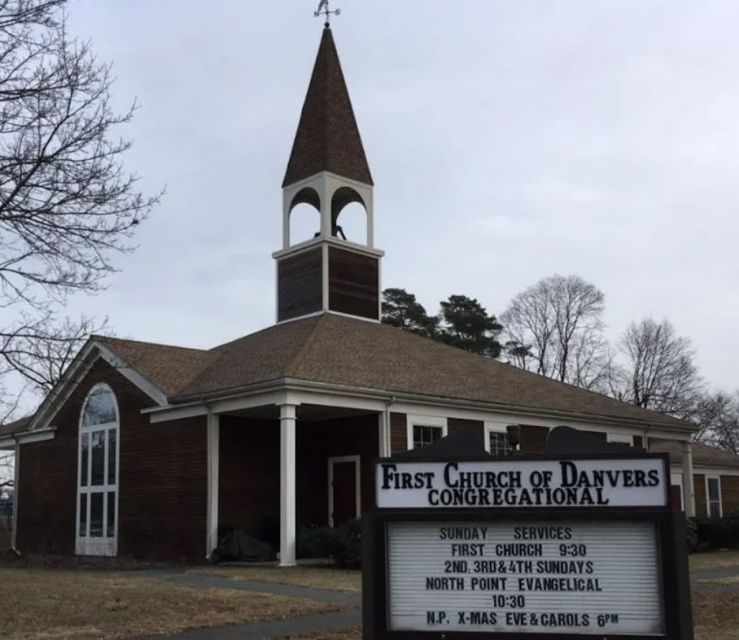
The 1692 witchcraft hysteria began not in Salem’s busy visitor center district, but in what is now Danvers, the former Salem Village. This 1.5-hour walk takes you to the parsonage site where Betty Parris and Abigail Williams first suffered the fits that set the panic in motion.
I like the real locations and the small, local focus. I also like having Daniel A. Gagnon, a lifelong Danvers resident, historian, and author of A Salem Witch, lead the walk. The main drawback is practical: you need to drive or take an Uber from Salem, and there are no bathrooms along the route.
Key points to know before you book
- The story begins at the original source: Visit the parsonage remains connected to the first fits of 1692.
- The Ingersoll Ordinary dates to about 1670: This old building hosted witchcraft hearings and gives the story a physical setting.
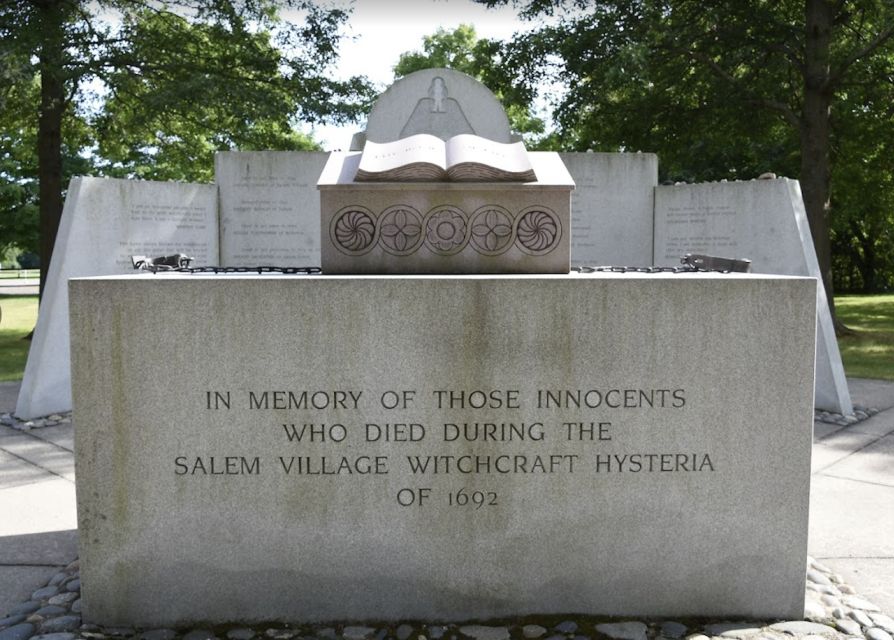
- The tour visits a memorial to all 25 victims: The stop helps place the trials in human terms.
- Daniel A. Gagnon leads the walk: His local connection and book on the subject add useful context.
- The walk includes an archaeological site: Wear comfortable shoes and expect a path rather than a fully paved route.
- Five dollars from each ticket supports local preservation: Your $25 fare includes a contribution to the Danvers Historical Society.
Why Danvers matters more than the Salem postcard
Salem is the better-known name, but Danvers is the place to visit if you want to trace the beginning of the 1692 crisis. The old Salem Village was a rural community separate from Salem Towne, and the first accusations grew out of events here before spreading across the North Shore.
That distinction matters. In Salem, you can learn about the trials through museums, historic buildings, and memorials. In Danvers, you get closer to the first setting of the story: a local parsonage, a meeting and training area, an old ordinary, and a memorial to those who died.
The tour focuses on how quickly fear took hold. On a cold February day, two young girls began acting in ways the local doctor could not explain. The diagnosis was that they were under the Devil’s hand. From there, suspicion moved through the community, turning neighbors against neighbors.
I like this approach because it treats the witchcraft hysteria as a chain of human decisions rather than a spooky legend. You are asked to think about belief, authority, fear, and rumor. The guide can also address the question at the heart of the story: did people believe in actual witchcraft, and why did that belief carry such force in 1692?
More Witch Tours in the USA
- The Salem Witch Walk
★ 4.5 · 1,301 reviews - Wicked Awesome Tours: Witch Trial History and Salem Haunts!
★ 5.0 · 1,032 reviews - Best Salem Witch Trials Historical Walking Tour
★ 4.0 · 743 reviews
Starting at the Training Field
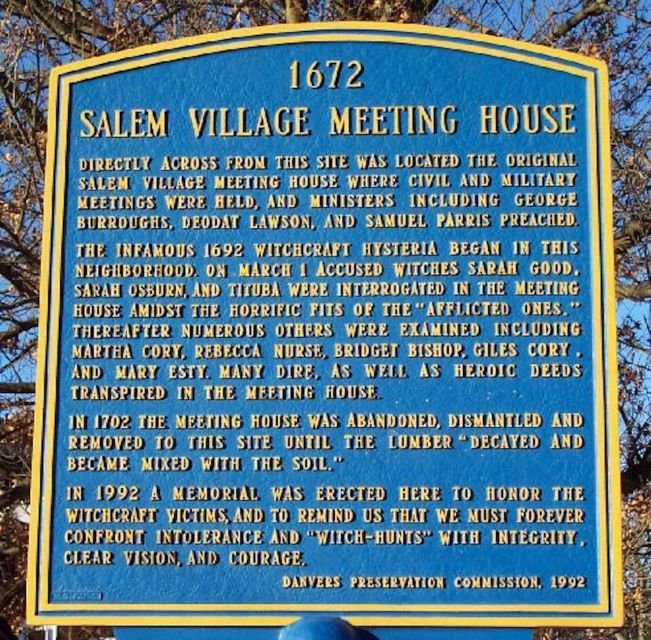
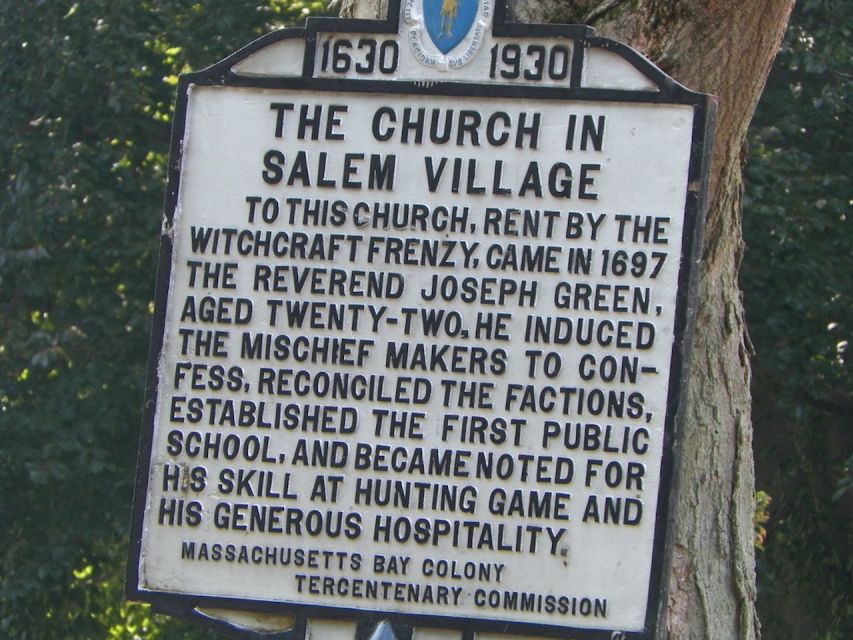
The meeting point is beside the Ingersoll Parkway, next to the Training Field. Look for the rock and blue sign explaining the field’s history. You meet the guide there, and the walk ends back at the same point.
This setup is useful because you do not need to arrange a separate taxi between stops. It also gives you a fixed place to leave a car before setting out. The tradeoff is that this is not a walk from central Salem. If you are staying in Salem, plan on a short drive or Uber to Danvers and allow enough time to find the Training Field.
The tour is offered only on selected dates in July, August, September, and October. Check the available dates and starting times carefully before building it into your day. Since the walk takes place rain or shine, the forecast matters. A light rain jacket and shoes with a solid grip are sensible choices.
There is no hotel pickup, food, or drink included. There is also no bathroom available during the activity, so take care of that before meeting the guide. These are small details, but they matter on a 1.5-hour walk.
The parsonage site and the first fits
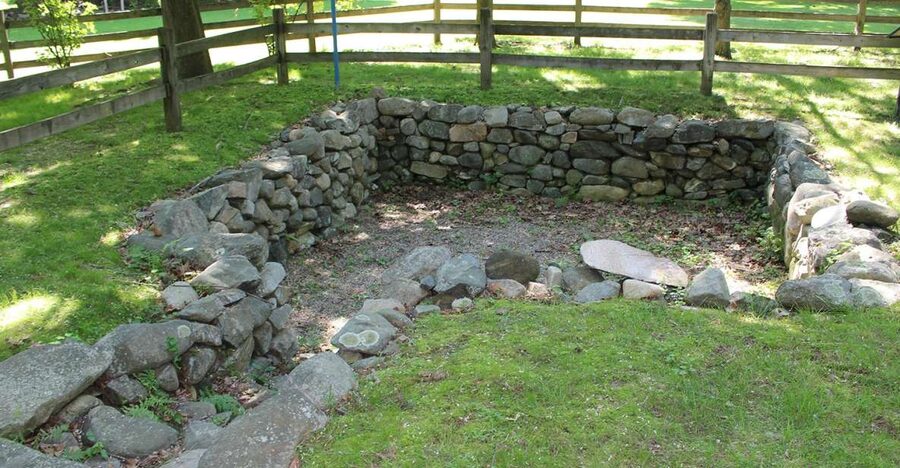
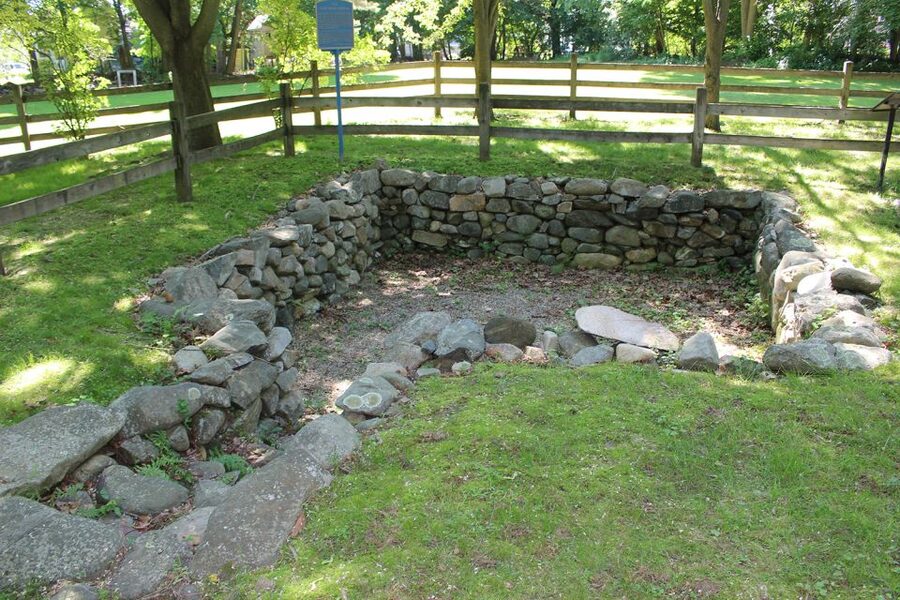
The most important stop is the archaeological site marking the remains of the parsonage. This is where Reverend Samuel Parris lived, and where his 9-year-old daughter Betty and 11-year-old niece Abigail began having the fits that launched the crisis.
You should set your expectations correctly. You are seeing remains, not a fully preserved house with furnished rooms. The power of the stop comes from its connection to the event. Standing near the site helps you understand that the hysteria began in a household and community, not in a theatrical haunted attraction.
The path to the archaeological site is one reason the tour is not suitable for people with mobility impairments. Comfortable shoes are required, and the route may feel less polished than a standard city walking tour. That rougher quality is part of the appeal, but it also means you should not treat this as an easy, fully accessible stroll.
Here, the guide’s storytelling is especially important. Daniel A. Gagnon can connect the physical remains with the local setting and explain how a medical diagnosis became a public crisis. His background as a lifelong Danvers resident gives the tour a strong sense of place, while his book, A Salem Witch, reflects his sustained interest in the subject.
The guide’s role is one of the main reasons to choose this activity instead of simply visiting sites on your own. A sign can tell you where a building once stood. A live guide can explain why that spot mattered, how the story moved outward, and what remains uncertain.
The Ingersoll Ordinary, dating to about 1670
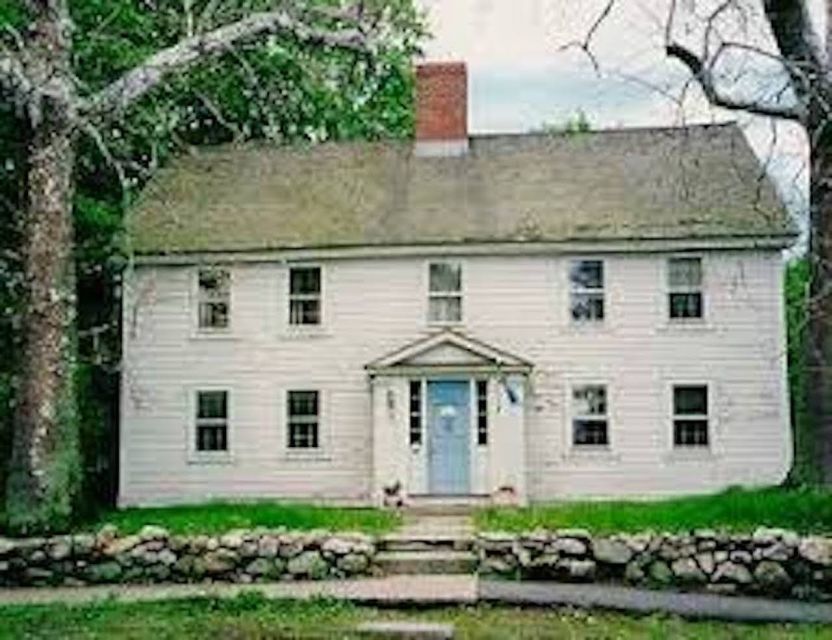
The walk also brings you to the Ingersoll Ordinary, a building dating to about 1670. Witchcraft hearings were held there, making it one of the clearest physical links between the village’s everyday life and the legal proceedings that followed.
An ordinary was a place where people could gather, eat, drink, and conduct business. That makes this stop valuable. The hearings were not taking place in some distant, abstract courtroom. They unfolded in familiar community spaces, among people who knew one another.
Gazing at a building this old also changes the scale of the story. The year 1692 can feel remote when you read it in a book. A structure from around 1670 helps you picture the age of the community and the world in which the accusations took place.
The Ingersoll Ordinary is best appreciated as part of the wider story, not as an isolated architectural sight. The guide can tie it to the movement from private suspicion to public accusation and official hearings. If you are mainly seeking an old building tour, this is not the right experience. If you want to understand how the witchcraft proceedings became part of village life, it is an important stop.
More witch trial tours in the USA:
- Williamsburg Ghosts, Witches and Pirates Tour
★ 4.5 · 584 reviews - Salem Ghost Tour: Witches & Wicked Whispers
★ 4.5 · 571 reviews - Salem Uncovered: The Salem Witch Trials Tour
★ 4.5 · 471 reviews - Salem Ghost Tours: Witches & Wicked Whispers
★ 4.2 · 436 reviews
Remembering the 25 people who died
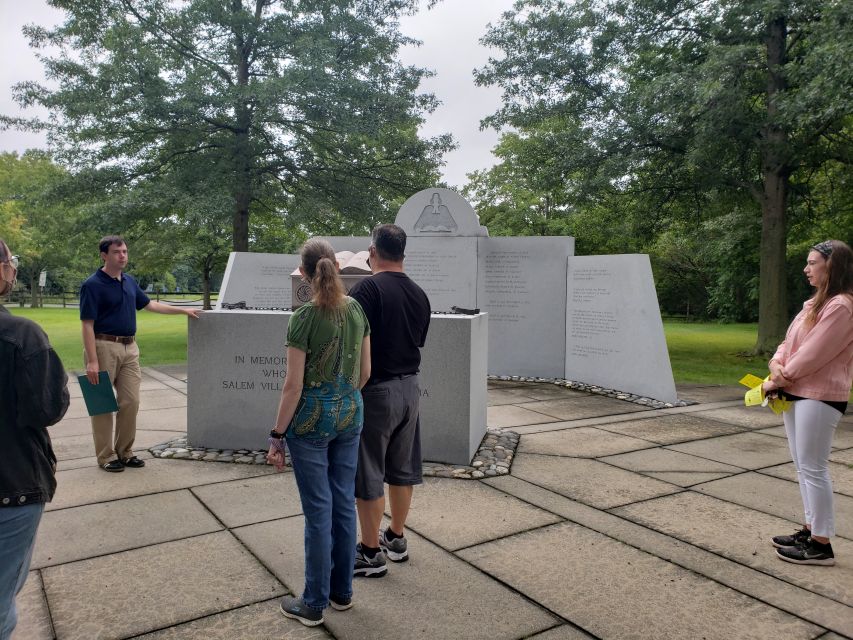
The Witchcraft Victims’ Memorial brings the walk to its most serious point. Twenty-five people died as a result of the 1692 witchcraft hysteria, and the memorial gives you a place to consider that human cost.
This stop keeps the tour from becoming a parade of eerie sites. The subject is often marketed through ghost stories and Halloween imagery, but the memorial points back to real people caught in a destructive process. It is a useful counterweight to the more curious and dramatic parts of the story.
I like the way the memorial broadens the focus. The first fits began with two children, but the consequences spread far beyond the Parris household. The tour shows how one diagnosis, combined with fear and accusation, affected an entire community.
Because the activity ends back at the Training Field, you can take a little time afterward to think through the sequence of places. You begin at the meeting point, walk to the parsonage remains and other key locations, visit the old ordinary and memorial, then return to where you started.
What the guide adds to the experience
The tour is in English and led by Daniel A. Gagnon. His local background is a real advantage for this kind of walk. Danvers is his home, and his book A Salem Witch shows that he has spent serious time with the subject.
The guide has also been praised for being friendly and extremely well informed about the Salem Witch Trials. That matters here because the story contains many names, places, dates, and competing explanations. A good guide can keep the sequence clear without reducing everything to a ghost story.
You should expect the tour to raise questions rather than settle every mystery. Why did the girls act as they did? Why did the doctor give the diagnosis he did? Why did the accusations gain such force? Why did neighbors accept claims that might otherwise have seemed impossible?
Those questions are part of the value. The tour encourages you to think about the social pressure of a small community and the danger of treating fear as proof. It also helps you separate Salem’s popular image from the more complicated events that began in Salem Village.
The highly personal nature of a local guide-led walk is another plus. You are not moving through a large museum exhibit or listening to a recorded narration. You can hear the story in the places where the first events unfolded and follow the guide’s explanations as the route develops.
Is $25 a fair price?
At $25 per person, I consider this a good value for a focused historical walk. The tour lasts 1.5 hours, includes an English-speaking guide, and visits several sites tied directly to the 1692 events. Five dollars from every ticket is donated to the Danvers Historical Society, which adds a useful local benefit to the price.
The value is strongest if you care about context and interpretation. You can see some sites from the outside without paying for a tour, but you would not receive the same connected explanation from the parsonage remains to the hearings and then to the memorial.
The price does not cover transportation from Salem, food, drinks, or a bathroom stop. If you need hotel pickup or a complete half-day package, this will not meet that need. It is a compact, pay-for-the-guide experience rather than an all-inclusive excursion.
The small number of available dates also means this is not as flexible as a daily Salem attraction. Book only after confirming that the selected date and time fit your plans. Free cancellation up to 24 hours before the activity and the option to reserve now and pay later make planning a little easier.
Who should take this walk?
I would recommend it to anyone who wants the historical beginning of the Salem Witch Trials rather than only the famous Salem name. It is especially well suited to people who enjoy local history, historic buildings, and guided storytelling.
Families with older children may also find it useful, though the subject includes accusations, executions, and death. The memorial makes clear that this is not simply a spooky outing. Parents should decide if that tone fits their children.
The tour is less suitable if you need step-free access or an easy paved route. The walk includes a path to an archaeological site, and the activity is specifically listed as unsuitable for people with mobility impairments.
You should also skip it if you want a broad survey of all Salem attractions. This tour stays tightly focused on Danvers and the beginning of the 1692 hysteria. That narrow focus is its strength, but it means you will need other activities for museums, maritime history, or Salem’s later history.
Practical tips for a better visit
Wear comfortable shoes with good traction. You will walk to an archaeological site, and the tour operates in rain or shine.
Bring water for your own use, since food and drinks are not provided. Most important, use a bathroom before you arrive because none is available during the activity.
Allow extra time to reach Danvers from Salem. The meeting point is at the Training Field beside the Ingersoll Parkway, not in Salem’s central visitor area. Your confirmation email provides the meeting details and directions.
Check the forecast and dress for the conditions. The tour is held outdoors, and the selected July through October dates do not guarantee perfect weather.
Finally, keep the focus on the story. You are not visiting a theme-park attraction. The main reward is hearing how a local incident grew into a regional crisis while standing near the places connected to it.
Should you book the Salem Village Witch Hunt Walking Tour?
Book it if you want to see where the 1692 witchcraft hysteria began and prefer a guide-led experience to a self-guided visit. The parsonage remains, Ingersoll Ordinary, and victims’ memorial create a clear, meaningful route, while Daniel A. Gagnon brings local experience and subject expertise.
Skip it if you need full accessibility, a bathroom on the route, hotel transportation, or a tour based in central Salem. For everyone else, $25 buys a focused 1.5-hour lesson in the place where the story first took hold, with part of the fare supporting local history.
FAQ
Where does the Salem Village Witch Hunt Walking Tour take place?
The tour takes place in Danvers, Massachusetts, formerly known as Salem Village. The meeting point is at the Training Field beside the Ingersoll Parkway.
Where do I meet the guide?
Meet the guide on the Training Field, next to a rock and a blue sign explaining the field’s history. The activity ends at the same location.
How long does the walking tour last?
The tour lasts 1.5 hours. Starting times depend on availability.
Who leads the tour?
Daniel A. Gagnon leads the tour. He is a lifelong Danvers resident, historian, and author of A Salem Witch.
What sites will I see?
You will see the remains of the parsonage connected to Betty Parris and Abigail Williams, the Ingersoll Ordinary dating to about 1670, and the Witchcraft Victims’ Memorial for the 25 people who died.
Is the tour accessible for people with mobility impairments?
The tour is not suitable for people with mobility impairments. The route includes walking down a path to an archaeological site.
Are bathrooms available during the tour?
No bathrooms are available during the activity. Plan to use one before meeting the guide.
What happens if it rains?
The tour takes place rain or shine. Wear suitable clothing and comfortable shoes for outdoor walking.
More Walking Tours in the USA
- History and Hauntings of Salem Guided Walking Tour
★ 5.0 · 14,564 reviews - New Orleans Premier Ghost, Voodoo and Vampire Walking Tour
★ 4.5 · 12,856 reviews - Chicago: Gangsters and Ghosts Walking Tour
★ 5.0 · 7,155 reviews - Savannah History and Haunts Candlelit Ghost Walking Tour
★ 5.0 · 3,235 reviews
Just added around the USA
- Zion: Harry Potter-Inspired Zion Ghost Tour with Sunset View★ 5.0 · 8 reviews
- Witches, Widows, & Wraiths: Wichita Ghost Tours★ 5.0 · 2 reviews
- Wraiths & Wicked Whispers: Wilmington Ghost Tour★ 4.2 · 25 reviews
- Wraiths of the West Texas Wind: El Paso Ghost Tour★ 4.5 · 9 reviews
- Williamsburg: Haunted Ghosts, Witches, and Pirates Tour★ 4.5 · 107 reviews
- Wilmington: Boos and Booze Haunted Pub Crawl★ 4.0 · 8 reviews
- Williamsburg: Dead of Night Paranormal investigations Tour★ 5.0 · 4 reviews
- Williamsburg: Echoes of Twilight Late-Night Ghost Tour★ 4.6 · 13 reviews
USA Ghost Tours, compared.
History and Hauntings of Salem Guided Walking Tour
Read our review →
New Orleans Premier Ghost, Voodoo and Vampire Walking Tour
Read our review →

Adults-Only New Orleans Ghost, Crime, Voodoo, and Vampire Tour
Read our review →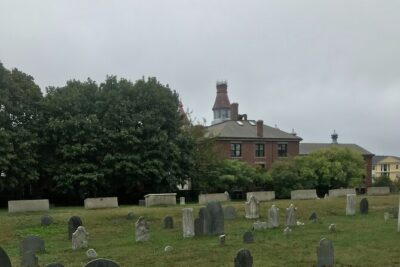
Haunted Evening Horse and Carriage Tour of Charleston
Read our review →
New Orleans Adults-Only Ghost, Voodoo and Vampire Tour
Read our review →
Savannah History and Haunts Candlelit Ghost Walking Tour
Read our review →Browse the lists this tour appears in