
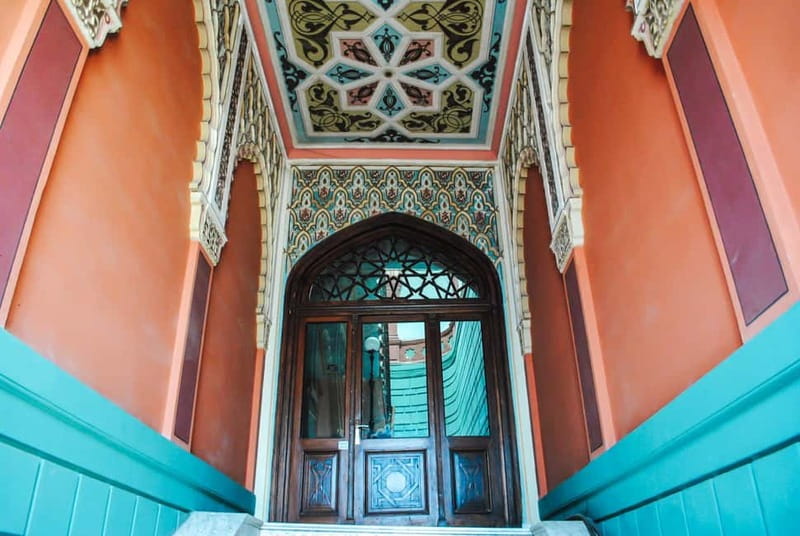
REVIEW · GHOST STORIES & LOCAL LEGENDS
Sololaki – Urban Legends Walk of Bourgeoisie & Haunted Flats
Sololaki’s best stories may be behind doors you would otherwise walk past. This 1.5-hour walk near Freedom Square takes you into a world of painted stairwells, grand early 20th-century homes, a supposedly haunted house, and Tbilisi’s only Gothic-style building.
I like the small group of five, which should make it easier to ask questions and enter the conversation. I also like the focus on handpainted hallways and local legends, details you are unlikely to find in a standard city guide.
The main drawback is access. Sololaki’s older residential buildings can mean stairs and uneven walking, and this tour is not suitable for wheelchair users, people with mobility impairments, or people with hearing impairments.
Key points
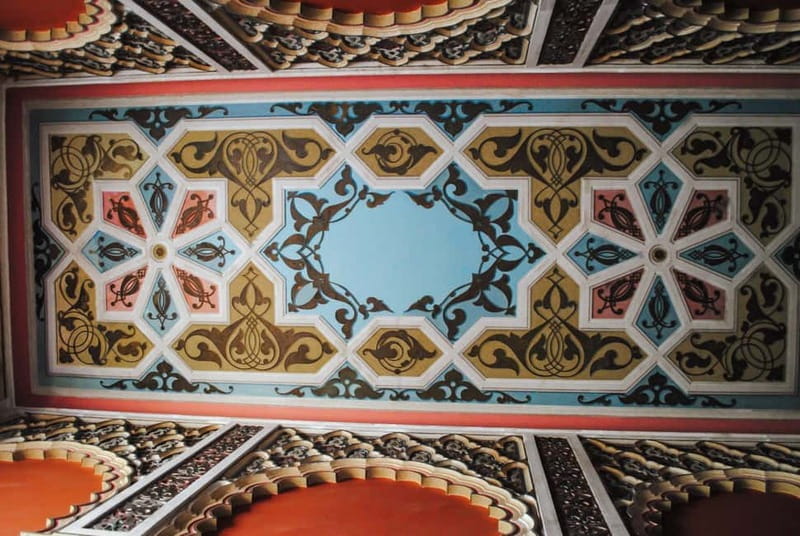
- Handpainted hallways: Look beyond the street facades for decorated residential entrances that many visitors miss.
- Several architectural styles: See Art Nouveau, Baroque, Renaissance, and the only Gothic-style building in Tbilisi.
- Local guide Baia: The English-language walk is led by a local guide praised for clear communication and thoughtful answers.
- Urban legends: Hear quirky stories about Sololaki, including the tale of a supposedly haunted house.
- Small group format: With no more than five participants, the walk feels more like a guided conversation than a crowd-following exercise.
- Restoration in plain sight: You will see both carefully preserved buildings and houses that need urgent repair.
Why Sololaki Rewards a Slow Walk
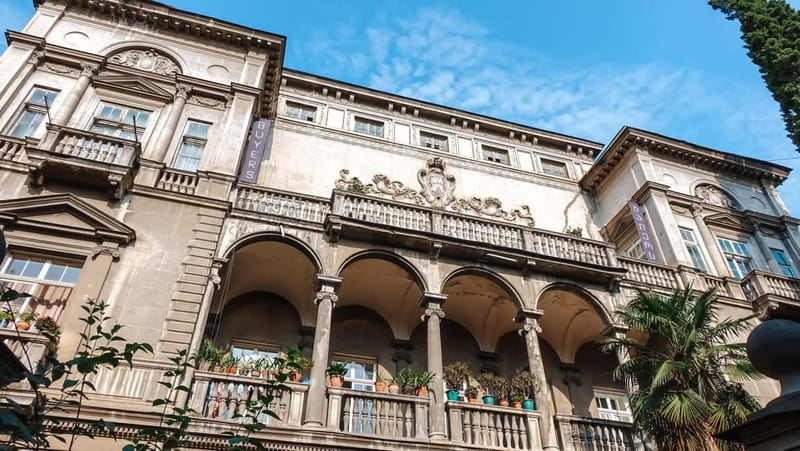
Sololaki sits just beyond Freedom Square, but it can feel far removed from Tbilisi’s broad avenues and modern traffic. Its streets are lined with old apartment houses built when the neighborhood was home to wealthy residents and ambitious builders.
The appeal is not one famous monument. It is the accumulation of details: a decorated entrance, an unusual facade, a stairwell painted in fading patterns, or a doorway that looks private and easy to ignore. A guide gives these places meaning and helps you notice what you would likely miss on your own.
I find this kind of walk especially useful early in a Tbilisi visit. You get a quick sense of how the city’s upper-class residential quarters were designed, how styles from different parts of Europe appeared in Georgia, and how much of the neighborhood remains part of ordinary daily life.
The tour stays around Freedom Square and Sololaki rather than sending you across the city. That keeps the experience focused and makes the 1.5-hour length practical. You spend your time looking at buildings instead of commuting between them.
More ghost story tours in the world:
- Prague: Ghost Walking Tour Where Legends Come To Life
★ 4.4 · 5,253 reviews - Prague: Ghosts, Legends, Medieval Underground & Dungeon Tour
★ 4.3 · 5,104 reviews - Prague: Ghosts and Legends of the Old Town Evening Tour
★ 4.5 · 3,091 reviews
Meeting Baia at Freedom Square
The meeting point is in front of the Chronograph shop at Freedom Square. Your guide carries a small orange backpack, which gives you a clear visual marker in a busy central location.
The tour is offered in English. Guide Baia has been praised for her clear English, welcoming manner, and ability to answer questions. That matters here because the walk depends on explanation. A painted hallway is attractive on its own, but the story behind the building is what turns a quick look into a useful piece of Tbilisi’s past.
Because the group is limited to five, you can ask about an architectural detail, a local custom, or one of the stories without needing to shout over a large crowd. If you prefer a quiet sightseeing experience with room for conversation, this format is a good match.
Wear comfortable shoes and expect to walk through older residential spaces. The activity description does not provide a detailed route or stair count, so anyone with mobility concerns should treat the access warning seriously rather than assume the walk is easy because it lasts only 90 minutes.
The First Look at Sololaki’s Bourgeois Homes
The walk introduces you to the neighborhood’s early 20th-century architecture, when prosperous residents commissioned houses with more decorative ambition than the plain exterior of many modern apartment blocks.
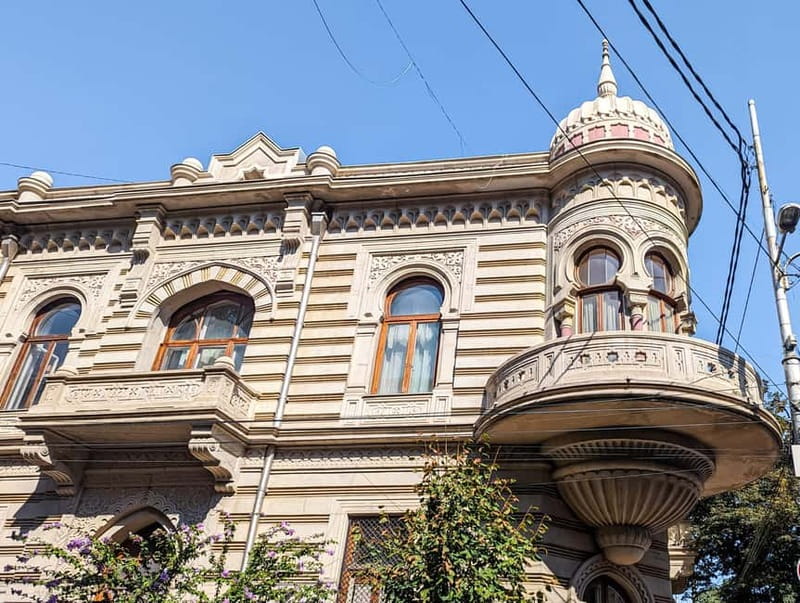
You can expect to see a mix of Art Nouveau, Baroque, and Renaissance-style details. These labels are useful, but the buildings may not fit into neat categories. Tbilisi’s architecture often reflects a meeting of local building traditions and imported European ideas, and Sololaki shows that mix in residential form.
The tour’s focus on bourgeois homes gives you a different view of the city. Instead of concentrating only on churches, fortifications, or grand public buildings, you look at how wealthy people once lived behind their front doors. The scale, decoration, and layout of these homes tell you about status and taste without requiring a museum ticket.
Do not rush past the less polished facades. Some buildings are well preserved, while others need urgent restoration. That contrast is part of the experience, not a flaw to hide. It shows you that Sololaki is still a living neighborhood, and that its architectural future is not guaranteed.
Handpainted Hallways Behind Closed Doors
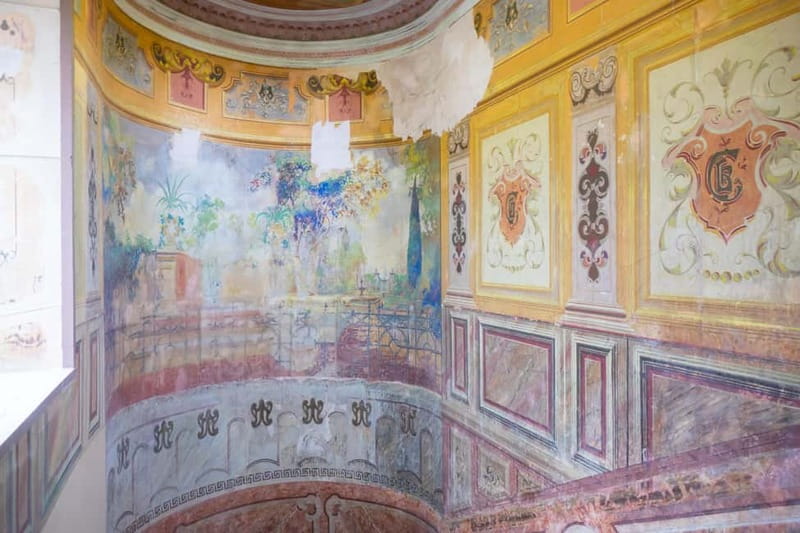
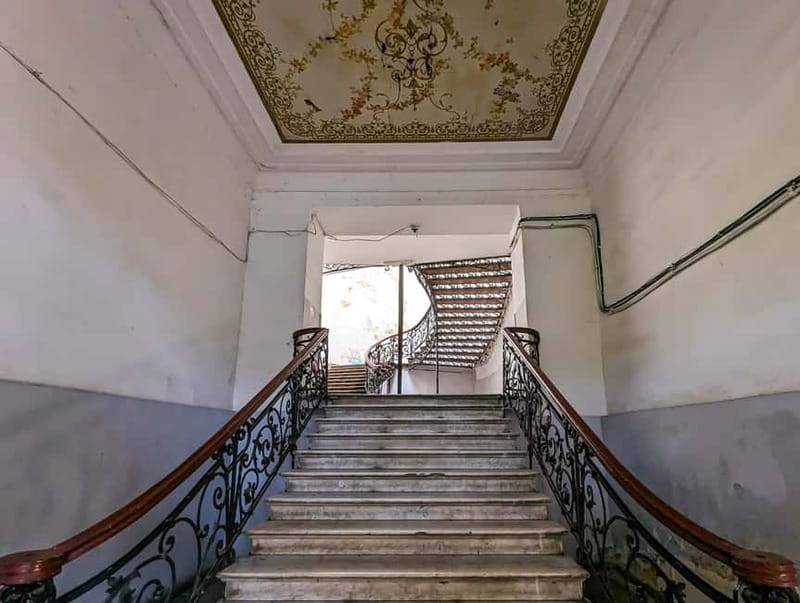
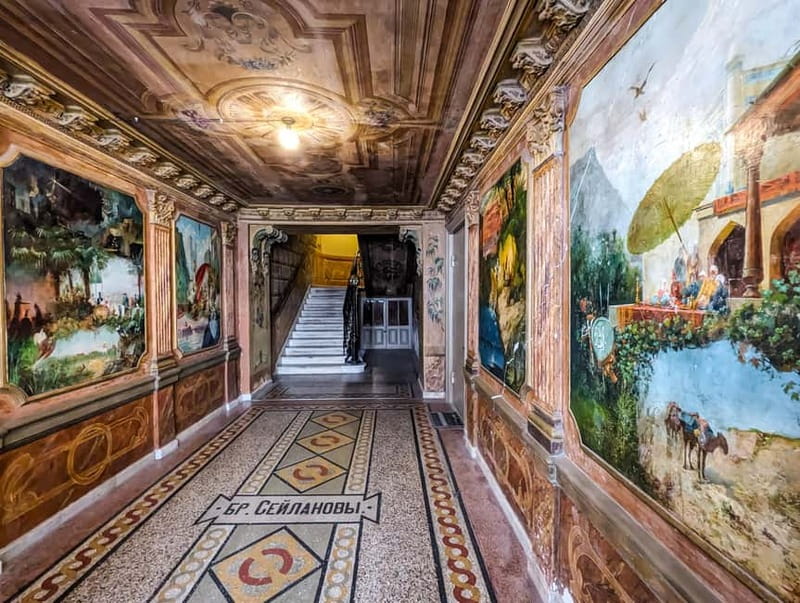
The most distinctive part of the walk is the chance to admire handpainted hallways. In a city where many visitors spend their time taking pictures of exterior facades, these interior passages offer a more intimate look at Sololaki.
A decorated entrance tells you that the building was meant to impress residents and visitors before they even reached an apartment. Painted walls and ornamental details transform a functional stairwell into a shared display of wealth and taste.
You should understand that this is not a polished museum route. These are residential buildings, and access can depend on what is open and appropriate at the time of the tour. The experience is valuable precisely because the spaces are part of the neighborhood rather than isolated exhibits.
Bring a camera, but keep your attention on the details. Faded paint, worn surfaces, and signs of repair can be as telling as the best-preserved decoration. The tour gives you a chance to look closely at a part of Tbilisi that is easy to overlook.
More walking tours in the world:
- History and Hauntings of Salem Guided Walking Tour
★ 5.0 · 14,564 reviews - New Orleans Premier Ghost, Voodoo and Vampire Walking Tour
★ 4.5 · 12,856 reviews - Chicago: Gangsters and Ghosts Walking Tour
★ 5.0 · 7,155 reviews - Savannah History and Haunts Candlelit Ghost Walking Tour
★ 5.0 · 3,235 reviews
The Gothic Building and Sololaki’s Architectural Oddities
One of the tour’s promised sights is the only Gothic-style building in Tbilisi. That makes it a useful reminder that Sololaki cannot be reduced to one local style or one period.
The Gothic reference creates a strong contrast with the Art Nouveau, Baroque, and Renaissance examples elsewhere on the route. You get to compare pointed, dramatic design with more flowing or classical decoration, all within a compact neighborhood walk.
The tour also includes several residential buildings described as unique in their architecture. Since no full building list is provided, you should not book expecting a fixed checklist of famous addresses. Instead, think of the route as a guided search for unusual details and overlooked houses.
That approach suits Sololaki. Its character comes from the relationship between many buildings, not from a single headline sight. A good guide can point out why one doorway, balcony, or facade is worth a second look.
Haunted Flats and Stories You Will Not Find in a Guidebook
The supernatural side of the walk centers on a supposedly haunted house. The story is presented as an urban legend, so you should treat it as local storytelling rather than proven fact.
That distinction does not make it less enjoyable. City legends reveal what residents choose to remember, repeat, and attach to a place. A haunted-house tale can show how an old building acquires a personality in the public imagination.
The tour promises other quirky legends that are not found in standard guidebooks. These stories add a lighter, more playful layer to the architecture. You are not simply learning dates and styles. You are hearing how the neighborhood has been talked about and imagined.
I like that balance. Sololaki’s decorative buildings could easily become a dry architecture lesson, while a string of ghost stories could become empty entertainment. Combining both gives the walk a stronger shape. You get a reason to look at the building, then a story that helps you remember it.
Restoration, Neglect, and the Real State of the Neighborhood
A major strength of this experience is its honest look at preservation. Some houses are carefully maintained. Others require urgent restoration. Seeing both conditions side by side gives you a clearer understanding of the neighborhood than a tour that shows only its prettiest corners.
Old architecture needs money, care, and practical solutions. Decorative stairwells and elaborate facades can be costly to repair, especially when the buildings are still used as homes. The fading condition of some properties is therefore part of the story of present-day Sololaki.
For you, the important point is expectation. This is not a spotless open-air museum. You may see peeling paint, worn stairs, and buildings that have lost some of their former polish. If you want a perfectly restored photo setting at every stop, the route may feel uneven.
If you appreciate places in transition, the contrast is a benefit. You can admire the craftsmanship while also seeing why restoration matters. The guide’s explanation helps you notice value in buildings that might otherwise appear merely old.
Is $42 a Fair Price for 90 Minutes?
At $42 per person, this is not the cheapest way to spend an hour and a half in Tbilisi. The value depends on what you want from a city walk.
You are paying for a live English-speaking guide, a small group limited to five, access to details you might not notice alone, and local stories that are not usually printed in guidebooks. If you are interested in architecture, neighborhood life, or unusual city tales, those elements make the price easier to justify.
The small group is important. A large group could make residential entrances awkward and reduce the chance to ask questions. With five people or fewer, the guide can keep the pace personal and respond to your curiosity.
The tour also includes all taxes, so the advertised price is straightforward. It lasts 1.5 hours, which makes it easy to fit around other plans. You are not committing half a day, but you still get a focused introduction to one of Tbilisi’s most distinctive neighborhoods.
For a first-time visitor, I would compare this cost with the price of a standard city tour. If your main goal is a broad overview of Tbilisi, another route may cover more ground. If your goal is to see the city through old homes, interior details, and local tales, this experience offers a more specific kind of value.
Who Will Enjoy This Walk Most?
I would recommend this tour to anyone who likes architecture but does not want a formal lecture. It also suits people who enjoy ghost stories, local gossip, and the oddities that give a neighborhood its personality.
It is a particularly good choice for:
- Visitors staying near Freedom Square who want a compact activity.
- People who have already seen Tbilisi’s main landmarks and want a closer look at residential streets.
- Architecture fans interested in Art Nouveau, Baroque, Renaissance, and Gothic design.
- Solo visitors or couples who value a small group and direct conversation.
- Anyone who enjoys seeing both restored buildings and properties in need of repair.
You may want to choose another activity if stairs, uneven surfaces, or older residential buildings create a problem. The walk is not suitable for wheelchair users, people with mobility impairments, or people with hearing impairments.
The tour is conducted in English, so you should also be comfortable following spoken English for the full 90 minutes. The clear communication praised in connection with Baia’s guiding is a plus, but the format still depends on listening.
Practical Details Before You Book
Meet in front of the Chronograph shop at Freedom Square and look for the guide with the small orange backpack. Check the available starting times when booking, since the schedule can vary.
The tour offers free cancellation up to 24 hours before departure, with a full refund. You can also reserve now and pay later, which helps if you are still arranging your Tbilisi schedule.
The experience includes all taxes. No transport is listed, so plan to reach Freedom Square on your own. The route description keeps the walk in the Sololaki area, making the central meeting point part of the practical appeal.
I would wear shoes suited to walking and older stairs, and I would avoid planning a tight appointment immediately afterward. The advertised duration is 1.5 hours, but a conversation-heavy small group can make the experience feel less rushed than a large walking tour.
Should You Book the Sololaki Urban Legends Walk?
Book it if you want to see the Tbilisi behind the postcard views: old residential buildings, painted hallways, unusual European styles, fading decoration, and legends tied to specific houses. The combination of architecture and local storytelling gives the walk a clear identity.
Baia’s friendly, easy-to-understand English and willingness to answer questions are strong reasons to choose this small-group format. At $42, it is best value for curious visitors who will stop, look closely, and ask why a building matters.
Skip it if you need step-free access, prefer a major-landmark tour, or want a fully restored setting at every stop. For everyone else, this is a focused way to spend 90 minutes near Freedom Square, with enough odd stories and visual detail to change how you see Sololaki afterward.
FAQ
Where does the Sololaki walk meet?
The meeting point is in front of the Chronograph shop at Freedom Square. The guide carries a small orange backpack.
How long does the tour last?
The walk lasts 1.5 hours.
What language is the tour offered in?
The live tour is conducted in English.
How many people can join the group?
The group is limited to five participants.
What kinds of buildings will I see?
You will see early 20th-century Art Nouveau, Baroque, Renaissance, and Gothic-style architecture, along with handpainted hallways, unusual residential houses, and a supposedly haunted house.
Is the tour suitable for wheelchair users?
No. The activity is not suitable for wheelchair users, people with mobility impairments, or people with hearing impairments.
Just added around the world
- Zion: Harry Potter-Inspired Zion Ghost Tour with Sunset View★ 5.0 · 8 reviews
- Your evening in Venice – Legends&Ghosts&Aperitif★ 4.7 · 79 reviews
- York’s Haunted Heart : Ghost, Ghouls and Gallows★ 4.6 · 82 reviews
- York : Private Ghost Hunt★ 5.0 · 3 reviews
- Witches, Widows, & Wraiths: Wichita Ghost Tours★ 5.0 · 2 reviews
- Wraiths & Wicked Whispers: Wilmington Ghost Tour★ 4.2 · 25 reviews
- Witches, ghosts and executioners / Mystical North Hesse★ 4.4 · 4 reviews
- Wraiths of the West Texas Wind: El Paso Ghost Tour★ 4.5 · 9 reviews
Ghost Stories & Local Legends, compared.

Ghost Walking Tour Where Legends Come To Life
Read our review →
Ghosts, Legends, Medieval Underground & Dungeon Tour
Read our review →
Budapest: Buda Castle District Vampires and Myths Night Tour
Read our review →
Ghosts and Legends of the Old Town Evening Tour
Read our review →
The Dark Side of Florence: Mysteries and Legends
Read our review →
Prague Ghost and Legend of Old Town Walking Tour
Read our review →
Ghosts and Legends Nighttime Guided Walking Tour
Read our review →
Gothic Quarter Ghosts and Legends Walking Tour
Read our review →Browse the lists this tour appears in