
REVIEW · LONDON GHOST TOURS
Jack the Ripper Private Immersive Tour
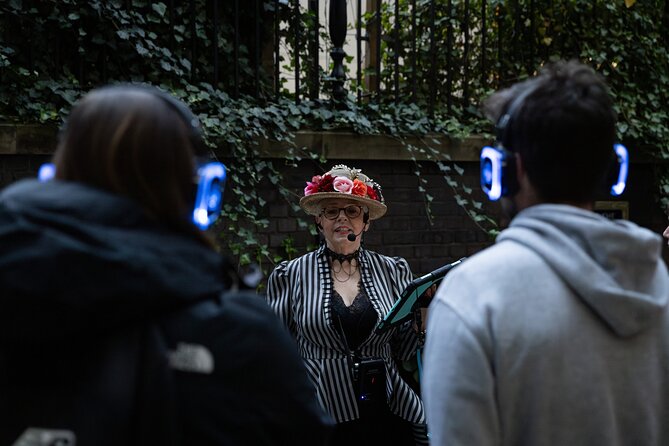
Jack the Ripper’s story is best understood on foot, where narrow streets, old market routes, lodging-house districts, and police boundaries give the case its unsettling shape. This private Whitechapel walk follows the murders from Aldgate to Spitalfields, using photographs, period sounds, and a tablet to connect today’s streets with 1888.
I like the attention to ordinary life, especially the discussion of homelessness, workhouses, cheap lodging, and unemployment. I also like that guide Jenny brings the story beyond the usual five victims, includes the two important letters, and explains the rivalry between the Metropolitan Police and City of London Police.
The main caution is physical and practical: you walk and stand for about two and a half hours with no scheduled break. There is also some confusion around the word immersive, since one booking confirmation reportedly described a different format, and headphone arrangements may vary.
Key things to know before you book
- Follow the case through real streets: The route links Aldgate, Mitre Square, Goulston Street, Brick Lane, Hanbury Street, and Spitalfields.
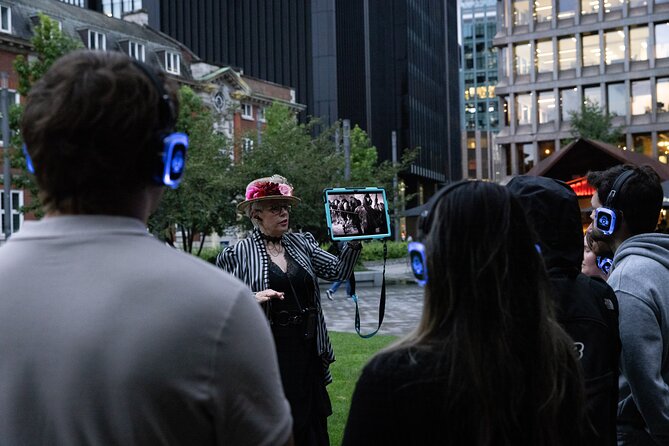
- Jenny leads the walk: She is described as an energetic Ripper specialist who uses photographs, a tablet, sound effects, and detailed explanations.
- See more than the famous five: The tour discusses Martha Tabram, a possible victim recently supported by criminologist Professor David Wilson.
- Hear both police and press angles: The walk covers the Goulston Street clue, the Lusk letter, newspaper panic, and the split between two police forces.
- Plan for a long, continuous walk: Moderate fitness is needed, and the experience is not recommended if walking or standing is difficult.
- Private means your group participates alone: The price is about $47.52 per person, with the final value depending on group size.
Starting at Aldgate with London in 1888
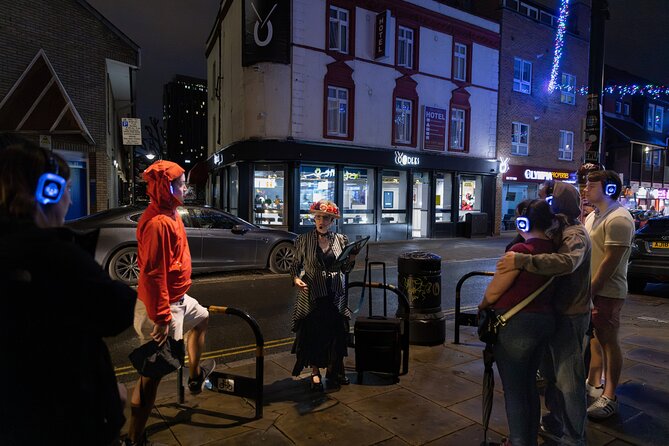
Meet at Aldgate Station, near the Dorsett City Hotel. The opening six minutes set the scene: the murders, the surrounding streets, and the area as it looked in 1888. This is a useful start because the case can otherwise feel like a string of names and dates.
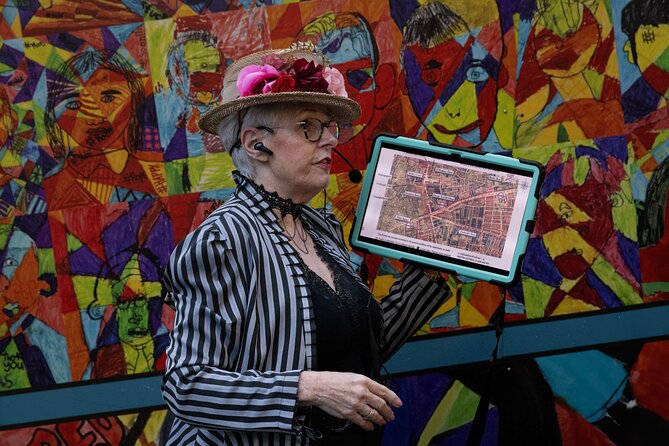
At St Botolph’s Aldgate, the focus shifts from the killer to the people living around him. You hear about common lodging houses, workhouses, unemployment, and homelessness. The guide uses a 14-inch tablet to show photographs, which should help when the light is low.
That social background is one of the strongest parts of the route. It explains why women were out late, why a few pennies could matter, and why the East End was so tense. The victims were not simply characters in a crime story. They were people moving through a hard urban economy.
The tablet is also practical. Old photographs can be difficult to see on a small phone, especially at night. A larger screen gives the guide a way to show street views and victims’ portraits while you stand in the same general area.
More Private Ghost Tours in London
- The Ultimate Jack the Ripper Tour (Private Group Booking)
★ 5.0 · 199 reviews - Private Tour of Haunted London in a Black Cab
★ 5.0 · 21 reviews - Jack the Ripper Private Day Time Walking Tour
★ 5.0 · 16 reviews
Mitre Street and Mitre Square: two murders in one night
Mitre Street brings you to the murder of Elizabeth Stride. The guide covers the hours before her death and explains how Louis Diemschutz found her body at the entrance to Dutfield’s Yard. Period photographs help you picture the location and follow the sequence of events.
The next stop, Mitre Square, concerns Catherine Eddowes. Her body was found by Police Constable Edward Watkins during his beat, less than an hour after Stride was killed. That timing is central to the case, and the walk explains why police treated the two murders as connected.
You then follow the search route toward Goulston Street. This is where the geography helps. Instead of hearing only that police found a clue, you get a sense of the short distance and the pressure on officers trying to search the area before evidence disappeared.
The story also introduces the separate Metropolitan Police and City of London Police forces. Their boundaries mattered in 1888, and the guide explains that the two organizations remain separate today. It is a small administrative detail with a large effect on how the investigation unfolded.
The Goulston Street clue and the question of evidence
At Goulston Street, you look toward the doorway near 108 to 119 Goulston Street, where the only widely discussed physical clue in the case was found. The guide explains what happened after its discovery and why it became so controversial.
This part is useful for anyone who wants more than gruesome detail. The question is not just what was found, but who controlled the area, who could examine it, and how fear affected police decisions. The split between the two police forces becomes especially important here.
The route then moves to Wentworth Street and returns to the beginning of the murder series. This stop concerns Martha Tabram, who is not part of the traditional five but has been identified as a likely victim by Professor David Wilson. You hear the account of her killing and the discussion that followed.
The wording matters here. Tabram is presented as a possible victim, not an established member of the canonical five. That distinction gives the tour a more careful approach than a simple list of every unsolved murder in Whitechapel.
Brick Lane, Polly Nichols, and the sound of the East End
As you turn toward Brick Lane, the walk adds period music from pubs and music halls. It is a short segment, but the sound helps break up the spoken explanation and gives you a feel for the public life of the district.
Near the Frying Pan pub, the guide tells the story of Polly Nichols. This was the last place where she had a drink before her death. The account focuses on the pressures surrounding her, including the need to find money for lodging.
You also hear how two men discovered her body in Berner’s Street and sent for the police. Photographs of Nichols and the murder site are shown on the tablet. The route then adds the sound of street sellers and the police questioning local people about suspicious men.
These details make the walk feel less like a museum lecture and more like a reconstruction of a night in the neighborhood. They also show how quickly a murder became a community problem. Street vendors, pubs, lodging houses, police patrols, and newspaper sellers all formed part of the setting.
More Private Ghost Tours in the UK
- Private Ghosts and Gore Walking Tour of London
★ 5.0 · 13 reviews - Dark History of the Tudors: Private Tour of Hampton Court Palace
★ 5.0 · 10 reviews - Private Jack the Ripper Walking Tour of Whitechapel and Brick Lane
★ 5.0 · 10 reviews - Jack the Ripper London Private Taxi Tour
★ 5.0 · 10 reviews
Hanbury Street and the growing fear
At Hanbury Street, the story turns to Annie Chapman, whose murder took place on September 8, 1888. The guide discusses her life, the circumstances before her death, and the account of Mrs. Long, who reportedly saw Chapman with a man outside number 27 less than an hour before the murder.
The tour explains how Chapman was enticed into the backyard of number 29 with promises of money. It also covers a prominent suspect who was later discounted. Photographs of Chapman and the location help you connect the testimony with the street.
This is one of the more detailed and disturbing sections. You should expect frank discussion of the crime rather than a softened version. The subject is not suitable for every audience, particularly anyone uncomfortable with descriptions of violence against vulnerable women.
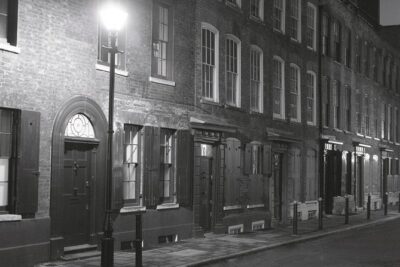
Walking down Wilkes Street, the focus widens again. The local community was becoming alarmed, while newspapers increased the sense of danger with lurid reporting. You also hear about the houses dating from the 1700s, including who built them and why.
That architectural detail is welcome. It shows that the East End was not just a backdrop for crime. People lived, worked, worshipped, rented rooms, and tried to survive among buildings that were already old in 1888.
Letters, newspaper panic, and the Ten Bells
At Puma Court, the guide discusses one of the letters sent to the press during the case. More than 1,000 letters were sent to police and newspapers, but this one and the Lusk letter receive special attention because of their possible connection to the murders.
As you leave, recorded newspaper sellers call out sensational headlines. It is a simple effect, but it makes a clear point: public fear was shaped not only by the murders themselves, but also by the way the press presented them.
On Commercial Street, opposite the Ten Bells pub, you hear about the pub’s connection with Mary Kelly and the nearby Spitalfields Market. The guide also discusses Christ Church graveyard, which mattered to people without homes. Basic needs such as a place to rest or sleep could lead to arguments and fights.
This is another strong social-history section. It keeps the walk from turning the victims into a collection of crime-scene photographs. You hear about the hard choices created by poverty and the importance of places that most people now pass without a thought.
The Lusk letter and Mary Kelly’s final scene
At the entrance to the London Fruit and Wool Exchange on Brushfield Street, the guide discusses the Lusk letter. It reportedly arrived in a box containing a human kidney, or an object claimed to be one. Photographs of the letter and its recipient are shown during the explanation.
The wording around this material should be treated with care. The case is full of claims, hoaxes, uncertain evidence, and sensational reporting. A good guide needs to separate what was documented from what was merely alleged, and this stop gives you a chance to ask questions about that difference.
The final stop is in the central courtyard of the London Fruit and Wool Exchange, the nearest accessible point to the place where Mary Kelly was killed in her room. Kelly was the youngest of the five canonical victims and the only one killed indoors.
The guide covers the events leading to her death, the murder itself, and the suspects discussed then and now. Jenny also gives her own theory about the killer. That final opinion can be entertaining, but you should treat it as a theory rather than a solved answer. Jack the Ripper’s identity remains unknown.
The tour ends here, with directions toward Liverpool Street Station. The final section lasts about 15 minutes, making it the longest stop on the route. It is also the most graphic, so you may prefer to know in advance that the walk finishes on its most disturbing material rather than its lightest note.
Sound, photos, and the private format
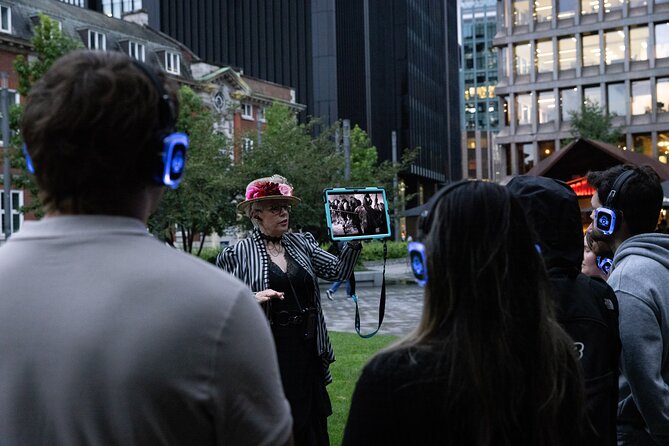
Hi-tech headphones are included, and several parts of the tour use music, newspaper cries, and other period sounds. One description says the headphones help you stay connected to the guide while walking, which is useful on streets where the group may spread out.
There is an important practical qualification. One person with hearing difficulty reported not receiving private headphones and having trouble hearing a guide using a microphone and speaker. The provider explained that a microphone may be used for a large group and that volume is kept down because of complaints about noise in the area.
If you are hard of hearing, tell Jenny before the walk begins and stand near the front. Also confirm what audio equipment will be used for your booking. The experience is private, but private does not automatically mean silent, close-range audio for every participant.
The private format is valuable if you want to ask questions. You can ask about individual victims, police procedure, suspected identities, or the difference between established evidence and later legend. It also lets your group move at its own pace, within the fixed route and timing.
Is $47.52 per person good value?
At about $47.52 per person, this is not the cheapest way to hear the Jack the Ripper story. The price makes more sense if you value a private guide, a long route, photographs, period audio, and time for questions.
The tour lasts around two and a half hours and covers 15 stops. Admission to each location is free because the experience takes place on public streets and outdoor areas. You are paying mainly for the guide’s preparation, storytelling, visual material, sound equipment, and the private format.
For a small group, the cost may feel high compared with a standard public walk. For a group that wants a focused evening activity and can split the cost, it becomes easier to justify. The lack of a scheduled break also means you should eat, use the toilet, and bring water before setting off. Bottled water is not included.
The walk operates Monday through Thursday from 3:00 p.m. to 9:00 p.m. during the stated operating period, February 26, 2026, through March 18, 2027. The meeting point is Aldgate Station, and the ending point is Bell Lane, with directions toward Liverpool Street Station.
Who will enjoy this walk most?
I would choose this for a true-crime fan who wants streets, photographs, police details, and social context rather than a quick supernatural story. It also suits London residents who know central London but have not followed the alleys and market roads of Whitechapel and Spitalfields in detail.
You should be comfortable with graphic crime descriptions and a fair amount of standing. The operator recommends moderate physical fitness and does not recommend the experience for anyone with walking or standing difficulties.
Service animals are allowed, and the route is near public transport. The walk requires good weather, and the operator may offer another date or a full refund if poor conditions lead to cancellation. You can cancel for a full refund up to 24 hours before the start time.
Should you book the Jack the Ripper Private Immersive Tour?
Book it if you want a serious, location-based investigation with a strong human story behind the murders. Jenny’s photographs, period sounds, tablet presentations, and willingness to answer questions are the main reasons to choose it over a shorter generic walk.
Skip it if you need frequent seating, dislike graphic material, or want a fully theatrical production with guaranteed individual headphones. Confirm the audio setup before booking, especially if hearing is a concern. For everyone else, the route offers a thoughtful look at Whitechapel, the victims, the police failures, and the fear that turned an unsolved case into a lasting London legend.
FAQ
Where does the tour start?
The tour starts at Aldgate Station in London, near the Dorsett City Hotel.
Where does the tour finish?
It finishes at Bell Lane. At the end, the guide directs you toward Liverpool Street Station.
How long does the tour last?
The tour lasts approximately two hours and 30 minutes.
Is this a private tour?
Yes. Only your group participates in the private activity.
How much does the tour cost?
The stated price is $47.52 per person.
Are headphones included?
Yes. Hi-tech headphones are listed as included. Because audio arrangements may vary, anyone with hearing difficulties should confirm the setup and tell the guide before the walk begins.
Does the tour include entrance tickets?
The listed stops have no admission charge. The experience takes place at outdoor locations and public areas along the route.
Is bottled water provided?
No. Bottled water is not included, so bring your own or drink water before the tour starts.
Is the route suitable for people with walking difficulties?
The operator recommends moderate physical fitness and does not recommend the experience for people who have difficulty walking or standing. There is no scheduled break during the approximately two-and-a-half-hour route.
What happens if the tour is canceled because of weather?
If poor weather causes cancellation, you are offered another date or a full refund. The tour may also be rescheduled or refunded if its minimum number of participants is not met.
More Jack the Ripper Tours in London
- London: The Original Jack the Ripper Walking Tour
★ 4.7 · 7,833 reviews - London Jack the Ripper Guided Tour with Ripper-Vision
★ 4.5 · 4,840 reviews - London: Jack the Ripper Small Group Tour
★ 4.7 · 3,159 reviews - London Jack The Ripper Guided Walking Tour
★ 5.0 · 3,131 reviews
Just added around London
- Wicked Whitechapel: Where Now’s Jack The Ripper Audio Tour★ 5.0 · 2 reviews
- Ghosts, Gore & Other Ghasty Stories in the City of London★ 5.0 · 7 reviews
- Visit Jack the Ripper in French★ 5.0 · 33 reviews
- The Ghosts of the secret alleyways of old London town★ 5.0 · 2 reviews
- The Haunted Pubs of Old London: Small Group Tour★ 5.0 · 38 reviews
- Afternoon Jack the Ripper : Guided Tour★ 5.0 · 183 reviews
- The Fading Light London Ghost Walk★ 5.0 · 35 reviews
- Self-Guided Audio Tour-Behind the shadow of evil: Jack the Ripper★ 4.0 · 2 reviews
London Ghost Tours, compared.
London Jack the Ripper Guided Tour with Ripper-Vision
Read our review →
Ghost, Ghouls and Gallows Tour : Guided Tour with Boat Ride
Read our review →
Jack the Ripper Tour with Immersive Ripper Vision
Read our review →
German Language : Original Jack the Ripper Tour
Read our review →Browse the lists this tour appears in