
REVIEW · LONDON GHOST TOURS
Jack the Ripper Walking Tour with Expert Ripperologist
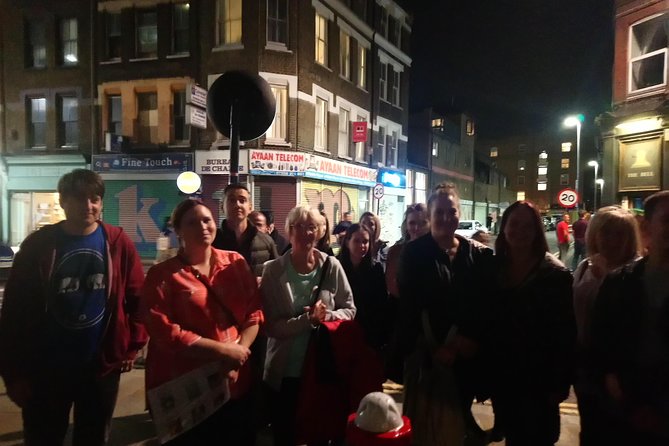
Jack the Ripper’s London is best understood on foot, where the narrow streets, old boundaries, pubs, markets, and churchyards help explain how the murders unfolded. I like the clear route through Whitechapel and the way guides such as Lindsey, Jenny, and Paul connect the crimes to poverty, policing, and daily life in 1888. The costumed presentation adds atmosphere without turning the subject into a silly ghost show.
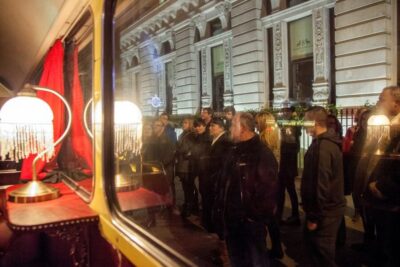
I also like the 14-inch backlit tablet, which lets you compare old photographs with the streets around you. The main drawback is the group size, which can reach 30 people, and the subject matter is grim. You will walk and stand for more than two hours, with very few toilet options along the way.
Key points to know before you go

- Mitre Square and Goulston Street bring the police investigation to life through the two murders of the double event and the only clue left on the killer’s route.
- A costumed guide adds drama, while the focus remains on documented events, victims, witnesses, and the conditions of Victorian Whitechapel.
- The visual tablet presentation shows photographs of the victims, crime sites, and surrounding streets in a format that is easier to see than a small phone screen.
- The route crosses two old police jurisdictions, a useful detail that helps explain why the investigation was so difficult.
- The tour costs $23.61 and lasts about two and a half hours, making it a reasonably priced introduction to the subject.
- The walk is for ages 15 and up, and anyone joining should be comfortable walking and standing for the full route.
What this Jack the Ripper walk actually does well
This is not just a search for spooky alleyways. The strongest part of the experience is its effort to place the murders inside the Whitechapel of 1888. You hear about overcrowding, poverty, crime, casual labor, prostitution, and the fragile line between surviving and sleeping on the street.
That context matters. Without it, the victims become names attached to grisly crime scenes. With it, you begin to understand the risks faced by women who had little money, no secure home, and few people able to protect them.
The guides also put the police investigation into practical terms. London had separate police forces operating on different sides of the City boundary. The route crosses that line, so the distinction is not just an abstract fact from a book. You can see why jurisdiction mattered as officers chased clues through nearby streets.
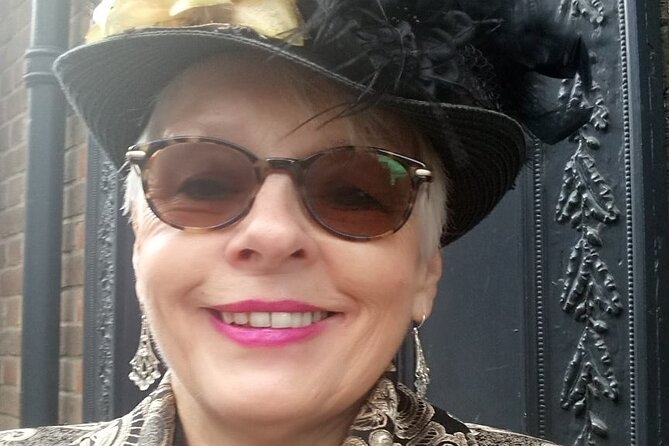
The presentation is theatrical, but not built only around shock. A guide may dress in period costume and use a dramatic tone, yet the better moments come from careful explanation. Lindsey is especially praised for combining research, wit, and sympathy for the victims. Jenny is also noted for clear explanations and punctuality, while Paul has been singled out for an engaging presentation.
More Jack the Ripper tours in London:
- London: The Original Jack the Ripper Walking Tour
★ 4.7 · 7,833 reviews - London Jack the Ripper Guided Tour with Ripper-Vision
★ 4.5 · 4,840 reviews - London: Jack the Ripper Small Group Tour
★ 4.7 · 3,159 reviews
Starting at St Botolph’s Church and Aldgate Square
The meeting point is outside St Botolph’s Church at Aldgate Station. The opening takes about five minutes, and it introduces the church’s grim nickname, the Prostitutes Church. Women once solicited on the island where the church stood, giving the location an immediate connection to the social world surrounding the murders.
You then move into Aldgate Square for a short account of Whitechapel in 1888. This is where the walk shifts from legend to social history. The talk covers overcrowded housing, squalor, crime, and the lives of people living on the breadline.
The stop is brief, but it gives you a useful frame for the rest of the walk. You are not simply following a killer. You are walking through a district where many people lived with hunger, insecure work, poor housing, and constant exposure to violence.
Mitre Square and the double event
Mitre Street and Mitre Square form one of the most important sections of the route. This is the setting connected with Elizabeth Stride, known as Long Liz, and Catherine Eddowes.
The guide explains how Stride was killed first, followed about 45 minutes later by the murder of Eddowes. The two deaths are often grouped together as the double event, and the short distance between the locations helps you understand why the timing mattered so much to the police.
This is also a good place to pay attention to the boundary between the City of London and the Metropolitan Police area. The distinction appears again later, but here it feels especially relevant. The murders occurred close together, yet the police response involved separate forces and different areas of authority.
Mitre Square is not a theatrical set. Modern London surrounds it, and the exact atmosphere of 1888 is long gone. The guide’s tablet images help bridge that gap by showing crime-scene material and photographs that make the past easier to picture.
Petticoat Lane and the police boundary
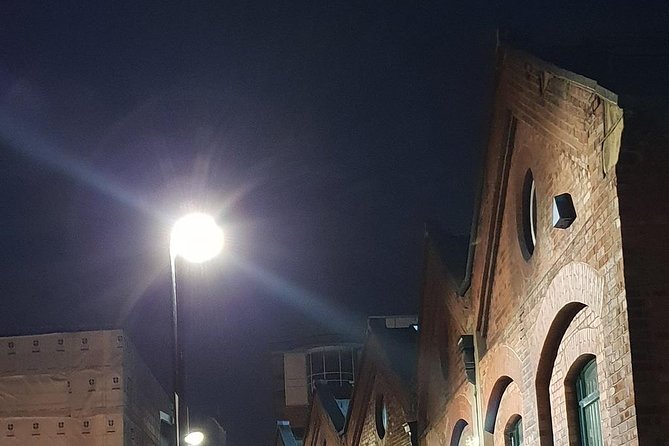
The walk continues through Petticoat Lane Market, now called Middlesex Street. The stop takes only about five minutes, but it marks an important dividing line between the City of London and the Metropolitan Police district.
This detail is easy to miss if you study the case only through popular books or films. The Ripper investigation was not handled by one unified force moving freely across one administrative area. Police boundaries, communication problems, and limited forensic tools all shaped the response.
You should expect the market area to feel like an active part of modern London, not a preserved Victorian quarter. That contrast is part of the point. The walk uses present-day streets to explain how the old district was arranged.
More walking tours in London:
- London Jack The Ripper Guided Walking Tour
★ 5.0 · 3,131 reviews - London: Jack the Ripper Evening Walking Tour
★ 4.9 · 1,449 reviews - London: Ghost Walk and River Thames Boat Ride
★ 4.5 · 1,251 reviews - London Jack The Ripper Small-Group Walking Tour
★ 5.0 · 1,013 reviews
Goulston Street and the only major clue
At Goulston Street, you stop near the doorway where the only clue connected with the killer’s route was found. The guide traces the path taken by police officers who were pursuing the case that night.
This section works best if you are interested in the investigation rather than only the murders. The clue raises questions about what the police saw, what they believed, and what might have been lost through hesitation or uncertainty.
The stop is short, but the route makes it more meaningful. You are not hearing about a clue in isolation. You are standing along the path where officers believed the killer had recently passed.
Gunthorpe Street and Martha Tabram
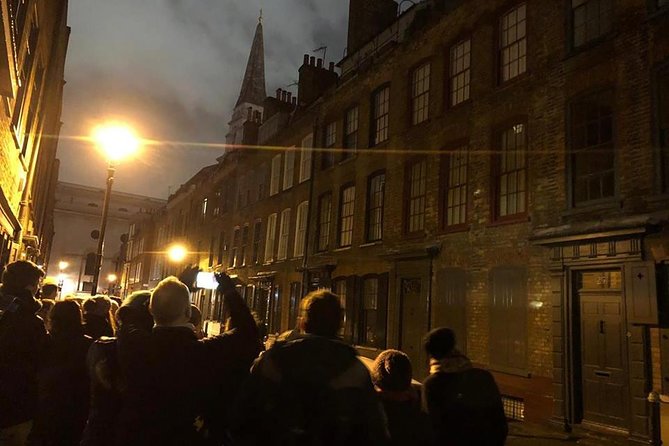
From Wentworth Street, you look toward Gunthorpe Street and the location where Martha Tabram was found murdered on August 7, 1888, in George Yard Buildings.
Tabram is now considered by some researchers to be the most likely first victim connected to Jack the Ripper. The guide presents her case as part of the wider pattern, while keeping the uncertainty that surrounds it.
This is a useful reminder that the accepted list of victims is not as fixed as popular culture suggests. The case involves disputed evidence, incomplete records, and different interpretations. If you want a tour that presents every detail as settled fact, this subject will frustrate you. If you appreciate honest uncertainty, this part adds depth.
Thrawl Street, Brick Lane, and Mary Ann Nichols
At Brick Lane, the route stops opposite the Frying Pan Pub, on the corner of Thrawl Street. This is linked with Mary Ann Nichols, who had her last drink there before walking toward Whitechapel Road.
Nichols was later murdered in Bucks Row, behind Whitechapel Station. The guide connects the pub, the streets, and the final movements attributed to her, showing how close ordinary places could be to sudden danger.
The walk is particularly effective when it keeps the victims at the center. You learn where they went, how they lived, and how little protection they had. Several people who take this tour value that approach, and I think it is one of its most important qualities. The story should not become a game of guessing the killer while the women disappear from view.
Hanbury Street and Annie Chapman
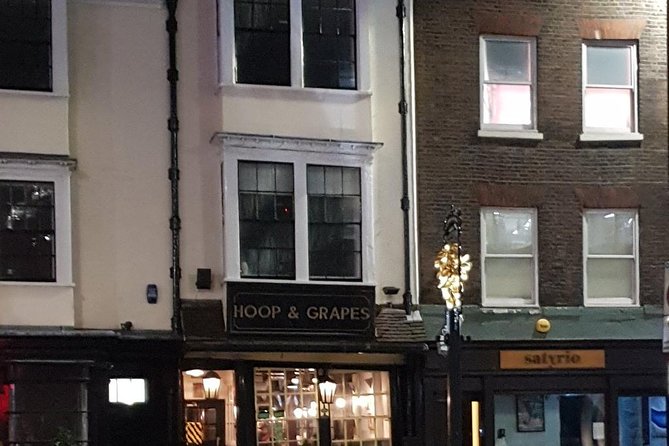
The route continues along Brick Lane and turns into Hanbury Street. Here you hear about Annie Chapman, who was murdered in the backyard of 29 Hanbury Street.
The stop lasts about 12 minutes, giving the guide time to explain the setting and the circumstances surrounding the crime. The tablet images are especially useful here because they help you picture the old buildings and the tight residential spaces that no longer look exactly the same.
This is one of the more serious sections of the tour. The guide does not need to exaggerate the horror. The basic facts, combined with the physical location, are enough to make the stop unsettling.
You should also expect photographs of the victims and murder sites. The material is shown on a large backlit tablet, not passed around in printed form. That makes it easier for a group to see, but the images may still be upsetting. This walk is not suitable for children under 15.
Wilkes Street, Puma Court, and the famous letters
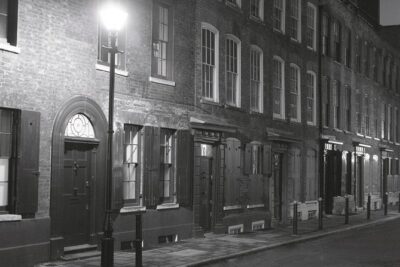
Wilkes Street offers one of the most atmospheric stretches of the route. The street is described as largely untouched since the 1800s, and the walk continues toward Puma Court.
Here the guide discusses the Dear Boss letter, one of the documents that helped shape the Ripper legend. The tour treats the letters as part of the case and its public mythology, rather than as simple proof of the killer’s identity.
That distinction matters. Jack the Ripper has been packaged and repackaged for more than a century, and not every letter linked to the case can be accepted without question. The walk gives you a chance to consider how newspapers, police work, public fear, and hoaxes helped create the figure known around the world.
The Ten Bells and Itchy Park
The route pauses opposite the Ten Bells, often associated with Mary Kelly and the other women connected with the Whitechapel story. You also look toward Christchurch Graveyard, known as Itchy Park.
The graveyard had a later reputation as a daytime sleeping place for homeless people. That detail returns the tour to the conditions of poverty introduced near St Botolph’s Church. The murders did not happen in a vacuum. They took place in an area where many people lived with little privacy, little security, and few safe choices.
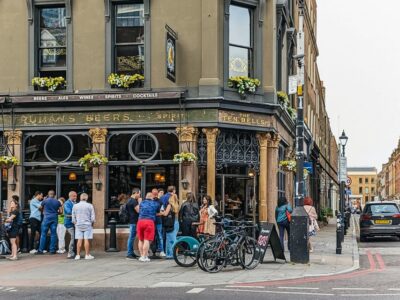
The Ten Bells is still a functioning pub, so you see a real modern business rather than a museum display. The surrounding streets are also active, and you may find the present-day noise and foot traffic at odds with the subject. I think that contrast helps keep the walk grounded in real London instead of turning it into a staged horror attraction.
Old Spitalfields Market and the final case details
Near Old Spitalfields Market, the group stops at the entrance of the London Fruit and Wool Exchange. This is where the guide discusses the letter sent to George Lusk, head of the Whitechapel Vigilance Group.
The stop adds another layer to the public response. Local residents and volunteers were not passive spectators. The Whitechapel Vigilance Group formed in response to fear, frustration, and the feeling that the official investigation was failing.
The setting also shows how much London has changed. The market and exchange area are now part of a popular East London district, yet the route still allows the guide to connect the buildings with the case.
Finishing with Mary Kelly near the Fruit Exchange
The final stop takes place in the square behind the London Fruit and Wool Exchange. Here the guide concludes with the murder of Mary Kelly, described as Jack the Ripper’s last victim, on November 9, 1888.
The ending is not designed as a cheap shock. It brings the story back to the victims and to the question of how the killer avoided capture. The guide also discusses suspects and offers an alternative view of what sort of person Jack might have been, based on his ability to evade police and vigilante groups.
If you want a long suspect-by-suspect analysis, this tour may give you less than you hope for. The focus is more strongly placed on the victims, the area, and the circumstances that made the crimes possible. That is a sensible choice, though one guide has acknowledged that some people would prefer more time spent on suspects.
From the final stop, it is about a five-minute walk to Liverpool Street Station. Your guide directs you to the station, where several Underground lines are available.
Price, group size, and what you get for $23.61
At $23.61 per person, this is a fair price for a two-hour-30-minute walking tour with a specialist guide and visual material. You are paying for interpretation and route planning, not entry to an attraction. The tour does not include paid admissions, and the listed stops are viewed from public streets and nearby areas.
The tablet presentation adds real value. Old photographs can be hard to see in a large group when displayed on a phone, but a 14-inch backlit screen gives the guide a better way to show images of victims, sites, and the district.
The maximum group size is 30, though groups of 20 to 25 are possible. A microphone is used so people can hear, but a large group can still make it harder to gather around a small location or ask many questions. If personal attention matters most, a private tour is available, though the price is not given here.
Wear shoes suited to steady city walking. There are very limited toilets along the route, and you should not book this if you cannot walk and stand for more than two hours.
Who should book this Whitechapel walk?
I would choose this experience if you enjoy dark history, unsolved crimes, old photographs, and the social setting behind famous events. It is also a good fit if you know only the Hollywood version of Jack the Ripper and want a more grounded account.
You should book with the right expectations. The tour is not a ghost walk, pub crawl, or light entertainment. The material includes murder victims and disturbing photographs, and the costumed guide adds atmosphere without removing the grim nature of the subject.
The walk suits adults and older teenagers aged 15 or above. Anyone aged 16 or 17 must be accompanied by an adult. It is not suitable for someone who needs frequent seating or cannot manage a long walk.
Should you book it?
Book this tour if you want the streets, victims, police boundaries, and Victorian living conditions to matter as much as the identity of the killer. The strongest features are the guides’ subject knowledge, the tablet visuals, and the respectful attention given to the women who were murdered.
Skip it if you want a small group, extensive suspect theories, or a gentle sightseeing stroll. For most people interested in the case, $23.61 is good value, provided you are comfortable with disturbing material, a group that may approach 30 people, and two and a half hours on foot.
FAQ
Where does the Jack the Ripper walking tour begin?
The tour begins outside St Botolph’s Church at Aldgate Station, Aldgate High Street, London EC3N 1AH.
Where does the tour finish?
The walk ends in the square behind the London Fruit and Wool Exchange at 66 to 68 Bell Lane, London E1 7LA. Liverpool Street Station is about a five-minute walk away, and the guide directs you there.
How long does the tour last?
The tour lasts approximately two hours and 30 minutes.
Is the tour suitable for children?
No children under 15 are allowed. Participants aged 16 or 17 must be accompanied by an adult.
How large can the group be?
The maximum group size is 30 people. Groups of about 20 to 25 may occur, and the guide uses a microphone to help everyone hear.
What happens if I need to cancel?
You can cancel up to 24 hours before the start time for a full refund. Cancellations or changes made less than 24 hours before the start time are not refunded or accepted.
Just added around London
- Wicked Whitechapel: Where Now’s Jack The Ripper Audio Tour★ 5.0 · 2 reviews
- Ghosts, Gore & Other Ghasty Stories in the City of London★ 5.0 · 7 reviews
- Visit Jack the Ripper in French★ 5.0 · 33 reviews
- The Ghosts of the secret alleyways of old London town★ 5.0 · 2 reviews
- The Haunted Pubs of Old London: Small Group Tour★ 5.0 · 38 reviews
- Afternoon Jack the Ripper : Guided Tour★ 5.0 · 183 reviews
- The Fading Light London Ghost Walk★ 5.0 · 35 reviews
- Self-Guided Audio Tour-Behind the shadow of evil: Jack the Ripper★ 4.0 · 2 reviews
London Ghost Tours, compared.
London Jack the Ripper Guided Tour with Ripper-Vision
Read our review →
Ghost, Ghouls and Gallows Tour : Guided Tour with Boat Ride
Read our review →
Jack the Ripper Tour with Immersive Ripper Vision
Read our review →
German Language : Original Jack the Ripper Tour
Read our review →Browse the lists this tour appears in