
REVIEW · LONDON GHOST TOURS
Private Ghosts and Gore Walking Tour of London
London’s oldest streets hide a remarkable amount of grim material. On this private Ghosts and Gore Walking Tour, you move from a haunted church and cursed buildings to plague pits, execution sites, resurrectionist pubs, and the former Newgate Prison. The supernatural tales are the hook, but the real payoff is a sharp look at how London lived, died, and rebuilt itself.
I like the private format, which lets your guide shape the talk around your group instead of delivering a fixed speech to a crowd. I also like the mix of folklore and solid London context. Guide Michael has been praised for bringing the stories to life with the instincts of a historian, not just a teller of spooky tales.
The main drawback is pace. Twenty-four stops in about two hours means roughly five minutes at each place, with walking in between. You get a broad sweep of the City rather than long visits inside buildings, and the route suits people who enjoy walking and darker subject matter.
Key points to know before you book
- Twenty-four stops in two hours: The route covers a dense stretch of the City, from Monument to Farringdon.
- A private group of up to 15: You get a more personal outing, useful for families and small groups with shared interests.
- Michael brings historical weight: His guiding style combines macabre tales with clear context about London’s past.
- The gore is historical, not theatrical: Expect execution stories, plague pits, grave robbing, and murder lore.
- The route ends near Farringdon: The finish is close to the Elizabeth Line entrance, handy for continuing your evening.
- Wheelchairs and strollers are welcome: The experience is listed as accessible, but a moderate level of physical fitness is still expected.
From Monument to the haunted churches of Cornhill
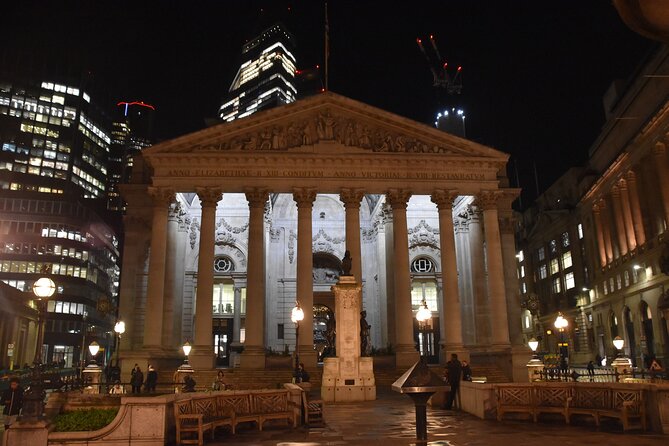
The walk begins at the Monument to the Great Fire of London on Fish Street Hill. This is a useful starting point because you are immediately in the old City, where Roman roads, medieval churches, banks, markets, and modern offices sit close together.
At St. Magnus the Martyr, the first story concerns a shadowy figure seen near a particular grave. A spiritual medium visited the church in 1951 and claimed to identify the ghost and explain its fixation. The story gives you an early sense of the tour’s style: the supernatural tale matters, but so does the question of who was buried there and why the memory endured.
At 54 and 55 Cornhill, look upward for carved devils linked to a dispute between an architect and a local vicar. It is a small detail, easy to miss when you hurry through the City, and exactly the sort of thing that makes a guided walk worthwhile.
Nearby St. Peter-upon-Cornhill brings in Charles Dickens. This is the churchyard associated with the grave that horrifies Ebenezer Scrooge in A Christmas Carol. You will also hear how London’s ghosts, deaths, and uneasy folklore fed the city’s fiction over the centuries.
At St. Michael’s Cornhill, the subject shifts to the devil arriving in London during a storm. The tale keeps the supernatural mood going while showing how churches absorbed local fears and strange events.
More Private Ghost Tours in London
- The Ultimate Jack the Ripper Tour (Private Group Booking)
★ 5.0 · 199 reviews - Private Tour of Haunted London in a Black Cab
★ 5.0 · 21 reviews - Jack the Ripper Private Day Time Walking Tour
★ 5.0 · 16 reviews
Bank, buried bones, and the Black Ghost
The next group of stops takes you around the Bank of England, where finance meets folklore.
At St. Margaret Lothbury, the story concerns a tall ghost whose bones were disturbed. The phantom is said to have rattled the Guards’ guns, stomped up stairs, and frightened bank tellers. I like this stop because it turns a place associated with money and power into a setting for a very human fear: disturbing the dead and getting more than you bargained for.
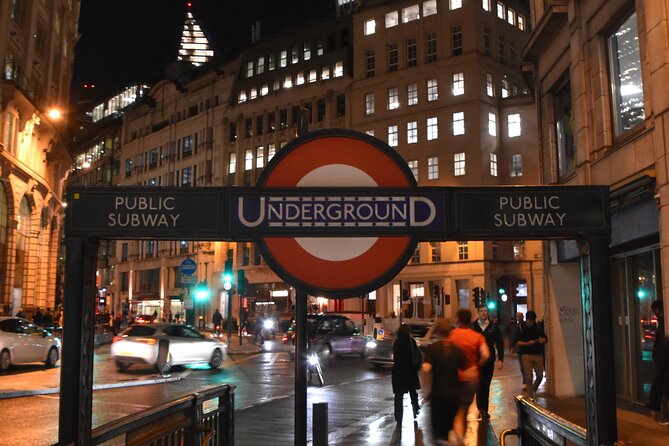
St. Mary Woolnoth has one of the area’s best-known ghost stories. The Black or Bank Ghost is linked with Bank Station, the Bank of England, and nearby streets. A woman in black asking if you have seen her brother is not a question you will want to answer lightly on this walk.
This stop also includes the grim secret of the Bank Station booking hall. The details are part of what makes the route useful for first-time visitors: you are not simply hearing isolated ghost tales, but learning why the ground beneath the modern City can feel so old and crowded with the past.
At St. Michael Paternoster Royal, the subject becomes more unusual. You hear about a famous Lord Mayor and his cat, a rat-catching animal said to have wandered between this church and the next stop.
St. James Garlickhythe brings a particularly unsettling story. In 1835, workers found a mummified body near the altar. The remains were displayed for many years and became known as Jimmy the Mummy. Children connected with the church reportedly played with the body, and the ghost is said to point toward the place where it was buried.
That tale is macabre even by the standards of the tour, so you should know the tone is not gentle ghost-story entertainment. The material can be blunt, especially when the route turns to corpses, executions, and grave robbing.
Haunted pubs and the curse of St. Mary Le Bow
Williamson’s Tavern is described as one of London’s most haunted pubs. Its past includes Lord Mayors, poltergeists, phantoms, banging doors, and footsteps. Police dogs are said to become terrified when they try to enter, which gives the story a suitably odd twist.
The pub has only one way out, according to the tale, so the guide frames entering it as a decision not to take lightly. You should not expect a guaranteed paranormal event, but the setting helps. A haunted pub feels more immediate than a ghost story told beside a glass office tower.
At St. Mary Le Bow, you learn why people born within the sound of its bells are called Cockneys, or proper Londoners. This church is presented not simply as haunted but as cursed. Fire, collapse, accidents, murder, and repeated deaths have given the site a long record of misfortune.
This is one of the route’s better historical links. You get local identity, architecture, disaster, and folklore in one place. The short stop cannot cover every detail, but it gives you a reason to notice the church and its bells after the tour.
Roman walls, plague pits, and ruined Greyfriars
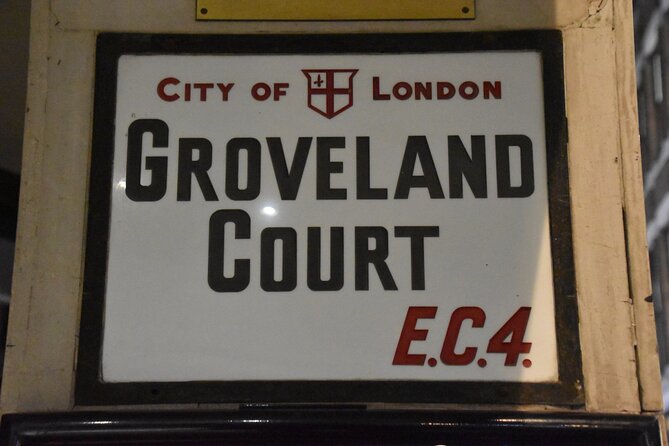
Noble Street is one of the oldest parts of the route. It was associated with the Roman garrison and contains sections of the Roman and medieval walls. The street has long links with death, unusual events, and reports of orbs in photographs.
If you enjoy paranormal claims, you may be tempted to take a picture here and check it later for a mysterious light. It is best to treat that as part of the fun, not as proof of anything. The walk gives you the story and the setting, while leaving you free to decide what you believe.
At St. Anne and St. Agnes Garden, you hear about one of London’s plague pits. The city’s plague outbreaks changed burial practices, public health, and the shape of entire neighborhoods. Here, the guide connects those events with modern reports of orbs appearing in photographs.
Christchurch Greyfriars Church Garden is another strong stop. The church once ranked among London’s largest, but today its ruins carry the ghost stories. The cast includes Queen Isabella and her lover, a constantly arguing married couple, a religious prophetess, a monk, and a greyhound.
The range of figures makes this more than one standard haunted-building tale. You get political rebellion, domestic quarrels, religion, and animal folklore layered onto a ruined churchyard. It is also a reminder that London’s open spaces can be as atmospheric as its interiors.
More Private Ghost Tours in the UK
- Dark History of the Tudors: Private Tour of Hampton Court Palace
★ 5.0 · 10 reviews - Private Jack the Ripper Walking Tour of Whitechapel and Brick Lane
★ 5.0 · 10 reviews - Jack the Ripper London Private Taxi Tour
★ 5.0 · 10 reviews - London Private Jack The Ripper Tour
★ 5.0 · 9 reviews
Temple Bar and the bones beneath Amen Court
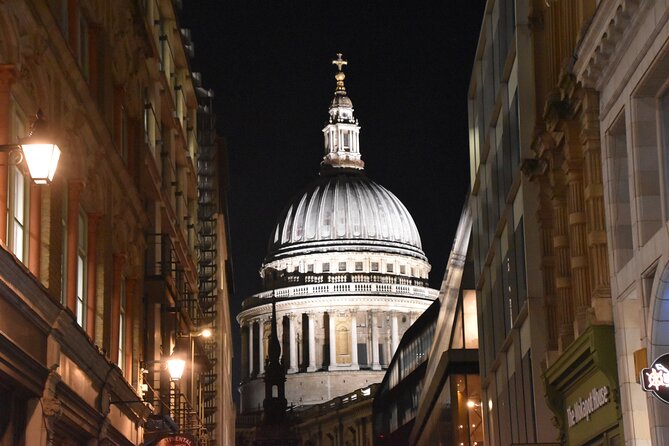
Temple Bar was once the main western entrance to the City. Designed by Sir Christopher Wren, it also had a grim public role. The severed heads of traitors and criminals were displayed there, turning the gateway into a warning to anyone entering London.
Today, the structure is far removed from that use, but the story explains why it is linked with condemned souls. It is one of the tour’s clearest examples of a handsome London landmark with a brutal past.
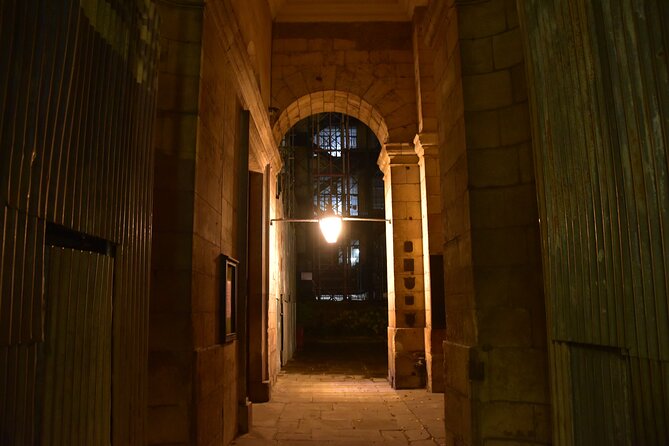
At Amen Court, named after the Lord’s Prayer, you can see sections of the old Newgate Prison walls. The prison was notorious, and the ground beneath the modern homes is said to contain the bones of men condemned to death.
The unsettling detail is that children now play over this ground without knowing what lies beneath. I find this kind of contrast more effective than a simple ghost tale because it shows how London has built ordinary life on top of past violence.
Newgate, the execution bell, and Cock Lane
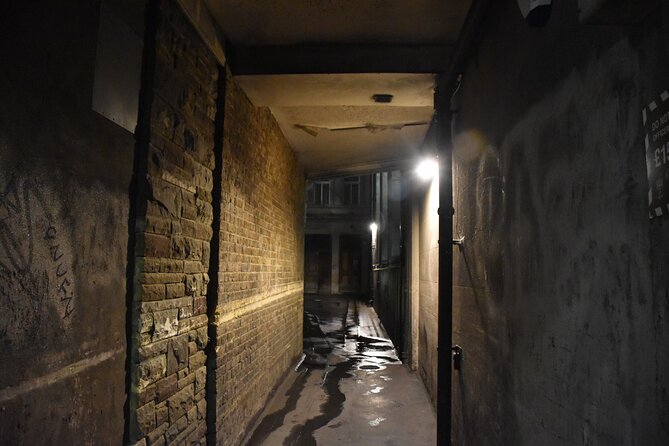
The Viaduct Tavern is described as London’s most haunted pub and is home to Fred, a mischievous ghost. His reported tricks are more comic than violent, including flushing the ladies’ toilets while they are in use.
That change in tone is welcome. After so many deaths and executions, a ghost causing harmless confusion gives the walk a needed break. It also shows that not every haunting on the route is designed to frighten you.
At the Old Bailey, you stand near the former Newgate Prison site. Public hangings took place in the street until 1868, and the building is associated with the Black Dog of Newgate. The warning is simple: if you see a large black dog in this area, update your will.
Holy Sepulchre Church holds an execution bell. It was rung before executions at nearby Newgate Prison and the Old Bailey. The story then continues to Cock Lane, where a church clerk becomes caught up in an infamous murder case involving a young girl who claimed to channel the spirit of a dead woman.
This section is especially good for understanding how belief, crime, and public spectacle mixed in old London. The tale involved major minds trying to save a man’s life and a young witness at the center of the investigation. It is less about a single ghost than about how an entire city could become absorbed in a supernatural claim.
Grave robbers, Smithfield executions, and St. Bartholomew
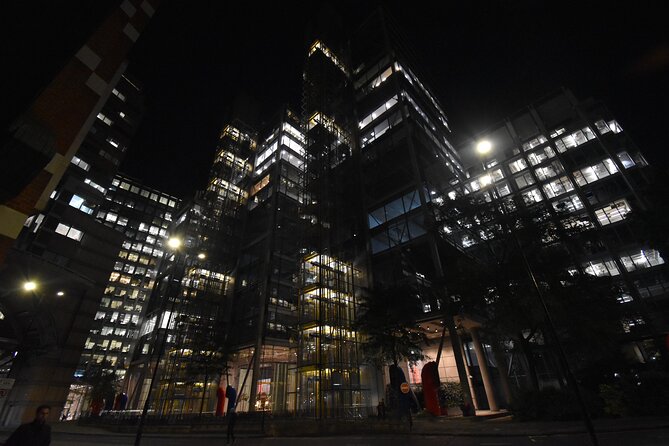
At the Golden Boy of Pye Corner, you reach the western limit of the Great Fire of London. The statue once sat on a pub that became associated with stolen bodies taken for doctors to dissect at nearby St. Bartholomew’s Hospital.
This is where the tour’s gore becomes most historical. You learn why fresh corpses were valuable to medical teaching, how resurrection men robbed graves, and how the demand for bodies contributed to murders. The story gives you a clearer sense of the ethical darkness behind early medical progress.
West Smithfield was one of London’s major execution sites. William Wallace and Wat Tyler were among those killed here, while others were burned at the stake or boiled alive. The nearby butcher’s market added the smell of meat and blood to an already horrifying public scene.
The connection with St. Bartholomew’s Hospital continues. The hospital is said to have poltergeists, a haunted lift, and strange nighttime activity reported by students working in labs, rooms, and study areas. The tour does not treat the hospital as a museum visit, but the stories add a second layer to this part of Smithfield.
At St. Bartholomew the Great, the founder Rahere is said to haunt the church. He is seen hobbling through the building, and the guide explains why he walked normally for centuries before the limp appeared. The church itself is one of the route’s strongest historic settings, even if your time there is brief.
Two haunted pubs and the final plague pit
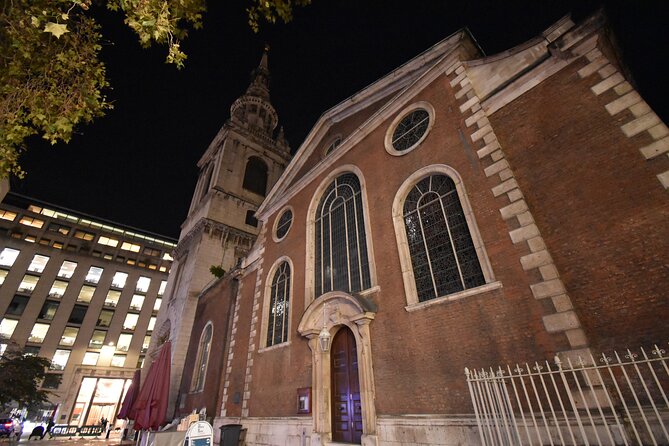
The Rising Sun was also linked with resurrectionists. Its ghost is known for disturbing behavior toward female staff, which explains why women who work there may be unwilling to live on-site.
This story is not for every audience. The tour’s private format helps here because your guide can judge the group’s comfort level, but you should still expect adult themes and unpleasant details.
The final stop is the Charterhouse, a short walk from the Elizabeth Line entrance at Farringdon Station. The site is associated with a major plague pit, with an estimated 50,000 people buried beneath the buildings.
The Charterhouse also connects to the Reformation. Monks were executed, and the most frequently seen ghost is a phantom monk at prayer. A headless duke is also said to walk there. The guide closes by discussing how modern psychiatry might explain unusual experiences, fittingly because a major school of psychiatry occupies Charterhouse Square.
That final note gives the experience some balance. You are allowed to enjoy the ghosts while also considering memory, fear, suggestion, and the mind. I appreciate that the route does not require you to accept every haunting as fact.
What the $247.70 group price really buys
The price is $247.70 for up to 15 people. For a full group, that works out to about $16.51 per person. For two people, it is a much higher individual cost, so the value improves sharply if you are traveling with family or friends.
You are paying for two hours of private guiding rather than admission to attractions. The churches, streets, gardens, pubs, and landmarks are the setting, and the guide supplies the connections, stories, and historical framing.
That makes the tour a better buy for a group that wants a shared evening than for someone looking for a cheap general walking tour. Michael’s style, described as entertaining and well informed, matters here because the route depends on storytelling. If the guide simply recited facts, twenty-four short stops could feel rushed. A strong guide turns the quick pauses into a coherent journey.
You should also remember that the route includes many stops but does not list entry fees or extended indoor visits. Most locations are viewed from public areas, churchyards, gardens, streets, or exterior spaces. The value is in the route and the interpretation, not in access to private rooms.
Timing, fitness, and practical details
The walk lasts about two hours and covers a long sequence of stops between Monument and Farringdon. The listed schedule allows about five minutes at each location, so you should wear comfortable shoes and expect regular movement.
The tour is wheelchair and stroller accessible, and service animals are allowed. At the same time, a moderate physical fitness level is advised. That combination suggests the route is designed to be usable, but you should still consider the total walking time and the number of transitions between stops.
The meeting point is the Monument to the Great Fire of London on Fish Street Hill. The finish is close to the Elizabeth Line entrance at Farringdon Station, which makes it easy to continue to another part of London after the walk.
English is the tour language, and a mobile ticket is provided. Booking tends to happen well ahead, with the experience averaging about 45 days in advance, so I would not leave a preferred evening until the last minute.
Free cancellation is available up to 24 hours before the start time. If you cancel or make changes less than 24 hours ahead, you should not expect a refund.
Who should book this London ghost walk?
I would choose this tour if you enjoy London history with a grim edge, especially stories about plague, public punishment, crime, burial, and old beliefs. It is also a good fit for a private family or friend group that wants a guide to help you get oriented in the City after dark.
History buffs may enjoy it even if they are skeptical about ghosts. The route passes Roman and medieval walls, Dickensian locations, churches, the old prison district, the Great Fire boundary, and major sites connected with medicine and law.
I would think twice if you dislike graphic stories or want long visits inside churches and historic buildings. The pace is brisk, and the route is built around storytelling at many short stops. You should also consider the price carefully if your group is very small.
Should you book it?
Book this tour if you want a private, story-led walk that covers a surprisingly large piece of old London in two hours. The strongest reasons are the range of subjects, the City setting, and Michael’s ability to add historical context to the macabre material.
Skip it if you want a quiet architectural walk, a theatrical haunted-house show, or a tour with long indoor access. For everyone else, especially a group of friends or family members who like both facts and frights, the $247.70 group rate can be good value. The best approach is to come ready for a fast walk, an open mind, and some very unpleasant stories.
FAQ
How long does the Private Ghosts and Gore Walking Tour of London last?
The tour lasts approximately two hours.
Where does the tour begin?
It begins at the Monument to the Great Fire of London on Fish Street Hill, London EC3R 8AH.
Where does the tour end?
The tour ends near the Elizabeth Line entrance to Farringdon Station on Cowcross Street.
How many people can join the private tour?
The price covers one private group of up to 15 people.
What language is the tour offered in?
The tour is offered in English.
Is the tour wheelchair and stroller accessible?
Yes. The experience is listed as wheelchair and stroller accessible.
Are service animals allowed?
Yes, service animals are allowed.
How far in advance is the tour usually booked?
The tour is booked an average of 45 days in advance.
Can I cancel for a full refund?
Yes. You can cancel up to 24 hours before the experience starts for a full refund. Cancellations or changes made less than 24 hours before the start time are not refunded.
More Walking Tours in London
- London: The Original Jack the Ripper Walking Tour
★ 4.7 · 7,833 reviews - London Jack The Ripper Guided Walking Tour
★ 5.0 · 3,131 reviews - London: Jack the Ripper Evening Walking Tour
★ 4.9 · 1,449 reviews - London: Ghost Walk and River Thames Boat Ride
★ 4.5 · 1,251 reviews
Just added around London
- Wicked Whitechapel: Where Now’s Jack The Ripper Audio Tour★ 5.0 · 2 reviews
- Ghosts, Gore & Other Ghasty Stories in the City of London★ 5.0 · 7 reviews
- Visit Jack the Ripper in French★ 5.0 · 33 reviews
- The Ghosts of the secret alleyways of old London town★ 5.0 · 2 reviews
- The Haunted Pubs of Old London: Small Group Tour★ 5.0 · 38 reviews
- Afternoon Jack the Ripper : Guided Tour★ 5.0 · 183 reviews
- Self-Guided Audio Tour-Behind the shadow of evil: Jack the Ripper★ 4.0 · 2 reviews
- The Fading Light London Ghost Walk★ 5.0 · 35 reviews
London Ghost Tours, compared.
London Jack the Ripper Guided Tour with Ripper-Vision
Read our review →
Ghost, Ghouls and Gallows Tour : Guided Tour with Boat Ride
Read our review →
Jack the Ripper Tour with Immersive Ripper Vision
Read our review →
German Language : Original Jack the Ripper Tour
Read our review →Browse the lists this tour appears in