
REVIEW · LONDON GHOST TOURS
Jack the Ripper – What About the Women?
Jack the Ripper tours often give the murderer top billing. This one puts the women first. You follow the lives of Martha Tabram, Polly Nichols, Annie Chapman, Mary Jane Kelly, Elizabeth Stride, and Catherine Eddowes while learning how poverty, insecure housing, addiction, and Victorian social attitudes shaped their lives.
I like the fact-based, respectful approach, and I like how the route connects the murders to places you can still see, from Brick Lane Mosque to Spitalfields Market. Guides Cecily and Ellie are praised for clear, warm storytelling, with Cecily especially easy to hear. The drawback is that this is a two-hour night walk with plenty of standing and walking, and anyone seeking grisly crime detail may find it too restrained.
Key points to know before you book
- The women, not the killer, are the focus: Expect social history and personal stories rather than a parade of murder theories.
- The route covers several East End landmarks: You visit Whitechapel Road, Brick Lane, the Old Truman Brewery, Spitalfields Market, Petticoat Lane, St Botolph’s Aldgate, and Mitre Square.
- It works well for older children: The tour avoids grisly photographs and graphic descriptions, though the subject remains serious.
- The small group matters: A maximum of 20 people makes it easier to hear the guide and ask questions.
- The evening setting adds atmosphere: The walk begins at 6:30 pm, when East London’s streets take on a different feel.
- The price is fair for a specialist history walk: At $34.28 per person, you are paying for a focused route and a live guide rather than an attraction admission.
Why this Whitechapel tour feels different
The Whitechapel murders are among London’s most recycled stories. Many tours circle around suspects, police mistakes, newspaper headlines, and the killer’s invented mythology. This walk takes another road. It asks who these women were before their deaths and what kind of city left them so exposed.
That change in focus matters. Martha Tabram, Polly Nichols, Annie Chapman, Mary Jane Kelly, Elizabeth Stride, and Catherine Eddowes can easily become a list of names between crime scenes. Here, their lives receive the attention. You hear about work, relationships, housing, migration, addiction, family troubles, and the daily struggle faced by poor women in the Victorian East End.
The guide also explains how later storytelling distorted these women. Some were casually labeled prostitutes, even though the facts are more complicated. The tour does not excuse the violence or turn the victims into symbols. It gives you enough social context to understand them as people living in a difficult place and time.
That makes this closer to a social history walk than a traditional true-crime outing. If you want a frightening night tour, this may not be your best match. If you want to understand why these crimes happened in this particular part of London, it offers much more.
More Jack the Ripper tours in London:
- London: The Original Jack the Ripper Walking Tour
★ 4.7 · 7,833 reviews - London Jack the Ripper Guided Tour with Ripper-Vision
★ 4.5 · 4,840 reviews - London: Jack the Ripper Small Group Tour
★ 4.7 · 3,159 reviews
Starting on Whitechapel Road at 6:30 pm
The meeting point is on Aldgate High Street, outside Aldgate station, a practical place to reach by public transportation. The tour starts at 6:30 pm and lasts about two hours. Since the route is outdoors, wear shoes you can walk in and bring something suitable for changing evening weather.
The first section takes in Whitechapel Road and introduces Martha Tabram and Polly Nichols. The guide uses their stories to explain daily life for working-class residents of the Victorian East End. This includes dosshouses, workhouses, spikes, and other forms of shelter available to people with little money or security.
These details are not decoration. They explain why a person could move through the city with almost no protection, privacy, or stable address. A short stay in a lodging house could mean sharing a crowded room with strangers. A workhouse offered help under harsh conditions. A spike, or overnight shelter, was basic aid for people with nowhere else to sleep.
The tour also points to charities still working in the area today. That small connection between Victorian poverty and modern support work gives the opening section a useful present-day link. You are not asked to view Whitechapel as a museum of crime. You see it as a neighborhood where social problems have changed shape but have not vanished entirely.
Allow about 20 minutes here. There is no admission fee at the stops, but you should expect to listen outdoors beside city streets.
Brick Lane, Polly Nichols, and the East End’s changing identity
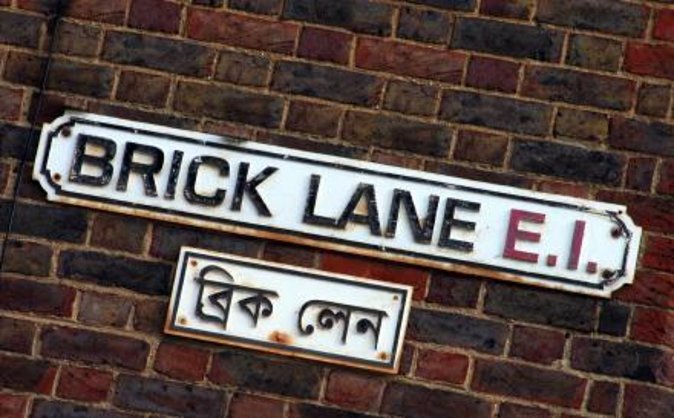
The route continues to Brick Lane, one of East London’s most recognizable streets. The guide discusses the pub where Polly Nichols spent her final night and uses her story to explore alcohol and addiction in the Victorian period.
This section is less about blaming Polly and more about the limited choices available to people dealing with poverty, unstable housing, and dependency. The period had few effective systems for treating addiction, and women without money could quickly lose control over where they slept and how they supported themselves.
You also stop at Brick Lane Mosque to learn about immigration and the cultural changes that shaped the East End. That stop widens the story beyond 1888. Brick Lane is not only connected with the Victorian murders. It also reflects the movement of communities into East London and the area’s long pattern of cultural change.
The stop lasts about 15 minutes. Brick Lane is an active part of the neighborhood, so you should expect a normal city setting rather than a preserved crime site. That is part of the appeal. The guide helps you read the street as a place shaped by many generations, not just by one notorious year.
Old Truman Brewery and Annie Chapman’s final address
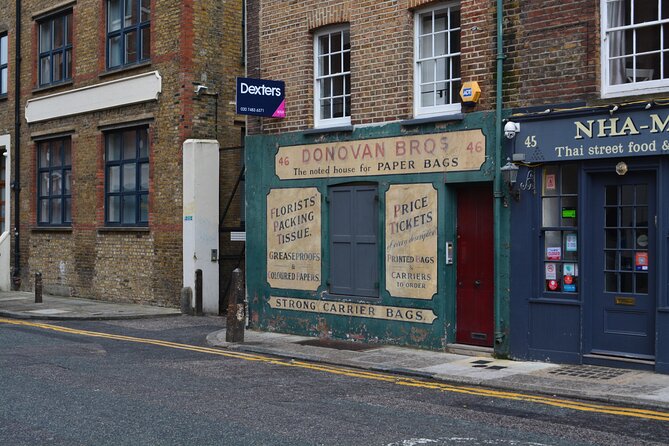
At Spitalfields, the walk reaches the former Truman Brewery, once described as the largest brewery in the world. Its size points to the industrial power of Victorian London and the contrast between commercial success and severe poverty nearby.
Close to the brewery is 29 Hanbury Street, where Annie Chapman was found on the morning of September 8. The guide discusses Chapman’s life and the personal losses she endured, including the heartbreak that marked her later years.
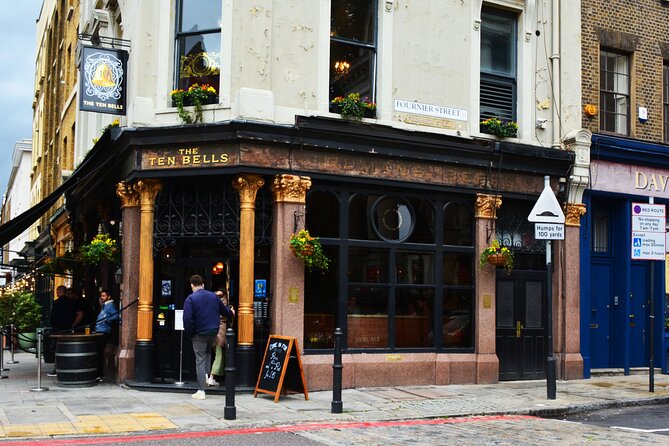
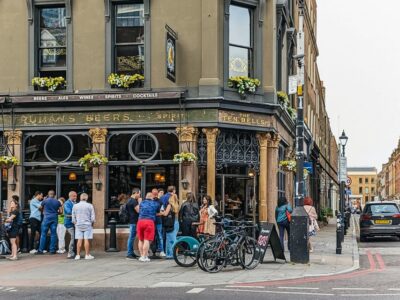
The nearby Ten Bells pub brings another layer to the story. The pub was once marketed under the Jack the Ripper name, turning a place connected with a victim into part of the killer’s tourist mythology. The movement Reclaim the Night helped push for the name to return to Ten Bells.
That detail is useful because it shows how modern tourism can shape memory. A pub, street, or building can become associated with the murderer while the woman linked to it fades from view. The guide brings the focus back to Annie rather than treating the pub as a prop in a horror story.
This part of the route lasts roughly 10 minutes. It is brief, but it ties together industry, poverty, commercial storytelling, and the fight to remember the victims with more care.
A few more ghost walks around London worth a look
- Ghost, Ghouls and Gallows Tour : Guided Tour with Boat Ride
★ 4.5 · 3,212 reviews - London Jack The Ripper Guided Walking Tour
★ 5.0 · 3,131 reviews - London: Comedy Horror Ghost Tour on a Bus
★ 4.4 · 2,084 reviews - London: Jack the Ripper Tour with Immersive Ripper Vision
★ 4.5 · 1,840 reviews
Spitalfields Market and the contrast of Victorian London
Old Spitalfields Market opened in 1887, the year of Queen Victoria’s Golden Jubilee and just before the Whitechapel murders began. The market is a good place to pause over the sharp contrasts of the era.
Victorian London could celebrate imperial power, royal ceremony, expanding trade, and new wealth while large numbers of people lived in cramped rooms and struggled to find steady work. Spitalfields lets the guide place those two realities side by side.
The route then moves to Crispin Street, where you hear about a refuge for working-class people that actually provided useful support. That detail is easy to miss in a standard crime tour, but it helps show that the East End was not only a place of despair. Communities, charities, and reformers were trying to respond to difficult conditions, with mixed results.
Across the street is the former site of Mary Jane Kelly’s residence. Kelly was the last victim in the series and remains one of the most mysterious figures in the story. The guide treats that uncertainty carefully, focusing on her life rather than adding more speculation for dramatic effect.
Old Spitalfields Market is also the stated end point for the experience. Because the tour passes through a busy part of East London, you may want to note nearby places to eat or stop for a drink after the walk. The guides also offer suggestions for local restaurants, pubs, and shops.
Petticoat Lane and the working East End
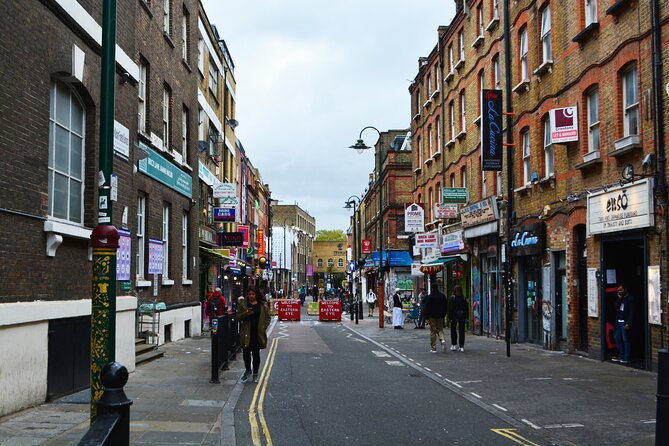
The next stop is Petticoat Lane Market, the former center of the East End textile industry. The visit is short, about five minutes, but it adds an important piece of economic context.
Textiles supported a large working population and helped shape the streets around Spitalfields and Whitechapel. The market also reminds you that these neighborhoods were places of work and trade, not simply scenes of tragedy.
This is one of several brief stops where the guide uses a modern street to explain an older way of life. You will not spend long at every location, and that keeps the two-hour route moving. The tradeoff is that anyone hoping to linger at each site for photographs may feel rushed.
St Botolph’s Aldgate and the final stories
Near St Botolph’s without Aldgate, the guide introduces Elizabeth Stride. Originally from Sweden, Stride had a difficult early life in Gothenburg before making her way to London. Her story brings migration into the tour in a personal way, rather than presenting immigration only as a broad social trend.
The final section concerns Catherine Eddowes, a woman from Wolverhampton whose body was found in Mitre Square. The guide presents her as a spirited, complicated person, not simply as a name attached to a location.
The walk finishes close to Mitre Square, while the stated end point is Spitalfields Market. The final 25-minute section brings together several themes from the evening: movement between countries and cities, unstable work, poverty, social judgment, and the way public memory can reduce a person to the circumstances of her death.
Because these are serious subjects, the tone is respectful rather than theatrical. You hear about the murders, but the tour does not use graphic images or linger on gruesome descriptions. That makes the experience suitable for mature families, including the family group that brought children aged 12 and 15.
What the guides add to the experience
The guide can make or break a walking tour, and Cecily and Ellie receive especially strong praise for their delivery. Cecily is noted for speaking clearly, which matters on a night walk when city noise can make outdoor tours hard to follow. Her calm, friendly manner also suits the subject.
Ellie brings strong knowledge of the women and the East End, with a warm small-group style. Both guides are described as willing to answer questions and connect the historical material to the streets around you.
I would pay attention to the guide’s storytelling rather than expecting a fixed audio-style script. The route includes factual history, but it also depends on how the guide explains uncertain evidence and avoids repeating myths as fact. That approach is valuable here because the Jack the Ripper story is full of guesswork.
The maximum group size is 20 people. That is not a private tour, but it is small enough to keep the guide within hearing range and allow some questions. If you have hearing difficulties, Cecily’s clear speaking style may be especially useful, though outdoor city conditions can still affect how easily you hear.
Price, length, and practical value
At $34.28 per person, this is reasonably priced for a two-hour guided walk in central London. You are not paying for museum entry or transport. You are paying for a specialist route, a guide who can explain the evidence, and the time saved by connecting several locations in the right order.
The value is strongest if you want more than a list of crime scenes. The guide supplies context that would be hard to build alone, especially around Victorian housing, working life, addiction, immigration, and the way the victims have been portrayed over time.
The tour is booked an average of 27 days ahead, so reserving early is sensible if your London dates are fixed. Confirmation is provided when you book, and service animals are allowed. Most people can take part, but you should be comfortable with two hours of walking and frequent stops.
There are places to sit when needed, according to the tour description, but the route remains an outdoor walk. Plan for a full evening activity rather than a quick stop. The tour requires good weather and a minimum number of participants. If poor weather or low enrollment cancels it, you are offered another date or a full refund.
Free cancellation is available up to 24 hours before the start time. Cancellations within 24 hours are not refunded, so leave yourself some flexibility if your London plans may change.
Who should book this walk?
I would choose this tour if you have read about the Whitechapel murders but are tired of hearing the same suspect theories. It is also a strong fit if you want to understand the women as people and place their deaths within Victorian society.
Families with mature children may appreciate the lack of graphic pictures and the history-first approach. It can also work well for visitors who are new to the Jack the Ripper story, since the tour provides a social and geographical framework rather than assuming you already know every name.
This is less suitable if you want a spooky performance, dramatic reenactments, or detailed descriptions of murder scenes. The tone is serious, factual, and often thought-provoking. The East End after dark adds atmosphere, but the guide does not turn suffering into entertainment.
Should you book Jack the Ripper: What About the Women?
Book it if you want a respectful Whitechapel walk that gives the victims more attention than the killer. The route covers major East End locations, the guide connects them to wider social issues, and the $34.28 price is fair for a focused two-hour experience.
Skip it if your main goal is horror, graphic crime detail, or an investigation built around naming Jack the Ripper. For everyone else, especially readers interested in Victorian London, women’s lives, migration, poverty, and the stories hidden behind famous crimes, this is a thoughtful way to see East London at night.
FAQ
Where does the tour start?
The tour starts at Aldgate High Street, London EC3N 1AH, outside Aldgate station.
What time does the tour begin?
The start time is 6:30 pm.
How long does the experience last?
The walking tour lasts approximately two hours.
Where does the tour finish?
The stated end point is Spitalfields Market at 65 Brushfield Street, London E1 6AA. The final part of the route also visits Mitre Square.
Which places are included on the route?
The route includes Whitechapel Road, Brick Lane, Brick Lane Mosque, the Old Truman Brewery, Hanbury Street, Ten Bells, Old Spitalfields Market, Crispin Street, Petticoat Lane, St Botolph’s Aldgate, and Mitre Square.
Is the tour graphic or suitable for children?
The tour does not use grisly pictures or graphic descriptions of the murders. Mature children can participate, but the subject concerns real killings and serious social problems.
What happens if I need to cancel?
You can cancel at least 24 hours before the start time for a full refund. Cancellations or changes made within 24 hours are not accepted for a refund. If poor weather or an insufficient number of participants cancels the tour, you are offered another date or a full refund.
Just added around London
- Wicked Whitechapel: Where Now’s Jack The Ripper Audio Tour★ 5.0 · 2 reviews
- Ghosts, Gore & Other Ghasty Stories in the City of London★ 5.0 · 7 reviews
- Visit Jack the Ripper in French★ 5.0 · 33 reviews
- The Ghosts of the secret alleyways of old London town★ 5.0 · 2 reviews
- The Haunted Pubs of Old London: Small Group Tour★ 5.0 · 38 reviews
- Afternoon Jack the Ripper : Guided Tour★ 5.0 · 183 reviews
- The Fading Light London Ghost Walk★ 5.0 · 35 reviews
- Self-Guided Audio Tour-Behind the shadow of evil: Jack the Ripper★ 4.0 · 2 reviews
London Ghost Tours, compared.
London Jack the Ripper Guided Tour with Ripper-Vision
Read our review →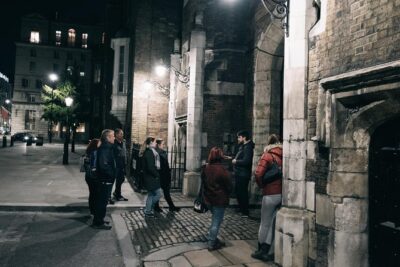
Ghost, Ghouls and Gallows Tour : Guided Tour with Boat Ride
Read our review →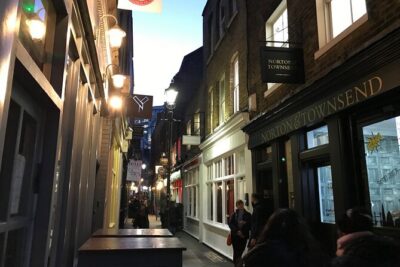
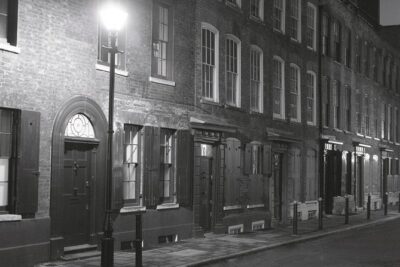
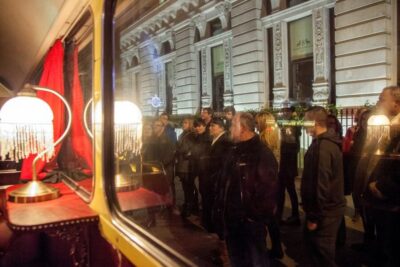
Jack the Ripper Tour with Immersive Ripper Vision
Read our review →
German Language : Original Jack the Ripper Tour
Read our review →Browse the lists this tour appears in