
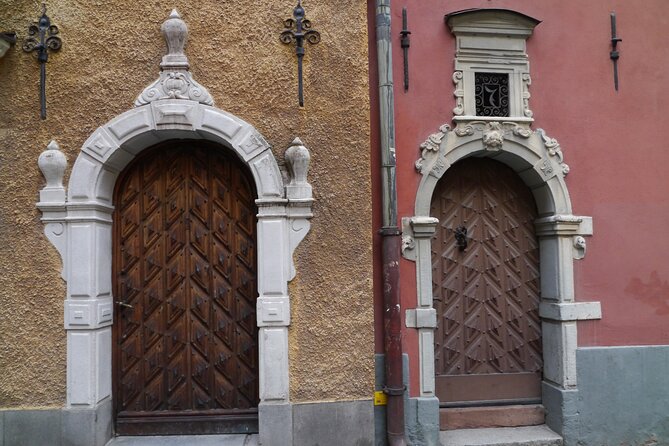
REVIEW · STOCKHOLM GHOST TOURS
Bloody Stockholm 2h – ghosts, horror and Dark Folklore Tour
Stockholm’s pretty Old Town has a grim second layer. On this walk, the narrow lanes around Stortorget become places of execution, curses, restless souls, and folklore creatures waiting in the mist. You’ll hear about the blood of the dead, magical body parts, the Swedish tomte, and water spirits that lure people into the deep.
I like the way the tour connects real Stockholm history with old supernatural beliefs, rather than treating the city as a backdrop for cheap scares. I also like the personal feel: guides such as Jonathan and Åsa have handled small groups, answered questions, and added plenty of local detail. The main drawback is that the title suggests two hours, while the stated duration is about 90 minutes, and the amount of folklore may vary by guide.
Key things to know before you go
- Stortorget sets the tone: Learn about around 90 executions linked to the Danish conquest of Stockholm, along with beliefs about the magical use of the dead.
- Folklore is the main attraction: The walk covers trolls, elves, the tomte, Näcken, the bäckahästen, the Sjörå, and the Skogsrå.
- It is more than a ghost walk: Expect dark history and traditional beliefs, not a staged haunted-house experience or a hunt for apparitions.
- The route is easy to follow: It begins at the Nobel Prize Museum in Stortorget and finishes outside Saint Jacob’s Church near Kungsträdgården.
- Guide quality matters: Jonathan and Åsa are named guides associated with strong feedback for clear storytelling, humor, and local knowledge.
- Allow extra time for the walk back: The end point is about a 10-minute walk from the starting area.
Stockholm’s beautiful streets with a darker past
I find this tour appealing because it changes the way you see Gamla Stan. The Old Town’s crooked lanes, painted buildings, and tidy squares can feel almost too picturesque. Then you hear what was believed to happen there after dark, or what people once did to protect a child from trolls and the Devil.
The focus is not simply on ghosts. It moves between documented events, old punishments, folk magic, and supernatural beings. That mix gives the walk more substance than a string of spooky tales. You get a sense of how people once explained illness, drowning, bad luck, death, and strange sounds in the night.
The guide is central to the experience. Jonathan is described as an engaging storyteller who knows the darker side of Stockholm in detail. Åsa has also led the walk, with a small group of three receiving a particularly personal experience. If you enjoy asking questions, the format should suit you well, especially when the group is small.
The tour has a maximum of 30 people, so you should not assume every departure will feel private. Still, the walking route and outdoor stops make it less dependent on a perfectly small group than a museum tour would be.
More ghost story tours in the world:
- Prague: Ghost Walking Tour Where Legends Come To Life
★ 4.4 · 5,253 reviews - Prague: Ghosts, Legends, Medieval Underground & Dungeon Tour
★ 4.3 · 5,104 reviews - Prague: Ghosts and Legends of the Old Town Evening Tour
★ 4.5 · 3,091 reviews
Stortorget and the memory of executions
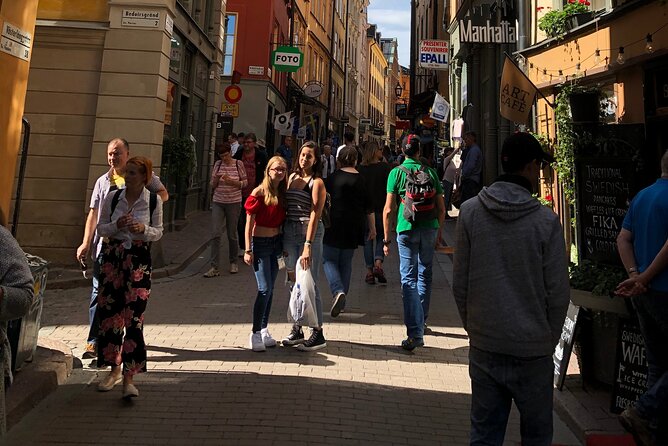
The walk begins at the Nobel Prize Museum in Stortorget, the Old Town’s best-known square. This is an effective starting point because the setting is attractive, central, and loaded with difficult history.
Here, the guide discusses around 90 executions connected with the time when the Danish King Kristian took Stockholm. The subject is blunt. You hear about death not as an abstract part of medieval life, but as a public act that shaped the square and the people who lived around it.
The talk then moves into folklore surrounding the bodies of the dead. Beliefs included using blood in curses, using parts of the gallows to brew a good tale, and giving other body parts magical purpose. These ideas can be disturbing, but they also show how closely death, superstition, and daily life were once connected.
This section lasts about 10 minutes. It is short, but it gives you the tour’s basic rhythm: a real place, an unpleasant event, then a belief that reveals how people made sense of fear.
If you prefer gentle sightseeing, this may be the strongest warning about the tour’s tone. The material includes executions and the treatment of dead bodies. It is intended to be entertaining and informative, but it is not polished into a soft family story.
Prästgatan and the lane called Hell
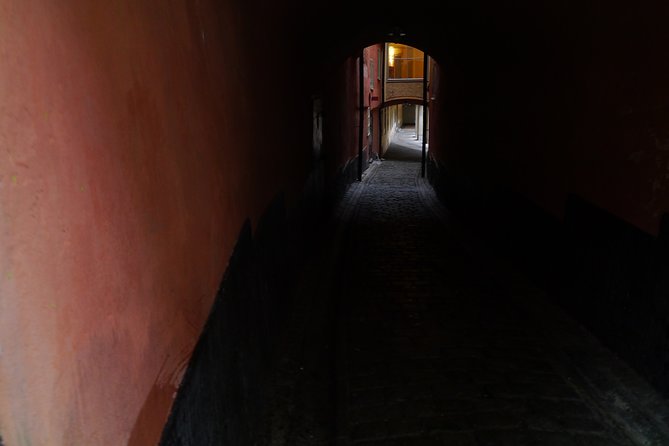
From Stortorget, the group continues along Prästgatan. The guide discusses the part of the street formerly known as Hell, including the people who lived there.
This is one of the more atmospheric stops because it uses the street itself rather than a formal site. You are not just hearing a legend in a lecture room. You are standing in the old quarter, looking at the lanes and buildings while learning how names and beliefs shaped local identity.
The stop lasts about 10 minutes. It is also a reminder that the tour works best when you pay attention to small details around you. The story may make an ordinary doorway or side street feel less ordinary for the rest of your visit.
The experience does not appear to rely on costumes, theatrical effects, or staged scenes. That is a plus for me. The charm comes from the guide’s delivery and from the contrast between the cozy Old Town and the grim stories attached to it.
Iron, doors, and protection from the unseen
At a house in Stockholm’s Old Town, the guide explains how iron was used as protection against the vaesen, the supernatural beings of Swedish folklore. You hear about elves arriving with the mist, understood in part as souls that had not found rest.
This stop also introduces the Swedish tomte. Many visitors know the tomte today as a cheerful Christmas figure, but older folklore could give household beings a more complicated character. The tour places the tomte alongside other protective beliefs, making clear that folklore was not only about frightening creatures. It also offered practical rules for avoiding trouble.
Doors receive special attention. The guide explains why entrances were treated as weak points and how newborn children were thought to need protection before baptism. In this belief system, an unbaptized child was vulnerable to trolls and the Devil.
I like this part because it shows folklore as a set of household habits, not just campfire entertainment. Iron, doors, mist, infants, and baptism all become part of one protective system.
The stop takes about 10 minutes. It should appeal to you if you like cultural history and old customs as much as horror. It also gives the tour a useful change of pace after the executions at Stortorget.
A few more ghost walks around the world worth a look
- Stockholm: Ghost Walk and Historical Tour
★ 4.7 · 2,685 reviews - The Original Stockholm Ghost Walk and Historical Tour – Gamla Stan
★ 4.5 · 1,165 reviews - Bloody Stockholm: ghosts, horror and dark folklore 2h
★ 4.5 · 19 reviews - Guided Ghost Tours with Actors From Stockholm
★ 4.5 · 8 reviews
Water spirits at Logårdstrappan
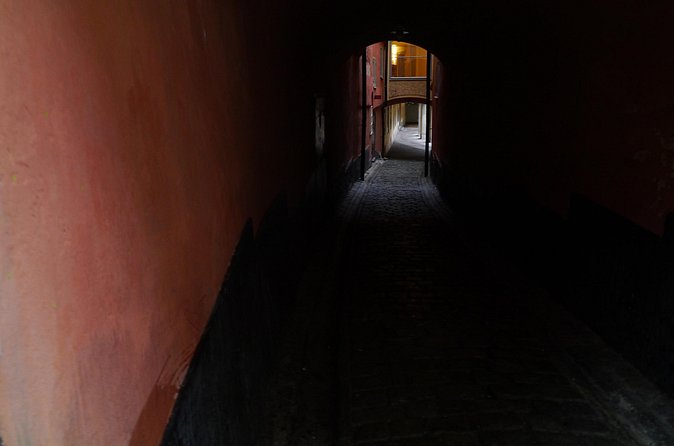
At Logårdstrappan, the subject shifts to the supernatural beings linked with water. This is where the tour introduces Näcken, the bäckahästen, the Sjörå, and the skepps-rå.
The bäckahästen is described as the Swedish version of the kelpie, a dangerous water creature associated with luring people toward drowning. Näcken is another familiar figure in Scandinavian folklore, while the Sjörå and skepps-rå connect the supernatural world with the sea and ships.
The stories focus on how these beings attracted people and pulled them into deep water. That theme makes sense in a country shaped by lakes, rivers, coastlines, and sea travel. Water was useful, necessary, and dangerous. Folklore gave a face to risks that could otherwise seem random.
This stop lasts about 10 minutes. It is likely to work best for you if you enjoy comparing folklore across countries. You may recognize echoes of other European water spirits, but the Swedish names and local traditions give the stories their own character.
The tour’s darker mood is strongest here when the guide connects beauty with danger. Water can look calm and inviting, yet the old stories warn you not to trust it too quickly.
Kungsträdgården and the creatures beyond the city walls
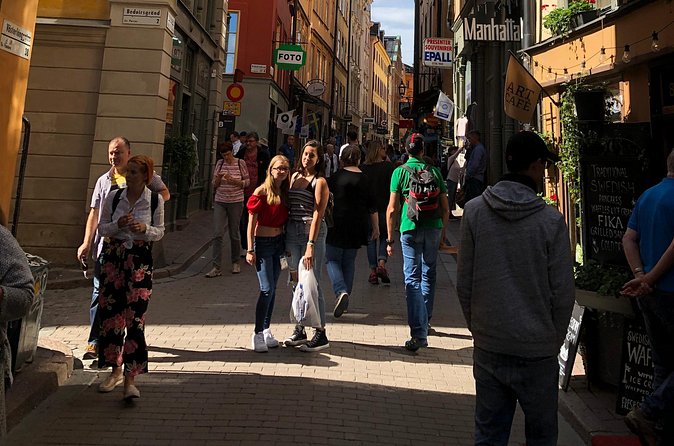
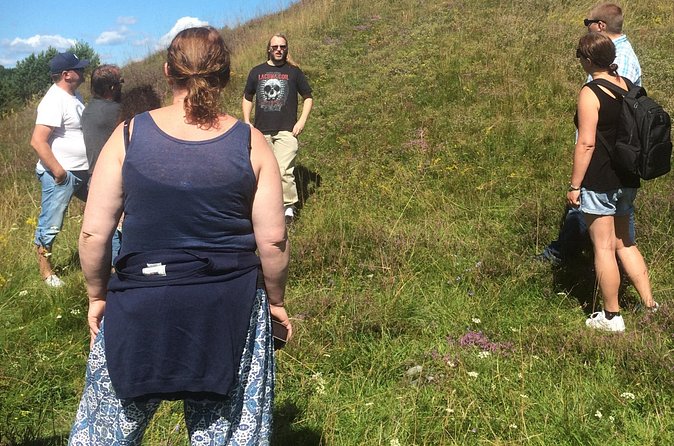
The group continues to Kungsträdgården for a longer section of about 20 minutes. Here the guide turns to other vaesen, including the Skogsrået, also called the huldran, and the myrling, an undead living child from folklore.
The Skogsrået is linked with the forest and is presented as a dangerous being. The myrling brings the tour back to death and the treatment of children, but in a form that is especially unsettling. These are not simply friendly fairy-tale creatures. They reflect fear of isolation, the forest, the unknown, and the dead who have not been properly laid to rest.
This is the longest individual stop, which gives the guide more room to explain the stories. If you are most interested in folklore rather than historical events, this may be the part you value most.
One point worth keeping in mind is that the balance between dark history and dangerous folklore can vary. Jonathan acknowledged that one version of the tour included more general Stockholm history and less folklore about dangerous beings than intended. That candor is useful. You should book this expecting a blend, not a nonstop parade of supernatural monsters.
Kungsträdgården also makes a practical transition point. You are moving beyond the Old Town, but you remain close to central Stockholm. The walk does not take you far out of the city or require transport between stops.
Saint Jacob’s Church and the final warnings
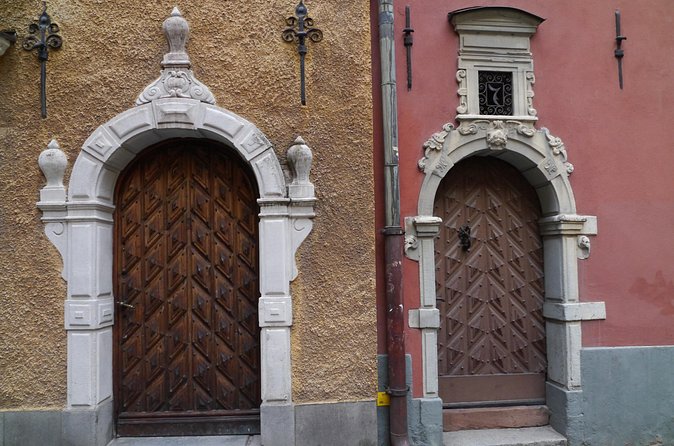
The final stop is outside Saint Jacob’s Church on Västra Trädgårdsgatan. The tour examines the church door, weak points in the church, and protection from supernatural danger.
The guide also discusses an exorcism involving a child at baptism. That returns to the earlier theme of baptism as a boundary between safety and vulnerability. The church is not treated only as a religious building. It becomes a place where people sought protection from forces they feared but could not see.
The last subject is especially dark: what to do if you had a worst enemy to punish. This brings the tour back to curses and folk magic, closing the circle with the beliefs discussed at Stortorget.
The church stop lasts about 15 minutes. Since the tour ends outside rather than returning to the start, you can continue into the surrounding central area afterward. The end point is near Kungsträdgården and roughly a 10-minute walk from the Nobel Prize Museum.
What the duration and group size mean
The experience is advertised under a two-hour title, while the stated tour duration is approximately one hour and 30 minutes. The listed stop times add up to about 75 minutes, with the remaining time taken by walking and transitions.
I would plan for about 90 minutes, while keeping a little flexibility in your schedule. One guide has run noticeably longer than that when conversation and storytelling expanded. That may be a pleasant surprise if you enjoy detail, but it could matter if you have a restaurant booking or another timed activity.
The maximum group size is 30. That is not a tiny group, but it is manageable for an outdoor walking tour. Your experience will depend partly on how easily you can hear the guide in the streets and how much room there is around each stop.
Small groups can make a real difference. A group of three had a particularly personal visit with Åsa, and the guide was able to share facts, stories, and answers without competing with a large crowd. If your booking happens to be fuller, you should stand near the guide and be ready to move in close at each stop.
The tour is offered in English and uses a mobile ticket. Service animals are allowed, public transportation is nearby, and most people can participate. Since this is a walking experience through city streets, sensible shoes and clothing suited to the weather are practical choices. One account describes enjoying the walk despite poor weather, but bad conditions can still make an outdoor storytelling tour less comfortable.
Is the dark folklore worth the price?
No price is provided here, so I cannot judge the exact cost against other Stockholm tours. I can judge what you are paying for: a guide-led walk through central locations, a focused theme, and stories that would be difficult to assemble from ordinary sightseeing alone.
The value is strongest if you enjoy interpretation. You are not paying for entry to a major attraction or a special performance. The Old Town streets, the church exterior, and the public squares are free. The guide supplies the connection between place, event, belief, and local tradition.
I would consider it good value if you want a compact evening activity that adds a different mood to your Stockholm visit. It is less compelling if you only want famous sights, formal architecture, or a strictly documented account of events.
The high recommendation rate and 4.8 rating from 14 recorded reviews suggest that the guide’s storytelling is the key strength. The most praised qualities are clear knowledge, humor, openness to questions, and entertaining stories. Those traits matter more here than fancy equipment or a dramatic setting.
Who should book Bloody Stockholm?
I would recommend this tour to you if you like:
- Dark chapters of city history
- Executions, curses, and old punishments
- Scandinavian folklore and supernatural beings
- Guided walks with time for questions
- Seeing familiar places in a new way
- A short evening activity in central Stockholm
It can also suit families with older children. A 10-year-old found the stories interesting and exciting, but parents should decide how comfortable their children are with death, exorcism, undead children, and punishment.
I would hesitate to recommend it to you if you want a traditional ghost tour filled with confirmed hauntings, jump scares, actors, or special effects. One useful description of the experience calls it an informative stroll rather than a true ghost tour. That is not a flaw, but it is important to know before booking.
I would also think twice if you dislike stories involving dead bodies, children in danger, or religious fears. The guide can be humorous and approachable, but the subjects remain grim.
Should you book this walk?
Book it if you want Stockholm’s Old Town to feel less polished and more human. The tour links real events at Stortorget with the beliefs people used to explain danger, illness, death, drowning, and bad luck.
The best reason to go is the combination of dark history and Swedish folklore. You will hear about executions, curses, trolls, elves, the tomte, water spirits, forest beings, and church protections in one compact route.
Go in expecting a guided history walk with supernatural themes, not a theatrical ghost hunt. If that sounds right to you, Bloody Stockholm offers a memorable way to look at familiar streets, especially with a strong guide such as Jonathan or Åsa leading the conversation.
FAQ
How long does Bloody Stockholm take?
The stated duration is approximately one hour and 30 minutes. The tour title refers to two hours, and one guide has occasionally spoken for more than two hours, so allow some flexibility.
Where does the tour begin?
It begins at the Nobel Prize Museum, Stortorget 2, in Stockholm’s Old Town.
Where does the tour end?
The tour ends outside Saint Jacob’s Church at Västra Trädgårdsgatan 2A, near Kungsträdgården. The end point is about a 10-minute walk from the starting area.
Is the tour offered in English?
Yes. The experience is offered in English.
Is this a traditional ghost tour?
It focuses on ghosts, horror, dark folklore, executions, curses, and supernatural beings, but it is primarily an informative guided walk. Do not expect a staged haunted-house experience or guaranteed ghost sightings.
What places are included on the route?
The route includes Stortorget, Prästgatan, Stockholm Old Town, Logårdstrappan, Kungsträdgården, and the exterior of Saint Jacob’s Church.
Can I cancel for a full refund?
Yes, if you cancel at least 24 hours before the experience start time. Cancellations made less than 24 hours before the start time are not refunded, and changes within that period are not accepted.
Just added around the world
- Zion: Harry Potter-Inspired Zion Ghost Tour with Sunset View★ 5.0 · 8 reviews
- Your evening in Venice – Legends&Ghosts&Aperitif★ 4.7 · 79 reviews
- York’s Haunted Heart : Ghost, Ghouls and Gallows★ 4.6 · 82 reviews
- York : Private Ghost Hunt★ 5.0 · 3 reviews
- Witches, Widows, & Wraiths: Wichita Ghost Tours★ 5.0 · 2 reviews
- Wraiths & Wicked Whispers: Wilmington Ghost Tour★ 4.2 · 25 reviews
- Witches, ghosts and executioners / Mystical North Hesse★ 4.4 · 4 reviews
- Wraiths of the West Texas Wind: El Paso Ghost Tour★ 4.5 · 9 reviews
Stockholm Ghost Tours, compared.
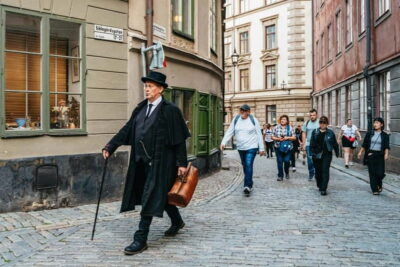
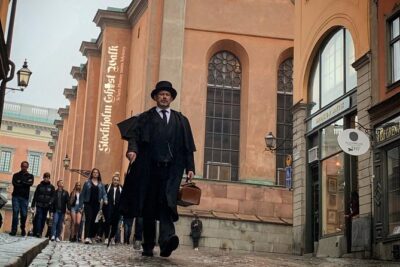
The Original Stockholm Ghost Walk and Historical Tour – Gamla Stan
Read our review →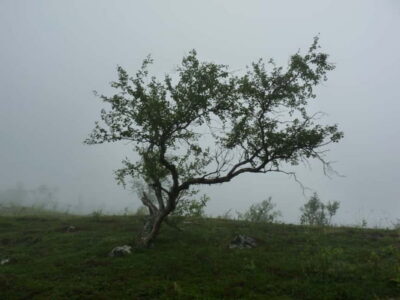
Bloody Stockholm: ghosts, horror and dark folklore 2h
Read our review →
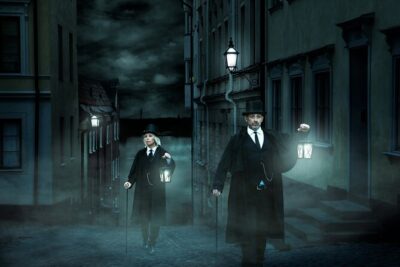
The Original Stockholm Ghost Walk and Historical Tour – Södermalm
Read our review →
Ghosts of Stockholm: A Guided Tour of Horror and Dark Folklore
Read our review →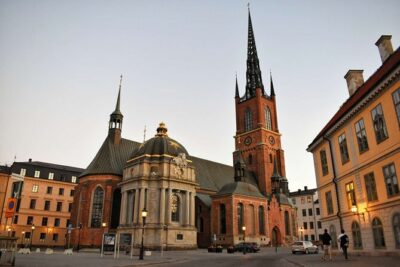
Stockholm Ghost Hunt: Self-Guided Tour and Puzzle Adventure
Read our review →
Private blood, ghosts and folklore Old Town 2h Stockholm tour
Read our review →Browse the lists this tour appears in