
REVIEW · WITCH TRIAL & WITCHCRAFT TOURS
Witches & Whispers: Zagreb’s Upper Town Tales
Zagreb’s Upper Town is best understood through its stories, and this walk gives those stories a human voice. Guide Đurđica appears in costume as a historical storyteller, bringing in the world of writer Marija Jurić Zagorka, the Witch of Grič tales, noble scandals, old beliefs, and the women who watched the city change.
I like two things right away: the private format lets your group ask questions and set the pace, and the route links famous sights with smaller details you could easily miss alone. You move from the Mandusevac Fountain and Stone Gate to old pharmacies, taverns, palaces, and church squares rather than simply checking off monuments.
The main consideration is the pace. With 13 stops in about two to three hours, several visits last only 10 or 15 minutes. This is a storytelling walk, not a series of long museum visits, so you should book it for atmosphere and local tales rather than detailed interior sightseeing.
Key points to know before booking
- Marija Jurić Zagorka shapes the experience: The guide connects Zagreb’s streets with the Croatian writer’s famous Witch of Grič world.
- You get a private walking tour: Only your group takes part, which makes it easier to ask questions and follow the stories.
- The route covers the Upper Town’s essential sights: Expect the Cathedral, Dolac Market, Stone Gate, St. Mark’s Church, Lotrščak Tower, and old taverns.
- Book a morning start for the cannon: Lotrščak Tower fires Zagreb’s famous noon cannon, so timing matters.
- The optional tasting adds a social finish: You can end at the nearby House of Spirits with an alcoholic tasting.
- The walk is free to cancel up to 24 hours ahead: Poor weather or an unmet minimum can also lead to a date change or full refund.
Why these Zagreb tales work better than a standard sightseeing walk
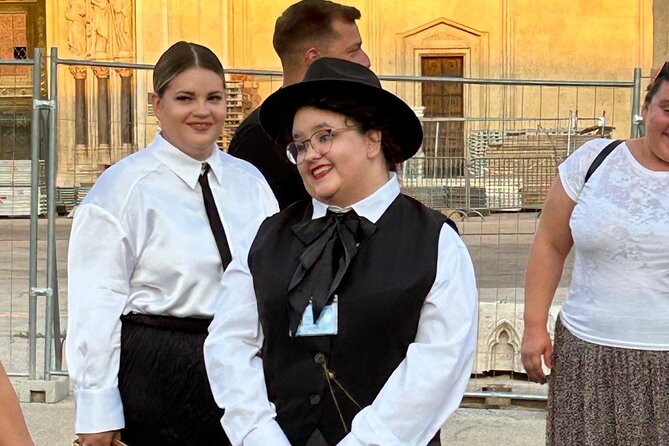
This experience takes a familiar city-center route and gives it a dramatic thread. You are not only told when a building was built or who once lived there. You hear why a street was called Bloody Bridge, how a painting survived a fire, and how Zagreb’s writers turned old legends into popular fiction.
The strongest part is the mix of fact and folklore. The guide presents witches, ghosts, secret meetings, forbidden romances, and noble ambition, but the stories remain tied to real places. That keeps the walk playful without making it feel like a made-up ghost tour.
The connection with Marija Jurić Zagorka is especially useful. Zagorka was a major Croatian writer, and her Witch of Grič novels turned Zagreb’s Upper Town into a setting of romance, danger, and political intrigue. When Đurđica performs scenes and speaks as a figure from the past, you get a sense of how literature can change the way a city is seen.
I would choose this tour early in a Zagreb visit. It gives you a map of the Upper Town in both the physical and imaginative sense. Later, you can return to the cathedral, market, Stone Gate, or St. Mark’s Church with more context.
More witch trial tours in the world:
- Edinburgh: Witches & Haunted History Walking Tour
★ 4.8 · 1,290 reviews - Edinburgh: Witches & Haunted History Walking Tour
★ 5.0 · 632 reviews - Williamsburg Ghosts, Witches and Pirates Tour
★ 4.5 · 584 reviews
From Ban Jelačić Square to the Mandusevac Fountain
The tour begins at Ban Jelačić Square, Zagreb’s central meeting place, then moves toward the Mandusevac Fountain. The fountain is linked to the old story of a weary soldier and a girl named Manda. In the tale, Manda was asked to scoop water, and her name became tied to Zagreb’s name.
It is a short stop, but a useful opening. The story reminds you that city names often grow from ordinary moments, not grand royal decisions. The spring also gives the tour its basic method: look at a real place, then listen for the tale attached to it.
You do not need an admission ticket for the stop. The square is easy to reach by public transport, and the ending on Radićeva Street is only a short walk from the starting area.
The Cathedral, Dolac Market, and two sides of old Zagreb
The Cathedral of Zagreb introduces the power of Kaptol, the historic church district. Its tall towers dominate the nearby streets, and the tour uses the cathedral to discuss the Bishop’s Court, Ottoman invasions, restoration work, and the influence of the church on Zagreb’s past.
The stop is about 15 minutes, so do not expect a full architectural tour or an extended visit inside. Instead, you get the political and religious setting needed to understand the old rivalry between Kaptol and Gradec.
At Dolac Market, the focus shifts from bishops and stone walls to daily life. Fresh food, conversation, and local trade give the market a more ordinary face. The useful point here is that markets are not only places to buy produce. They also show how community and power worked at street level.
The market is a good place to notice the difference between a formal historical account and a lived one. A cathedral records authority from above. A market shows how people actually gathered, worked, argued, and shared news.
Bloody Bridge and the old divide between Kaptol and Gradec
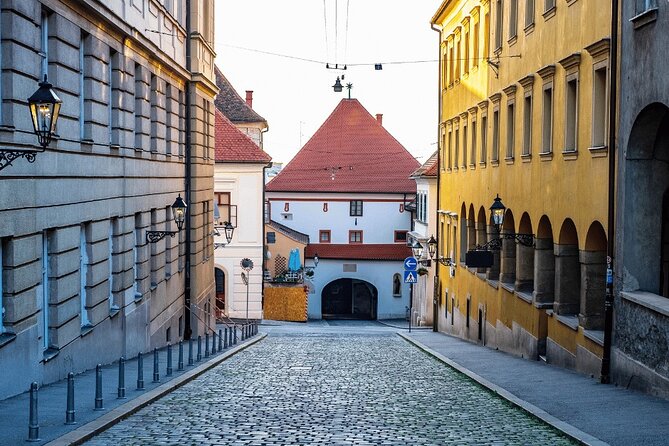
Krvavi Most translates as Bloody Bridge, but there is no bridge here today. The name recalls clashes between the citizens of Gradec and the clergy of Kaptol, two neighboring parts of medieval Zagreb with different interests and authority.
This is one of the more effective stops because the narrow street does not look like a battlefield. Its ordinary appearance makes the old rivalry easier to picture. The guide fills in the conflict while you stand in a place where the two sides once met.
I like this kind of stop because it gives the Upper Town some friction. Without stories of rivalry, Zagreb’s old streets can look like a tidy collection of churches and handsome buildings. Bloody Bridge shows that city life was also shaped by arguments over power, money, and control.
More ghost story tours in the world:
- Prague: Ghost Walking Tour Where Legends Come To Life
★ 4.4 · 5,253 reviews - Prague: Ghosts, Legends, Medieval Underground & Dungeon Tour
★ 4.3 · 5,104 reviews - Prague: Ghosts and Legends of the Old Town Evening Tour
★ 4.5 · 3,091 reviews - Prague Ghost and Legend of Old Town Walking Tour
★ 4.5 · 2,630 reviews
Stone Gate and the painting that became a place of prayer
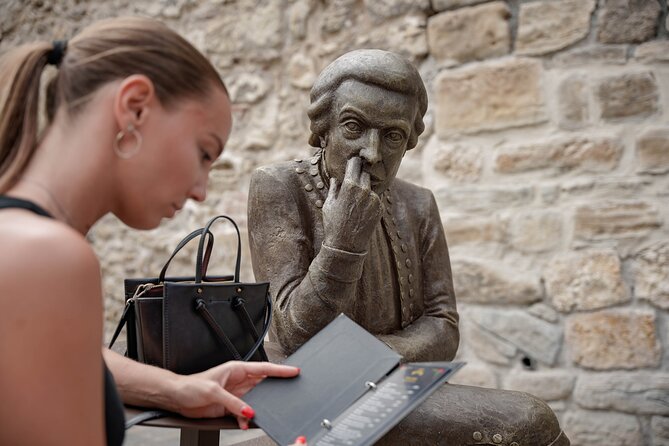
Stone Gate is the only surviving gate into medieval Gradec. It is also one of the most personal stops on the walk. According to the story, a fire damaged the gate, but a painting of the Virgin Mary survived. The image came to be treated as miraculous, and the passage became a small sanctuary.
People still stop here to light candles and make quiet wishes. You can pause and take in the contrast between the rough medieval passage and the private acts of faith happening inside it.
This is not a grand cathedral visit. Its appeal is its closeness. The Stone Gate feels like a place where history, belief, and daily routine continue to overlap. Keep your voice low and allow space for people who are praying.
The Black Eagle Pharmacy and the city’s old remedies
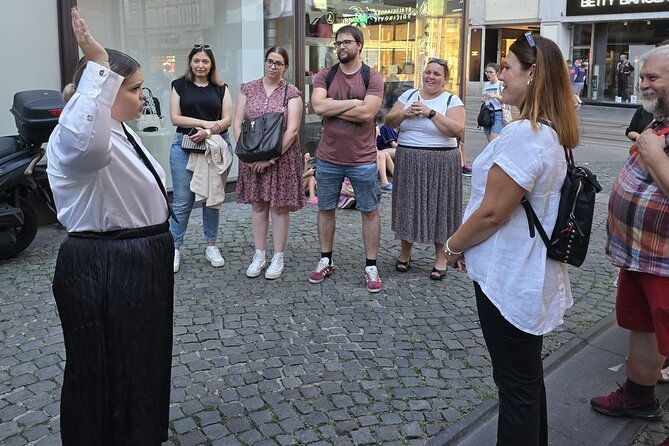
Ljekarna k crnom orlu, or the Black Eagle Pharmacy, brings the tour into the world of herbal lore and folk medicine. It is one of Zagreb’s oldest pharmacies and connects naturally with the stories of witches.
This stop matters because the word witch can mean different things in different periods. It can suggest fear, superstition, healing, or a woman who knew more about plants and remedies than the people around her. The guide uses the location to explore those darker and less tidy parts of old city life.
The pharmacy is not presented as a separate shopping visit. Think of it as a doorway into the beliefs behind the legends. You will hear about old forms of treatment and the whispered stories that grew around them.
St. Mark’s Church and the women behind public events
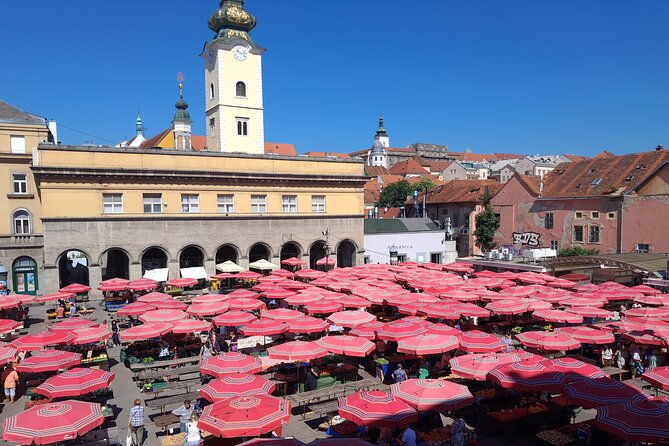
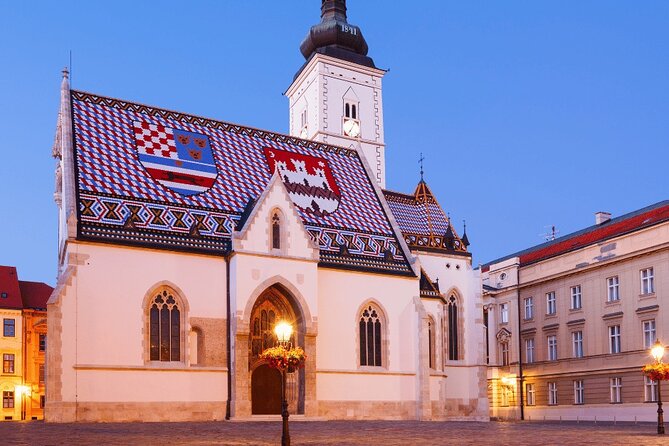
St. Mark’s Church is one of Zagreb’s most recognizable sights, known for its colorful tiled roof. A short photo stop would be easy here, but this tour adds the political setting around the church.
The square was a center of public life, meetings, and decisions. The stories also turn attention toward women who watched important events from the edges rather than appearing in official records. That choice gives the stop a different angle from a standard architectural explanation.
The church itself is not the only subject. You hear about the city’s political heart, private meetings, and the quiet observers who understood what was happening even when they had no formal power. This is one of the places where the tour’s focus on women becomes most useful.
Access to some parts of St. Mark’s Square can change because of official activity, but the provided tour information does not promise an interior visit. Plan on hearing the story from outside.
Lotrščak Tower and the noon cannon
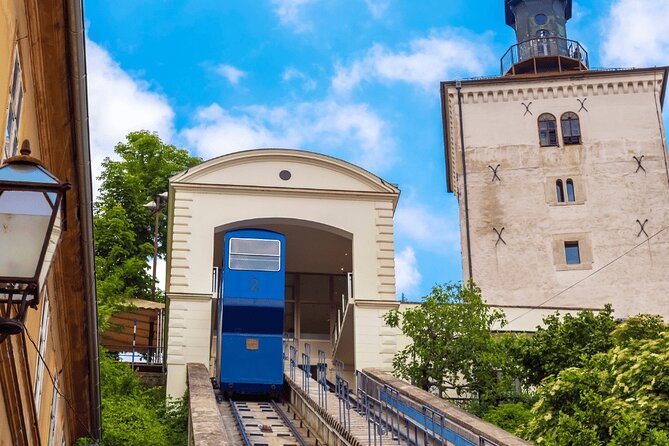
Lotrščak Tower is one of the route’s most practical timing points. Every day at noon, the tower fires a cannon, a tradition now closely tied to Zagreb’s soundscape.
If you want to hear it during the walk, book a morning tour. The timing note is important because a later start may bring you to the tower after the shot has already happened. The tour still explains the cannon and the ghosts connected with the tower, but you may miss the live sound.
The cannon also gives the guide a chance to explain how sound helped organize city life. Before modern communication, a loud signal could mark time and unite people across the town. The tower’s ghost stories add mood, while the cannon provides a firm link to the city’s practical past.
The funicular is closed for renovation until March 2026. That matters because Zagreb’s Upper Town includes slopes and uneven historic streets. The walk requires moderate physical fitness, and you should wear comfortable shoes rather than relying on the funicular for the climb.
Palaces, ambition, and the Witch of Grič connection
At Trg Franje Markovića, the route reaches the setting of Zrinski Palace. The palace is associated with Zagreb’s nobility, and the stories here move toward aristocratic rules, scandals, and forbidden romances.
This part gives the tour a more intimate tone. Noble life was governed by status and expectation, but private desires did not always follow those rules. The contrast between public respectability and private passion makes the palace stories easy to follow, even if you know little about Zagreb’s elite families.
The nearby Croatian History Museum occupies the Vojković-Oršić-Kulmer-Rauch Palace. The guide tells the story of a nobleman who advanced socially through marriage, a real-life tale that later helped inspire the Witch of Grič novels.
You should not expect enough time for a full museum visit. The stop is about 10 minutes and focuses on the building, the man connected with it, and the link between social ambition and fiction. If you want to visit the museum properly, plan a separate visit.
Demetrova Street and Zagreb’s first public theatre
Demetrova ulica marks a cultural turning point. This was the site of Zagreb’s first public theatre with a real stage and balcony boxes.
The story helps explain how the city developed a public cultural life. Theatre offered more than entertainment. It created a place where people could gather, watch performers, form opinions, and see Zagreb present itself as a modern city.
The stop lasts about 10 minutes, so it works best as a short historical scene rather than a detailed theatre lesson. I like the way it widens the tour beyond churches, nobles, and supernatural tales. Zagreb’s identity also grew through performance and public culture.
Pod starim krovovima, a tavern with a long memory
Pod starim krovovima is described as Zagreb’s oldest tavern still operating. Its name means under the old roofs, and the setting brings the walk down to a more social level.
For more than a century, poets, rebels, and everyday people have gathered beneath its old beams. That range of company is the point. A tavern can reveal a city in a way a palace cannot, because the people who pass through it are less carefully arranged by rank.
The stop lasts about 15 minutes. It is not automatically a meal or drink break, so do not count on having time for a full sit-down visit during the walking portion. You can return later if the place appeals to you.
Radićeva Street and the optional House of Spirits tasting
The walk ends on Radićeva Street, close to Ban Jelačić Square. This historic café and tavern lane puts you in a useful spot for continuing through the Upper Town, with shops, galleries, sights, and places to eat nearby.
You can also add a tasting at the House of Spirits. Alcoholic drinks are optional, and the tasting gives the storytelling a relaxed final note. It is a good choice if you enjoy local drinks and want time to talk with Đurđica after the formal walk.
The tasting is not essential to the tour. Families, non-drinkers, and anyone watching their budget can finish at Radićeva Street without it. If you do choose it, remember that alcohol is an optional extra experience rather than the main purpose of the walk.
Price, group size, and practical value
At $65.06 per person, this is not the cheapest way to walk around Zagreb. The value depends on what you want from a guide.
You are paying for a private experience lasting about two to three hours, with a costumed storyteller and a carefully connected route. The admission fees at the listed stops are free, so the price is not covering a series of paid attractions. It pays for the guide’s performance, local interpretation, and the time spent shaping the city into one coherent story.
For a private group, the price can make sense, especially if you enjoy asking questions or want a tour that feels more personal than a large group walk. Group discounts are available, which may improve the value for larger parties.
The walk is offered in English and includes a mobile ticket. Service animals are allowed, and the route is near public transportation. You should still be ready for city walking, slopes, and historic surfaces. The funicular closure until March 2026 makes comfortable shoes and a sensible pace more important.
The tour requires good weather. You can cancel for a full refund up to 24 hours before the start time. A cancellation made less than 24 hours ahead is not refundable, and changes inside that period are not accepted. If poor weather or an unmet minimum number of participants cancels the experience, you are offered another date or a full refund.
Who will get the most from this walk
I would choose this for you if you like history presented through people and stories rather than dates alone. It suits readers of historical fiction, fans of legends, and anyone curious about Marija Jurić Zagorka and the Witch of Grič tradition.
It is also a good match for couples and small private groups who want a relaxed walk with room for conversation. The guide’s acting and scene reading give the experience extra energy, so you should enjoy a little theatre along with your history.
You may want another kind of tour if you need long interior visits, detailed architectural analysis, or a fast list of every major sight. Several stops last only 10 or 15 minutes, and the route covers a lot of ground. The reward is atmosphere and connection, not exhaustive museum time.
Should you book Witches & Whispers?
Book it if you want Zagreb’s Upper Town to feel like a place of characters, rivalries, beliefs, and unfinished stories. The cost is easier to justify when you value a private guide and a strong performance, especially with the optional House of Spirits tasting at the end.
Choose a morning departure if the Grič cannon matters to you. Leave time on another day for the Croatian History Museum or a longer visit inside any sight that catches your attention.
For a first visit, I find the tour’s best quality is its sense of place. It gives you the fountain, market, gates, churches, palace, theatre, and tavern, then ties them together with Zagreb’s writers and legends. If that sounds more appealing than a standard monument checklist, this is a smart way to meet the city.
FAQ
How long does the tour last?
The walking tour lasts approximately two to three hours.
Where does the tour begin?
It begins at Ban Jelačić Square, Trg bana Josipa Jelačića, in Zagreb.
Where does the tour end?
It ends on Ulica Pavla Radića, a short walk from Ban Jelačić Square and close to Upper Town shops, galleries, sights, and eateries.
Is the tour private?
Yes. Only your group participates in the activity.
Is the tour offered in English?
Yes. The tour is offered in English, and confirmation is provided at the time of booking.
Can I hear the Grič cannon during the tour?
You need to book the morning tour if you want to experience the famous cannon firing at noon.
Is the House of Spirits tasting included?
The alcoholic tasting at the House of Spirits is optional. Personal expenses and souvenirs are not included, and gratuities are optional and appreciated.
Just added around the world
- Zion: Harry Potter-Inspired Zion Ghost Tour with Sunset View★ 5.0 · 8 reviews
- Your evening in Venice – Legends&Ghosts&Aperitif★ 4.7 · 79 reviews
- York’s Haunted Heart : Ghost, Ghouls and Gallows★ 4.6 · 82 reviews
- York : Private Ghost Hunt★ 5.0 · 3 reviews
- Witches, Widows, & Wraiths: Wichita Ghost Tours★ 5.0 · 2 reviews
- Wraiths & Wicked Whispers: Wilmington Ghost Tour★ 4.2 · 25 reviews
- Witches, ghosts and executioners / Mystical North Hesse★ 4.4 · 4 reviews
- Wraiths of the West Texas Wind: El Paso Ghost Tour★ 4.5 · 9 reviews
Witch Trial & Witchcraft Tours, compared.
Wicked Awesome Tours: Witch Trial History and Salem Haunts!
Read our review →
Best Salem Witch Trials Historical Walking Tour
Read our review →
Browse the lists this tour appears in