
REVIEW · CANADA GHOST TOURS
Vancouver: The Dark Secrets of Stanley Park Tour
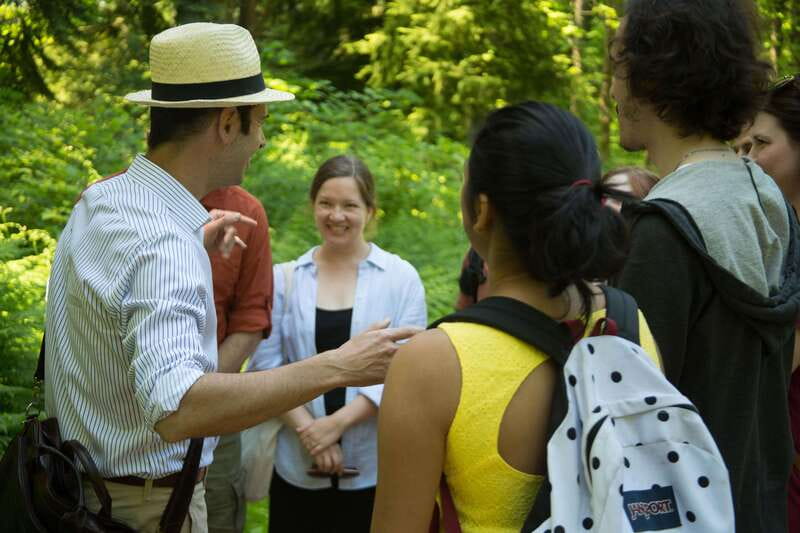
Stanley Park is usually sold as an untouched patch of rainforest beside Vancouver. This tour tells a harder, more honest story: Coast Salish villages were cleared, families faced forced evictions, and places now treated as scenic parkland carry memories of disease, conflict, crime, and loss. I like the route’s mix of forest trails and serious history, and I like that it ends with the famous totem poles, seawall, and city views instead of staying in the woods the whole time.
The tour also earns points for its guides. Cole, Ashlyn, and Glenn are named in the feedback, with particular praise for clear storytelling and preparation. The main drawback is the subject matter. This is designed for adults, with references to death, illness, crime, and other mature themes, so it is not a light family stroll.
Key points about the Stanley Park walk
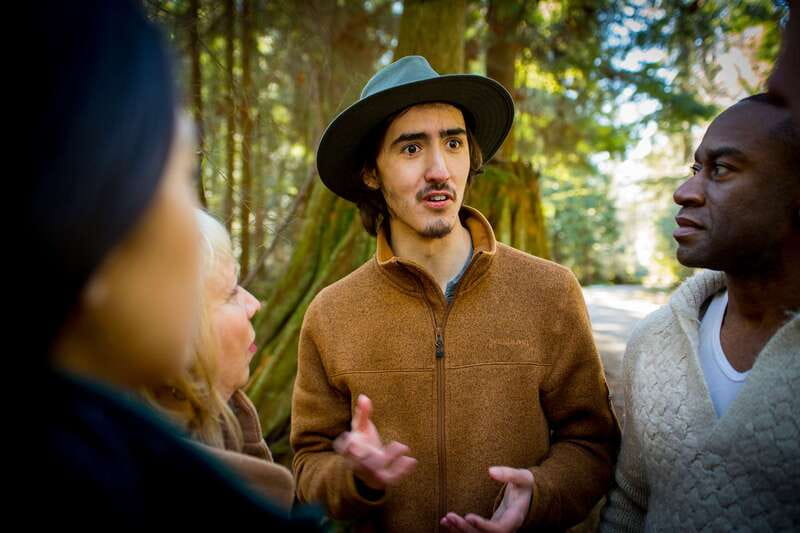
- Former Coast Salish village sites: See places connected with Indigenous communities that lived here for thousands of years before government pressure and eviction.
- Deadman’s Island: Hear the Squamish legend tied to the island and learn about its use as a pest house during 19th-century smallpox outbreaks.
- Forest trails away from the crowds: Walk beneath huge trees on paths that many visitors miss.
- Dark stories with real places: The route includes crime scenes, secret cemeteries, ghost stumps, and other locations that give the park a more complicated past.
- Big Vancouver views: Finish with the totem poles, seawall, downtown skyline, and Lions Gate Bridge.
- Good value at $28: Two hours with a local guide costs less than many standard sightseeing tours, provided you are comfortable walking on natural trails.
Starting beside the Vancouver Aquarium
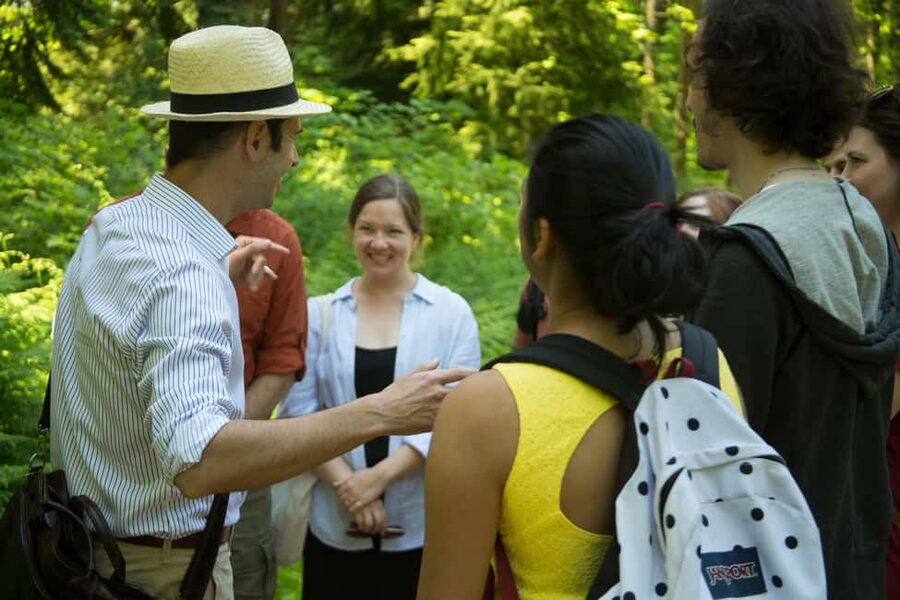
The meeting point is easy to find: the whale sculpture outside the entrance to the Vancouver Aquarium at 845 Avison Way in Stanley Park. That is a useful starting place if you are already visiting the aquarium, though you do not need an aquarium admission ticket for the walking tour itself.
The route begins in a familiar tourist zone, then quickly changes character. You leave the busiest paths and head beneath tall trees, where the park feels much less like a city attraction and more like Pacific Northwest forest.
That change is important. Stanley Park is often experienced from a car, bicycle, horse-drawn carriage, or the seawall. Those options show you the park’s broad outline, but they can leave out the smaller paths and less visible historical sites. This walk gives you time to stop, look around, and connect the setting to the stories being told.
Wear comfortable shoes. The tour uses forested trails, and the information provided does not describe the route as wheelchair accessible. Wheelchair users should not book this activity.
More dark history tours in Canada:
- Toronto: Dark History Nighttime Walking Tour
★ 4.7 · 273 reviews - Toronto Old Town: Self-Guided Dark History Walking Game
★ 5.0 · 15 reviews - Adults-Only New Orleans Ghost, Crime, Voodoo, and Vampire Tour
★ 5.0 · 6,545 reviews
The forest is not an untouched wilderness
One of the tour’s most useful ideas is that Stanley Park was never simply an empty forest waiting to become a public park. Coast Salish people lived on this land for millennia, building communities and maintaining connections to specific places.
You will visit the sites of former villages that are easy to miss today. In some cases, the physical evidence may be slight, which is exactly why a guide matters. Without context, you might see only trees and paths. With context, those same areas become reminders that the park’s popular story has left out the people who were already here.
The tour addresses forced evictions and the long struggle of Coast Salish families to remain on their land. This is not a decorative history lesson added to a sightseeing walk. It changes how you understand the entire park.
I appreciate that the subject is presented as part of Stanley Park’s central story, rather than as a brief footnote before the tour moves on to prettier sights. The account also includes the treatment of other marginalized groups connected with the park, giving the walk a wider social focus.
You should expect difficult material. The guide may discuss government pressure, displacement, disease, and death. The tone is intended for an adult audience, and the local age recommendation is 14 or older. Children aged 10 and up may attend if their parents are comfortable with mature subject matter.
Deadman’s Island and the stories beneath the name
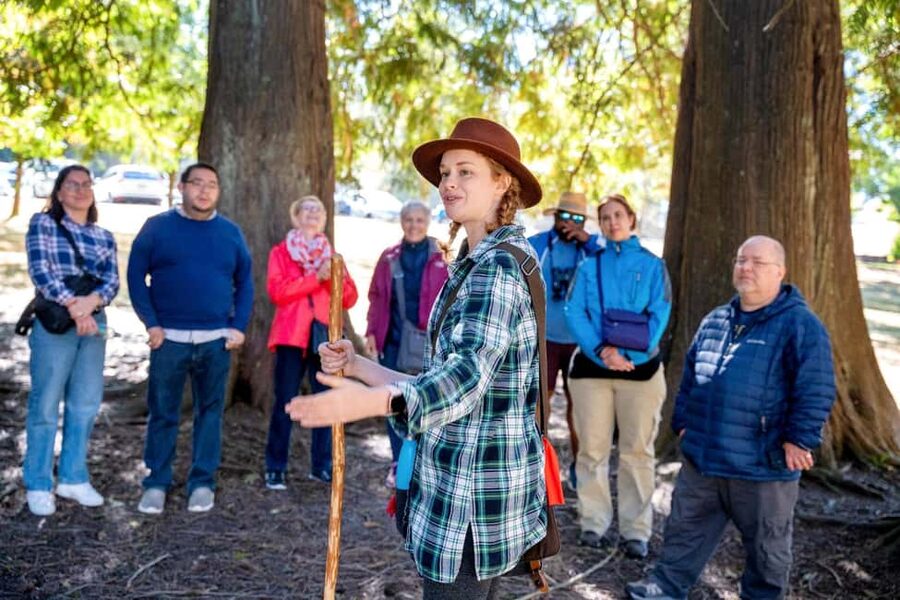
Deadman’s Island is one of the tour’s most memorable stops because its name opens several doors into the past. You hear the Squamish legend of an ancient war, then learn how the island was used as a pest house during smallpox outbreaks in the 1800s.
A pest house was a place where people suffering from infectious disease could be isolated. That detail gives the location a grim practical meaning. It was not merely a mysterious island with a dramatic name. It was also connected with fear, illness, and the unequal effects of epidemic disease.
This part of the walk is a good example of the tour’s method. A familiar place is approached through Indigenous tradition, colonial history, public health, and human tragedy. The stories are serious, but the setting remains beautiful, which creates the uncomfortable contrast that gives the tour its edge.
Do not expect every stop to have a large sign or obvious memorial. Some of the appeal lies in learning how to read places that appear ordinary. The guide supplies the missing frame.
Totem poles and the park’s public face
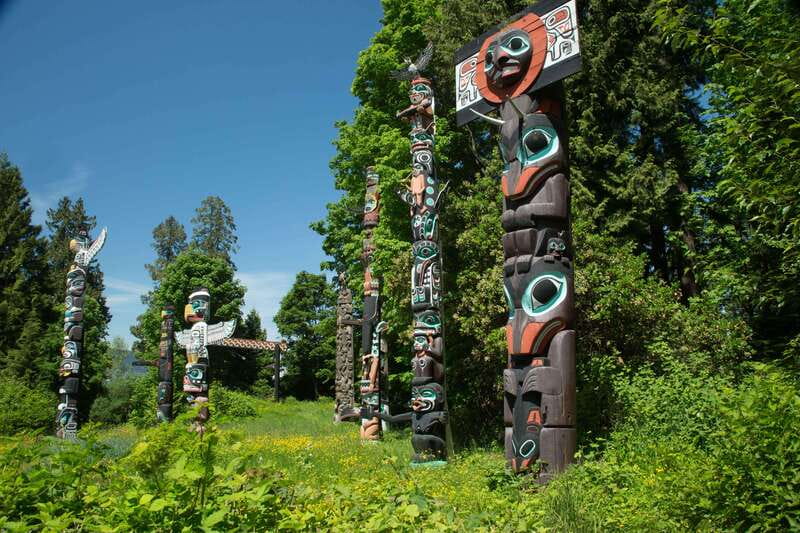
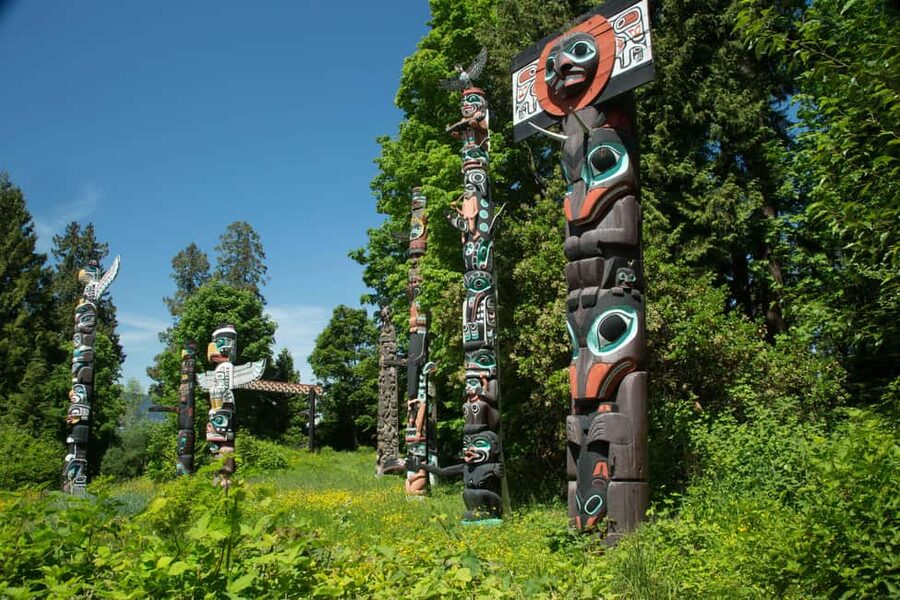
The world-famous Stanley Park totem poles provide a clear contrast with the less visible village sites and cemeteries. They are one of the park’s most recognizable attractions, and many people visit them without hearing the wider history of Indigenous presence in the area.
On this tour, the poles fit into a larger conversation. You are not simply checking off a famous photo stop. You are considering how Indigenous cultures are presented in a public park, and how that public presentation relates to the communities and histories discussed earlier.
The totem poles also give the route a more accessible pause. The tour can move from heavy subjects to a place that is visually striking and widely known, without losing the historical thread.
If you have already seen the poles, the guide’s interpretation can still add value. A Vancouver-born participant reportedly expected little new information and was surprised by how much remained unfamiliar. That is a fair warning against assuming Stanley Park has no more secrets for you.
A few more ghost walks around Canada worth a look
- Ghostly Walking Tour in Victoria
★ 5.0 · 816 reviews - Old Montreal: Traditional Ghost Walk of the Haunted City
★ 4.7 · 746 reviews - Old Montreal Ghost Walking Tour
★ 4.5 · 726 reviews - Ottawa: Haunted Night Walking Tour
★ 4.5 · 341 reviews
Secret cemeteries, ghost stumps, and crime scenes
The tour’s darker side comes through its references to secret cemeteries, ghost stumps, and shocking crime scenes. These are the details that set this walk apart from a standard park orientation.
The cemetery sites point to people and events that have not always been marked in ways a casual visitor would notice. The term ghost stumps suggests the remains of trees or other physical traces that carry a story even when the original setting has changed. The crime scenes bring true crime into the route, but the walk is not presented as a sensational hunt for grisly details.
That distinction matters. You should book this if you enjoy place-based storytelling, where a guide explains how a specific spot became connected with a crime or burial. You should skip it if you prefer your park time to stay peaceful and free of stories about violence and death.
The true crime material also gives the tour a practical rhythm. Historical interpretation can become dense, especially in a forest where there are few visible landmarks. A well-told crime story gives you a sharp point of attention, then carries you to the next part of the route.
The experience is not a ghost tour in the supernatural sense. The supplied information points to legends, cemeteries, crime, and dark history, but it does not promise paranormal activity. Book it for real stories and local lore, not haunted-house effects.
Seawall views after the darker stories
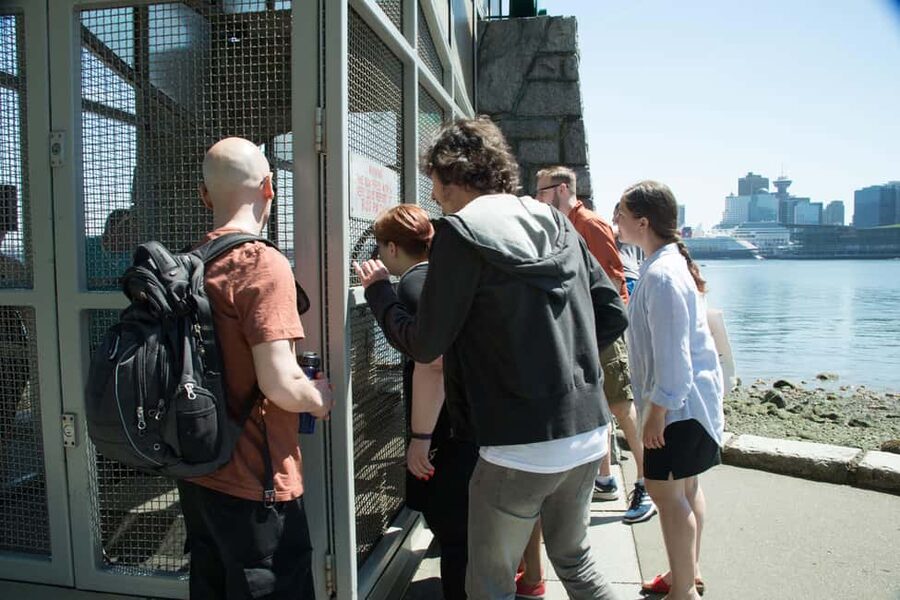
The route includes the seawall and views of downtown Vancouver and the Lions Gate Bridge. These scenic stops are more than a pleasant ending. They remind you that Stanley Park is tied closely to the modern city around it.
After hearing about villages, evictions, epidemics, cemeteries, and crimes, the skyline can look different. You are seeing a prosperous urban setting beside land with a much more complicated past. The contrast is one of the tour’s strongest features.
The views also give you a chance to reset. Two hours of serious history can feel intense, especially when the material concerns forced displacement and disease. The open sightlines and water views provide a natural change of pace before the tour returns to the aquarium.
The tour ends back at the Vancouver Aquarium, which makes planning easier. You are not left at an unrelated location across the park, and you can continue with other Stanley Park activities afterward.
How much walking and time should you expect?
The experience lasts two hours. That is long enough for a series of connected stories, but short enough to fit into a day of sightseeing in Vancouver.
The route includes forest trails and outdoor park paths. The information does not give a total distance, elevation gain, or exact trail conditions, so you should prepare for ordinary uneven outdoor walking rather than assume a paved city sidewalk.
Bring water, drinks, sunscreen, and weather-appropriate clothing. Comfortable clothes and shoes matter more here than dressed-up sightseeing clothes. Vancouver weather can shift, and the tour continues outdoors.
Pets are not allowed. The tour is in English, with a live guide. Since this is an intimate guided walk, you can expect a more personal setting than a large bus tour, although the exact group size is not provided.
Plan your energy sensibly. You may want to combine the walk with the aquarium, totem poles, or the seawall, but avoid packing every activity into the same narrow window. The stories deserve attention, and rushing away to the next appointment would weaken the experience.
Is $28 a fair price?
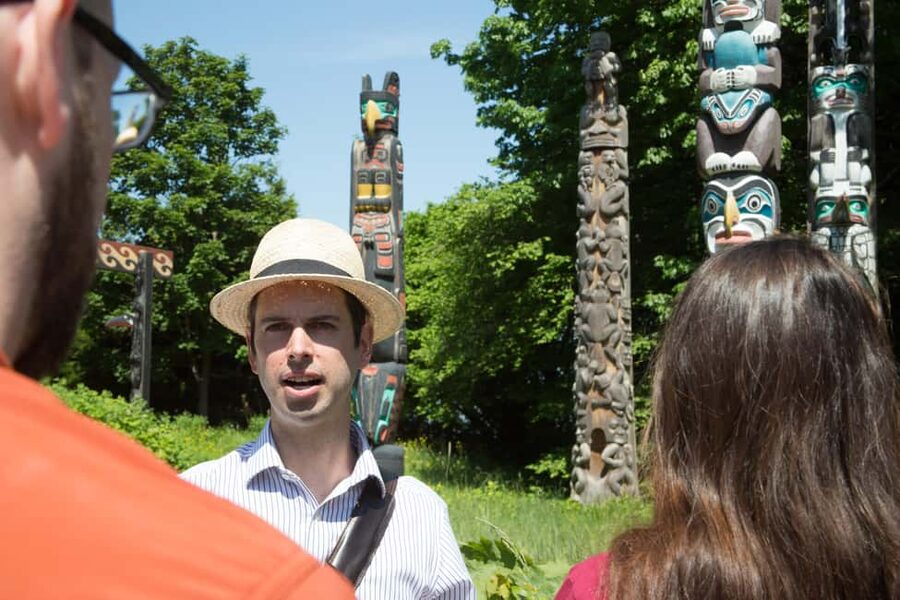
At $28 per person, this is a solid value if you want interpretation rather than simple transportation or a list of photo stops. You are paying for two hours with a local Stanley Park specialist, including access to lesser-known trails and historical context that would be difficult to assemble on your own.
The value is strongest for first-time visitors who want more than the standard park circuit. It is also good for Vancouver residents or repeat visitors who know the seawall and totem poles but have never learned about the former villages, evictions, cemeteries, or Deadman’s Island.
The price is less attractive if you mainly want free time in the forest. Stanley Park itself costs nothing to explore, and you can walk the seawall without a guide. The tour earns its fee through storytelling and interpretation, not through exclusive admission or a special vehicle.
The high rating of 4.9 from 34 ratings supports the idea that the storytelling works well for its intended audience. Specific feedback praises Cole’s history-based walk, Ashlyn’s preparation and friendly approach, and Glenn’s guiding. One French-speaking participant also described the afternoon as convivial and the guide as captivating, though the tour itself is offered in English.
Who should book this walk?
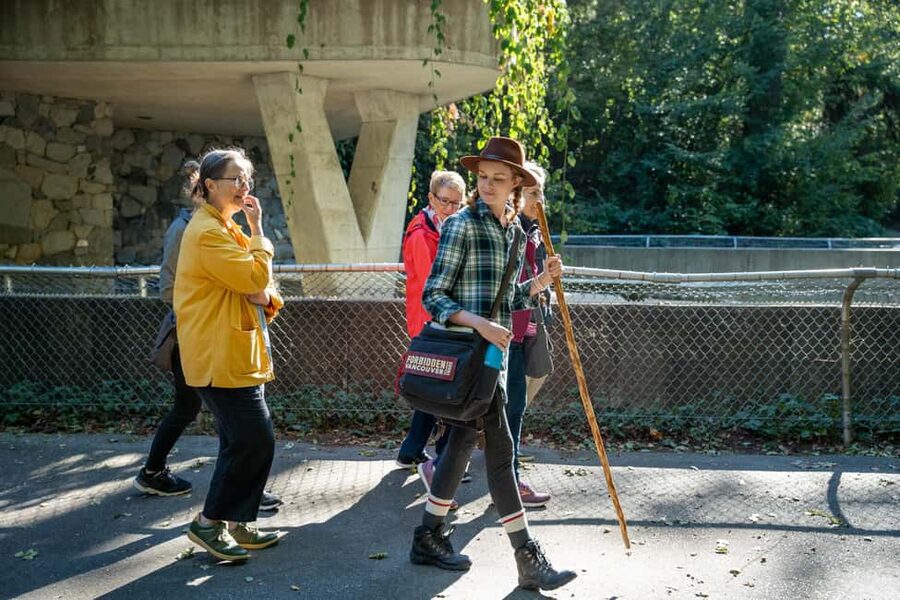
I would recommend it to adults interested in Indigenous history, local politics, true crime, legends, and the less polished side of famous places. It is especially useful if you have only a short time in Vancouver and want a focused introduction to Stanley Park beyond its postcard image.
It suits curious repeat visitors, too. The comment from a person born and raised in Vancouver is telling: even someone who knew the park well found plenty of new material.
Families should decide based on maturity, not just age. Children under 10 should not attend. For older children, parents need to be comfortable with references to adult themes, forced removal, disease, death, and crime.
You should not book if you use a wheelchair, dislike natural trails, or want a gentle nature walk with no difficult history. You should also avoid attending if you feel ill or have been in contact with someone who has been ill in the previous two weeks, in line with the health guidance provided for the activity.
Final call: book it for the stories, not just the scenery
Book this tour if you want Stanley Park to become more than trees, water, and a famous seawall. At $28, the walk offers a clear return: local storytelling, overlooked Indigenous history, Deadman’s Island, cemeteries, true crime, and city views in one two-hour route.
Skip it if you want a quiet stroll or a conventional sightseeing tour. The subject matter is dark, the route is not suitable for wheelchair users, and the tour asks you to pay attention to uncomfortable parts of Vancouver’s past.
For the right audience, this is a smart way to see a familiar park with fresh eyes. Bring good shoes, water, and an open mind.
FAQ
Where does the Stanley Park Dark Secrets tour meet?
It meets at the whale sculpture outside the entrance to the Vancouver Aquarium at 845 Avison Way in Stanley Park.
How long does the tour last?
The walking tour lasts two hours.
How much does the tour cost?
The price is $28 per person.
What language is the tour offered in?
The tour is conducted in English with a live guide.
What places are included on the walk?
The route includes forest trails, former Coast Salish village sites, Deadman’s Island, secret cemetery sites, the Stanley Park totem poles, the seawall, ghost stumps, crime scenes, and views of downtown Vancouver and the Lions Gate Bridge.
Is the tour suitable for children?
Children under 10 are not suitable for the tour. The local age recommendation is 14 and older, while children aged 10 and up may attend if their parents are comfortable with mature subject matter.
Is the tour wheelchair accessible?
No. The tour is not suitable for wheelchair users.
What should I bring?
Bring comfortable shoes, water, drinks, sunscreen, comfortable clothing, cash, and clothing suitable for the weather.
Are pets allowed?
No. Pets are not allowed on the tour.
Can I cancel the booking?
You can cancel up to 24 hours in advance for a full refund. The reserve now and pay later option lets you hold a place without paying immediately.
Just added around Canada
- Victoria: Ghost Tour of Old Town and Bastion Square★ 4.7 · 70 reviews
- Winnipeg’s Most Haunted: a Smartphone Audio Ghost Tour★ 3.5 · 5 reviews
- The Haunting of Vancouver Film Tour★ 5.0 · 14 reviews
- Ghosts of the Village at Black Creek★ 4.5 · 6 reviews
- University of Toronto Ghost Tour – Campus Secrets & Spectres★ 4.5 · 13 reviews
- Haunted Walk Experience at the Mackenzie King Estate★ 4.5 · 12 reviews
- Ottawa Valley Haunted Tour – Night Trip From Ottawa★ 4.5 · 5 reviews
- Ghosts of the Bytown Museum★ 5.0 · 2 reviews
Canada Ghost Tours, compared.
Old Montreal: Traditional Ghost Walk of the Haunted City
Read our review →

Browse the lists this tour appears in