
REVIEW · DARK HISTORY & TRUE CRIME TOURS
Bucharest: 3-Hour Dark History Tour with a Local
Bucharest’s darkest stories are written in cemeteries, bullet-marked buildings, old brothel districts, and the squares where people faced a dictatorship. This three-hour walk connects those places, from the ornate Bellu Cemetery to the bloody events of 1989 and the strange case of the so-called Vampire of Bucharest.
I like the small-group format, capped at 12 people, and the way the tour moves beyond standard sights. I also like the guides’ personal touch: Alex, Elena, Andra, Irina, and Vlad are praised for explaining difficult history clearly, answering questions, and adding local details. The main drawback is simple: this is a long walking tour, much of it outdoors, so cold weather and tired feet can affect the experience.
Key points to know before you book
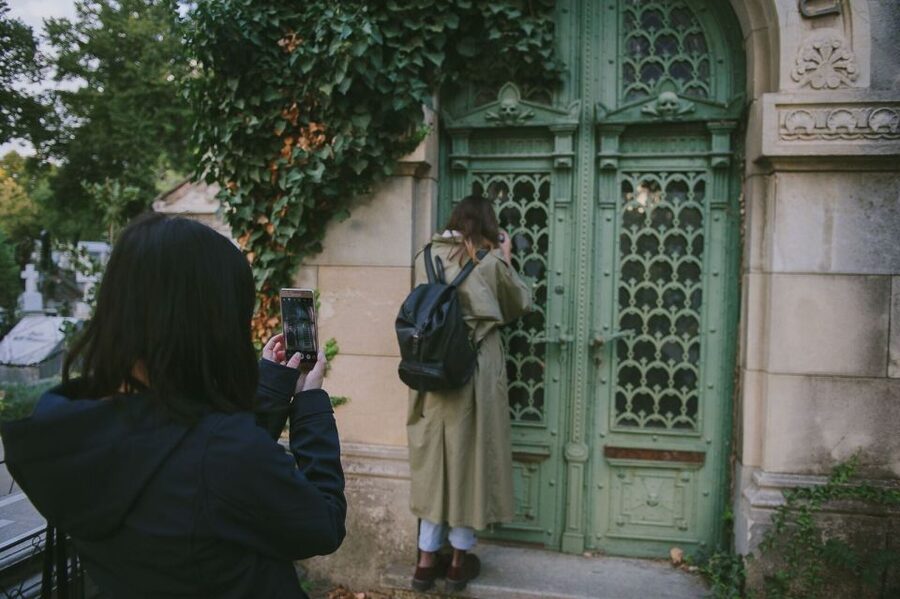
- Six cemeteries on one Bucharest street: The opening area brings together several burial grounds, including the Jewish Cemetery, Russian Soldiers’ Cemetery, and the Cemetery of the Victims of the 1989 Revolution.
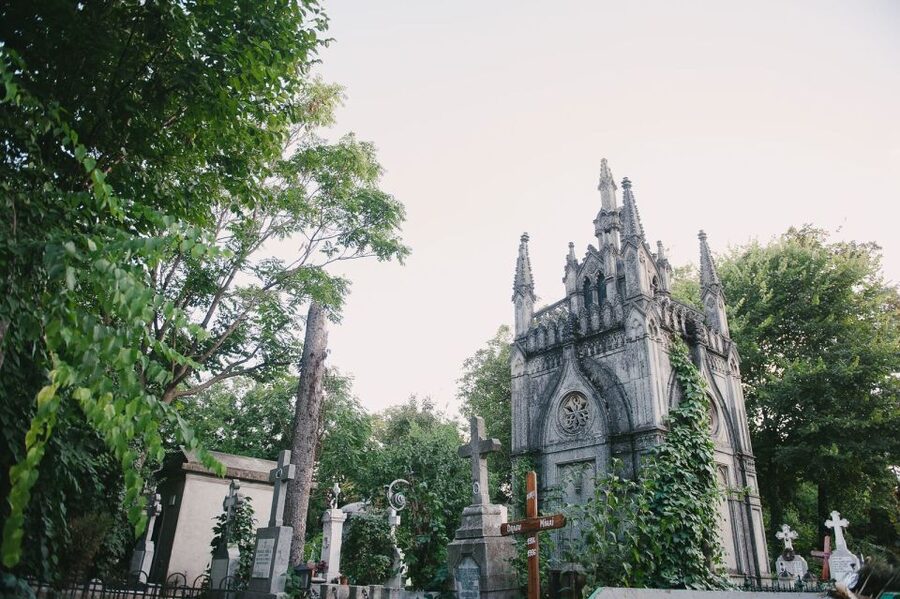
- Bellu Cemetery is the visual centerpiece: Expect carved monuments, elaborate tombs, sad love stories, folklore, and unsettling tales.
- The 1989 Revolution gets serious attention: University Square and Revolution Square help explain how Romania’s communist regime began to collapse.
- The tour covers more than politics: You’ll hear about interwar prostitution, a former brothel, architecture, local customs, and the serial killer nicknamed the Vampire of Bucharest.
- Public transport is part of the route: Metro tickets are included, making it possible to connect the cemetery area with central Bucharest.
- The tone is mature and sometimes grim: No one under 16 may join, and the subject matter includes murder, prisons, torture, executions, and political violence.
Why this Bucharest tour feels different
Many city tours stay with grand buildings, royal stories, and pleasant café streets. This one asks you to look at the wounds beneath Bucharest’s surface. You see how death, crime, dictatorship, protest, and survival have shaped the city.
That does not mean three hours of nonstop horror. The route also brings in architecture, folklore, street art, local food, cats, dogs, and ordinary life. Guides such as Elena and Vlad have been praised for noticing small details, from bullet holes to plants and faded signs. Those observations help the city feel less like a backdrop and more like a place where real people have lived through hard times.
The format is part walking tour, part conversation. You may get a formal explanation of the 1989 Revolution, followed by a personal account of life under communism or a recommendation for a restaurant. Guides often ask about your interests and adjust the balance between architecture, folklore, politics, and crime.
That flexibility matters. If you want only ghost stories, you may find the political history takes up more time than expected. If you want a serious introduction to Romania’s modern past, the mix works very well.
More dark history tours in the world:
- Adults-Only New Orleans Ghost, Crime, Voodoo, and Vampire Tour
★ 5.0 · 6,545 reviews - Edinburgh: Dark Secrets of the Old Town Ghost Walking Tour
★ 4.6 · 1,671 reviews - New Orleans Adults-Only True Crime and Ghost Walking Tour
★ 5.0 · 1,666 reviews
Starting among six cemeteries
The meeting point is at the main entrance of the Ion Luca Caragiale National Theatre on Bulevardul Nicolae Bălcescu 2. From there, the tour heads toward a street not far from central Bucharest that accommodates at least six cemeteries.
This opening stop gives you an unusual way to read the city. Instead of treating cemeteries as isolated memorial spaces, the guide explains how different communities and historical events are represented side by side. The area includes the Cemetery of the Victims of the Revolution in 1989, the Jewish Cemetery, the Cemetery of the Russian Soldiers, and Bellu Cemetery.
You should not expect to spend equal time in all six burial grounds. Bellu is the cemetery you visit in depth, while the surrounding sites provide context for the district and its layers of history. That arrangement keeps the tour moving, though it also means the experience is more about selected stories than a full study of every cemetery.
Bring comfortable shoes. The route includes considerable walking, and several stops involve standing outdoors while the guide talks. In winter, wrap up more warmly than you think you need. It is easy to lose body heat while listening quietly in a cemetery or square, especially on a cold afternoon.
Bellu Cemetery: sculpture, sorrow, and strange stories
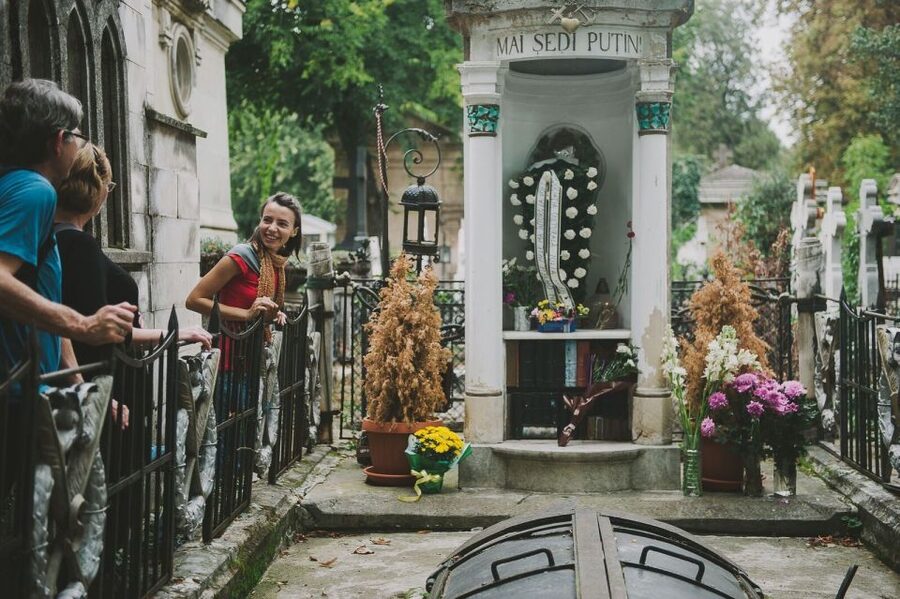
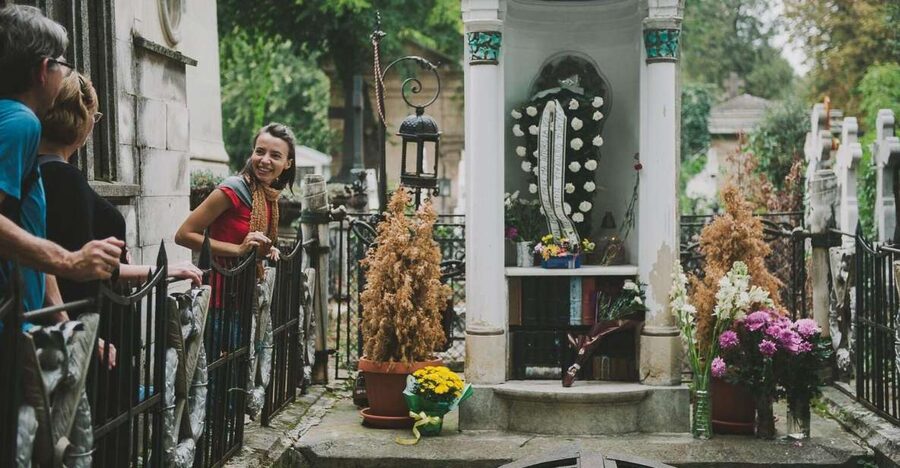
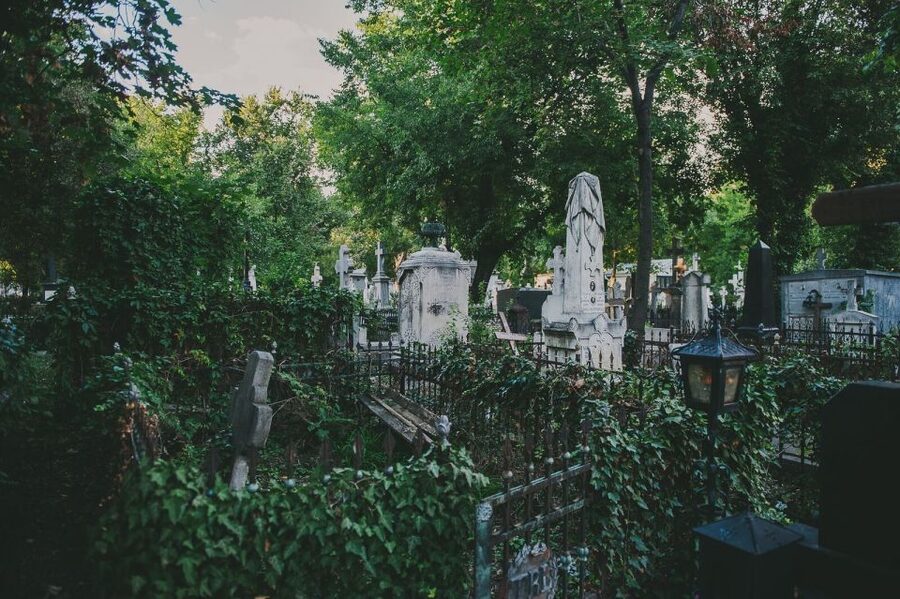
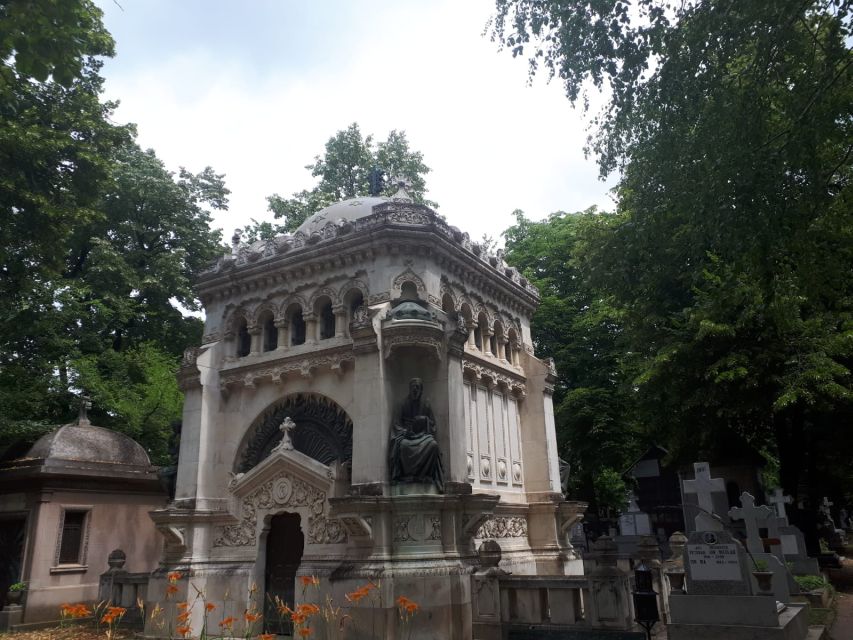
Bellu Cemetery is the tour’s strongest stop for atmosphere. It is a national historical monument, and its tombs and funerary architecture give the place the feel of an open-air gallery.
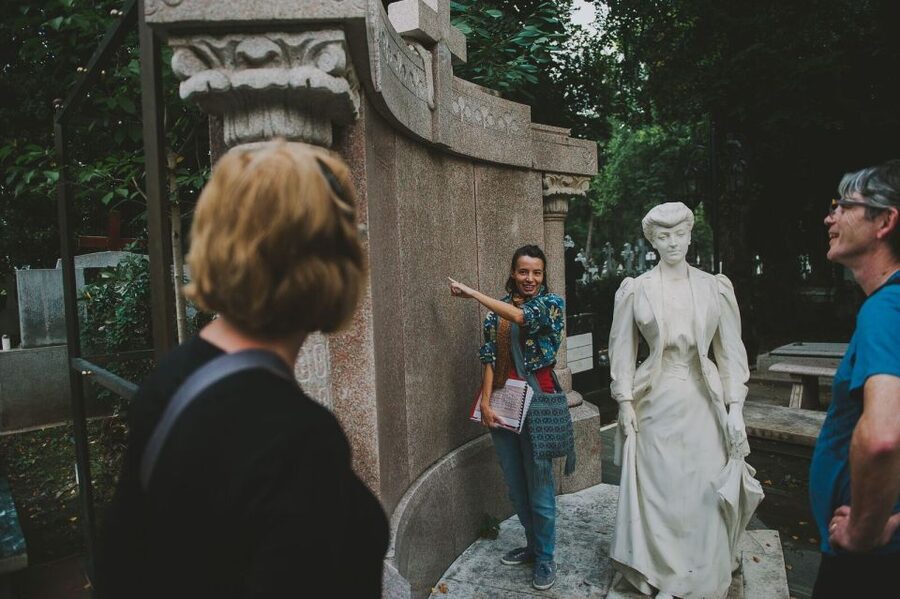
The guide uses individual graves and monuments to tell stories rather than offering only dates and names. You might hear about tragic love, family loss, local beliefs about death, or mysteries connected to the people buried there. The appeal is visual as much as historical: carved stone, crypts, statues, and decorative details reward a slow pace.
I especially like the way this stop connects Romanian culture with the physical setting. A cemetery can tell you about social rank, religious feeling, artistic taste, and family memory. Here, the monuments help explain how Bucharest’s past was recorded by people who could afford elaborate memorials, as well as by the stories attached to less celebrated graves.
There is also a gentle, informal side to the visit. Several guides are fond of the cemetery’s cats and dogs, and you may see them feeding or greeting the animals. That detail should not be mistaken for a promised animal encounter, but it helps keep the stop human. After stories of murder and political violence, a cemetery cat can provide a welcome moment of relief.
The subject matter can be sad and occasionally sinister. If you prefer light sightseeing, this may feel heavy. If you enjoy old cemeteries, folklore, sculpture, and stories with a chill, Bellu may be the part you remember best.
From the Little Paris era to an old brothel
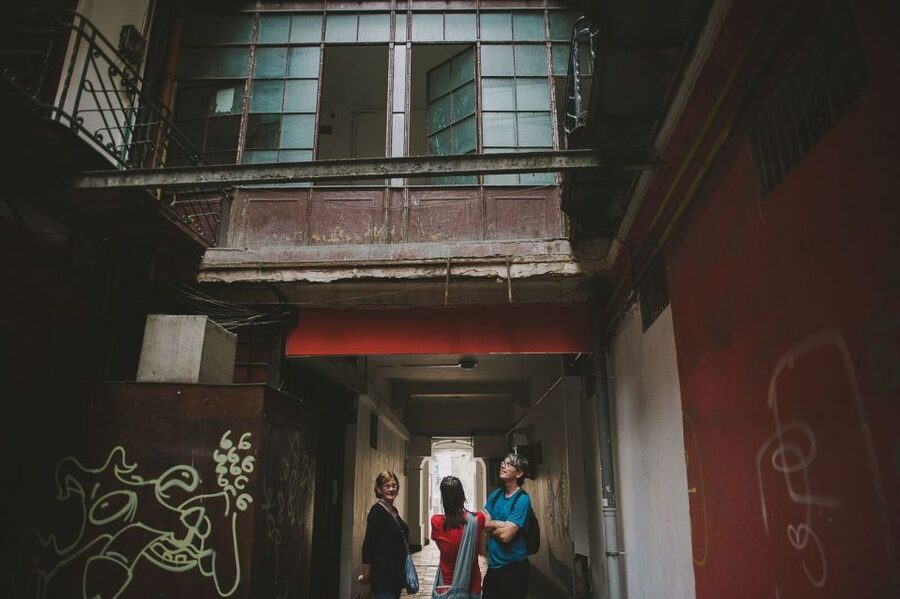
The tour then reaches back to the period when Bucharest was known as Little Paris. That nickname points to the city’s earlier French influence and its sophisticated urban image, but the tour does not present the era as an elegant postcard.
You learn about sex work in interwar Bucharest and see what remains of a former brothel. This is not a visit to a preserved museum interior. The value comes from placing an ordinary-looking urban space into its social setting and explaining how prostitution functioned in the city.
This section adds useful contrast. Bucharest’s past was not only kings, grand façades, and literary cafés. It also included nightlife, exploitation, glamour, poverty, and people working at the edges of respectable society. The guide’s job is to connect those elements without turning the subject into cheap entertainment.
The story of the serial killer nicknamed the Vampire of Bucharest belongs here as well. He terrorized the city at the beginning of the 1970s, and the account gives the tour one of its most unsettling crime stories. Expect a historical explanation rather than a theatrical haunted-house performance.
If you are interested in true crime, this section will likely be a highlight. If the term vampire suggests a supernatural tour, adjust your expectations. The focus is a real criminal case and the fear it created in Bucharest.
More heritage tours in the world:
- History and Hauntings of Salem Guided Walking Tour
★ 5.0 · 14,564 reviews - Savannah History and Haunts Candlelit Ghost Walking Tour
★ 5.0 · 3,235 reviews - Stockholm: Ghost Walk and Historical Tour
★ 4.7 · 2,685 reviews - New Orleans Small-Group Haunted History Carriage Tour
★ 4.5 · 2,289 reviews
University Square and the bloodshed of 1989
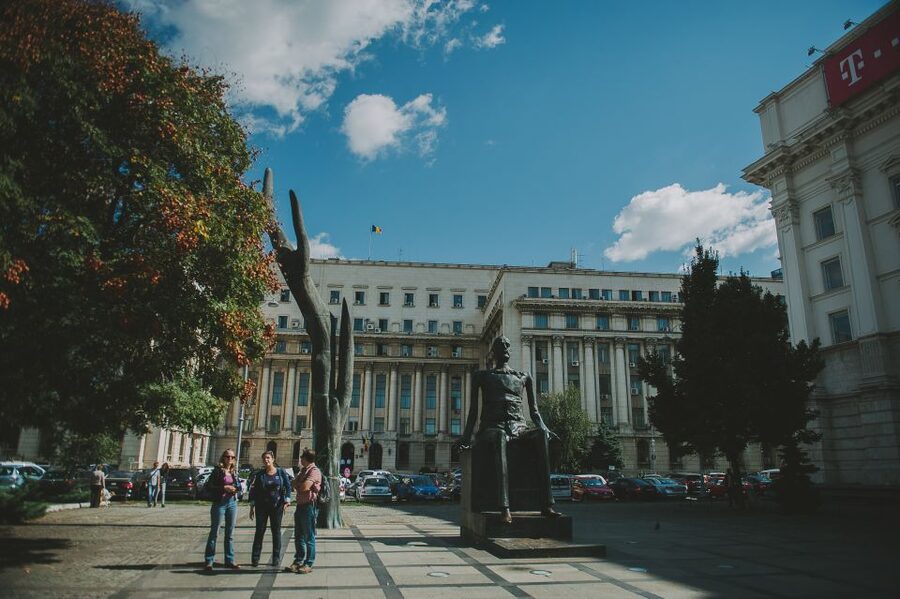
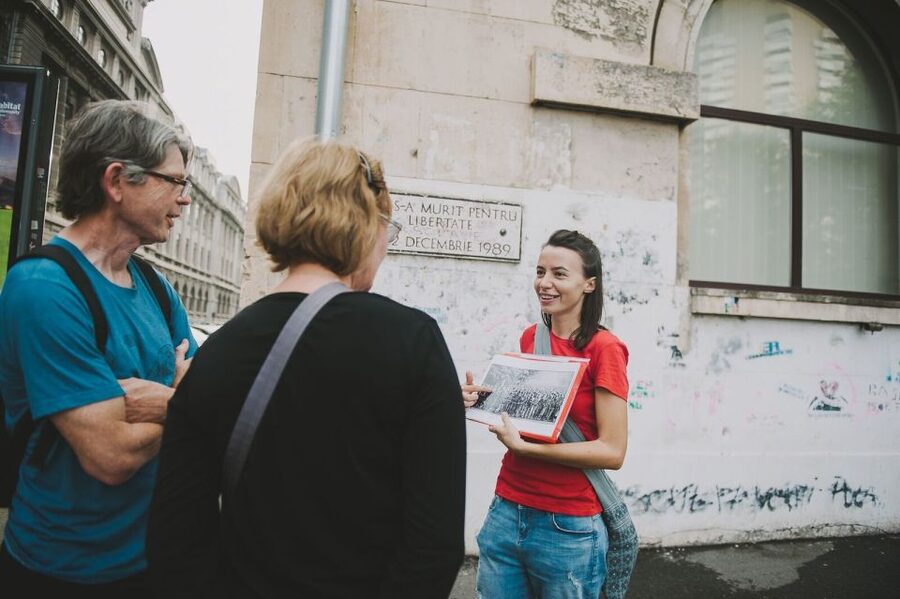
University Square is one of Bucharest’s most important public spaces, and the tour uses it to explain two different waves of protest. The first is the 1989 Revolution, which helped bring down Nicolae Ceaușescu’s communist regime. The second is the anti-communist student protests of the 1990s.
Both episodes involved violence and bloodshed. The square therefore becomes more than a busy central location. It is a place where public space, political power, and ordinary citizens collided.
This is where a good guide makes a real difference. The history can become confusing quickly, with different dates, groups, slogans, and stages of protest. Guides such as Andra, Irina, Alex, and Vlad are praised for making difficult events easier to follow and for answering questions without rushing.
You may also notice small physical clues around the city, including bullet holes and other traces connected to the revolution. The tour encourages you to look closely instead of passing through the square as if it were simply a transport junction.
For me, this is one of the tour’s most useful features: it links the dramatic national story to a place you can still stand in today. You are not studying a distant event in a textbook. You are looking at the streets where it happened.
Revolution Square and life under Ceaușescu
The final major section takes you to Revolution Square, the place where the 1989 Revolution began in Bucharest. Here the subject widens from the uprising itself to the machinery of communist control.
You hear about prisons, labor camps, and torture methods used to silence critics. The guide also explains the role of the Securitate, Romania’s feared secret police, and the pressure placed on people in daily life. The emphasis is not only on famous political figures. It is also on how ordinary people tried to get through each day under surveillance, shortages, fear, and strict control.
This part gives the tour its moral weight. The earlier crime stories are dramatic, but the communist section shows how an entire society can be controlled over many years. It also helps explain why the 1989 Revolution remains such a central part of Romania’s identity.
Some guides add personal or family memories of communism. Vlad, for example, has been praised for explaining his own experience of life under the regime. Those details can make the period easier to grasp, but the precise discussion will depend on who leads your group.
The advantage of a live local guide is that you can stop and ask about a point that puzzles you. The limitation is that a three-hour tour cannot cover every part of communist Romania. You will get a clear framework and memorable stories, not a full academic course.
Walking, metro rides, and group size
The tour lasts three hours and includes metro tickets. Two metro rides have been mentioned as part of the route, allowing the group to cover more ground than a purely central walking tour.
That transport is practical, but do not mistake the metro for a seated sightseeing trip. You still spend much of the afternoon on foot, moving between outdoor stops and listening while standing. Comfortable shoes are essential.
The group limit is 12 people. That is small enough for questions and conversation, while still allowing the tour to operate as a shared experience. Some departures may be much smaller. When only a few people book, guides have sometimes tailored the route to specific interests or spent extra time answering questions.
Guides also seem willing to adjust the pace. Several, including Vlad and Elena, have been praised for checking that everyone is comfortable and pausing when needed. Still, you should be ready for a steady outing rather than a gentle café-to-café stroll.
The tour is offered in English with a live guide. The guides whose names appear most often include Alex, Elena, Andra, Vlad, Irina, Bogi, and others. You cannot rely on receiving a particular guide unless the booking system allows you to select one, but the repeated strength of the guiding team is an important part of the experience.
What the $55 price gets you
At $55 per person, the tour costs more than a basic free walking tour, but the comparison is not quite fair. You are paying for three hours with a local English-speaking guide, metro tickets, a small traditional street snack, and a route that connects locations spread across Bucharest.
The price makes the most sense if you value explanation. Bellu Cemetery is free to enter, and you could visit some central squares independently. What is difficult to recreate alone is the connection between the cemetery stories, interwar social history, the serial killer case, the 1989 Revolution, and communist repression.
The snack is a small extra rather than a reason to book. Some guides have also offered water or additional food suggestions, but additional food and drinks are not included as a standard feature. Souvenirs and personal shopping are also your responsibility.
At the end, you may receive a traditional Romanian chocolate bar or another street snack. Treat that as a pleasant touch, not a meal. Eat beforehand if you need more than a light bite.
Free cancellation is available up to 24 hours before the tour, and you can reserve now and pay later. Those terms help if your Bucharest plans are still shifting, but the bigger decision is whether the subject suits you.
Who should book this experience
I would recommend this tour to you if you want Bucharest explained through difficult stories, local memory, and places beyond the usual postcard route. It is a strong choice for first-time visitors who want historical context, as well as repeat visitors who have already seen the main churches, palaces, and old town streets.
It suits people who enjoy:
- Cemeteries, funerary art, and folklore
- True crime with a historical setting
- The Romanian Revolution of 1989
- Communist-era history
- Architecture and overlooked street details
- Conversational tours with room for questions
It is less suitable if you want a short, relaxed sightseeing loop or a polished presentation focused only on beautiful buildings. The material includes murder, torture, political imprisonment, labor camps, and death. Children under 16 cannot join.
The route also requires stamina. Cold weather can make the stops uncomfortable, and even in good weather you will walk a lot. Wear practical shoes and layers.
Should you book the Dark History Tour?
Book it if you want to understand why Bucharest feels both elegant and scarred. Bellu Cemetery supplies the atmosphere, the interwar section adds social history, and the University and Revolution squares explain the political trauma that still shapes Romania.
I would give it extra weight if you can join a guide such as Alex, Elena, Andra, Irina, or Vlad, since the experience depends heavily on storytelling and local explanation. The format is informal, but the subjects are serious.
Skip it if you dislike cemeteries, crime stories, or long outdoor walks. For everyone else, $55 is a fair price for a focused afternoon that shows Bucharest through its losses, fears, and survival, not just its grand façades.
FAQ
How long does the Bucharest Dark History Tour last?
The tour lasts three hours.
Where does the tour meet?
It meets at the main entrance of the Ion Luca Caragiale National Theatre at Bulevardul Nicolae Bălcescu 2, București 010051, Romania.
What language is the tour in?
The tour is conducted in English by a live local guide.
Is Bellu Cemetery included?
Yes. Bellu Cemetery is a main stop, where the guide discusses funerary architecture, personal stories, folklore, and mysteries.
Are metro tickets included?
Yes. Metro tickets are included in the tour price.
Is food included?
A traditional street snack is included. Additional food and drinks are not included.
Can children join the tour?
No. Participants must be at least 16 years old.
How large is the group?
The maximum group size is 12 people.
What should I bring?
Bring comfortable shoes. Warm clothing is especially important during cold-weather departures because much of the tour takes place outdoors.
Just added around the world
- Zion: Harry Potter-Inspired Zion Ghost Tour with Sunset View★ 5.0 · 8 reviews
- Your evening in Venice – Legends&Ghosts&Aperitif★ 4.7 · 79 reviews
- York’s Haunted Heart : Ghost, Ghouls and Gallows★ 4.6 · 82 reviews
- York : Private Ghost Hunt★ 5.0 · 3 reviews
- Witches, Widows, & Wraiths: Wichita Ghost Tours★ 5.0 · 2 reviews
- Wraiths & Wicked Whispers: Wilmington Ghost Tour★ 4.2 · 25 reviews
- Witches, ghosts and executioners / Mystical North Hesse★ 4.4 · 4 reviews
- Wraiths of the West Texas Wind: El Paso Ghost Tour★ 4.5 · 9 reviews
Dark History & True Crime Tours, compared.
Adults-Only New Orleans Ghost, Crime, Voodoo, and Vampire Tour
Read our review →
The Deathly Dark Tour of York: Experience of the Year 2024
Read our review →
The Dark Side of Florence: Mysteries and Legends
Read our review →
Dark Secrets of the Old Town Ghost Walking Tour
Read our review →
New Orleans Adults-Only True Crime and Ghost Walking Tour
Read our review →
Genteel and Bard’s Savannah Dark History and Ghost Encounter Walking Tour
Read our review →
Buda Castle District Dark History, Legends and Vampire Night Tour
Read our review →Browse the lists this tour appears in