
REVIEW · LONDON GHOST TOURS
London: Jack the Ripper Walking Tour
Jack the Ripper’s crimes still grip the imagination because the killer was never identified. This 90-minute Whitechapel walk takes you from Tower Hill through the streets linked to the five canonical murders, using the actual locations to explain what happened, what is known, and what remains guesswork.
I like two things here. First, the route gives you a very different view of London, away from royal palaces and grand museums. Second, the best guides, including Jim, Alice, Marc, Matthew, and Robin, bring strong storytelling and a firm grip on the case. The main drawback is that the meeting instructions can be confusing, and daytime departures may lack the eerie feel some people want.
Key points to know before you book
- Five murder sites: Follow the route from Trader’s Gate to Mitre Square, Goulston Street, Commercial Street, and Hanbury Street.
- Strong guide-led storytelling: Guides such as Jim and Alice explain the evidence, competing suspects, and Victorian setting with humor and drama.
- A compact 90-minute route: The tour packs in a lot without taking over your afternoon or evening.
- Outdoor and weather-dependent: You walk the whole route, so bring sensible shoes and clothing for London rain.
- Meeting point needs care: Start outside Tower Hill Underground Station near the ice cream refreshments stand, and allow extra time to find the exact spot.
- Good value at $20: You get a live English-speaking guide and a focused look at one of London’s most enduring mysteries.
Starting at Tower Hill with Victorian Whitechapel in view
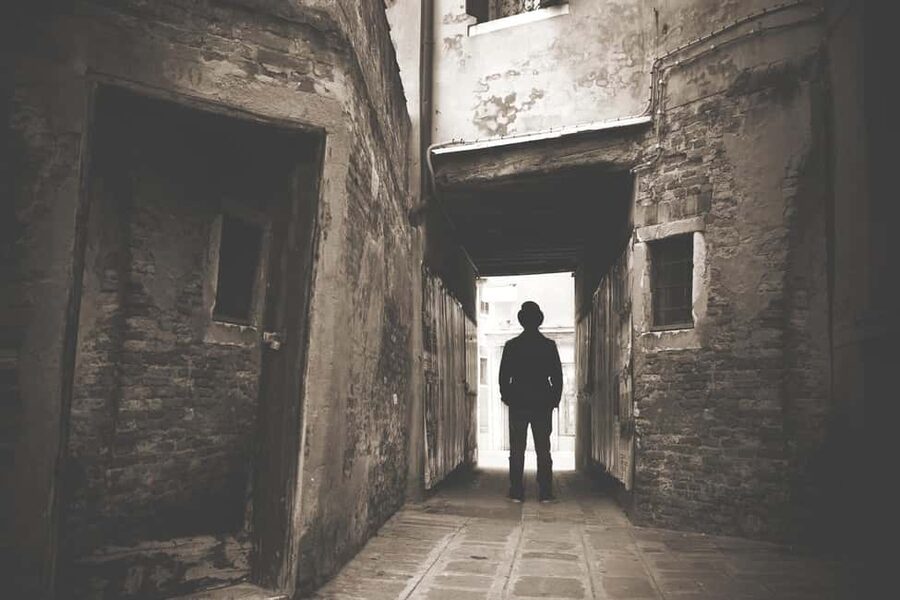
The tour begins outside Tower Hill Underground Station, at the Tower Hill Tram ice cream refreshments stand beside the station exit. The official departure times are 3:30 p.m. and 6 p.m., although you should confirm the time offered for your date when booking.
I would arrive early. The meeting directions have caused some confusion, and one booking note described the map pin as leading people toward a food truck area and the Underground stop rather than the correct gathering point. Another person had trouble finding the group and lost about 20 minutes. Look for the stand by the station exit, check your booking details, and ask locally if needed.
That small nuisance matters because a walking tour works best when you arrive calm and ready to listen. Once the group sets off, the setting does much of the work. Tower Hill places you close to the old eastern edge of the City of London, while Whitechapel opens up as a district shaped by poverty, overcrowding, immigration, work, and sharp social divisions in the late 19th century.
Your guide supplies the period setting. The murders were not isolated acts floating in a vacuum. They happened in an East End where streets, alleys, lodging houses, markets, pubs, and places of work stood close together. The walk uses that setting to show why the case caused such fear and why police work was so difficult in 1888.
More Jack the Ripper tours in London:
- London: The Original Jack the Ripper Walking Tour
★ 4.7 · 7,833 reviews - London Jack the Ripper Guided Tour with Ripper-Vision
★ 4.5 · 4,840 reviews - London: Jack the Ripper Small Group Tour
★ 4.7 · 3,159 reviews
Aldgate High Street and the road into the case
From the meeting point, the route continues along Aldgate High Street toward the murder locations. This early stretch helps you shift from modern London to the older street pattern beneath it. You are not simply hearing a crime story in a room. You are moving through the same broad part of the city where the investigation unfolded.
The guide explains the first murder that launched the famous manhunt. In the early hours of August 31, 1888, a man walking to work found a shapeless bundle near some gates. The discovery turned out to be the body of a murdered woman, identified as Mary Ann Nichols, a Whitechapel sex worker.
This opening gives the story its human and historical frame. The focus is not only on the unknown killer. You also learn about the women, the district, and the conditions that made the case so disturbing. The strongest guides avoid treating the victims as mere pieces in a puzzle and explain how their lives fit into the wider world of Victorian London.
The route is urban rather than scenic. You will walk beside ordinary streets and modern buildings, with only fragments of the older setting still visible. That can disappoint anyone expecting a perfectly preserved crime scene, but it also makes the experience more honest. London has changed, and the guide helps you connect the present streets to the vanished city.
Mitre Square, where the case grew darker
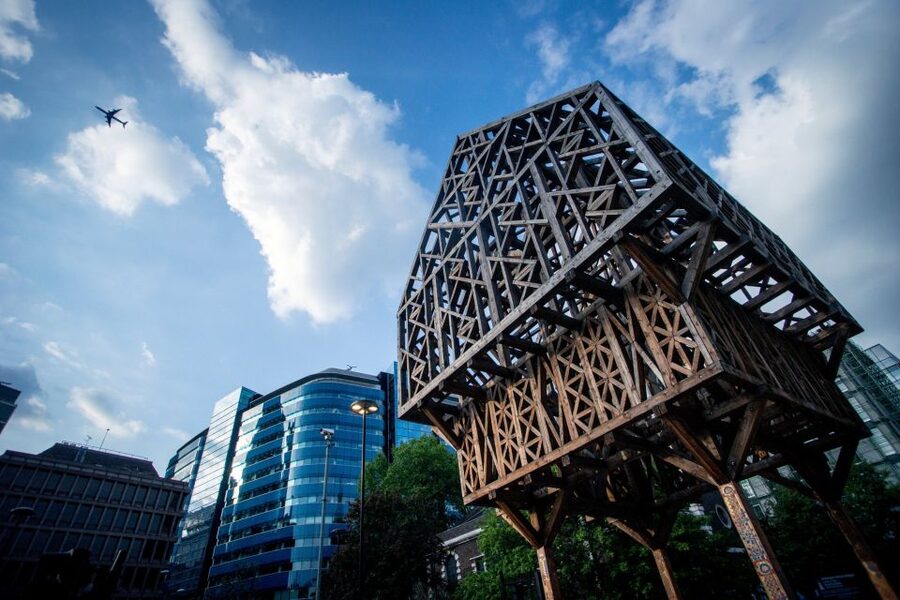
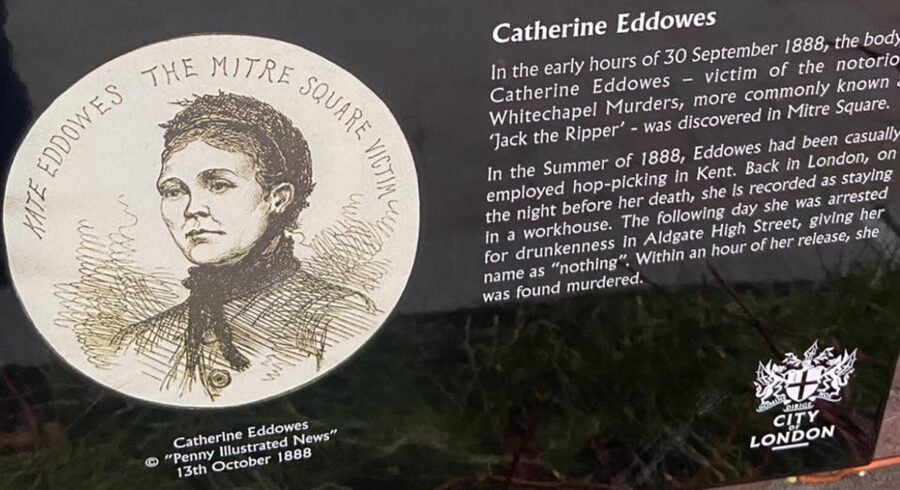
The walk then reaches Mitre Square, one of the most important points on the route. Jack the Ripper is linked to two victims there, making this stop especially significant in the sequence of events.
Mitre Square works well as a stop because the guide can explain the location, the timing, and the evidence without rushing. The open space and surrounding streets help you think about movement through the area. A good guide also makes clear which details are established fact and which have been shaped by later speculation.
That distinction is central to the tour. The name Jack the Ripper came from a letter whose authenticity remains disputed, and the popular image of the killer has grown through newspapers, books, films, and later theories. Guides including Marc, Johnny, and Alice have been praised for separating the documented case from the more dramatic claims.
You should expect gruesome material. The tour deals with murder, mutilation, and the deaths of women who were vulnerable in life and often reduced to headlines after death. It is not a light sightseeing walk, even when the guide uses humor to keep the group engaged. Children under 16 may attend at a parent’s discretion, so adults should decide if the subject fits their family.
Goulston Street and the most disputed clue
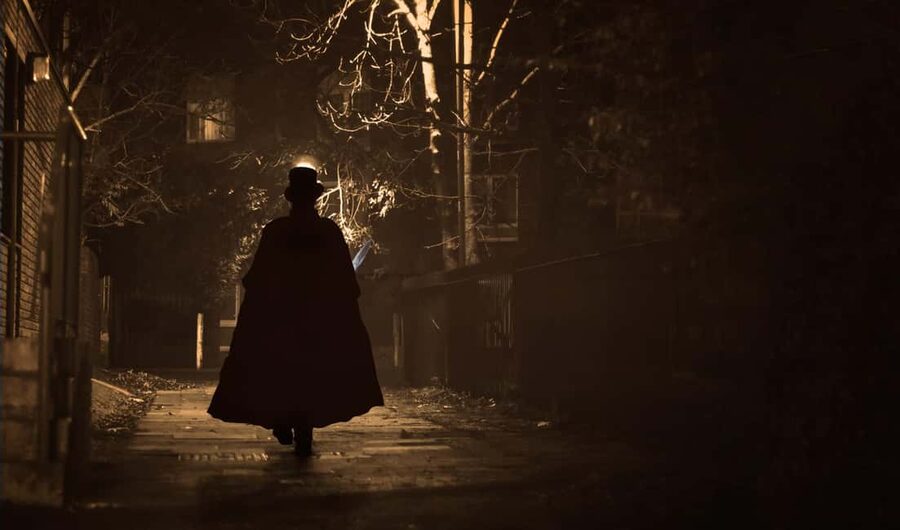
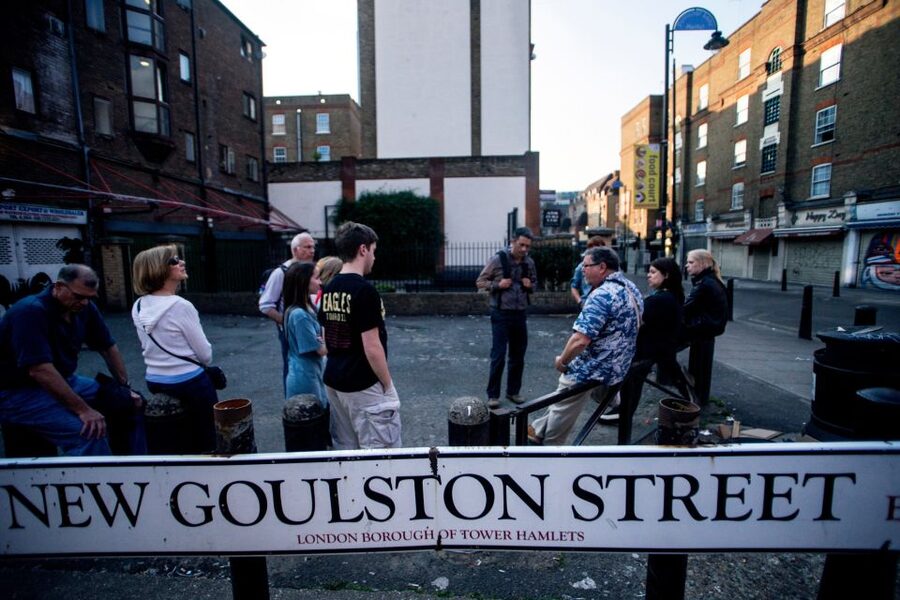
Next comes Goulston Street, often presented as the place connected to the case’s most important possible clue. This is where the tour moves from a sequence of crime scenes into the puzzle at the center of Ripper research.
The guide explains the writing found on a wall and the fragment of clothing associated with the investigation. Police faced a difficult decision about what to do with the writing, since the wording could have been read as hostile or antisemitic. The details are important because they show how fragile the evidence was and how much uncertainty surrounded even the most famous clue.
This is one of the best sections for anyone who enjoys historical investigation rather than simple ghost-story entertainment. You will hear competing ideas about what the clue meant, who may have written it, and how later writers interpreted the evidence. The point is not to hand you a neat answer. It is to show why the mystery remains open.
The guide’s skill makes a real difference here. Jim has been praised for explaining the case and its five victims with unusual command, while Johnny is described as a committed Ripper specialist who could recall the facts without prompts. You should still treat any confident solution with caution. No suspect has been proven to be Jack the Ripper.
More walking tours in London:
- London Jack The Ripper Guided Walking Tour
★ 5.0 · 3,131 reviews - London: Jack the Ripper Evening Walking Tour
★ 4.9 · 1,449 reviews - London: Ghost Walk and River Thames Boat Ride
★ 4.5 · 1,251 reviews - London Jack The Ripper Small-Group Walking Tour
★ 5.0 · 1,013 reviews
Commercial Street and the city around the murders
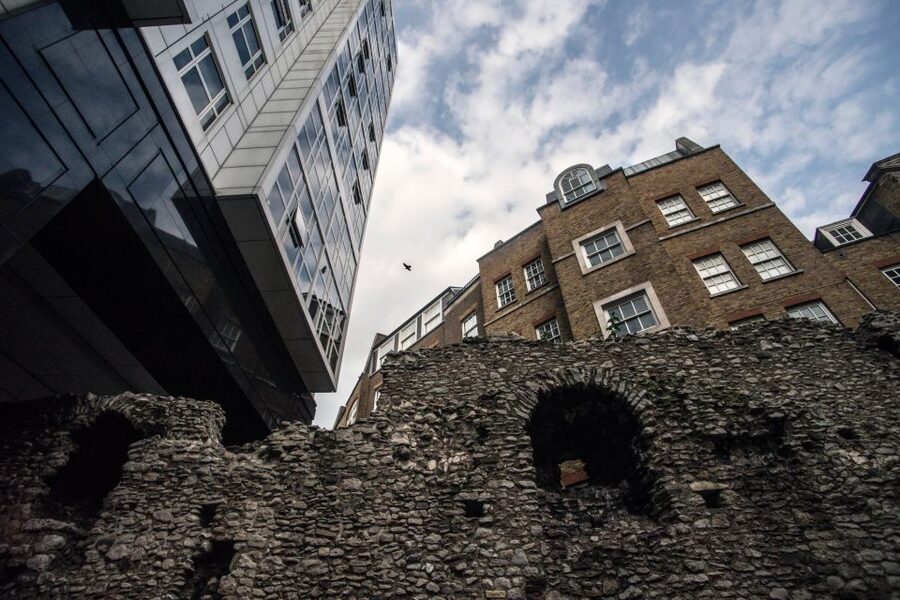
The route crosses Commercial Street, adding another layer to the story. Today, you are walking through a London district with shops, restaurants, transport links, and constant city traffic. In 1888, the same area had a very different social character and a far harsher daily life for many residents.
This is where the tour can become more than a murder walk. Several guides have added useful facts about London, the old East End, and the people connected to the case. One guide even tied aspects of the wider story to the city backgrounds of people in the group. That kind of local context helps you see the tour as a compact history lesson, not just a hunt for sinister corners.
I like this part because it gives the murders a physical setting. You see how close the sites are to one another and how a person could move between them on foot. At the same time, you should not expect every passing building or landmark to receive a full explanation. One booking comment wished the guide had identified nearby churches and markets while the group was walking between stops. The main subject remains Jack the Ripper, so side attractions receive limited attention.
The route is also a reminder that much of the old Whitechapel visible in photographs and books has disappeared. The guide’s descriptions fill in what the street itself cannot show. Think of the walk as a conversation between present-day London and a reconstructed Victorian setting.
Hanbury Street and the story of Annie Chapman
The final major stop is Hanbury Street, where Annie Chapman’s body was found. Her murder is among the most disturbing in the case, and the guide explains the scene, the investigation, and the surrounding circumstances.
This stop often gives the tour its strongest sense of place. The location is not important because it looks unchanged. It is important because standing there helps you understand distance, access, and the ordinary surroundings in which the crime occurred. The contrast between a normal modern street and the horror associated with it can be unsettling.
A responsible guide should keep the focus on facts and avoid turning suffering into a cheap spectacle. The best feedback points to guides who set the scene, explain the people involved, and use humor carefully. Marc has been praised for making the period understandable, while Matthew has been described as both well informed on the case and able to connect it to wider London history.
The walk concludes after about an hour and a half. That is long enough to build a clear narrative but short enough to fit around other London plans. One person wanted the tour to continue because the subject was so absorbing, but the fixed length will suit you if you want a focused evening activity rather than a full-night commitment.
What the guides add to the experience
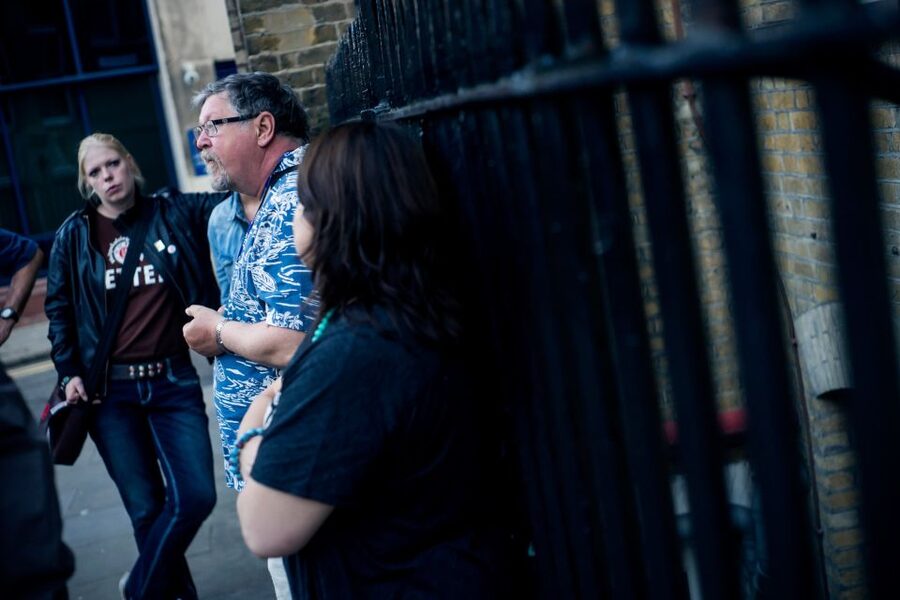
The guide is the tour. The streets provide the setting, but the quality of the evening depends on how well the person leading it handles evidence, atmosphere, pace, and sensitive material.
The most praised guides include Jim, Alice, Marc, Matthew, Robin, Michael, and Johnny. Their approaches vary. Jim has used recitations of the famous Ripper letters. Alice has been praised for clear explanations and for slowing down when older members of a group needed more time. Robin has adjusted the walk during rain and tailored explanations for younger children. Michael has been described as witty and well informed.
That variety is useful, but it also means your exact experience depends on who leads the group. A strong guide can turn a familiar story into a careful history lesson. A less engaging guide would leave you looking at ordinary streets while hearing facts you could have read elsewhere.
The best approach is to listen for the difference between evidence and theory. The tour covers possible suspects, but it does not solve the case. The guides who explain uncertainty honestly are the ones most likely to give you value for your money.
Is $20 a fair price for 90 minutes?
At $20 per person, this is a reasonable London activity if the subject appeals to you. You receive a live English-speaking guide for a focused route through several major sites. There are no attraction admission fees involved, and the cost is modest compared with many central London sightseeing experiences.
The value comes from interpretation, not from access to a building or collection. You are paying for the route, the research, the storytelling, and the chance to connect scattered locations into one narrative. If you already know the case well, you may find fewer surprises, though the setting and guide’s theories can still add something.
The price does not include food or drinks, and there are no indoor attractions included. Plan for the walk itself. Sensible footwear is useful, and a waterproof layer is wise in London. The 6 p.m. departure may feel more atmospheric in darker months, while the 3:30 p.m. option gives you more daylight and may feel easier for families.
You can reserve and pay later, which helps if your London plans are still shifting. Cancellation is free up to 24 hours before the tour for a full refund. Those terms reduce the risk of booking it early, but you should still check the exact availability and departure time for your date.
Who will enjoy this Whitechapel walk?
I would choose this tour if you like unsolved crimes, social history, old maps, and guided walks that use real places to tell a story. It also suits repeat visitors who have already seen the Tower, Westminster, and the major museums and want a different side of London.
It is a good option for families with older children if an adult is comfortable with the subject. The provider allows children under 16 at a parent’s discretion, but the murders are graphic. Young children may find the material upsetting, even if the guide presents it with humor.
You should think twice if you dislike gruesome crime stories, dislike walking in poor weather, or want a tour centered on grand architecture. The route is about evidence, victims, suspects, and Victorian East London. The modern streets are useful context, but they are not preserved film sets.
The walk can also suit people who know little about Jack the Ripper. You do not need to arrive as a Ripper specialist. A good guide explains the names, dates, locations, and theories in order, making the story easy to follow.
Practical tips for a smoother evening
- Arrive early at the Tower Hill Underground Station exit and find the ice cream refreshments stand beside it.
- Check the map carefully before leaving your hotel. The meeting-point information has confused some people.
- Wear shoes you can walk in for 90 minutes and bring protection from rain.
- Choose the 6 p.m. departure if you want a darker, more atmospheric setting, but remember that daylight and weather vary by season.
- Keep an open mind about suspects. The tour explores theories, but no identity has been proved.
- Expect sensitive content. The murders and injuries are discussed as part of the case.
- If walking with an older person or child, stay close to the guide and let them know if the pace becomes difficult.
- Do not plan a meal or attraction at the exact end time. The tour is scheduled for 90 minutes, but city streets and group pace can affect the finish slightly.
Should you book this Jack the Ripper tour?
Book it if you want a low-cost, story-driven walk that shows you an unfamiliar side of London. The strongest reasons are the real murder locations, the compact route, and the chance to hear the case explained by guides such as Jim, Alice, Marc, Matthew, Robin, and Johnny.
I would skip it if you want a gentle sightseeing stroll or dislike graphic subject matter. I would also leave extra time for finding the meeting point, since that is the clearest practical weakness.
For most people interested in the mystery, Victorian London, or unusual city walks, $20 is a fair price. Go for the guide’s interpretation rather than the hope of seeing an untouched crime scene. The streets have changed, but the questions surrounding them have not.
FAQ
Where does the Jack the Ripper walking tour meet?
The meeting point is outside Tower Hill Underground Station, at the Tower Hill Tram ice cream refreshments stand next to the station exit.
What time does the tour depart?
The listed departure times are 3:30 p.m. and 6 p.m. Check availability for the exact start time on your chosen date.
How long is the walking tour?
The tour lasts 1.5 hours, or 90 minutes.
What language is the tour in?
The live tour guide speaks English.
What locations does the route visit?
The route begins at Trader’s Gate and continues along Aldgate High Street to Mitre Square, Goulston Street, Commercial Street, and Hanbury Street.
Does the tour visit the murder locations?
Yes. The walk visits locations associated with the Whitechapel murders, including Mitre Square and Hanbury Street.
Is the tour suitable for children?
Children under 16 may join at their parent’s discretion. Adults should consider the graphic subject matter before bringing younger children.
Is food included?
No. Food and beverages are not included.
Are attraction admission fees included?
There are no attraction admissions included. The experience is a guided outdoor walking tour.
Can I cancel for a refund?
Yes. You can cancel up to 24 hours in advance for a full refund.
Do I have to pay when I reserve?
No. The reserve-now, pay-later option lets you hold a place without paying immediately.
Just added around London
- Wicked Whitechapel: Where Now’s Jack The Ripper Audio Tour★ 5.0 · 2 reviews
- Ghosts, Gore & Other Ghasty Stories in the City of London★ 5.0 · 7 reviews
- Visit Jack the Ripper in French★ 5.0 · 33 reviews
- The Ghosts of the secret alleyways of old London town★ 5.0 · 2 reviews
- The Haunted Pubs of Old London: Small Group Tour★ 5.0 · 38 reviews
- Afternoon Jack the Ripper : Guided Tour★ 5.0 · 183 reviews
- The Fading Light London Ghost Walk★ 5.0 · 35 reviews
- Self-Guided Audio Tour-Behind the shadow of evil: Jack the Ripper★ 4.0 · 2 reviews
London Ghost Tours, compared.
London Jack the Ripper Guided Tour with Ripper-Vision
Read our review →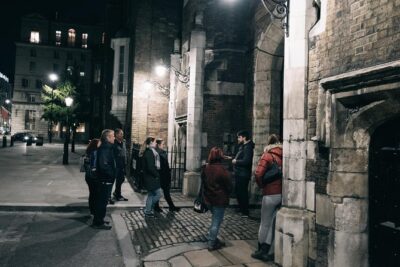
Ghost, Ghouls and Gallows Tour : Guided Tour with Boat Ride
Read our review →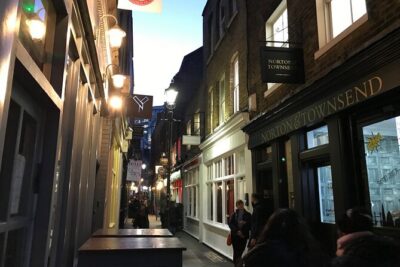
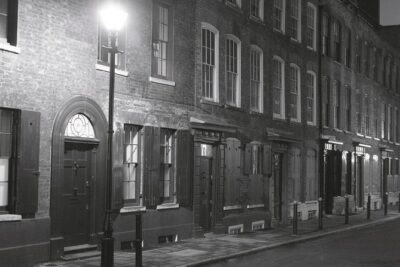

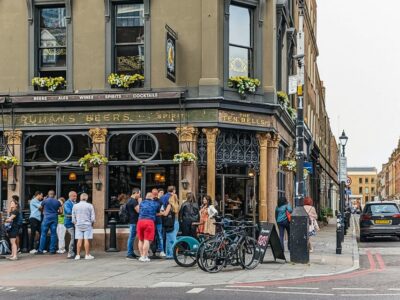
Jack the Ripper Tour with Immersive Ripper Vision
Read our review →
German Language : Original Jack the Ripper Tour
Read our review →Browse the lists this tour appears in