
REVIEW · LONDON GHOST TOURS
London’s Ghosts & Gruesome Past Nighttime Walking Tour
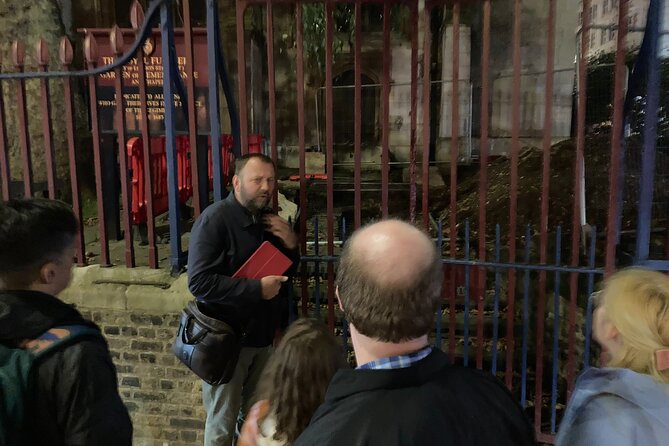
London’s darker past comes quickly into view on this two-hour nighttime walk through Farringdon, Smithfield, and the old City. You’ll hear why people once drank blood and ate bones as medicine, who is said to haunt a Tube station, and why Jack the Ripper is not the worst killer in the story.
I like the route’s mix of 900-year-old churches and grim public sites. I also like the guide-led storytelling, especially when Matt leads, since his style is warm, lively, and clearly driven by the subject. The main drawback is the balance: this is as much about plague, crime, grave-robbing, and bad medicine as it is about ghosts.
Key points to know before you book
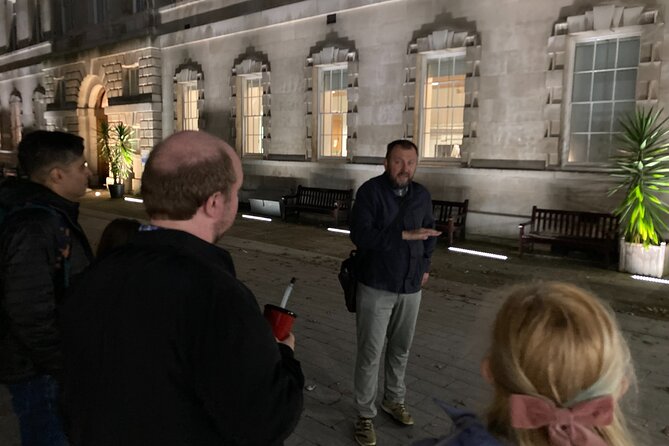
- Farringdon starts the ghost story: Meet outside the Underground station and hear about the girl said to haunt it.
- Smithfield brings public executions into focus: The market area once saw the torture and killing of heroes, martyrs, and ordinary people.
- The medical history is wonderfully unpleasant: St. Bartholomew’s Hospital reveals the strange treatments people once trusted.
- Charterhouse Square marks London’s plague years: You’ll hear how disease changed the city and how doctors tried to respond.
- Holy Sepulchre Church connects pubs, hospitals, and grave-robbing: The story explains who bought stolen bodies and why.
- The Old Bailey saves the worst for last: The final tale concerns a killer described as England’s most prolific, not Jack the Ripper.
Why this London night walk feels different
Many London ghost walks stay with familiar tales of haunted inns and famous murderers. This one takes a broader view. It uses the city’s streets, churches, hospitals, markets, and courthouses to show how ordinary London life was once shaped by disease, executions, crude medicine, and fear of the dead.
That approach gives the walk more substance than a string of spooky stories. You’ll hear about ghosts, but you’ll also learn why people once accepted blood as a remedy, how bodies disappeared from churchyards, and what medical treatment looked like before modern surgery.
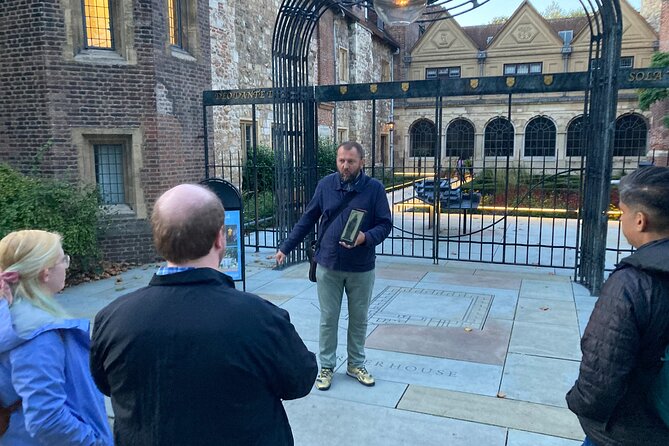
The walk is led in English by a professional certified guide and storyteller. The guide matters here. The subject can become a long list of dates and grisly facts, but a good storyteller gives each stop a clear human angle. Matt is one guide associated with this experience, and his storytelling is described as informative, entertaining, and passionate.
You should expect a lively presentation rather than a quiet architectural tour. The tone is often gruesome, sometimes playful, and occasionally unsettling. If you want serious historical context with a macabre edge, this works well. If you want a tour made almost entirely of supernatural tales, you may find too much of the evening is spent on real suffering and medical horrors.
More walking tours in London:
- London: The Original Jack the Ripper Walking Tour
★ 4.7 · 7,833 reviews - London Jack The Ripper Guided Walking Tour
★ 5.0 · 3,131 reviews - London: Jack the Ripper Evening Walking Tour
★ 4.9 · 1,449 reviews
Farringdon Station and the ghost beneath the rails
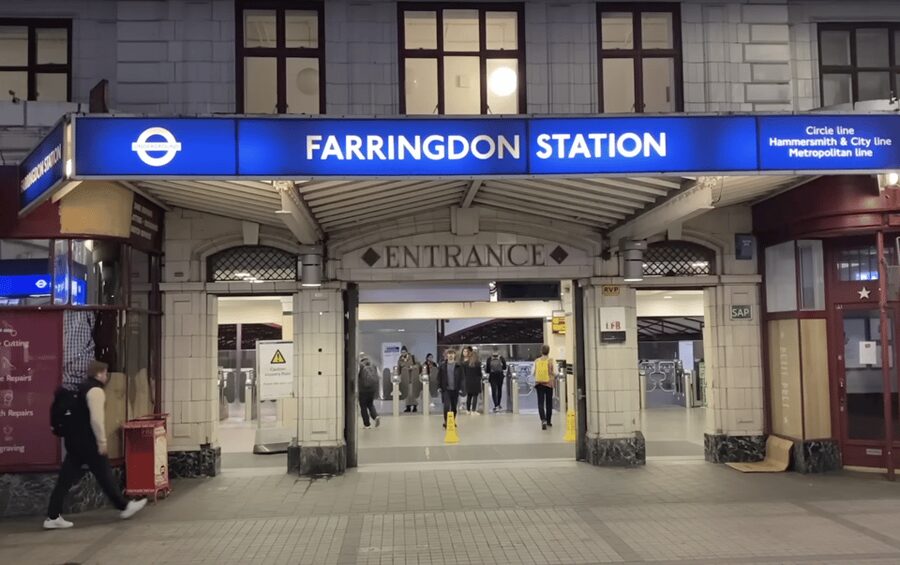
The walk begins at 42 Cowcross Street, outside Farringdon Underground Station. The meeting point is in front of the main station entrance and exit, between the old and new station buildings.
This is a useful starting place because the first story begins almost under your feet. You’ll hear about a girl said to haunt the station, then get an early reminder that London’s Underground is not simply a transport system. It is a network built through older streets, burial grounds, and layers of the city’s past.
The guide also uses the familiar instruction mind the gap as a neat way into the story. It is a small detail, but it sets the tone: modern London is still tied to older, stranger stories.
Arrive with enough time to locate the correct entrance. Farringdon has more than one station structure, and the meeting instructions are specific for a reason. Since this is a nighttime walk, staying close to the guide and listening for directions at busy streets will make the opening easier.
Smithfield Market and centuries of public killing
From Farringdon, the route reaches Smithfield Market, an area with a long connection to public executions. For centuries, this was a place where heroes, religious martyrs, criminals, and innocent people could be tortured and killed in front of a crowd.
The value of this stop is its setting. You are not hearing about executions in an abstract classroom. You are standing in the same part of London where punishment was staged as public entertainment and political warning.
The guide explains that people could be killed in different ways, depending on the crime and the period. That makes Smithfield one of the more sobering stops. It shows how a city could treat death as both justice and spectacle.
You will have time for a photo stop and a visit to the area, but this is still a walking tour rather than an entrance-based attraction. Do not expect access to every building or a long indoor presentation. The surroundings and the guide’s account do most of the work.
Charterhouse Square and London’s plague years

The next stop, Charterhouse Square, offers a striking change of mood. It is a peaceful park surrounded by the busy city, yet the stories beneath its calm surface concern plague, mass death, and desperate attempts to control disease.
Here you’ll learn how plagues changed London, how deadly they were, what doctors tried to do, and what happened to those who survived. The square helps make the scale of the problem easier to grasp. Disease was not only a medical issue. It affected burial, housing, work, religion, and the way people moved through the city.
This is also where the tour’s title can be slightly misleading if you expect nonstop apparitions. The stop is more about death and public memory than a conventional ghost tale. That is not a weakness if you enjoy social history, but it explains why some people may want more ghosts and less gruesomeness.
A few more ghost walks around London worth a look
- London Jack the Ripper Guided Tour with Ripper-Vision
★ 4.5 · 4,840 reviews - Ghost, Ghouls and Gallows Tour : Guided Tour with Boat Ride
★ 4.5 · 3,212 reviews - London: Jack the Ripper Small Group Tour
★ 4.7 · 3,159 reviews - London: Comedy Horror Ghost Tour on a Bus
★ 4.4 · 2,084 reviews
St. Bartholomew the Great and a haunted churchyard
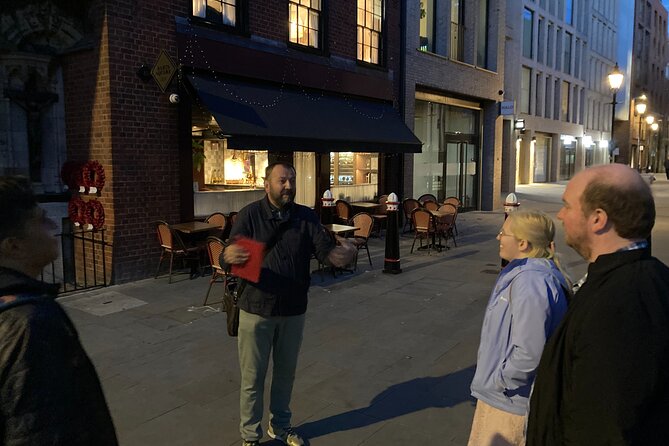
At St. Bartholomew the Great, the route reaches one of its most atmospheric settings. The church is about 900 years old, and its connection with St. Bartholomew’s Hospital gives the stop a strong link between religion, medicine, burial, and charity.
You’ll hear stories involving the church’s founder and famous burials while standing among old tombstones in what is described as one of London’s most haunted graveyards. The setting does much of the storytelling before the guide even begins.
This is a good place to slow down and look around. The tour is not just about hearing facts as you walk past. At several stops, you are given time to take in the surroundings and make sense of why the location matters.
The churchyard may appeal most to people who like atmospheric places rather than theatrical scares. The mood is old, enclosed, and reflective. The stories are macabre, but the site also shows how close churches, hospitals, and burial places once were to daily city life.
William Wallace Memorial and the memory of conflict
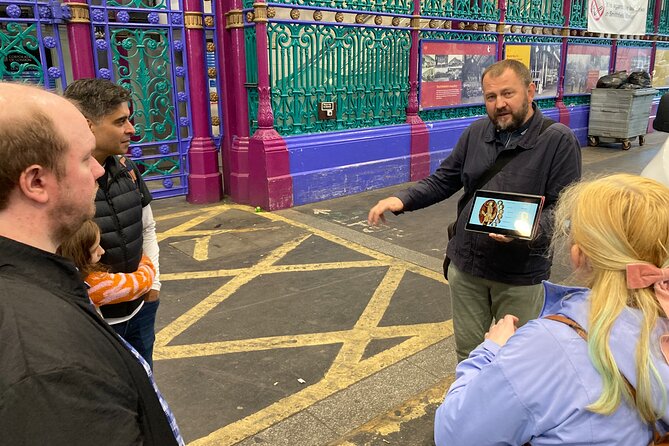
The route then reaches the Sir William Wallace Memorial, a brief but memorable shift away from medicine and burial. Wallace is remembered as a Scottish freedom fighter from the wars between England and Scotland.
This stop gives the walk a wider political frame. London’s darker stories are not limited to local ghosts and criminal cases. They also include conquest, resistance, punishment, and the way nations remember their heroes.
The memorial is particularly useful for visitors who know Wallace mainly from popular culture. The guide brings the story back to the historical conflict between England and Scotland and explains why this particular figure remains important to Scottish memory.
It is a shorter stop than the church and hospital sections, but it breaks up the medical and death-related themes. That variety helps the two hours move along at a good pace.
St. Bartholomew’s Hospital and the medicine of desperation
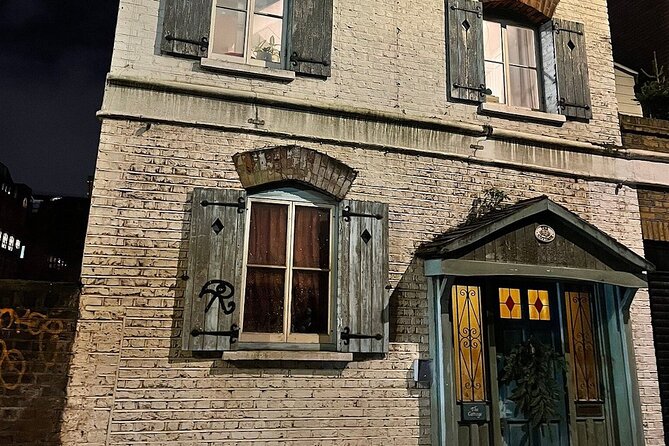
At St. Bartholomew’s Hospital, the tour turns to some of its most memorable material. You’ll hear what doctors once used as tools, treatments, and supposed cures, including things people were expected to drink, eat, or smear on their bodies in the hope of getting well.
This is where the tour’s promise about blood and bones comes into focus. The point is not simply to shock you. It is to show how limited medical knowledge could make strange remedies seem reasonable, especially when illness was frightening and effective treatment was scarce.
The hospital also explains the later grave-robbing story. Doctors and medical students needed bodies for anatomical study, but legal supplies were limited. That created a market for stolen corpses, linking hospitals with nearby churchyards and public houses.
I find this section especially useful because it connects several parts of London’s past. Poor medical care, high death rates, burial customs, and criminal activity were not separate subjects. They fed into one another.
The material can be graphic. If you have a low tolerance for descriptions of bodily treatment or death, keep that in mind before booking. The tour is designed for adults who can handle unsettling subjects, even though no age restriction is provided in the supplied details.
Holy Sepulchre Church and the grave-robbing trade
The churchyard at Holy Sepulchre Church contains empty burial pits that recall an ugly trade from more than two centuries ago. People made money by removing bodies from graves and selling them.
The obvious question is who would buy a dead body. The answer connects this stop to the hospital and to the pubs along the route. The guide draws those links together, showing how medical demand created an incentive for grave robbers.
This is one of the tour’s clearest examples of place-based storytelling. You are not only told that grave-robbing happened. You are shown the kind of churchyard involved, then asked to connect it with nearby medical institutions and drinking places.
The stop also carries a practical lesson about old London. Modern streets can hide layers of earlier use. A quiet churchyard may sit above plague pits or beside places where bodies were once taken, sold, studied, or buried again.
The Old Bailey and the final criminal tale
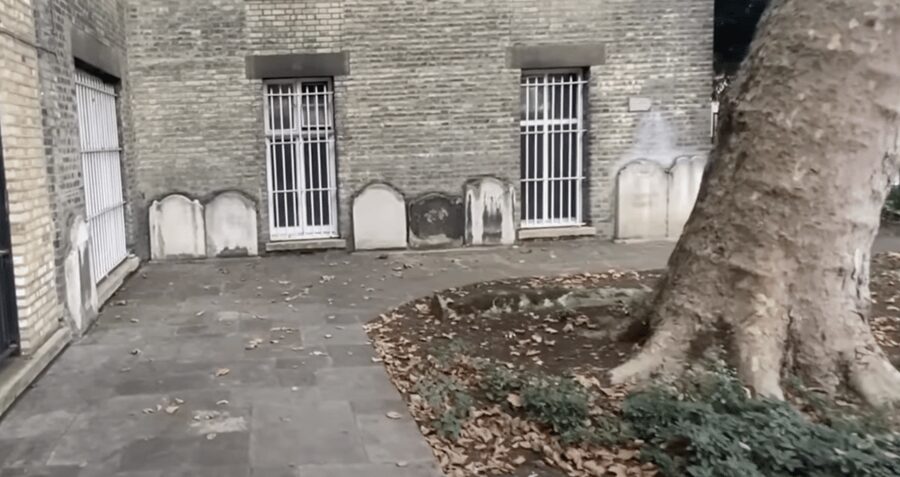
The route finishes its main historical sequence at The Old Bailey, one of London’s best-known courthouses. The guide saves the most notorious criminal story for this part of the walk.
The subject is described as England’s worst or most prolific serial killer, and the story makes clear that the answer is not Jack the Ripper. That twist gives the final stop a useful purpose. It moves you beyond the most familiar London murder legend and toward a less expected case.
The Old Bailey is a fitting place to end because the courthouse brings together crime, evidence, punishment, and public fascination. After hearing about open-air executions at Smithfield, you now reach the institution where criminal cases were formally judged.
The final story may be the strongest choice for visitors who book mainly for crime history. Those looking for ghosts will find that the tour’s main focus is wider: real people, real suffering, and the strange beliefs that grew around them.
The route information lists St. Paul’s Cathedral as the finish, while the meeting details also say the activity ends back at the meeting point. Since those descriptions do not match perfectly, confirm the exact end point and route with the operator before you go.
Price, pace, and practical value
The price is $49 per person for two hours. That is fair if you value a live guide who can connect several areas of London into one story. You are paying for interpretation and structure, not for admission to a paid attraction.
The tour includes a professional certified guide and an escort through the nighttime streets. It does not list meals, transport, or indoor admissions as inclusions. The experience is mainly a guided outdoor walk with photo stops and visits to historic sites.
At two hours, the route is long enough to feel substantial without taking up an entire evening. You get several distinct subjects: ghosts, plague, medicine, executions, Scottish resistance, grave-robbing, and serial crime.
Wear comfortable shoes and prepare for outdoor conditions. The available information does not specify the distance, so you should be ready for a continuous city walk rather than a short stroll between buildings.
The tour is wheelchair accessible, and it is conducted in English. Cancellation is free up to 24 hours before the start, and you can reserve now and pay later. Those policies are useful if your London schedule is still changing.
Who should book this walk
I would choose this tour if you enjoy historical crime, old burial grounds, unusual medicine, and urban legends. It suits repeat visitors who have already seen the main royal and museum sights and want a different side of central London.
It also works for first-time visitors who want a guided route through older parts of the city. You will see churches, hospitals, market areas, memorials, and the courthouse while learning why each location matters.
You may want to skip it if you dislike graphic subjects or want a purely supernatural experience. One clear criticism of the format is that the gruesome history sometimes takes up more space than the ghost stories.
The guide makes the biggest difference. Matt is praised for being informative, entertaining, and passionate, so he would be a welcome leader for this subject. Still, guide assignments can change, and the booking information does not promise a particular person.
Should you book London’s Ghosts and Gruesome Past?
Book it if you want London’s macabre side presented through real places and connected stories. The best parts are the old churchyards, the hospital and grave-robbing link, and the way the guide explains why blood, bones, and stolen bodies once entered medical practice.
Do not book it expecting two hours of jump scares or ghost sightings. This is a walking history lesson with supernatural touches. At $49, it offers good value for a visitor who wants strong storytelling and unusual context, but less value for someone interested only in haunted locations.
FAQ
How long is London’s Ghosts and Gruesome Past Nighttime Walking Tour?
The tour lasts two hours.
Where does the tour begin?
Meet outside Farringdon Underground Station, at the main entrance and exit between the old and new station buildings. The listed starting address is 42 Cowcross Street.
What language is the tour conducted in?
The live tour guide speaks English, and English is the only language listed for the activity.
What places are included on the route?
The route includes Smithfield Market, Charterhouse Square, St. Bartholomew the Great, the Sir William Wallace Memorial, Holy Sepulchre Church, and the Old Bailey. Farringdon Station is the starting point.
Is the tour wheelchair accessible?
Yes, the activity is listed as wheelchair accessible.
Can I cancel for a refund?
Yes. You can cancel up to 24 hours before the tour for a full refund.
Does the tour include admission tickets or food?
The listed inclusions are a professional certified guide and an escort through London’s nighttime streets. Food, transport, and separate admission tickets are not listed as included.
Just added around London
- Wicked Whitechapel: Where Now’s Jack The Ripper Audio Tour★ 5.0 · 2 reviews
- Ghosts, Gore & Other Ghasty Stories in the City of London★ 5.0 · 7 reviews
- Visit Jack the Ripper in French★ 5.0 · 33 reviews
- The Ghosts of the secret alleyways of old London town★ 5.0 · 2 reviews
- The Haunted Pubs of Old London: Small Group Tour★ 5.0 · 38 reviews
- Afternoon Jack the Ripper : Guided Tour★ 5.0 · 183 reviews
- The Fading Light London Ghost Walk★ 5.0 · 35 reviews
- Self-Guided Audio Tour-Behind the shadow of evil: Jack the Ripper★ 4.0 · 2 reviews
London Ghost Tours, compared.
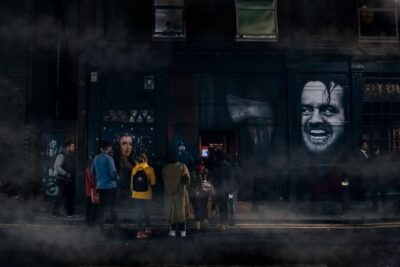
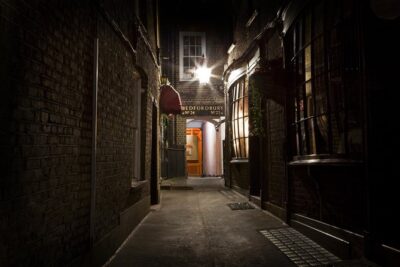
London Jack the Ripper Guided Tour with Ripper-Vision
Read our review →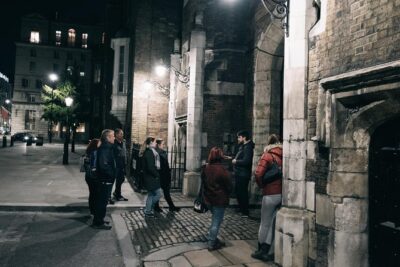
Ghost, Ghouls and Gallows Tour : Guided Tour with Boat Ride
Read our review →

Jack the Ripper Tour with Immersive Ripper Vision
Read our review →
German Language : Original Jack the Ripper Tour
Read our review →Browse the lists this tour appears in