
REVIEW · PARIS GHOST TOURS
Paris: Creepy Middle Ages Walking Tour
Paris keeps its strangest stories in plain sight. On this walking tour, you move from Roman ruins at the Arènes de Lutèce to medieval churches, Notre-Dame, and Pont Neuf while hearing about Vikings, witches, the Knights Templar, and the Black Death. Ancient Paris feels close here, not sealed behind museum glass.
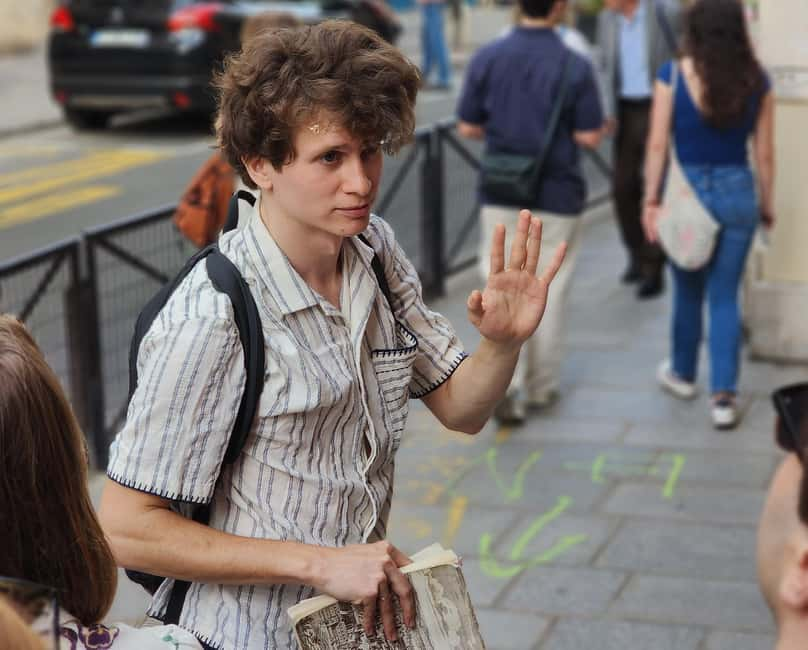
I like two things in particular: you see real remains from Roman Lutetia, and the route connects famous places with less obvious stories. Guides such as Slava bring strong command of French and Parisian history, with a lively sense of humor. Private and small-group options also make the tour more personal.
The main drawback is pace. A guide who knows this much can follow one fascinating side road too far, leaving you with more facts than you can retain. If you prefer a brisk walk with only the key dates, this may feel talk-heavy.
Key points to know before you book
- Roman Paris appears at the Arènes de Lutèce, where ancient ruins begin the story.
- Medieval Paris gets its full treatment, from Notre-Dame and the Sorbonne to hospitals, disease, food, and daily life.
- The Knights Templar and witch trials add the darker edge promised by the tour title.
- The route ends near Pont Neuf, giving you a scenic finish beside the Seine.
- A private or small group can change the experience, especially if you want time for questions.
- Comfortable shoes matter, since the tour lasts two to three hours and includes steady walking.
From Roman Lutetia to medieval Paris
This tour focuses on the oldest district of Paris, not the grand boulevards and polished facades most first-time visitors see. The point is to trace how the city grew layer by layer, from Roman settlement to medieval capital.
You begin near the Arènes de Lutèce, close to the restaurant Le Petit Panthéon. That meeting point puts you near one of the city’s oldest surviving Roman sites, so the tour starts with physical evidence rather than a long introduction in an ordinary square.
The guide’s subjects range widely. You may hear how Julius Caesar conquered Gaul, how Paris defended itself from Viking attacks, and how the city changed as Christianity, royal power, trade, war, and disease reshaped daily life. The best part of this approach is the connection between places. You are not only hearing isolated legends. You are following a city through several dangerous and creative centuries.
The tour is advertised as two hours, though the full walk may take two to three hours. That extra hour matters. A guide who pauses for questions and side stories can turn this into a thoughtful history walk rather than a quick checklist of landmarks.
More walking tours in Paris:
- Paris: Dark History and Ghostly Guided Walking Tour
★ 4.7 · 1,000 reviews - Paris by Night Walking Tour: Ghosts, Mysteries and Legends
★ 4.5 · 924 reviews - Paris: Ghosts, Legends & Mysteries Evening Walking Tour
★ 4.5 · 241 reviews
Arènes de Lutèce: a Roman start
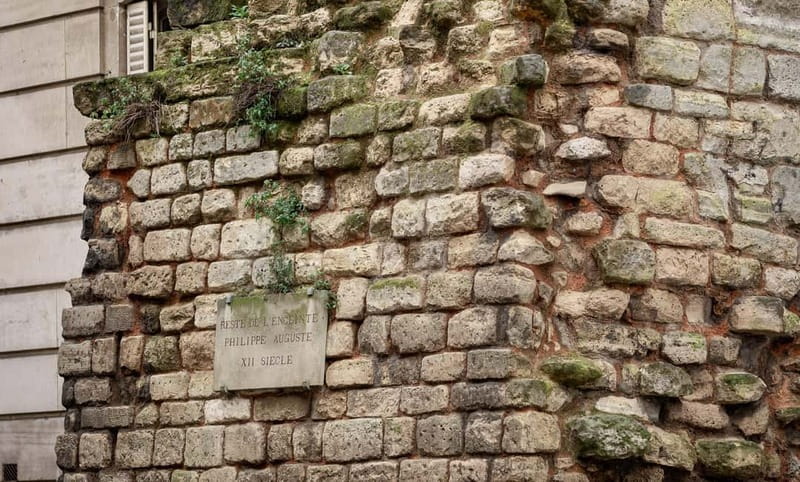
The Arènes de Lutèce is the first major stop. These ancient Roman ruins give you a clear sense that Paris did not begin with medieval kings or Notre-Dame. The settlement once known as Lutetia belonged to the Roman world, and the remains here introduce the long story of the city.
You will have a guided visit and time to walk around the site. The appeal is simple: ruins make an early chapter easier to understand. Instead of imagining Roman Paris from a textbook, you are looking at surviving stone in the middle of the modern city.
The Roman section also frames the question of how Julius Caesar conquered Gaul. You should expect the guide to connect Roman expansion with the development of Paris, rather than treating the ruins as a detached archaeological stop.
This is a good opening for anyone who wants context before reaching the famous monuments. It may feel less dramatic than Notre-Dame, but it gives the whole tour a stronger foundation.
The Sorbonne and the making of a medieval capital
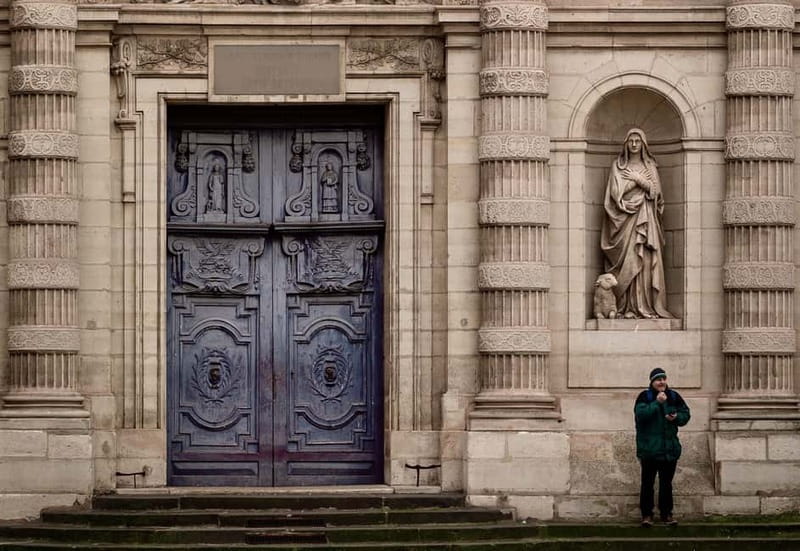
The route continues to La Sorbonne, one of the key institutions tied to Parisian intellectual life. Here, the guide shifts from military conquest and Roman settlement toward education, religion, and the growth of the medieval city.
The stop is guided and taken on foot, so the experience is about the surrounding streets and the story attached to them. You may hear how medieval Parisians studied, worshiped, worked, and spent their free time. The tour also promises discussion of what people ate and how they entertained themselves, useful details that can make the Middle Ages feel less like a parade of kings and battles.
I appreciate this part because it broadens the focus. The title suggests frightening stories, but daily life matters just as much. A city is not only its rulers and disasters. It is also its students, workers, religious communities, markets, meals, and public amusements.
Musée de Cluny and the Roman baths
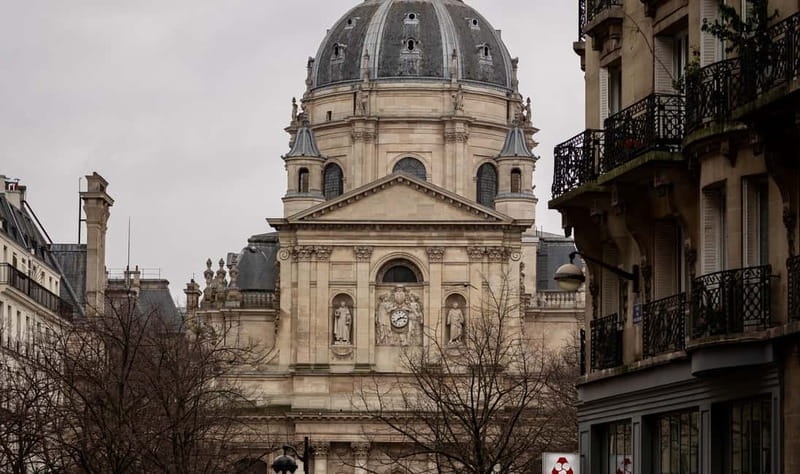
The Musée National du Moyen Âge, also called the Musée de Cluny, brings together Roman and medieval layers in one memorable section of the walk. The site includes the ancient Roman baths, making it a natural place to discuss how Paris changed after the Roman period.
You should not expect a full museum visit as part of this walking tour. The itinerary lists a guided walk and sightseeing stop, not an included museum admission. The value here is the outside setting and the guide’s explanation of what the ruins mean within the city.
This is one of the strongest places to listen for the contrast between Roman public life and medieval Paris. The remains remind you that later generations did not build on an empty site. They reused, adapted, and sometimes forgot older structures.
If you want to explore the Musée de Cluny’s collections in detail, plan a separate visit. Two to three hours is not enough for both a full museum experience and this wide-ranging walking route.
A few more ghost walks around Paris worth a look
- Paris: Haunted Père Lachaise Cemetery Guided Tour
★ 4.6 · 3,591 reviews - Paris: Haunted Père Lachaise Cemetery Guided Tour
★ 4.5 · 344 reviews - Père Lachaise’s Cemetery Celebrities and Ghosts Mystery Tour
★ 4.5 · 31 reviews - Paris: Ghosts and Dark Stories Guided Walking Tour
★ 4.1 · 11 reviews
The secret stop and the darker side of Paris
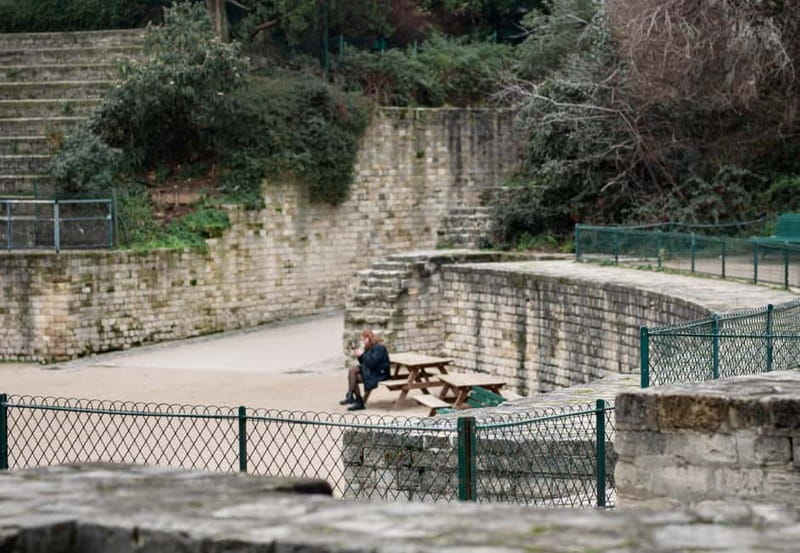
One stop is kept secret until the tour. That small touch fits the subject matter, though it also means you cannot judge its importance in advance. You may find it most enjoyable if you like leaving room for surprise.
The darker stories are woven through the walk. The guide covers the Knights Templar, one of the most secretive and heavily mythologized organizations of the Middle Ages, along with witch hunts and sorcery accusations. These subjects suit the tour’s creepy tone, but the experience is not presented as a haunted-house performance.
The appeal lies in seeing how fear worked in medieval society. Rumors, religious anxiety, political power, and disease could all shape public behavior. The Knights Templar section should interest anyone drawn to medieval mysteries, while the stories of witchcraft show the human cost behind old legends.
Keep your expectations grounded. This is a history walk with a dark theme, not a paranormal investigation. The tour information promises secrets and mysteries, but it does not promise ghosts, staged scares, or nighttime effects.
The Panthéon and the story of Saint Geneviève
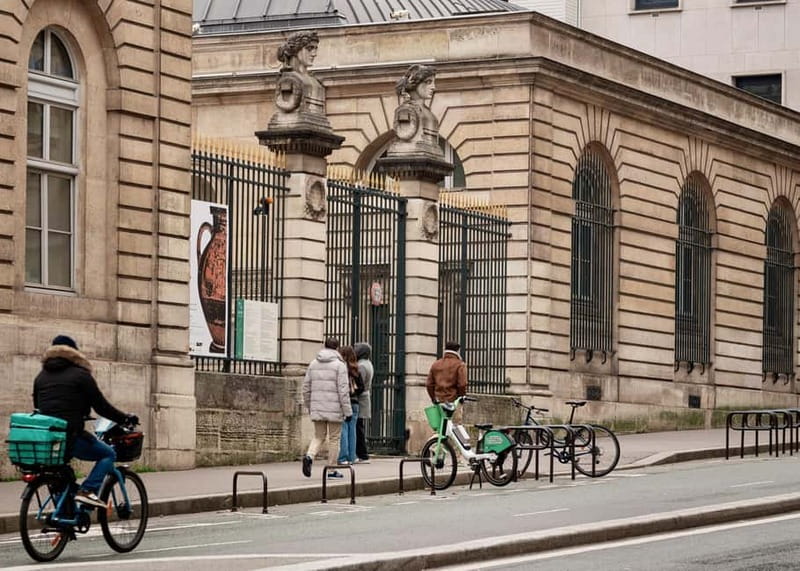
The route includes the Panthéon, Paris, another major landmark in the Latin Quarter. Its inclusion helps connect famous architecture with the city’s earlier legends and crises.
One promised story concerns who saved Paris from the Huns led by Attila. That points to Saint Geneviève, a central figure in Parisian tradition. The guide can use this episode to show how religious belief and civic identity mixed in the city’s memory.
The Panthéon itself is a powerful building, but this walking tour is not primarily an interior visit. You should think of the stop as part of the city walk, with the guide explaining its place in Paris rather than giving you a full architectural tour.
This is also a useful pause in the route. After Roman ruins, university history, and grim medieval subjects, the Panthéon gives you a large, recognizable landmark before the walk heads toward Notre-Dame.
Notre-Dame and the building of a legend
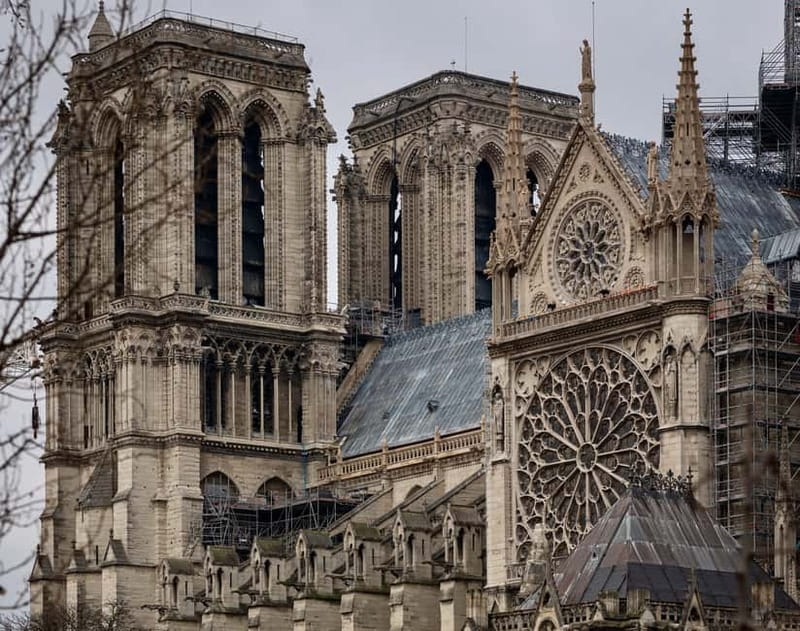
Notre-Dame Cathedral is the route’s most famous stop. The guide discusses how the legendary cathedral was created, giving you a chance to see it not only as a postcard image but as a long medieval building project.
The tour includes guided sightseeing and walking here. It does not list interior admission, so do not book this walk expecting a guaranteed cathedral entry. The focus is the cathedral’s place in medieval Paris and the stories built around it.
Notre-Dame works especially well in a tour about the city’s oldest district. Its fame can make it seem timeless, but the guide’s job is to return you to the period when it was being planned, constructed, and absorbed into the life of the city.
This is likely to be the busiest part of the route, and the guide’s storytelling becomes important. A strong explanation can help you look past the crowds and notice the cathedral as a product of medieval ambition, faith, labor, and money.
Black Death, hospitals, and life under pressure
The tour also asks a practical and unsettling question: how did Parisians deal with the Black Death? That subject leads into the history of hospitals and the claim that Paris was home to the oldest hospital in the world.
The guide presents these subjects as part of the city’s medieval secrets. You can expect discussion of how disease affected ordinary people and how medical care worked before modern science. This is one of the tour’s most useful themes because it moves beyond dramatic tales and shows what made medieval life hard.
The experience also promises information about food and entertainment. Those details help balance the grim material. You may hear about what people ate, how they spent time, and how city life continued even during war and disease.
Because the tour covers so many subjects, the amount you retain will depend on the guide’s pace and your own questions. One guide, Slava, is described as especially strong on French and Parisian history and able to answer detailed questions. That is a benefit if you enjoy conversation, but a possible strain if you want only short explanations.
Pont Neuf and the Seine-side finish
The final stop is Pont Neuf, with the tour ending at 15 Place du Pont Neuf. Despite its name, Pont Neuf is Paris’s oldest standing bridge, making it a fitting place to finish a walk through the city’s earliest chapters.
This is a photo stop as well as a guided stop. After two or three hours of Roman, religious, royal, and tragic history, the bridge offers a more open view and a natural moment to pause.
The finish is practical too. You end near the Seine rather than returning to the starting point, so you can continue sightseeing from central Paris. The tour does not include transportation, food, or drinks, but the route itself is designed as a walking experience from start to finish.
Bring water and wear comfortable shoes. Weather-appropriate clothing is important, since the activity takes place outdoors and has no promise of shelter during every explanation.
How the $58 price measures up
At $58 per person, this is not the cheapest way to see the Latin Quarter. You are paying for a two to three hour guided walk, a professional local guide, access to a private or small group format, and a separate PDF guide with 15 Paris locations to explore after the tour.
The value depends on how much you want from the storytelling. If you only want to photograph Notre-Dame and Pont Neuf, you can do that without paying for a guide. If you want Roman ruins, medieval religion, Templar mysteries, the Black Death, and ordinary life tied into one route, the price is easier to justify.
A small group or private booking may offer better value for couples, families, or friends who want to ask questions. A January weekday can sometimes result in a private experience, though you should not count on having the guide alone unless you book a private option.
The free PDF is a useful extra, especially if you plan to keep exploring Paris after the walk. It does not replace a full guidebook, but 15 additional places can help you turn this tour into a starting point for later walks.
Pace, group size, and guide style
This tour suits you best if you like history delivered as a conversation rather than a formal lecture. Guides speak English or Russian, and the format can be private or arranged for a small group.
The guide style matters here. Slava is praised for strong historical command, enthusiasm, and humor. That combination can make difficult subjects easier to follow, especially when the tour moves from Caesar to Attila, the Templars, Notre-Dame, and the plague in a single outing.
The same strength can create the main weakness. A guide who knows a great deal may stop for long explanations or move into related topics. One visitor found the material so detailed and the pace so slow that less information was retained. You can help by saying early that you prefer a brisk pace, or by asking the guide to focus on the main stories.
The route is not described as difficult, but two to three hours on foot is still a commitment. There are no included food, drinks, or transport breaks. Plan accordingly, especially in hot, cold, or wet weather.
Who should take this walk
I would choose this tour if you have already seen the obvious Paris highlights and want the city’s older, stranger side. It is also a good first-day activity for history-minded visitors who want a map of the Latin Quarter and the Île de la Cité before exploring on their own.
You are likely to enjoy it most if you:
- Like Roman and medieval history
- Prefer stories about ordinary life as well as famous rulers
- Want to ask detailed questions
- Enjoy legends about the Knights Templar, witches, and disease
- Value a local guide over a self-guided walk
- Can comfortably walk for two to three hours
You may want another option if you want a fast overview, a museum-heavy outing, or guaranteed access inside Notre-Dame and the Musée de Cluny. Those are not listed as included visits.
Should you book the Creepy Middle Ages Walking Tour?
Book it if you want Paris presented as an old, layered city rather than a collection of famous monuments. The Roman arena, medieval churches, Notre-Dame, Pont Neuf, and the darker stories give you plenty of substance for $58, particularly in a private or small group setting.
Go in ready for a talkative guide and a broad range of subjects. If you prefer short stops and quick facts, ask for a faster pace at the beginning. If you enjoy history, questions, and the occasional grim medieval tale, this is a strong way to spend an afternoon in central Paris.
Free cancellation is available up to 24 hours before the tour, and you can reserve without paying immediately. Those terms make it easier to fit the walk into a changing Paris schedule.
FAQ
How long does the Paris Creepy Middle Ages Walking Tour last?
The stated duration is two hours, while the full description gives a range of two to three hours. Check the available start times when booking.
Where does the tour begin?
The meeting point is near the Arènes de Lutèce, beside the restaurant Le Petit Pantheon.
Where does the tour finish?
The walk finishes at 15 Place du Pont Neuf, near Pont Neuf and the Seine.
Which languages are available?
The tour is available in English and Russian.
Is the tour private or shared?
Private and small-group options are available.
Does the price include food, drinks, or transportation?
No. Food, drinks, and transportation are not included.
What should I bring?
Bring comfortable shoes, water, and clothing suitable for the weather.
Just added around Paris
- Paris Ghosts and Dark Stories Tour★ 4.0 · 10 reviews
- Père Lachaise’s Cemetery Celebrities and Ghosts Mystery Tour★ 4.5 · 31 reviews
- Haunted Walking Tour of Père Lachaise Cemetery★ 3.0 · 2 reviews
- Paris Mysterious and Dark Stories Walking Tour – Small Group★ 5.0 · 10 reviews
- Ghost & Haunted Walking Tour in Eiffel Tower Exterior at Night★ 3.5 · 3 reviews
- A City of Shadows: Dark Tales of Paris by Night★ 5.0 · 5 reviews
- Paris: Ghosts, Legends & Mysteries Evening Walking Tour★ 4.5 · 241 reviews
- The Haunted Paris Experience★ 4.8 · 6 reviews
Paris Ghost Tours, compared.


Paris by Night Walking Tour: Ghosts, Mysteries and Legends
Read our review →
Ghosts, Legends & Mysteries Evening Walking Tour
Read our review →
Père Lachaise’s Cemetery Celebrities and Ghosts Mystery Tour
Read our review →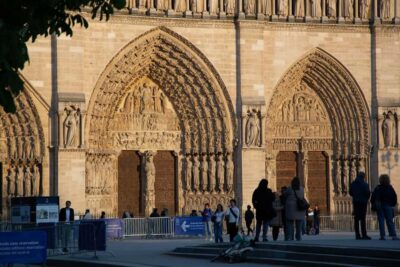

Paris Mysterious and Dark Stories Walking Tour – Small Group
Read our review →Browse the lists this tour appears in