
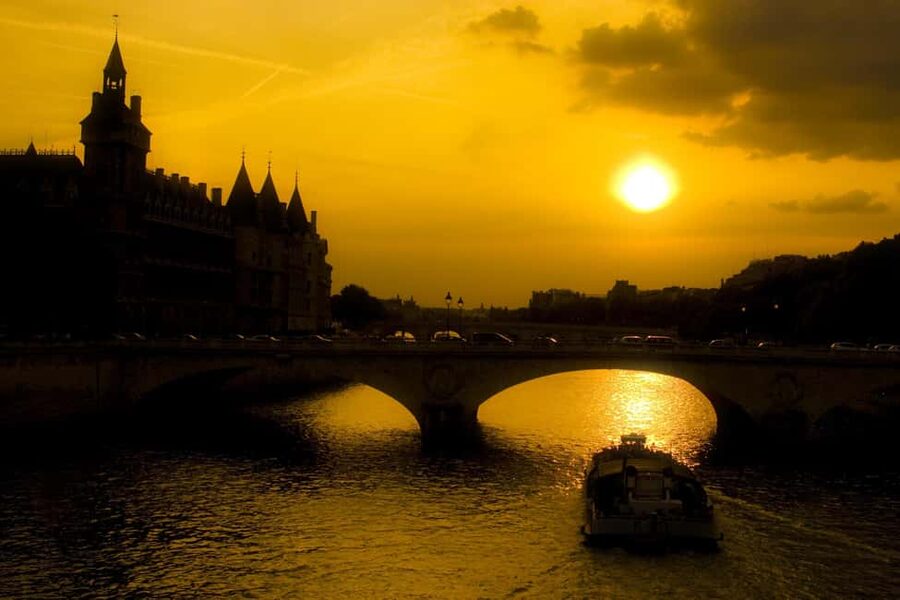
REVIEW · PARIS GHOST TOURS
Paris: Ghosts, Legends & Mysteries Evening Walking Tour
Paris after dark has more to offer than pretty lights and river views. On this two-hour evening walk, you follow old streets through stories of torture, plague, religious violence, royal prisoners, executions, and murder. The setting is central Paris, but the mood is far from postcard-perfect.
I like the route’s mix of famous sights and less obvious stops, especially the Fontaine de la Croix-du-Trahoir and Fontaine des Innocents. I also like the strong storytelling element. Guides such as Ami, Natalie, Rimi, Sophia, and Saeed have been singled out for humor, energy, and a clear grasp of Parisian history. The main caution is that the tour can feel more historical than supernatural, and one recent booking ended after just over an hour rather than the advertised two.
Key points to know before you book
- The walk starts on Pont Neuf: Meet at the equestrian statue of Henri IV, in the middle of the bridge at the western end of Île de la Cité.
- The stories are often historical rather than truly ghostly: Expect executions, massacres, royal imprisonment, disease, ritual lore, and famous criminals more than theatrical scares.
- The Conciergerie adds a strong royal connection: The route visits the former prison where Marie Antoinette was held.
- The price is unusually low: At $15 per person, this is an inexpensive way to add a guided night walk to your Paris plans.
- You will walk and stand outdoors: Wear comfortable shoes and dress for the weather, especially in colder months.
- Mobility access is limited: The tour cannot accommodate wheelchairs, strollers, baby carriages, or people needing special assistance.
Why Paris feels different after sunset
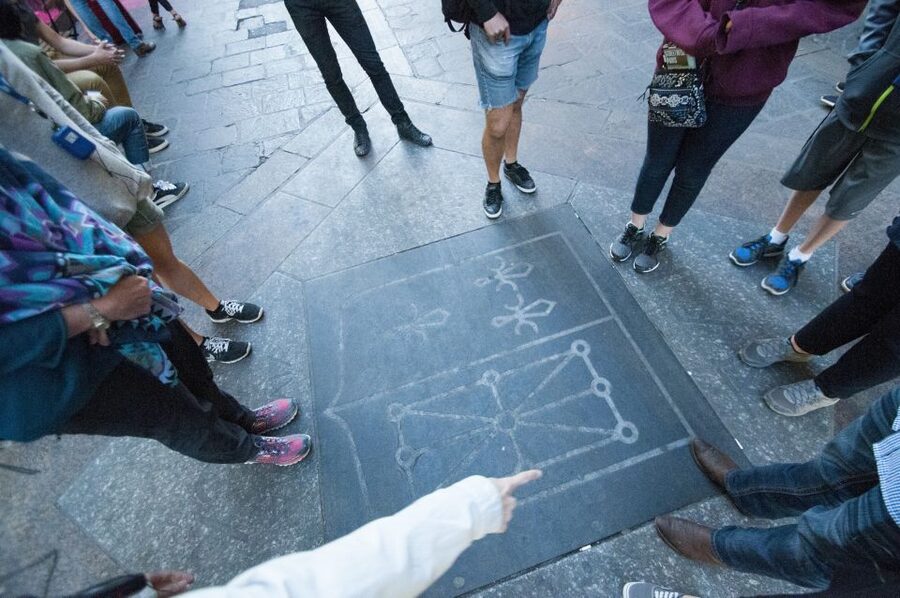
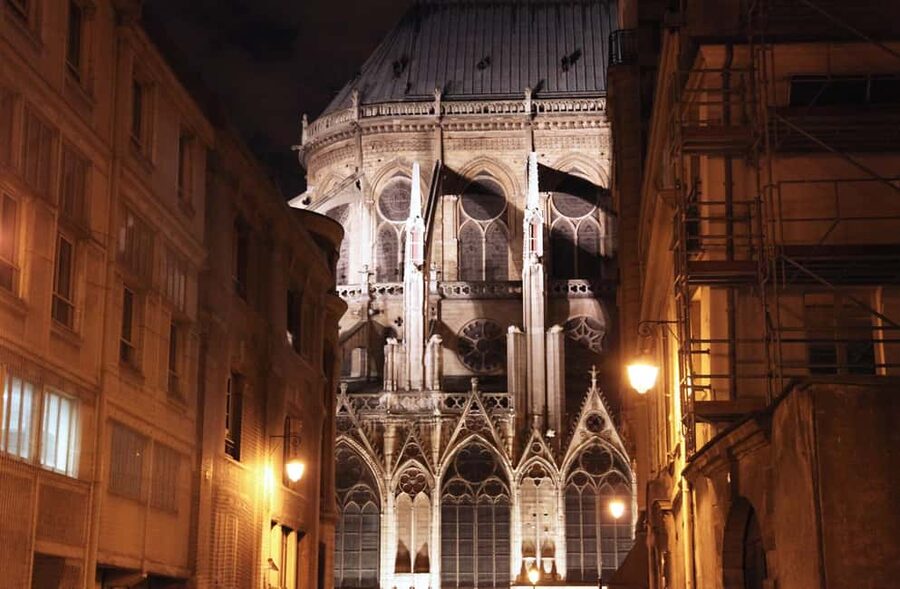
The appeal of this tour is not haunted-house theater. It is the shift in perspective. You see familiar central Paris locations through events that are violent, secretive, and often forgotten beneath the city’s polished surface.
The route stays in the historic center, but the stories move across several centuries. You hear about the Knights Templar, the French monarchy, Napoleon Bonaparte, Henry IV, Marie Antoinette, religious conflict, serial killers, and the grim conditions faced by poor Parisians. The guide links these figures and places into a darker version of the city.
I would choose this for an evening when you want something more active than a bar or dinner, but less formal than a museum visit. The tour is also a good first-night activity if you want to understand the city’s old center before returning to it on your own.
It is worth setting your expectations correctly. The title promises ghosts, legends, and mysteries, but the strongest material appears to be history told with a spooky edge. If you want documented crimes, old punishments, royal intrigue, and macabre details, you should be happy. If you want constant ghost sightings or theatrical scares, this may feel restrained.
More ghost story tours in Paris:
- Paris by Night Walking Tour: Ghosts, Mysteries and Legends
★ 4.5 · 924 reviews - A City of Shadows: Dark Tales of Paris by Night
★ 5.0 · 5 reviews - Prague: Ghost Walking Tour Where Legends Come To Life
★ 4.4 · 5,253 reviews
Meeting Henri IV on Pont Neuf
Your starting point is easy to identify once you are on Pont Neuf. Look for the equestrian statue of Henri IV in the middle of the bridge, at the western end of Île de la Cité.
This is a useful meeting place because Pont Neuf links the island with both the Left Bank and Right Bank. The closest Metro stations are Pont Neuf on Line 7 and Cité on Line 4. Give yourself enough time to find the statue, especially after dark when the bridge can feel less straightforward than it looks on a map.
Starting here also places you beside the Seine and one of Paris’s oldest central districts. The city’s political and religious power once concentrated around this area, so the opening setting fits the subject well.
Your guide speaks English, and the guide can vary by date. Names associated with the tour include Ami, Natalie, Rimi, Sophia, Saeed, and others. The best accounts consistently praise the guides’ storytelling, humor, enthusiasm, and ability to answer questions. Ami appears especially often in the booking history, while Natalie, Rimi, and Sophia also receive warm praise for making the material lively and easy to follow.
Square du Vert-Galant and the Knights Templar
The first walk takes you to Square du Vert-Galant, the pointed green area at the western tip of Île de la Cité. The park itself is peaceful, which makes its connection to execution and political violence all the more unsettling.
Here, your guide tells the story of the last Knights Templar being burned at the stake. This gives the tour an early taste of its method: a quiet location, an attractive view, and a brutal event from the past.
The Templars remain one of the most useful subjects for this kind of walk because fact and legend sit close together. You should expect the guide to discuss the historical event and the mysteries that grew around it, rather than simply present a ghost story. The stop works well if you enjoy medieval power struggles and the way old stories change over time.
The route then passes the Louvre. You do not get a standard museum visit, so do not book this as a substitute for seeing the galleries. Instead, the museum serves as another reminder that Paris’s grand monuments were tied to monarchy, authority, and conflict.
Saint-Germain-l’Auxerrois and the St. Bartholomew’s Day Massacre
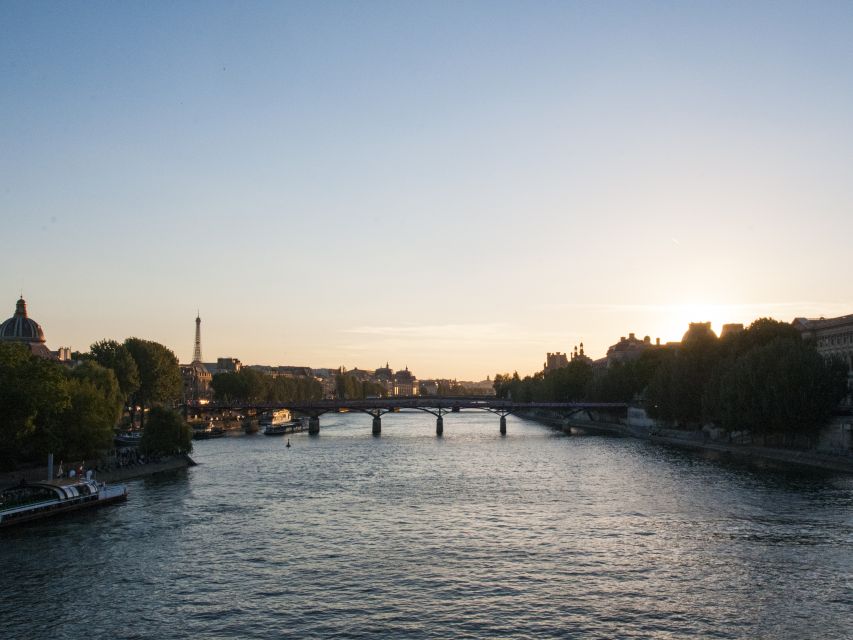
At Saint-Germain-l’Auxerrois, the tour turns toward one of the most violent episodes in French religious history. The church is associated with the St. Bartholomew’s Day Massacre, during which estimates place the death toll at around 30,000 people.
This is one of the route’s heavier stops. It gives you a sense of how religious and political tension could move from royal decisions into ordinary streets. The subject is not spooky in the supernatural sense. It is frightening because it happened, and because the scale of the killing is difficult to grasp while standing in a beautiful historic district.
The guide’s role matters here. A flat recital of dates would lose the group, while a good storyteller can make the sequence understandable without turning suffering into cheap entertainment. The strongest feedback about this experience centers on guides who keep the tone lively while still giving the history weight.
You may also hear about Henry IV and the royal conflicts surrounding his era. These stories help connect the massacre to the wider struggle between monarchy, religion, and political control.
More evening tours in Paris:
- Ghost & Haunted Walking Tour in Eiffel Tower Exterior at Night
★ 3.5 · 3 reviews - Budapest: Buda Castle District Vampires and Myths Night Tour
★ 4.6 · 3,830 reviews - Haunted Evening Horse and Carriage Tour of Charleston
★ 4.5 · 3,678 reviews - Edinburgh: Evening Underground Ghost Tour
★ 4.4 · 3,092 reviews
Two historic fountains and the city’s harsher side
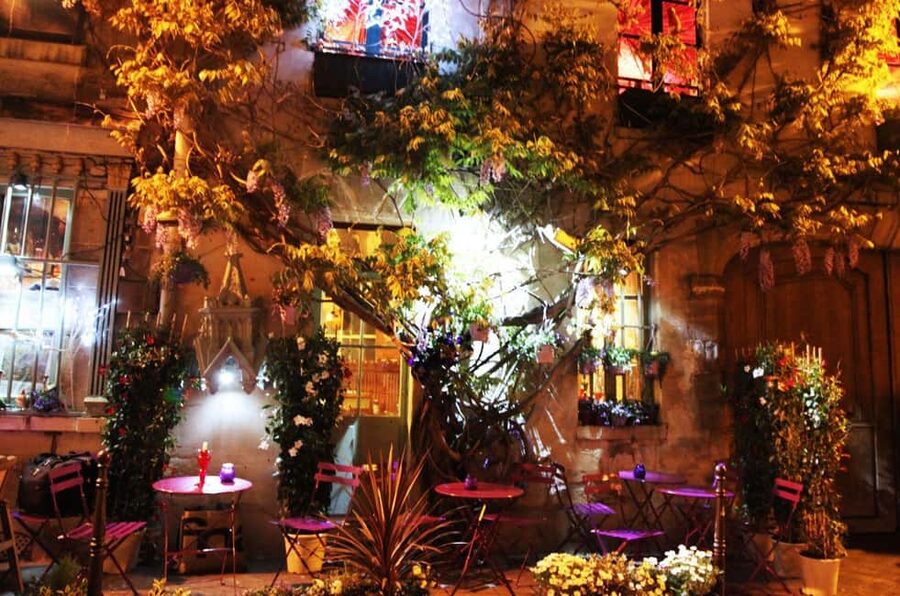
The stop at the Fontaine de la Croix-du-Trahoir adds a smaller, street-level detail to the route. You stop for photos and hear more about the place rather than simply marching past it.
This is the kind of location I appreciate on a walking tour. You might pass it alone without knowing why it matters. A guide gives the fountain a story and turns an ordinary urban object into part of Paris’s darker past.
The Fontaine des Innocents offers another historical pause. Its name and setting provide a natural opening for stories about death, public health, and the pressures faced by poorer residents. The tour’s material includes disease among the lower classes, so you should expect the discussion to move beyond famous kings and criminals.
These stops also break up the larger stories. The evening is not one long lecture about Marie Antoinette and the French Revolution. Instead, the route uses fountains, churches, squares, towers, and government buildings to show how grim events were spread through everyday Paris.
Saint-Jacques Tower and the walk through central Paris
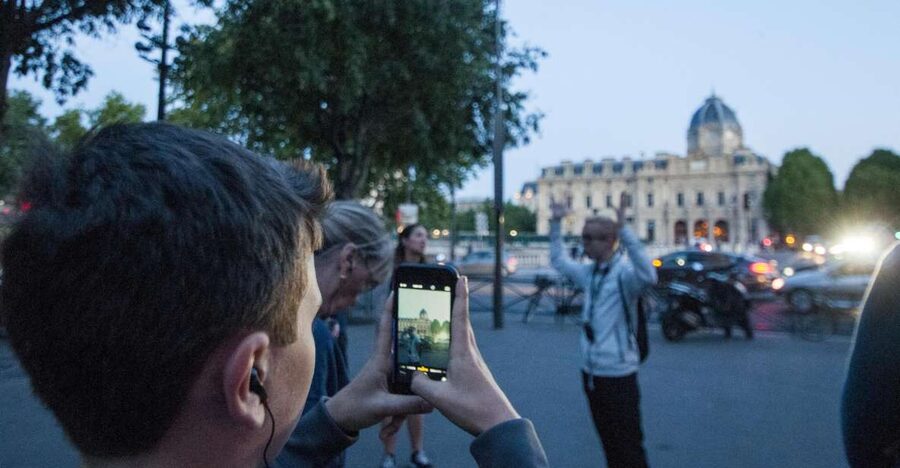
The guided stop at Saint-Jacques Tower gives you another landmark with a long connection to the old city. The tower is a strong visual marker, but the value here comes from the story attached to it.
The walk between stops is part of the experience, not dead time. You move through streets where modern Paris sits directly over older layers of violence, worship, punishment, and public life. Several people have found the pace comfortable, while others have felt that the tour involved more standing than walking. Both points are useful: this is a walking tour, but it is also a series of storytelling stops.
I would not schedule it after a full day of exhausting sightseeing if your feet are already sore. One family enjoyed the route with teenagers, and another person called it a good complement to the usual Paris attractions. That sounds right. You need enough energy to listen while standing outdoors, but the walk is not described as an extreme physical challenge.
Dress with the evening in mind. Cold weather has not stopped the tour from working, but it can affect your comfort while listening. Comfortable shoes are more important than formal clothes.
The Conciergerie and Marie Antoinette’s prison
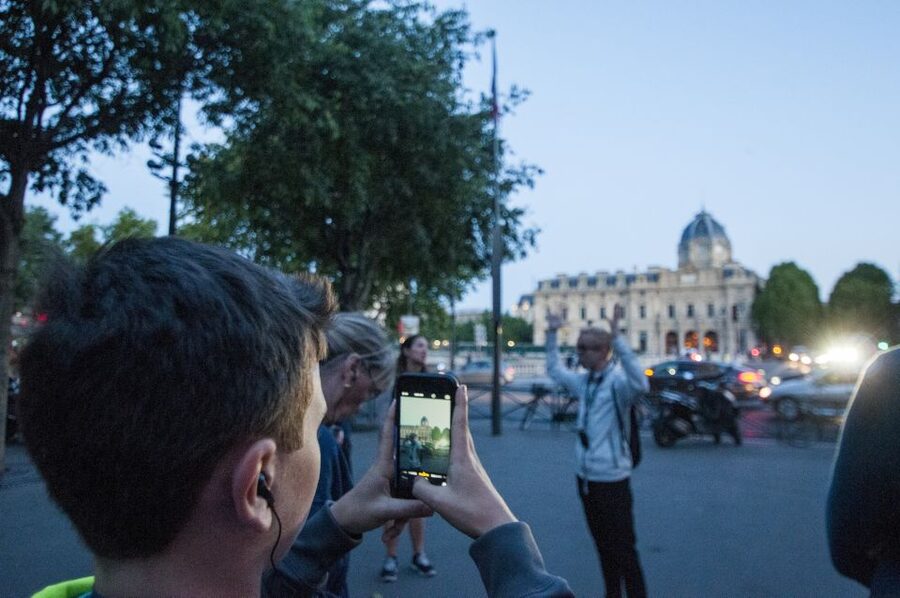
The Conciergerie is the route’s strongest royal stop. This former prison is associated with Marie Antoinette, who was held there before her execution.
The building gives the tour a more immediate connection to the French monarchy and the Revolution. Instead of hearing only about distant rulers, you stand at a place tied to confinement, judgment, and the collapse of royal power.
The Conciergerie also helps explain why this walk is useful even if you are not especially interested in ghosts. The stories connect people and places: the monarchy, the courts, political punishment, and the streets around Île de la Cité. You get a more human sense of how power operated, and how quickly a royal prisoner could become a condemned prisoner.
The experience includes a guided visit to the Conciergerie, but the supplied details do not promise a separate full museum tour or extended indoor admission. Treat it as one stop within a larger walking route rather than as a replacement for a dedicated visit to the site.
Île de la Cité, the Palais de Justice, and Hôtel de Ville
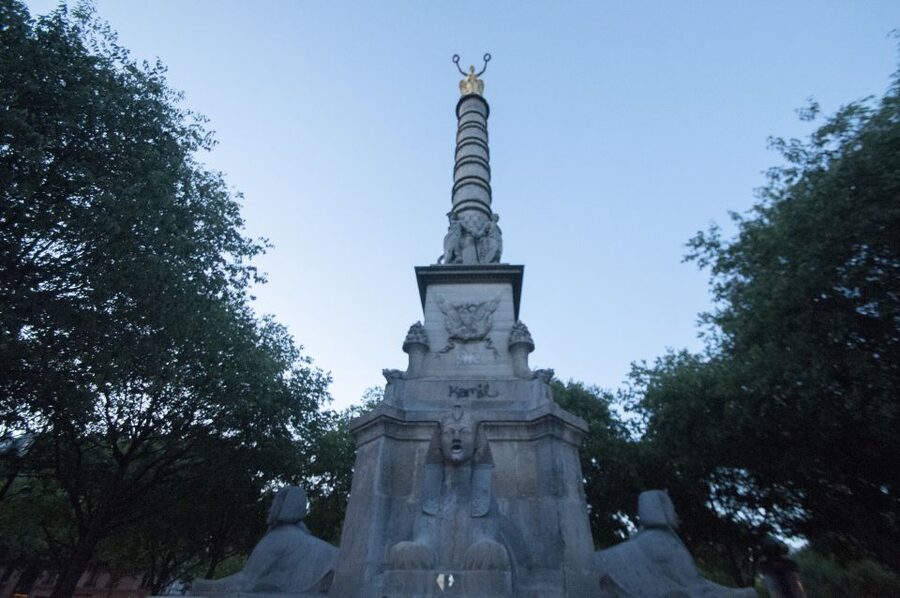
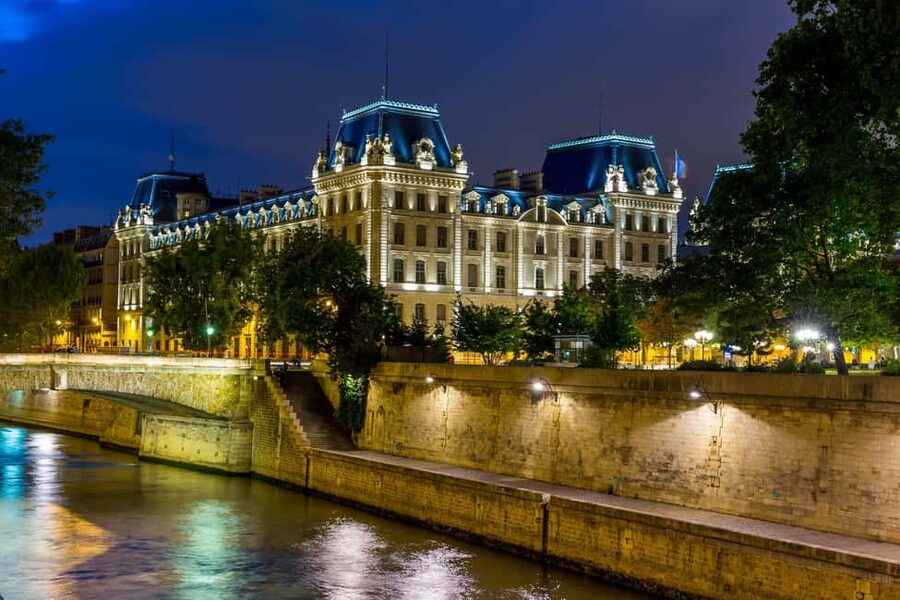
After the Conciergerie, the route continues through Île de la Cité and passes the Palais de Justice. This section reinforces the connection between Paris’s dark stories and its legal institutions.
You also get a photo stop on the island, giving you a chance to step back from the grim material and take in the setting. The contrast is part of the appeal. The Seine, bridges, and illuminated buildings can look calm while your guide is describing imprisonment, executions, or murder.
The tour finishes at Hôtel de Ville. This is not a return to the starting point, so plan your next move before the walk ends. The finish is central and useful for continuing your evening, but it means you should not leave a bag, bicycle, or other item at Pont Neuf.
One older booking described the ending as abrupt and wished for a full circle back to the start. That is a fair practical point. The route is designed as a one-way walk, so think of Hôtel de Ville as your evening base afterward.
What the storytelling is like
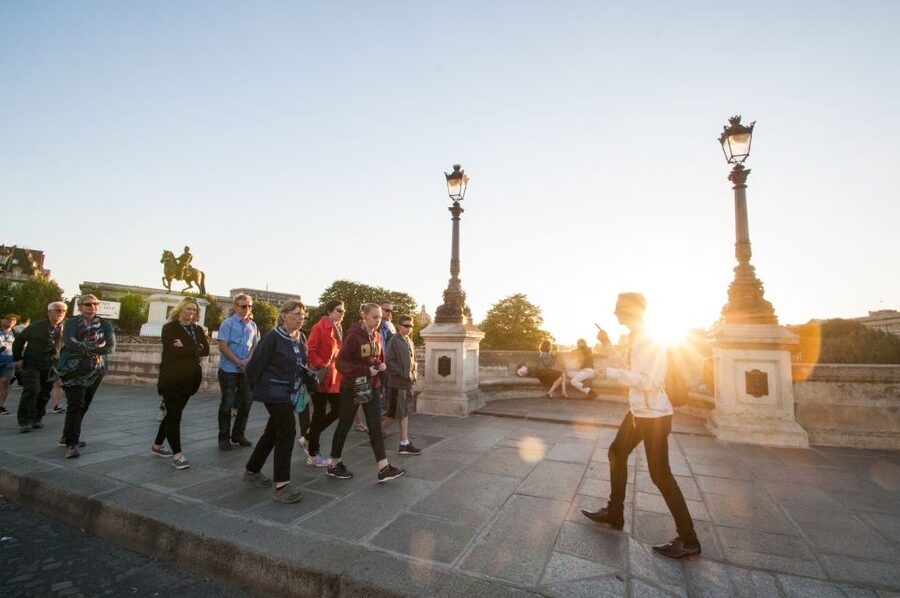
The quality of this experience depends heavily on the guide. The route has good material, but the stories need pace, clear English, and a sense of humor to work.
Guides such as Ami have been praised for weaving stories together and answering questions. Natalie was described as both entertaining and historical, while Rimi was praised for taking the group through back streets and explaining the stories behind them. Sophia was noted for her clear descriptions and helpful attitude after the tour. Other guides, including Vic, Hamish, Daniel, Saeed, and Alberto, have also been praised for making the walk engaging.
You should not expect every guide to have the same delivery. One person found a guide quiet and hard to understand, and another felt too much time went to taking photos. A separate booking lasted a little over an hour rather than two hours, which is worth keeping in mind when comparing this tour with longer evening walks.
The route also overlaps with familiar Paris history. If you have already taken a general walking tour, you may hear about some of the same people and events. The difference is the focus: this tour selects the violent, mysterious, and unsettling material and puts it into an evening setting.
Is $15 a fair price?
At $15 per person, the tour is easy to justify if you want a guided activity without committing to a costly dinner, show, or museum ticket.
The value comes from three things. First, the guide gives you context you would not get by walking between these places alone. Second, the night setting changes the mood of familiar streets. Third, the route covers a useful stretch of central Paris, from Pont Neuf to Hôtel de Ville.
The price is less compelling if you expect a long, highly theatrical production or a full two-hour route every time. One booking was shorter than advertised, and the tour does not include hotel pickup or drop-off. Still, even a concise walk can be good value at this price, particularly if the guide is as engaging as Ami, Natalie, or Rimi.
Free cancellation is available up to 24 hours before the activity, and you can reserve now and pay later. Those terms help if your Paris schedule is still shifting, but check the exact start time when booking because the available time varies.
Who should book this evening walk?
I would recommend it to adults, older children, teenagers, history fans, and anyone who has already seen the standard Paris sights and wants a different angle. One family found the stories suitable for teenagers because the walk was spooky without being overwhelmingly frightening.
It also suits you if you enjoy urban legends but want real historical events mixed in. You will hear about ritual worship, famous rulers, religious violence, executions, royal imprisonment, serial killers, and disease. The mood is macabre, but the experience is still an educational city walk.
I would be more cautious if you dislike stories of torture, murder, massacres, or executions. The subject matter is the point of the tour, not a small side note.
The activity is not suitable for wheelchair users or people with mobility impairments. Strollers and baby carriages are not allowed, and the provider cannot accommodate visitors who need special assistance. Since the route involves outdoor walking and standing, you should also consider your comfort with uneven city movement and evening weather.
Should you book it?
Book this tour if you want a low-cost, story-led night walk through central Paris, with real history carrying more weight than manufactured scares. The Conciergerie, Île de la Cité, the Templar story, and the St. Bartholomew’s Day Massacre give the route plenty of substance.
Skip it if you want a dedicated ghost investigation, a guaranteed full two hours, or a tour built around entering several major attractions. For most people, the best reason to book is simple: Paris looks different when the guide points out what happened in the shadows of its grand monuments.
FAQ
Where does the Paris Ghosts, Legends & Mysteries tour start?
It starts at the equestrian statue of Henri IV in the middle of Pont Neuf, at the western end of Île de la Cité.
Which Metro stations are closest to the meeting point?
The closest stations are Pont Neuf on Line 7 and Cité on Line 4.
Where does the tour finish?
The walk finishes at Hôtel de Ville, not at the starting point.
How long does the tour last?
The advertised duration is two hours. One booking reported a walk of just over an hour, so the actual duration may vary.
What language is the tour in?
The tour is conducted in English by a live English-speaking guide.
How much does the tour cost?
The listed price is $15 per person.
Does the tour include hotel pickup and drop-off?
No. Hotel pickup and drop-off are not included.
Does the route visit the Conciergerie?
Yes. The itinerary includes a guided visit to the Conciergerie, the former prison associated with Marie Antoinette.
Can I bring a stroller or baby carriage?
No. Baby strollers and baby carriages are not allowed.
Is the tour suitable for wheelchair users?
No. The activity cannot accommodate wheelchair users, people with mobility impairments, or anyone requiring special assistance.
More Walking Tours in Paris
- Paris: Dark History and Ghostly Guided Walking Tour
★ 4.7 · 1,000 reviews - Paris: Creepy Middle Ages Walking Tour
★ 4.9 · 20 reviews - Paris: Ghosts and Dark Stories Guided Walking Tour
★ 4.1 · 11 reviews - Paris Mysterious and Dark Stories Walking Tour – Small Group
★ 5.0 · 10 reviews
Just added around Paris
- Paris Ghosts and Dark Stories Tour★ 4.0 · 10 reviews
- Père Lachaise’s Cemetery Celebrities and Ghosts Mystery Tour★ 4.5 · 31 reviews
- Haunted Walking Tour of Père Lachaise Cemetery★ 3.0 · 2 reviews
- Paris Mysterious and Dark Stories Walking Tour – Small Group★ 5.0 · 10 reviews
- Ghost & Haunted Walking Tour in Eiffel Tower Exterior at Night★ 3.5 · 3 reviews
- A City of Shadows: Dark Tales of Paris by Night★ 5.0 · 5 reviews
- The Haunted Paris Experience★ 4.8 · 6 reviews
- Paris: Creepy Middle Ages Walking Tour★ 4.9 · 20 reviews
Paris Ghost Tours, compared.

Paris by Night Walking Tour: Ghosts, Mysteries and Legends
Read our review →
Père Lachaise’s Cemetery Celebrities and Ghosts Mystery Tour
Read our review →

Paris Mysterious and Dark Stories Walking Tour – Small Group
Read our review →Browse the lists this tour appears in