
REVIEW · BARCELONA GHOST TOURS
Barcelona El Raval Dark History Walking Tour
Barcelona’s polished center tells only part of the story. This two-hour walk through El Raval follows old churches, former hospitals, crime scenes, nightlife streets, and industrial sites, bringing out the city’s rougher and more surprising past. You get a Barcelona of social struggle, strange characters, art, and changing neighborhoods.
I like the small maximum of 15 people, which gives the guide room to answer questions and keep the group together. I also like the route itself: it links historic buildings with places you might otherwise pass without a second glance, ending amid large-scale graffiti at the Three Chimneys Gardens.
The main consideration is the subject matter. Stories of murder, autopsies, abandoned infants, and Barcelona’s seedy nightlife are not light entertainment. The walk is also outdoors for two hours, with no meal included, so wear sensible shoes and choose another outing if you want only Gaudí and postcard views.
Key points at a glance
- A darker side of El Raval: Hear stories about the Vampire of the Raval and other unsettling figures tied to the neighborhood.
- Six stops with very different moods: The route moves from a former charitable institution and old hospital buildings to churches, nightlife streets, and a graffiti-filled garden.
- Sant Pau del Camp: See one of Barcelona’s oldest churches, linked to a monastery with a violent past.
- A small-group format: No more than 15 people take part, making it easier to hear the guide and ask questions.
- Guides with strong personalities: Eoghan is often praised for his storytelling, humor, and recommendations, while Zeynep, Callum, Andres, and Cal have also led the walk.
- A useful first-day tour: The route helps you understand El Raval before exploring the area on your own.
Why this El Raval walk is different
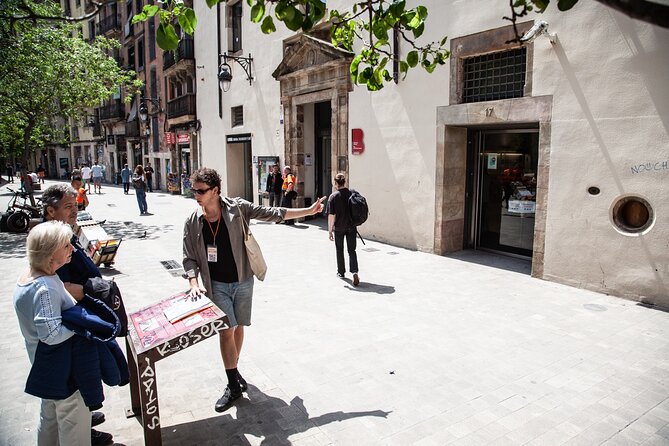
El Raval sits just west of Barcelona’s famous Gothic Quarter, but it has a different feel and a more complicated story. This is not a parade of grand monuments. Instead, the guide points out doors, streets, churches, former institutions, and public spaces that carry stories beneath the surface.
The dark-history theme gives the walk a clear purpose. You are not simply wandering around El Raval hoping to find something interesting. Each stop connects to an episode from Barcelona’s past, from abandoned infants and medical autopsies to notorious criminals and the old nightlife around Avenida del Paralelo.
I like that the route does not treat the neighborhood as a horror set. The stories are grim, but the walk also touches on art, social rights, changing neighborhoods, and the relationship between Barcelona’s past and present. That broader view matters. El Raval can be reduced to a reputation for crime and disorder, but this experience gives you more than that narrow picture.
The guide makes a real difference here. Eoghan receives especially strong praise for his humor, warmth, love of the city, and ability to tell a story. Other named guides include Zeynep or Zaynab, Callum, Andres, and Cal. Your guide will vary, but the format suits someone who enjoys conversation and interpretation more than a scripted list of dates.
More Dark History Tours in Spain
- Barcelona: Dark History Night Walking Tour
★ 4.8 · 344 reviews - Barcelona’s Dark History Night Tour
★ 5.0 · 181 reviews - Barcelona Dark History Night Walking Tour With Drinks
★ 5.0 · 153 reviews
Starting near Sant Pere Nolasc Mercedaris
The walk begins at the Parròquia de Sant Pere Nolasc Mercedaris on Plaça de Castella. This is a useful starting point because the first stop is close by and the group can begin in central Ciutat Vella before moving west toward El Raval.
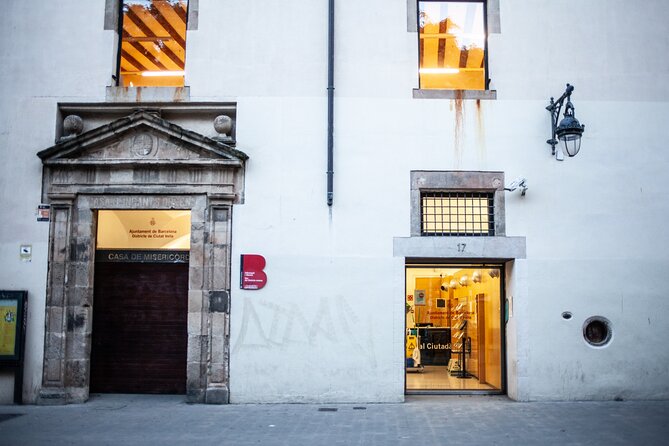
You will first hear about the Fundació Privada Casa de Misericòrdia de Barcelona. The focus here is the old foundling wheel, a device used for leaving unwanted infants anonymously. It is a powerful reminder that Barcelona’s social history includes poverty, desperation, charity, and difficult choices, not only trade and architecture.
The stop lasts about 20 minutes and admission is free. The building is less about entering a major attraction than learning to notice a detail hidden in plain sight. That is one of the walk’s strengths: the guide provides the meaning, while the street provides the setting.
This opening also establishes the tone. The material is serious, but it is presented as part of the city’s social past rather than as a cheap scare tactic. If you prefer straightforward architectural tours, this section may feel heavy. If you want context for how ordinary people lived, it gives the neighborhood a strong beginning.
Crime stories along Carrer de Joaquín Costa
The second stop takes you to Carrer de Joaquín Costa, once associated with a notorious villain whose crimes became part of Barcelona’s darker folklore. The tour description connects this area with the Vampire of the Raval, Barcelona’s answer to a nineteenth-century serial killer legend.
The appeal of this stop depends heavily on the guide. A good storyteller can explain the crime, the setting, and the way the tale has been remembered without turning the stop into theater. Eoghan is particularly well suited to this style, according to the comments about his humor, energy, and storytelling.
You should expect an account of crime and violence, not a visit to a preserved crime museum. The street remains part of modern Barcelona, and the value comes from understanding what happened there and how the neighborhood’s reputation developed.
I also like the chance to see Carrer de Joaquín Costa in context. It is easy to walk down a central Barcelona street and see only cafés, shops, and passing pedestrians. The guide adds another layer, showing how the same streets have carried very different lives over time.
Medicine and autopsies at the former Hospital de la Santa Creu
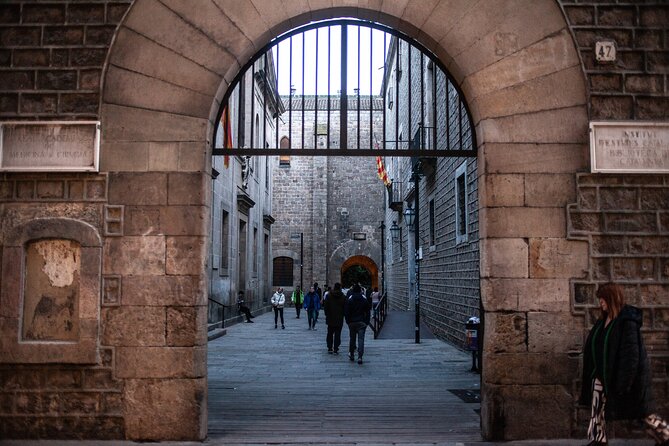
The third stop is the Real Academia de Medicina de Cataluña, connected with the former Hospital de la Santa Creu. The site is known for its medical history and autopsies, which gives the tour another kind of darkness. Here, the focus shifts from crime to the treatment of illness, death, and the development of medical practice.
The stop lasts around 20 minutes, with no separate admission charge listed. You should not expect a full museum visit or a long indoor tour. The experience is built around the building and the guide’s explanation, so listen closely and ask questions if you want more detail.
This is one of the better-balanced parts of the route because it moves beyond sensational crime stories. Barcelona’s past was shaped by hospitals, charitable care, medical study, and public health. The former hospital helps connect El Raval with those wider concerns.
It also gives the walk some architectural variety. After streets tied to crime and social hardship, you get an important medical institution with its own long story. You may find this stop especially useful if you like tours that connect buildings to the people who used them.
More dark history tours in Barcelona:
- Barcelona: Gothic Quarter Tour Dark History & Ghosts Tour
★ 4.8 · 64 reviews - Crimes the tour through the Dark Side of Barcelona
★ 5.0 · 15 reviews - Barcelona’s Dark History Walking Tour in El Raval
★ 4.8 · 6 reviews - Dark History and Legends Night Walk of Gothic Quarter
★ 5.0 · 2 reviews
Sant Pau del Camp and a monastery’s violent past
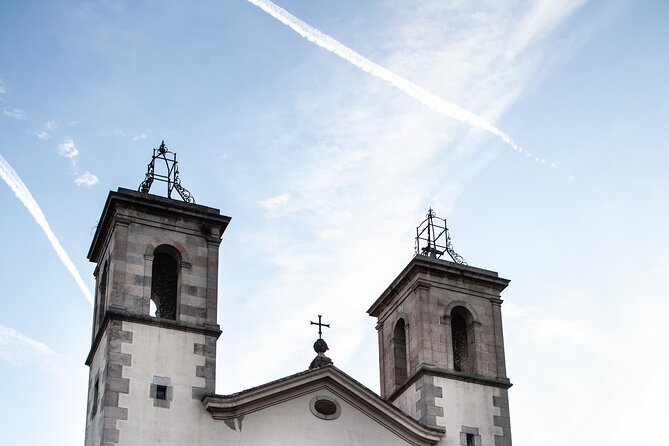
Sant Pau del Camp is one of the route’s strongest historical stops. It is described as Barcelona’s oldest church and was once a monastery. The setting provides a welcome change from the city streets, while the story reminds you that religious institutions were not always peaceful places.
The guide explains the church’s past and the violence connected with the former monastery. You get the visual reward of an old religious building, but the subject remains consistent with the tour’s focus on difficult chapters.
This stop is a good example of why a walking tour can add value even when you can see the building independently. You might admire the church and move on without knowing why it matters. The guide gives you a reason to pause.
The route allows about 20 minutes here. That is enough for an introduction, though not enough for an exhaustive study of the church. If you want extended time for photographs, religious art, or architectural details, you may need to return on your own.
Avenida del Paralelo and the old Chinese district
The walk then heads toward Avenida del Paralelo, a major street linked with the Chinese district and the seedier side of twentieth-century Barcelona nightlife. This part of the route broadens the story again, moving from older institutions and crime into entertainment, migration, clubs, and urban change.
The mention of hidden clubs and squares gives you a sense of what the guide is trying to reveal. You are not being led only to famous sights. Instead, you are shown places that help explain how Barcelona entertained itself and how different communities shaped city life.
Avenida del Paralelo also makes the route feel less confined to El Raval’s narrow lanes. The neighborhood is connected to the wider city, and its story includes theaters, nightlife, and social tensions beyond the old center.
Do not expect entry to clubs or a nightlife experience. The tour is a walking history lesson, not a pub crawl. That distinction is useful when deciding if the price suits you. You are paying for the guide’s interpretation and route, not for drinks or admissions.
Finishing at the Three Chimneys Gardens
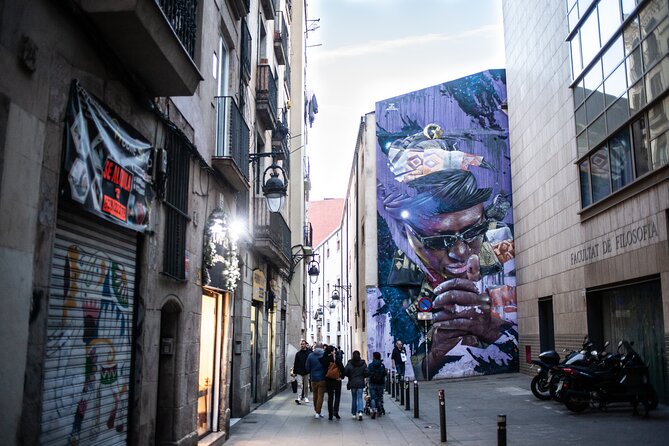
The final stop is the Jardins de les Tres Xemeneies, or Three Chimneys Gardens, at Plaça de Les Tres Xemeneies. The tour ends here after roughly two hours, and the location offers a sharp visual contrast with the old churches and historic streets earlier in the walk.
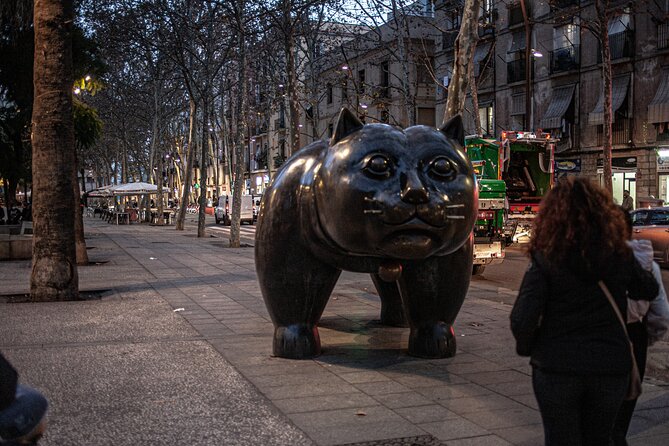
The gardens were once part of industrial Barcelona. Today, they are known for graffiti art, making this a satisfying ending for anyone interested in street art and urban change. The old industrial setting and present-day public art show how a city can reuse difficult or neglected spaces.
This ending is practical as well as memorable. You finish at Avenida del Paralelo, 49, in the Sants-Montjuïc district, rather than returning to the starting point. Plan your next stop with that in mind.
I like the ending because it avoids a predictable finish at another historic monument. After hearing about crime, hospitals, monasteries, and nightlife, you arrive at a contemporary public space shaped by art. It leaves you with a sense that El Raval and its neighboring districts are still changing.
How the guides shape the experience
The guide is the heart of this tour. The route has unusual material, but the stories need a clear voice and good pacing. The strongest feedback centers on Eoghan, who is described as charming, funny, passionate about Barcelona, and an excellent storyteller. He also offers suggestions for places to eat and things to do.
Zeynep, also referred to as Zaynab in one comment, is praised for providing useful information and showing sights that are easy to miss. Callum is noted for keeping a small group engaged while covering both past and present. Andres is associated with clear explanations of the neighborhood’s history, and Cal is praised for making the group feel welcomed and comfortable in an area that some guidebooks portray in an intimidating way.
These comments point to an important practical benefit: the tour can help you feel more at ease in El Raval. That does not mean you should stop paying attention to your belongings or ignore normal city awareness. It means a guide can provide context and help you read the neighborhood with more confidence.
The experience also seems to work well for groups with mixed interests. One person may enjoy crime stories, another may prefer churches, and someone else may focus on social history or art. A skilled guide can tie those threads together.
Price, pace, and who gets the best value
At $33.42 per person, the tour is not the cheapest way to walk around Barcelona, since the stops themselves have free admission. The value comes from the route, the research, the storytelling, and the time saved finding and connecting these places yourself.
For two hours, that is a reasonable price if you want a focused introduction to El Raval. A private guide would cost far more, while a self-guided walk would require you to research the sites and build the route. The group limit of 15 keeps the experience more personal than a large city walk.
The tour is booked an average of 21 days in advance, so it is sensible to reserve ahead, especially if your dates are fixed. Confirmation arrives at booking, and the experience is offered with a mobile ticket.
Most people can take part, and service animals are allowed. The tour is near public transportation, but there is no lunch included. Expect about two hours on foot and plan food before or after the walk.
Free cancellation is available up to 24 hours before the start time for a full refund. Changes or cancellations inside that 24-hour window are not accepted for a refund. The tour also requires a minimum number of participants, and if that minimum is not met, you are offered another date or experience, or a full refund.
Who should book this walk
I would choose this tour for a first or second day in Barcelona if you want to understand more than the famous center. Several people use it as an opening experience because it helps them feel like insiders and gives them ideas for later meals, walks, and visits.
It suits you if you enjoy:
- Local stories tied to real streets and buildings
- Crime, medical, religious, and social history
- Small groups and an informal guide
- Street art and changing neighborhoods
- Walking routes that avoid the usual major attractions
I would hesitate to recommend it to young children or anyone who dislikes grim subject matter. The stories concern abandoned infants, murder, autopsies, violence, and nightlife. The tone may be warm and humorous, but the facts are not always easy.
You should also choose another tour if your main goal is Gaudí, the Sagrada Família, grand viewpoints, or admission to historic interiors. This is an interpretive neighborhood walk, not a highlights tour of Barcelona’s major monuments.
Should you book the Barcelona El Raval Dark History Walking Tour?
Book it if you want the Barcelona beneath the usual postcard image. The route is well chosen, the small group makes conversation possible, and the six stops offer a strong mix of crime, medicine, religion, nightlife, industry, and art.
The best reason to go is the guide. Eoghan has made a particularly strong impression, but the tour has also been led by Zeynep, Callum, Andres, and Cal. Since guide assignments can vary, book for the route and format first, then enjoy the added benefit of a lively storyteller.
For $33.42, you receive two hours of focused context rather than admission to a major attraction. That is fair value if you want to see places you might miss alone. Wear comfortable shoes, keep an open mind, and remember that the dark title is accurate. This is Barcelona with its shutters raised, its difficult stories included, and its modern street art left in view.
FAQ
How long is the Barcelona El Raval Dark History Walking Tour?
The tour lasts approximately two hours.
How much does the tour cost?
The listed price is $33.42 per person.
What is the maximum group size?
The tour has a maximum of 15 participants.
Where does the tour begin?
It begins at Parròquia de Sant Pere Nolasc Mercedaris, Plaça de Castella, 6, in Barcelona’s Ciutat Vella district.
Where does the tour end?
It ends at Plaça de Les Tres Xemeneies, Avenida del Paralelo, 49, at the Jardins de les Tres Xemeneies.
What places are visited?
The route includes the Casa de Misericòrdia area, Carrer de Joaquín Costa, the Real Academia de Medicina de Cataluña, Sant Pau del Camp, Avenida del Paralelo, and the Three Chimneys Gardens.
Is admission to the stops included?
The listed stops have no admission charge. The tour includes an experienced local guide, but lunch is not included.
Is the tour suitable for most people?
Most people can participate. The experience is near public transportation, and service animals are allowed.
Can I cancel for a refund?
Yes. You can cancel at least 24 hours before the start time for a full refund. Cancellations or changes made less than 24 hours before the start time are not accepted for a refund.
More Walking Tours in Barcelona
- Barcelona Ghosts of a Dark Past Gothic Walking Tour
★ 5.0 · 55 reviews - Barcelona: El Born Ghost Walking Tour.
★ 4.0 · 54 reviews - Barcelona: El Born Ghost Walking Tour
★ 3.8 · 47 reviews - Barcelona: Ghosts of a Dark Past Walking Tour
★ 5.0 · 10 reviews
More Heritage Tours in Barcelona
- History and Hauntings of Salem Guided Walking Tour
★ 5.0 · 14,564 reviews - Savannah History and Haunts Candlelit Ghost Walking Tour
★ 5.0 · 3,235 reviews - Stockholm: Ghost Walk and Historical Tour
★ 4.7 · 2,685 reviews - New Orleans Small-Group Haunted History Carriage Tour
★ 4.5 · 2,289 reviews
Just added around Barcelona
- Walking Tour Mysteries and Legends of Barcelona and its Ghosts★ 5.0 · 3 reviews
- Witch Hunt on Montjuïc: Self-Guided Puzzle Quest in Barcelona★ 4.5 · 9 reviews
- Barcelona Ghosts of a Dark Past Gothic Walking Tour★ 5.0 · 55 reviews
- Dark History and Legends Night Walk of Gothic Quarter★ 5.0 · 2 reviews
- The Gothic Trail – Ghosts of Barcelona Exploration Game★ 4.5 · 33 reviews
- Crimes the tour through the Dark Side of Barcelona★ 5.0 · 15 reviews
- Barcelona Ghosts and Legends Gothic Quarter Tour★ 5.0 · 152 reviews
- Barcelona: El Born Ghost Walking Tour.★ 4.0 · 54 reviews
Barcelona Ghost Tours, compared.
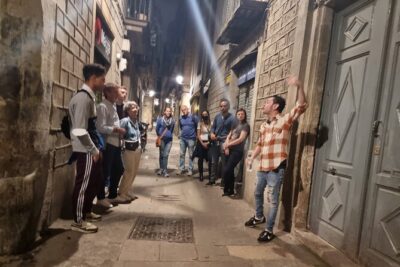
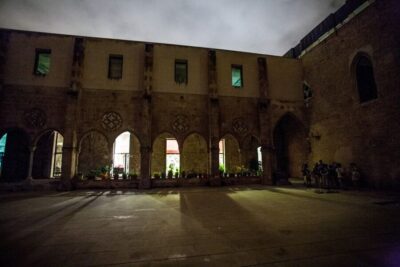
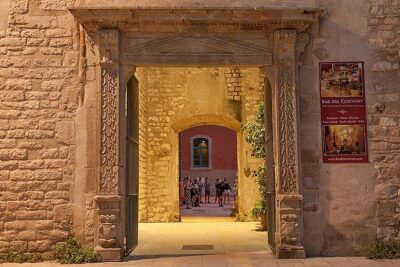

Barcelona Dark History Night Walking Tour With Drinks
Read our review →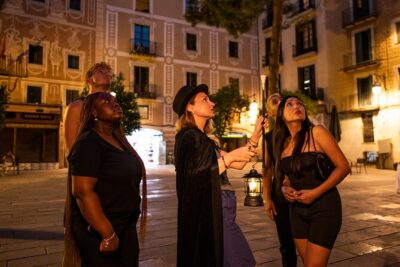
Barcelona Ghosts and Legends Gothic Quarter Tour
Read our review →
Barcelona Ghosts of a Dark Past Gothic Walking Tour
Read our review →
Browse the lists this tour appears in