
REVIEW · USA GHOST TOURS
Dark History: Wilmington Coup and Massacre Historic Tour
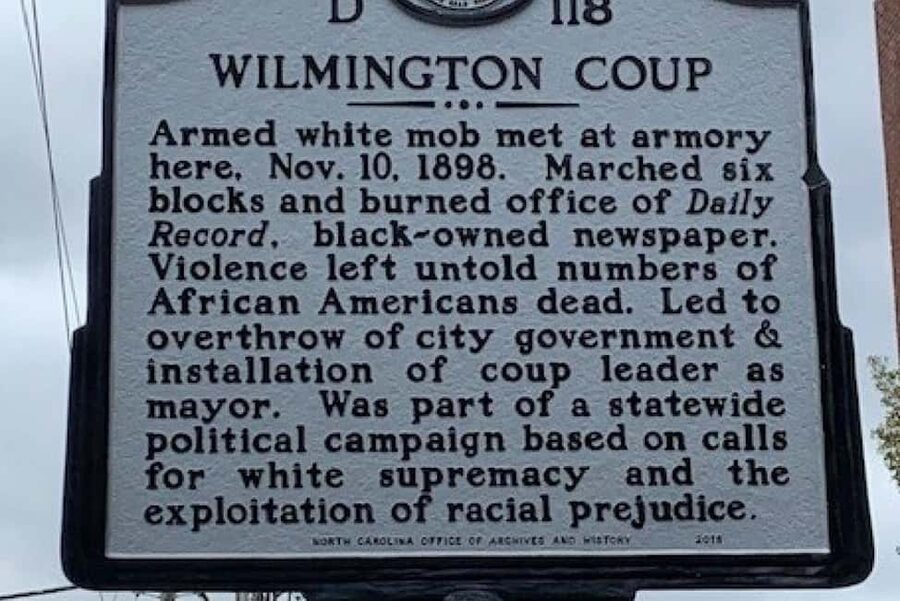
Wilmington’s 1898 coup was not a vague episode of unrest. It was a violent overthrow of North Carolina’s biracial, democratically elected government, followed by a massacre of hundreds of citizens. This 75-minute walking tour puts that story on the streets where the rallies, attacks, speeches, and political struggle took place.
I like the tour’s clear historical focus and its use of actual homes and city sites rather than a lecture in a room. I also like the low $19 price, which makes a serious history lesson easy to add to a Wilmington visit. The main consideration is the walking pace: the route covers a fair amount of ground, and older walkers may find roughly two miles per hour brisk.
I also appreciate that the tour does not treat the coup as an isolated act of violence. It explains the economic and political pressure behind it, then follows the damage into North Carolina’s Jim Crow period. The subject is difficult, but the English-speaking historian guides, including Max, present it in a direct and respectful way.
Key points about the Wilmington 1898 tour
- A successful American coup: Learn why the overthrow in Wilmington is described as the only successful coup that placed a new government into power in American history.
- Sites tied to real people: Visit the homes of major perpetrators and victims, not just general downtown landmarks.
- Rallies and attacks on foot: See locations connected to speeches, political gatherings, and violence during the coup.
- History beyond one terrible day: Understand how the event helped begin North Carolina’s Jim Crow period.
- A 75-minute format: The tour gives you a focused introduction without taking over an entire day in Wilmington.
- Accessible but active: The tour is wheelchair accessible, yet you should still expect significant walking and changing weather.
Starting at Slice of Life on Market Street
The tour begins at Slice of Life Pizzeria & Pub Downtown, on Market Street. This is a practical meeting point in central Wilmington, and the tour returns here at the end, so you do not need to arrange a separate pickup or find your way to a distant neighborhood.
There is no transportation included. You make your own way to the meeting point and back, and food and drinks are separate. That keeps the $19 price easy to understand: you are paying for the historian, the walking route, and the educational material, not for a meal or a vehicle.
I would arrive with water already in hand and your shoes ready for pavement. The tour does not call for special equipment, but comfortable footwear matters more here than dressing for a polished downtown outing. The subject is serious, and the route is active.
More Dark History Tours in the USA
- Adults-Only New Orleans Ghost, Crime, Voodoo, and Vampire Tour
★ 5.0 · 6,545 reviews - New Orleans Adults-Only True Crime and Ghost Walking Tour
★ 5.0 · 1,666 reviews - Genteel and Bard’s Savannah Dark History and Ghost Encounter Walking Tour
★ 5.0 · 1,546 reviews
Why the 1898 Wilmington Coup matters
The basic story is both startling and important. In 1898, North Carolina had a biracial government chosen through democratic elections. In Wilmington, white supremacists used organized political pressure and violence to overthrow that government.
The coup culminated in a massacre of hundreds of citizens. The new political order did not simply replace local officials for a short time. It helped open the door to a long period of racial oppression and the beginning of North Carolina’s Jim Crow era.
That context gives the walking route its force. A building is not just an old house here. A street is not simply part of downtown. Each location helps explain who held power, who was attacked, who was forced out, and how public memory can leave a major event out of the usual city story.
The tour also looks at the economic and political conditions that made the coup possible. That matters because it moves the experience beyond a list of villains and victims. You learn how local politics, racial control, public speeches, and economic interests worked together.
Following the homes of perpetrators and victims
One of the strongest parts of the route is its attention to private homes. You visit houses connected with important perpetrators and victims of the coup and massacre.
These stops can make the history easier to grasp. Political violence often feels distant when you hear it as a date and a headline. Standing near the homes of the people involved brings the conflict back to individuals and families who lived in the same city and faced very different consequences.
The homes also help show that Wilmington’s history was not confined to one public square or government building. The coup affected people in their workplaces, neighborhoods, and homes. The route uses those places to give the story a human scale.
You should not expect every stop to offer a large memorial or a full museum display. Part of the value comes from what the guide explains at ordinary city locations. The result may feel less polished than a conventional attraction, but it is also more direct. You are asked to listen, look closely, and understand what happened in a place that may appear unremarkable at first.
Rallies, speeches, and the mechanics of political violence
The tour visits sites connected with important rallies, attacks, and speeches. These stops show how the coup developed in public, through organized messages and action rather than through a single sudden clash.
That distinction is useful. A massacre can sound like an isolated eruption, but the route places it within a larger campaign. You learn how political language helped create a climate for violence, how public gatherings shaped opinion, and how attacks changed who could safely take part in civic life.
The guide’s job is especially important here. Sensitive events can be flattened into a simple good-versus-bad story, or softened until the meaning disappears. The tour aims for a direct account of what happened, including the role of white supremacist forces and the experiences of Black citizens during the period.
One review praised Max for framing difficult material into a compelling account of the events experienced by Black people of the period. That is a useful clue about the tour’s tone. You should expect the guide to name the racial violence clearly rather than hide behind vague words such as conflict or disagreement.
Same streets after dark, a different sort of fright:
- History and Hauntings of Salem Guided Walking Tour
★ 5.0 · 14,564 reviews - New Orleans Premier Ghost, Voodoo and Vampire Walking Tour
★ 4.5 · 12,856 reviews - Chicago: Gangsters and Ghosts Walking Tour
★ 5.0 · 7,155 reviews - Salem’s Best Ghost Tour
★ 4.5 · 4,186 reviews
From the coup to North Carolina’s Jim Crow period
The tour does not stop when the immediate violence ends. It explains the legacy of the coup and how it helped begin North Carolina’s Jim Crow period.
This is essential. If you only hear about the massacre, you may leave thinking of it as a terrible but finished event. The longer view shows how a successful overthrow could reshape voting, public power, and daily life for years afterward.
The connection to Jim Crow also explains why Wilmington’s 1898 history belongs in a wider North Carolina story. The event was local in setting, but its meaning reaches into the state’s political development and the broader history of racial oppression in the United States.
I find this part particularly valuable for visitors who know something about slavery and the Civil War but less about Reconstruction and the years that followed. The tour links those periods without pretending that history moved neatly from one chapter to the next.
It also gives you a better way to read the city after the tour. Streets, homes, and civic spaces can carry several layers of history at once. Wilmington’s attractive historic core is not only a pleasant place for a walk. It is also a place where the public record has not always fully faced what happened.
How the pace and route affect the experience
The tour lasts 75 minutes, which is long enough for a serious introduction but short enough to fit around other plans. You return to the same downtown starting point, so the route is easy to build into a day of sightseeing.
The tradeoff is that the tour covers many important sites in a limited time. The walking pace can feel brisk, especially for older walkers. If you need frequent pauses, ask about the pace before booking or plan to move carefully and bring water.
The route is described as involving significant walking. Comfortable shoes are not a suggestion to ignore. Wear weather-appropriate clothing, since the experience takes place outdoors and may involve varying conditions.
Photography is allowed, but the sites require respect. You are photographing places tied to violence and loss, not simply collecting attractive downtown images. A quiet, attentive approach fits the subject better.
The tour is wheelchair accessible, which is useful information when planning. Still, accessible does not mean effortless. The event remains a walking tour, so consider your own comfort with the route and the amount of time spent moving between locations.
The guide makes the difference
The tour is led by a professional historian, and that matters more here than it would on a basic sightseeing walk. The subject includes political strategy, racial violence, public speeches, economic interests, and long-term consequences. A guide who can connect those pieces makes the 75 minutes far more useful.
Max is one guide associated with the experience. Another guide received strong praise for staying close to the historical record and speaking openly about what actually happened. That is the standard you should want from this tour: clear language, careful facts, and no attempt to make the story more comfortable than it was.
The best questions to bring are broad but specific. Ask how the coup changed political power, how the massacre affected Wilmington’s Black community, and how the event connects to the Jim Crow period. The tour is designed to explain context, so you will get more from it if you listen for cause and consequence rather than only memorizing dates.
Because the group size is not specified, you should not assume an intimate private tour. The guide may need to manage a mixed group, and the route may limit how long each stop can receive. The 75-minute format keeps things focused, but it also means this is an introduction rather than a full research seminar.
Is $19 a fair price?
At $19 per person, I consider this strong value for Wilmington. You receive a guided route led by a historian, visits to key sites, and educational material. There is no admission fee to a separate attraction included, but the central value is the interpretation.
A self-guided walk could show you some of the same streets. It would not necessarily explain which homes mattered, why certain rally sites were important, or how the coup led into Jim Crow. The guide turns a set of locations into a connected story.
The price is also modest enough to make the tour useful even if you have only a short stay. You are not committing to a half-day excursion or a costly museum package. In 75 minutes, you gain a stronger foundation for understanding Wilmington and North Carolina.
The limitation is that you should not expect every question to be answered in one outing. The tour introduces a difficult subject and points you toward the places where the story unfolded. If you want detailed archival research or a long museum visit, you will need to continue on your own.
Who should book this walking tour?
I recommend it most strongly to visitors who want more than Wilmington’s pleasant streets and familiar historic sights. It suits anyone interested in Reconstruction, Black history, political power, civil rights, or the ways cities remember painful events.
It is also a good choice if you prefer history on foot. Seeing the homes, rally locations, attack sites, and speech locations gives the story a physical setting that a book alone cannot provide.
Families with older children and teenagers may find the subject valuable, but parents should decide if the material suits them. The tour deals with racist violence and a massacre, and it does not sound like a light sightseeing activity.
You may want to skip it if you are looking only for entertainment, food stops, or a relaxed stroll with little commentary. You should also think twice if significant walking or a roughly two-mile-per-hour pace would make the 75 minutes uncomfortable.
Book ahead if you want flexibility, since the activity allows free cancellation up to 24 hours before the start and offers reserve-now, pay-later booking. Check the available starting time, then arrive ready for an outdoor history lesson rather than a casual downtown walk.
Should you book the Wilmington Coup and Massacre tour?
Yes, if you want to understand Wilmington beyond its attractive historic center. The tour explains a successful coup, a massacre of hundreds, and the political order that helped launch North Carolina’s Jim Crow period. That is a major part of the city’s story, and it deserves direct attention.
The $19 cost is reasonable, the 75-minute length is manageable, and the return to Slice of Life on Market Street keeps the logistics simple. Just bring water, wear good shoes, allow for changing weather, and be ready to treat the sites with care.
This is not a cheerful sightseeing loop. It is a serious, useful walk that helps you see Wilmington with more honesty.
FAQ
Where does the Wilmington Coup and Massacre tour begin?
The tour begins at Slice of Life Pizza on Market Street, at Slice of Life Pizzeria & Pub Downtown.
Where does the tour end?
The guided walk returns to Slice of Life Pizzeria & Pub Downtown.
How long does the tour last?
The tour lasts 75 minutes.
What language is the tour offered in?
The live tour guide speaks English.
Is the tour wheelchair accessible?
Yes, the tour is listed as wheelchair accessible. It also involves significant walking, so consider your personal comfort with the route.
What should I bring?
Bring comfortable shoes, water, and clothing suited to the weather. Photography is allowed, but you should show respect at sensitive sites.
Can I cancel or pay later?
You can cancel up to 24 hours in advance for a full refund. Reserve-now, pay-later booking is also available.
More Heritage Tours in the USA
- Savannah History and Haunts Candlelit Ghost Walking Tour
★ 5.0 · 3,235 reviews - New Orleans Small-Group Haunted History Carriage Tour
★ 4.5 · 2,289 reviews - New Orleans Haunted History Ghost Tour
★ 4.5 · 2,084 reviews - The Historic Galveston Ghost Tour
★ 5.0 · 1,524 reviews
Just added around the USA
- Zion: Harry Potter-Inspired Zion Ghost Tour with Sunset View★ 5.0 · 8 reviews
- Witches, Widows, & Wraiths: Wichita Ghost Tours★ 5.0 · 2 reviews
- Wraiths & Wicked Whispers: Wilmington Ghost Tour★ 4.2 · 25 reviews
- Wraiths of the West Texas Wind: El Paso Ghost Tour★ 4.5 · 9 reviews
- Williamsburg: Haunted Ghosts, Witches, and Pirates Tour★ 4.5 · 107 reviews
- Wilmington: Boos and Booze Haunted Pub Crawl★ 4.0 · 8 reviews
- Williamsburg: Dead of Night Paranormal investigations Tour★ 5.0 · 4 reviews
- Williamsburg: Echoes of Twilight Late-Night Ghost Tour★ 4.6 · 13 reviews
USA Ghost Tours, compared.
History and Hauntings of Salem Guided Walking Tour
Read our review →
New Orleans Premier Ghost, Voodoo and Vampire Walking Tour
Read our review →

Adults-Only New Orleans Ghost, Crime, Voodoo, and Vampire Tour
Read our review →
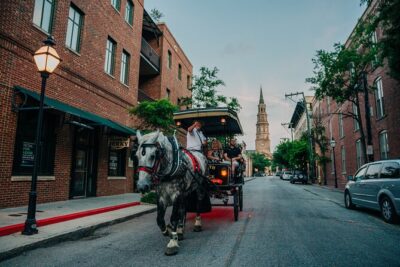
Haunted Evening Horse and Carriage Tour of Charleston
Read our review →
New Orleans Adults-Only Ghost, Voodoo and Vampire Tour
Read our review →
Savannah History and Haunts Candlelit Ghost Walking Tour
Read our review →Browse the lists this tour appears in