
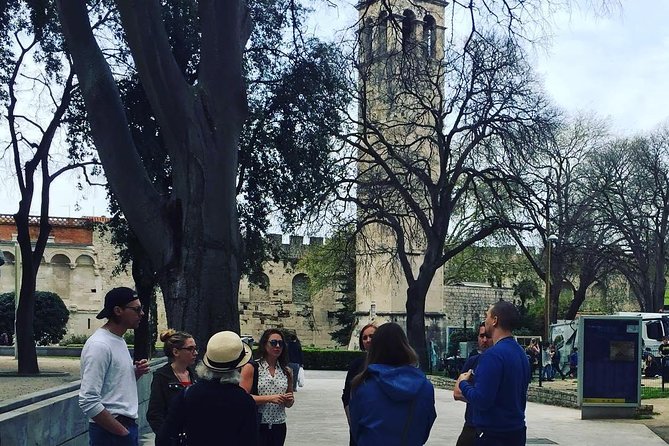
REVIEW · DARK HISTORY & TRUE CRIME TOURS
Dark Tour of Split
Split’s old center is not just a pretty Roman shell. It is a living city built inside and around Diocletian’s Palace, where emperors, merchants, soldiers, families, and modern café owners have shared the same stones for centuries. This tour looks past the postcard view and focuses on crime, hardship, odd customs, local characters, and the less polished side of Split’s past.
I like the small group of up to 10 people, which makes it easier to hear stories in narrow lanes and ask questions. I also like the local touch at the end: Dasen has offered Croatian craft beer, or local soda for people who do not drink alcohol. The main drawback is that the tour lasts only about 90 minutes, so it gives you a sharp introduction rather than a full study of Split.
- The darker side of Diocletian’s Palace: Learn how the palace worked as a real settlement, not just a Roman monument.
- A local guide named Dasen: Hear personal anecdotes and stories tied to life in Split.
- Three central areas in one walk: The palace, Old Split west of the palace, and the Riva harbor.
- A maximum of 10 people: A useful size for a story-based walking tour.
- A historical rather than theatrical ghost tour: Expect facts, odd episodes, and local humor instead of costumes or forced scares.
- A simple finish with a local drink: Beer or soda may be offered at the end.
Why Split’s darker past works so well on foot
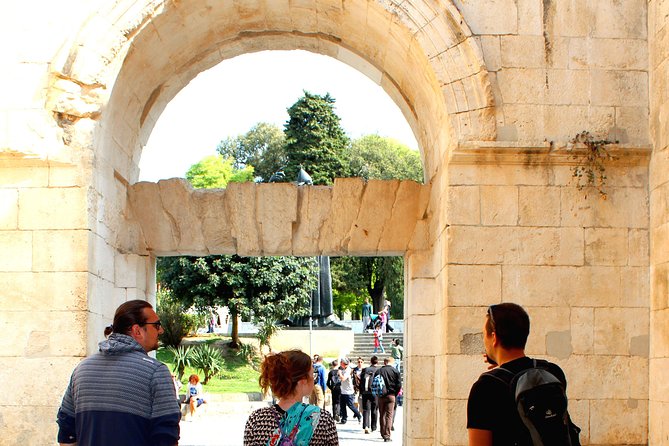
Split can feel almost too attractive at first glance. The waterfront is lined with palms, the stone alleys glow in the evening, and Diocletian’s Palace looks like a grand Roman monument. But the most interesting part is that the palace is not an isolated ruin. People still live, work, eat, shop, and meet inside its old walls.
That makes a darker-history walk a smart choice. You are not simply looking at columns and arches. You are hearing how power, religion, family life, war, public punishment, superstition, and everyday survival shaped the city.
I like the tone promised by this experience. It is not built around jump scares or theatrical ghost stories. Dasen’s approach is more direct and grounded in historical events, local anecdotes, and the strange details that standard sightseeing tours often skip.
The humor matters, too. A tour about difficult subjects can become heavy quickly. A friendly guide who can move between grim facts and funny local observations keeps the pace comfortable. You should still expect stories about the harsher side of Split, but the mood is described as modest, respectful, and approachable rather than sensational.
Entering Diocletian’s Palace for 50 minutes
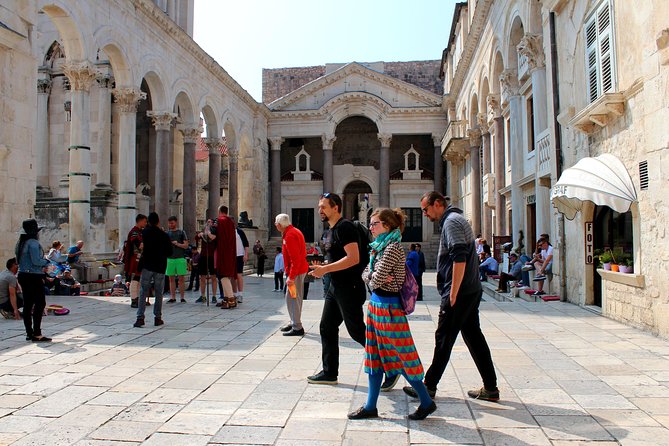
The first and longest stop is Diocletian’s Palace, where you spend about 50 minutes. The palace is roughly 1,700 years old and is recognized by UNESCO as one of the best-preserved late-Roman palaces in the world.
That description can make it sound like a museum site. It is not. The palace forms the heart of central Split, with lanes, courtyards, shops, homes, and public spaces woven into the ancient structure. I find that this setting gives the tour more force. The stories are not being told beside a distant ruin. They unfold in a place where the city still functions.
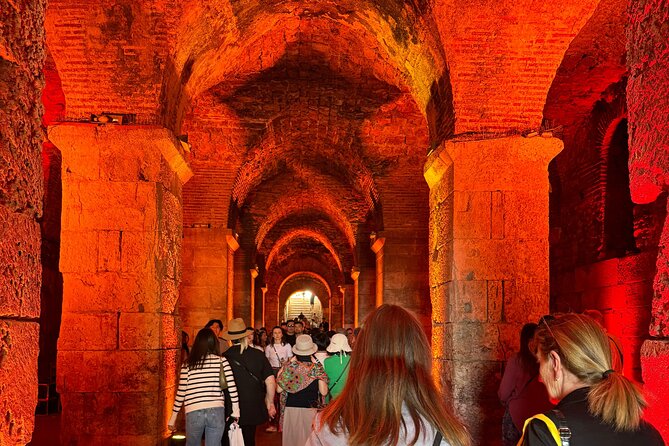
The dark-tour angle gives you a different way to read the stone. Instead of only asking who built a wall or when an arch was added, you consider how people lived under imperial authority and what happened when order broke down. You may hear about unusual episodes, local beliefs, hard periods, and characters who rarely appear in a standard introduction to Roman Split.
The supplied information does not name every story, so you should not book this expecting a fixed ghost-story script or a list of famous hauntings. The strength is the wider theme: the darker, stranger, and sometimes funnier parts of the city’s past, explained by a local guide.
This is also where the small group matters most. Palace lanes can be tight, and a group of no more than 10 people is easier to keep together than a large crowd. You can ask Dasen about a detail that catches your attention instead of simply following a flag through the streets.
Admission is listed as free because this is an outdoor walking experience through public parts of the center. You are paying for the guide’s time, interpretation, and storytelling, not for a separate entrance ticket.
More dark history tours in the world:
- Adults-Only New Orleans Ghost, Crime, Voodoo, and Vampire Tour
★ 5.0 · 6,545 reviews - Edinburgh: Dark Secrets of the Old Town Ghost Walking Tour
★ 4.6 · 1,671 reviews - New Orleans Adults-Only True Crime and Ghost Walking Tour
★ 5.0 · 1,666 reviews
Old Split and the alleys west of the palace
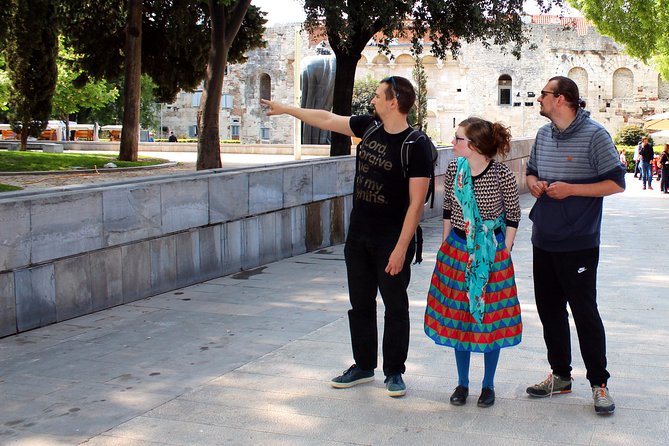
The walk then moves into Old Split, the part of the city west of the palace, for about 20 minutes. This section helps connect the imperial core with the later city around it.
The palace is the obvious attraction, but Old Split is where the city can feel more intimate. Streets narrow, buildings change, and the grand Roman story gives way to smaller human stories. This is a good setting for the less formal side of the tour, including local anecdotes and the kind of unusual facts you might miss while rushing from one major sight to another.
I especially like the practical value of this stop. You may already have walked through these lanes before realizing what you were seeing. A guide can point out how the old center fits together, show you routes you might otherwise overlook, and give meaning to spaces that seem ordinary at first.
The 20-minute timing is useful for orientation, but it also limits the depth. You will not examine every lane or period of Split’s development. Think of this as a focused walk through selected corners, not a complete architectural survey.
Families with older children may find this section especially effective. The darker material gives young people a reason to stay engaged, while the short walking distance keeps the experience manageable. Feedback specifically notes that children aged 13 and 14 found the subject interesting, though younger children may be less comfortable with some of the themes.
Finishing on the Riva after 20 minutes
The final stop is the Riva, Split’s sea promenade along the southern side of the palace. You spend about 20 minutes here before the experience ends at Obala Hrvatskog narodnog preporoda 20.
The Riva gives the tour a change of mood. After narrow lanes and old stone walls, you reach an open waterfront with views across the harbor. It is also a fitting place to discuss how Split has changed over time, from imperial residence to working city to modern coastal destination.
I would not treat this as a sunset-viewing cruise or a harbor excursion. The tour remains a walking history experience. Still, ending beside the sea gives you a clear sense of geography. You see how close the palace is to the water and why this side of Split has always mattered.
The endpoint is useful if you plan to continue along the promenade, stop for a drink, or explore the waterfront after the tour. The experience begins at CoffeeHrvojeva 9 and ends at the Riva, so you should be ready for a one-way walk rather than a return to the starting point.
Dasen’s storytelling is the main reason to book
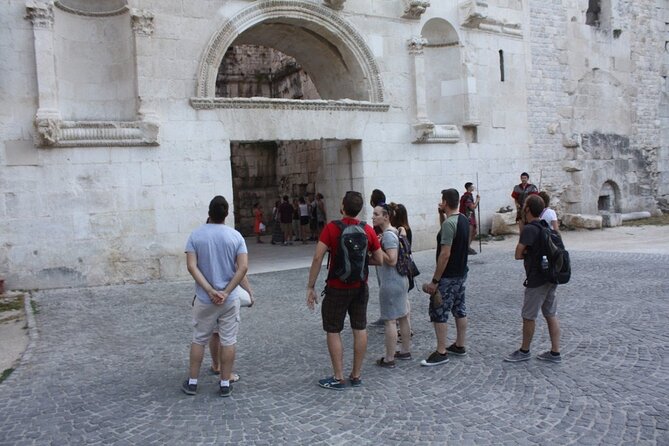
The guide can make or break a short walking tour. Here, Dasen is the name most closely tied to the experience. He is described as a lifelong local who brings in personal observations about Split and its difficult periods, along with details about local festivals and daily life.
That local connection gives the tour a useful edge. A guide who knows the city beyond its official monuments can explain how the center feels as a real neighborhood, not just a heritage site. He may also be able to answer questions about modern Split in a way that a purely academic tour cannot.
I like that the guide’s style is described as funny but competent. Those qualities do not always come together. A guide can be entertaining without explaining anything, or accurate without holding your attention. The best moments here appear to come from the balance: clear facts, unusual stories, respectful delivery, and enough humor to keep the walk moving.
There is also a thoughtful personal touch at the finish. If you drink beer, a local craft beer may be offered. If you do not, you can communicate that preference and receive a local soft drink instead. It is a small gesture, but it fits the informal, friendly tone of the experience.
The guide’s name appears with several different spellings in the supplied material, including Dasen, Daser, Dason, and Dusen. When booking, check the confirmation for the exact meeting details and guide information.
A few more ghost walks around the world worth a look
- Dubrovnik Ghosts and Mystery Walking Tour
★ 5.0 · 165 reviews - Dubrovnik: Ghosts and Mysteries Walking Tour
★ 5.0 · 52 reviews - Dark Tales of the Old Town
★ 5.0 · 98 reviews - Dubrovnik: Dark tales of the Old Town
★ 5.0 · 29 reviews
A historical dark tour, not a haunted-house performance
You should set your expectations correctly. The word dark can suggest a theatrical ghost walk filled with actors, costumes, dramatic pauses, and deliberate scares. This experience is described in a different way.
The focus is on accurate historical concepts, darker episodes, local stories, and the funny or unexpected side of the past. That makes it a better fit for you if you want context and storytelling rather than a staged fright.
I appreciate that distinction. Split already has enough atmosphere without adding fake drama. Stone passages, Roman walls, and old urban lanes do much of the work. A straightforward guide can let the place provide the mood.
The approach also makes the tour more suitable for families with teenagers and for people who normally skip ghost tours. You may still hear about violence, hardship, or troubling customs, but the presentation is intended to be respectful rather than graphic or exploitative.
Is $34.24 good value for 90 minutes?

At $34.24 per person, this is not the cheapest way to walk around Split. You can explore the palace, Old Split, and the Riva on your own without paying an admission fee.
The value comes from what you would miss without interpretation. A self-guided walk gives you the stones and streets. This tour adds a sequence of stories, local context, darker details, and answers to questions. For a first visit, that can save you from wandering through the center without understanding how the parts fit together.
The maximum group size of 10 also improves the value. You are not paying for a private tour, but you are avoiding the scale of a large sightseeing group. That matters when the guide is telling stories in a noisy public setting.
I would book it if you enjoy guided walks and want a fresh angle on a city you may already have begun exploring. I would skip it if you prefer to spend the same money on a longer museum visit, or if you want a detailed architectural tour focused on Roman engineering.
Because the walk is only about 90 minutes, it works well as an early activity during a stay in Split. You can use what you learn afterward when exploring the palace independently. It can also fit neatly into an evening, though the supplied details do not guarantee a particular departure time.
Who will enjoy this Split walk most?
This tour suits you best if you like:
- Local stories over a basic monument checklist
- History with an unusual or slightly unsettling angle
- Small-group walking tours
- Guides who mix facts with humor
- Exploring central Split on foot
- Short activities that leave room for dinner or further sightseeing
It is also a good pick for couples and families with teenagers. The subject gives the walk a clear purpose, and the shorter format avoids the fatigue that can come with a long city tour.
You may want something else if you need a fully accessible route, a private guide, a museum entry, or a highly theatrical ghost experience. The information confirms that service animals are allowed, the tour is near public transportation, and most people can participate, but it does not provide a detailed surface-by-surface accessibility assessment.
The tour is offered in English and uses a mobile ticket. Confirmation arrives when you book. Since it requires good weather and a minimum number of participants, keep a little flexibility in your plans.
Booking advice for your day in Split
I would place this tour early in your stay, ideally before you have spent too much time wandering the old center. The guide’s explanations can give later walks more meaning, especially inside the palace where it is easy to pass an important spot without noticing it.
The tour is booked, on average, 16 days ahead. That is not a rule, but it is a useful reason to reserve before arriving if your dates are fixed. With only 10 places available, last-minute space may be limited.
Free cancellation is available up to 24 hours before the start time for a full refund. Changes or cancellations made less than 24 hours ahead are not accepted for a refund, and poor weather or failure to reach the minimum group size can lead to a new date or a full refund.
Should you book the Dark Tour of Split?
Book it if you want to understand Split through its stranger, tougher, and more personal stories. The combination of Diocletian’s Palace, Old Split, and the Riva gives you a compact view of the city, while Dasen’s local perspective adds details you are unlikely to get from simply following a map.
The strongest reasons to go are the small group, the historical rather than theatrical approach, and the friendly finish with a local drink. The main limitation is scope: 90 minutes is enough for a memorable introduction, not a full study of Split.
For first-time visitors, curious teenagers, and anyone tired of standard sightseeing scripts, I think the $34.24 cost is fair. If you want only monuments and dates, walk the center on your own. If you want the stories that make those stones feel human, book the tour.
FAQ
Where does the Dark Tour of Split start?
The tour starts at CoffeeHrvojeva 9, 21000 Split, Croatia.
Where does the tour end?
The experience ends at Obala Hrvatskog narodnog preporoda 20 on the Riva sea promenade.
How long does the tour last?
The walking tour lasts approximately 1 hour and 30 minutes.
Is admission to the stops included?
The listed stops have free admission. The experience is a guided walk through Diocletian’s Palace, Old Split, and the Riva.
What language is the tour offered in?
The tour is offered in English and uses a mobile ticket.
What happens if the weather is poor or the minimum group size is not reached?
If poor weather or an insufficient number of participants causes cancellation, you will be offered another date or experience, or a full refund.
Just added around the world
- Zion: Harry Potter-Inspired Zion Ghost Tour with Sunset View★ 5.0 · 8 reviews
- Your evening in Venice – Legends&Ghosts&Aperitif★ 4.7 · 79 reviews
- York’s Haunted Heart : Ghost, Ghouls and Gallows★ 4.6 · 82 reviews
- York : Private Ghost Hunt★ 5.0 · 3 reviews
- Witches, Widows, & Wraiths: Wichita Ghost Tours★ 5.0 · 2 reviews
- Wraiths & Wicked Whispers: Wilmington Ghost Tour★ 4.2 · 25 reviews
- Witches, ghosts and executioners / Mystical North Hesse★ 4.4 · 4 reviews
- Wraiths of the West Texas Wind: El Paso Ghost Tour★ 4.5 · 9 reviews
Dark History & True Crime Tours, compared.

Adults-Only New Orleans Ghost, Crime, Voodoo, and Vampire Tour
Read our review →
The Deathly Dark Tour of York: Experience of the Year 2024
Read our review →
The Dark Side of Florence: Mysteries and Legends
Read our review →
Dark Secrets of the Old Town Ghost Walking Tour
Read our review →
New Orleans Adults-Only True Crime and Ghost Walking Tour
Read our review →
Genteel and Bard’s Savannah Dark History and Ghost Encounter Walking Tour
Read our review →
Buda Castle District Dark History, Legends and Vampire Night Tour
Read our review →Browse the lists this tour appears in