

REVIEW · DUBLIN GHOST TOURS
Dublin: North Quay Guided Ghost Walk
Dublin’s northside has plenty beneath its ordinary streets: a ruined medieval abbey, former Viking territory, mass graves, old thieves’ tales, and houses said to shelter several ghosts. This North Quay Ghost Walk turns those forgotten corners into a lively evening lesson, with enough eerie material to keep the mood spooky without turning the tour into a haunted-house act.
I like the way the walk connects ghost stories to real Dublin history, especially at Saint Mary’s Abbey and Croppie’s Acre. I also like the guides’ storytelling style. Kate, Darragh, Matthew, and Derek are singled out for humor, local detail, and the ability to answer questions. The main caution is that the experience can feel more like a history walk than a fright night, and the route keeps you on your feet for about 1.5 hours, with some descriptions allowing closer to two.
Key points to know before booking
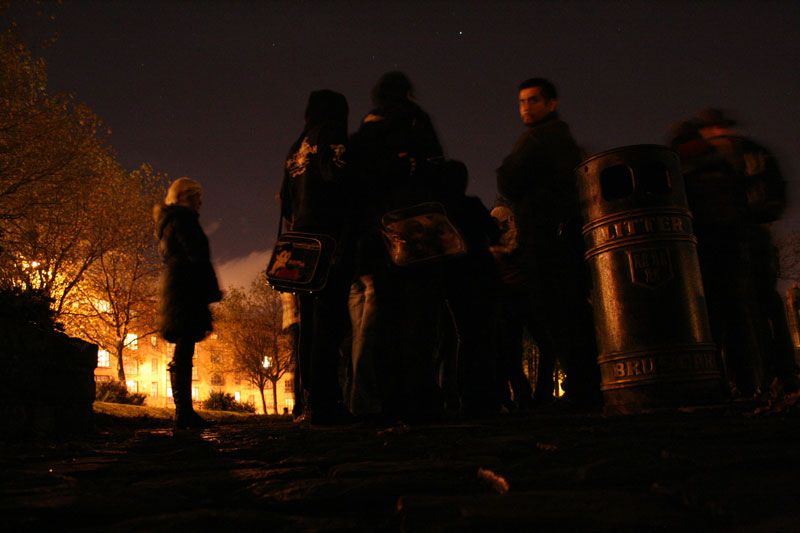
- Medieval Dublin in the dark: Explore old Oxmantown, once home to Viking enclaves and medieval settlements.
- Real places, eerie stories: Visit the former site of two haunted Hendrick Street houses and hear about six alleged ghosts.
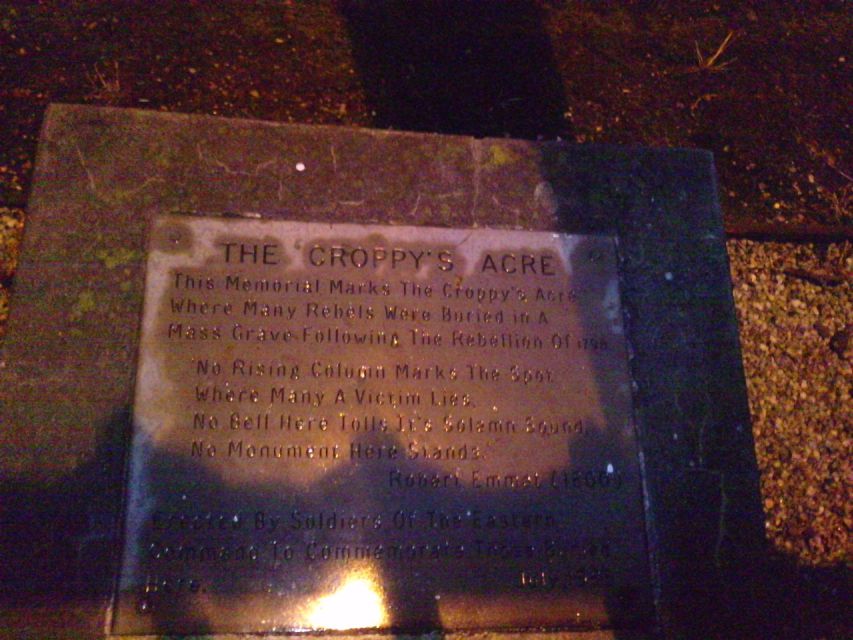
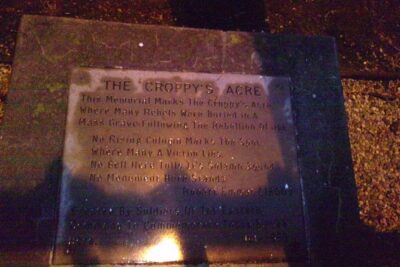
- Croppie’s Acre: Learn how a former football pitch covers a mass grave linked to the 1798 rebellion.
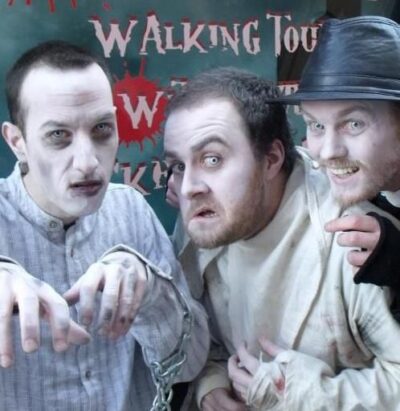
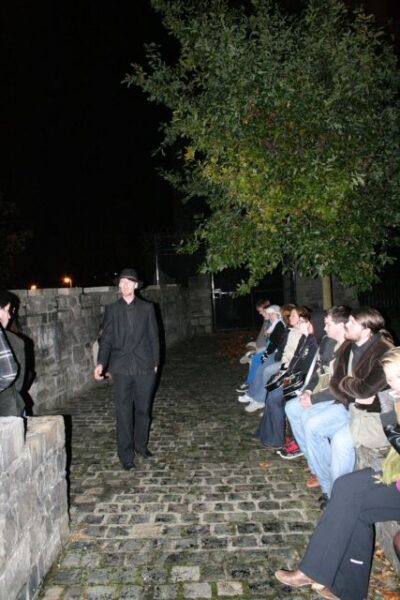
- Story-led rather than theatrical: The guide provides the atmosphere through history, humor, and storytelling, with no reported stage effects.
- A useful northside orientation: You see corners of Dublin that are easy to miss on a standard city walk.
- Good value at $28: The price covers an English-language guided walk lasting about 1.5 hours, and cancellation is free up to 24 hours before departure.
Why Dublin’s northside makes a good ghost walk
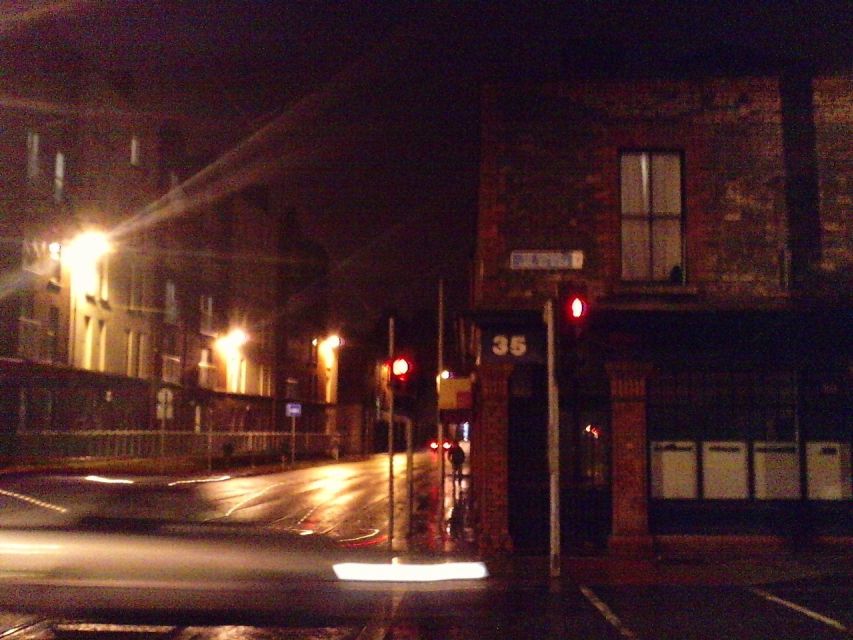
Dublin’s ghost stories work best when they are tied to places you can actually see. Here, the setting is not a dark forest or a staged attraction. It is the city itself: an alley beside a ruined monastery, a residential street linked to old tales, and an overlooked patch of ground with a grim past.
That gives the walk a useful second purpose. You are not only hearing about ghosts. You are learning how Dublin grew, where medieval power was concentrated, and how rebellion, poverty, crime, religion, and folklore shaped the city.
The route focuses on the northside, particularly old Oxmantown. This former medieval area included Viking enclaves and settlements that helped form the early city. Much of that past is easy to miss because modern Dublin moves around it so quickly. The guide’s job is to point out what the streets no longer explain for themselves.
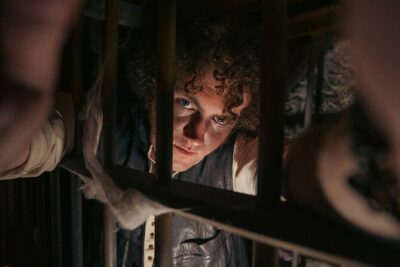
I would set your expectations correctly. This is not described as a jump-scare production, and the strongest parts come from the stories and locations. If you want actors leaping from doorways, you may find it too mild. If you enjoy old crimes, unsettling legends, and the odd tale that sits between fact and folklore, it should be a better fit.
More ghost walking tours in Dublin:
- North Quay Ghost Walk Tour
★ 4.5 · 91 reviews - Prague: Ghost Walking Tour Where Legends Come To Life
★ 4.4 · 5,253 reviews - Savannah History and Haunts Candlelit Ghost Walking Tour
★ 5.0 · 3,235 reviews
Meeting outside The Church Bar on Mary Street
The walk begins outside The Church Bar and Restaurant on Mary Street. That is a central, easy-to-identify meeting point, but you should still allow a little time to find it before the start.
The tour returns to the same meeting point at the end. That makes planning simpler than a walk that leaves you on the other side of Dublin at night. You can arrange dinner or a drink nearby afterward, and one of the guides may also suggest places to visit later in your stay.
The activity is listed as lasting 1.5 hours, while the fuller description refers to two hours. I would plan for roughly 1.5 to two hours so you are not rushing to another booking. The walk is conducted in English, and a live guide leads the group throughout.
Bring comfortable shoes. You will be walking and standing for most of the experience, and the route is more enjoyable when you can listen instead of worrying about tired feet. Evening weather in Dublin can change quickly, so a light waterproof layer is sensible.
Saint Mary’s Abbey and the city beneath the city

One of the most striking stops is the site of Saint Mary’s Abbey. In medieval Ireland, it was one of the country’s most powerful monastic settlements. Today, only a small ruin remains down an alleyway, easy to pass without noticing.
That contrast gives the site its power. The guide can help you picture the importance of a place that now looks modest and partly hidden. Thousands of commuters may pass close by without knowing what is there, while the walk asks you to pause and look again.
This is also where the tour’s historical side becomes clear. The ghost element adds mood, but the real reward is learning how much of old Dublin survives in fragments. A short section of wall or a tucked-away ruin can tell you more about the medieval city than a polished modern attraction.
If you prefer a clear line between documented history and supernatural tradition, listen closely to how each story is presented. Some tales belong to local folklore rather than proven fact. The walk is most enjoyable when you treat them as part of Dublin’s storytelling tradition, not as a test of belief.
Hendrick Street and the six ghosts
The route continues to Hendrick Street, formerly associated with two of Dublin’s most haunted houses. Between numbers 7 and 8, the story concerns no fewer than six different ghosts.
This is the sort of stop that works through detail. A house number, a narrow street, and a cluster of old accounts can feel more unsettling than a broad claim that an entire city is haunted. The guide gives the location a story you can carry with you as you continue walking.
The stop also shows why the tour is suited to curious adults and older families. The material is macabre, but the tone is often light. Guides such as Matthew and Darragh are praised for being funny and personable, while Kate is noted for answering questions and adding small pieces of Dublin information beyond the ghost tales.
That balance matters. A guide who pushes the material too hard can make it feel silly. Here, the best approach is usually a measured one: tell the story, explain the place, add a joke when the mood needs it, and let the street do some of the work.
More walking tours in Dublin:
- Haunted Dublin Walking Tour
★ 5.0 · 550 reviews - Dublin’s Haunted History Walking Tour
★ 4.3 · 345 reviews - Hidden Dublin: Haunted History Walking Tour v2.0 2026
★ 4.5 · 188 reviews - Dublin: Macabre History Walking Tour
★ 4.9 · 95 reviews
Croppie’s Acre and the 1798 rebellion
Croppie’s Acre is likely to be the most serious stop on the route. The site was later used as a football pitch, but beneath it lies a mass grave connected with rebels executed after the 1798 rebellion.
This is where the walk moves beyond ghost entertainment. The story involves political violence, punishment, and people whose final resting place became part of ordinary city life. A football pitch over a mass grave is a stark reminder that Dublin’s past is not neatly separated from its present.
You may find this section less spooky and more sobering. That is a strength if you want the tour to have some weight. It also explains why the experience can feel like a city history walk with ghost stories woven through it.
The guide’s tone matters here. A good storyteller gives the dead their place without turning suffering into a cheap punchline. The walk’s strongest accounts suggest that the guides handle the material with humor elsewhere, but retain enough care for the darker history.
Scaldbrother, the medieval thief
The tale of Scaldbrother adds a crime-story thread to the walk. He is presented as an infamous medieval thief, giving you a glimpse of the dangers and characters associated with old Dublin.
This section should appeal to anyone who likes the less polished side of history. Medieval cities were not only churches, merchants, and rulers. They also had thieves, underground routes, rival groups, and people who survived by taking risks.
One particularly unusual story area involves an old electric factory and underground tunnels. The available details do not provide a full stop-by-stop account of those locations, but the guides have used them to tell stories about audacious thieves, hidden routes, and sad events.
You may find these short crime tales more memorable than the broad supernatural claims. They give the city personality and help explain why a street or building might have gathered legends over time.
Saint Michan’s mummies and Bram Stoker
The walk also tells you about the mummies at Saint Michan’s Church, one of Ireland’s most macabre attractions. The church’s preserved bodies are linked in the tour description to Bram Stoker, the Dublin-born author of Dracula.
This part works well as a bridge between local history and popular culture. Stoker was born in Clontarf, and Dublin’s religious buildings, burial places, and old stories offer useful context for understanding the atmosphere behind his work.
The walk does not appear to include a visit inside Saint Michan’s Church. Instead, you hear about the mummies as part of the broader route and the city’s supernatural tradition. If you want to see the actual crypt, you would need to arrange that separately.
That distinction is important when planning. The ghost walk gives you the story and the wider setting. It is not a substitute for every museum, church, or crypt mentioned along the way.
A modern apparition and old religious ground
The tour also includes the site of a 21st century apparition of the Virgin Mary. This gives the walk a modern counterpoint to its medieval ruins and old burial stories.
The contrast is useful. Dublin’s supernatural traditions are not limited to one era. Medieval monastic legends, rebellion-era graves, Victorian-style ghost tales, and modern religious sightings all sit within the same city.
You do not need to accept every story literally to enjoy this section. The value is in seeing how people attach meaning to particular streets and buildings. A city’s folklore tells you what communities fear, remember, or hope to explain.
The guides make or break the evening
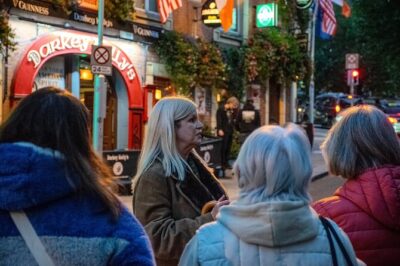
The guide is the main attraction here. The route itself includes important locations, but the experience depends on how clearly the stories are told and how well the guide handles questions.
Kate is praised for thorough preparation, answering questions, adding local tips, and suggesting things to do after the walk. Darragh is described as personable and an excellent storyteller. Matthew is noted for humor, information, and a strong selection of stories, while Derek is praised for knowing the details and keeping the walk charming.
Those names should not be treated as a guarantee of who will lead your departure. Guide assignments can change. Still, the pattern tells you what kind of tour this is at its best: conversational, funny, and informed, with plenty of room for questions.
The walk is not built around elaborate theatrics. That suits me. You get more room to think about the stories, compare them with the buildings around you, and decide how much you believe. A skeptic can enjoy the history, while someone who likes ghost lore can enjoy the uncertainty.
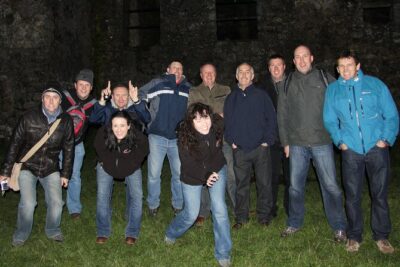
Large groups can make any walking tour harder to hear, and one account describes a big group where the guide remained understandable. Even so, a smaller group is usually preferable for an evening storytelling walk because it is easier to ask questions and stay close to the guide.
How scary is the North Quay Ghost Walk?
I would rate it as atmospheric rather than terrifying. The locations are unsettling, especially Croppie’s Acre and the former Hendrick Street houses, but the guides use humor and historical context instead of trying to frighten you at every turn.
Summer daylight may soften the mood. One departure around 8 p.m. can still take place while the sun is out late in the season, which makes the route feel more like an evening history walk. In darker months, the same stories may feel more effective, though you will also want to prepare for colder or wetter weather.
The experience suits you if you enjoy a good tale but do not need a theatrical scare. It is also a strong choice for a first Dublin walk because you see parts of the northside that a standard sightseeing route may skip.
I would think twice if you dislike walking at night, dislike stories about graves and executions, or want a strictly factual tour with no folklore. The guide may separate history from legend, but the format naturally mixes both.
Is $28 a fair price?
At $28 per person, the tour offers reasonable value for a 1.5-hour guided city walk, especially if the route gives you a useful orientation to Dublin’s northside. You are paying for the guide’s storytelling and local context, not for admission to a museum or a staged attraction.
That distinction helps you judge the price. If you compare it with a ticketed performance, it may seem expensive because there are no special effects or indoor exhibits. If you compare it with a private guide or a standard city tour, the price is more modest.
I like that the walk covers several different themes in one outing: Viking and medieval Dublin, monastic ruins, crime stories, rebellion, burial grounds, mummies, and modern religious folklore. You get a broad sense of how the city’s darker tales developed.
Free cancellation up to 24 hours before departure gives you some flexibility, and you can reserve now and pay later. Those terms are useful when your Dublin schedule is still shifting.
Who should book this Dublin ghost walk?
I would recommend it for:
- First-time visitors who want a different way to get oriented
- Repeat Dublin visitors who have already covered the main tourist stops
- Families with older children who can handle ghost stories and rebellion-era history
- History fans who enjoy folklore mixed with real places
- Couples and small groups looking for a relaxed evening activity
- Skeptics who appreciate local stories without needing to believe them
I would not make it your first choice if you want to enter every building mentioned or see a full theatrical performance. The experience is mainly outdoors, led on foot, and built around narration.
It is also worth remembering that the tour returns to its starting point. You can use the walk as a self-contained evening plan, then continue to a nearby pub or meal afterward rather than arranging transport across the city.
Should you book the North Quay Ghost Walk?
Book it if you want Dublin history with a spooky edge, not a haunted-house spectacle. The walk’s best moments come from places many people pass without noticing: Saint Mary’s Abbey hidden beside modern streets, Hendrick Street’s ghost lore, Croppie’s Acre, and stories tied to thieves, tunnels, mummies, and religious apparitions.
The $28 price is fair for a lively guided walk, and the strongest guides add humor, local suggestions, and useful context. Wear good shoes, allow up to two hours, and expect folklore to sit beside documented history.
Skip it if you need guaranteed frights or a strictly academic account of Dublin. For everyone else, it is an entertaining way to see the city’s northside with fresh eyes, especially after dark.
FAQ
Where does the Dublin North Quay Ghost Walk begin?
The walk begins outside The Church Bar and Restaurant on Mary Street.
Where does the tour end?
The activity ends back at the meeting point outside The Church Bar and Restaurant.
How long does the ghost walk last?
The activity details list a duration of 1.5 hours. The fuller description refers to two hours, so allow roughly 1.5 to two hours.
How much does the tour cost?
The listed price is $28 per person.
What language is the tour conducted in?
The live tour guide speaks English, and the activity is offered in English.
What locations are included?
The walk includes the site of Saint Mary’s Abbey, Hendrick Street, Croppie’s Acre, and locations connected with Oxmantown, Scaldbrother, Saint Michan’s Church, and a 21st century apparition of the Virgin Mary.
Is Saint Michan’s Church visited inside?
The tour includes information about the mummies at Saint Michan’s Church, but the provided details do not state that the walk enters the church.
Can I cancel for a full refund?
Yes. You can cancel up to 24 hours in advance for a full refund.
Can I reserve now and pay later?
Yes. The activity allows you to reserve your place and pay later.
Just added around Dublin
- Macabre, Ghostly & Bloody Walking Tour★ 5.0 · 15 reviews
- Legends, Ghosts and Ghouls Walking Tour Dublin★ 4.5 · 16 reviews
- North Quay Ghost Walk Tour★ 4.5 · 91 reviews
- Dublin Ghost Hunt Exploration Game and Tour★ 4.0 · 34 reviews
- Hidden Dublin: Haunted History Walking Tour v2.0 2026★ 4.5 · 188 reviews
- Dublin: Macabre History Walking Tour★ 4.9 · 95 reviews
- Dublin walking tour: ghosts & haunted places★ 4.9 · 55 reviews
- Dublin: Legends, Ghosts & Ghouls Walking Tour★ 4.6 · 7 reviews
Dublin Ghost Tours, compared.

Hidden Dublin: Haunted History Walking Tour v2.0 2026
Read our review →
Browse the lists this tour appears in