
REVIEW · LONDON GHOST TOURS
Jack the Ripper. Walking tour in London in Spanish
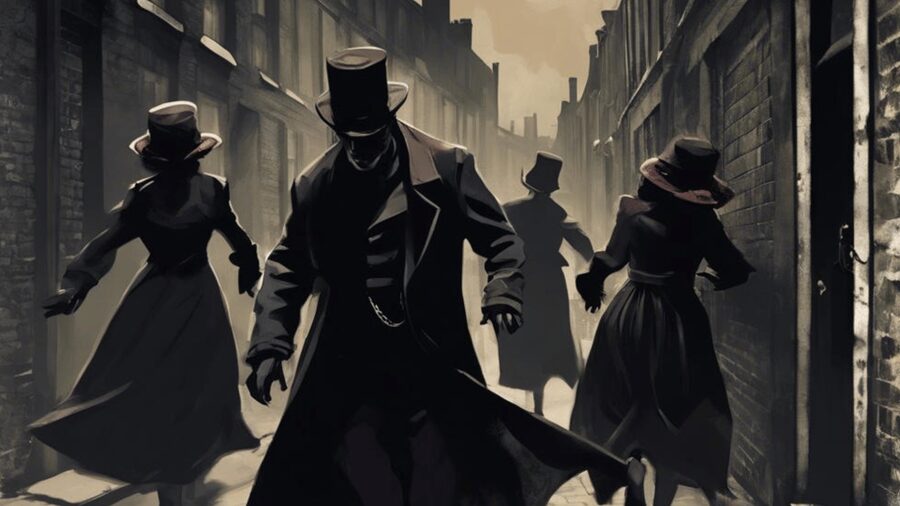
Jack the Ripper takes the lead on this theatrical Whitechapel walk, with your guide Javier playing the killer’s spirit for two hours. The route connects the 1888 murders with real streets, old buildings, pubs, and alleyways, while keeping the tone dark, sarcastic, and sometimes unsettling.
I like two things right away: the strong character work gives the tour a clear identity, and the Spanish narration makes the story easier to follow if you prefer not to process complex historical details in English. Javier also interacts with the group and offers suggestions for restaurants and places to visit. The main drawback is the subject itself. This is a tour about murdered women, so the theatrical approach and macabre humor will not suit everyone.
Key points before you book

- Javier guides you in character: He uses a mask, a red umbrella, sarcasm, and theatrical performance to present the story through Jack’s spirit.
- The route covers real Whitechapel locations: You visit Goulston Street, Mitre Square, Artillery Passage, Old Spitalfields Market, and the Ten Bells.
- Spanish is the tour language: This helps you follow names, theories, and grisly details without having to translate as you walk.
- The walk begins beside Tower Hill Station: Look for the sundial on the right-hand side outside the station exit.
- The experience is aimed at ages 14 and older: The subject matter includes murder, violence, and disturbing details.
- You get two hours for $20: That is a fair price for a guided London walk, especially if the guide’s performance matters as much to you as the history.
Meeting Jack beside Tower Hill Station
You meet outside Tower Hill Station, just a few meters from the exit, at the sundial. The medieval castle visible nearby helps you get your bearings, and the guide should be easy to spot: look for a mask and a red umbrella.
That meeting point is practical. Tower Hill is well connected, and you do not need to enter a museum or find an obscure street before the tour begins. Still, give yourself a few extra minutes. A busy station exit can make a small group harder to spot, even with the umbrella.
Javier does not present the tour as a standard history lecture. He appears as Jack’s spirit and guides you through the streets he supposedly walked. That choice shapes the whole experience. You are not simply hearing a list of dates and crime-scene details. You are watching a performer turn the walk into a piece of street theatre.
The theatrical style has clear advantages. It gives the route energy, helps separate this walk from ordinary city tours, and makes it easier to remember the sequence of places. It also comes with a limit: if you want a quiet, academic discussion of the case, this format may feel too showy.
More Jack the Ripper tours in London:
- London: The Original Jack the Ripper Walking Tour
★ 4.7 · 7,833 reviews - London Jack the Ripper Guided Tour with Ripper-Vision
★ 4.5 · 4,840 reviews - London: Jack the Ripper Small Group Tour
★ 4.7 · 3,159 reviews
Why the Spanish performance matters
Jack the Ripper tours often involve unfamiliar names, competing theories, old street names, and details from Victorian London. Hearing all of that in Spanish lets you concentrate on the story rather than translating in your head.
Javier’s role also depends on timing and interaction. The available feedback points repeatedly to his ability to stay in character, explain details, and involve people during the walk. He has been praised for being friendly, creative, and well prepared, while several comments single out his performance as Jack.
That does not mean the tour is only an acting exercise. The route is built around actual streets and locations connected with the Whitechapel murders. The tour presents itself as based on truthful information rather than invented scenes, although the guide’s character is clearly a dramatic device.
I would choose this experience if you like history delivered with personality. If you prefer a neutral guide who separates every known fact from every theory in a formal way, ask yourself how comfortable you are with the role-playing before you reserve.
Chamberlain and the opening Whitechapel story
Chamberlain is described as a favorite stop for people who study the Ripper case. The importance here is less about a single grand building and more about how the guide uses the location to set up the mystery.
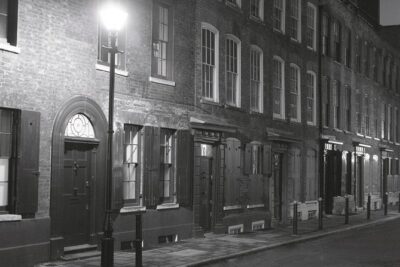
You can expect the story to move from the public image of Jack the Ripper toward the people and streets behind it. That is useful because the case is often reduced to a famous nickname and a handful of gruesome details. A good route needs to bring back the setting: cramped streets, late-night movement, pubs, shelters, and working-class life.
The tour also puts attention on the victims’ lives, not only on the killer’s identity. That is an important distinction. The performance uses Jack’s spirit as its narrator, but the historical value comes from seeing the women as part of the neighborhood rather than as names attached to crime scenes.
Because the tour is limited to two hours, you should expect selected stories rather than a complete study of every person involved. The guide has to keep moving, and the route covers several locations.
Algate Church and the streets of prostitution
Algate Church is described as a favorite place for prostitutes in the 19th century. This stop helps explain the social setting in which the crimes took place.
The location also gives the guide a chance to discuss how women working or sleeping on the streets faced danger and limited choices. That context matters. Without it, the murders can become a puzzle game about an unknown killer. With it, you get a clearer sense of the vulnerable people who lived and worked in Whitechapel.
The tour’s sarcastic tone may be effective here, but it is also where you should pay attention to your own comfort level. Dark humor can keep a serious subject from becoming flat, yet it can also feel too light if you want the victims treated in a solemn way.
This is one reason the minimum age is 14. The experience is not designed as a family-friendly ghost walk. Parents should consider both the violent subject matter and the fact that the guide plays the killer.
More walking tours in London:
- London Jack The Ripper Guided Walking Tour
★ 5.0 · 3,131 reviews - London: Jack the Ripper Evening Walking Tour
★ 4.9 · 1,449 reviews - London: Ghost Walk and River Thames Boat Ride
★ 4.5 · 1,251 reviews - London Jack The Ripper Small-Group Walking Tour
★ 5.0 · 1,013 reviews
Mitre Square and the Double Event
Mitre Square is one of the key stops. It is identified with the Double Event, a major part of the Jack the Ripper story and one of the places where the route becomes most closely tied to the crimes.
Here, the theatrical approach will probably be at its strongest. You can expect Javier to use the setting, his character, and the surrounding streets to explain what made the location significant. The point is not simply to reach a named square. It is to connect the place with the sequence of events and the mystery that followed.
I like this kind of stop because it gives the case a physical shape. You are moving from one location to another rather than hearing an abstract account indoors. At the same time, modern London has changed, so you should not expect the entire Victorian scene to remain intact. The value is in the location and the explanation, not in seeing a preserved crime scene.
Mitre Square also shows why comfortable shoes matter. The walk lasts two hours and includes several streets, passages, and outdoor stops. The tour is described as wheelchair accessible, but anyone with mobility concerns should still consider the pace and the nature of a city walking route.
Goulston Street, the heart of the route
Goulston Street is listed as one of the main guided stops and is called the heart of Whitechapel for this experience. It is central to the story and helps link the crime scenes with the wider neighborhood.
You will spend part of the tour moving through ordinary city streets while hearing about events that made the area famous for all the wrong reasons. That contrast is one of the strongest features of a historical walking tour. London continues to function around you, while the guide points out places tied to fear, police work, and public speculation.
This is also where a Spanish-speaking guide can add real value. The case includes many details that can blur together if you are working from partial understanding. Javier’s explanations, audience interaction, and ability to add detail help give the route a narrative thread.
The tour does not promise a final answer to the killer’s identity. That is important. You are going to explore the mystery, not receive a proven solution at the end.
The Roman Wall of Londinium and changing London
The itinerary includes a guided stop by the Roman Wall of Londinium. This adds an older layer to the walk and reminds you that Whitechapel is not a single-period setting.
The wall is not presented as a crime-scene location, but it helps place the neighborhood within London’s long development. Ancient remains, medieval landmarks, Victorian streets, and modern transport all appear within a relatively short route.
I appreciate this contrast because it keeps the tour from becoming a series of isolated murder stories. You get a sense of a district shaped by many periods. The stop also connects back to the meeting point, where the medieval castle can be seen near Tower Hill.
Do not book this walk expecting a dedicated Roman history tour. The wall is one part of the route, and Jack the Ripper remains the main subject. Its value is as historical context and a change of pace during a dark tour.
Artillery Passage and a darker corner
Artillery Passage is described as a lively street with a dark corner. That combination captures the mood of the route well. You move through a place with everyday urban life while the guide draws out its connection to the darker side of Whitechapel.
Passages and narrow streets work especially well for this kind of walk. They create a more enclosed setting than a broad avenue and make the guide’s storytelling feel tied to the physical surroundings. You might find the atmosphere more effective after sunset, but the tour information does not specify its starting time, so check availability when you book.
The guide’s umbrella and mask also matter here. They make him easier to identify and reinforce the performance without requiring a stage or special venue. This is simple street theatre, and that simplicity is part of its appeal.
Still, keep your expectations sensible. The tour creates mood through performance and story. It is not a haunted attraction, and no supernatural event is promised.
Old Spitalfields Market and the silk trade
Old Spitalfields Market is another important stop. The market dates to the 17th century and was associated with silk, giving you a different view of the area from the one created by the murder story.
Markets help explain how people moved through the district and how work, trade, and nightlife shaped local streets. The stop gives the tour a broader social frame. Whitechapel was not simply a place of crime. It was also a working neighborhood with businesses, markets, meeting places, and changing populations.
This is one of the most useful parts of the route for first-time visitors to East London. You get a destination that can be appreciated beyond the Ripper story, and you can return to the market later if you want more time there.
The two-hour schedule means you will have only a guided look rather than a long market visit. Plan another visit if shopping or food is a priority. During the tour, your attention remains on the history and the performance.
The Ten Bells, where the walk ends
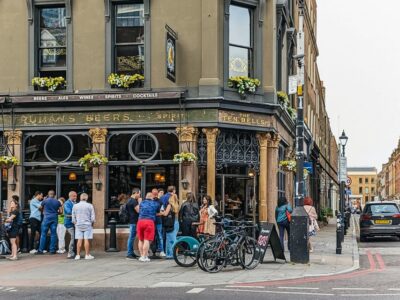
The tour finishes at the Ten Bells, described as the pub of the last night. Ending here gives the route a strong final location rather than leaving you on an anonymous street.
A pub ending also suits the subject. It connects the story with the social life of the neighborhood and gives you a clear place to pause after two hours of grim material. You can continue exploring from there or use the finish as a point for food and drinks, though the tour does not include refreshments.
The Ten Bells is also a practical ending because Javier has been praised for offering suggestions about restaurants and places to visit. I would take a moment to ask for ideas before leaving if you still have time in East London.
Do not expect the guide to solve the case at the pub. The experience is built around the mystery, and the identity of Jack the Ripper remains the central unanswered question.
What the $20 price gets you
At $20 per person, this is reasonably priced for a two-hour guided walk in London. You are paying for a live Spanish-speaking guide, a planned route through several significant locations, and a performance that gives the tour its character.
The value depends heavily on what you want. If you only want to see Whitechapel streets, you can walk through the area without paying. If you want someone to connect Goulston Street, Mitre Square, the Roman wall, Artillery Passage, Spitalfields, and the Ten Bells into one story, the fee is easier to justify.
The small rating base of 11 reviews means I would not treat the 4.9 score as a guarantee for every group. Still, the same strengths appear again and again: Javier’s commitment to the role, his clear explanations, his interaction with the group, and the unusual design of the route.
You also get free cancellation up to 24 hours before the start and the option to reserve without paying immediately. Those terms reduce the risk if your London plans are still shifting.
Who should book this walk?
I would recommend it to you if:
- You want a Spanish-language activity in London.
- You enjoy mystery, true crime, and theatrical storytelling.
- You prefer a guide who interacts with the group instead of giving a formal lecture.
- You are comfortable hearing about murder and the exploitation of women.
- You want to see Whitechapel locations while learning how they fit together.
- You are at least 14 and can manage a two-hour city walk.
I would look elsewhere if you want a quiet museum-style tour, a broad survey of London history, or a child-oriented activity. The Jack persona is central, not a minor touch, and the sarcasm may not work for every audience.
Practical tips for a better experience
Arrive a little early at the Tower Hill sundial. Find the right-hand side outside the station exit and look for the red umbrella and mask.
Wear shoes suitable for two hours on city streets. The tour is wheelchair accessible, but the route includes several outdoor stops and passages, so it is sensible to confirm that the pace and surfaces fit your needs.
Bring clothing for London weather. The experience takes place outdoors, and the umbrella is a meeting marker as well as part of the character. Rain will not make the subject any less dark.
Keep your group together when moving between stops. The route passes through busy parts of East London, and listening while walking can be harder than standing in one place.
Finally, remember the tone before you book. This is not simply a stroll through atmospheric streets. It deals with femicide, fear, and disturbing historical details, presented through a sarcastic and theatrical version of Jack the Ripper.
Should you book it?
Book this tour if you want a lively Spanish-language performance with real Whitechapel locations, and if you enjoy a little dark humor with your history. Javier’s character work, audience interaction, and detailed explanations are the main reasons to choose it over a standard walking route.
Skip it if you dislike role-playing around violent crime or prefer the victims’ stories handled in a quiet, solemn format. For the right audience, $20 is a fair price for two focused hours, a memorable route, and a guide who gives the mystery a strong theatrical voice.
FAQ
Where does the Jack the Ripper walking tour begin?
It begins outside Tower Hill Station, at the sundial a few meters from the station exit. The guide should be on the right-hand side and will be wearing a mask with a red umbrella.
Where does the tour finish?
The walk finishes at the Ten Bells pub in Whitechapel.
How long does the tour last?
The guided walking tour lasts two hours.
Is the tour conducted in Spanish?
Yes. The live tour guide speaks Spanish.
Which places do you visit?
The route includes Goulston Street, Mitre Square, the Roman Wall of Londinium, Artillery Passage, Old Spitalfields Market, and the Ten Bells. Chamberlain and Algate Church are also included among the key points described for the experience.
Is the tour suitable for children?
The tour is not suitable for children under 14 years old.
Can I cancel the booking?
Yes. You can cancel up to 24 hours in advance for a full refund. You can also reserve now and pay later.
Just added around London
- Wicked Whitechapel: Where Now’s Jack The Ripper Audio Tour★ 5.0 · 2 reviews
- Ghosts, Gore & Other Ghasty Stories in the City of London★ 5.0 · 7 reviews
- Visit Jack the Ripper in French★ 5.0 · 33 reviews
- The Ghosts of the secret alleyways of old London town★ 5.0 · 2 reviews
- The Haunted Pubs of Old London: Small Group Tour★ 5.0 · 38 reviews
- Afternoon Jack the Ripper : Guided Tour★ 5.0 · 183 reviews
- The Fading Light London Ghost Walk★ 5.0 · 35 reviews
- Self-Guided Audio Tour-Behind the shadow of evil: Jack the Ripper★ 4.0 · 2 reviews
London Ghost Tours, compared.
London Jack the Ripper Guided Tour with Ripper-Vision
Read our review →
Ghost, Ghouls and Gallows Tour : Guided Tour with Boat Ride
Read our review →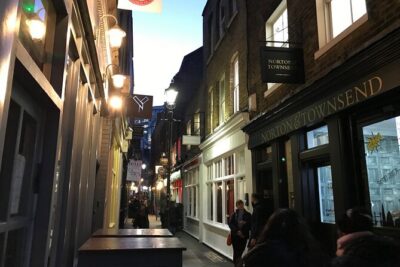

Jack the Ripper Tour with Immersive Ripper Vision
Read our review →
German Language : Original Jack the Ripper Tour
Read our review →Browse the lists this tour appears in