
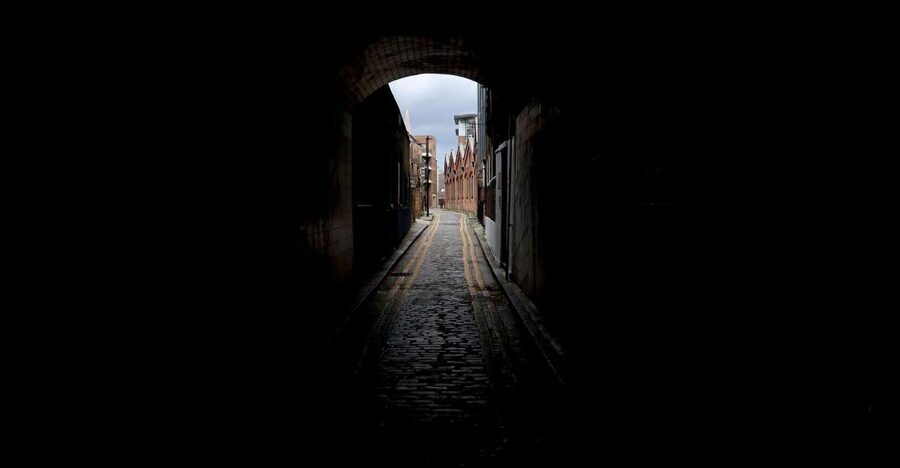
REVIEW · LONDON GHOST TOURS
London: Jack the Ripper tour in Spanish (RLA Winner)
Jack the Ripper’s name is famous. The streets where the crimes happened are less familiar, and that is where this two-hour Spanish walking tour earns its place. Led by José Oranto, a historian and author of Jack el Destripador y las crónicas de Whitechapel, it focuses on documented places rather than the usual foggy London legend.
I like two things here: the real locations, from Brick Lane to Mitre Square, and the chance to ask questions throughout the walk. Oranto’s work has received the 2023 RLA Award, and his explanations are supported by photographs and historical material. The main consideration is simple: this is a serious murder case, so it may not suit you if you prefer light sightseeing or dislike grim subject matter.
Key points about the Whitechapel walk
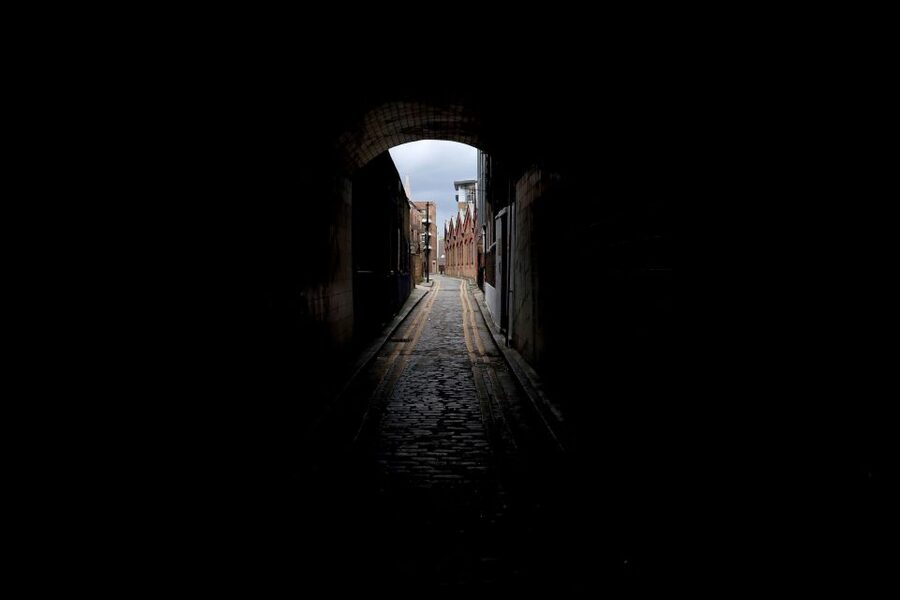
- José Oranto leads in Spanish, with a focus on evidence, context, and open discussion.
- The route visits actual case locations, including Mitre Square and 29 Hanbury Street.
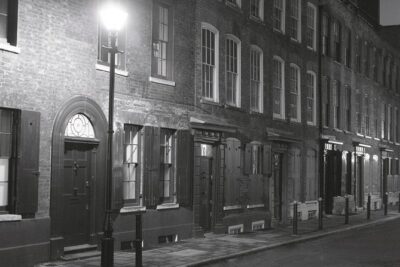
- Old streets and buildings add context, helping you picture Victorian Whitechapel beyond the crime stories.
- Questions are welcome, including discussion of theories and wider London history.
- The walk covers a manageable route in two hours, with no claim that you need to march across the whole East End.
- At $21 per person, it offers a focused way to explore a famous London case without paying for a full-day tour.
Why this Jack the Ripper tour feels different
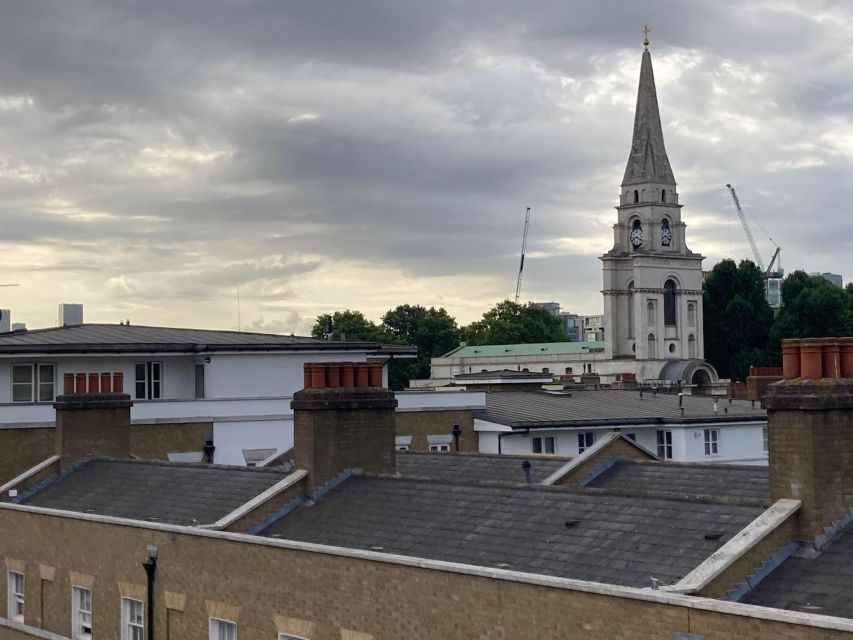
Many Jack the Ripper walks lean hard on atmosphere. Dark alleys, dramatic pauses, and familiar myths can make for an entertaining evening, but they do not always help you separate fact from invention.
This experience takes a more research-led path. José Oranto is presented as a historian and specialist in the Whitechapel murders. He wrote Jack el Destripador y las crónicas de Whitechapel, has worked with around a dozen specialist publications, and was named a leading investigator in the field by Ripperologist magazine in 2024.
That background matters because the case is crowded with bad information. Names, dates, police theories, newspaper claims, and later guesses often get mixed together. You can ask Oranto to explain what is documented, what is disputed, and what remains unknown.
The tone is not dry, though. The guide uses images to support the explanations, and the format allows a direct conversation as you walk. One useful detail for your planning is that the route is not described as especially demanding. You still need comfortable clothes and weather protection, but this is not an endurance hike through London.
More Jack the Ripper tours in London:
- London: The Original Jack the Ripper Walking Tour
★ 4.7 · 7,833 reviews - London Jack the Ripper Guided Tour with Ripper-Vision
★ 4.5 · 4,840 reviews - London: Jack the Ripper Small Group Tour
★ 4.7 · 3,159 reviews
Starting at St Marys Whitechapel Church Memorial
The walk begins at the St Marys Whitechapel Church Memorial. This is a useful starting point because it places you in the Whitechapel area before the tour moves through the individual addresses.
You are not simply being shown a list of points on a map. The guide connects the case to the streets where people lived and worked, along with the surviving architecture of Victorian London. That broader setting helps you understand Whitechapel as a neighborhood, not just as a backdrop for murder stories.
The opening part is also a good time to settle into the Spanish-language format. You can ask questions early, and the guide encourages discussion rather than saving all conversation for the end.
Brick Lane and 16 Gunthorpe Street
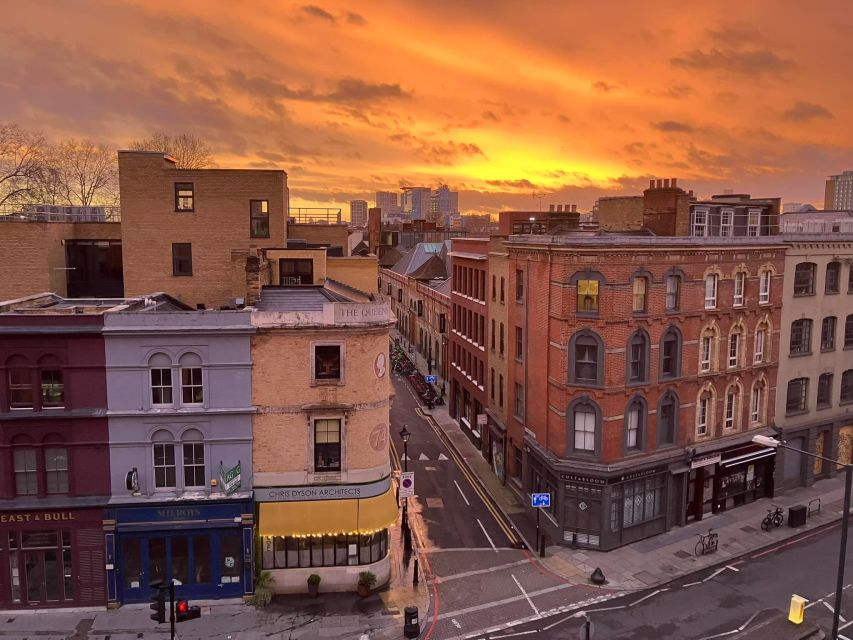
The next stops are 1 Brick Lane and 16 Gunthorpe Street. These addresses are part of the documented route through the Whitechapel case.
Brick Lane is now one of East London’s best-known streets, but the value of stopping here is the contrast between its current identity and the older streetscape tied to the investigation. The tour uses the location to connect the modern city with the streets of the late nineteenth century.
At 16 Gunthorpe Street, expect another location-based explanation rather than a museum display. You will be standing in an ordinary London street while the guide reconstructs the relevant part of the case. That can be more effective than viewing objects behind glass, but it also means you need to listen closely and use your imagination.
These stops work best if you care about place. If you only want a list of famous suspects, this tour may feel slower than expected. If you want to understand how the case unfolded across a real neighborhood, the street setting adds useful weight.
Flower and Dean Walk and Banglatown Arch
The route passes by 49 Flower and Dean Walk before continuing to Banglatown Arch. The first is a pass-by stop, so do not expect the same amount of time at every point.
That detail is worth knowing. A walking tour like this has to balance movement with explanation. Some locations receive a full stop, while others serve as connecting points between better-preserved or more important places. You will see the address and hear its place in the story, but the group will not necessarily linger.
Banglatown Arch offers a clear reminder that East London keeps changing. The name and surroundings belong to present-day London, while the tour is concerned with the Victorian period. Oranto’s job is to help you read both layers without pretending the area has remained frozen since 1888.
I like this part because it gives the route a wider purpose. You are learning about a case, but you are also seeing how a London neighborhood has been altered, renamed, and reused over time.
A few more ghost walks around London worth a look
- Ghost, Ghouls and Gallows Tour : Guided Tour with Boat Ride
★ 4.5 · 3,212 reviews - London Jack The Ripper Guided Walking Tour
★ 5.0 · 3,131 reviews - London: Comedy Horror Ghost Tour on a Bus
★ 4.4 · 2,084 reviews - London: Jack the Ripper Tour with Immersive Ripper Vision
★ 4.5 · 1,840 reviews
29 Hanbury Street and The Ten Bells
At 29 Hanbury Street, the tour reaches one of the key addresses on the route. This is a proper visit rather than a quick pass-by, giving the guide room to explain the location and its role in the case.
The appeal here is directness. You are not hearing about a vague part of Whitechapel. You are being taken to a named street address connected to the investigation. The present-day setting may look different from the Victorian one, so the guide’s images and descriptions are especially useful.
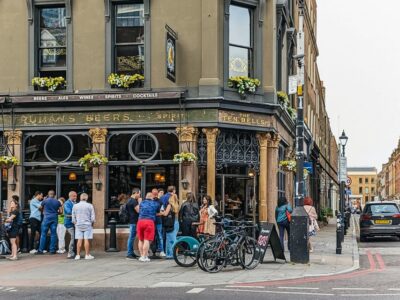
The route then passes by The Ten Bells in Spitalfields. The pub is strongly linked in popular culture to the Jack the Ripper story, but the sensible approach is to treat it as part of the case’s public memory as well as its physical setting.
Do not assume the pub stop means you will go inside or have time for a drink. The information provided describes it as a pass-by point. If you want to visit on your own, plan that separately rather than expecting it to be built into the two-hour walk.
This section may be the most familiar part of the route for people who have already read about Jack the Ripper. The benefit of having Oranto with you is that you can ask where the popular version matches the record and where later storytelling has taken over.
Mitre Square Garden and the case evidence
Mitre Square Garden is another full visit on the walk. The stop gives you a chance to consider how an open public space fits into the wider pattern of the Whitechapel murders.
This is where the tour’s factual approach matters most. A famous crime location can easily become a stage for exaggeration. Instead, you can ask about the evidence, the investigation, and the theories connected with the site.
The setting also shows one limit of historical walking tours: the modern space is not the same as the Victorian one. Buildings, roads, signs, and public areas change. A guide cannot give you a perfect visual copy of the past, but photographs and careful explanation can help bridge the gap.
Oranto’s willingness to answer questions is a real advantage here. You can ask about the case itself, the victims, the police work, or the way later writers have interpreted the evidence. The format feels more useful than a memorized speech because it leaves room for the interests of the group.
Goulston Street and White’s Row
The final two locations are 46 Goulston Street and 6 White’s Row. Both are listed as visits, so they form the closing section of the route rather than a rushed walk back to the start.
At 46 Goulston Street, the guide can place another part of the investigation into its street setting. At 6 White’s Row, you get a final address where the case can be discussed through documented detail rather than simple folklore.
By this point, you will have covered several connected parts of Whitechapel and Spitalfields. The route is useful because it does not stop after one or two famous sites. It builds a larger picture of the area and the way the locations relate to each other.
You should also expect the finish to be focused on the case rather than on a grand sightseeing endpoint. This is not a general tour of London landmarks. The reward is a clearer understanding of one dark and complicated part of East End history.
A Spanish tour with room for questions
The tour is conducted in Spanish, which is important for more than convenience. A complicated case is easier to follow when you can ask about small differences in wording, dates, names, and theories.
The format also suits you if you dislike silent walks where the guide never pauses. Questions are actively encouraged, and the experience is described as a direct exchange where you can debate ideas and share your own theories.
That does not mean every theory receives equal weight. The guide’s background is in historical investigation, so the useful question is not simply who you suspect. It is why a particular theory exists, what evidence supports it, and what evidence weakens it.
The Spanish language also makes this a strong choice for visitors who want more than a translated audio guide. You can ask about the case in your own words and receive answers in Spanish. The same guide can also help with general London questions, such as using the Underground or finding points of interest, according to the experience details.
Price, pace, and practical value
At $21 per person, this is a fairly modest price for a two-hour guided walk in central London. The value depends on how much you want from the subject.
If you are already interested in the Jack the Ripper case, the price buys you a specialist-led route through real addresses, plus the chance to ask questions. That is more useful than simply walking around Whitechapel with a map and a list of names.
If you are only mildly curious, the value is still reasonable, but the subject may not hold your attention for two hours. You are paying for focused research and storytelling, not for a broad tour covering the Tower of London, the City, or major London monuments.
The route is described as manageable, and one detailed account notes that it does not require excessive walking. Even so, this is an outdoor walk, so wear suitable shoes and weather-appropriate clothing. The tour is wheelchair accessible, which makes it more practical for a wider range of visitors, though the information does not provide detailed route notes about every surface or crossing.
You can cancel up to 24 hours before the start for a full refund, and you can reserve now while paying later. Those policies are useful if your London schedule is still shifting.
Video recording is not allowed. Take that seriously, especially if you normally document tours on your phone. You can still participate, ask questions, and use the guide’s spoken explanations and supplied images during the experience.
Who should book this Whitechapel experience?
I would choose this tour if you want the case explained in Spanish and you care about separating evidence from legend. It is especially well suited to readers of crime history, visitors interested in Victorian London, and anyone who prefers a small-scale local story to a standard landmark tour.
It also suits you if you like asking questions. The guide’s patience and willingness to discuss the case are repeatedly emphasized in the experience information, and that interactive quality seems central to the format.
Families should make their own call based on the ages and interests of the group. The subject involves murder and disturbing events, and the description does not present it as a child-focused walk.
You might skip it if you want a general tour of London or a theatrical ghost story. The appeal here is research, locations, photographs, and discussion. It is less about costume drama and more about examining what can actually be established.
Should you book the $21 Spanish Jack the Ripper walk?
Book it if you want a focused, evidence-led look at Whitechapel and can follow Spanish comfortably. José Oranto’s specialist background, the real locations, and the open question format give the experience more substance than a quick round of spooky anecdotes.
Skip it if the murder subject is not for you, or if you want famous London landmarks instead. For the right audience, though, two hours and $21 make this a practical way to connect a well-known case with the streets where it happened.
FAQ
How long does the Jack the Ripper tour last?
The walking tour lasts two hours.
What language is the tour conducted in?
The live guided tour is conducted in Spanish.
Who leads the tour?
The tour is led by José Oranto, a historian, author, and specialist in the historical investigation of the Whitechapel murders.
What locations are visited?
The route includes St Marys Whitechapel Church Memorial, 1 Brick Lane, 16 Gunthorpe Street, Banglatown Arch, 29 Hanbury Street, Mitre Square Garden, 46 Goulston Street, and 6 White’s Row.
Which locations are pass-by stops?
The tour passes by 49 Flower and Dean Walk and The Ten Bells Spitalfields.
Is the tour wheelchair accessible?
Yes, the experience is listed as wheelchair accessible.
What should I bring?
Bring clothing suitable for the weather, since the experience takes place outdoors on foot.
Can I cancel my booking?
Yes. You can cancel up to 24 hours in advance for a full refund. You can also reserve now and pay later.
Just added around London
- Wicked Whitechapel: Where Now’s Jack The Ripper Audio Tour★ 5.0 · 2 reviews
- Ghosts, Gore & Other Ghasty Stories in the City of London★ 5.0 · 7 reviews
- Visit Jack the Ripper in French★ 5.0 · 33 reviews
- The Ghosts of the secret alleyways of old London town★ 5.0 · 2 reviews
- The Haunted Pubs of Old London: Small Group Tour★ 5.0 · 38 reviews
- Afternoon Jack the Ripper : Guided Tour★ 5.0 · 183 reviews
- The Fading Light London Ghost Walk★ 5.0 · 35 reviews
- Self-Guided Audio Tour-Behind the shadow of evil: Jack the Ripper★ 4.0 · 2 reviews
London Ghost Tours, compared.
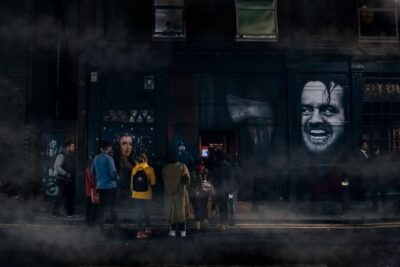
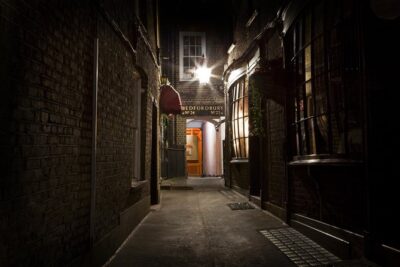
London Jack the Ripper Guided Tour with Ripper-Vision
Read our review →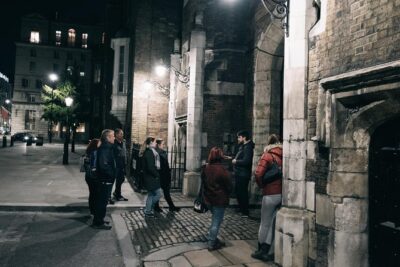
Ghost, Ghouls and Gallows Tour : Guided Tour with Boat Ride
Read our review →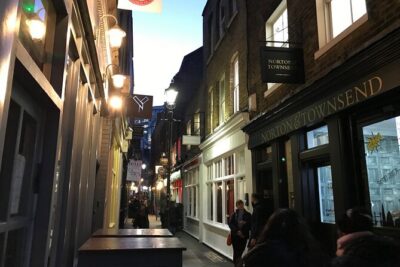

Jack the Ripper Tour with Immersive Ripper Vision
Read our review →
German Language : Original Jack the Ripper Tour
Read our review →Browse the lists this tour appears in