
REVIEW · VENICE GHOST TOURS
New – Maleficia: Inquisition, Torture and Witchcraft between the centuries
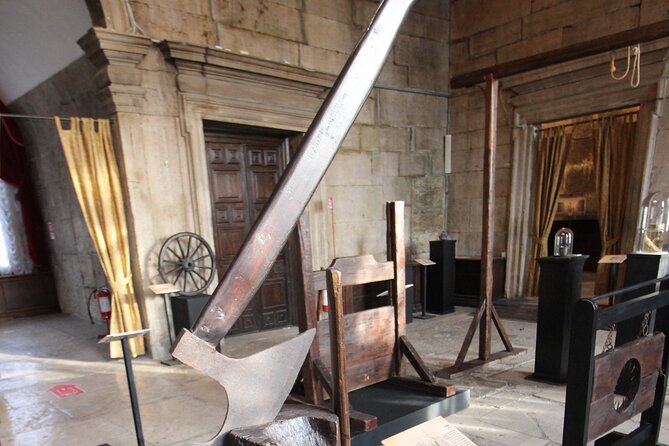
Maleficia takes you into Venice’s Palazzo delle Prigioni, where objects, documents, and stories reveal how the Venetian Republic dealt with witchcraft, magic, and alleged heresy from the 15th through the 18th century. This is not a grand palace tour. It is a compact exhibition about fear, punishment, and the machinery of justice.
I like two things right away: the setting is authentic, and the subject reaches beyond familiar Venetian art and canals. You also get a close look at the documents and instruments connected with real trials, including the case of Giacomo Casanova, who was accused of dabbling in magic and the occult.
The main caution is that this is a small, one-hour visit, and its impact depends heavily on explanation. Without a guide or useful audio commentary, some displays may feel like a quick collection of grim objects rather than a clear story.
Key points to know before you go
- Inside the historic Palazzo delle Prigioni: The exhibition occupies the former prison palace on Riva degli Schiavoni, near Venice’s major sights.
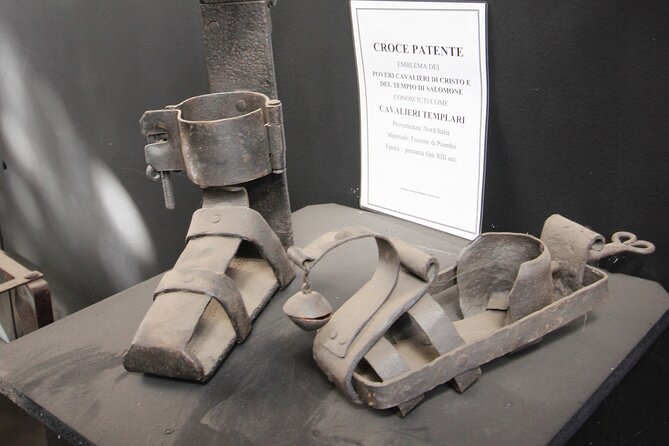
- Witchcraft is part of a wider story: The displays also cover Inquisition practices, confessions, punishment, and the use of justice tools.
- Original records and reproductions: You see historical documents associated with the Holy Office alongside objects and reconstructed instruments.
- A short, focused visit: Plan on about one hour, with admission included in the booking.
- A guide can make the difference: One guided visit was praised for its engaging explanations, while another visitor regretted not having an audio guide.
- Check the entrance carefully: Signage for other exhibitions in the building can make the meeting point confusing.
Entering Venice’s Palazzo delle Prigioni
The setting gives Maleficia much of its force. You meet at Circolo Artistico, Palazzo delle Prigioni, at Riva degli Schiavoni 4209, 30122 Venezia VE. The activity begins and ends at this same point, so you do not need to arrange a separate return transfer.
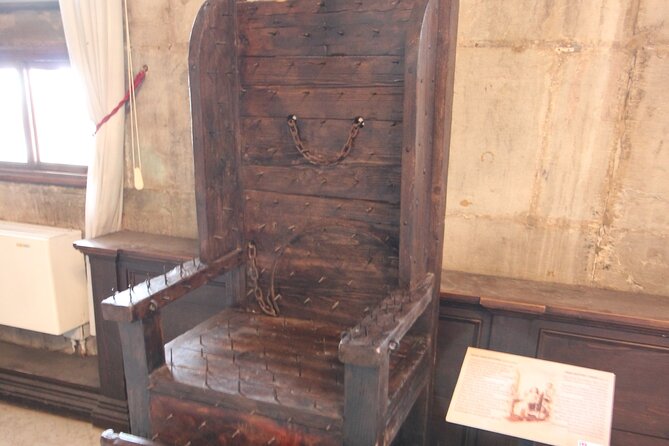
The palace is not simply a neutral gallery space. It was part of Venice’s prison and judicial complex, and the exhibition uses that connection to frame the material. Between the 15th and 18th centuries, the building was linked with the Tribunal of the Inquisition and the punishment of people accused of witchcraft, magic, or other offenses.
That context matters. A torture tool displayed in a modern museum can seem like a strange object from a distant past. In a former prison, it carries a more direct question: how did institutions turn suspicion into evidence, and evidence into punishment?
You should allow a few extra minutes to find the exact entrance. One of the practical weaknesses here is unclear signage. The building can indicate another exhibition, while the person or sign connected with Maleficia may not be immediately visible. Keep your mobile ticket open and check the full meeting-point wording before you arrive.
More witch trial tours in Venice:
- The Salem Witch Walk
★ 4.5 · 1,301 reviews - Edinburgh: Witches & Haunted History Walking Tour
★ 4.8 · 1,290 reviews - Wicked Awesome Tours: Witch Trial History and Salem Haunts!
★ 5.0 · 1,032 reviews
What you see during the one-hour visit
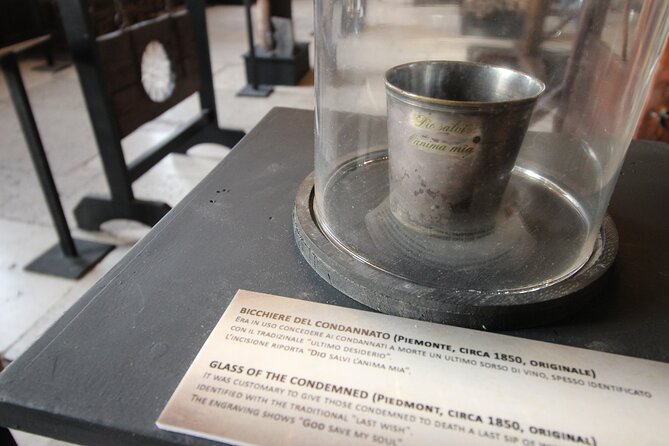
The exhibition follows a compact route rather than a long, multi-room museum program. You examine documents, objects, and reproductions tied to the Venetian Republic’s handling of witchcraft and alleged magical practices.
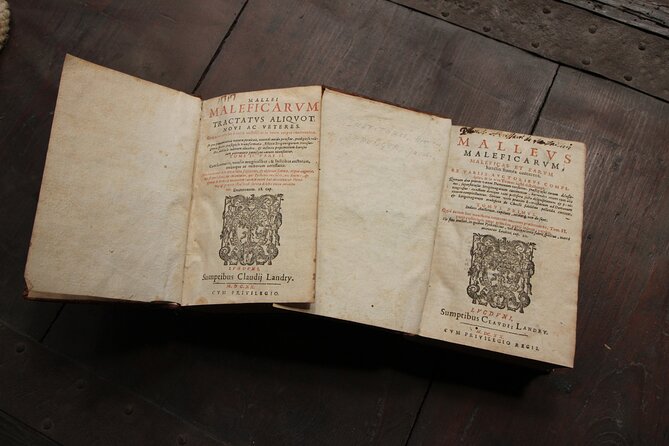
The historical documents are important because they show the process behind the punishments. The display is not only about dramatic instruments. It also points to the legal and religious systems that investigated accusations, sought confessions, and determined guilt.
You might find the distinction between original artifacts and reproductions useful. Original papers can show the language and form of the period, while reproductions and reconstructed tools make it easier to understand how justice was carried out. At the same time, reproductions can feel less powerful than authentic objects, especially if you already know a great deal about medieval and early modern punishment.
The material also reaches beyond witchcraft alone. The exhibition places witchcraft within a broader account of the Inquisition, torture, imprisonment, and public justice. This is why the visit may work best for someone interested in how authorities operated, not just for someone seeking a collection of unusual old tools.
The Casanova reference adds a familiar Venetian name to the story. Casanova is usually remembered as an adventurer and writer, but here you encounter the darker side of his reputation. His alleged involvement with magic and the occult shows that accusations could touch well-known men as well as women accused of spells and magical arts.
Witchcraft, accusation, and the human cost
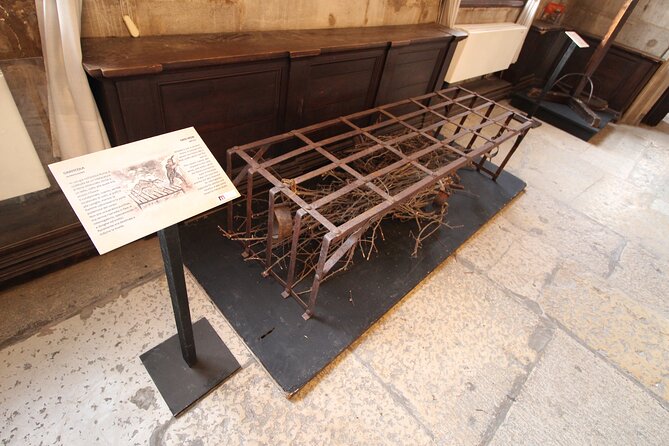
The word witchcraft can make an exhibition sound theatrical. Maleficia is more serious than a simple display of folklore or legends. Its central subject is what happened when fear, religious belief, and legal authority joined together.
Women accused of harmful spells could face severe consequences, including death sentences. The exhibition asks you to think about the gap between an accusation and proof, especially in an age when confession was treated as a vital part of justice and torture could be used to obtain it.
That human cost is the reason the visit can feel sobering. The tools are visually striking, but the people affected by them matter more than the objects themselves. You are looking at evidence of a system that could punish alleged magical acts as real crimes, often with little protection for the accused.
The exhibition also provides a useful counterpoint to Venice’s polished public image. The city is often presented through churches, palaces, music, and paintings. This visit shows another Venice, one concerned with confinement, surveillance, religious control, and judicial fear.
I would not choose this as a light stop between gelato and a gondola ride. The subject involves torture and execution, and the exhibition is intended to make you reflect on suffering in past eras. That does not make it inappropriate for a short itinerary, but it does mean you should set the right mood before entering.
Why a guide or audio commentary matters
The strongest positive response attached to this experience was directed at the guide, who was described as engaging and informative. No guide’s name is provided, so you cannot request a particular person in advance. Still, the message is clear: explanation adds real value here.
A guided visit can connect the displays to the rooms where imprisonment and torture took place. It can also explain terms, legal practices, and the difference between a historical record and a later reconstruction. Those links are hard to get from a bare display label.
Another visitor found the small museum pleasant but regretted not having an audio guide. That is a useful warning for independent visitors. If your booking does not clearly include guided commentary or an audio guide, ask before you arrive. The one-hour format does not leave much time to compensate for confusing labels.
The published information confirms admission, but it does not name a guide or clearly promise an audio guide for every booking. Treat commentary as something to verify, not something to assume. If you are choosing between a bare museum visit and a clearly guided option, I would favor the guided version for this particular subject.
A few more ghost walks around Venice worth a look
- Venice Ghost Stories, Legends and Anecdotes Tour
★ 4.0 · 846 reviews - Venice: Ghost Tour to Rialto and San Marco Square
★ 3.8 · 659 reviews - Venice: Mysterious Tales of Ghosts and Murders
★ 4.9 · 636 reviews - Venice: The Ghost & Legends Walking Tour
★ 4.0 · 206 reviews
Is the $11.56 price good value?
At about $11.56 per person, Maleficia sits at the inexpensive end of Venice’s paid attractions. The price is reasonable if you want a focused historical stop and are comfortable spending about an hour with a serious subject.
The value depends on what you expect. If you want a large museum with extensive collections, many rooms, or a full account of Venetian political history, this will feel limited. If you want a short visit that adds difficult, less polished material to your understanding of the city, the cost is easier to justify.
Admission is included, and the mobile ticket removes the need to carry a printed voucher. The small maximum group size of 15 people should help keep the visit manageable, although the experience is still compact rather than elaborate.
I would especially consider it good value when paired with nearby sightseeing. You can visit the exhibition as a change of pace from Venice’s major monuments without giving up half a day. The one-hour length also makes it easier to fit into a busy schedule.
The price becomes less attractive if the meeting point causes delays or if you arrive expecting a fully guided tour and receive only a self-directed exhibition. Confirm what your ticket covers, particularly any guide or audio component.
Getting there and avoiding the meeting-point problem
The meeting point is Circolo Artistico, Palazzo delle Prigioni, Riva degli Schiavoni 4209. The site is near public transportation, and the activity ends back at the same location.
The practical problem is not distance. It is identification. Building signage may point to another exhibition, and the operator may not have a large flag, branded sign, or obvious staff member waiting outside. One dissatisfied visitor also reported difficulty reaching the operator by phone through the ticket information.
For that reason, I would arrive early enough to look around calmly rather than walking up at the exact start time. Have the mobile ticket ready, read the meeting instructions closely, and ask at the building entrance where the Maleficia admission point is located.
This is especially important in Venice, where crowded paths, bridges, and confusing addresses can turn a simple appointment into a rushed arrival. The booking confirmation is supplied at the time of purchase, so save it before leaving your hotel or apartment.
Most people can participate, and the activity is near public transportation. The supplied information does not give detailed accessibility information, so you should contact the operator directly if you need specific details about stairs, corridors, or seating.
Small group size and current operating details
The maximum group size is 15 people. That is a useful limit for a compact exhibition because a large crowd could make it difficult to read documents or hear a guide.
Small groups do not guarantee a private tour. They do, however, give you a better chance of seeing the displays without being pushed along by a large line. One practical benefit is that the experience can remain focused even when Venice itself is crowded.
The operator also states that customer touchpoints are cleaned frequently and that the activity follows national Covid-19 directives. These measures may change with current requirements, so check the latest conditions close to your visit.
The visit is generally booked about 10 days in advance. That does not mean you must reserve that far ahead every day, but it gives you a useful planning guide. If your Venice schedule is fixed, booking early can protect the time slot you want.
Who will enjoy Maleficia most?
I would recommend this exhibition to you if you enjoy:
- Venetian political and religious history
- The history of law and punishment
- Witchcraft trials and early modern beliefs
- Small museums with an unusual subject
- Serious historical displays that encourage reflection
- Short attractions near the central sightseeing route
It may also suit you if you have already seen Venice’s major churches and palaces and want a different side of the city. The exhibition helps explain how power worked away from the postcard views.
I would be more cautious if you want a lively, entertaining activity or a broad survey of Venetian history. The material is narrow, the visit is short, and the torture theme can be unpleasant. Families should decide based on the ages and sensitivities of their children, since the display concerns execution, torture, and suffering.
I would also hesitate to book without clarification if you need a fully guided experience. The best account of the visit involved an engaging guide, while another person found the exhibition less satisfying without an audio guide. That difference is too important to ignore.
Booking, cancellation, and access fees
The ticket is refundable if you cancel at least 24 hours before the local start time. Cancellations made within 24 hours are not refunded, and changes during that period are not accepted.
Some dates require day visitors staying outside Venice to pay a separate €5 access fee to enter the city. This charge is not the exhibition price. Check the official Venice access-fee website before your visit to see if your date applies and if you qualify for an exemption.
The mobile ticket is convenient, but do not rely on finding a large street sign at the entrance. Save your confirmation, note the exact address, and arrive with enough time to identify the correct exhibition.
Should you book Maleficia?
Book it if you want a short, affordable look at Venice’s less comfortable past, especially if the booking includes a guide or you can confirm useful audio commentary. The former prison setting, witchcraft records, torture tools, and Casanova connection give the visit a clear identity.
Skip it if you want a large museum, polished entertainment, or a guaranteed guided program that is not clearly stated in your booking. The exhibition can be worthwhile, but it is not self-explanatory for everyone, and the entrance arrangements need care.
My practical choice would be to book Maleficia as a one-hour historical add-on, not as one of Venice’s main attractions. Go with realistic expectations, allow time to find the entrance, and make sure you know how the commentary works. Done that way, it offers an inexpensive and sobering look behind the city’s elegant facade.
FAQ
Where does the Maleficia experience take place?
It takes place at Circolo Artistico, Palazzo delle Prigioni, Riva degli Schiavoni 4209, 30122 Venezia VE, Italy.
How long does the visit last?
The visit lasts approximately one hour.
What does the exhibition cover?
It covers the Inquisition, witchcraft accusations, torture, imprisonment, and justice practices used by the Venetian Republic between the 15th and 18th centuries.
Are original objects and documents displayed?
The exhibition includes original artifacts and documents, along with reproductions and instruments connected with historical justice practices.
Is admission included?
Yes. The admission ticket is included in the booking.
Is the ticket mobile?
Yes. The experience provides a mobile ticket.
Is a guide or audio guide included?
The supplied information does not clearly confirm that a guide or audio guide is included with every booking. Confirm this before arrival, since commentary can help explain the displays.
Can I cancel for a full refund?
Yes, if you cancel at least 24 hours before the experience start time. Cancellations within 24 hours are not refundable.
Is there a Venice access fee?
On certain dates, day visitors staying outside Venice may need to pay a separate €5 access fee. Check the official Venice access-fee website for applicable dates and exemptions.
Just added around Venice
- Your evening in Venice – Legends&Ghosts&Aperitif★ 4.7 · 79 reviews
- Venice: Private After Dark Tour and Gondola Ride★ 4.6 · 11 reviews
- Venice: Legends, Anecdotes and Ghost Stories Walking Tour★ 4.1 · 137 reviews
- Venice Ghost Tour: Haunted Palaces & Secret Canals★ 4.8 · 3 reviews
- Venice: Ghosts & Murders – Mysterious Tales of San Marco Area★ 4.5 · 80 reviews
- Venice: Ghosts and Legends Evening Private Walking Tour★ 4.5 · 6 reviews
- Venice: Private After Dark Tour and Gondola Ride★ 5.0 · 64 reviews
- Venice Ghost & Legends Walking City Tour★ 3.5 · 83 reviews
Venice Ghost Tours, compared.
Venice Ghost Stories, Legends and Anecdotes Tour
Read our review →


Legends, Anecdotes and Ghost Stories Walking Tour
Read our review →
Ghosts & Murders – Mysterious Tales of San Marco Area
Read our review →
Your evening in Venice – Legends&Ghosts&Aperitif
Read our review →Browse the lists this tour appears in