

REVIEW · NEW ORLEANS GHOST TOURS
New Orleans: French Quarter Ghosts and True Crime Tour
The most interesting thing about this French Quarter walk is its mix of true crime and ghost stories. You might hear about the Ax-Man who loved jazz, Madame Lalaurie, two separate trunk murders, a singing priest, and a World War I hero shot by his wife on Bourbon Street. The stories are strange, but the city around them is real.
I like the small-scale feel promised by the personal guide contact, and I like that the tour gives skeptics something to enjoy through crime, culture, and local history. The main drawback is that it may lean more toward a general history walk than a scare-focused ghost tour, so keep that in mind if you want nonstop supernatural tales.
Key points to know before you book
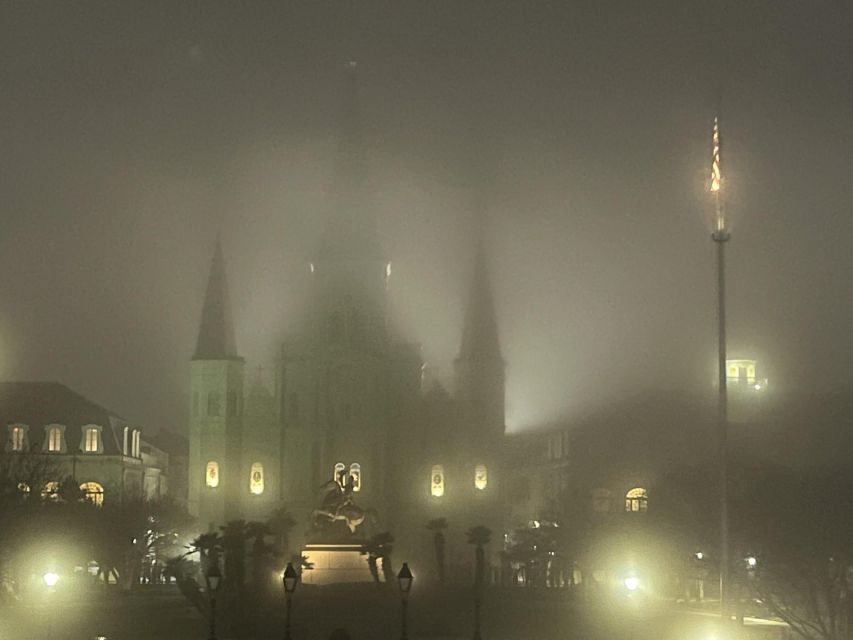
- About one mile on foot: The route takes 1.5 to 2 hours through the French Quarter.
- Joshua may lead the walk: A recent tour group found him kind, patient, and clear when answering questions.
- History matters as much as hauntings: The stories connect to New Orleans as a port, war city, music center, and former crime hub.
- Good for believers and skeptics: The true crime material gives the tour weight even if you do not believe in ghosts.
- Adults and older teens only: Children under 12 are not allowed, and minors cannot attend alone.
- Easy booking terms: The price is $30 per person, with free cancellation up to 24 hours before departure.
New Orleans after dark, without the haunted-house act
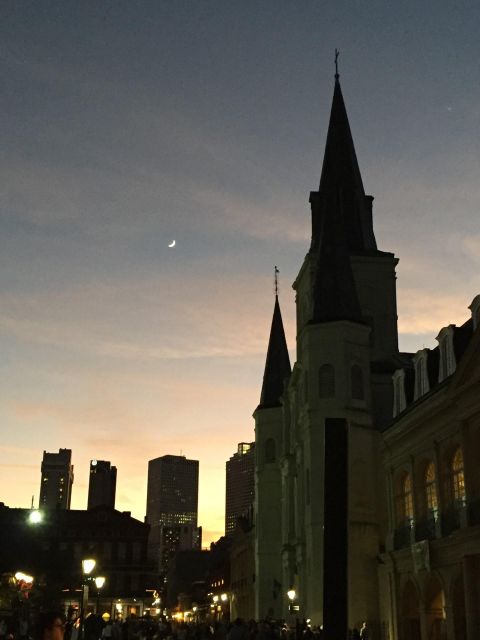
This tour uses the French Quarter as its stage, but it does not depend on costumes, props, or jump scares. Its appeal comes from the odd and often grim events connected to real streets, old buildings, powerful families, criminals, musicians, soldiers, and religious figures.
That makes the experience a good fit if you want atmosphere with some substance. The French Quarter can feel like a party district on the surface, especially around Bourbon Street, yet its past includes forced enslavement, violent crime, war, disease, political power, and hard port life. The tour uses ghost stories to draw you in, then adds enough background to explain why these tales took root.
I also like the age limit. This is not a family stroll aimed at young children. The subject matter includes murder and cruelty, so the minimum age of 12 gives the guide room to speak plainly without turning the walk into a sanitized history lesson.
Still, do not expect every minute to be frightening. One recent rating of three stars made a fair point: the walk felt more historical than focused on ghosts and true crime. That is not necessarily a flaw, but it matters. If your ideal tour is one chilling story after another, this may feel too measured.
More Dark History Tours in New Orleans
- Adults-Only New Orleans Ghost, Crime, Voodoo, and Vampire Tour
★ 5.0 · 6,545 reviews - New Orleans Adults-Only True Crime and Ghost Walking Tour
★ 5.0 · 1,666 reviews - New Orleans: Ghost, Crime, Voodoo, and Vampires Guided Tour
★ 4.7 · 139 reviews
Meeting under the streetlight on St. Philip Street
You meet at 721 St. Philip Street, between Bourbon and Royal Streets. The meeting point is under the streetlight in front of a large school building that is currently closed and has no name on it.
That detail is useful. The building may not look like a normal attraction or business, so do not search for a school sign. Your guide sends a text before the tour with identifying information, which should make the meeting easier in the busy French Quarter. You also have a way to contact the guide later during your trip, useful if a story raises a question after the walk.
Arrive with the practical mindset you need for any city walking tour. Wear comfortable shoes, carry water, and expect to remain on foot for roughly a mile. The route is not long, but the total time can reach two hours because the guide pauses for stories and context.
The tour is wheelchair accessible according to the activity details. Since the route runs through city streets and public spaces, you may still want to ask the operator about the exact route if you have specific mobility needs.
The French Quarter as the first chapter
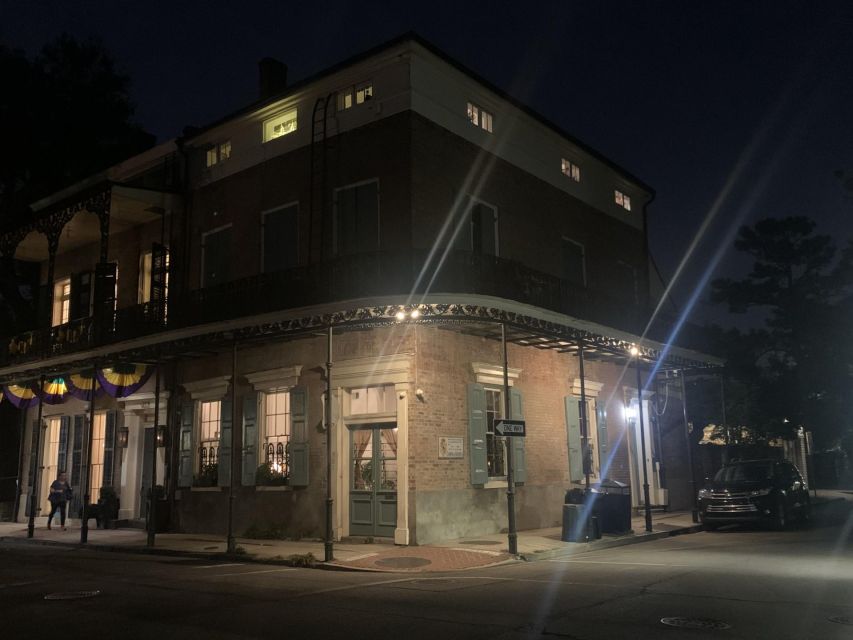
The introduction places the French Quarter in a much wider story than its balconies and bars. Before the colonial city took shape, the area served as a Native American gathering place. Then came a French colonial community that included convicts, adventurers, and people from an insane asylum.
The neighborhood also became a landing place for thousands of Africans forced into enslavement. That history is essential context. It prevents the French Quarter from becoming a simple collection of spooky buildings and colorful legends. Behind the stories of ghosts and criminals is a city shaped by forced migration, trade, power, and violence.
Your guide also connects the neighborhood to New Orleans as a major port. Port cities gather people, money, secrets, and trouble. Pirates, smugglers, gamblers, workers, soldiers, artists, and musicians all passed through. That helps explain why the French Quarter has so many tales that sound too strange to be true.
The tour’s history content is therefore part of the point, not just filler between ghost stories. If you enjoy learning how a place developed, you will likely appreciate this approach. If you only want supernatural suspense, the historical sections may feel like a detour.
The Ax-Man and the city’s musical pulse
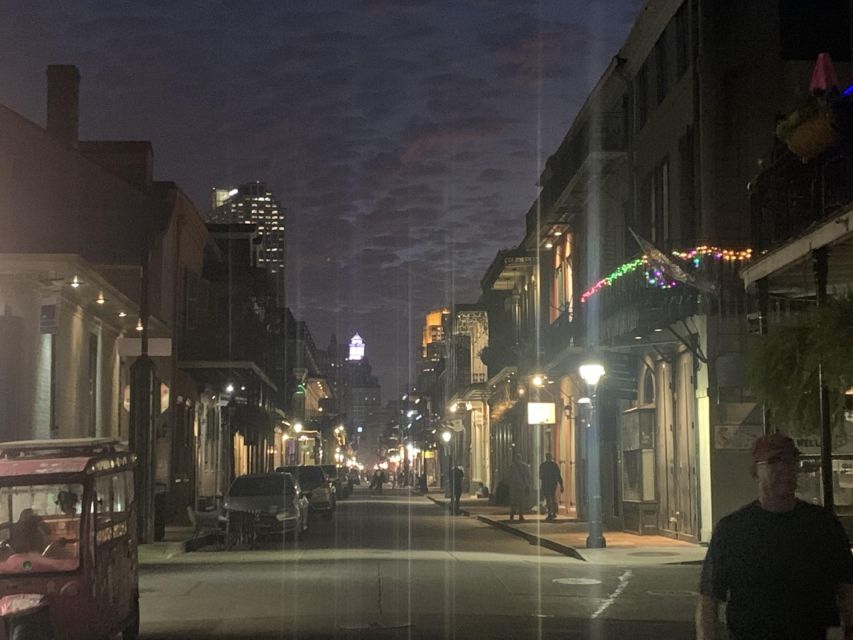
One of the featured tales concerns the Ax-Man, a criminal figure linked with jazz. Even from the short description, this story captures something specific about New Orleans: music is not just decoration here. It is tied to the city’s identity, social life, and public memory.
A story like this works best because it links crime to culture. You are not simply hearing that a violent person once lived or operated in New Orleans. You are hearing about a figure remembered through the city’s love of jazz, a musical tradition that remains part of the French Quarter’s character.
The same pattern appears elsewhere on the walk. Crime stories are connected to streets, people, and local customs rather than presented as random horror trivia. That gives you a better sense of the city after the tour ends.
More Dark History Tours in the USA
- Dark History Tour In New Orleans
★ 4.5 · 77 reviews - Ghost Stories and True Crime Walking Tour of the French Quarter
★ 5.0 · 51 reviews - New Orleans French Quarter Dark History, Haunts, and Laughs Tour
★ 5.0 · 30 reviews - Adults-Only True Crime, Mafia, Dark History Tour
★ 5.0 · 22 reviews
Madame Lalaurie and the darker side of society
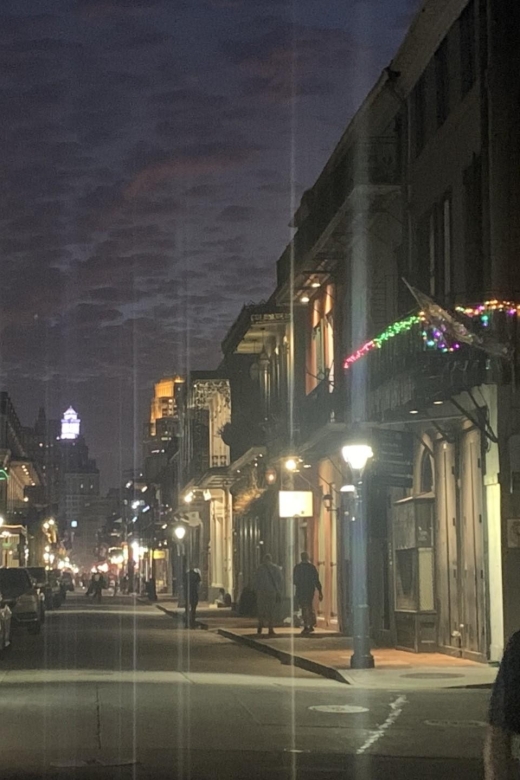
Madame Lalaurie is presented as a 19th-century socialite serial killer, one of the most notorious names in New Orleans crime lore. Her story brings a different kind of menace from the Ax-Man. It points toward wealth, social status, and the disturbing gap between public respectability and private cruelty.
This is one reason the tour is not just a ghost walk. The most unsettling material may come from the crimes themselves, not from anything supernatural. You can believe every ghost story is folklore and still find the human behavior disturbing.
The guide’s role matters here. A skilled storyteller must explain a dark subject without making it feel like a cheap thrill. Joshua received particularly strong praise for being patient and clear, and one small group appreciated that he continued with the tour even when numbers were low. Those details suggest a guide who treats the walk as a real appointment, not a performance that only works with a crowd.
Two trunk murders, not one
The itinerary includes the Trunk Murderer and then makes a point of noting that New Orleans has another Trunk Murderer. That odd repetition is exactly the sort of detail that makes a city crime tour memorable.
You do not need to know the full cases in advance. The appeal is in seeing how different crimes can become attached to the same object, method, or nickname in one city’s memory. The story also shows how local legends grow. Names get shortened, crimes get retold, and the most striking detail often survives longer than the complete facts.
This part should appeal to anyone who enjoys true crime podcasts or old newspaper cases. At the same time, the tour is not presented as a modern forensic investigation. It is a spoken account delivered in the streets where the city’s past unfolded.
Singing ghosts, an accordion, and a river
The supernatural stories add a change of pace. You may hear about a beloved priest whose ghost sings and a German girl who waits by the river while playing an accordion.
These tales are less about murder and more about memory. A singing priest suggests a figure remembered with affection, while the accordion-playing girl gives the river a lonely, musical presence. They help balance the harsher crime stories and show that New Orleans ghost lore is not made up only of villains and victims.
For skeptics, these stories can still work as local folklore. You do not need to accept a ghost as fact to enjoy asking why a particular person, building, or stretch of the city became associated with one. That is where the tour can serve both believers and nonbelievers.
Bourbon Street, war, and revenge
Another featured story concerns a World War I hero who was shot by his wife on Bourbon Street. This tale ties the famous nightlife street to personal drama and wartime history. Bourbon Street is often treated as a place for drinking and noise, but the story reminds you that real lives played out there long before modern nightlife took over.
The tour also includes a wine seller who took revenge on the Mob. That story shifts the focus from domestic violence and war to organized crime and personal retaliation. Together, these accounts show the range of material covered in two hours. You are not getting a single haunted-house narrative. You are getting a sequence of people who became part of the city’s darker folklore.
Because the walk covers about one mile, the guide can keep the route compact. You should expect several stops or pauses rather than a long march through distant parts of New Orleans. The exact order and street locations can vary by guide, but the setting remains the French Quarter.
What Joshua’s guiding style means for you
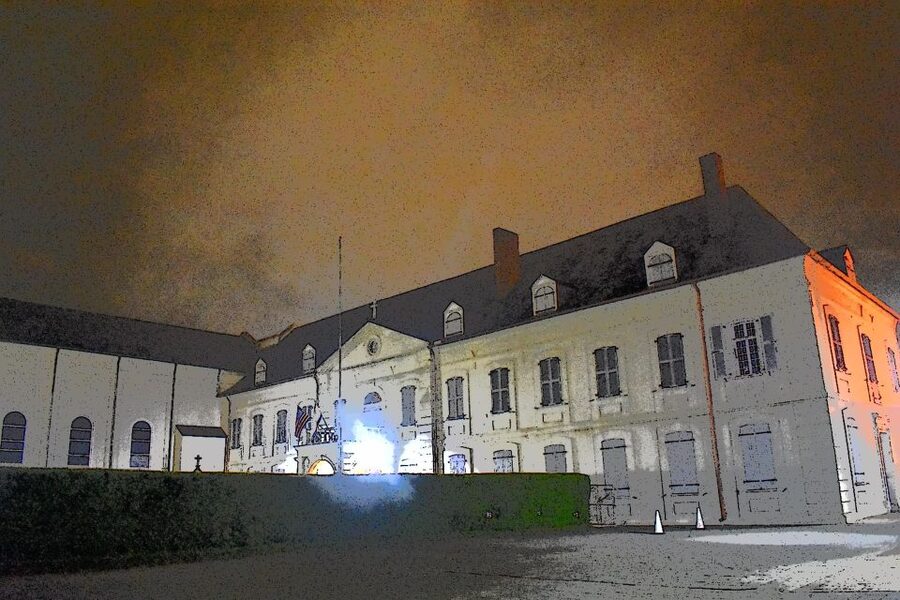
Joshua is the only guide named in the supplied information, and recent feedback describes him as kind, detailed, patient, and easy to discuss things with. A small group found it simple to ask questions, and another group felt the tour was a strong start to a New Orleans visit.
That is important because walking tours depend heavily on the person leading them. A guide who answers questions can turn a fixed script into a conversation. You can ask about a crime, a local custom, or how a story fits into the city’s past instead of simply moving from one speech to the next.
The personal text before the tour also improves the experience. You know who to look for, and you can contact the guide later in your trip. That gives you a useful local connection, especially at the start of a New Orleans visit.
The tradeoff is that the guide’s style may shape your experience more than the advertised themes do. Joshua appears to favor explanation and context along with storytelling. That suits you if you like a thoughtful walk. It may not suit you if you want theatrical scares, actors, or a fast pace.
Is $30 a fair price?
At $30 per person, this is a moderate-cost way to spend two hours in the French Quarter. The value depends on how much you want from a guide. If you only need a list of haunted addresses, you may find the price less appealing. If you want someone to connect crime, folklore, music, slavery, port life, war, and neighborhood history, the cost is easier to justify.
Small groups can improve the value. One recent group found that a low head count made discussion easy, and another group effectively had a private walk. Group size is not guaranteed, but the guide’s willingness to continue with a very small booking is a positive sign.
The tour can also help you get your bearings early in a trip. You will learn the character of the French Quarter while hearing stories that may shape how you notice the streets afterward. For $30, that combination of orientation and storytelling is reasonable.
Who should book this French Quarter walk?
I would choose this tour for adults and older teens who like history with their ghost stories. It suits people who enjoy true crime, local legends, and guides who explain the setting instead of rushing through a list of spooky claims.
It is also a good pick for skeptics. The crime cases, port history, music connections, and social stories offer plenty to enjoy even if you reject the supernatural parts.
I would hesitate if you are bringing children under 12, need a tour in a language other than English, or want a highly theatrical scare experience. I would also think twice if you dislike historical context. One person found the balance too historical, and that concern is worth taking seriously.
Lucky Bean Tours offers free cancellation up to 24 hours before the start, and you can reserve now while paying later. Those terms help if your New Orleans plans are still shifting.
Should you book it?
Book this walk if you want the French Quarter explained through real crimes, strange legends, music, and the city’s difficult past. The best reasons to go are the unusual story list, the compact one-mile route, and the chance for a personal guide such as Joshua to answer questions.
Skip it if your main goal is theatrical horror or a nonstop parade of ghost encounters. This tour can be historical, and that is part of its value, but it may not deliver the pure scare factor some people expect from a ghost tour.
FAQ
How long does the New Orleans French Quarter Ghosts and True Crime Tour last?
The tour lasts about 1.5 to 2 hours.
How far do you walk?
You cover about one mile through the French Quarter.
Where does the tour meet?
Meet under the streetlight in front of the large school building at 721 St. Philip Street, between Bourbon and Royal Streets. The school is currently closed and does not have a name.
Who can take the tour?
The tour is for ages 12 and up. Children under 12 are not allowed, and unaccompanied minors cannot attend.
Is the tour available in English?
Yes. The live guide conducts the tour in English.
Is the tour wheelchair accessible?
Yes, the activity is listed as wheelchair accessible.
Can I cancel the booking?
Yes. You can cancel up to 24 hours in advance for a full refund. You can also reserve now and pay later.
Just added around New Orleans
- Witches Coven Walking Tour in New Orleans★ 5.0 · 49 reviews
- Twilight Tour- Hauntings for Tweens (8 – 12 y.o.)★ 5.0 · 13 reviews
- The Haunted AF French Quarter Walking Tour★ 4.5 · 50 reviews
- Crawl New Orleans: Haunted Bar Crawl with Shot Included★ 5.0 · 167 reviews
- Ghost Walk of Franklin with Access to Haunted Structures, close to New Orleans★ 5.0 · 22 reviews
- Spooky Kid-Friendly Ghost Hunt in New Orleans★ 5.0 · 37 reviews
- The Blackest Ghost Tour: Ages 17 and Above★ 5.0 · 67 reviews
- Treasures of New Orleans: Ghosts & Voodoo Private Tour★ 4.5 · 6 reviews
New Orleans Ghost Tours, compared.
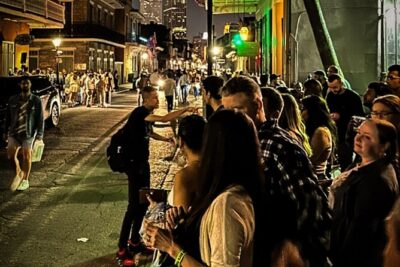
New Orleans Premier Ghost, Voodoo and Vampire Walking Tour
Read our review →
Adults-Only New Orleans Ghost, Crime, Voodoo, and Vampire Tour
Read our review →
New Orleans Adults-Only Ghost, Voodoo and Vampire Tour
Read our review →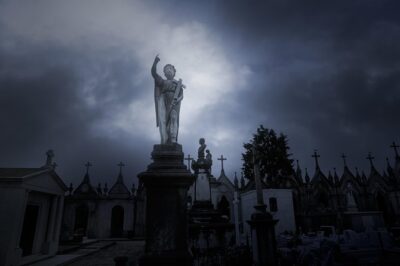
Cemetery and Ghost BYOB Bus Tour in New Orleans
Read our review →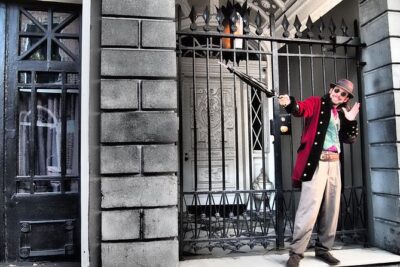
Ghost and Vampire Walking Tour Of The French Quarter
Read our review →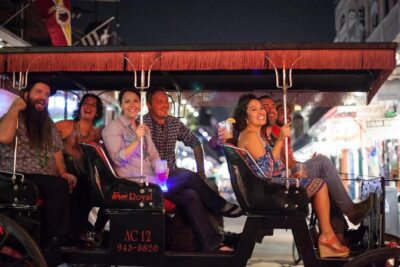
New Orleans Small-Group Haunted History Carriage Tour
Read our review →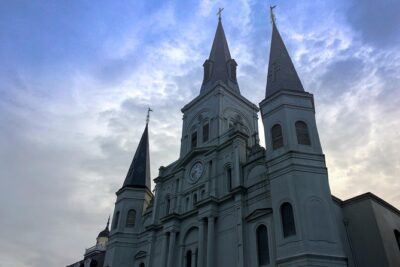
Browse the lists this tour appears in