
REVIEW · USA GHOST TOURS
Rust, Rebels & Ruins: Raleigh Ghost Tours
Raleigh’s haunted past comes into focus on this compact walk through the Capitol district. In about an hour, you move from the State Capitol to old homes, public squares, a former funeral business, and the City of Raleigh Museum while hearing stories of knocks, shadows, footsteps, and restless spirits.
I like the strong mix of history and folklore, especially at Haywood Hall and the Executive Mansion. I also like the route’s easy downtown setting and the range of guides who have earned praise for personal storytelling, including Chris, Wendy, Cora, Catherine, Alexa, and Mary-Ryan.
The main caution is sound and presentation. Large groups, traffic, and an underpowered speaker have made it hard for some people to hear, and the scare factor depends heavily on the guide. This is a history walk with ghost stories, not a haunted-house attraction.
Key things to know before you book
- Eight downtown stops: The route includes the State Capitol, Haywood Hall, the Executive Mansion, Nash Square, Death and Taxes, and the City of Raleigh Museum.
- One-hour walking format: You cover about a mile, with roughly seven or eight minutes at each location.
- History comes first: The stories are tied to real buildings, former residents, political figures, and Raleigh’s early development.
- Guide quality matters: Chris, Wendy, Cora, Catherine, Alexa, Mary-Ryan, and Miranda have all been praised for clear, warm, or funny storytelling, but individual experiences vary.
- Maximum group size is 35: A group of 20 or more may make it harder to hear near traffic.
- Best for a mild scare: Expect atmosphere, legends, and macabre details rather than guaranteed paranormal activity.
What this Raleigh ghost walk is really like
Rust, Rebels & Ruins is built around a simple idea: old buildings collect stories. The walk does not take you inside most of the places on the route. Instead, your guide stops outside, explains what happened there, and connects the building’s past with reports of ghostly activity.
That format works best if you enjoy local history with a supernatural edge. You will hear about political leaders, early Raleigh families, post-Civil War rebuilding, funeral traditions, and old commercial buildings. The ghost stories add mood, but the tour is not designed around jump scares or special effects.
The experience lasts about one hour and ends where it begins, at the North Carolina State Capitol on East Edenton Street. The route covers roughly a mile, though the exact walking pace can vary with the size of the group and the time spent answering questions.
I would think of it as an evening introduction to downtown Raleigh. It is short enough to fit before dinner, after a museum visit, or at the start of a night in the city. At $32 per person, the value depends on what you want. If you want a lively guide who can turn old facts into good stories, the price is reasonable. If you expect access to haunted interiors or intense supernatural activity, you may find it expensive for an outdoor walk.
A few more ghost walks around the USA worth a look
- Rust, Rebels & Ruins: Raleigh Ghost Tours
★ 4.3 · 44 reviews - The Original Raleigh Ghost Walk
★ 5.0 · 25 reviews - Raleigh Guided E-bike Tour: Ghosts, Mystery, Creepy History
★ 5.0 · 23 reviews
Starting at the North Carolina State Capitol
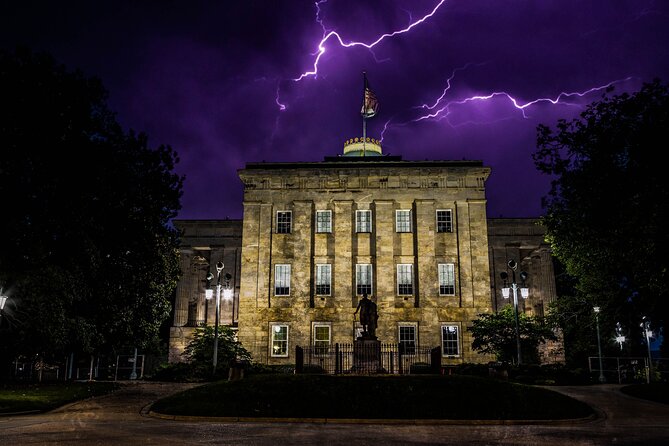
The tour begins at the North Carolina State Capitol, a fitting place to discuss power, politics, and old secrets. The supplied route description includes a story about hidden tunnels and unexplained footsteps beneath the building, though the stop itself is primarily an exterior history lesson.
You should allow a little time to find the meeting point. The stated start is 1 East Edenton Street, and one past booking was affected by a different meeting location being given over the phone. Check the confirmation carefully before setting out, especially if you are relying on a map app or arriving from another part of downtown.
The Capitol stop lasts about seven minutes. That is enough time for a focused story, but not enough for a full architectural tour. If your interest is government buildings, Raleigh politics, or old city planning, this opening stop gives the walk a useful frame.
One unusual possibility is hearing an additional story from a North Carolina State Capitol Police Officer, as happened on one tour. That sort of encounter cannot be promised, but it shows why the Capitol is a good place to begin: the building’s daily life still has people who work around its old legends.
The White-Holman House at 211 New Bern Place
The second stop is the White-Holman House, a historic residence associated with Secretary of State William White. The main ghost story centers on the staircase, where a mysterious figure has reportedly appeared.
This is the kind of stop that works through imagination. You are not walking through the house or standing on its staircase. You are looking at an old residence from the street while your guide explains its former occupants and the story attached to the building.
The stop lasts about seven minutes. That short pause keeps the tour moving, but it also means the amount of detail depends on the guide. A strong storyteller can make a staircase feel important even from outside. A less engaging guide may leave you with only a few facts and a vague ghost tale.
Haywood Hall and Raleigh’s early days
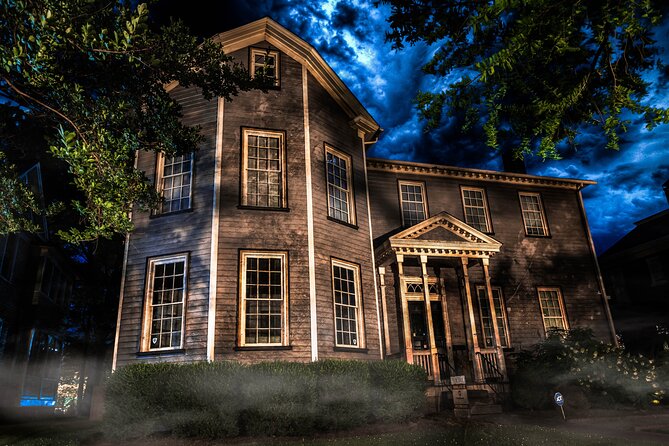
Haywood Hall is one of the most interesting stops because it connects a ghost story with Raleigh’s earliest civic life. The home was built by John Haywood, Raleigh’s first mayor, and it remains on its original plot inside the city’s historic limits.
That detail matters. Many city buildings have been moved, altered, or replaced. A residence that has remained on its original land gives you a clearer sense of the city’s early scale and development.
The route allows about eight minutes here. You can expect discussion of the house, Haywood’s role in Raleigh, and the idea that spirits linger in a place with such a long connection to the city. This is a good example of the tour’s approach: the historical setting carries as much weight as the haunting.
If you enjoy old houses and civic stories, this may be one of the strongest stops. If you want to go inside haunted rooms, keep your expectations in check. The itinerary does not promise interior admission.
Same streets after dark, a different sort of fright:
- History and Hauntings of Salem Guided Walking Tour
★ 5.0 · 14,564 reviews - New Orleans Premier Ghost, Voodoo and Vampire Walking Tour
★ 4.5 · 12,856 reviews - Chicago: Gangsters and Ghosts Walking Tour
★ 5.0 · 7,155 reviews - Adults-Only New Orleans Ghost, Crime, Voodoo, and Vampire Tour
★ 5.0 · 6,545 reviews
The Executive Mansion and Governor Fowle’s knocks
The Executive Mansion brings politics back into the story. This Queen Anne-style residence was completed in 1891 and has served as an important home for North Carolina governors.
The haunting linked to the mansion centers on Governor Fowle. His presence is said to announce itself through mysterious knocks. That is a simple story, but it fits the building well. A mansion tied to public office naturally invites tales about former leaders who never quite left.
You spend about eight minutes at this stop. Your guide may use the architecture and the mansion’s political role to set a more serious tone than the playful ghost stories told elsewhere.
This is also a place where guide style matters. A guide such as Chris or Wendy, praised for combining facts with personality, can make the story feel like a piece of Raleigh life rather than a list of haunted claims. A flat presentation can make even a good setting feel ordinary.
Heck-Andrews House and the uneasy postwar city
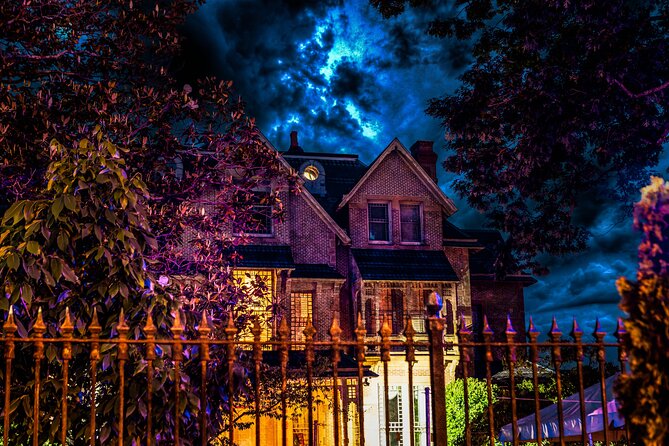
The Heck-Andrews House dates to 1870 and is described as one of Raleigh’s earliest homes built after the Civil War. Its story fits the tour’s title well: the house reflects a city rebuilding and changing during a difficult period.
Reports of spectral figures and unexplained events give the stop its eerie edge. The more useful part, though, is the historical setting. You are hearing about a residence from a time when Raleigh was dealing with political, social, and physical change after the war.
The tour gives this stop about seven minutes. That is enough for a brief account of the house and its reported apparitions. I would listen for the connection between the city’s past and the ghost story. The supernatural details are more effective when you understand the uncertainty and strain surrounding the building’s early years.
This stop may appeal to you if you prefer ghost tales with a historical reason to exist. It may disappoint you if you want vivid evidence or a dramatic encounter. Like most of the route, the experience depends on storytelling rather than anything you see happen.
Nash Square after dark
Nash Square provides a change of setting. Instead of an old house, you get an open green space in the middle of downtown, where shadowy figures are said to cross the lawn after dark.
The contrast is useful. A quiet square can feel more unsettling than an ornate house because there are fewer obvious details to focus on. Your guide can use the open lawn, the evening light, and the idea of moving silhouettes to create a different kind of ghost story.
The stop lasts around eight minutes. It is also one of the places where timing matters. One past participant found the tour ended while it was still fairly light, which weakened the atmosphere. If you are booking for maximum spookiness, choose the latest available start time shown for your date, if one is offered.
Do not assume the square will feel frightening. The story is about reported shadows, not a scheduled paranormal event. I would treat it as a mood-setting stop that works best when the guide lets the silence and surroundings do some of the work.
Death and Taxes, from funeral home to restaurant
Death and Taxes is perhaps the route’s most memorable modern stop. The restaurant once operated as a coffin store and funeral home, giving the building a direct link to death and mourning.
That past gives the ghost story more substance than a simple tale attached to an ordinary storefront. Spirits connected with former residents are said to remain, and the restaurant is now presented as a place where unusual activity may continue.
You stop here for about seven minutes. Since this is a functioning restaurant, you should expect to hear the story from outside rather than explore the building. The name alone may get a laugh, but the former use of the property gives the stop a darker tone.
I like this part of the route because it shows how Raleigh’s old buildings keep changing purpose. A place associated with coffins and funerals now serves diners. The tour uses that contrast well, even if you are more interested in architecture and city change than in ghosts.
The City of Raleigh Museum and tiny footsteps
The final stop is the City of Raleigh Museum, located in the old Briggs Hardware Building. The building is described as the only largely unaltered 19th-century commercial structure remaining in downtown Raleigh.
That makes it an important closing stop, even before the ghost story begins. You get a sense of how downtown commerce once looked, and you finish with a report of childlike laughter and tiny footsteps on the stairs.
The stop lasts about seven minutes. Again, the tour does not include museum entry as part of the listed experience. You hear the story from outside, so consider returning during opening hours if the building itself interests you.
The child-related haunting gives the walk a softer but still unsettling finish. It also brings the route back to sound, one of the tour’s recurring themes: knocks at the mansion, footsteps under the Capitol, and small feet on the museum stairs.
Guide style can make or break the evening
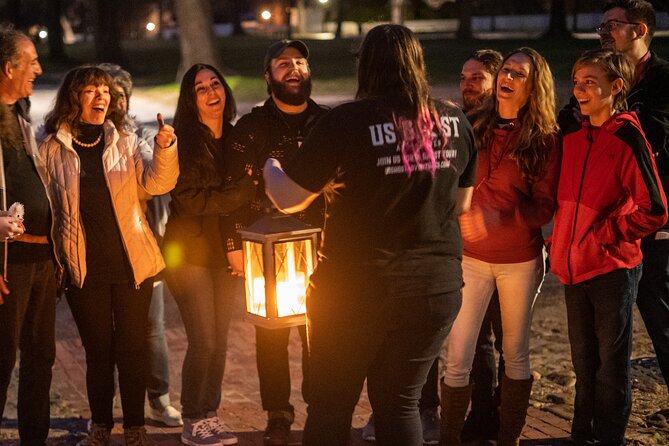
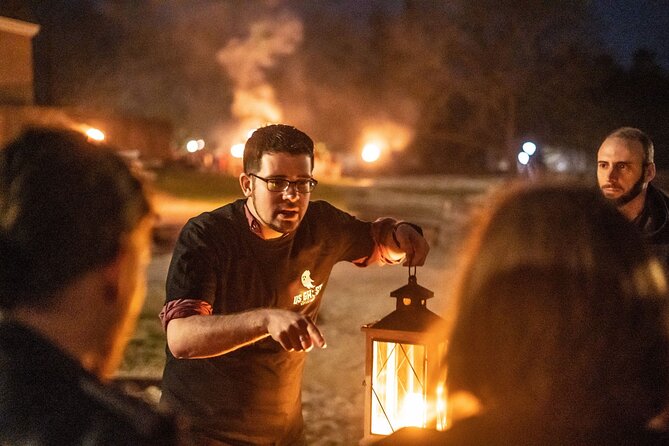
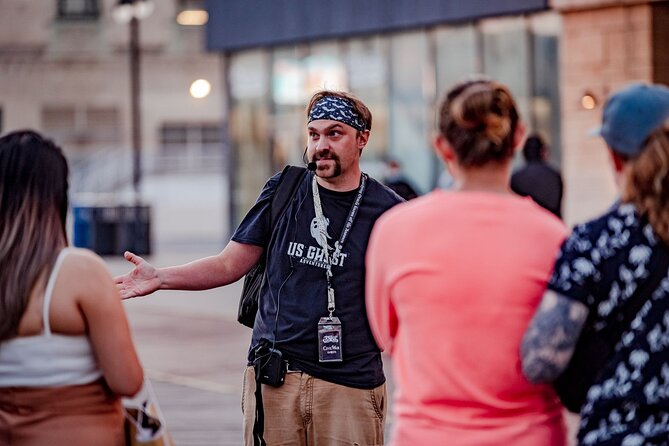
The strongest feedback centers on the guides. Chris has been praised for being engaging, personal, and just the right amount of spooky. Wendy has been singled out for local stories, clear delivery, and making sure people feel part of the group. Cora, Catherine, Alexa, Mary-Ryan, and Miranda have also been praised for warmth, humor, historical detail, or keeping the group together.
That is important because this is a story-led experience. The buildings do not provide the entertainment by themselves. You need a guide who can explain the facts clearly, pause at the right time, and give the ghost stories enough shape.
The experience is not consistent every time. Some guides have been described as dull, nervous, disorganized, or too quiet. One person found the narration neither funny nor scary. Another felt that the guide did not properly welcome the group or manage crosswalks carefully.
Sound is the most practical concern. Traffic noise has made it hard for some people to hear, even when a speaker was being used. A group of 26 was considered too large for comfortable listening, and the maximum group size is 35.
I would position yourself near the guide at the start and stay close when crossing streets. If you have hearing difficulty, ask before the walk begins how amplification will be handled. A smaller group can make a major difference.
Is $32 a fair price?
At $32, this is not a bargain-priced stroll, but the route is more than a basic walk around downtown. You get eight stops, a researched story at each location, and a guide who supplies the context you would not get by walking alone.
The value is highest for you if you like local buildings, political history, old homes, and ghost lore in equal measure. The price is harder to justify if your main goal is fear. Several accounts describe the experience as fun or informative but not especially scary.
The tour is also short. One hour is convenient, but it limits the depth of each stop. You are paying for a focused introduction rather than a long night of investigation.
I would compare it with the cost of a drink or casual meal in downtown Raleigh. If you want a light evening activity before dinner, the price can make sense. If your group expects a major attraction with indoor access, special effects, or documented paranormal encounters, spend your money elsewhere.
Who should book this walk?
I would recommend it to first-time visitors who want a quick orientation to Raleigh’s historic center. It also suits people who live nearby but have never heard the stories connected with familiar buildings.
Families can enjoy it, though the tone is best described as mildly creepy rather than terrifying. Couples have used it as a date-night activity, and the one-hour length leaves room for dinner afterward.
History fans may get more from the tour than serious ghost hunters. You will hear about governors, mayors, postwar houses, commercial buildings, and city development. The supernatural material gives those facts a memorable hook.
I would be cautious if you need guaranteed night darkness, a small group, a very polished performance, or access to the inside of haunted buildings. The tour ends in the same general place where it begins, and most of the experience happens on public streets and sidewalks.
Free cancellation is available if you cancel at least 24 hours before the start time. Changes or cancellations inside that window are not refunded. Service animals are allowed, public transportation is nearby, and most people can take part, but remember that this is a walking tour.
Should you book Rust, Rebels & Ruins?
Book it if you want Raleigh history with a spooky accent, not a full paranormal investigation. The route covers several of the city center’s most interesting old buildings, and the best guides turn short stops into memorable stories.
I would book for a later start when possible, arrive early at the State Capitol, and check the meeting details closely. Stay near the guide, especially in a large group, and judge the tour by the storytelling rather than expecting anything supernatural to appear.
If you can get a guide with the style praised in the strongest experiences, such as Chris or Wendy, this can be a pleasant and distinctive evening walk. If the assigned guide is quiet or the group is crowded, the same $32 may feel less worthwhile. Your decision comes down to one question: do you want a brisk historical walk with ghost tales, or do you need a truly scary night?
FAQ
How long does the Raleigh ghost tour last?
The tour lasts approximately one hour.
Where does the tour start?
It starts at the North Carolina State Capitol, 1 E Edenton Street, Raleigh, North Carolina 27601.
Where does the tour end?
The activity ends back at the meeting point.
How much does the tour cost?
The listed price is $32 per person.
What language is the tour offered in?
The tour is offered in English.
How many people can join the tour?
The maximum group size is 35 people.
Are service animals allowed?
Yes, service animals are allowed.
What is the cancellation policy?
You can receive a full refund if you cancel at least 24 hours before the experience start time. Cancellations or changes made less than 24 hours before the start time are not accepted for a refund.
Just added around the USA
- Zion: Harry Potter-Inspired Zion Ghost Tour with Sunset View★ 5.0 · 8 reviews
- Witches, Widows, & Wraiths: Wichita Ghost Tours★ 5.0 · 2 reviews
- Wraiths & Wicked Whispers: Wilmington Ghost Tour★ 4.2 · 25 reviews
- Wraiths of the West Texas Wind: El Paso Ghost Tour★ 4.5 · 9 reviews
- Williamsburg: Haunted Ghosts, Witches, and Pirates Tour★ 4.5 · 107 reviews
- Wilmington: Boos and Booze Haunted Pub Crawl★ 4.0 · 8 reviews
- Williamsburg: Dead of Night Paranormal investigations Tour★ 5.0 · 4 reviews
- Williamsburg: Echoes of Twilight Late-Night Ghost Tour★ 4.6 · 13 reviews
USA Ghost Tours, compared.
History and Hauntings of Salem Guided Walking Tour
Read our review →
New Orleans Premier Ghost, Voodoo and Vampire Walking Tour
Read our review →
Adults-Only New Orleans Ghost, Crime, Voodoo, and Vampire Tour
Read our review →
Haunted Evening Horse and Carriage Tour of Charleston
Read our review →
New Orleans Adults-Only Ghost, Voodoo and Vampire Tour
Read our review →
Savannah History and Haunts Candlelit Ghost Walking Tour
Read our review →Browse the lists this tour appears in