
REVIEW · SALEM GHOST TOURS
Secrets of Salem Hidden Dark History Tour
Salem’s witch trials are only the beginning here. This two-hour walk links the 1692 hysteria to old judges’ homes, a grim cemetery, Nathaniel Hawthorne, British Loyalists, and scandals that came long after the trials. The result is a fuller picture of Salem than a tour focused only on ghosts.
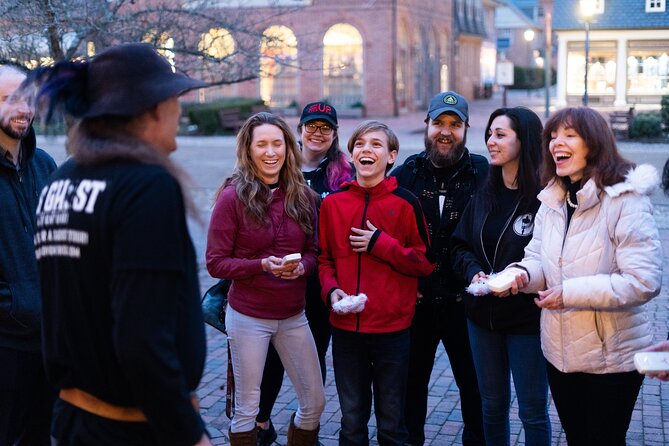
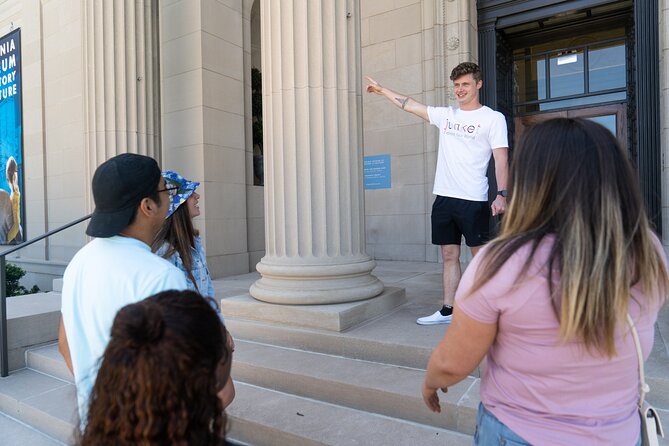
I like the small maximum group of 20, which makes it easier to hear the guide and ask questions on narrow downtown streets. I also like the range of guides, including Mason, Danielle, John, and Sam, who bring different local details and personal connections to the town.
The main catch is that this is a walking tour, not a ride. You cover a fair amount of ground in about two hours, and one booking problem reported a confusion over the meeting location, so check that detail carefully before setting out.
Key points at a glance
- Two hours through central Salem: The route connects major witch trial sites with homes, libraries, cemeteries, and later scandals.
- More than witchcraft: You’ll hear about Salem’s town and village rivalry, British Loyalism, architecture, Nathaniel Hawthorne, and even Bewitched.
- Small-group format: The tour accepts no more than 20 people, a useful limit in busy Salem.
- Strong guide lineup: Mason, Danielle, John, and Sam have each led tours praised for clear storytelling, humor, and local insight.
- A moderate walking outing: Transportation is not included, and you should be comfortable walking around downtown Salem for roughly two hours.
- Good value at $32: You get a researched, guided introduction to several important places without paying separate admission for a long list of attractions.
Why Salem’s dark story is bigger than the witch trials
The most useful thing about this tour is its wider frame. Salem’s 1692 witch trials take up much of the town’s tourist attention, but the walk shows how they fit into a longer story of religious pressure, local politics, class conflict, property, reputation, and changing loyalties.
You begin near 210 Essex Street and finish at the historic Hawthorne Hotel on Washington Square West. That gives you a practical route through central Salem rather than a scattered series of distant stops. The final location also puts you near other downtown sights after the walk.
The tone is not limited to ghost tales. You’ll hear about real people who made serious decisions, suffered public backlash, or were caught in a legal system that could not protect the innocent. Spooky stories are part of the appeal, but the stronger material comes from seeing how fear and power worked in everyday Salem.
A guide such as Mason may add a personal connection to the area, while Danielle has been praised for her charisma and ability to explain Salem’s past with energy. John’s style leans toward lesser-known facts and dark details. Sam’s tour has been described as an easy walk with broad coverage of Salem’s story. Your exact guide will shape the delivery, but the subject matter remains substantial.
More Dark History Tours in the USA
- Salem Uncovered: Dark Stories of Salem Tour
★ 4.5 · 307 reviews - Adults-Only New Orleans Ghost, Crime, Voodoo, and Vampire Tour
★ 5.0 · 6,545 reviews - New Orleans Adults-Only True Crime and Ghost Walking Tour
★ 5.0 · 1,666 reviews
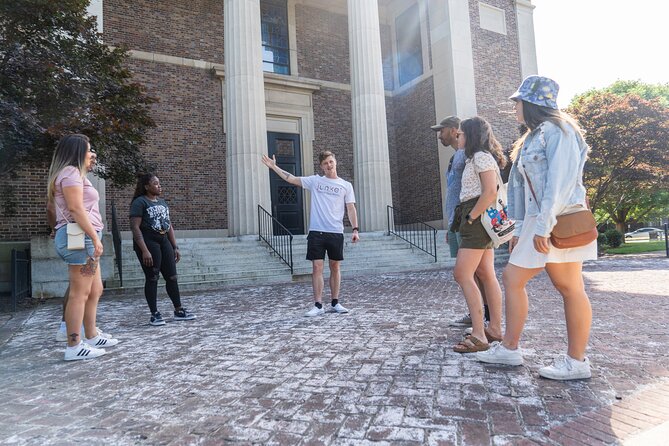
Salem’s 1816 municipal building starts the walk
One early stop is Salem’s oldest original municipal building, constructed in 1816. It is now available for private functions, but its earlier role gives you a useful entry point into the town’s civic life.
This stop matters because it shifts your attention away from the familiar witch symbols. Salem was not only a place of accusations and executions. It was also a functioning town with public institutions, political disputes, commercial interests, and local authority.
The building helps set up one of the tour’s recurring ideas: old Salem was complicated. The people who shaped the town were not simply heroes or villains, and the forces behind public decisions often involved status, money, religion, and loyalty.
You should expect to view the site from the route rather than treat it as a long indoor museum visit. The walk is designed around the streets and exterior settings, with the guide supplying the context.
The Witch Museum puts 1692 in order
The Salem Witch Museum offers one of the clearest introductions to the 1692 trials in town. The experience here is valuable because Salem’s witchcraft story can quickly become a blur of names, accusations, folklore, and modern commercial imagery.
The museum presents the trials as one of the best-known examples of mass hysteria in American history. That framing gives you a way to separate the documented events from the spooky legends that grew around them.
The tour’s stop at the museum is especially useful if you are new to the subject. It provides a basic structure before the walk takes you to people and places tied directly to the crisis. You can better understand why a judge’s home or a sheriff’s property matters once you know how accusations moved through the community.
Do not expect the entire tour to take place inside the museum. This is a walking route with several outside stops, so the museum serves as one part of a larger story. If you want a longer museum visit, you may need separate time in your schedule.
The Corwin house and the failures of justice
The home of Judge Jonathan Corwin is one of the most important stops. Dating from the period of the witch trials, it is the only surviving house in Salem with direct ties to those proceedings.
Corwin served as a judge during the trials and lived in this house. Seeing the place associated with a decision-maker brings the story down from a textbook level. You are no longer dealing only with dates and names. You are looking at the setting connected to a man who helped decide the fate of accused people.
The guide also addresses lesser-known miscarriages of justice. That focus is important. The story is not just about whether people believed in witchcraft. It is about what happened when fear, testimony, authority, and weak legal protections combined.
This is likely one of the strongest parts of the walk for anyone interested in legal history. It also gives the tour moral weight without requiring theatrical ghost effects. The facts are unsettling enough on their own.
More dark history tours in Salem:
- The Deathly Dark Tour of York: Experience of the Year 2024
★ 5.0 · 3,609 reviews - The Dark Side of Florence: Mysteries and Legends
★ 5.0 · 2,785 reviews - Edinburgh: Dark Secrets of the Old Town Ghost Walking Tour
★ 4.6 · 1,671 reviews - Genteel and Bard’s Savannah Dark History and Ghost Encounter Walking Tour
★ 5.0 · 1,546 reviews
Nathaniel Ropes House and Salem’s Loyalist divide
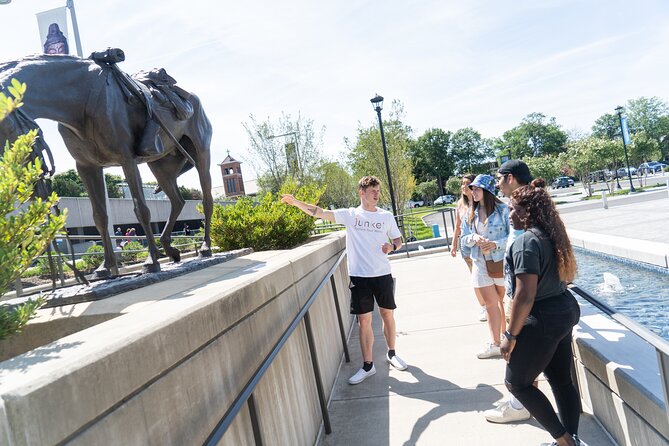
The Nathaniel Ropes House adds a different kind of conflict. The building was constructed about a century after Salem’s founding, around three decades after the witch trials, and later sold to Nathaniel Ropes after the original owner died.
Ropes was a firm British Loyalist. Near the end of his life, he faced hostility from his own town because of that position. The stop introduces a Salem shaped by the political tensions of the Revolutionary era, not just the religious panic of 1692.
The connection is useful because it shows how quickly public opinion can turn. In one generation, Salem’s troubles centered on witchcraft accusations. Later, loyalty to Britain could make a local resident a target. The details at this stop concern tragedy as well as politics, giving the house a darker feel without forcing it into the witch trial story.
I like this part of the route because it broadens the meaning of dark history. Salem’s past includes public pressure and social punishment long after 1692.
The Salem Athenaeum and Nathaniel Hawthorne
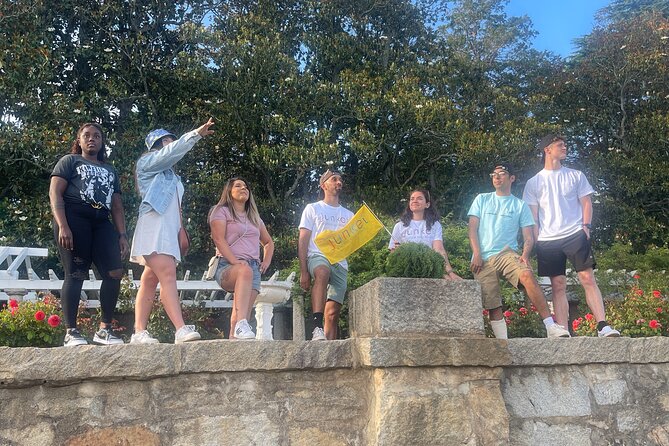
The Salem Athenaeum was formed from the libraries of two separate societies. Nathaniel Hawthorne, author of The Scarlet Letter, once served as its head during the 1800s.
This stop connects Salem’s difficult past with its literary identity. Hawthorne’s work is deeply tied to guilt, secrecy, judgment, and inherited wrongdoing, so his link to Salem feels particularly fitting. The tour does not treat him as an isolated author. Instead, it places him inside the town’s intellectual and civic life.
For readers who know The Scarlet Letter, the stop offers a useful local connection. For those who do not, it still shows how Salem’s public memory changed over time. The town became known not only for its trials but also for the writers and stories that interpreted its past.
The Athenaeum also gives the walk a welcome change of pace. After judges, sheriffs, accused people, and political conflict, you get a look at the institutions that preserved books and ideas.
George Corwin’s property and the sheriff’s role
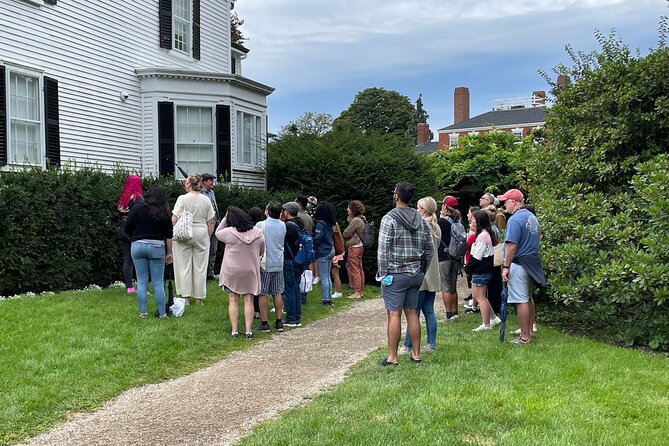
Another stop sits on land once owned by George Corwin, the nephew of Judge Jonathan Corwin. George served as sheriff of Salem during the witch trials and was said to have acted with unusual cruelty toward people accused or convicted of witchcraft.
This connection helps explain that the legal system involved more than judges. Sheriffs and other officials carried out the practical work of arrest, confinement, and punishment. Their actions could affect accused people long after a court had issued its decision.
The site also creates a family link between two powerful figures in the trials. Jonathan Corwin judged cases, while George Corwin enforced authority. That relationship makes the crisis feel like a network of local power rather than a series of unrelated events.
You should expect dark material here. The tour is designed for people who want the uncomfortable details, not only the picturesque streets and old architecture. The guide’s delivery matters, and the best approach is factual rather than sensational.
Charter Street Cemetery and the Corwin ghost story
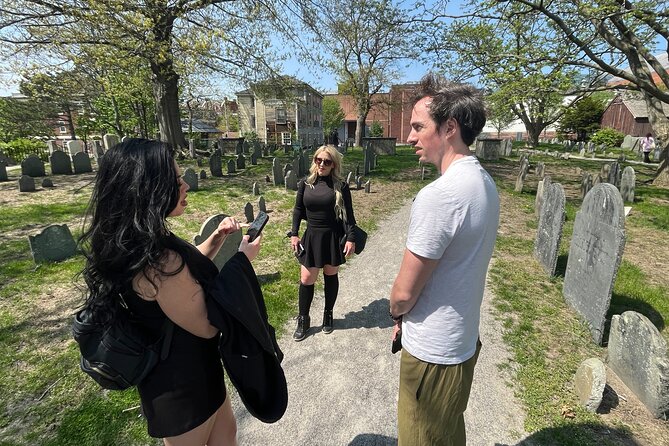
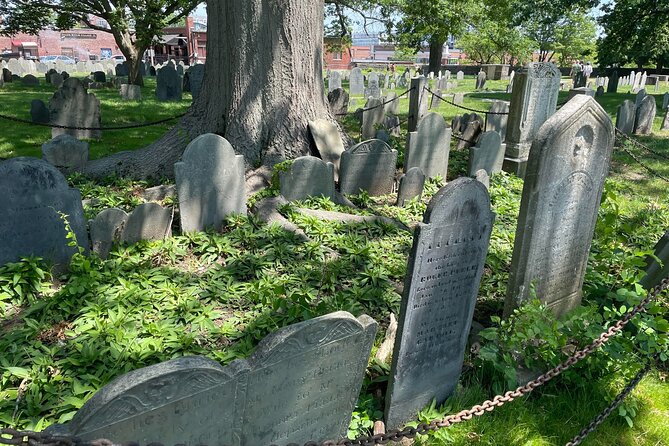
Charter Street Cemetery dates to 1637, making it one of the oldest cemeteries in the United States. It contains the remains of the second wife of Giles Corey and Judge Jonathan Corwin.
The cemetery stop ties several threads together. Giles Corey is one of the most memorable names connected with the witch trials, and Jonathan Corwin appears again as the judge linked to the surviving trial-era home. Seeing their burial place gives the walk a physical sense of time and continuity.
This is also where ghost lore enters most directly. The tour includes stories from people who reportedly saw Judge Corwin’s ghost among the graves. You can enjoy that material as local folklore while keeping it separate from the documented record.
That balance is one of the tour’s strengths. Salem is full of supernatural claims, but the walk also makes clear that the real historical failures are more disturbing than many ghost stories. The cemetery is likely to appeal most to visitors who enjoy atmosphere but still want solid context.
As with any cemetery, be respectful. This is a historic burial ground, not simply a backdrop for photographs.
A later house with scandals of its own
One of the homes on the route was built more than a century after the witch trials and has no direct link to them. That fact is part of its value.
The house has its own secrets and scandals, proving that Salem did not stop producing difficult stories once the trials ended. This stop prevents the route from becoming a simple procession of witch-related locations. You get a wider look at private lives, reputations, and trouble in later Salem.
The available information does not identify every detail of the scandal, so the guide’s explanation will be the key part of the stop. Listen for how the story fits the broader pattern of public judgment and private behavior.
For me, this is the kind of stop that makes a town walk feel less predictable. The famous headline is not always the most interesting story on the block.
Salem Town versus Salem Village
The rivalry between Salem Town and Salem Village may have helped create the conditions for the hysteria of 1692. This part of the walk gives you social and political context that can be missed when the story is told only through famous names.
The distinction between town and village was more than a map label. It reflected different communities, interests, and local tensions. When fear spread, those divisions could shape who was trusted, who was blamed, and whose voice carried weight.
You will not simply hear that the trials happened because people believed in witches. The tour explores the local rivalry that may have helped turn suspicion into a wider crisis. That makes the story more convincing and more human.
This is also one of the best reasons to take the walk early in your Salem visit. Once you understand the town and village split, later stops involving judges, officials, and accused people make more sense.
Nathaniel Hawthorne and a touch of television lore
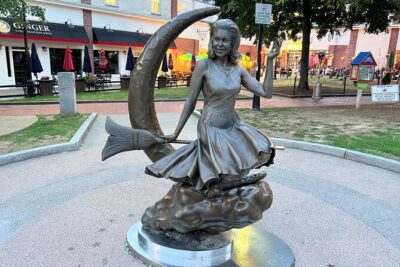
The walk ends at the Hawthorne Hotel, named for Salem’s famous son, Nathaniel Hawthorne. The hotel also appeared in an episode of the television series Bewitched, filmed there in the 1970s.
That detail offers a lighter finish after the grim material at the cemetery and witch trial sites. It also shows how Salem’s image has shifted from colonial crisis to literary destination to pop culture setting.
The hotel is a useful endpoint because you can continue exploring Washington Square and central Salem from there. It is not merely a place to stop the guide’s narration. It gives the tour a clear finish in one of the town’s recognizable historic settings.
What the $32 price really buys you
At $32 per person, the tour is reasonably priced for a two-hour guided walk through central Salem. You are paying for a structured route, a professional guide, researched history, and access to stories that would be easy to miss while walking alone.
The value is strongest if you want orientation. In two hours, you connect the Witch Museum, Corwin’s home, historic houses, the Athenaeum, Charter Street Cemetery, and the Hawthorne Hotel. You also get a narrative that links the sites rather than treating them as disconnected photo stops.
The price does not include transportation or separate admission to any attraction. That keeps the cost fairly clear, but you should plan for the walk itself and allow extra time if you want to enter museums or historic buildings.
A maximum of 20 people is another practical benefit. The group is not private, but it is small enough for a guide to keep the story moving and answer some questions. Several guides, including Mason, Danielle, and John, have been praised for enthusiasm, humor, and local detail. Those qualities matter on a walking tour because a flat delivery can make even a good route feel long.
Walking comfort, timing, and booking tips
You should have a moderate level of physical fitness. The route is described as an easy walk by some people, but it still involves quite a bit of walking over about two hours. Wear sensible shoes, and plan around the weather because the experience is outdoors for much of its duration.
The meeting point is 210 Essex Street. The tour ends at the Hawthorne Hotel, 18 Washington Square West. Since one booking involved a disagreement over the meeting location, read your confirmation carefully and verify the start point before you arrive. That is especially important if you are visiting Salem on a tight schedule.
The experience is offered in English and uses a mobile ticket. Service animals are allowed, and the starting point is near public transportation. Confirmation is sent within 48 hours of booking, subject to availability.
You can cancel for a full refund if you do so at least 24 hours before the start time. Cancellations or changes made within 24 hours are not refunded or accepted, so avoid waiting until the last minute if your plans are uncertain.
Who will enjoy this Salem walk most
I would choose this tour if you want witch trial history with more context than a standard ghost walk. It suits first-time visitors, readers of Nathaniel Hawthorne, people interested in old houses and cemeteries, and anyone who wants a clear introduction before exploring Salem alone.
It also works well for mixed-age groups. One guide kept a group ranging from age 14 to 55 engaged, which suggests the material can work for teenagers and adults when the guide keeps the pace lively.
You may want something else if you dislike walking, want a private tour, or prefer a strictly supernatural experience. The route includes ghost stories, but it gives equal or greater attention to documented events, civic history, architecture, and politics.
Should you book the Secrets of Salem tour?
Yes, if you want a well-paced introduction to Salem’s darker past and you value clear storytelling over theatrical effects. The route covers the witch trials, the Corwin family, Charter Street Cemetery, Salem’s local rivalries, Nathaniel Hawthorne, and later scandals in one manageable walk.
The strongest reason to book is the range. You get the famous 1692 story, but you also see how Salem’s conflicts continued through the Revolutionary period and beyond. At $32, that is solid value for a two-hour guided overview.
Go in ready to walk, confirm the meeting location, and treat the ghost stories as folklore alongside the documented history. If that balance sounds right, this is a practical first tour for getting your bearings in Salem.
FAQ
How long is the Secrets of Salem Hidden Dark History Tour?
The tour lasts approximately two hours.
How much does the tour cost?
The price is $32 per person.
Where does the tour begin?
The tour begins at 210 Essex Street, Salem, Massachusetts 01970.
Where does the tour end?
The tour ends at the historic Hawthorne Hotel at 18 Washington Square West in Salem.
Is transportation included?
No. Transportation is not included. The experience is a walking tour through central Salem.
How large is the tour group?
The tour has a maximum of 20 travelers.
What is the cancellation policy?
You can cancel at least 24 hours before the start time for a full refund. Cancellations and changes made less than 24 hours before the start time are not accepted, and the amount paid is not refunded.
More Heritage Tours in Salem
- History and Hauntings of Salem Guided Walking Tour
★ 5.0 · 14,564 reviews - Wicked Awesome Tours: Witch Trial History and Salem Haunts!
★ 5.0 · 1,032 reviews - Best Salem Witch Trials Historical Walking Tour
★ 4.0 · 743 reviews - Salem, MA: History and Hauntings Guided Walking Tour
★ 4.8 · 651 reviews
Just added around Salem
- Salem: Voodoo, Vampires, and Ghosts Guided Walking Tour★ 4.8 · 206 reviews
- Witch Costume Photo Shoot – Witch Cottage theatrical set★ 5.0 · 149 reviews
- Witch City Broom Making Workshop in Salem★ 5.0 · 105 reviews
- [ESP] History of Salem Witch Trials★ 4.0 · 5 reviews
- Vampire Ghost Adventures and Haunted Objects Walking Tour★ 4.5 · 34 reviews
- Private Walking Salem Legends Tour Professional Guide★ 5.0 · 3 reviews
- Wandering Witches★ 4.5 · 33 reviews
- “Witch Trials” Walking Tour in Salem★ 4.0 · 133 reviews
Salem Ghost Tours, compared.
History and Hauntings of Salem Guided Walking Tour
Read our review →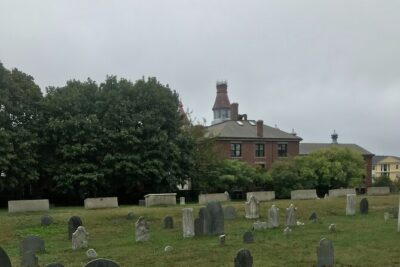
Wicked Awesome Tours: Witch Trial History and Salem Haunts!
Read our review →
Best Salem Witch Trials Historical Walking Tour
Read our review →
Salem, MA: History and Hauntings Guided Walking Tour
Read our review →
Browse the lists this tour appears in