
REVIEW · GLASGOW GHOST TOURS
The Dark Side of Glasgow
Glasgow has a talent for holding two ideas at once. It can be warm and welcoming, yet shaped by hard lives, old gang rivalries, grim crimes, and unsettling legends. The Dark Side of Glasgow uses that tension well, taking you from the polished Merchant City to the old hanging ground at Glasgow Green, with a true Glaswegian guide adding dry humour along the way.
I like two things right away: the local storytelling and the way the tour connects crime to Glasgow’s social past. You hear about Bible John, the Gorbals Vampire, Arthur Thompson, and the Human Crocodile, but also about slavery, workers’ housing, and the forces behind gang life. The whisky dram and teacake at Glasgow Green are a welcome touch.
The main consideration is the walking. Three hours outdoors is a fair stretch, and Glasgow weather does not always play along. You will need comfortable shoes, rain gear, and a willingness to hear some disturbing material. Children under 12 cannot join.
Key points to know before booking
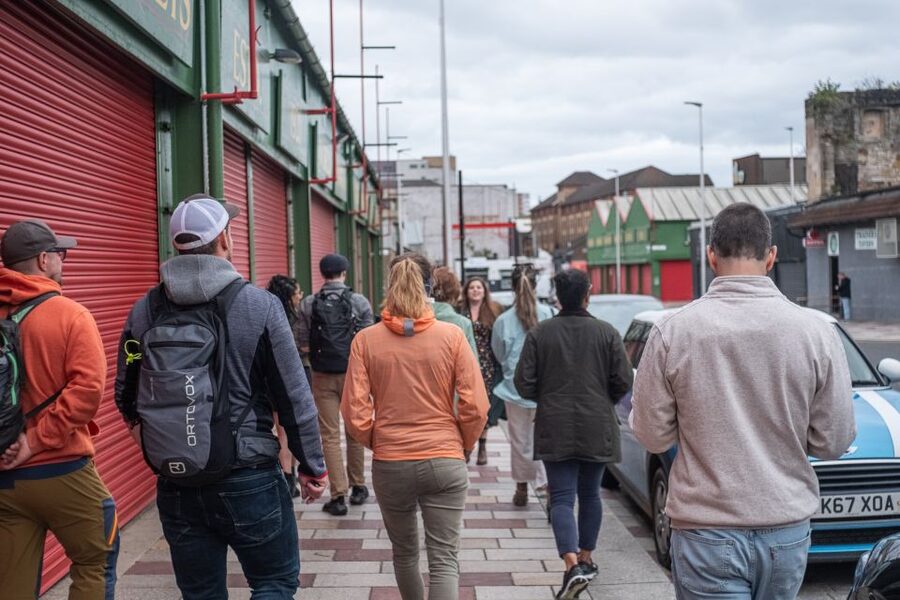
- Stories told by a local Glaswegian: Guides such as Rhona bring family anecdotes, local humour, and theatrical delivery to the route.
- A serious look behind the grisly tales: The tour links crime with poverty, overcrowded housing, trade, and Glasgow’s social structure.
- Whisky and a teacake at Glasgow Green: A small tasting break gives the walk a friendly local feel.
- A strong route through central Glasgow: You visit the Merchant City, High Court, Glasgow Green, Barras, Barrowland Ballroom, Gallowgate, and Mercat Cross.
- Three hours on foot: The route has no stairs or rough ground and aims to suit people with limited mobility, but you still need to walk for much of the afternoon.
- Best for adults and older teenagers: The subject matter includes murder, hanging, gangs, serial killers, and ghosts.
Glasgow’s dark past begins in the Merchant City
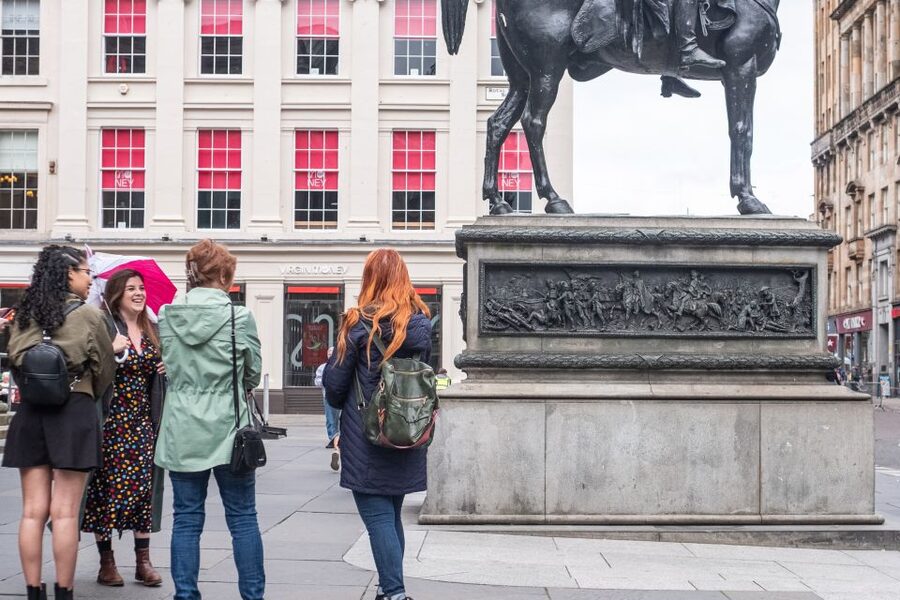
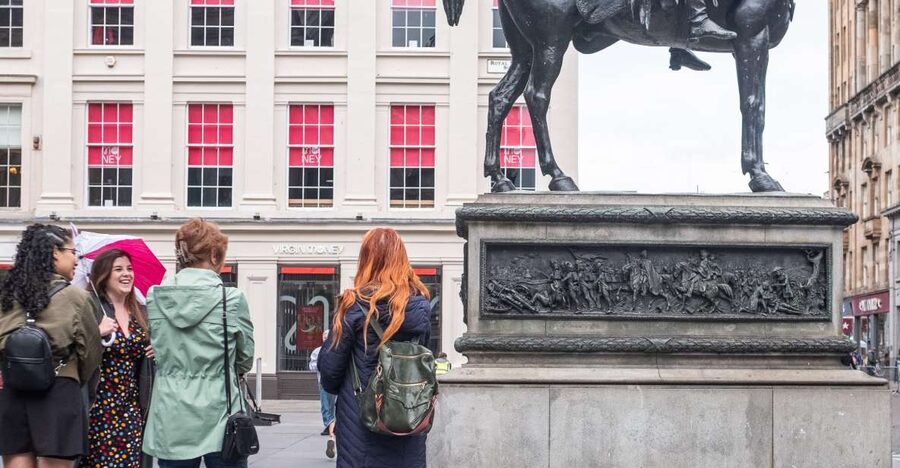
The meeting point is easy to reach. Find the Duke of Wellington statue in Royal Exchange Square, directly outside the Glasgow Museum of Modern Art. The famous traffic cone on the statue’s head is a useful landmark, and the guide is meant to be holding a pink unicorn above their head.
Royal Exchange Square sits across from George Square and close to Buchanan Street. Glasgow Queen Street and Glasgow Central stations are each about a five-minute walk away, and Buchanan Street subway station is also nearby. You can arrive early for a drink or meal, since the area has plenty of bars and restaurants.
The tour opens in the Merchant City, one of Glasgow’s grandest central districts. Its handsome buildings and wealthy past make a sharp contrast with the stories that follow. Here, you look at the fortunes built by merchants and examine the uncomfortable links between Glasgow’s commercial success and the slave trade.
That context matters. This is not just a parade of murders and spooky tales. The guide places people and crimes within the city that produced them. Glasgow’s wealth, housing conditions, work patterns, and social divisions all help explain why certain parts of its past became so troubled.
I especially like this early contrast. You may be looking up at elegant architecture while hearing about the less admirable sources of the money behind it. The tour asks you to notice both sides of the city rather than treating its grand buildings as decoration.
More Dark History Tours in the UK
- The Deathly Dark Tour of York: Experience of the Year 2024
★ 5.0 · 3,609 reviews - Edinburgh: Dark Secrets of the Old Town Ghost Walking Tour
★ 4.6 · 1,671 reviews - Edinburgh: The Dark Side Walking Tour
★ 4.8 · 1,405 reviews
The High Court adds a serious edge
The next major stop is the High Court of Justiciary. You visit the court from the outside and hear about the dramatic criminal cases connected with Glasgow.
This is a useful point in the walk because it shifts the stories from rumour and street legend to formal justice. The court has seen cases involving serious violence and notorious criminals, giving the guide a place to discuss how Glasgow’s darker episodes were handled in public.
The presentation is a performance, but it is not simply theatrical noise. The best moments come when the guide separates documented events from folklore and personal family stories. That distinction is important on a tour built around ghosts, killers, and old rumours.
Rhona is particularly strong in this role. Her delivery is animated and theatrical, but she also explains the background behind the stories. The result is lively without turning every tragedy into a joke. Her humour is distinctly Glaswegian: dry, quick, and sometimes feisty.
You should still know what you are signing up for. The subject matter includes murder and disturbing crimes. If you prefer gentle city sightseeing, this stop and the rest of the tour may feel too intense.
Glasgow Green brings history, whisky, and a pause
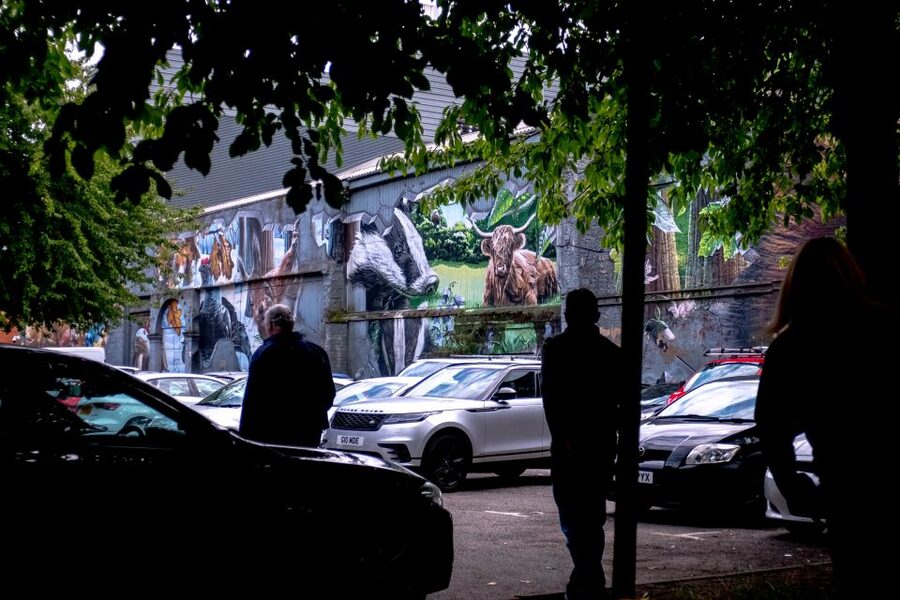
After the High Court, the route reaches Glasgow Green, the city’s large historic park. The setting gives you room to breathe, but it also carries one of the tour’s bleakest details: this was once a place where bodies were hanged.
That contrast between open parkland and a grim past is typical of the experience. Glasgow Green is not presented as a pretty stop with no connection to the main theme. Instead, the guide uses it to show how ordinary public spaces can carry memories that are easy to miss.
This is also where you get a small whisky tasting and traditional snack. The information describes a single malt dram, and the feedback repeatedly points to whisky and a teacake as a pleasant surprise. It is not a full meal, so do not arrive expecting lunch, but it does break up the walking and gives the group a chance to chat.
I like this part because it feels social rather than staged. Sharing a dram while hearing local stories makes the experience feel closer to an informal Glasgow storytelling session than a standard monument tour. It also gives you a taste of the city’s hospitality after some of the heavier material.
Weather can shape this stop. The tour runs rain or shine, and Glasgow’s showers are no respecter of schedules. Bring an umbrella, waterproof layer, and an extra sweater if you tend to feel cold. The open park can feel exposed, even when the rest of the route is sheltered by city streets.
The Barras shows Glasgow at street level
The route continues toward the Barras Market, one of the city’s best-known weekend markets. The tour includes a guided visit, with time for shopping, though the market is only fully open on weekends.
This is an important practical detail. On a weekday, you should expect the area and its history to remain part of the tour, but you may not get the same market atmosphere or choice of stalls. If the Barras is a major reason for booking, choose a weekend departure.
The market adds a different side of Glasgow. After grand merchant buildings, courts, parks, and tales of notorious criminals, you reach a place tied to ordinary city life, trading, music, and local character. It helps the tour avoid becoming a collection of grim anecdotes in old streets.
The guide also brings you past the Barrowland Ballroom, now associated with concerts and dancing. The route mentions Van Winkle Barrowlands, where you pass by and hear more about the area. The combination of market and dancehall gives this section a strong sense of place, even if you do not enter the ballroom.
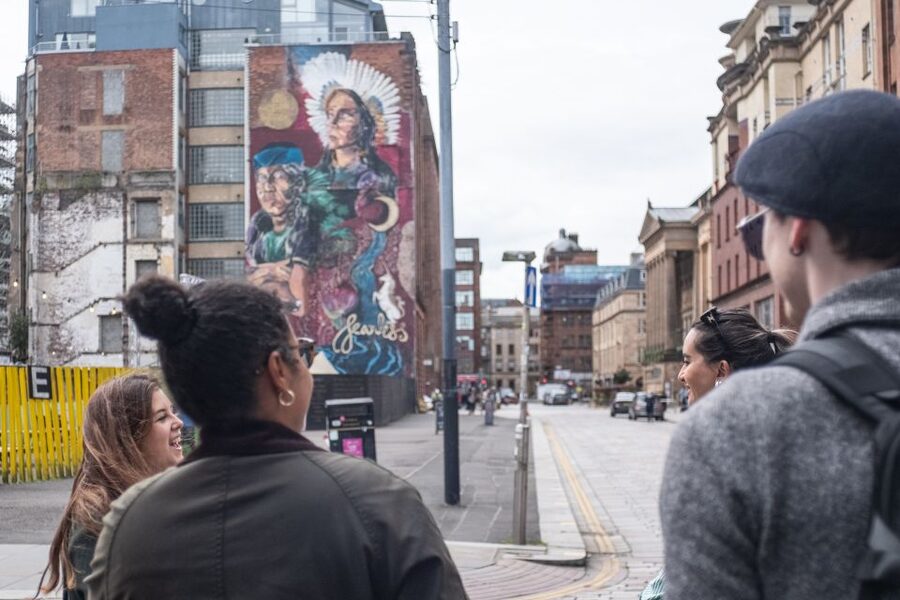
This is one of the stops where you should look up. Glasgow’s architecture can be easy to miss when you are focused on the pavement and the next story. One person who took the tour specifically appreciated being encouraged to notice the buildings. The guide’s stories give you a reason to pay attention to details you might otherwise walk past.
Same streets after dark, a different sort of fright:
- The World Famous Underground Ghost Tour
★ 4.5 · 9,272 reviews - London: The Original Jack the Ripper Walking Tour
★ 4.7 · 7,833 reviews - Edinburgh: Haunted Underground Vaults and Graveyard Tour
★ 4.6 · 6,607 reviews - London Jack the Ripper Guided Tour with Ripper-Vision
★ 4.5 · 4,840 reviews
Gallowgate and the city’s harder stories
The short walk through Gallowgate brings the tour back to the people at its center. This is where stories about gangs, godfathers, and local criminals fit into the wider account of Glasgow.
The strongest part of this section is the social context. Gang conflict is not treated as a collection of colorful characters floating free from their surroundings. The tour explains how workers’ living conditions and the way people were housed influenced the city’s gang culture.
That approach gives the darker stories more weight. You hear about names such as Arthur Thompson and his family, but the point is not simply to make criminals sound legendary. The guide shows how poverty, crowded neighborhoods, and local loyalties shaped the city’s past.
You may also hear about the Gorbals Vampire, a famous piece of Glasgow folklore, along with ghosts and other local tales. These stories are clearly presented as legend or family storytelling when they are not established fact. That separation between history and myth is one of the experience’s useful features.
Ending at Mercat Cross in Glasgow’s old center
The final stop is Mercat Cross, close to the historic Tolbooth Steeple. This was a key city entrance and a public place where trade, announcements, punishment, and civic life met.
It makes sense as the finishing point. After seeing the wealthy Merchant City, the court, Glasgow Green, the Barras, and Gallowgate, you end in a place that connects many strands of the old city. Mercat Cross helps you picture Glasgow before modern streets and traffic reshaped the center.
The Tolbooth Steeple is also a fine reminder that Glasgow’s past is not only about criminals. The city’s civic buildings, markets, public punishments, and trade routes all formed the setting for the stories. By the end, you have seen a more complicated Glasgow than the postcard version.
The tour ends centrally, which is handy for continuing your evening. You can ask the guide for suggestions about restaurants, bars, and other places to visit. The small-group format also gives you a better chance to ask questions than you would get on a large coach tour.
How the guides make the difference
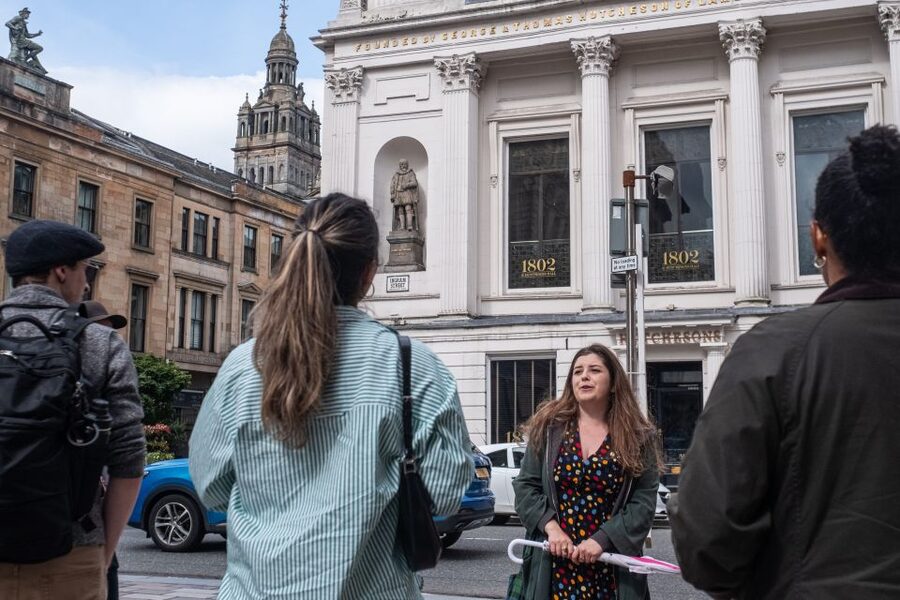
This experience depends heavily on the guide. Rhona is repeatedly described as enthusiastic, warm, theatrical, and engaging. She keeps the pace suited to the slowest person in the group, which matters on a three-hour walking route.
Her local connection is a major part of the appeal. The guides are born and raised in Glasgow, and they include family stories passed down through generations. Those personal details cannot replace documented history, but they add the sound and feel of a city explained by someone who belongs to it.
The best guide will also know when to stop joking. Glasgow humour helps make difficult material easier to hear, but the tour deals with real suffering and violent crimes. Rhona’s style works because she combines energy with context and makes clear when a tale belongs to history, family memory, or local myth.
The group is described as small and intimate, with time for questions and personal suggestions. Group size is not specified, so I would not book assuming it will be a private tour. Still, the format should feel more personal than a large sightseeing group.
Price, pace, and practical value
At $37 per person, the tour offers three hours of guided walking, local storytelling, a whisky dram, a traditional snack, and several central Glasgow stops. I consider that fair value, especially if you want a guide who explains the city rather than simply pointing out buildings.
The value is strongest for first-time visitors who want an introduction to Glasgow’s character. You get architecture, crime, social history, local legends, and practical conversation with a guide. The whisky and snack are small additions, but they make the price feel less like a standard walking tour with only narration.
It is less suitable if you want a quiet stroll or a tightly academic history lecture. The guide’s delivery is lively and theatrical, and the stories can be grisly. You also spend much of the three hours outdoors, so poor weather can affect your comfort.
The route has no stairs or rough ground and aims to use mobility-accessible paths. It is listed as wheelchair accessible, but you should still consider the full walking time and ask ahead if you have specific mobility needs. The tour does not require difficult terrain, yet three hours on foot is still demanding.
Free cancellation up to 24 hours before the start gives you some flexibility, and you can reserve without paying immediately. English is the tour language.
Who should book The Dark Side of Glasgow?
Book this if you like local stories with a rough edge, enjoy walking, and want to understand Glasgow beyond its museums and handsome buildings. It is especially good for adults, older teenagers, fans of true crime, and anyone curious about the links between wealth, poverty, crime, and city life.
I would also recommend it to repeat visitors. Even locals can see familiar streets differently when a guide points out the buildings, public spaces, and characters they normally pass without noticing.
Think twice if you are sensitive to stories of murder, hanging, serial killers, or violence. The same applies if you dislike outdoor tours in uncertain weather or need frequent indoor breaks.
Should you book it?
I would book The Dark Side of Glasgow if you want a memorable first look at the city and prefer people and stories over a checklist of sights. Rhona’s theatrical style, the whisky and teacake, and the careful mix of fact, family anecdote, and folklore give the tour a strong sense of place.
Wear good shoes, check the weather, and choose a weekend if the Barras Market matters to you. If you can handle the dark subject matter and three hours of walking, this is a lively way to meet Glasgow at its most honest, funny, troubling, and human.
FAQ
How long is The Dark Side of Glasgow tour?
The tour lasts three hours.
How much does the tour cost?
The price is $37 per person.
Where does the tour meet?
Meet at the Duke of Wellington statue in Royal Exchange Square, directly in front of the Glasgow Museum of Modern Art.
How do I recognize the guide?
The guide meets you by the statue, which has a traffic cone on its head, and is expected to hold a pink unicorn above their head.
What places does the tour visit?
The route includes the Merchant City, High Court of Justiciary, Glasgow Green, Barras Market, Barrowland Ballroom, Gallowgate, and Mercat Cross with the Tolbooth Steeple nearby.
Is whisky included?
Yes. The tour includes a single malt Scottish whisky tasting, along with traditional snacks.
Is the tour suitable for children?
No. Children under 12 are not permitted.
Does the tour operate in bad weather?
Yes. The tour runs rain or shine, so bring an umbrella, rain gear, and suitable clothing.
Is the tour wheelchair accessible?
Yes. The route has no stairs or rough terrain and aims to use mobility-accessible paths. You should still consider that the tour involves about three hours of walking.
Just added around the UK
- York’s Haunted Heart : Ghost, Ghouls and Gallows★ 4.6 · 82 reviews
- York : Private Ghost Hunt★ 5.0 · 3 reviews
- York: Dark Tales of York★ 4.6 · 25 reviews
- Windsor: Private Dark Side Walking Tour★ 5.0 · 2 reviews
- Warwick: Ghost, Crime & Murder Walking Tour★ 4.8 · 57 reviews
- York’s Famous Ghosts Smartphone App walking tour★ 5.0 · 2 reviews
- History and Hauntings Self Guided Walking Tour in York with App★ 4.0 · 19 reviews
- Ghosts and Ghouls Haunted York Self Guided Audio Tour★ 4.5 · 4 reviews
Glasgow Ghost Tours, compared.
Ghouls, Ghosts & Gruesome Tales Guided Walking Tour
Read our review →
Glasgow Ghost Hunt: The Soul That Got Away Exploration Game
Read our review →
Browse the lists this tour appears in