
REVIEW · DARK HISTORY & TRUE CRIME TOURS
The Dark Side of Medieval Dubrovnik Private Walking Tour
Dubrovnik’s medieval past was not all grand walls and handsome palaces. This private walk also looks at plague, punishment, orphan care, and public shame, giving you a sharper sense of how hard daily life could be 500 or more years ago. Guide Vesna leads the route through the Old City, from St. Claire’s Convent to the old quarantine station.
I like the small private format, which lets you ask questions as the darker subjects come up. I also like the clear route through major places, including the Franciscan Monastery, Rector’s Palace, the harbor, and Luza Square. The main consideration is the short length: two hours gives you a strong introduction, but not enough time for long visits inside attractions or a broad survey of Dubrovnik’s 1,500-year story.
Key points to know
- Medieval life beyond the postcard: Learn about childbirth, children, illness, justice, and social rules.
- A private group of up to eight: The guide works only with your party, not a large mixed group.
- Vesna leads the walk: Her approach combines historical detail with humor and room for questions.
- Seven focused stops: The route links women’s history, medicine, government, trade, punishment, and quarantine.
- Starts near the western entrance: Meet at Brsalje Street and finish at Ploče Gate on the east side.
- Good value for a small group: At $196.90 per group, the per-person cost improves as your party fills the eight available places.
A darker introduction to Dubrovnik’s Old City
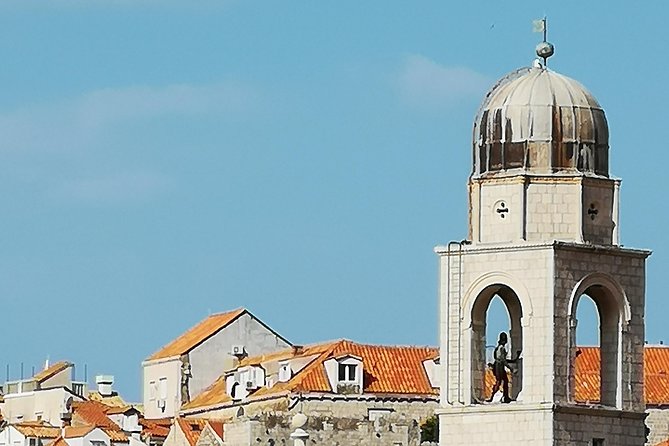
This is the sort of walk that changes how you read Dubrovnik. The polished stone streets and grand buildings remain, but Vesna draws your attention to the people who lived under strict rules, faced dangerous disease, and could be punished in public for breaking social expectations.
The tour focuses mainly on medieval subjects, though Dubrovnik’s story reaches back more than 1,500 years. You will hear about how people lived, how many children families had, which illnesses caused fear, and what people meant by the art of dying. The tone includes amusing stories, serious history, and some grim material.
That mix is important. The tour is not simply a list of dates and buildings. Each stop uses a familiar place to explain a different part of life in the old republic. You move from a convent and orphanage to a pharmacy and monastery, then to government, shipping, punishment, and quarantine.
Because this is a private tour, your group can spend more time on the subjects that interest you. If you want to ask about medieval women, medical treatment, crime, or the Black Death, you are not competing with a busload of people for the guide’s attention.
More dark history tours in the world:
- Adults-Only New Orleans Ghost, Crime, Voodoo, and Vampire Tour
★ 5.0 · 6,545 reviews - Edinburgh: Dark Secrets of the Old Town Ghost Walking Tour
★ 4.6 · 1,671 reviews - New Orleans Adults-Only True Crime and Ghost Walking Tour
★ 5.0 · 1,666 reviews
St. Claire’s Convent and the lives of women
The first stop is the Convent of St. Claire, near the start of the walk. The stop lasts about five minutes, so expect an introduction rather than a long visit.
Here, Vesna explains who the nuns served and discusses the orphanage that operated in the convent. This gives the tour an early human focus. Instead of beginning with rulers or military victories, you start with women, children, and the systems that cared for or controlled them.
The stop also looks at how women were treated in medieval Dubrovnik. That subject adds useful balance to the usual Old City story, which often centers on merchants, officials, churches, and fortifications.
Admission is listed as free. You should think of this stop as an outdoor historical explanation connected to the convent, not as a separate museum visit. Its short length helps keep the walk moving, but anyone hoping for an extensive discussion of women’s daily lives may find the treatment brief.
Franciscan Monastery, illness, and the Black Death
The Franciscan Church and Monastery receives about ten minutes. This is one of the strongest sections for anyone curious about medieval medicine.
You will hear which ailments troubled people and what the Black Death meant in practical terms. The conversation also covers attempted cures. Medieval medicine had limited tools, and disease could move through communities with terrifying speed. Vesna’s focus here helps you understand illness as part of everyday life, not just a dramatic event in a textbook.
The tour also introduces the art of dying, a medieval idea tied to preparing for death and facing it properly. That subject may sound bleak, but it fits the tour’s purpose. Medieval people had different ideas about health, death, faith, and public behavior, and the walk asks you to see those ideas in their own setting.
Admission is free at this stop. The schedule allows ten minutes, so you should not expect a full church tour or an extended look at every religious feature. The value comes from the historical explanation and the way it connects the building to the fears of the period.
Stradun and the practical business of living
Stradun is Dubrovnik’s main street and the setting for a ten-minute look at ordinary life in the past. This is where the tour shifts from illness and care to daily routines.
You will hear how people lived, including the social conditions that shaped family life. The supplied description specifically raises questions about how many children people had, making this more than a simple walk along the city’s polished central avenue.
Stradun can be one of the busiest and most visually impressive parts of the Old City, but this tour asks you to look past the clean stone paving. Think about the people who worked, raised children, traded goods, followed religious rules, and tried to stay healthy in a crowded medieval city.
The stop is free and fairly short. I like its place in the route because it grounds the darker stories in normal life. The drawback is that ten minutes cannot cover every part of household structure, work, food, housing, and class. You get a useful frame, not a full social history.
More private ghost tours in the world:
- Ghosts of Greenwich Village: 2-Hour Private Walking Tour
★ 5.0 · 178 reviews - NOLA’s BIG 4 PRIVATE CITY TOUR – NO GHOST, ONLY FACTS!
★ 5.0 · 158 reviews - The Last Ride Private Golf Cart Ghost Tour for up to 5 people!
★ 5.0 · 89 reviews - Private Ghost Tour of York
★ 5.0 · 83 reviews
Rector’s Palace and the male center of power

At Rector’s Palace, the tour turns toward political authority. The stop lasts about five minutes and presents the palace as a male sanctuary and the center of political power.
That description gives you a clear lens for the building. Rather than treating the palace only as an impressive architectural sight, Vesna connects it to the men who governed Dubrovnik and the systems that shaped public life.
This is also a helpful counterpoint to the opening discussion of women and the orphanage. The route places social experience beside official power, showing that medieval Dubrovnik was organized through strong divisions of authority and status.
The stop is short, so expect context from outside or around the palace rather than a detailed palace visit. Admission is listed as free. If the political side of Dubrovnik interests you most, you may want to ask questions here, since the schedule moves on quickly.
The harbor, trade, and the arrival of good and bad
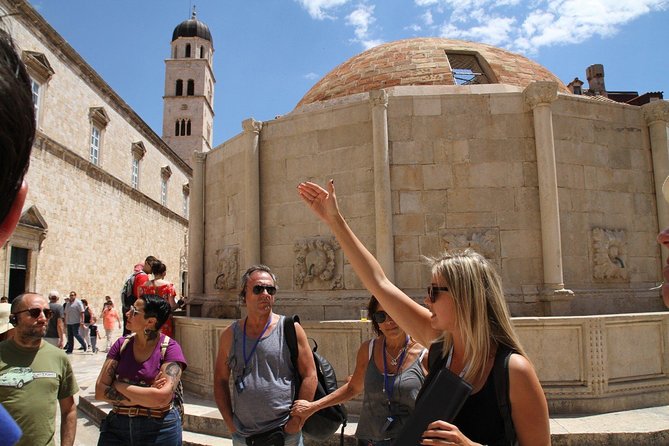
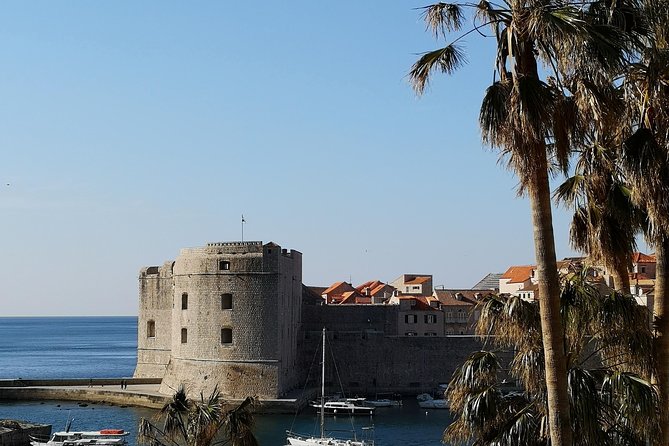
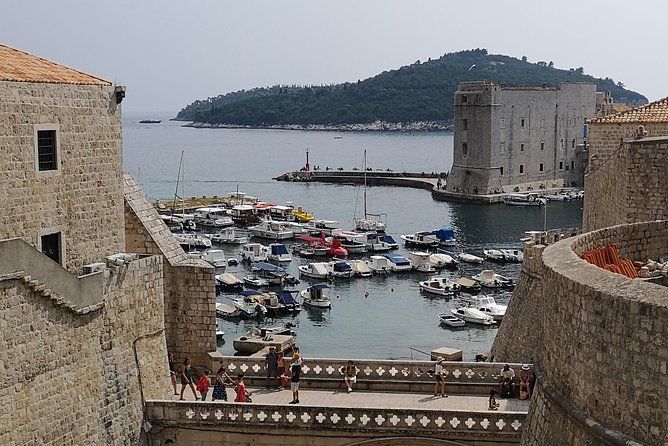
The City Harbor is the link between Dubrovnik and the wider world. This ten-minute stop explains how goods, people, news, dangers, and opportunities arrived by sea.
The harbor makes the earlier subjects easier to understand. Dubrovnik was not isolated. Its connections supported trade and political life, but those same connections could bring disease and other threats. The phrase good and bad fits the stop well: maritime access could make a city prosperous while also exposing it to risks beyond local control.
I like this part of the walk because it adds movement to the story. The convent, monastery, street, and palace show life within the city. The harbor shows the outside forces that could change life inside it.
There is no separate admission fee listed. The ten-minute timing gives enough room for a focused explanation, though not a long port history. You will get the harbor’s role in the medieval city rather than a full account of every trading connection.
Luza Square and public punishment
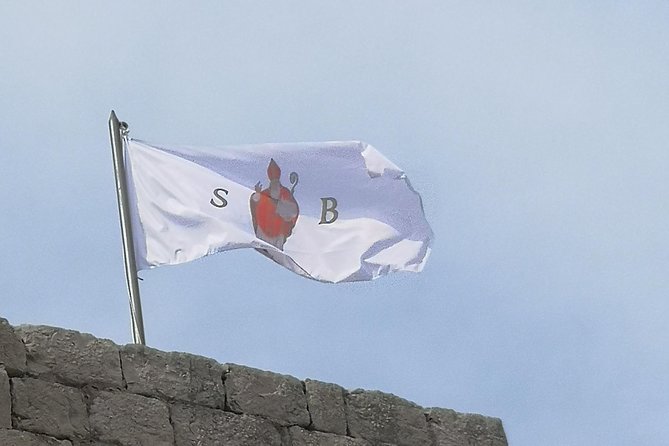
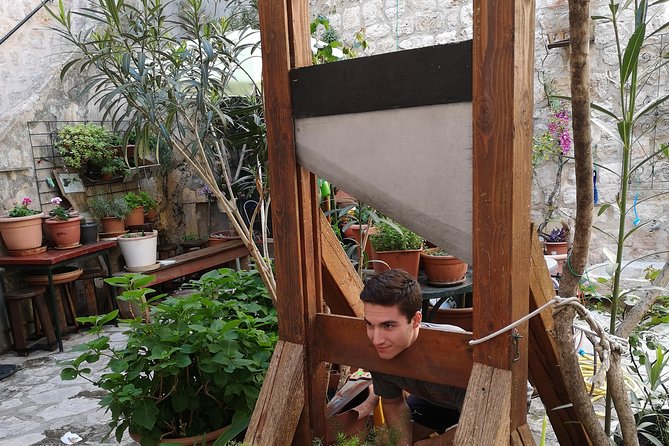
Luza Square provides one of the tour’s most direct looks at medieval justice. It was a place for punishment and embarrassment, and Vesna explains why people were punished and how those penalties were carried out.
This is a useful reminder that justice was often public theater. Punishment did not happen only behind closed doors. Shame, visibility, and the reaction of the community could be part of the penalty.
The stop also connects to the tour’s larger questions about how people behaved under medieval rules. What counted as wrongdoing? Who had the authority to punish? How did public humiliation affect a person’s place in the community? The square gives those questions a physical setting.
The planned stop is about ten minutes and costs nothing to enter. Some people will find this material uncomfortable, which is part of the point. If you prefer a light sightseeing walk, this section may feel too grim. If you want the less polished side of medieval life, it is one of the most useful stops.
Lazareti and Dubrovnik’s quarantine system
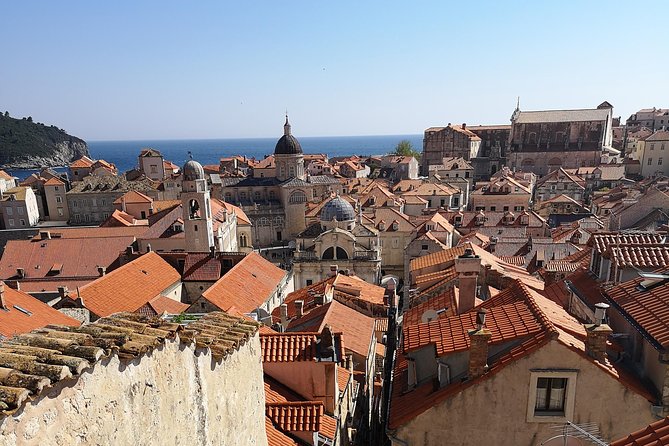
The final stop is Kavana Lazareti, described as Dubrovnik’s last quarantine station. The visit lasts about ten minutes and brings the medical and maritime themes together.
Quarantine only makes sense when you connect it to the harbor. Ships and people brought trade and contact with the wider world, but they could also carry sickness. A quarantine station was one way Dubrovnik tried to protect the city from disease arriving by sea.
This stop gives the walk a strong ending because it returns to the problem of illness with a civic response. Earlier, you hear about ailments, the Black Death, and medieval cures. Here, you see how the city handled the threat through separation and control.
The tour ends at the eastern city gate, Ploče Gate, on Ulica Vrata od Ploča. That makes the route a one-way walk across the Old City rather than a loop back to the starting point. You meet at Brsalje Street 1, near the western side of the historic center, and finish near the opposite end.
What the two-hour format gives you
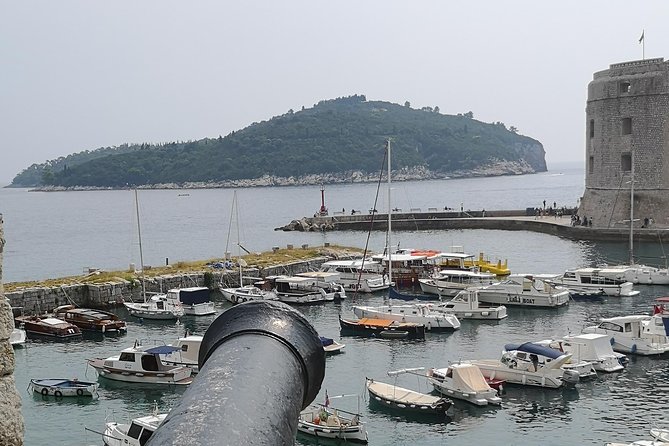
Two hours is a good length for a themed introduction. The route includes seven stops, and most explanations last five or ten minutes. You get a clear narrative without committing half a day to a single subject.
The tradeoff is depth. The tour touches women’s lives, orphan care, disease, medicine, family life, politics, trade, punishment, and quarantine. That is a lot of ground. You will come away with memorable examples and a new way to read the Old City, but you should not expect a full academic course or detailed interior visits.
The mobile ticket is practical, and the tour is listed for daily operation from 9:00 a.m. to 6:00 p.m. for the stated operating period. Confirmation is sent within 48 hours of booking, subject to availability. Service animals are allowed, and the meeting area is near public transportation.
The walk is described as suitable for most people, but the supplied details do not give a precise accessibility assessment. If you need specific information about surfaces, slopes, seating, or access inside a particular stop, ask before booking.
Is $196.90 a fair price for a private walk?
The price is $196.90 for the whole group, with up to eight people included. That means the value depends heavily on group size.
For eight people, the cost works out to about $24.61 per person. For four people, it is about $49.23 each. For two people, it becomes $98.45 per person. The private format makes the strongest financial sense for a family or small group traveling together.
There are no separate admission charges listed for the seven stops, which keeps the price easier to understand. You are paying mainly for Vesna’s time, the private format, and the themed storytelling rather than for a package of paid attractions.
I would compare this price with what you want from a guide. If you only need a quick orientation to Dubrovnik, a standard city walk may offer more general coverage. If you specifically want medieval medicine, punishment, women’s history, and quarantine, this focused route gives you a clearer subject than a broad sightseeing tour.
The two published ratings are both five-star, and the written praise centers on Vesna’s command of the subject, her ability to answer questions, and her sense of humor. One person who works as a travel guide described the guiding as especially strong, which is a meaningful detail if you care about presentation as much as facts.
Who should book this Dubrovnik walk?
I would choose this tour if you enjoy history that deals with real people and difficult subjects. It suits curious adults, families with older children, and small groups who want to ask questions without a large crowd.
It is also a good fit if you have already seen Dubrovnik’s main walls and churches and want a different angle. The route does not ignore famous places, but it uses them to explain society, medicine, law, and trade.
I would think twice if you want a relaxed stroll with only scenic stops. The Black Death, public humiliation, punishment, and death are central themes, not passing references. The pace is efficient, and the subject matter can be heavy.
Free cancellation is available if you cancel at least 24 hours before the local start time. Cancellations made later are not refunded, and changes within that period are not accepted.
Should you book it?
Book this private walk if you want Dubrovnik to feel like a lived-in medieval city rather than a collection of beautiful façades. Vesna’s route gives you a compact, human look at women’s lives, disease, government, trade, justice, and quarantine.
The best value comes with a group of several people, especially if you appreciate private guiding and plan to ask questions. If you want extensive interior access or a broad tour of every period in Dubrovnik’s past, choose a longer or more general experience instead. For a focused two-hour look at the city’s darker medieval side, this is a strong choice.
FAQ
Where does the tour start?
The tour starts at Brsalje ul. 1, 20000 Dubrovnik, Croatia.
Where does the tour end?
The tour ends at Ploče Gate, the eastern city gate, on Ulica Vrata od Ploča.
How long does the tour last?
The tour lasts approximately two hours.
How many people can join the private tour?
The private tour is for your group only, with up to eight people.
Who leads the tour?
The tour is provided by Walk with Vesna, and the guide named in the experience details and published comments is Vesna.
What places are included?
The route includes St. Claire’s Convent, the Franciscan Church and Monastery, Stradun, Rector’s Palace, the City Harbor, Luza Square, and Kavana Lazareti.
Does the tour focus only on buildings?
No. The tour uses the buildings and public spaces to discuss medieval daily life, women’s treatment, orphan care, illness, the Black Death, cures, political power, trade, punishment, and quarantine.
Are admission tickets included?
Admission is listed as free at all seven scheduled stops.
Can I cancel for a full refund?
Yes. You can receive a full refund if you cancel at least 24 hours before the experience start time. Later cancellations and changes made within 24 hours are not accepted.
More Walking Tours in the world
- History and Hauntings of Salem Guided Walking Tour
★ 5.0 · 14,564 reviews - New Orleans Premier Ghost, Voodoo and Vampire Walking Tour
★ 4.5 · 12,856 reviews - Chicago: Gangsters and Ghosts Walking Tour
★ 5.0 · 7,155 reviews - Prague: Ghost Walking Tour Where Legends Come To Life
★ 4.4 · 5,253 reviews
Just added around the world
- Zion: Harry Potter-Inspired Zion Ghost Tour with Sunset View★ 5.0 · 8 reviews
- Your evening in Venice – Legends&Ghosts&Aperitif★ 4.7 · 79 reviews
- York’s Haunted Heart : Ghost, Ghouls and Gallows★ 4.6 · 82 reviews
- York : Private Ghost Hunt★ 5.0 · 3 reviews
- Witches, Widows, & Wraiths: Wichita Ghost Tours★ 5.0 · 2 reviews
- Wraiths & Wicked Whispers: Wilmington Ghost Tour★ 4.2 · 25 reviews
- Witches, ghosts and executioners / Mystical North Hesse★ 4.4 · 4 reviews
- Wraiths of the West Texas Wind: El Paso Ghost Tour★ 4.5 · 9 reviews
Dark History & True Crime Tours, compared.

Adults-Only New Orleans Ghost, Crime, Voodoo, and Vampire Tour
Read our review →
The Deathly Dark Tour of York: Experience of the Year 2024
Read our review →
The Dark Side of Florence: Mysteries and Legends
Read our review →
Dark Secrets of the Old Town Ghost Walking Tour
Read our review →
New Orleans Adults-Only True Crime and Ghost Walking Tour
Read our review →
Genteel and Bard’s Savannah Dark History and Ghost Encounter Walking Tour
Read our review →
Buda Castle District Dark History, Legends and Vampire Night Tour
Read our review →Browse the lists this tour appears in