
REVIEW · CHICAGO GHOST TOURS
The Devil in the White City: A Haunting History Tour
Chicago’s darkest famous story is only one part of this tour. You’ll connect H.H. Holmes and his former Murder Castle with the grand 1893 World’s Columbian Exposition, Victorian Chicago, Prairie Avenue, Jackson Park, and the old stockyards. The bus matters here, since these places are spread across the city.
I like the mix of short walks and bus sightseeing, which keeps a three-hour history lesson from becoming a marching tour. I also like the chance to see places you might skip on your own, especially the former fairgrounds, the Japanese Garden, and the Union Stockyard Gate. The main thing to consider is the title: this is best understood as a Chicago history tour with ghost stories and H.H. Holmes woven through it, not a nonstop murder investigation.
Key points to know before you book
- Tony is the named guide praised most often, with a warm, funny, story-driven approach and strong command of Chicago history.
- The route covers six very different sites, from Prairie Avenue and the old Murder Castle site to Jackson Park and the stockyard gate.
- The 1893 World’s Fair gets more attention than the title may suggest, so expect architecture, industry, wealthy Chicagoans, and city growth alongside haunted tales.
- You ride by bus and walk at several stops, making this easier than a long all-day walking tour.
- The tour begins and ends at the Congress Plaza Hotel at 520 South Michigan Avenue, starting at 2 p.m.
- The $64 price includes the guided transportation and commentary, while each stop listed has no separate admission charge.
The real subject is Chicago in 1893
The hook is H.H. Holmes, the Chicago criminal whose name is tied to the so-called Murder Castle. But the stronger thread is the city around him. In the late nineteenth century, Chicago was growing fast, showing off its wealth, building on a grand scale, and preparing to present itself to the world through the Columbian Exposition.
That wider setting gives the tour its shape. You are not simply taken to one crime site, told a grisly story, and sent home. You move through neighborhoods and public places connected to the city’s political, industrial, architectural, and social past.
That can be a plus or a disappointment, depending on your expectations. If you want a serious look at Chicago’s transformation during the Gilded Age, the tour offers useful range. If you booked mainly for ghost stories about Holmes, some portions may feel too broad.
The tour is listed at about three hours, with a mix of bus travel and walking. One piece of practical advice is to keep your schedule flexible. A three-hour activity can run longer if traffic, storytelling, or loading times slow the route. One account also described the bus navigation as less efficient than expected, so do not place a tight dinner reservation immediately afterward.
More heritage tours in Chicago:
- Chicago: Historic Gangsters & Ghosts Night Cruise
★ 3.9 · 45 reviews - Prairie Avenue Haunted History Tour and Ghost Hunt
★ 5.0 · 11 reviews - Chicago Ghosts & Haunted History Walking Tour
★ 5.0 · 11 reviews
Starting at the Congress Plaza Hotel
The meeting point is the Congress Plaza Hotel and Convention Center at 520 South Michigan Avenue. You meet there for a 2 p.m. departure and return to the same location at the end.
This is a fitting launch point for the subject. The hotel sits near the central Michigan Avenue area and is connected to the era that shaped the tour’s stories. The opening discussion includes Chicago during the period of the World’s Fair, along with ghost lore connected to the hotel.
I like beginning here because it gives the tour a clear sense of place before the bus heads farther south. You are not dropped into a random neighborhood with no context. The guide can establish the city’s mood, the Fair’s importance, and the relationship between documented history and local legend.
Do not expect a museum-style opening with artifacts or a long indoor presentation. This is a moving tour, and the information comes through the guide’s narration. Tony is the guide most often singled out in the supplied feedback. He is described as funny, friendly, enthusiastic, and able to bring the period to life.
Prairie Avenue and the Fort Dearborn story
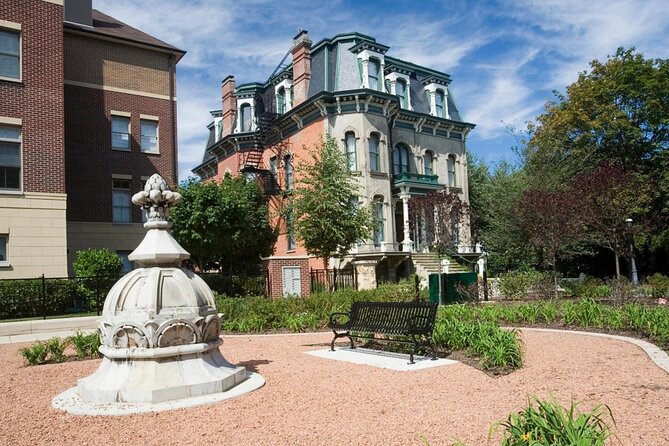
The first listed stop is the Prairie Avenue Historic District, with about 30 minutes here. This area is tied to Victorian Chicago and to the Fort Dearborn Massacre, giving you an early look at the city before the World’s Fair became its central claim to fame.
Prairie Avenue helps broaden the tour beyond Holmes. The district points to the city’s wealthy residents and its changing social order. This is where you begin to see that Chicago’s story was not only about crime and ghosts. It was also about power, money, grand homes, and a city trying to define itself.
The stop is free, as are the other scheduled stops. That does not mean it is a throwaway pause. A guide adds value by explaining what you are looking at and tying the neighborhood to the larger story.
The tradeoff is that historic districts can be subtle. You may be viewing streets and buildings rather than entering a major attraction. If you prefer dramatic interiors, this portion may feel quiet. If you like city history presented through neighborhoods, it is a useful start.
The former Murder Castle site and the USPS building
The next stop takes you to the United States Postal Service building at the site associated with H.H. Holmes’s former Murder Castle. The scheduled visit lasts about 25 minutes.
The present-day setting is deliberately ordinary. That contrast is part of the effect. You are looking at an unassuming postal facility while hearing about the crimes and ghost stories attached to what once stood there. The location is not presented as a preserved haunted house, and you should not expect an intact building full of secret rooms.
This is the stop most closely tied to the tour’s title, so it deserves a realistic expectation. The supplied accounts are mixed on how much time the tour gives to Holmes. One account felt the subject received only a brief treatment, while other accounts found the visit fascinating and enjoyed seeing the area where Holmes committed his crimes.
My advice is simple: book this for context, not for a full forensic study of Holmes. The guide’s storytelling is central. Tony’s strongest quality, based on the available feedback, is his ability to make historical material vivid. That matters here because the physical site itself does not provide a large attraction to explore.
A few more ghost walks around Chicago worth a look
- Chicago: Gangsters and Ghosts Walking Tour
★ 5.0 · 7,155 reviews - Chicago: Gangsters and Ghosts Guided Walking Tour
★ 4.7 · 1,697 reviews - Medieval Torture Museum Ticket with Audio Guide and Ghost Hunting
★ 5.0 · 962 reviews - Haunted Chicago Booze and Boos Ghost Walking Tour
★ 5.0 · 266 reviews
Jackson Park’s Japanese Garden
The tour then reaches Jackson Park’s Japanese Garden for about 15 minutes. This is a shorter stop, intended as a scenic place for photographs while the guide discusses ghost stories connected to Jackson Park and the 1893 Fair.
The change of pace is welcome. After the urban history of Prairie Avenue and the unsettling Holmes material, the garden offers a calmer setting. It also helps you understand that the Fair’s legacy was spread across a large area, not confined to one building or one dramatic landmark.
Because the stop is brief, you should not expect a long garden visit or a detailed botany lesson. The value is in the setting and the connection to the Fair. Bring a phone or camera if you want pictures, but keep an eye on the schedule.
The Japanese Garden is also a good example of the tour’s blend of fact and legend. You receive stories about the site, but the tour is not presented as a formal paranormal investigation. The ghost material is part of the local atmosphere and the storytelling.
Jackson Park and the former World’s Fairgrounds
The main World’s Fair stop is Jackson Park, with about 30 minutes scheduled. This is one of the most important parts of the tour for anyone interested in the 1893 Columbian Exposition.
The Fair helped shape Chicago’s public image and left a strong mark on the city’s architecture and civic ambitions. On this tour, the guide places the surviving setting within that larger story. You will learn about the former fairgrounds and how the event fits into the period’s interest in progress, spectacle, invention, and wealth.
This is also where the tour may differ from what the title leads you to expect. The Fair receives real attention, and that means the tour includes more than crime stories. You may hear about architects, millionaires, the city’s growth, and the public excitement surrounding the exposition.
The stop is not a visit to a fully preserved fairground. Much of what you see requires explanation. That is why the guide matters so much. A good narration can help you picture a vanished event; a weaker one can leave you wondering what you are supposed to be seeing.
Feedback on the storytelling is not uniform. Some accounts praised Tony’s delivery and said he made Chicago’s past feel alive. Another found the story less effective and felt the tour took longer than necessary. I would treat this as a guide-led history experience whose quality depends heavily on how much you enjoy spoken interpretation.
The Union Stockyard Gate and Chicago’s industrial past
The bus next stops at the Union Stockyard Gate for about 10 minutes. This is a short visit, but it introduces a different side of late nineteenth-century Chicago.
The gate is linked to the stockyards and to Upton Sinclair’s The Jungle. That connection points toward labor, meatpacking, immigration, and the industrial systems that helped make Chicago a major American city. It is a useful counterweight to the grand architecture and wealthy figures associated with the Fair.
Do not expect a long walk or an extended literary discussion here. Ten minutes is enough for an explanation and a look at the site, but not enough for a full study of Sinclair or the stockyards. The stop works best as a sharp historical marker on a wider route.
This is one reason the bus format makes sense. You can cover several parts of Chicago in one afternoon instead of spending your entire day trying to link them by train, taxi, or long walks. The bus also gives the guide time to connect one stop to the next while you ride.
The Museum of Science and Industry, the Fair’s surviving building
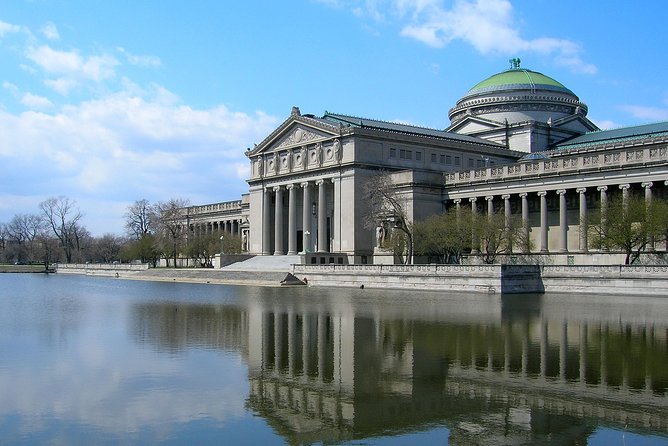
The final listed stop is the Museum of Science and Industry, with about 15 minutes scheduled. The guide discusses ghost stories tied to the last remaining building from the 1893 World’s Fair.
That makes this a strong closing piece. You finish with a tangible link to the exposition rather than leaving the Fair as something that exists only in stories. The building’s connection to the event gives the tour a physical ending, while the ghost tales keep the mood consistent with the tour’s name.
The short timing matters. This is not described as a full museum visit, and you should not plan to explore the museum’s galleries during the tour. The value comes from the exterior setting and the guide’s account of its Fair connection.
If you want to visit the Museum of Science and Industry properly, plan that for another time and buy the needed admission separately. The tour itself focuses on the historical and supernatural story around the building.
What $64 gets you
At $64 per person, this is not the cheapest way to hear Chicago history. The value rests in the combination of transportation, route planning, and live interpretation.
You are paying to connect six sites that are spread around the city. You also get the convenience of returning to the Congress Plaza Hotel rather than arranging your own way back from the South Side. Since the scheduled stops have no separate admission charge, the cost is mainly for the bus, the guide, and the structure of the afternoon.
I think the price is fair for someone who wants a guided overview and does not want to build the route alone. It is less compelling if you only want a concentrated H.H. Holmes tour, since the experience spends meaningful time on Victorian Chicago, the World’s Fair, Prairie Avenue, and the stockyards.
The group can reach up to 52 people. That is a fairly large maximum, so do not expect a private or intimate walk. A larger group may make it harder to hear at outdoor stops, though the bus format keeps the experience organized.
Who will enjoy this tour most
I would recommend it to you if you like city history with a spooky edge. It suits a first visit to Chicago because it gives you a broad look at several areas while adding stories you would be unlikely to encounter on a standard architecture or downtown sightseeing tour.
It is also a good choice if you have read The Devil in the White City and want to place its subjects on a map. The tour connects the book’s major themes with real neighborhoods, the former Holmes site, Jackson Park, and the Fair’s surviving traces.
Families with older children may find the format manageable, since there is limited walking and plenty of bus time. Still, the Holmes material and murder stories may not suit young children. The supplied information says most participants can take part, but it does not promise a child-specific presentation.
You should choose another experience if you want a long walking tour, a museum visit, or a tightly focused investigation of H.H. Holmes. You may also want to skip it if ghost stories do not interest you at all, since legends are part of the tour’s appeal even when the historical content is stronger.
Practical details for a smoother afternoon
Use the mobile ticket and arrive at the Congress Plaza Hotel before the 2 p.m. start. The meeting point is near public transportation, which makes it fairly practical to reach without a car.
Wear shoes suitable for short walks and outdoor stops. The tour is not described as strenuous, but it does include guided walking at several locations. Since the activity depends on good weather, check for updates if rain or poor conditions are expected.
The tour ends back at the starting point. That makes it easier to plan a later meal or another activity in the central Chicago area, but allow extra time in case the route runs beyond the advertised three hours.
Cancellation is free up to 24 hours before the start time for a full refund. Changes or cancellations inside that window are not accepted for a refund. If poor weather causes the operator to cancel, you are offered another date or a full refund.
Should you book the Devil in the White City tour?
Book it if you want a broad, story-led afternoon about Chicago in 1893, with H.H. Holmes, ghost lore, the World’s Fair, industry, and historic neighborhoods all in the same route. Tony appears to be a strong guide for this format, especially if you enjoy humor and spoken storytelling.
Think twice if you want the title’s murder story to dominate every minute. The most accurate description is a Chicago history tour with Devil in the White City material, not a pure Holmes tour. At $64, it is good value for the bus coverage and guide’s narration, but only if that wider focus matches what you want.
FAQ
How long is the Devil in the White City tour?
The tour lasts approximately three hours, though you should allow extra time in case traffic or the route causes delays.
Where does the tour begin?
It begins at the Congress Plaza Hotel and Convention Center, 520 South Michigan Avenue, Chicago, Illinois 60605.
What time does the tour start?
The scheduled start time is 2 p.m.
Where does the tour end?
The activity ends back at the Congress Plaza Hotel, the same place where it begins.
Does the tour use a bus?
Yes. The experience includes sightseeing by bus as well as guided walking at several stops.
How many people can join the tour?
The maximum group size is 52 people.
Is admission to the stops included?
The listed stops have no separate admission charge. The $64 price covers the tour experience, including the guided route and transportation.
Is the tour suitable for most people?
The supplied information says most participants can take part. You should still expect some walking at outdoor stops.
Can I cancel for a full refund?
Yes. You can cancel at least 24 hours before the start time for a full refund. If poor weather causes the operator to cancel, you are offered another date or a full refund.
Just added around Chicago
- Prairie Avenue Haunted History Tour and Ghost Hunt★ 5.0 · 11 reviews
- Embers of the Windy City: Chilling Chicago Ghost Tours★ 4.5 · 121 reviews
- Lincoln Park Hauntings Ghost Investigation Tour★ 5.0 · 43 reviews
- Haunted Ghosts & The Chicago Outfit Segway Tour★ 4.5 · 38 reviews
- Ghosts of Chicago Family Friendly Ghost Tour★ 4.0 · 12 reviews
- Chicago Hauntings Original Ghost Bus Tour★ 4.0 · 147 reviews
- Haunted Chicago Exploration Game and Tour★ 4.0 · 6 reviews
- Chicago Ghosts & Haunted History Walking Tour★ 5.0 · 11 reviews
Chicago Ghost Tours, compared.
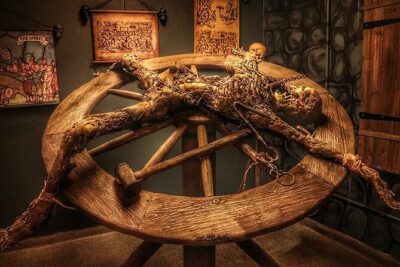
Medieval Torture Museum Ticket with Audio Guide and Ghost Hunting
Read our review →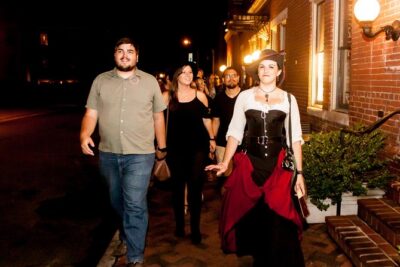
Haunted Chicago Booze and Boos Ghost Walking Tour
Read our review →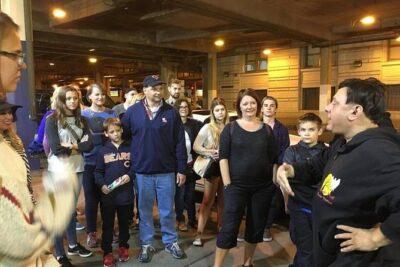
Embers of the Windy City: Chilling Chicago Ghost Tours
Read our review →
Ghosts & Hauntings of the Windy City Walking Tour
Read our review →Browse the lists this tour appears in