
REVIEW · BARCELONA GHOST TOURS
Crimes the tour through the Dark Side of Barcelona
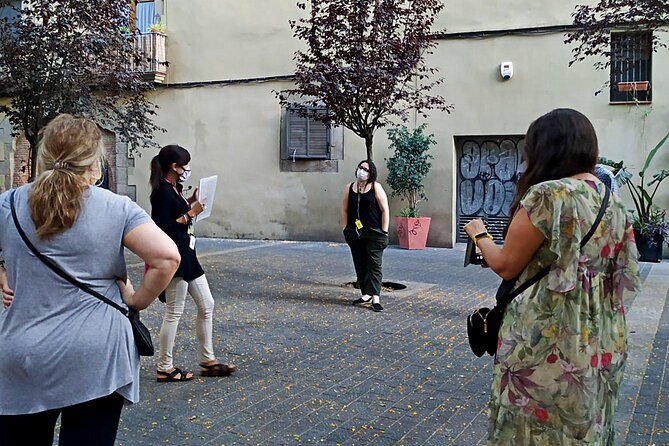
Barcelona’s famous sights tell only part of its story. This dark-history walking tour follows crimes, executions, prison life, war, and local legends through El Raval, the Gothic Quarter, and El Born. The setting changes from grand streets to quiet lanes, and the city’s past grows less polished at every stop.
I like two things right away. First, the route visits places you could easily pass without noticing, including the former prison at Carrer de la Reina Amàlia and the building linked with Enriqueta Martí, the so-called Vampire of Raval. Second, guide Cristina brings a strong sense of place and explains how crime connects with poverty, religion, politics, and daily life.
The main drawback is the price: $254.95 per person for about two hours is a serious spend, even for a private tour. The subject also includes executions, murder, war crimes, and misery, so this is not a light city walk or a good fit for anyone seeking only Barcelona’s architecture and food.
Key points before you book
- Twelve stops in three old neighborhoods: The route links El Raval, the Gothic Quarter, and El Born in one compact walk.
- A private experience: Only your group participates, although the tour information also gives a maximum group size of 20.
- Guide Cristina is central to the experience: Her clear storytelling and strong command of Barcelona’s past are repeatedly emphasized in the available feedback.
- Crime is the doorway, not the whole subject: Expect stories tied to prisons, religious institutions, poverty, civil war, Roman Barcelona, and public punishment.
- No admissions are needed at the listed stops: The sites are viewed from public streets and squares, and a licensed guide is included.
- The walk ends at Plaça de Sant Pere: It begins near La Rambla, close to Le Méridien Barcelona, and finishes near the old city streets by Sant Pere.
Why Barcelona’s dark side makes a useful city walk
A crime-themed tour can easily turn into a string of sensational tales. This route has a broader purpose. Each story is tied to a physical place, and those places help explain how Barcelona changed over time.
In El Raval, crime is placed beside poverty, crowded living conditions, former religious buildings, and prison life. In the Gothic Quarter, the tour reaches back to Roman Barcino and the old city walls before moving through executions and public punishment. In El Born, later political violence and wartime stories show how unrest shaped ordinary streets.
That mix is the strongest reason to book. You are not simply hearing who did what and where. You are using crime as a thread through Barcelona’s social and political past.
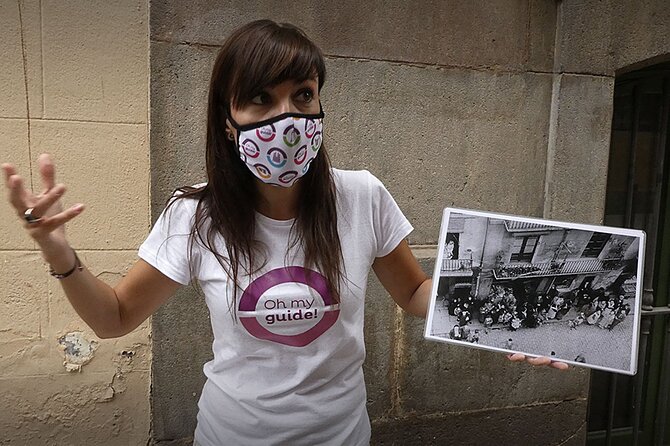
The guide matters a great deal here. Cristina Belenguer is named as the guide in the supplied material, and her style is described as lively, well organized, and easy to follow. Several comments also point to her ability to connect facts with lesser-known corners of the city. That is important on a walking tour where the building in front of you may look completely ordinary.
More Dark History Tours in Spain
- Barcelona: Dark History Night Walking Tour
★ 4.8 · 344 reviews - Barcelona’s Dark History Night Tour
★ 5.0 · 181 reviews - Barcelona Dark History Night Walking Tour With Drinks
★ 5.0 · 153 reviews
Starting on La Rambla with Barcelona’s first crime story
The tour begins at Le Méridien Barcelona, at La Rambla 111 near Carrer del Pintor Fortuny. The opening story concerns the former Hotel Manila and what is described as Barcelona’s first real crime.
This is a smart starting point. La Rambla is one of the city’s most familiar streets, yet many people see only its shops, restaurants, and crowds. Beginning here sets the tone: the guide takes a well-known address and adds a less comfortable layer.
You should expect about ten minutes at this stop. There is no admission charge because the story is told outdoors. Since La Rambla can be busy, stay close to the guide and listen carefully while the group gathers.
El Raval, misery, and the Vampire of Raval
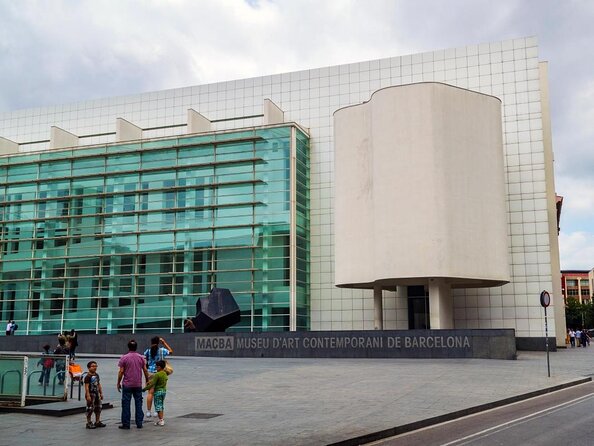
The route then moves toward MACBA, the Museu d’Art Contemporani de Barcelona. The museum occupies the site of a former convent, giving Cristina a way to explain the difficult conditions that shaped El Raval in the early 1900s.
This context gives the crime stories more weight. Poverty does not excuse violence, but it helps you understand why certain parts of the city developed reputations for hardship and danger. The stop also shows how Barcelona’s old religious and civic buildings have been given new roles.
From MACBA, the walk continues to Carrer de Joaquín Costa, 29. This is the apartment building associated with Enriqueta Martí, known in local legend as the Vampire of Raval.
The story is one of the route’s most recognizable episodes, but the value is in seeing the actual street and building rather than hearing a free-floating tale. The stop also raises a useful question about the line between documented crime, newspaper sensation, and later legend. If you prefer careful historical context to theatrical storytelling, pay close attention to how Cristina presents the case.
The neighborhood itself is part of the experience. You will walk through streets that are still active parts of Barcelona, not preserved museum scenes. That contrast can be unsettling, particularly when the guide points out how little an ordinary doorway reveals about what happened there.
The former Queen Amalia prison and life behind walls
At Carrer de la Reina Amàlia, the group reaches the site of the former Queen Amalia prison. The guide explains the poor conditions inside and identifies notable prisoners connected with the institution.
This is one of the more useful stops for understanding punishment in older Barcelona. A prison is not just a place where criminals were kept. It reflects what a society considered acceptable treatment, how authorities controlled the poor, and how public fear shaped justice.
The supplied itinerary allows about ten minutes at each stop, so do not expect a long lecture on the prison’s complete story. Instead, you will get a focused account linked to the location. The compact timing keeps the route moving, but it also means you may want to ask questions as the guide speaks.
More dark history tours in Barcelona:
- Barcelona El Raval Dark History Walking Tour
★ 5.0 · 70 reviews - Barcelona: Gothic Quarter Tour Dark History & Ghosts Tour
★ 4.8 · 64 reviews - Barcelona’s Dark History Walking Tour in El Raval
★ 4.8 · 6 reviews - Dark History and Legends Night Walk of Gothic Quarter
★ 5.0 · 2 reviews
Sant Pau del Camp and the violence of 985
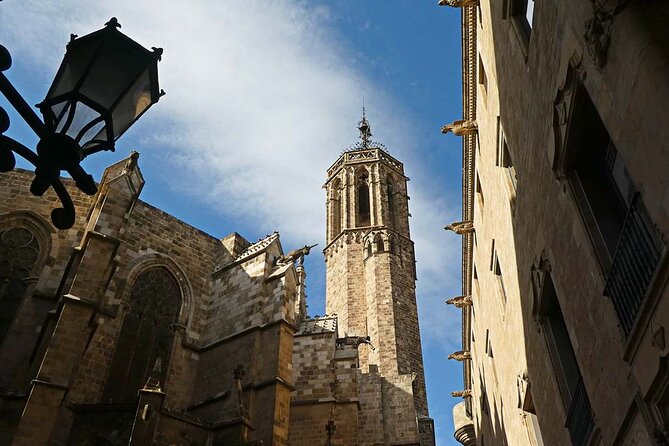
The old monastery of Sant Pau del Camp brings the route back to the year 985, during an invasion of Barcelona. The guide explains war crimes connected with the former convent.
This stop adds an earlier period to a tour that otherwise moves through more recent events. It also reminds you that violence in Barcelona did not begin with modern city life. Religious buildings could become places of refuge, conflict, or suffering during war.
The monastery is an especially effective setting because the site itself carries centuries of religious and civic meaning. The tour information does not include entrance to the monastery, so expect to hear the story from the public area rather than take a formal interior visit.
Plaça George Orwell and the Spanish Civil War
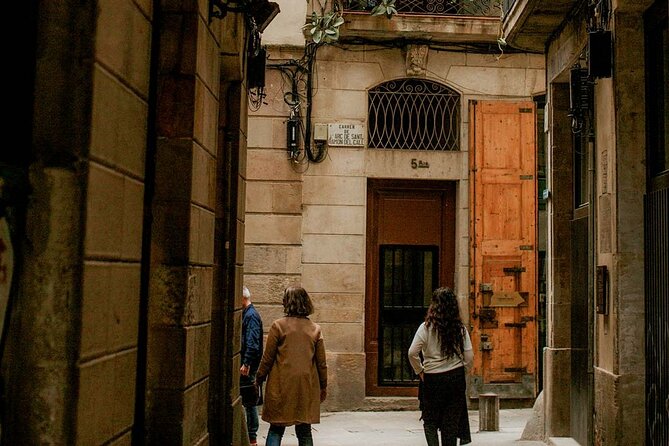
At Plaça George Orwell, the focus shifts to the Spanish Civil War and its crimes. The guide also discusses George Orwell’s Homage to Catalonia, the book based on his experience in Spain.
This stop gives the tour a clear political dimension. Civil war is not presented as distant background. It becomes part of the city’s streets, squares, and memory. The reference to Orwell is useful because his book offers an important outside account of Barcelona during a period of political division and violence.
Plaça George Orwell is also a good reminder that Barcelona’s public spaces can change meaning. A square named for an author associated with war reporting carries a different tone from the old religious sites earlier in the walk.
If your interest in the Civil War is strong, you may wish you had more than ten minutes here. Still, the stop works well as an introduction to the subject, especially if you have not read Homage to Catalonia.
Roman walls, Barcino, and the first documented crime
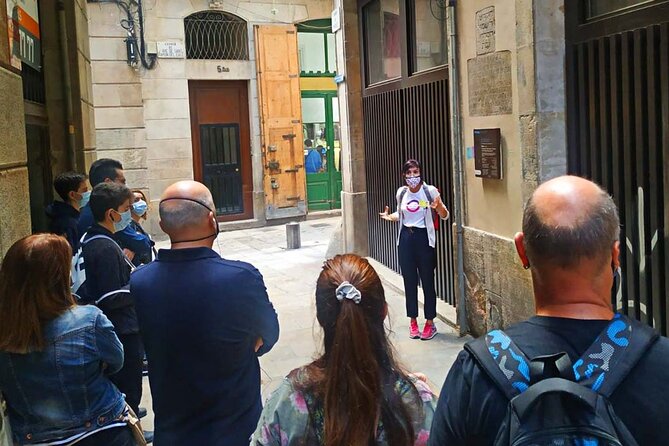
The route next reaches the Muralla Romana, the remains of the Roman walls. Here, Cristina explains the former colony of Barcino and what is described as the first documented crime in Barcelona’s history.
This is one of the tour’s best changes of pace. After stories about prisons, war, and modern urban crime, the Roman walls widen the timeline. You begin to see Barcelona not as one fixed city but as several cities built on top of one another.
The wall also gives you a strong visual anchor. Even if you have already seen it on a sightseeing walk, hearing about it through the subject of crime changes the way you read the stones and the old city boundary.
The stop is free and outdoors. Wear comfortable shoes, since the route crosses several historic streets and squares and involves continuous walking between stops.
Plaça de l’Àngel and public executions
At Plaça de l’Àngel, once the main square of the old city, the guide explains the executions that took place there and the different methods used.
This is likely to be one of the more graphic parts of the tour. Public execution was not hidden from city life. It took place in a central square, where punishment served both as spectacle and warning.
The subject may be uncomfortable, but it helps explain how older authorities used public spaces. A square could function as a market, meeting place, political stage, and execution ground, depending on the period.
You should decide in advance how much detail you want. The tour is built around dark subjects, so sensitive material is not an occasional surprise. Parents and anyone uncomfortable with descriptions of violence should consider that before booking.
A 1934 tragedy on Carrer de l’Allada-Vermell
Carrer de l’Allada-Vermell provides a quieter setting for a tragic family story from 1934. One member of a family died there in circumstances that made the event part of Barcelona’s darker local memory.
The strength of this stop lies in its scale. The story is not attached to a famous battlefield or major monument. It happened on a street that can look like any other old-city lane.
That is a recurring feature of the route. The city’s history is not limited to palaces and churches. Personal tragedies also belong to its streets, and a guide can make those places visible without requiring a museum ticket or formal exhibit.
The 1789 wheat protest at Plaça de Sant Agustí Vell
At Plaça de Sant Agustí Vell, the topic becomes public anger over the price of wheat. The guide recounts a demonstration in 1789.
This stop helps connect crime with economics. A rise in the cost of basic food can turn private worry into collective protest. The story is not simply about disorder. It is about how quickly daily hardship can become a public challenge to authority.
The square also gives the route another kind of setting: a neighborhood space where social pressure could gather. You will see how the tour moves beyond murder cases and famous villains to include protests and the forces that push people toward confrontation.
Portal Nou and the unsolved death of Benvingut Funes
At Carrer del Portal Nou, the guide tells the story of Benvingut Funes, who was killed in 1936 in an exceptionally savage way. The death remains a mystery in Barcelona.
This is the kind of case that will appeal to anyone who likes unresolved history. The lack of a complete answer leaves you with questions rather than a neat ending. It also fits the route’s larger idea: Barcelona’s past contains gaps, rumors, and events that cannot be fully settled by a guide’s explanation.
Again, the street setting matters. You are not placed behind glass with a label and a date. You are standing in the city, trying to picture an event that left little visible trace.
Plaça de Sant Pere and the final wartime stories
The tour ends at Plaça de Sant Pere, near an old convent and the site of further war crimes from 985 involving nuns. This is the final stop and the endpoint of the walk.
Ending here brings the route back to the early medieval period and to the religious institutions introduced at Sant Pau del Camp. It gives the two-hour walk a circular feel, even though the stories span centuries.
The finish is practical as well as historical. Plaça de Sant Pere is close to the Arc de Triomf and Urquinaona subway stops, so you can continue into other parts of the city after the tour. The end point is not back at La Rambla, so plan your next stop accordingly.
Does $254.95 offer good value?
At $254.95 per person, this is expensive for a two-hour walk. The price can make sense if you are booking a private experience for a small group and want a specialist guide rather than a large, general city tour.
The value comes from three things:
- You visit 12 locations across three historic neighborhoods.
- A licensed guide leads the walk and supplies the historical links.
- The route offers a subject you are unlikely to get from a standard Barcelona highlights tour.
The value is weaker if you are traveling alone, watching your budget, or mainly want major monuments. You will not receive snacks, and the listed sites do not include admission to museums or monuments. You are paying for the guide’s time, research, storytelling, and the private format.
The tour information also lists a maximum of 20 people while describing the activity as private, with only your group participating. Clarify the arrangement when booking if group size matters to you.
Practical details for a smoother walk
You receive a mobile ticket, and confirmation is sent within 48 hours, subject to availability. The tour requires a moderate level of physical fitness, so wear shoes suited to steady city walking.
The route is near public transportation at both ends. It begins at Le Méridien Barcelona on La Rambla and finishes at Plaça de Sant Pere, near Arc de Triomf and Urquinaona. Give yourself time to find the exact starting address, since La Rambla has many nearby entrances and busy crossings.
Service animals are allowed. The tour is outdoors and covers public streets and squares, so weather may affect your comfort. The supplied information does not state a fixed time of day, so check the available departure time when reserving.
Free cancellation is available if you cancel at least 24 hours before the start time. Cancellations within 24 hours are not refunded, and changes inside that period are not accepted. If the minimum number of participants is not met and the tour is canceled, you are offered another date or experience, or a full refund.
Who should book this Barcelona crime tour?
I would choose this tour if you have already seen Barcelona’s major sights and want a less familiar way to read the old city. It also suits people who enjoy crime stories, social history, religious history, political conflict, and unresolved cases.
The route can work well for locals, too. Its focus on side streets and overlooked locations offers a different view even if you know the city center. Cristina’s background in art and Barcelona tours also appears useful for anyone who likes wider cultural context rather than isolated crime facts.
I would skip it if you want a relaxed stroll, a family-friendly introduction, or a low-cost activity. The material includes murder, executions, prison misery, war crimes, and disturbing deaths. The two-hour format is efficient, but the subject matter is not gentle.
Should you book it?
Book Crimes, the Tour Through the Dark Side of Barcelona if you want a focused, private walk built around stories that standard sightseeing usually leaves out. The best parts are the links between crime and the city’s wider past, plus Cristina’s ability to make ordinary streets feel historically important.
Think carefully about the price and tone. At $254.95 per person, this is a specialist experience, not a bargain introduction to Barcelona. For the right audience, though, it offers a memorable way to see El Raval, the Gothic Quarter, and El Born through a darker, more revealing lens.
FAQ
Where does the tour begin?
It begins at Le Méridien Barcelona, La Rambla 111, near Carrer del Pintor Fortuny, in Ciutat Vella.
Where does the tour end?
The tour ends at Plaça de Sant Pere in Ciutat Vella.
How long does the tour last?
The tour lasts approximately two hours.
How much does the tour cost?
The listed price is $254.95 per person.
Is this a private tour?
Yes. The activity is described as private, with only your group participating. The tour information also lists a maximum group size of 20.
Who guides the tour?
Cristina Belenguer is identified as the guide associated with this experience. A licensed tour guide is included.
Which neighborhoods does the route visit?
The route passes through El Raval, the Gothic Quarter, and El Born.
Are entrance tickets included?
The listed stops have no admission charge. No separate entrance tickets are included or required for those outdoor stops.
Is the tour suitable for people with limited fitness?
The tour requires a moderate level of physical fitness.
What is the cancellation policy?
You receive a full refund if you cancel at least 24 hours before the start time. Cancellations or changes made within 24 hours are not refunded or accepted.
Just added around Barcelona
- Walking Tour Mysteries and Legends of Barcelona and its Ghosts★ 5.0 · 3 reviews
- Witch Hunt on Montjuïc: Self-Guided Puzzle Quest in Barcelona★ 4.5 · 9 reviews
- Barcelona Ghosts of a Dark Past Gothic Walking Tour★ 5.0 · 55 reviews
- Dark History and Legends Night Walk of Gothic Quarter★ 5.0 · 2 reviews
- The Gothic Trail – Ghosts of Barcelona Exploration Game★ 4.5 · 33 reviews
- Barcelona Ghosts and Legends Gothic Quarter Tour★ 5.0 · 152 reviews
- Barcelona: El Born Ghost Walking Tour.★ 4.0 · 54 reviews
- Barcelona: Ghosts of a Dark Past Walking Tour★ 5.0 · 10 reviews
Barcelona Ghost Tours, compared.
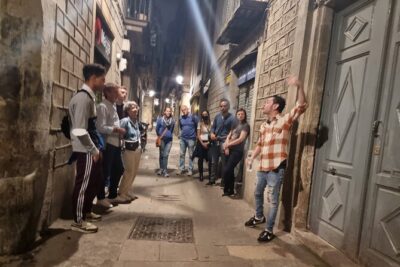
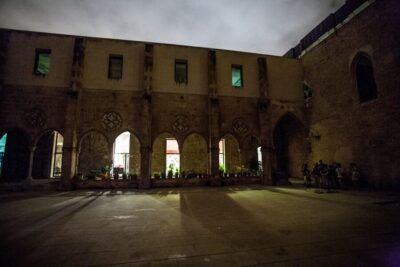
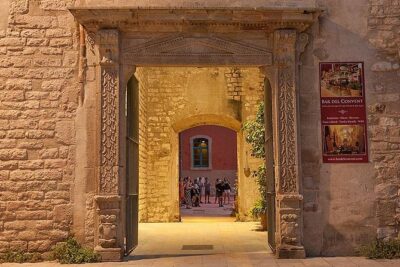

Barcelona Dark History Night Walking Tour With Drinks
Read our review →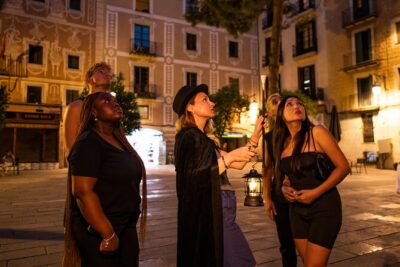
Barcelona Ghosts and Legends Gothic Quarter Tour
Read our review →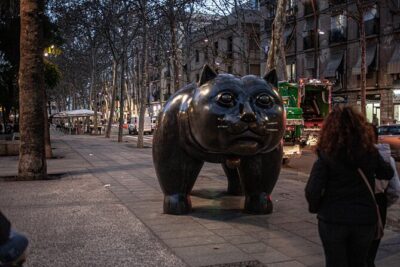
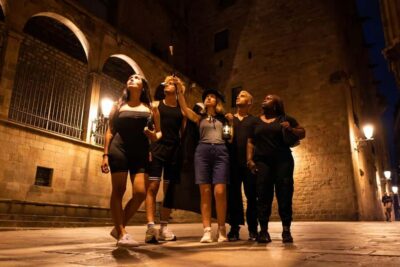
Barcelona Ghosts of a Dark Past Gothic Walking Tour
Read our review →Browse the lists this tour appears in