
REVIEW · CHICAGO GHOST TOURS
Chicago Ghosts & Haunted History Walking Tour
Chicago’s ghost stories begin with real disasters, violent crimes, and places where the city’s past still feels close. This two-hour evening walk starts at the Congress Hotel, often called Chicago’s most haunted hotel, then traces a route through some of downtown’s grimmest chapters.
I like the small group size of 18 people, which should make it easier to hear the guide and ask questions. I also like the mix of supernatural tales with documented history, from H. H. Holmes to the 1903 Iroquois Theatre Fire and the S.S. Eastland disaster.
The main drawback is that the stops are brief, usually about five minutes each in the stated itinerary. If you want long visits inside historic buildings or a detailed architectural tour, this is not the right choice. It is a walking story hour with a dark Chicago theme.
Key points to know before booking
- Begin at Chicago’s most haunted hotel: The Congress Plaza Hotel provides an atmospheric starting point for the evening.
- Walk through several kinds of tragedy: The route covers serial crime, theater disaster, a shipwreck, prison breaks, and the old red-light district.
- See the site of Death Alley: West Couch Place was where victims of the Iroquois Theatre Fire were laid out after the disaster.
- Finish at the Chicago River: The final meeting point is the Clark Street Bridge, not the Congress Hotel.
- Expect a compact group: The tour accepts a maximum of 18 people, with mobile ticketing and free cancellation up to 24 hours before departure.
- Plan ahead: The tour is booked an average of 32 days in advance, so last-minute spots may not be easy to find.
Why Chicago’s ghost stories work best after sunset
Chicago is famous for grand architecture, deep-dish pizza, and a long record of hard living. This tour focuses on the darker side of that story, but it does not rely only on floating spirits and creaking doors. Its strongest material comes from events that really happened.
That mix matters. You hear about ghosts, but you also learn how fire safety failed, how crowded public events could turn deadly, how organized crime and prostitution shaped downtown, and how famous killers moved through the city. The supernatural angle gives the walk its mood. The history gives it weight.
The tour is scheduled around sunset, which suits the subject without requiring you to spend a whole night on it. In about two hours, you move from the Congress Hotel through downtown streets and finish near the river. You get an evening activity with a clear beginning and end, rather than a long, sprawling walk.
I would think of this as a history tour with a spooky frame, not as a serious paranormal investigation. The included material promises a paranormal expert guide and chilling stories about two of America’s infamous serial killers. H. H. Holmes is the named figure in the route description, while the second killer is not identified in the available details.
More heritage tours in Chicago:
- Chicago: Historic Gangsters & Ghosts Night Cruise
★ 3.9 · 45 reviews - The Devil in the White City: A Haunting History Tour
★ 4.5 · 17 reviews - Prairie Avenue Haunted History Tour and Ghost Hunt
★ 5.0 · 11 reviews
The Congress Hotel gives the tour its proper opening
The meeting point is the Congress Plaza Hotel and Convention Center at 520 South Michigan Avenue. The building is known for unsettling stories and ghostly legends, and the tour uses that reputation to set the tone from the first minutes.
You should expect the guide to explain why the hotel is considered one of Chicago’s most haunted places. The information provided does not promise a room visit, overnight investigation, or private access inside the hotel, so you should treat it as the starting location and historical backdrop rather than assume an indoor hotel tour.
That distinction is useful. A dramatic old building can create expectations of locked rooms and paranormal equipment, but this experience is primarily a guided city walk. The real appeal is hearing how the hotel fits into Chicago’s larger story before heading onto the streets.
The Congress Hotel is also a practical place to begin because it sits on South Michigan Avenue, near public transportation. Confirmation arrives when you book, and the mobile ticket means you do not need to print a paper voucher. Still, arrive with enough time to locate the meeting point. The tour ends several blocks away at the Clark Street Bridge, so you should note the return route before setting out.
The Iroquois Theatre Fire and the Nederlander Theatre
One of the most serious stops is the James M. Nederlander Theatre, the site connected with the 1903 Iroquois Theatre Fire. The disaster killed 602 patrons, making it one of the most important and painful stories on the walk.
The stop is listed at about five minutes, with no admission fee. That tells you what kind of visit to expect: the guide uses the location as a stage for a concise explanation rather than taking you into a museum or theater exhibit.
This is where the tour’s historical side becomes especially valuable. A ghost story can be entertaining, but a mass tragedy demands more care. The fire shows how a night of theater could become a fatal trap, and why public safety rules matter. You are not just hearing about a haunted address. You are standing near a place linked to a disaster that changed how people remembered Chicago.
The short time here may be enough for the main story, but it will not satisfy anyone hoping for a full account of the fire, its causes, and its aftermath. If that event is your main reason for booking, you may want to do extra reading before or after the walk. The tour gives you a strong introduction, not a full museum lecture.
Death Alley puts the disaster into physical space
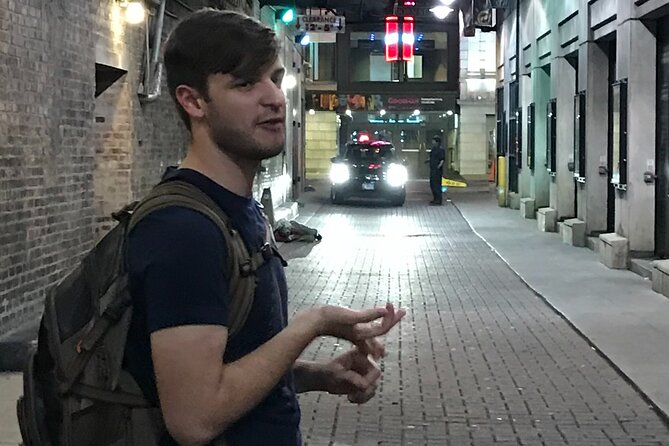
West Couch Place is also known as Death Alley. After the Iroquois Theatre Fire, bodies were stacked six high here. That detail is grim, direct, and difficult to forget.
The stop helps connect a broad historical event to a specific street. The theater fire was not only something that happened inside a building. Its aftermath spilled into the surrounding city, and this narrow location became part of the tragedy.
Again, the listed stop lasts about five minutes. That brevity can work well for atmosphere, since you are not standing in one place for too long, but it also means the guide must tell the story with focus. A good guide has to explain the human cost without turning the victims into mere props for a spooky evening.
This is one of the points where I would pay close attention to tone. The tour is designed to be a fun night out, yet the fire and its aftermath are serious subjects. The strongest version of the experience will make room for both the eerie mood and the respect these stories require.
More walking tours in Chicago:
- Chicago: Gangsters and Ghosts Walking Tour
★ 5.0 · 7,155 reviews - Chicago: Gangsters and Ghosts Guided Walking Tour
★ 4.7 · 1,697 reviews - Haunted Chicago Booze and Boos Ghost Walking Tour
★ 5.0 · 266 reviews - Chicago: Ghosts & Hauntings of the Windy City Walking Tour
★ 4.4 · 45 reviews
The Chicago River and the S.S. Eastland disaster
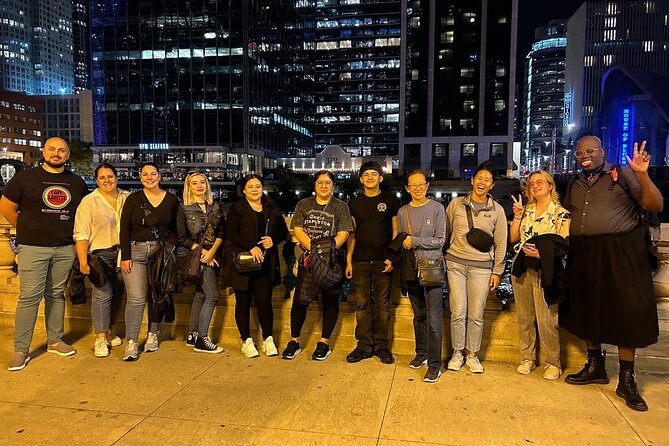
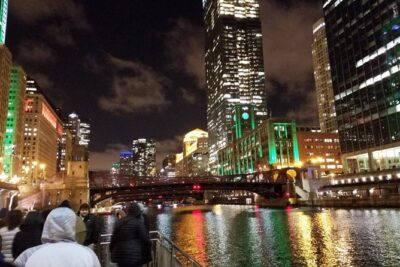
At the Chicago River, the guide covers the S.S. Eastland disaster. The passenger tour ship rolled over while docked in 1915, killing more than 800 people.
The location is important because the event happened while the ship was still at the dock. You do not need a storm at sea to create a maritime catastrophe. The river becomes part of the story, and the setting gives you a physical connection to one of Chicago’s worst disasters.
The stop is also listed at about five minutes and has no admission charge. You will hear the account outdoors, alongside a working downtown waterway, rather than enter a dedicated memorial site. That keeps the tour moving and gives the evening a steady rhythm, but it limits the amount of detail the guide can provide.
I like the choice of this stop because it broadens the tour beyond murders and haunted hotels. The S.S. Eastland story is about crowds, public trust, and sudden loss. It shows that Chicago’s ghost lore often begins with people who died in preventable or unexpected disasters.
H. H. Holmes and Chicago’s criminal past
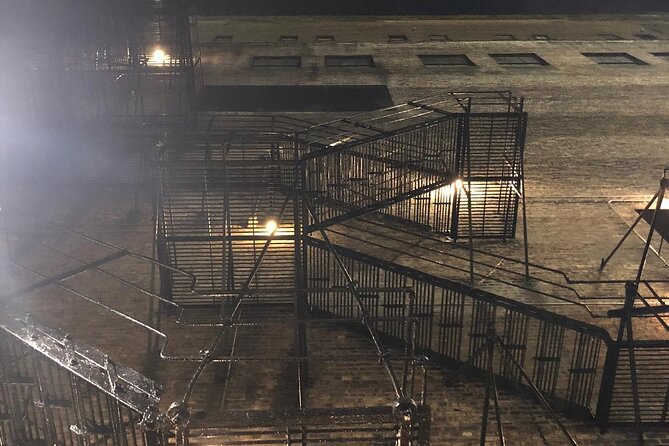
The tour follows streets associated with H. H. Holmes, described as Chicago’s first serial killer. You hear about where he wandered as he stalked his victims and how his crimes became part of the city’s darker reputation.
Holmes is a natural fit for this tour because his name is closely tied to Chicago’s late-19th-century crime history. The route does not promise entry to a specific Holmes building, so you should expect location-based storytelling as you walk through downtown streets.
This section will likely appeal most to people who enjoy true crime. It also gives the guide a chance to explain how a killer became part of popular legend. I would listen for the difference between documented events and later ghost lore. That distinction helps you enjoy the drama without accepting every frightening detail as established fact.
The tour also includes stories of two infamous American serial killers, although only Holmes is identified in the supplied details. If the identity of the second killer matters to you, ask the provider before booking. Do not assume the tour is devoted only to Holmes.
The Everleigh Club and Chicago’s old red-light district
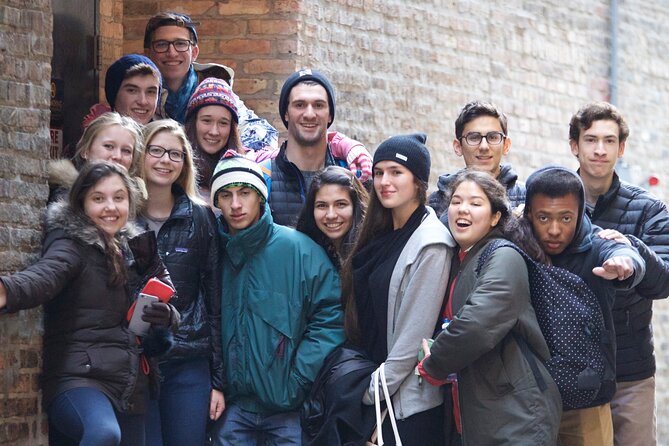
At 2131 South Dearborn Street, the guide discusses the Everleigh Club, a high-class brothel that operated in the early 1900s. The stop offers a look at the city’s old red-light district and the social world that surrounded it.
This part of the walk is useful because Chicago’s past was not shaped only by respectable civic buildings and famous businessmen. Prostitution, vice, wealth, and exploitation were also part of urban life. The Everleigh Club story can show how a house of ill-repute attracted attention and fit into the city’s wider social order.
The stop is listed at about five minutes, so expect a sharp overview rather than a full social history of the district. The address is a story point on the route, not a promise of an open historic interior. You will want comfortable shoes and a willingness to keep moving.
This is also one of the more distinctive parts of the experience. Many Chicago tours focus on architecture, food, or the Loop’s famous buildings. The Everleigh Club gives this walk a less polished, more candid look at the city’s past.
Downtown prison breaks add another strand of suspense
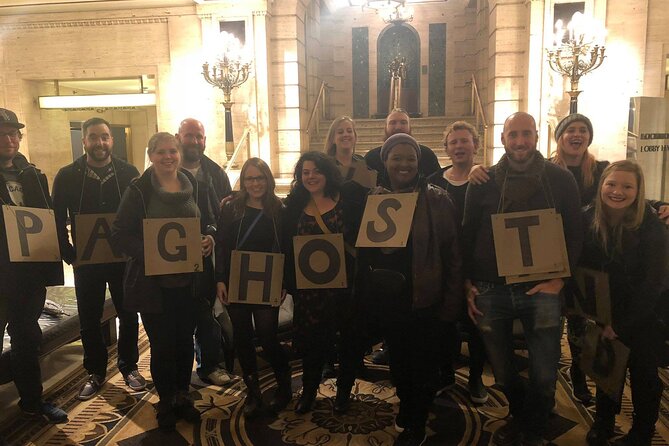
The route includes stories about downtown prison breaks, though the supplied details do not name a particular jail, escape, or date. That means the guide’s storytelling is important here. You can expect another look at crime and law enforcement in Chicago, but you should not book this tour expecting a dedicated prison museum visit.
This topic fits neatly between the more famous stories. It keeps the walk from feeling like a list of disasters and serial killers, adding a little action and suspense to the route. It also helps show that the city’s criminal history involved institutions, inmates, and daring escapes, not just notorious individuals.
Since this section is not tied to a named stop, the amount of time devoted to it may vary. If you are especially interested in Chicago’s prisons, ask the guide what the tour covers when you meet. The format allows for questions, particularly in a group capped at 18 people.
Guide style matters more than special effects
The guide can make or break a walking tour built around stories. Here, the advertised guides are paranormal experts, and Kelly is specifically praised for being fun and well informed. That combination is worth noting because the subject could easily become either too theatrical or too dry.
You want a guide who can tell a frightening story, explain the historical setting, and know when to treat a tragedy with seriousness. Kelly’s reported style suggests an energetic presentation, but guide assignments can change, so you should not assume she will lead every departure.
The small maximum group of 18 is a real advantage. A guide can speak to the whole group without needing a microphone, and you have a better chance to ask about a location or story. The tradeoff is that the tour may sell out, especially since it is booked an average of 32 days in advance.
The tour promises a fun night out, and that makes it a good fit for couples, friends, and families with older children who enjoy spooky subjects. It may be less suitable for anyone who dislikes stories about murder, mass death, prostitution, or other disturbing events.
What $49 buys you
At $49 per person, this is not the cheapest way to walk downtown Chicago. You are paying for a guide, a planned route, and two hours of narration rather than admission to attractions. The listed stops have free admission, so the value depends almost entirely on the guide’s storytelling and the quality of the route.
I think the price can make sense if you want a ready-made evening activity and would otherwise spend time researching Chicago’s darker history yourself. You get several subjects in one walk, including the Congress Hotel, H. H. Holmes, the Iroquois Theatre Fire, the S.S. Eastland disaster, Death Alley, the Everleigh Club, and prison-break stories.
The value is weaker if you mainly want to enter historic buildings, inspect paranormal equipment, or spend a long time at each site. The itinerary gives most stops only five minutes, and there is no stated museum admission or private access.
Because the tour ends at the Clark Street Bridge, you can also use the finish as a practical point for continuing your evening near the river. The tour does not include meals, drinks, or transportation, so budget for those separately.
Walking, timing, and practical planning
The tour lasts about two hours and follows city streets from the Congress Plaza Hotel to the Clark Street Bridge. Public transportation is nearby, and most people can participate. Service animals are allowed.
The information does not state the exact walking distance, accessibility of every street, or the precise start time. If you have mobility concerns, contact the provider before booking rather than assume every section will be easy. You will be outdoors for the route, so dress for Chicago’s weather and wear shoes suited to walking.
A mobile ticket keeps arrival simple. Confirmation is provided at booking, and the group size is limited to 18. Since the experience is often reserved well ahead, I would book early if the date matters, especially during a busy Chicago visit.
You can cancel for a full refund up to 24 hours before the start time. Cancellations or changes made less than 24 hours ahead are not accepted for a refund, and the cut-off follows Chicago local time.
Who should book this Chicago ghost walk?
I would recommend it to you if you like true crime, local history, and ghost stories in equal measure. It works especially well for a first visit when you want an evening activity that introduces several parts of downtown without requiring a full day.
It is also a good choice if you prefer a guide-led experience to reading plaques or finding historic locations on your own. The route connects events that might otherwise feel scattered, and the guide supplies the context that turns ordinary streets into meaningful places.
I would hesitate if you want a polished paranormal attraction with actors, elaborate effects, or guaranteed access inside haunted buildings. Nothing in the supplied details promises those features. I would also think twice if graphic accounts of fires, mass death, serial murder, or prostitution are not your idea of a pleasant night out.
Should you book the Chicago Ghosts & Haunted History Walking Tour?
Book it if you want a compact, story-driven look at Chicago’s unsettling side. The strongest reasons are the well-chosen route, the mix of documented tragedy and ghost lore, the small group limit, and the chance to hear a lively guide such as Kelly.
Skip it if you need long site visits, indoor attractions, or a strictly factual history lecture. At $49, the tour earns its value through narration rather than admission tickets. For the right audience, that is a fair trade: you spend two hours walking downtown while Chicago’s worst stories unfold around you.
FAQ
Where does the Chicago Ghosts & Haunted History Walking Tour begin?
The tour begins at the Congress Plaza Hotel and Convention Center, 520 South Michigan Avenue, Chicago, Illinois 60605.
Where does the tour end?
The tour ends at the Clark Street Bridge on North Clark Street, Chicago, Illinois 60654.
How long does the tour last?
The walking tour lasts approximately two hours.
How much does the tour cost?
The listed price is $49 per person.
What locations are included?
The route includes the Congress Hotel, the James M. Nederlander Theatre, the Chicago River, West Couch Place, and 2131 South Dearborn Street, associated with the Everleigh Club.
What historical subjects are covered?
The tour covers H. H. Holmes, the Iroquois Theatre Fire, the S.S. Eastland disaster, Death Alley, the Everleigh Club, Chicago’s old red-light district, and downtown prison breaks.
How large is the group?
The tour has a maximum of 18 participants.
Can I cancel for a refund?
Yes. You can cancel at least 24 hours before the scheduled start time for a full refund. Cancellations or changes made less than 24 hours before the start time are not accepted for a refund.
Just added around Chicago
- Prairie Avenue Haunted History Tour and Ghost Hunt★ 5.0 · 11 reviews
- Embers of the Windy City: Chilling Chicago Ghost Tours★ 4.5 · 121 reviews
- The Devil in the White City: A Haunting History Tour★ 4.5 · 17 reviews
- Lincoln Park Hauntings Ghost Investigation Tour★ 5.0 · 43 reviews
- Haunted Ghosts & The Chicago Outfit Segway Tour★ 4.5 · 38 reviews
- Ghosts of Chicago Family Friendly Ghost Tour★ 4.0 · 12 reviews
- Chicago Hauntings Original Ghost Bus Tour★ 4.0 · 147 reviews
- Haunted Chicago Exploration Game and Tour★ 4.0 · 6 reviews
Chicago Ghost Tours, compared.
Medieval Torture Museum Ticket with Audio Guide and Ghost Hunting
Read our review →
Haunted Chicago Booze and Boos Ghost Walking Tour
Read our review →
Embers of the Windy City: Chilling Chicago Ghost Tours
Read our review →
Ghosts & Hauntings of the Windy City Walking Tour
Read our review →Browse the lists this tour appears in