
REVIEW · DUBLIN GHOST TOURS
Macabre, Ghostly & Bloody Walking Tour
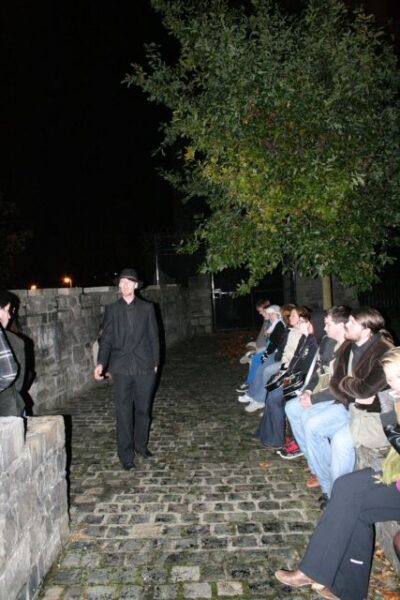
Dublin’s darker past is hiding in plain sight. On this two-hour evening walk, you’ll hear about mummified corpses, Victorian grave robbers, plague cages, Viking rituals, and a man-eating rat attack, all tied to streets and buildings in the city center. I like the way the tour uses real places rather than treating Dublin as a stage set for spooky tales.
I also like the compact route and the small maximum of 25 people. Guides Peter and Rob have been praised for bringing in wider Irish history, local tips, humor, and plenty of energy. The main consideration is the subject matter: this tour deals with execution, disease, murder, death, and disturbing folklore, so it may not suit younger children or anyone seeking a gentle evening stroll.
Key points to know before you book

- The Spire is the meeting point: Start beside Dublin’s 120-meter landmark on O’Connell Street at 6 p.m.
- Eight dark-history stops fill about two hours: The route includes the GPO, Wolfe Tone Park, Oxmantown, Father Matthew Bridge, St. Audoen’s Church, Fishamble Street, and St. Michan’s Church.
- The stories are tied to actual landmarks: You hear about Cuchulainn at the GPO, grave robbers near Wolfe Tone Park, and plague-era quarantine cages at St. Audoen’s.
- The tone mixes horror with humor: Guides Peter and Rob have been praised for lively delivery, general Dublin history, and useful local recommendations.
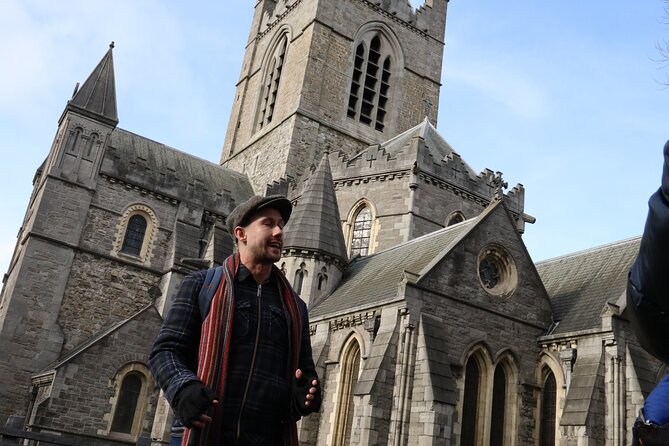
- The tour ends near Dublin’s nightlife core: The stated end point is Fishamble Street, beside Christ Church Cathedral and the Temple Bar district.
- The price is modest for a guided city walk: At $20.43 per person, you are paying mainly for interpretation and storytelling rather than attraction admissions.
Why Dublin’s macabre side works so well on foot
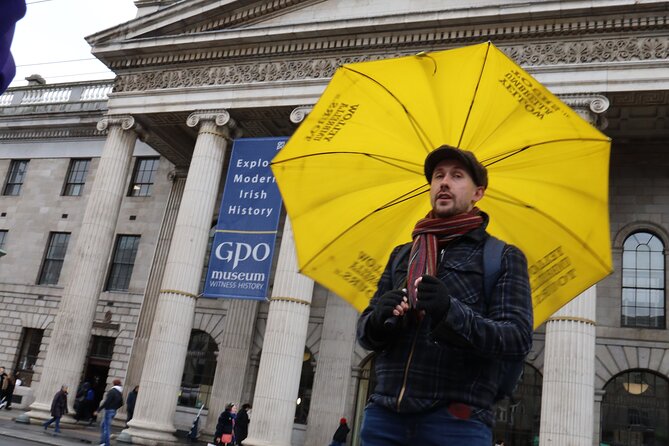
Dublin is a good city for a dark-history walk because the old stories are linked to ordinary streets. You are not simply hearing a list of crimes in a lecture room. You move from O’Connell Street toward the older quarters around the Liffey, where legends, religion, trade, war, disease, and punishment overlap.
The tour also avoids relying on one kind of story. Some stops draw from medieval legend, some from Viking-era history, some from Victorian crime, and others from the physical remains of old churches and city walls. That variety should keep the walk from feeling like eight versions of the same ghost story.
I like that the guide also brings in general Irish and Dublin history. One guide, Peter, has been praised for explaining more than just the grim material, while Rob has been described as enthusiastic, funny, and captivating. That matters because macabre stories can become shallow if they are told only for shock value. Context gives them weight.
The experience is offered in English and lasts about two hours. At roughly 15 minutes per stop, the pacing is clear and manageable, though you should expect a steady walking tour rather than long visits inside buildings. The supplied details identify free admission at every stop, so the $20.43 cost covers the professional guide and the organized route, not entry tickets.
More walking tours in Dublin:
- Haunted Dublin Walking Tour
★ 5.0 · 550 reviews - Dublin’s Haunted History Walking Tour
★ 4.3 · 345 reviews - Hidden Dublin: Haunted History Walking Tour v2.0 2026
★ 4.5 · 188 reviews
Meeting beside the Spire on O’Connell Street
The walk begins beside the Spire, the tall steel sculpture rising 120 meters above central Dublin. It is an easy landmark to identify, and meeting here gives the guide a useful starting point for explaining the city’s modern center before leading you into older and darker stories.
This first stop lasts about 15 minutes and has no admission fee. Since it is an outdoor meeting point on O’Connell Street Upper, arrive ready to spot the guide and the rest of the group rather than expecting a ticket office or indoor waiting area.
The Spire itself is not a macabre attraction. Its value here is practical and geographical. It places you in the middle of present-day Dublin, then sets up the contrast with the violence, superstition, and harsh public life that shaped earlier versions of the city.
The GPO and the death of Cuchulainn
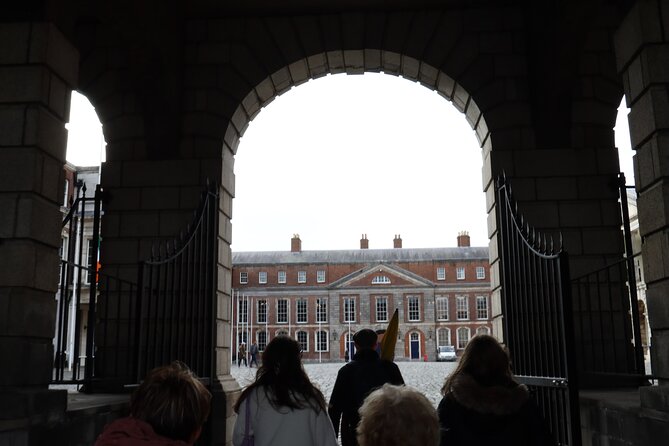
The next stop is An Post General Post Office, one of Dublin’s best-known public buildings. Here, the guide points out a statue and tells the story of the death of Cuchulainn, the legendary Irish warrior.
This is an important change of mood. The tour moves from modern Dublin into Irish mythology, where heroic stories often contain grim endings and unsettling images. If you know little about Cuchulainn, the stop gives you a compact introduction to a major figure in Irish legend. If you already know the story, hearing it at a central Dublin landmark adds a strong sense of place.
The visit lasts around 15 minutes and remains outside, with no admission ticket required. Do not expect a full tour of the GPO interior. The focus is the statue, the surrounding setting, and the guide’s telling of the story.
Wolfe Tone Park, grave robbers, and Arthur Guinness
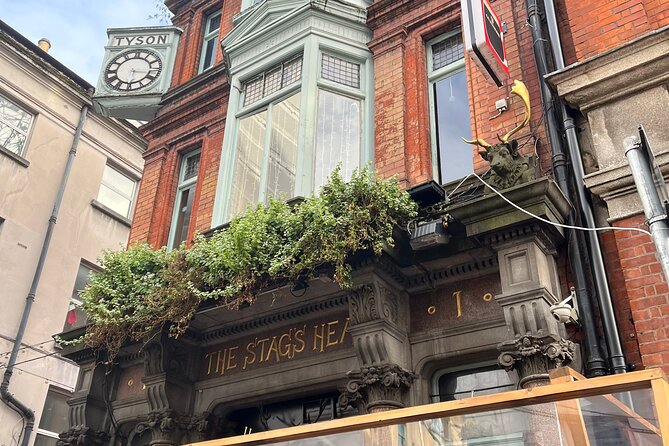
At Wolfe Tone Park, the subject turns toward Victorian-era grave robbers. This is one of the more useful stops for understanding how fear and poverty shaped old Dublin. Grave robbing was not just a Gothic fantasy. It was linked to the demand for bodies for medical study, making cemeteries places of anxiety as well as mourning.
The stop also brings in Arthur Guinness and the story of his wedding venue. That detail helps broaden the experience beyond death and crime. Dublin’s past was made by working people, religious communities, business families, criminals, and public figures, often in the same few streets.
Again, you spend about 15 minutes outside. The short timing means the guide will give you the key story rather than a full lecture on Victorian medicine or the Guinness family. I see that as a benefit on a walking tour, provided you want a lively overview instead of academic detail.
A few more ghost walks around Dublin worth a look
- Dublin Ghost Bus Tour with Professional Actors
★ 4.5 · 949 reviews - From Dublin: Gravedigger Ghost Bus Tour
★ 4.4 · 546 reviews - Gravedigger 2-Hour Ghost Bus Tour From Dublin
★ 4.5 · 501 reviews - Dublin: North Quay Guided Ghost Walk
★ 4.2 · 144 reviews
Oxmantown and the city’s Viking past
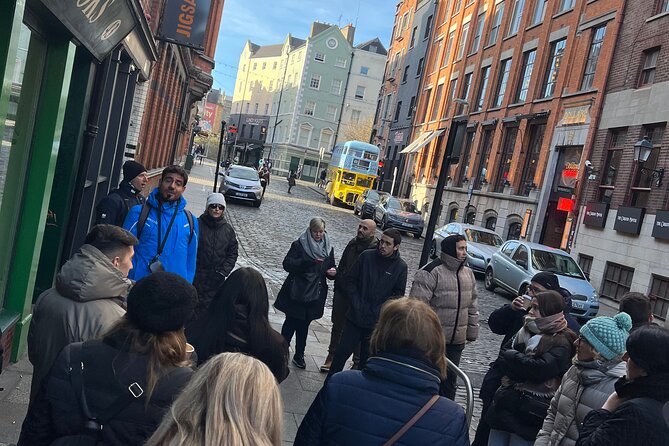
Near the old fruit and vegetable market in Oxmantown, the guide explains the Viking presence in this part of Dublin. The story then moves into the gorier side of Viking ritual.
This stop adds early medieval history to the walk. Dublin was shaped by trade, settlement, conflict, and contact between different peoples, and the Viking chapter is central to that story. The ritual material may be unsettling, but it gives you a sense of why the city’s earliest past can feel so remote from the polished streets you see today.
The old market setting also matters. Even without entering the building, you are standing near a place connected with food and commerce, while hearing about an earlier period when violence and ritual were woven more closely into public life.
The information provided does not say that you enter the old market or visit an archaeological display. Plan on an outdoor storytelling stop of about 15 minutes.
Father Matthew Bridge and the man-eating rats
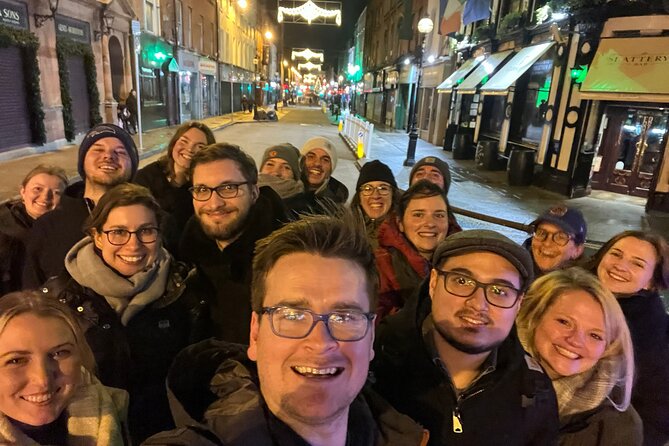
At Father Matthew Bridge, the tour tells the story of a soldier devoured by man-eating rats. This is one of the more startling tales on the route, and it is likely to appeal to anyone who enjoys Dublin folklore with a grim twist.
The stop also shows how the tour uses bridges and streets as anchors for stories. You are not being taken to a formal haunted-house attraction. The guide builds atmosphere from the location itself, then adds a tale that may sit somewhere between recorded history and local legend.
That blend is worth keeping in mind. The experience is called macabre, ghostly, and bloody, so the storytelling may include folklore alongside historical material. If you need every story separated clearly into documented fact and legend, ask the guide when a tale is traditional or disputed.
St. Audoen’s Church and the old quarantine cages
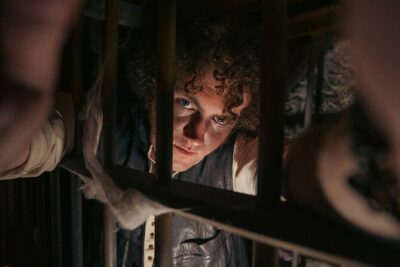
St. Audoen’s Church brings the Black Death into the walk. You see the quarantine cages at the old city walls and hear how these spaces were connected with disease control.
This is one of the route’s most valuable stops because it links a frightening story to a surviving physical feature. Disease in medieval cities was not an abstract danger. It affected movement, trade, worship, burial, and daily contact, and quarantine measures could be severe.
The old cages also give the tour a more visual moment. Many dark-history walks depend almost entirely on the guide’s words. Here, you have a structure or remnant to look at while hearing the story, which can make the past easier to picture.
You spend around 15 minutes here, with no admission ticket listed. The tour does not promise a full guided visit inside St. Audoen’s Church, so treat this as an exterior stop focused on the old walls and quarantine story.
Fishamble Street and the brothel keeper burned at the stake
On Fishamble Street, the guide tells the story of an infamous brothel keeper and her death by fire at the stake. This is among the tour’s bleakest episodes, and it brings questions of punishment, gender, sexuality, and public spectacle into the route.
The story is not simply a crime tale. Execution by fire tells you something about how authorities once used punishment to make an example of a person. Fishamble Street also helps connect the macabre material to the social life of old Dublin, where trade, entertainment, religion, and vice could exist close together.
This stop is listed as lasting about 15 minutes. Fishamble Street is also the stated end point, beside Christ Church Cathedral and the Temple Bar district. The tour details separately list St. Michan’s Church as the final stop, so I would confirm the exact walking order and finishing point with the guide on the day. Either way, you finish close to restaurants, pubs, and other central Dublin sights.
St. Michan’s Church, mummies, and a legless serial killer
The St. Michan’s stop supplies the most recognizable horror imagery on the route. You hear about the mummified corpses in the church cellar and the legless serial killer.
Mummies give this section a physical, almost gothic quality that the earlier folklore stories may not have. The serial-killer story adds another layer of crime and fear. Together, they explain why St. Michan’s is such a natural setting for a macabre walk.
The supplied details do not say that entry into the cellar is included, so you should not assume you will go underground or see the corpses directly as part of this experience. The stop is described as a place where you learn the stories. That distinction matters if your main goal is a church or crypt visit rather than an outdoor guided walk.
How much value do you get for $20.43?
At $20.43 per person, this is priced as an accessible guided walk rather than a premium attraction. Since no admission fees are included or required at the listed stops, the value rests on the guide’s research, delivery, route planning, and ability to connect scattered stories.
I think the price is fair if you enjoy city history told through people and places. You receive about two hours of live interpretation, eight themed stops, and an introduction to parts of Dublin that a standard sightseeing route may skip. You are also paying for a guide who can answer questions and add wider Irish history, as Peter did for one small group.
The value is less clear if you want major indoor attractions, extended visits, or dramatic special effects. This is a walking tour, not a theatrical haunted experience. The atmosphere comes from Dublin’s streets, old walls, churches, bridges, and the guide’s storytelling.
The maximum group size is 25. That is large enough to create a social group but small enough that the guide should be able to keep the party together. One particularly useful detail is that the tour can still operate with a very small booking, based on the experience of a guest who found Peter professional and helpful even when the group consisted of just one person.
Timing, walking comfort, and the evening setting
The start time is 6 p.m., which suits anyone who wants to use the day for museums or other sightseeing before shifting to darker stories. The route takes place in the evening, but the information provided does not promise special lighting, indoor shelter, or a vehicle transfer.
Wear comfortable shoes and prepare for outdoor walking between stops. The route covers central streets, bridges, parks, and church areas, with about 15 minutes devoted to each location. Most people can take part, and service animals are allowed. The tour is near public transportation, which makes the central start and finish practical.
The end near Christ Church Cathedral and Temple Bar is useful for planning dinner or another evening activity. The stated end point is Fishamble Street, so use that as your practical reference, while confirming the precise final stop because St. Michan’s is also listed at the end of the route.
Who will enjoy this Dublin walk?
I would choose this tour if you like history with a dark edge, local legends, old crimes, and stories that make familiar streets look different. It should suit first-time visitors who want an unusual introduction to central Dublin, as well as repeat visitors looking for material beyond the usual pubs, literary landmarks, and major museums.
It is also a good fit if you prefer a guide-led experience with a clear route and a modest price. The strongest praise has focused on the guides’ energy, humor, general historical knowledge, and useful recommendations, so the quality depends heavily on the person leading your group.
I would think twice if you dislike stories about execution, disease, corpses, murder, or bodily harm. The title is a fair warning. Families should also consider the subject matter carefully, since no specific child-friendly version is offered.
Should you book the Macabre, Ghostly & Bloody Walking Tour?
Book it if you want Dublin’s old streets explained through its strangest and harshest stories. The tour offers a good spread: Cuchulainn at the GPO, grave robbers at Wolfe Tone Park, Viking ritual, plague controls, a notorious brothel keeper, mummies, and a serial killer.
The best reason to choose it is the combination of real locations and lively guiding. Peter and Rob have been praised for making the walk funny, fascinating, and broader than a string of horror tales. At $20.43, the cost is reasonable for two hours of professional storytelling.
Skip it if you want interior access, gentle family sightseeing, or a strictly factual history lecture. For everyone else, especially those with an appetite for Dublin’s unsettling side, it is a practical and distinctive way to spend an evening.
Free cancellation is available up to 24 hours before the 6 p.m. start time. A confirmation is provided at booking, and changes or cancellations made within 24 hours are not accepted for a refund.
FAQ
Where does the tour start?
The tour starts beside the Spire on O’Connell Street Upper in North City, Dublin.
What time does the tour begin?
The start time is 6 p.m.
How long does the walking tour last?
The tour lasts approximately two hours.
What language is the tour offered in?
The tour is offered in English.
How many people can join the tour?
The maximum group size is 25 people.
Where does the tour finish?
The stated end point is Fishamble Street in Wood Quay. The finish is beside Christ Church Cathedral and the Temple Bar district.
Can I cancel for a full refund?
Yes. You can cancel for a full refund if you do so at least 24 hours before the experience start time.
Just added around Dublin
- Legends, Ghosts and Ghouls Walking Tour Dublin★ 4.5 · 16 reviews
- North Quay Ghost Walk Tour★ 4.5 · 91 reviews
- Dublin Ghost Hunt Exploration Game and Tour★ 4.0 · 34 reviews
- Hidden Dublin: Haunted History Walking Tour v2.0 2026★ 4.5 · 188 reviews
- Dublin: North Quay Guided Ghost Walk★ 4.2 · 144 reviews
- Dublin: Macabre History Walking Tour★ 4.9 · 95 reviews
- Dublin walking tour: ghosts & haunted places★ 4.9 · 55 reviews
- Dublin: Legends, Ghosts & Ghouls Walking Tour★ 4.6 · 7 reviews
Dublin Ghost Tours, compared.

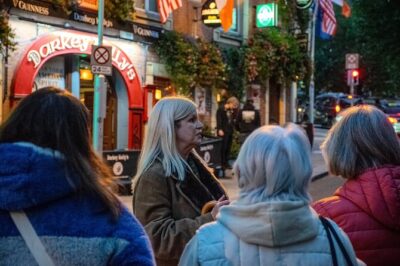
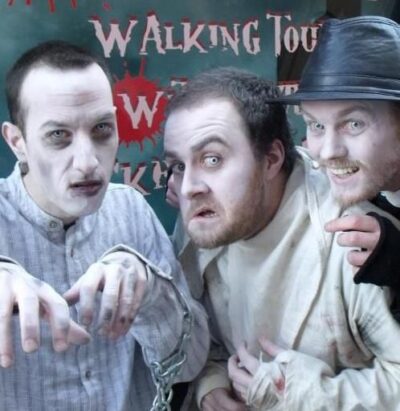
Hidden Dublin: Haunted History Walking Tour v2.0 2026
Read our review →
Browse the lists this tour appears in