

REVIEW · DARK HISTORY & TRUE CRIME TOURS
Evening Tour: The Dark Side of Brussels
The most interesting thing about this Brussels walk is its definition of dark. You will hear about torture, murder, suicide, punishment, political power, and the less flattering chapters of the city’s past. But you will also see handsome squares, Gothic churches, old streets, and the Marolles after the daytime crowds thin out. This is a history walk with grim edges, not a tour of Brussels nightlife or modern crime.
I like the route for two reasons: it connects major sights with corners you might otherwise skip, and the English-speaking guides bring plenty of personality. Guides such as Sebastian, Rahim, David, Ann Marie, Ian, and Gunny have been praised for humor, clear storytelling, and a willingness to answer questions. I also like the price: at $3.62 per group of up to six, it is an excellent way to get your bearings. Plan to tip well, since the low booking price does not reflect the guide’s full earnings.
The main catch is the title. Several parts of the walk feel more like an evening history tour than a concentrated tour of Brussels’ dark side. The route can also involve more walking than expected, and one account described a guide who was difficult to locate at the crowded meeting point.
Key points to know before you book
- Dark history, not a horror show: Expect stories about punishment, torture, murder, suicide, and political power, mixed with ordinary city history.
- A long central Brussels route: The walk links Grand Place, Sablon, the Palais de Justice, Place du Jeu de Balle, and the Marolles.
- Guides make the difference: Sebastian, Rahim, David, Ann Marie, Ian, and Gunny have all been singled out for strong delivery and entertaining stories.
- A very low booking price: The listed cost is $3.62 per group of up to six, so bring euros for a fair tip.
- Expect roughly two hours on foot: Some people found it closer to 1.5 hours, while others said the guide continued well past two hours.
- Finish in the Marolles: The walk ends at Kapellekerk, near Rue des Ursulines, not back at Grand Place.
What the Dark Side of Brussels tour really offers
The name suggests a close look at sinister legends, crime, and the city’s seedier corners. In practice, you get a broader package: Brussels landmarks explained through unusual facts, unpleasant episodes, political structures, religion, punishment, and old urban life.
That mix is a strength if you want more than a standard sightseeing script. A guide may tell you why a building matters, then add the unsettling story attached to it. The experience is less about shock value and more about seeing familiar places with a different set of questions.
I would not book this expecting a tightly focused true-crime walk. If your main interest is murder cases, haunted buildings, or modern Brussels nightlife, the title may set the wrong expectation. If you like city walks with odd facts and serious historical material, the format works much better.
The overall rating is 4.7 from 435 ratings, with 93 percent recommending it. That strong result reflects the best guides, but the uneven comments also matter. Your experience will depend partly on who leads the group and how closely the planned route is followed.
More dark history tours in Belgium:
- Evening Tour: The Dark Side of Bruges
★ 5.0 · 956 reviews - Evening Tour of the Dark Side of Gent
★ 5.0 · 646 reviews - Evening Walking Tour: The Dark Side of Antwerp
★ 5.0 · 193 reviews
Starting at Grand Place and Place du Grand Sablon
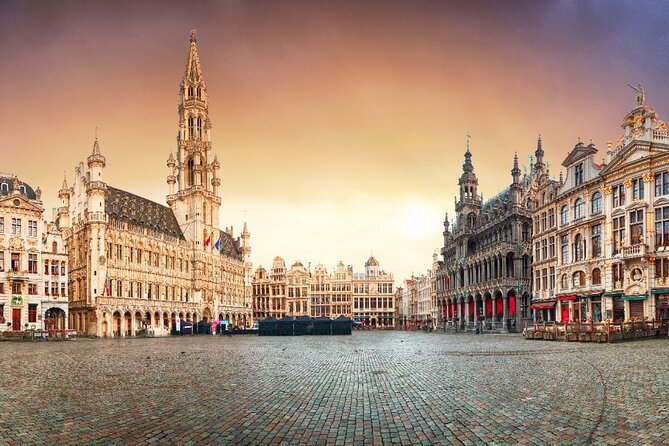
The advertised meeting point is Grand Place, at Grote Markt in central Brussels. The square can be crowded, so you need to identify the guide clearly. One person arrived early but could not find the group, while the guide later said they had been waiting in front of City Hall. Give yourself extra time and confirm the precise meeting spot before setting out.
From there, the route moves toward Place du Grand Sablon. The square and surrounding Sablon district offer a polished start, with handsome buildings, cafés, shops, and a long connection to Brussels’ market culture. The supplied description presents Grand Marché as a place for produce, crafts, and local food, though this evening walk is not a food-market tour.
The value here is the contrast. You begin with one of Brussels’ most attractive areas before the guide turns toward less comfortable stories. Expect about 10 minutes at this stop, enough for an introduction and a short explanation rather than a long visit.
Place Saint-Jean and Tour Anneessens
Place Saint-Jean brings you to a smaller historic square centered on St. John the Baptist Church. It is a calmer place to pause, look at the surrounding architecture, and hear how religious buildings fit into the city’s older urban fabric.
The church is a useful reminder that the dark side of Brussels is not limited to alleys and criminals. Religion, authority, punishment, and public life have often overlapped in European cities. Your guide may use this setting to connect local stories with the larger forces that shaped Brussels.
Next comes Tour Anneessens, a district known for its mixed architecture, local markets, and varied community. The stop is brief, around 10 minutes, and the value lies in getting beyond the postcard center. You see a less polished side of Brussels, with the guide providing context about how the city changed and how different communities shaped it.
Some people found the less famous stops less exciting than expected. That is a fair criticism if you want a parade of headline sights. I see Tour Anneessens as useful for travelers who want a wider sense of Brussels rather than only the Grand Place and Royal Quarter.
Rue de Rollebeek and Notre Dame du Sablon
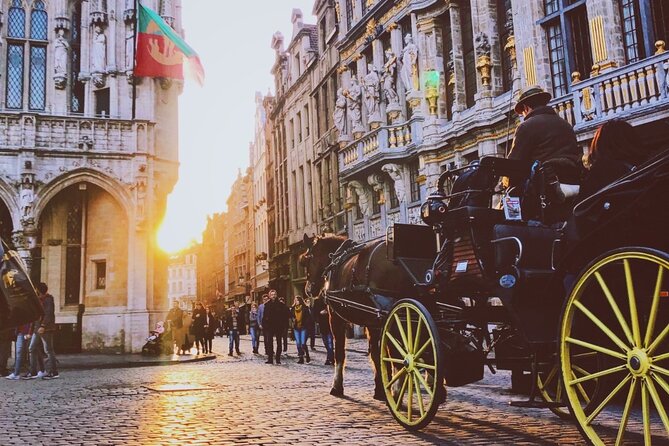
Rue de Rollebeek gives the walk a more intimate scale. Cobblestones, cafés, and small shops make it a pleasant street for a slow walk, and the route uses it to connect the larger landmarks.
This is one of the places where the tour’s two sides meet. You are looking at a charming street, but the guide’s subject matter may turn toward old punishments, grim events, or the social rules that shaped city life. The contrast keeps the walk from becoming a simple architecture tour.
Notre Dame du Sablon adds a major Gothic landmark. Its stained glass and detailed interior design make it one of the most memorable religious buildings along the route. The stop is scheduled for about 10 minutes, so do not expect an extended church visit or a full architectural lecture.
I like this section because it gives you attractive Brussels scenery without losing the unusual historical angle. If the guide is strong, the building becomes more than a photo stop. You begin to see how religion, civic identity, and power worked together in the city.
More evening tours in Belgium:
- Night Tour: The Dark Side of Bruges – by Legends
★ 4.8 · 18 reviews - Budapest: Buda Castle District Vampires and Myths Night Tour
★ 4.6 · 3,830 reviews - Haunted Evening Horse and Carriage Tour of Charleston
★ 4.5 · 3,678 reviews - Edinburgh: Evening Underground Ghost Tour
★ 4.4 · 3,092 reviews
The Palais de Justice and Brussels from above
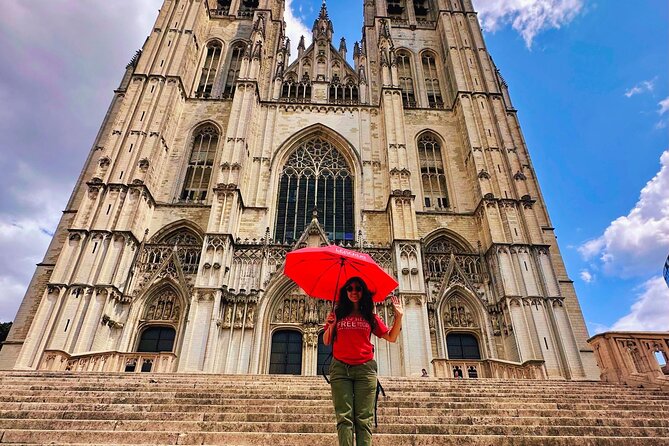
The Palais de Justice is the route’s biggest architectural statement. This huge courthouse rises above Brussels with a heavy neoclassical presence and broad views across the city. It is one of the walk’s most useful stops even if the darker stories are not your main reason for booking.
The building naturally leads to topics such as law, punishment, authority, and public justice. That makes it a good setting for stories about how Brussels dealt with crime and wrongdoing in earlier periods. The guide can also explain the political structures behind the city’s legal life.
The stop is listed at about 10 minutes, but the route around it may feel longer because the walk includes several uphill sections and changes in elevation. One person called the tour more strenuous than the description suggested, though still manageable for someone in reasonable walking shape.
You will want comfortable shoes. This is a walking experience across central streets, squares, and neighborhoods, not a series of short transfers between parked vehicles. The Palais de Justice also gives the guide a chance to orient you geographically, since its hilltop position opens views across Brussels.
Petit Sablon and the city’s public memory
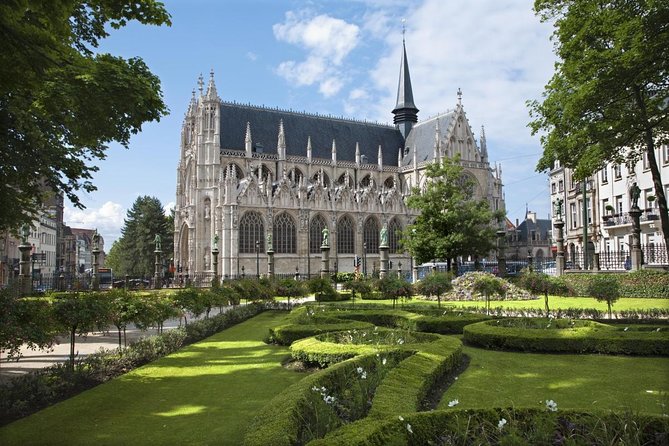
Square du Petit Sablon is a graceful garden surrounded by 48 bronze statues representing medieval guilds. The gardens, statues, and formal layout give you a quieter pause after the courthouse.
The square may seem too pretty for a dark-history tour, but that is part of the appeal. Brussels is full of places that look calm now yet carry centuries of conflict, hierarchy, work, religion, and civic ceremony. A good guide uses the square to explain the people and institutions behind the decorative surface.
The setting also helps break up the heavier material. If the stories about punishment or murder become too grim, Petit Sablon gives you a calm place to look around and reset. You get culture and design alongside the unsettling anecdotes, rather than two straight hours of bleak material.
Place du Jeu de Balle and the Marolles
The route then heads toward Place du Jeu de Balle, the center of the Marolles district. This square is known for its daily flea market, where you may find old photographs, vintage furniture, used clothing, and assorted objects.
The flea market is part of what gives the area its distinct character. It feels more local and less polished than the Sablon, and it helps explain why the Marolles is such an important part of Brussels’ identity. The tour’s description calls the atmosphere welcoming, but you should still expect a neighborhood stop rather than a major monument.
This is also where the walk feels most connected to ordinary city life. Instead of focusing only on grand buildings, you see a district shaped by trade, secondhand goods, changing residents, and street-level activity. The guide may connect this setting with the social history of Brussels and the less comfortable parts of urban life.
The square is scheduled for around 10 minutes. If you want time to browse the flea market properly, return on your own another day. The walking tour is designed to keep moving, and the market may not be operating in the same way during an evening visit.
Ending at Kapellekerk in the Marolles
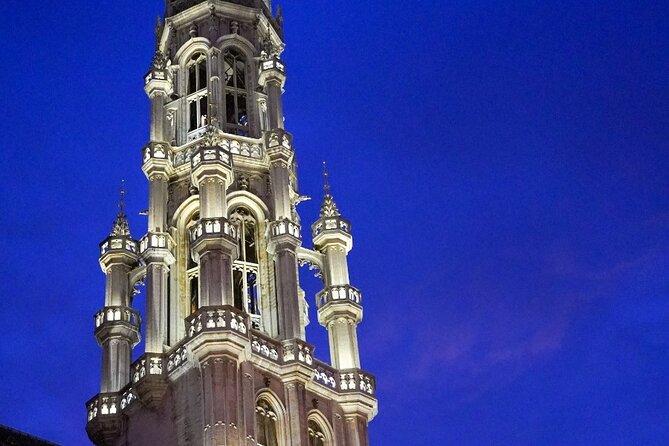
The walk finishes at Église Notre-Dame de la Chapelle, also called Kapellekerk. This Gothic church dates back to a chapel founded here in 1134, giving the final stop a long connection with the Marolles.
The end point is on Rue des Ursulines, near Brux.-Chap or Brus.-Kap. That matters because you do not return to Grand Place. If you have a train, dinner booking, or another evening plan, check the route from Kapellekerk before you start.
Finishing here works well. The church and surrounding neighborhood feel more grounded and less formal than the Sablon. You end with a sense of Brussels as a lived-in city, not just a collection of monumental squares.
Guide quality, group size, and the walking pace
The maximum group size is 35 people. That is large enough to create a crowd around a guide, especially in busy squares, but still manageable if the guide projects clearly and keeps the group together.
The best accounts focus on guides who brought the material to life. Sebastian was described as funny and well informed. Rahim was praised for enthusiasm, humor, and a real desire to teach. David was noted for clear delivery and for making sure solo participants could follow along. Ann Marie was appreciated for storytelling and for taking questions, while Ian received praise for making the history interesting.
The less positive experiences point to practical risks. One guide was hard to hear, and another person felt the route changed according to the guide’s mood or group size. There was also a complaint about a tour being canceled when only one person appeared, even though the booking had been confirmed. The stated terms do allow cancellation if the minimum number is not reached, with a different date, another experience, or a full refund offered.
The walk is offered in English, and most people can participate. Service animals are allowed, and the meeting point is near public transportation. Because the route is on foot and can be more strenuous than expected, you should be comfortable walking for about two hours.
Is the $3.62 price really the full cost?
The listed price is $3.62 per group of up to six people. That is unusually low for a two-hour guided walk, and it makes the experience a sensible choice for budget-conscious visitors or anyone wanting a first look at Brussels.
But you should treat the booking fee as a starting point, not the complete value of the experience. The guides rely on tips, and several people specifically urged visitors to carry euros and reward a guide who gives a strong tour. A fair tip is especially important when the guide spends extra time, answers questions, or continues beyond the scheduled two hours.
The value depends on your expectations. For a small booking fee plus a tip, you can get a long introduction to central Brussels, unusual stories, and a route that reaches the Marolles. If you want a tightly scripted tour with guaranteed stops and a fixed duration, the low-cost format may feel less dependable.
Who should book this evening walk?
I would choose this tour if you want to see Brussels on foot, hear stories beyond standard sightseeing, and visit several districts in one evening. It is especially useful early in a Brussels stay, when you want a broad orientation before exploring individual areas on your own.
It also suits solo visitors. The group setting makes it easy to join a walk without arranging a private guide, and strong guides make an effort to include people traveling alone.
You should think twice if you want a pure dark-tour experience. The route includes serious subjects, but it also covers churches, architecture, political structures, markets, and ordinary city history. It is dark in subject matter at times, not necessarily in atmosphere.
Should you book The Dark Side of Brussels?
Book it if you want an inexpensive, story-led introduction to Brussels with a good chance of hearing about punishment, politics, religion, and lesser-known local facts. The route covers a lot, and the best guides, including Rahim, Sebastian, David, Ann Marie, and Ian, can make the walk funny, thoughtful, and memorable.
Skip it if your schedule is tight, you dislike long walks, or you expect a polished true-crime production. Arrive early, make the meeting point clear, wear sensible shoes, and carry euros for a tip. With those expectations in place, this is a strong-value way to see Brussels after the day’s rush has eased.
FAQ
Where does the tour start?
It starts at Grand Place, also called Grote Markt, at 1000 Brussels, Belgium. The meeting point is near City Hall on the main square.
Where does the tour end?
The tour ends at Kapellekerk, or Église Notre-Dame de la Chapelle, on Rue des Ursulines in Brussels’ Marolles neighborhood.
How long does the tour last?
The planned duration is approximately two hours. Some accounts describe walks lasting about 1.5 hours, while others continued beyond two hours.
Is the tour really about the dark side of Brussels?
It includes stories involving torture, murder, suicide, punishment, and less flattering parts of Brussels’ past. It also covers general history, architecture, politics, churches, and local neighborhoods, so it is not a pure true-crime tour.
What language is the tour offered in?
The tour is offered in English.
How many people can join?
The maximum group size is 35 people. The booking price is listed for a group of up to six.
Is the tour suitable for most people?
Most people can participate, and service animals are allowed. You should be prepared for a fairly long walk, some uphill sections, and a pace that may feel more strenuous than expected.
Can I cancel for a full refund?
Yes. You can cancel at least 24 hours before the start time for a full refund. Changes or cancellations made less than 24 hours before the start time are not accepted for a refund.
Just added around Belgium
- Private Tour: The Dark Side of Gent★ 5.0 · 73 reviews
- Private Tour: The Dark Side of Brussels★ 5.0 · 20 reviews
- Private Tour: The Dark Side of Bruges★ 5.0 · 70 reviews
- Private Tour: The Dark Side of Antwerp★ 5.0 · 84 reviews
- Private Tour: The Dark Side of Antwerp★ 4.5 · 7 reviews
- Night Tour: The Dark Side of Bruges – by Legends★ 4.8 · 18 reviews
- Haunted Bruges Walking Tour★ 5.0 · 3 reviews
- Ghent: The Dark Side of Ghent Private Walking Tour★ 4.9 · 19 reviews
Dark History & True Crime Tours, compared.
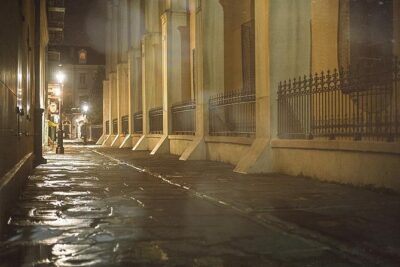
Adults-Only New Orleans Ghost, Crime, Voodoo, and Vampire Tour
Read our review →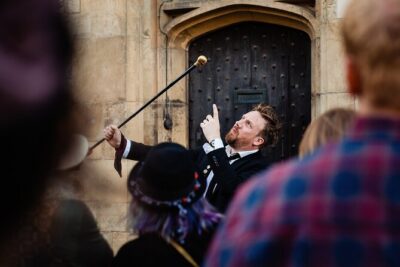
The Deathly Dark Tour of York: Experience of the Year 2024
Read our review →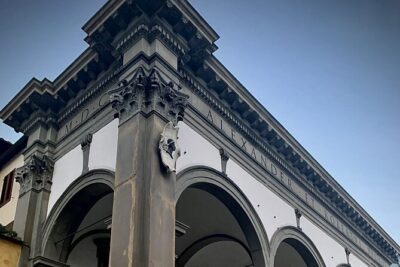
The Dark Side of Florence: Mysteries and Legends
Read our review →
Dark Secrets of the Old Town Ghost Walking Tour
Read our review →
New Orleans Adults-Only True Crime and Ghost Walking Tour
Read our review →
Genteel and Bard’s Savannah Dark History and Ghost Encounter Walking Tour
Read our review →
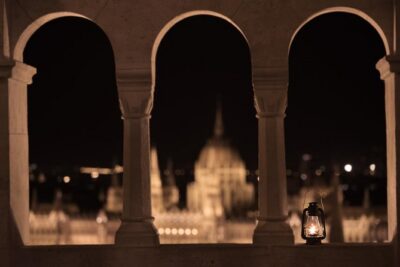
Buda Castle District Dark History, Legends and Vampire Night Tour
Read our review →Browse the lists this tour appears in