
REVIEW · CITY TOURS
Ghost City istanbul Walking Tour
The most memorable part of this Istanbul walk is the shift from open-air monuments to underground water chambers. You begin at the Serpent Column, trace the old imperial center, then enter the cool, shadowy cisterns beneath the city. I especially like the focus on the Theodosius Cistern, which gives you a quieter look at Byzantine engineering, and the way guide Rose connects snake legends, Medusa, and Turkey’s evil eye. The main catch is simple: admission tickets are not included, so your final cost will be higher than the $64.46 tour price.
I also like the small maximum of 15 people. That size should make it easier to hear the guide and ask questions, which matters in places where columns, myths, and emperors can blur together. The walk lasts about two to three hours, is offered in English, and finishes at the Basilica Cistern, a useful location for continuing your day in Sultanahmet.
Key details before you book
- Rose brings the stories to life: Her explanations connect Byzantine monuments with the Medusa and evil-eye traditions.
- Theodosius Cistern adds something different: It is less famous than Basilica Cistern and offers a more intimate underground stop.
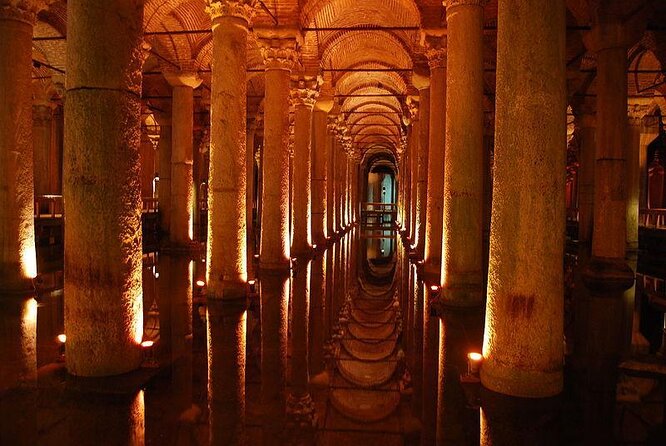
- The Basilica Cistern is the grand finale: Its 336 marble columns create the tour’s most atmospheric setting.
- You pay separately for entry: The tour fee covers professional guidance and local taxes, not admission tickets.
- The route is compact: It begins by the German Fountain and ends at Basilica Cistern.
- A small group keeps it personal: No more than 15 people can join.
Why this short walk works in Istanbul
Istanbul can overwhelm you quickly. In one small area, you have Roman monuments, Byzantine waterworks, Ottoman gardens, mosques, markets, and layers of legend. A good guide gives those sights order. This tour does that by following a clear thread through the old imperial center.
The route is not a long march across the city. It stays around Sultanahmet, beginning at the German Fountain near the Hippodrome and ending at Basilica Cistern on Alemdar Street. That makes it a useful first activity if you want to understand the area before exploring it on your own.
The strongest feature is the storytelling. Rose is praised for her warm, energetic style and for explaining details rather than simply pointing at stones. Her discussion of the link between Medusa and the evil eye is the kind of connection that makes Istanbul feel less like a collection of famous sights and more like a place where old beliefs continue to shape daily culture.
At $64.46 per person, this is not a bargain-priced stroll, especially since you still pay for entry. The value depends on how much help you want with context. If you already know the Byzantine period well and prefer to read signs at your own pace, you may find the cost hard to justify. If you want the monuments explained clearly in a compact visit, the price can make sense.
More walking tours in the world:
- History and Hauntings of Salem Guided Walking Tour
★ 5.0 · 14,564 reviews - New Orleans Premier Ghost, Voodoo and Vampire Walking Tour
★ 4.5 · 12,856 reviews - Chicago: Gangsters and Ghosts Walking Tour
★ 5.0 · 7,155 reviews
Starting at the Serpent Column
The meeting point is the German Fountain, close to the Serpent Column in the former Hippodrome. This is a smart place to begin because the area once served as a major public center of Constantinople, the Byzantine capital.
The Serpent Column is an ancient bronze monument with three snake heads at the top. It is also known as the Serpentine Column, the Plataean Tripod, and the Delphi Tripod. The column was connected to the Greek victory over the Persians and later brought to Constantinople.
You get about 10 minutes here, and there is no admission charge. That short stop is enough to understand the monument’s basic story and position, but it is not a long archaeological session. I would pay close attention to Rose’s explanation because the column’s meaning comes from its past, not from its present appearance alone.
This opening stop also sets up the tour’s interest in snakes, legends, and protective symbols. That thread returns later when Medusa enters the story at the Basilica Cistern.
Theodosius Cistern and the city below your feet
The Theodosius Cistern is scheduled for about 30 minutes, with admission paid separately. It offers a quieter alternative to the better-known Basilica Cistern and gives the tour a useful middle chapter between the outdoor monuments and the grand final stop.
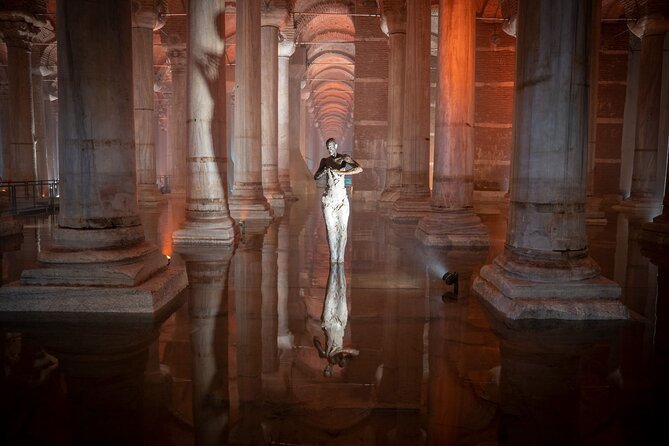
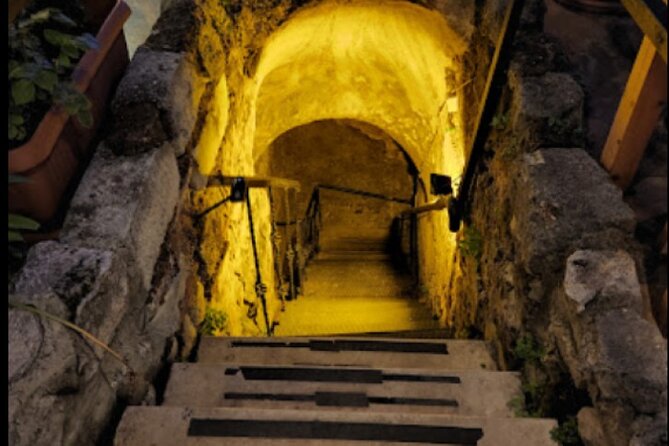
Underground, you can expect arched columns, stonework, and water reflections. The space gives you a feel for the practical problem Byzantine rulers had to solve: storing water for a large city. The cistern was not built as decoration, but its structure now creates a calm and striking setting.
I like having this stop before Basilica Cistern because it gives you a point of comparison. You can notice how the two spaces differ in mood and scale instead of treating every underground chamber as the same. Theodosius Cistern is presented as a more intimate visit, while Basilica Cistern offers the larger, more dramatic experience.
The limitation is the extra charge. Since tickets are not included, check the current entry cost when planning your total budget. The tour price covers guidance and local taxes, but not the doors you pass through.
Çemberlitaş Column and Constantine’s monument
The route also includes Çemberlitaş Column, though no separate visit length is provided. This column is also called the Burnt Column or Column of Constantine. It was built in 330 to honor Emperor Constantine I.
That date matters. Constantine founded Constantinople as a new imperial center, and the column belongs to the city’s early Roman and Byzantine story. It is an outdoor sight, so you do not pay an entry fee to see it.
This is the kind of monument that benefits from a guide. On its own, a weathered column can look like an isolated remnant. With the date and imperial setting explained, it becomes part of the city’s transformation into a major capital.
Do not expect a long stop with extensive access around the monument. Its value lies in its location and explanation. Rose’s approach, according to the details provided about her guiding, should help connect the stone to the wider story rather than leave you with a name and a date.
More city tours in the world:
- Savannah’s Ghost City “Dead of Night” Walking Night Tour
★ 4.5 · 2,482 reviews - Creepy Krakow: 2-Hour City Walking Tour
★ 4.7 · 1,131 reviews - Gangsters and Ghosts Tour New York City
★ 5.0 · 905 reviews - Old Montreal: Traditional Ghost Walk of the Haunted City
★ 4.7 · 746 reviews
Basilica Cistern, the atmospheric finish
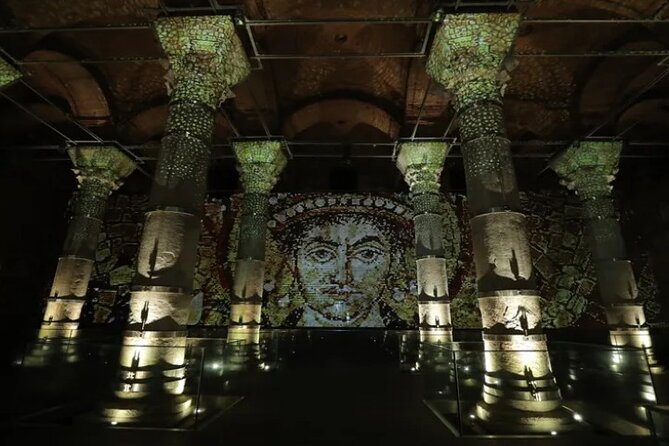
The Basilica Cistern is the tour’s main visual payoff. It sits near Hagia Sophia and is known for its underground hall, dim lighting, water, and 336 marble columns. The site has recently been renovated, adding to its appeal for visitors who want to see one of Istanbul’s most polished historic interiors.
You spend about 30 minutes here, and admission is not included. That time is enough to walk through the main space and absorb its scale, but it is not a leisurely independent visit. If you want to linger, take photographs, or read every display, you may want to return on your own after the tour.
The cistern was built to store water, yet it feels almost theatrical today. Rows of columns rise from the floor, reflections move across the water, and the low light gives the place a hushed mood. The contrast with the open Hippodrome is one of the tour’s best features.
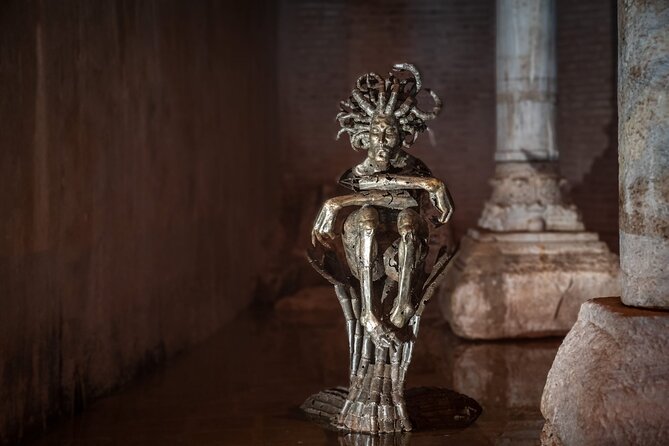
This is also where the Medusa story becomes especially useful. The famous Medusa heads and the surrounding myths give Rose a chance to explain how ancient symbols were reused, reinterpreted, and linked in the modern imagination to the evil eye. That kind of story adds meaning without requiring you to be an expert in Roman or Byzantine history.
Because the Basilica Cistern is the endpoint, you can choose what to do next without crossing the city. You are left near Hagia Sophia and other central sights in Sultanahmet. The ending is practical as well as memorable.
Gülhane Parkı Sarnıcı, a brief extra stop
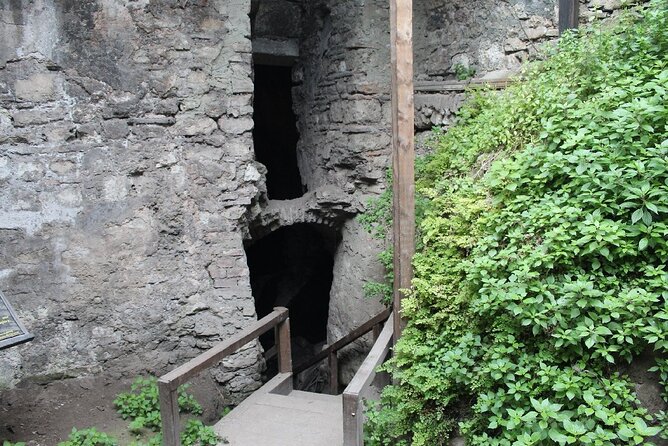
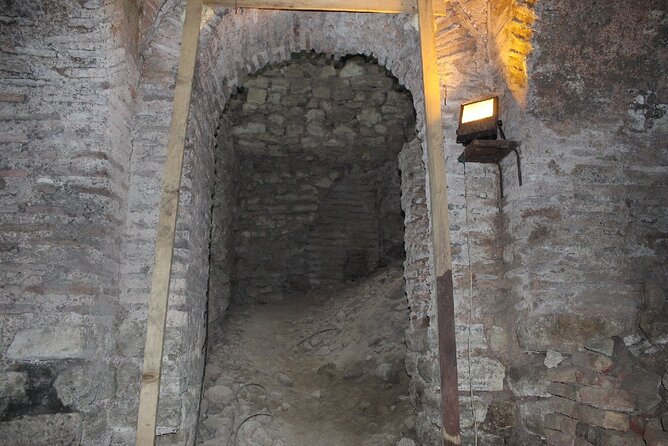
The route also lists Gülhane Parkı Sarnıcı, with about 10 minutes and no admission charge. This site was once used as an aquarium and is now open to the public. Its former use helps explain why its present layout may differ from what you expect from a traditional cistern.
This is a quick stop, so treat it as a short look rather than a full museum visit. Its value comes from showing another way Istanbul’s underground spaces have been adapted over time. Not every historic site on this route is preserved in exactly the same condition or for exactly the same purpose.
The stop also keeps the tour from focusing only on the two best-known cisterns. You get a broader sense of how water structures and historic spaces fit into the modern city.
What Rose adds to the experience
The guide can make or break a short history walk. Rose receives especially strong praise for her enthusiasm, patience, and ability to explain details in a way that feels personal rather than stiff. She is also singled out for answering questions thoroughly, which matters when you are moving through several eras in a short time.
Her strongest material appears to be the link between objects and living traditions. The connection between Medusa and the evil eye is not the sort of detail you always pick up by walking through Sultanahmet alone. The story of Turkey’s own snake queen also adds a local mythic angle to the route.
You should still keep your expectations practical. A two to three hour walk cannot explain every emperor, architectural change, or religious shift connected with these sites. The tour is best seen as an introduction with memorable stories, not a full course in Byzantine studies.
Group size, pace, and practical comfort
The maximum group size is 15 people. That is small enough for a guide to speak to the whole group without needing to shout constantly, though the actual feel will depend on how many people book that day.
The tour is offered in English and uses mobile tickets. Confirmation is provided at booking, and the meeting point is near public transportation. Most people can take part, according to the available information, but no detailed accessibility description is provided. If you need specific assistance, ask before booking.
The duration is listed as approximately two to three hours. Plan for the longer end if the group asks questions or if entry takes time. Since the route includes underground sites and a walking section through the historic center, comfortable shoes are a sensible choice.
The tour starts at the German Fountain, Binbirdirek, At Meydanı Cd, in Fatih. It ends at Basilica Cistern, Alemdar, Yerebatan Cd. 1/3. Those are useful landmarks, but check the exact meeting instructions after booking so you do not confuse the German Fountain with another monument in the square.
Is $64.46 good value?
The price is easiest to judge by separating the guide service from the admissions. You pay $64.46 per person for professional guidance and local taxes, while tickets are extra. That means the true cost depends on which sites require payment and the prices in force on your date.
I would call it reasonable for someone who values a focused guide and wants several central sights tied together. Rose’s storytelling is a real part of the product, and the small group limit gives the tour more personal potential than a large coach excursion.
I would be less enthusiastic if you are mainly looking for fast entry or a cheap orientation walk. The two to three hour schedule includes several stops, and paid admissions can add up. You also may want extra time at Basilica Cistern, which the planned 30-minute visit may not provide.
The best comparison is with exploring alone. You can see the outdoor monuments without paying for a guide, but you lose the explanations that connect Constantine, the Hippodrome, the water system, Medusa, and the evil eye. If those connections are what you want, the cost becomes easier to defend.
Who should book this Istanbul walk?
I would recommend it to first-time visitors who want a clear introduction to Sultanahmet without spending a full day on a formal history tour. It also suits anyone drawn to underground architecture, old legends, and the way different cultures leave marks on the same city.
Families and mixed-interest groups may find the short stops helpful. The route changes setting often, so you are not standing beside one monument for an hour. The maximum of 15 people also makes it more workable for questions than a very large group.
You may want to skip it if you have already visited the cisterns and know the central monuments well. Independent explorers who prefer a slow pace should also consider visiting Basilica Cistern separately, since 30 minutes may feel brief.
The cancellation terms are fair: you can cancel for a full refund up to 24 hours before the start time. Changes or cancellations inside that window are not accepted for a refund.
Should you book it?
Book this tour if you want stories with your monuments, especially explanations of the Serpent Column, Constantine’s column, Medusa, and the evil eye. Rose’s warm presentation and the small group cap are the best reasons to choose it.
Think twice if you are watching every dollar or want admission fees included. The $64.46 price is only part of the day’s cost, and the Basilica Cistern stop may leave you wanting more time.
For a first look at Istanbul’s historic center, the route is well chosen. It moves from ancient bronze and imperial stone to cool underground chambers, then ends beside one of the city’s most famous sights. That is a useful, story-filled introduction, as long as you budget for the tickets and accept the brisk pace.
FAQ
How long does the Ghost City Istanbul Walking Tour last?
The tour lasts approximately two to three hours.
What language is the tour offered in?
The tour is offered in English.
Are entrance tickets included in the tour price?
No. Tickets and entry admissions are not included. The price includes professional guidance and all local taxes.
Where does the tour start and finish?
The tour starts at the German Fountain near At Meydanı Cd in Fatih. It ends at Basilica Cistern on Yerebatan Cd.
How many people can join the tour?
The group has a maximum of 15 travelers.
Can I cancel for a full refund?
Yes. You can cancel at least 24 hours before the local start time for a full refund. Cancellations or changes made less than 24 hours before the start time are not accepted for a refund.
Just added around the world
- Zion: Harry Potter-Inspired Zion Ghost Tour with Sunset View★ 5.0 · 8 reviews
- Your evening in Venice – Legends&Ghosts&Aperitif★ 4.7 · 79 reviews
- York’s Haunted Heart : Ghost, Ghouls and Gallows★ 4.6 · 82 reviews
- York : Private Ghost Hunt★ 5.0 · 3 reviews
- Witches, Widows, & Wraiths: Wichita Ghost Tours★ 5.0 · 2 reviews
- Wraiths & Wicked Whispers: Wilmington Ghost Tour★ 4.2 · 25 reviews
- Witches, ghosts and executioners / Mystical North Hesse★ 4.4 · 4 reviews
- Wraiths of the West Texas Wind: El Paso Ghost Tour★ 4.5 · 9 reviews
City Tours, compared.

Savannah’s Ghost City “Dead of Night” Walking Night Tour
Read our review →
Old Montreal: Traditional Ghost Walk of the Haunted City
Read our review →
“Murder in Music City” Night-Time Ghost Walking Tour of Nashville
Read our review →
New York City: Gangsters and Ghosts 2-Hour Walking Tour
Read our review →
Charleston Haunted Jail Night-Time Walking Tour with Admission to Old City Jail
Read our review →Browse the lists this tour appears in