
REVIEW · MUNICH GHOST TOURS
Munich Macabre Group Walking Tour
Munich’s pretty old center hides a much rougher past, and this tour brings it out with medieval murder, witch trials, plague fears, and graveyard customs. Archaeologist and historian Taff Simon leads you from Marienplatz through the old town, using real artifacts, replica weapons, bad jokes, and a little historic beer to make the stories stick.
I like two things right away: you do not just stare at history behind glass, since you can handle ancient coins and pottery, and the tour connects big events to the exact streets where they happened. The darker stories are balanced with beer history, guilds, archaeology, and local life, so the evening is more than a parade of grisly tales.
The main consideration is tone. Some material covers plague, antisemitic accusations, executions, witch trials, and human remains. The route also includes uneven surfaces and several stretches without seating, so wear good shoes and tell the operator in advance if walking speed or mobility is a concern.
Key points about Munich Macabre
- Hands-on archaeology: Handle original ancient coins and pottery, along with replica medieval swords and armor.
- A real specialist guide: Taff Simon is a working archaeologist and historian who explains how evidence is read, not just recited.
- Dark stories at real locations: Explore medieval Jewish Munich, St. Peter’s burial ground, the Pappenheimer witch trial, and a notorious royal murder.
- Historic beer tasting: Sample medieval-style beer while learning why brewing mattered and how bad beer could bring harsh penalties.
- Small evening group: The tour is limited to 15 people, making it easier to ask questions and follow the storytelling.
- A focused old-town route: The tour starts and ends at the Fischbrunnen in Marienplatz and lasts about two and a half hours.
Why this Munich tour feels different
Many old-town walks give you dates, rulers, and handsome facades. This one asks you to look at what lies beneath them: burial customs, public punishment, religious fear, trade, brewing, and the physical evidence left behind.
Taff Simon’s archaeological background is the key difference. He brings objects that can be examined in your own hands, including ancient coins used as alms and pieces of pottery. You are shown how small clues can reveal class, belief, trade, and daily life. That approach gives the tour a practical edge. Instead of simply hearing that medieval people used certain objects, you get a chance to inspect their size, weight, and workmanship.
The evening format also helps. The 6:00 pm start gives you the day to see Munich’s museums and major sights, then shifts the mood as the old center grows quieter. The route remains in central Munich, so you can pair it with dinner or a drink afterward.
This is not a formal lecture. Questions are welcome, and the guide adjusts the talk to the group. Past family groups have included teenagers, and the material was softened when needed. Still, the subject matter is not designed for very young children or anyone with a particularly vivid imagination.
More walking tours in Germany:
- Munich Ghosts and Spirits Evening Walking Tour
★ 5.0 · 1,900 reviews - Stuttgart: Guided Ghost Walking Tour
★ 4.5 · 867 reviews - Görlitz: Ghosts and Spooky Historical Night Walking Tour
★ 4.8 · 197 reviews
Marienplatz sets the stage
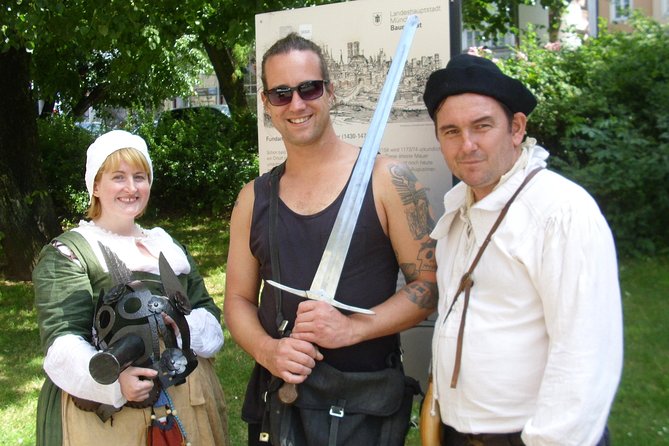
Meet at the Fischbrunnen in Marienplatz, the city’s ancient market square. The opening talk takes about 15 minutes and explains how Munich began and why the center looks as it does today.
This is a useful start because Marienplatz is often treated as a photo stop. Here, it becomes the first clue in the city’s story. You get the basic setting before moving into the less polished parts of Munich’s past.
The tour returns to Marienplatz at the end, which makes the meeting point easy to use. It is also near public transportation, so you should have no trouble reaching it. Check the exact location before setting out, since the square has several notable fountains and buildings.
Landschaftstraße and the story of medieval Jewish Munich
The next stop, Landschaftstraße, may look ordinary at first. That is part of its value. The tour points out that this area ran beside Munich’s medieval Jewish quarter and uses archaeology to recover a part of the city that is easy to miss.
You learn about the Jewish community’s role in Munich’s economic and cultural life, followed by the ugly accusations used against it. The discussion includes blood libel, blame for the Black Death, and claims that Jewish residents aided criminals or witches. These were not harmless stories. They fed persecution, exclusion, and violence.
This section requires a steady guide. Taff’s archaeological approach helps keep the subject tied to evidence and place rather than turning it into shock theater. You also hear how recent excavations connected with a new U-Bahn project have added to the understanding of this part of the city.
I find this one of the most worthwhile sections because it complicates the usual medieval picture. You are not just hearing about kings and churches. You are considering who lived in the city, who was blamed during crises, and how archaeology can help recover communities that official stories often pushed aside.
St. Peter’s Church and the meaning of old graves
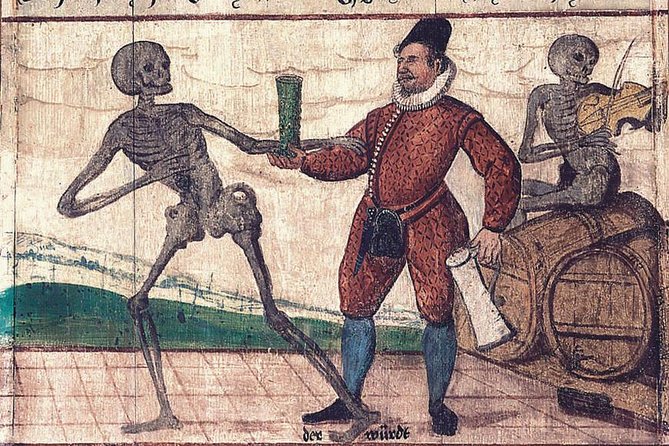
St. Peter’s is Munich’s oldest church, and the stop here focuses on its old burial ground, grave markers, and changing burial practices. The talk covers early Bavarian customs through later periods, with photographs from archaeological excavations that Taff has worked on, often at construction sites.
You learn how to read symbols on gravestones and how design can point to trade, class, guild membership, and religious belief. The church’s architecture and memorials become evidence, not just decoration.
The discussion of early medieval graves includes grave goods such as jewelry and weapons. Some visitors will find the archaeology fascinating. Others may find photographs of excavated burials uncomfortable. The tour operator is clear about this, and that warning is worth taking seriously.
The hands-on part returns here. You can examine original ancient coins, including the type that might have been given as alms. That small object makes an abstract subject feel real. It also shows the difference between this tour and a standard walking route, where objects are usually described but never handled.
There may be seating at some points, but not everywhere. If standing for long periods is difficult, mention it when booking so the route can be adjusted without removing the main content.
A few more ghost walks around Germany worth a look
- Gruseltour Leipzig: A Haunted Guided Tour
★ 4.5 · 1,385 reviews - Munich: Spooky Tour of Old Town in German
★ 4.6 · 1,112 reviews - Berlin: Haunted Guided Tour in German
★ 4.5 · 696 reviews - Munich: Witches and Executioners Guided Tour
★ 4.7 · 353 reviews
Viktualienmarkt, from outcast ground to beer garden
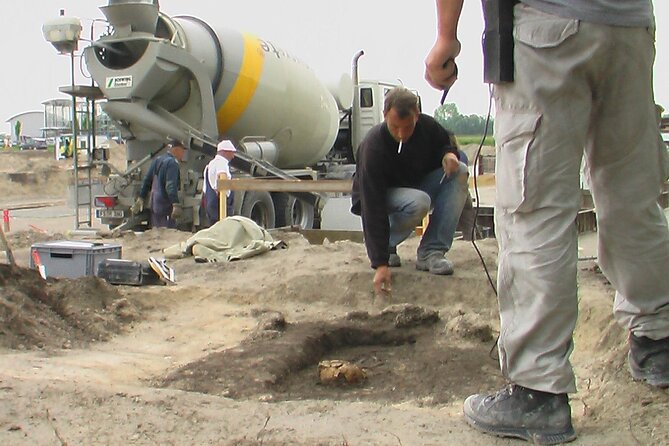
Viktualienmarkt is now one of Munich’s most pleasant places to buy food, pretzels, and cheese before sitting with a beer. The tour asks you to imagine a very different past, when being sent to this area could mark you as an outcast.
This stop takes about 25 minutes and adds a welcome change of pace. The subject turns toward beer, brewing, and the rules that shaped daily life. You hear about the penalties for making bad beer and pretzels, which is a fine reminder that medieval authorities were serious about food, drink, trade, and public standards.
You also sample authentic medieval beer, usually at least two historical styles if supplies allow. These are samples, not full drinks, and occasional supply problems can mean a modern substitute. Even then, the tasting still supports the discussion of Munich’s brewing traditions.
I like this part because the beer is not tacked on as a gimmick. It helps explain why brewing mattered and gives you a direct sense of how the subject fits into Munich’s identity. If you are expecting a full pint, adjust your expectations. The tasting is modest, but it adds flavor to the history.
Alter Hof, royal murder, and medieval combat
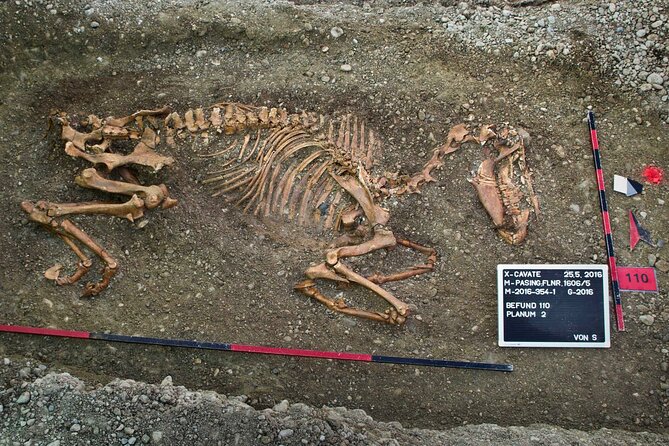
Alter Hof began as a castle for the Wittelsbach family, Bavaria’s ruling dynasty. Here the tour turns to a murder that shocked medieval Europe and considers how its consequences affected later generations of people in Munich.
The precise appeal of this stop is the way private crime meets public power. A murder inside a ruling family is not treated as a detached anecdote. It becomes a window into authority, reputation, punishment, and the long memory of a city.
The tour then moves into medieval combat through the ideas of Hans Talhoffer, a late medieval sword master. You can handle replica swords and, when available, some armor. This is another strong hands-on moment, especially for anyone who has read about medieval fighting but has never considered the size, weight, or balance of the equipment.
Time may allow a look at archaeological discoveries made here in 1944, when an Allied bomb accidentally exposed very old artifacts. You may handle and compare different pottery types and other objects. Since timing can vary, this portion is not something to treat as guaranteed in full, but it shows how unexpected events can reveal earlier layers of Munich.
The Old Town Hall and the Pappenheimer witch trial
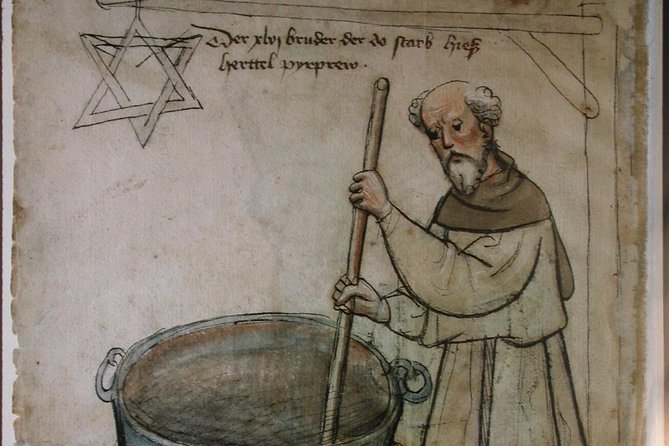
The final major stop is the Old Town Hall, where one of the most vicious witch trials in German history took place. The discussion covers the background, the charges, the methods used to create supposed evidence, and the fate of the Pappenheimer family.
This is the heaviest section of the tour. It deals with torture, accusation, and the way a legal process can be shaped by fear and prejudice. The story also reaches beyond Munich, with consequences felt as far away as colonial Massachusetts.
The value here is not simply the horror of the case. You are shown how a trial worked, how claims became evidence, and how institutions could turn suspicion into punishment. That makes the stop useful for anyone interested in law, social history, or the recurring dangers of moral panic.
Taff’s humor helps keep the tour from becoming oppressively grim, but this is still serious material. The overall tone depends partly on the group. Adult groups may receive a more direct version, while family groups can ask for gentler treatment.
A guide who uses humor without losing the history
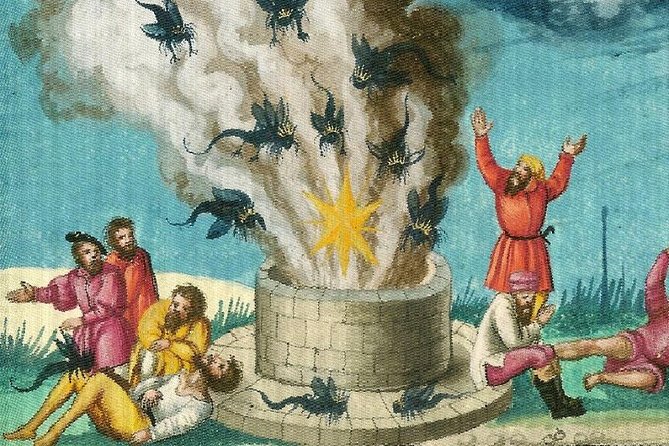
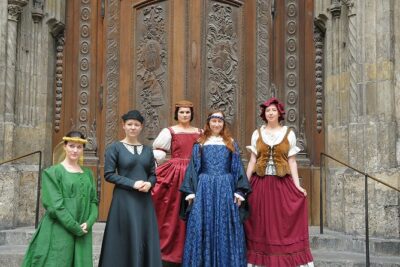
The most praised part of this experience is Taff Simon himself. He arrives in period costume, uses props, and tells stories with a theatrical touch. That presentation could feel silly in the wrong hands, but here it is tied to archaeological evidence and historical explanation.
His style is conversational rather than scripted. He welcomes questions and can adapt the route and level of detail to the group. That matters if your family includes teenagers, or if you want to ask about coins, excavation methods, Jewish history, beer laws, or medieval weapons.
The humor is useful because the subjects are often bleak. Bad jokes and playful acting give you a breather before the tour returns to plague, execution, or persecution. The guide still treats sensitive subjects seriously, especially the history of antisemitism and the witch trial.
You should not book this expecting a quiet academic seminar. You should book it if you want history explained through stories, objects, physical places, and conversation.
What $42.24 buys you
At $42.24 per person, the price is higher than a basic self-guided walk but reasonable for a small group experience lasting two and a half to nearly three hours. You are paying for a specialist guide, a prepared route, beer samples, original artifacts, and replica arms and armor.
The hands-on material is the main value. A cheaper walk may show you the same streets, but it will not normally let you examine ancient coins and pottery or compare replica weapons. The guide’s archaeological work also gives the tour a level of detail that a memorized script may not provide.
The group maximum is 15 people. That is small enough for questions and object handling to remain practical, though the experience may still feel less personal than a private tour. One review describes a one-on-one version, but you should not assume that every booking will be private.
The tour is offered only in English. German speakers looking for a German-language alternative will need to choose another operator. If you are comfortable in English, the language restriction is less important than the guide’s ability to explain difficult subjects clearly.
Practical advice before you book
Wear sturdy, comfortable shoes. The route crosses old city surfaces, and some areas are uneven. Dress for the local weather, since this is an outdoor walking experience.
Plan for limited seating. Some stops have places to sit, but others do not. If you need a slower pace or a route adjusted for mobility, contact the operator before the tour. The route can be adapted, though seating cannot always be guaranteed.
Bad weather or public events such as rallies, concerts, or blocked streets can force a route change. The historical themes should remain, but the exact locations and balance of subjects may shift.
The tour requires a minimum number of participants. If that minimum is not met, or if poor weather cancels the experience, you should be offered another date or a full refund. You can also cancel for a full refund up to 24 hours before the start time. Late cancellations and changes are not accepted for a refund.
Who should book Munich Macabre?
I would choose this tour if you like archaeology, social history, old crimes, religious belief, or the less polished side of famous cities. It is especially good for families with older children and teenagers who lose interest during standard monument tours.
It also suits repeat visitors who have already seen Marienplatz, the main churches, and the central streets. You will recognize familiar places, but the stories attached to them will change.
I would hesitate if you dislike graphic historical subjects, standing outdoors, uneven pavement, or theatrical guides. The costume and humor are central to the experience, not an occasional extra.
Should you book it?
Book Munich Macabre if you want an evening walk that puts history in your hands. Taff Simon’s mix of archaeology, storytelling, medieval beer, real objects, and replica weapons gives Munich’s old center a human scale.
Skip it if you want a gentle overview of the city or a polished sightseeing lecture. For everyone else, the combination of strong storytelling, unusual evidence, and a small group makes the $42.24 price fair. This is the kind of tour that can leave you looking at a church wall, a market square, or an ordinary street and wondering what happened there before the postcard version began.
FAQ
Where does the Munich Macabre tour start?
It starts at the Fischbrunnen in Marienplatz, Munich, at 6:00 pm.
Where does the tour finish?
The tour ends back at the Fischbrunnen meeting point in Marienplatz.
How long does the walking tour last?
It lasts approximately 2 hours 30 minutes to 2 hours 45 minutes.
Is the tour offered in German?
No. This experience is offered only in English.
Is beer included?
Yes. You receive samples of authentic medieval beer, with the aim of offering at least two historical beverages. Supply issues may require a modern substitute, and the drinks are samples rather than full servings.
Is the tour suitable for children?
Some children can take part, but parts of the content are not suitable for particularly young children. The guide can temper some descriptive material for family groups. The tour is limited to a maximum of 15 people.
Just added around Germany
- Witches, ghosts and executioners / Mystical North Hesse★ 4.4 · 4 reviews
- Creepy city tour Experience the dark side of Görlitz★ 5.0 · 63 reviews
- Nuremberg Ghosts and Gallows Evening Walking Tour in English★ 5.0 · 56 reviews
- Executioners, whores, witches with drama★ 5.0 · 7 reviews
- The Original Haunted Walk of Munich in English★ 4.5 · 13 reviews
- Ghosts of Munich: The Haunted Apprentice Exploration Game★ 4.0 · 19 reviews
- Cologne Haunted Quest: The Witch Self-Guided Tour★ 3.0 · 38 reviews
- Gruseltour Berlin Haunted Ghost Walk 90-minute at Berlin Mitte city center★ 5.0 · 75 reviews
Munich Ghost Tours, compared.
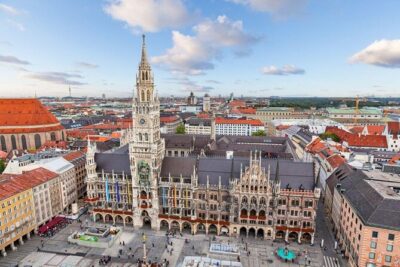
Munich Ghosts and Spirits Evening Walking Tour
Read our review →
Ghosts of Munich: The Haunted Apprentice Exploration Game
Read our review →
Browse the lists this tour appears in