

REVIEW · DARK HISTORY & TRUE CRIME TOURS
Self-Guided Audio Tour to the Dark Side of Zurich
Zurich’s old center has a darker story than its polished streets suggest. This self-guided walk leads you from Paradeplatz to Herkulesbrunnen through tales of witches, public executions, torture, drowning, and medieval justice. Along the way, you still see major sights such as Fraumunster, Wasserkirche, Grossmunster, and the Town Hall.
I like the easy route and the way it points out details you could easily miss on a normal city stroll. I also like the flexibility: you can pause the narration, take photos, enter Fraumunster if you wish, or stop for a break without holding up a group.
The subject is grim, and one section of the audio can feel like a list of facts rather than a flowing story. You also need your own phone, internet connection, and headset, so this works best when your battery and data are ready to go.
Key points to know before you go
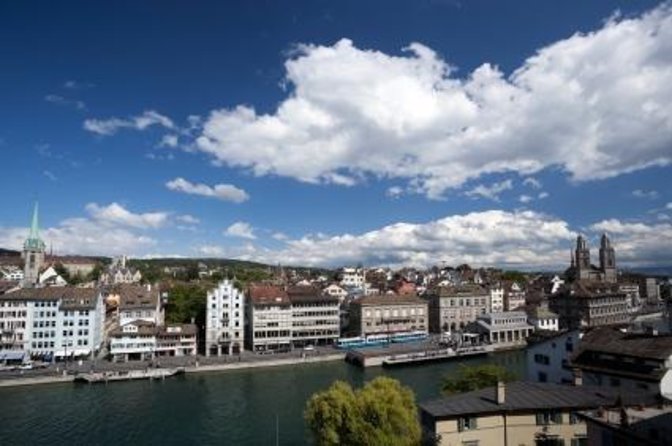
- Fourteen stops across Zurich’s old center: The route begins at Paradeplatz and ends at Herkulesbrunnen on Bahnhofstrasse.
- A close look at witch hunts and executions: Learn about torture, public punishment, medieval courts, executioners, and condemned prisoners.
- A flexible English audio guide: Follow directions and photos on your phone, with no fixed group pace or live guide.
- A low price for a focused walk: At $13.22 per person, the cost is modest if you want a themed introduction to central Zurich.
- Fraumunster costs extra inside: The church’s interior admission is CHF 5 per person, while the other listed stops are free to view.
- A short but serious outing: Allow about one to two hours, depending on your pace and whether you stop along the way.
Why this walk shows a different Zurich
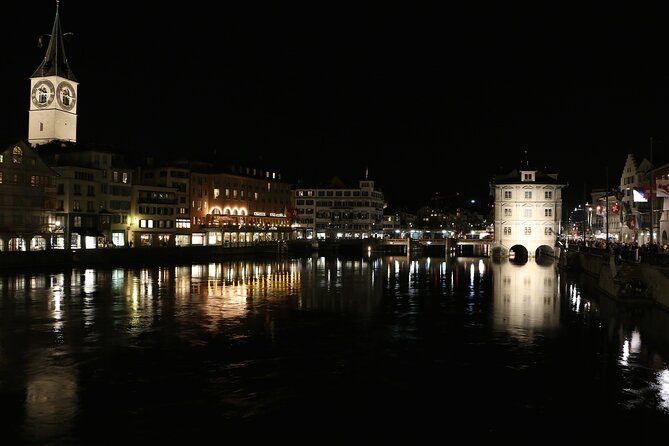
Most first walks through Zurich focus on the Limmat, guild houses, shopping streets, and handsome churches. This route uses those same streets but asks a different question: what happened here when law and religion were enforced with public punishment?
That change in viewpoint gives the city a sharper edge. Paradeplatz is now associated with banks and polished offices, but the tour begins by connecting the area with an executioner’s former residence. Börsenstrasse then brings you closer to the working life of executioners, including their training, pay, and the methods used for punishment.
You are not simply listening to a string of old crimes. The route also explains how institutions worked. You hear about prosecution, judges, public sentences, religious persecution, and the way condemned people were moved through the city. That makes the walk useful for anyone interested in how ordinary streets once served as places of fear and authority.
The tone is not light. If you prefer cheerful sightseeing, this is not the best first activity in Zurich. If you like a city walk with an unusual subject and a serious moral edge, the theme gives familiar landmarks a new meaning.
More self-guided ghost trails in the world:
- Self-Guided Smartphone Ghost Walking Tour in Salem
★ 4.5 · 225 reviews - Ghosts of Gettysburg Self-Guided Driving Audio Tour
★ 4.0 · 77 reviews - Glasgow Ghost Hunt: The Soul That Got Away Exploration Game
★ 4.0 · 71 reviews
Starting at Paradeplatz and Börsenstrasse
At Paradeplatz, the audio introduces Zurich’s former executioners and the social position of people who performed this work. You learn about their residence and the training needed for the profession. The stop is short, about five minutes, but it sets up the central idea of the walk: punishment was an organized public system, not an occasional act of private revenge.
From there, you continue along Börsenstrasse. The route focuses on where medieval executioners lived and explains which methods were most common, how often executions took place, and how executioners were paid.
I like this opening because it gives practical context before the more personal stories begin. You are not asked to absorb a list of names without explanation. You first learn how the system functioned, then follow its effect on individuals.
The narration uses a professional speaker with a deep voice. That suits the subject, though the audio sometimes adds extra facts that do not move the story forward. Keep your expectations realistic: this is a compact themed walk, not a full academic study of Zurich’s legal past.
Along the Limmat, stories of accused witches
At the Limmat, the focus turns to women accused of witchcraft. The story of Elsbeth, who endured fifteen days of torture, gives the subject a human center. This is one of the most difficult sections because it deals directly with pain, fear, and the lack of fair legal protection.
The riverside setting makes the material especially stark. Today, you can pause beside the water and watch Zurich carry on around you. The audio asks you to picture a city where accusations could lead to confinement and torture, and where religious or social suspicion could become a death sentence.
This stop may be uncomfortable for anyone sensitive to human rights. The tour presents the past rather than softening it, and some of the material is plainly grim. That seriousness is also part of its value. The route encourages you to think about how systems of justice can fail when accusation replaces proof.
Fraumunster and the choice to go inside

Fraumunster is one of the route’s visual highlights. From outside, you see one of Zurich’s best-known churches. If you pay the CHF 5 entrance fee, you can view the interior and its Marc Chagall stained-glass windows, including the crucifixion image mentioned in the tour material.
The church adds an important change of pace after the material about torture and execution. It is also one of the few places where you may want to stop longer than the planned five minutes. One previous participant specifically advised going inside for the stained glass, and I agree that the extra fee may be worthwhile if church art matters to you.
The admission is not included in the $13.22 tour price. You can still complete the route without entering, so this remains a choice rather than a required expense.
More dark history tours in the world:
- Adults-Only New Orleans Ghost, Crime, Voodoo, and Vampire Tour
★ 5.0 · 6,545 reviews - Edinburgh: Dark Secrets of the Old Town Ghost Walking Tour
★ 4.6 · 1,671 reviews - New Orleans Adults-Only True Crime and Ghost Walking Tour
★ 5.0 · 1,666 reviews - Genteel and Bard’s Savannah Dark History and Ghost Encounter Walking Tour
★ 5.0 · 1,546 reviews
Hans Waldmann and the Water Church
At the Hans Waldmann Statue, the audio tells the story of the Zurich figure executed in 1489. The stop gives the tour another angle on public punishment. This is not only about witchcraft accusations. Powerful or prominent people could also meet a violent end when political and social forces turned against them.
Next comes Wasserkirche, or the Water Church. Here the story reaches back to Felix and Regula, who were beheaded because of their Christian beliefs. Their legend is closely tied to Zurich’s religious identity and gives the tour a martyr story alongside its accounts of courts and executioners.
These two stops work well together. The statue connects punishment with civic power, while Wasserkirche connects it with religious belief. You get a broader picture of why people were condemned, and how later generations remembered them.
The route also passes the Grossmunster, a key symbol of the Swiss-German Reformation. It is not listed as a full timed stop, but you should still look up as you pass. The church helps connect the darker stories with Zurich’s larger religious and political past.
Kirchgasse and the language of witch-hunting
Kirchgasse takes you into the ideas that supported witch hunts. The audio explains old advice about how to identify a witch and how torture was used to force admissions or confirm suspicion.
This is a useful stop because it shows how persecution gained a false appearance of order. A written rule or official procedure can make injustice look respectable. The walk does not treat witch-hunting as a strange side story detached from daily life. It shows how such beliefs could enter legal and religious practice.
The stop is brief, so you may want to pause the audio if you need time to think or take in the surroundings. One advantage of a self-guided format is that the timing belongs to you. A live group would normally continue, but here you can stop without pressure.
Untere Zäune and the story of a wealthy woman
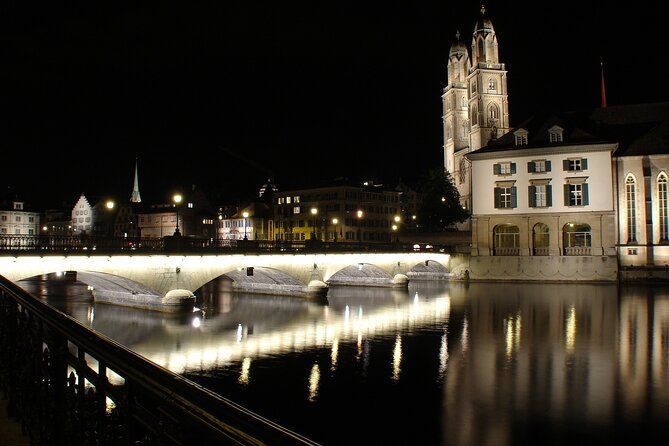
At Untere Zäune, you hear about the home of a wealthy woman executed for witchcraft. Her social position makes the story especially striking. The accusations did not affect only people without money or influence.
This stop adds a personal scale to the larger explanation of witch trials. Instead of hearing only about laws and customs, you are pointed to a particular residence and a person who lived there. The house becomes a reminder that these events happened within an ordinary neighborhood, not in some distant, isolated setting.
The route’s ability to connect a specific address with a human story is one of its strongest features. It gives you a reason to look closely at the buildings around you.
Neumarkt, Obere Zäune, and the judge’s revenge
Neumarkt marks the former place of the pillory. Public humiliation was part of medieval punishment, and the pillory made the crowd an active witness. The stop is short, but it helps explain how law was displayed in public rather than kept behind courthouse doors.
At Obere Zäune, the focus shifts to the house of a judge working during the height of the witch hunts. You also hear his revenge story. This brings personal motives into the picture and suggests how private grudges could become dangerous when a judge held formal power.
Together, these stops show three sides of punishment: the accused person, the crowd, and the official making decisions. I find that combination more useful than simply listing old execution sites. It helps you see how authority and public opinion could reinforce one another.
Some of the narration here may feel fact-heavy. If you want a fast-paced story at every stop, the audio may seem uneven. If you enjoy details about how a city operated, the information gives the walk substance.
Zurich Town Hall and the machinery of justice
At Zurich’s Town Hall, the audio explains medieval prosecution and points out the square where death sentences were pronounced. This is one of the most important stops for understanding the legal process.
The route has already introduced executioners, accused witches, judges, and public punishment. The Town Hall brings those pieces together. You learn where decisions were made and how a sentence moved from accusation to public announcement.
For me, this is where the walk feels most useful to a first-time visitor who wants more than landmark names. You are not just told that Zurich has old streets. You are shown how those streets were used by courts, officials, and the people who watched them.
The setting also makes a good pause point. The route is still compact, but by this stage you have covered several serious stories. Take a few minutes before continuing toward the memorial and the final stops.
The Täufergedenkplatte and executions by drowning
The Täufergedenkplatte memorial plate recalls people executed by drowning. It is a small memorial with a heavy subject, and it widens the tour’s focus beyond witch trials.
The stop points to religious conflict and the harsh response faced by people whose beliefs challenged official authority. It also reminds you that execution did not always happen by hanging or burning. Water itself became a means of punishment.
Because the memorial is modest, do not expect a large museum display or a long visit. Its value comes from what the audio adds: a story and a place that might otherwise pass unnoticed.
Rennweg and the last sip
At Rennweg, you hear about the baker whose duty was to provide the last sip to people being taken to execution. This is one of the route’s more unusual details.
The story gives you a glimpse of the small roles that surrounded public punishment. Execution required officials, but it also involved local workers and familiar streets. A baker offering a final drink makes the process feel less like an abstract legal ritual and more like something woven into neighborhood life.
This stop also breaks up the heavier legal material with a memorable detail. It is the kind of fact you are likely to remember later, especially because the route ties it to a particular house.
Ending at Herkulesbrunnen
The walk finishes at Herkulesbrunnen on Bahnhofstrasse, where the condemned left the city. The audio explains where burnings and hangings took place and brings the route back to its central subject: how Zurich handled people it marked as dangerous, sinful, or disobedient.
Ending here gives the walk a clear shape. You begin with the people who carried out punishment and finish with the route taken by those sentenced to it. The city’s modern streets then provide a sharp contrast with the stories you have just heard.
The final stop is also practical. You are still in central Zurich, so you can continue sightseeing or head to another part of town. The tour does not leave you at a remote site or require a special return journey.
What the $13.22 price gets you
At $13.22 per person, this is inexpensive for a one to two hour activity, particularly if you want a planned route and a specific theme. You receive an English audio guide, professional narration, photos, and detailed directions.
The value depends on how much structure you want. If you are comfortable wandering through Zurich with a guidebook, you may prefer to explore independently. If you want a ready-made route that leads you to less obvious stories, the price is easy to justify.
Remember that your own phone, internet connection, and headset are required. The link can take a while to load on a slow connection, so open it before you reach Paradeplatz if possible. Since there is no live guide, technical preparation matters more than it would on a standard walking tour.
The tour is private in the sense that only your group participates, but it is not a private guided walk with a person beside you. You control the pace, and that is the main benefit.
Who should choose this audio walk?
I would choose this experience if you have already seen the main Zurich sights and want a different theme. It also works well for repeat visits, curious history fans, and anyone who likes short walks built around specific stories.
It is a good match for you if:
- You prefer self-guided activities to fixed group tours.
- You want to keep the cost low.
- You enjoy unusual historical subjects.
- You are comfortable listening to serious material about torture and execution.
- You want clear directions rather than a free-form city stroll.
- You would like to decide for yourself how long to spend at Fraumunster or other stops.
I would skip it if you want a broad introduction to Zurich’s art, food, architecture, and daily life. The route has a narrow focus, and one clear criticism is that it does not offer much variety outside the darker subject. It also may not suit you if stories about human suffering are likely to spoil your day.
Most people can take part, and service animals are allowed. The route is near public transportation, but the supplied details do not promise specific step-free access at every point, so anyone needing that information should confirm it before booking.
Should you book the Dark Side of Zurich walk?
Book it if you want a low-cost, flexible way to see central Zurich through stories of witch trials, religious persecution, execution, and medieval law. The route is easy to follow, the narration is clear, and the stops reveal corners of the city you might otherwise pass without noticing.
Do not book it expecting a general sightseeing tour or a live storyteller. The content can be grim, the audio occasionally wanders into extra facts, and the experience depends on your phone and internet connection.
For the right mood, this is a smart little addition to a Zurich visit. Bring headphones, charge your phone, allow up to two hours, and consider spending the extra CHF 5 to see Fraumunster’s stained glass. Free cancellation is available if you cancel at least 24 hours before the start time. Within 24 hours, the payment is not refunded.
FAQ
How long does the Dark Side of Zurich audio tour take?
The walk takes approximately one to two hours, depending on your pace and how long you spend at the stops.
Where does the tour begin?
It begins at Paradeplatz, 8001 Zurich, Switzerland.
Where does the tour end?
It ends at Herkulesbrunnen on Bahnhofstrasse, 8001 Zurich, Switzerland.
What language is the audio guide in?
The audio guide is offered in English.
Is there a live guide?
No. You follow the route with a link provided after booking, using your own phone and headset.
Is entry to Fraumunster included?
No. If you choose to enter Fraumunster, admission costs CHF 5 per person. The other listed stops are free to view.
What do I need to bring?
You need your own mobile phone with internet access and a headset. The tour includes audio narration, photos, and directions, but not the device or headphones.
Can I cancel the booking?
Yes. You can receive a full refund by canceling at least 24 hours before the experience start time. Cancellations within 24 hours are not refunded.
More Self-Guided Tours in the world
- Self Guided Haunted Walking Tour in Portsmouth APP/GPS/EMF Reader
★ 4.0 · 64 reviews - Cologne Haunted Quest: The Witch Self-Guided Tour
★ 3.0 · 38 reviews - Dublin Ghost Hunt Exploration Game and Tour
★ 4.0 · 34 reviews - The Gothic Trail – Ghosts of Barcelona Exploration Game
★ 4.5 · 33 reviews
More Audio Tours in the world
- Medieval Torture Museum Ticket with Audio Guide and Ghost Hunting
★ 5.0 · 962 reviews - Ghosts of New Orleans: Self-Guided Haunted Audio Walking Tour
★ 4.0 · 32 reviews - Llandaff’s Ghosts: A Self-Guided Audio Tour
★ 4.5 · 29 reviews - Ghosts of Savannah Self-Guided Haunted Audio Tour App/EMF Reader
★ 4.0 · 20 reviews
Just added around the world
- Zion: Harry Potter-Inspired Zion Ghost Tour with Sunset View★ 5.0 · 8 reviews
- Your evening in Venice – Legends&Ghosts&Aperitif★ 4.7 · 79 reviews
- York’s Haunted Heart : Ghost, Ghouls and Gallows★ 4.6 · 82 reviews
- York : Private Ghost Hunt★ 5.0 · 3 reviews
- Witches, Widows, & Wraiths: Wichita Ghost Tours★ 5.0 · 2 reviews
- Wraiths & Wicked Whispers: Wilmington Ghost Tour★ 4.2 · 25 reviews
- Witches, ghosts and executioners / Mystical North Hesse★ 4.4 · 4 reviews
- Wraiths of the West Texas Wind: El Paso Ghost Tour★ 4.5 · 9 reviews
Dark History & True Crime Tours, compared.
Adults-Only New Orleans Ghost, Crime, Voodoo, and Vampire Tour
Read our review →
The Deathly Dark Tour of York: Experience of the Year 2024
Read our review →
The Dark Side of Florence: Mysteries and Legends
Read our review →
Dark Secrets of the Old Town Ghost Walking Tour
Read our review →
New Orleans Adults-Only True Crime and Ghost Walking Tour
Read our review →
Genteel and Bard’s Savannah Dark History and Ghost Encounter Walking Tour
Read our review →
Buda Castle District Dark History, Legends and Vampire Night Tour
Read our review →Browse the lists this tour appears in