

REVIEW · SEVILLE GHOST TOURS
Seville: Paranormal and Legends Guided Walking Tour
Seville’s postcard beauty has a darker side. On this 90-minute paranormal walk, you follow narrow streets and quiet squares tied to ghosts, plagues, fires, inquisitions, and unexplained events. The stories reach back to the period after the Christian reconquest and the centuries when Seville became Europe’s gateway to America.
I like two things right away: the tour gives you a different reason to wander the old center, and the guides make the tales feel personal. Julio, Paco, and Anna are praised for lively storytelling, humor, and local knowledge. The main consideration is that this is an atmospheric history walk, not a theatrical haunted house. If you want jump scares or access inside haunted buildings, this is not that.
Key points to know before you book
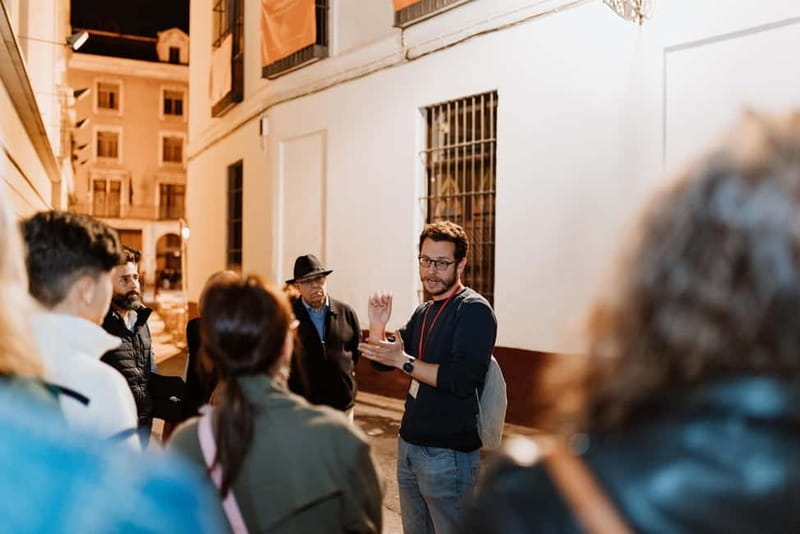
- The fountain in Plaza de la Encarnación is the meeting point: Look for the guide at the fountain, also identified as the 18th-century public fountain.
- The route stays outdoors: You visit streets and public squares, but no interior entrance tickets are included.
- Julio and Paco are especially praised for storytelling: Anna has also led the walk, offering a friendly and engaging style.
- The group is limited to 15 people: That is small enough for a more personal walk and easier questions.
- The stories mix fact, folklore, and personal experience: Expect historical context alongside ghost tales and reports of strange events.
- The 15-dollar price is strong value: You get 90 minutes with a local guide and an unusual way to see central Seville.
Why Seville’s old center works so well after dark
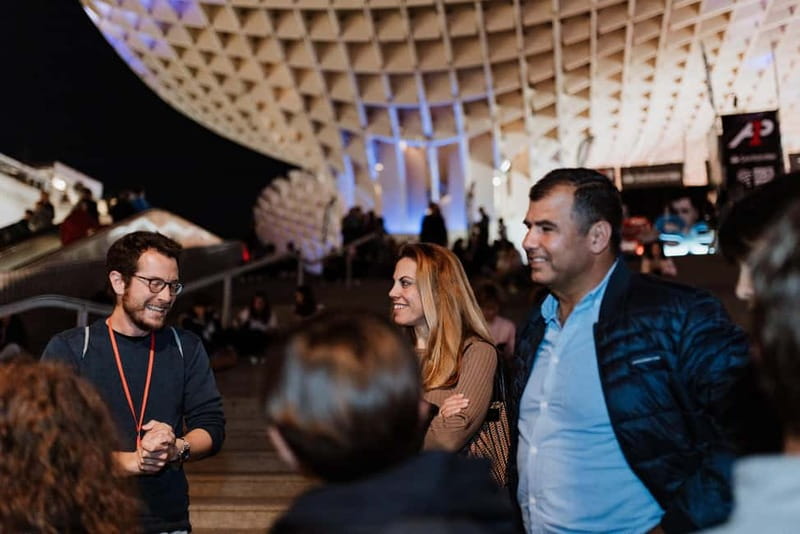
Seville is easy to admire in daylight. The cathedral, royal palace, and tiled courtyards do the obvious work. This tour asks you to look at the same city through another lens: what happened in the streets after fires, epidemics, religious conflict, and sudden wealth changed daily life.
The stories begin in the centuries after the Christian reconquest of Seville in the 13th century. Later, the city became a major link between Europe and the Americas. Merchants, sailors, foreigners, prisoners, clergy, and fortune seekers passed through. That movement brought money and opportunity, but also disease, accidents, violence, and social tension.
You do not need to believe in ghosts to enjoy the walk. The appeal is the way the guide connects old buildings and public spaces with the people who once lived, suffered, prayed, worked, or died there. A plain doorway can become interesting once you know the tale attached to it.
The tone is generally cultural rather than theatrical. There are no actors, costumes, or staged scares. That makes the experience a better fit for someone who enjoys folklore and local history but does not want a full horror production.
More Ghost Story Tours in Spain
- Barcelona: Gothic Quarter Ghosts and Legends Walking Tour
★ 4.7 · 1,443 reviews - Madrid Oscuro: Torture, Ghosts, Crimes and Legends
★ 5.0 · 1,363 reviews - Barcelona Ghosts & Legends Tour
★ 4.5 · 548 reviews
Starting at the fountain in Plaza de la Encarnación
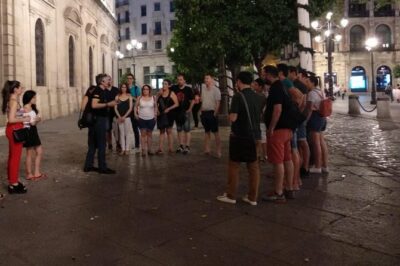
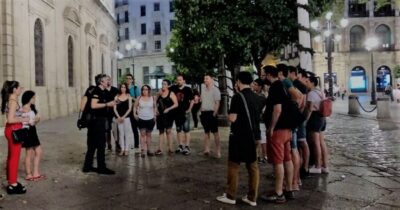
The tour begins at the fountain in Plaza de la Encarnación. The meeting point is important because the square is large enough to make a vague rendezvous frustrating. Go directly to the fountain and arrive with enough time to identify the guide before the walk begins.
This opening area sets up the tour’s basic mood. You are not being taken to one isolated haunted building. Instead, you begin a moving story about Seville, with each stop adding another piece to the city’s darker past.
The group can include English and Spanish speakers, depending on the departure. The advertised maximum is 15 people. That is a useful limit for this kind of walk. Storytelling works better when you can hear the guide clearly and ask a question without shouting across a crowd.
Calle Arguijo: stories in ordinary streets
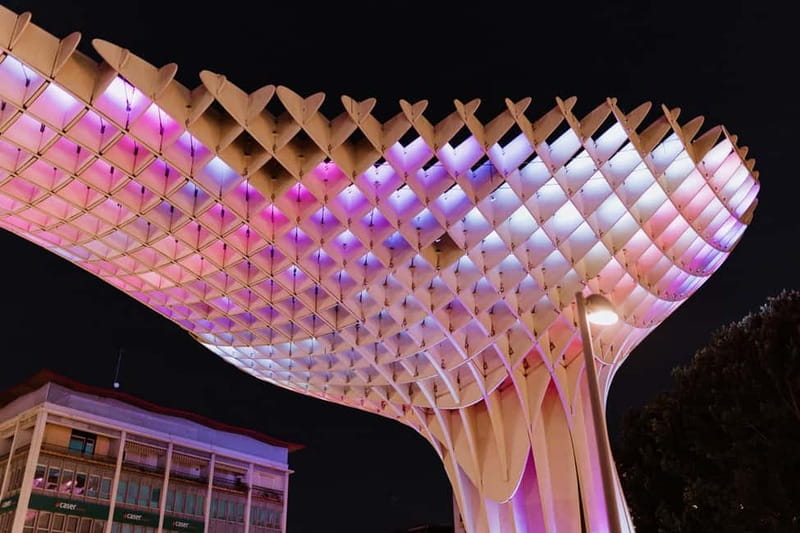
The first route stop is Calle Arguijo, where the guide continues the shift from sightseeing to storytelling. Streets like this can look unremarkable at first, and that is part of the charm. The tour does not depend only on grand monuments. It uses the old urban fabric, including lanes and buildings you might otherwise pass without a second glance.
At each stop, expect the guide to explain the setting before telling the legend connected with it. This structure helps separate the historical background from the supernatural claim. The best moments come when the story makes you reconsider a familiar part of town.
Guides Paco and Julio are repeatedly praised for energy and timing. That matters here because a paranormal walk can quickly become flat if the guide simply recites facts. Their style appears to lean toward animated delivery, humor, and personal connection rather than a dry lecture.
The Faculty of Fine Arts and Seville’s changing city
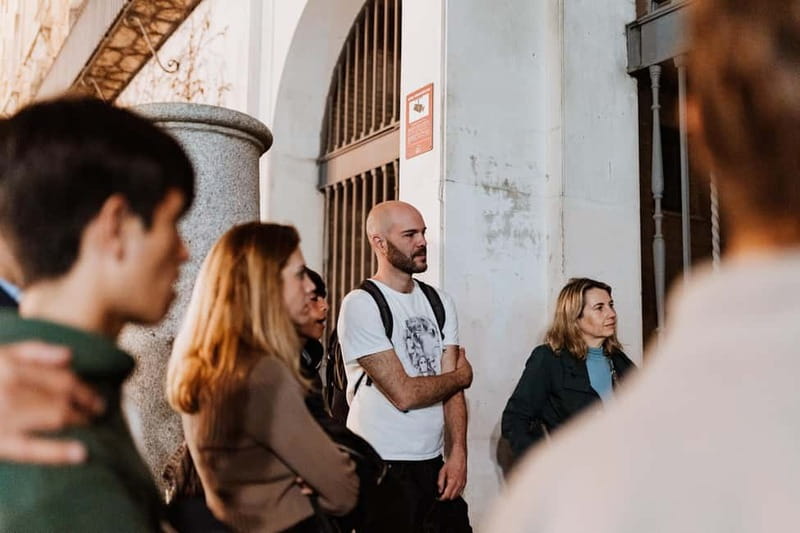
The route then reaches the Faculty of Fine Arts at the University of Seville. This stop adds a more institutional setting to the walk and gives the guide another chance to connect the present-day city with older events.
You should expect to remain outside. The activity includes guided stops at the listed locations, but it does not include entry into the faculty or any other building. That keeps the price low, though it also means the atmosphere depends on the guide and the street scene rather than interiors, exhibits, or special access.
One useful feature of the tour is that you can ask questions beyond the ghost stories. Several guides are described as able to answer questions about nearby buildings and the city more generally. That makes the walk useful even when your interest in the paranormal is only moderate.
Same streets after dark, a different sort of fright:
- Seville Evening Historical Tour with Haunted History
★ 5.0 · 626 reviews - Barcelona: Dark History Night Walking Tour
★ 4.8 · 344 reviews - Barcelona’s Dark History Night Tour
★ 5.0 · 181 reviews - Barcelona Dark History Night Walking Tour With Drinks
★ 5.0 · 153 reviews
Calle Puente y Pellón: connecting legends to daily life
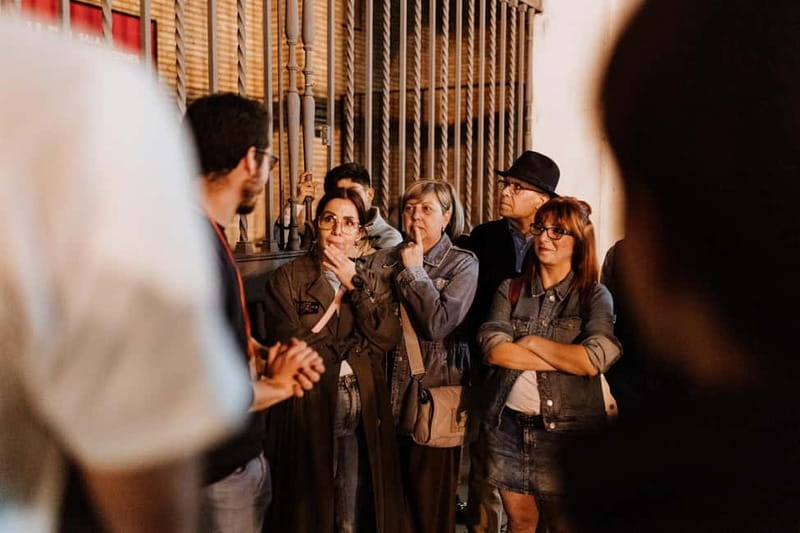
At Calle Puente y Pellón, the tour continues through central Seville rather than stopping at a single famous attraction. This part of the route shows the value of exploring with a theme. Without a guide, you might see a street as a shortcut between major sights. With the story attached, it becomes part of a larger account of fear, rumor, faith, and memory.
The tour’s tales include haunted houses, restless spirits, plagues, and unexplained incidents. Some stories are old, while others are more modern. One useful difference is that the walk does not rely only on medieval legends. More recent accounts can feel especially unsettling because they seem closer to ordinary life.
That mix also keeps the experience from becoming a history lesson limited to one century. You get a sense of how strange stories change as the city changes. Old religious beliefs, public disasters, and modern personal experiences can all become part of Seville’s folklore.
Plaza de la Alfalfa and a good place to pause
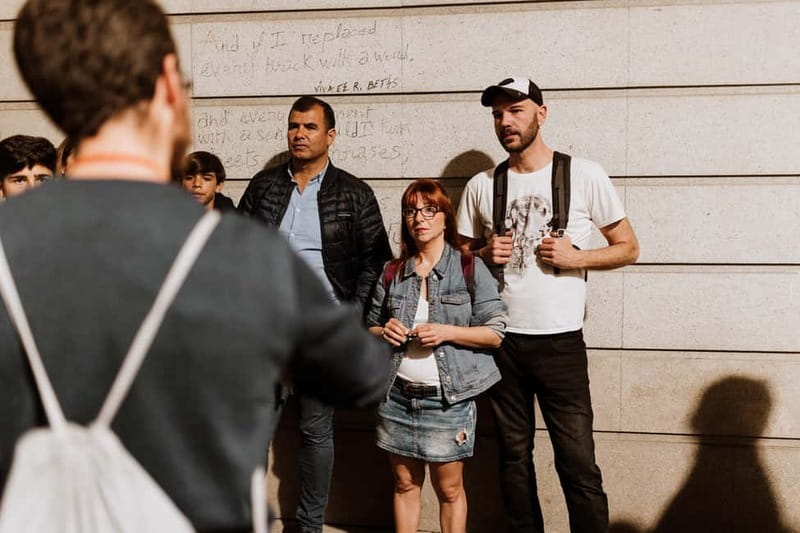
Plaza de la Alfalfa is one of the more recognizable public spaces on the route. The stop offers a change of scale from narrow lanes to an open square, while keeping you in the old center.
The guide uses the stops as storytelling platforms, not as attractions with formal admission. You stand outdoors, listen, and move on. That makes comfortable shoes sensible, even though the walk lasts only about an hour and a half.
This is also the sort of tour that can become social. The small group format gives you a chance to chat with other people between stops. One person even described meeting fellow participants and going for drinks afterward. That is not a promised part of the activity, of course, but the route finishes in an area with restaurants, making dinner afterward easy to arrange.
If you prefer quiet sightseeing, keep in mind that the guide’s style can be energetic. The most praised guides, especially Julio and Paco, bring plenty of personality. That is a plus for most groups, but it may feel like too much if you want a silent evening walk.
Calle Federico Rubio and the Elvira Bells
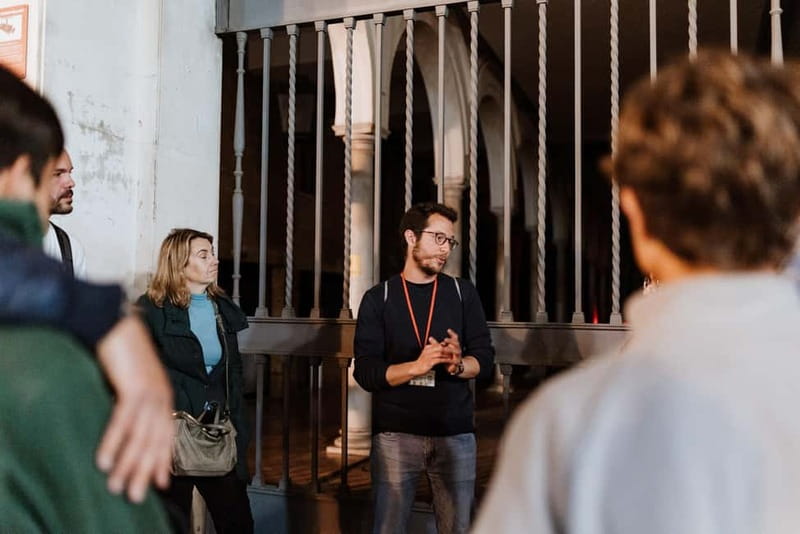
The route then turns toward Calle Federico Rubio. This section contributes to the tour’s sense of gradual discovery. Rather than presenting every story as a famous Seville legend, the guide brings attention to tales that may be unfamiliar even to people who have spent time in the city.
A featured legend involves the haunting Elvira Bells. The supplied route does not include a visit inside a church or tower, so you should think of this as a story connected to Seville’s historic religious setting rather than a formal bell-tower visit.
Religious buildings and bells carry special weight in a city shaped by centuries of Christian, Islamic, and Jewish influence, followed by the upheavals of conquest and the Inquisition. The tour does not promise a full course in Seville’s religious history, but these stories give you another way to consider how belief and fear shaped local life.
Calle Muñoz y Pabón: the final stories
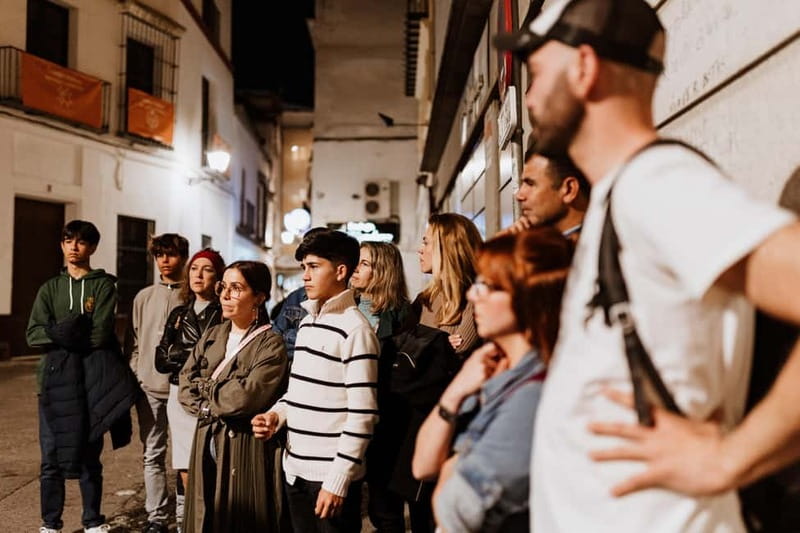
Calle Muñoz y Pabón is the last listed guided stop before the walk ends. By this point, you have crossed several kinds of urban space: a large square, narrow streets, a university setting, and old central lanes.
The final stretch is useful because the tour has had time to build a mood. You are not simply hearing six unrelated ghost stories. The route gradually shows how legends attach themselves to streets, houses, churches, public tragedies, and people whose lives became part of local memory.
The guide may also share personal paranormal experiences. Julio has done this during some tours, and that personal element gives the evening a less scripted feel. It also changes the tone from a standard city lecture to a conversation about why people continue to believe, question, or retell these stories.
Ending at Casa Fabiola
The tour finishes at Casa Fabiola, home of the Mariano Bellver Art Collection. The activity does not include admission, and the walk should be understood as ending outside rather than as a museum visit.
That is still a useful finish. You remain in central Seville, close to places where you can continue the evening with a meal or drink. Guides have also offered suggestions for restaurants, bars, and other sights, which can help if you are still deciding what to do afterward.
Because there is no interior visit, do not book this tour expecting access to Casa Fabiola or any other building on the route. The value comes from the route, the setting, and the guide’s interpretation.
How much does the $15 price buy you?
At $15 per person, this is one of the easier Seville activities to add to a trip. You get approximately 90 minutes with a professional local guide, in a group capped at 15 people. There are no food, drink, transport, or admission costs included, but the walk itself requires no extra spending.
I see the price as particularly good if you have already visited Seville’s headline sights. You are paying for a fresh theme and a local guide, not for another standard monument tour. It can also fill an evening without committing to a costly performance or long excursion.
The main value is in the delivery. A list of ghost locations would be easy to find and not very useful. A guide who explains the history, tells the story well, answers questions, and adds personal experience gives the walk a reason to exist.
The experience has earned a 4.7 rating from 336 reviews, and the repeated praise centers on the same qualities: clear storytelling, enthusiasm, humor, local connection, and a good mix of history and paranormal material. That consistency is more useful than one isolated compliment.
Timing, weather, and practical comfort
The tour is described as an evening experience, but the exact start time varies. Check the available departures when you book. In summer, it may still be light or very warm during part of the walk. One person specifically suggested that a darker season would add to the spooky mood, while another appreciated a guide finding shade during hot weather.
Wear comfortable shoes and bring water, especially in warm months. You are walking between several outdoor locations, and there are no included refreshments. If you want a drink or dinner afterward, plan to do that after the tour rather than expecting a break during it.
The activity is listed as wheelchair accessible. Since no detailed route conditions are provided, you should confirm any specific mobility needs before booking. The tour is conducted in English or Spanish, with a live guide rather than an audio recording.
Free cancellation is available up to 24 hours in advance, and you can reserve now and pay later. Those options are helpful if your Seville schedule is still changing.
Who will enjoy this walk most?
I would choose this tour for a first-time visitor who wants a different introduction to Seville, and for a repeat visitor who has already seen the major sights. It suits adults, teenagers, and families with older children who can handle ghost stories. One family with ages ranging from a child of nine to adults enjoyed the combination of history and spooky tales.
It is also a good choice for solo visitors. The small group gives you company without the scale of a large city tour. If you are practicing Spanish, the experience can work well too. One participant joined the tour alone and asked to continue in Spanish, with the guide checking in along the way.
You should skip it if you want verified paranormal evidence, access to abandoned interiors, or theatrical scares. The tour deals in legends, reported experiences, and historical settings. Its strength is the story and the city around it, not proof of the supernatural.
Should you book the Seville Paranormal and Legends Walk?
Book it if you like local tales, atmospheric streets, and history presented with a little shiver. The $15 price is modest, the 90-minute length fits neatly into an evening, and the route takes you through parts of central Seville you might not study on your own.
I would be especially happy to book with a guide such as Julio, Paco, or Anna, based on the consistent praise for their warmth and storytelling. Just set the right expectation: this is a lively outdoor cultural walk with ghost stories, not a haunted attraction.
FAQ
Where does the tour meet?
Meet at the fountain in Plaza de la Encarnación. The starting point is also identified as the Fuente Pública Siglo XVIII.
How long does the walking tour last?
The tour lasts approximately 1 hour and 30 minutes.
Which languages are available?
A live guide leads the experience in English or Spanish.
What locations are included?
The route includes Calle Arguijo, the Faculty of Fine Arts at the University of Seville, Calle Puente y Pellón, Plaza de la Alfalfa, Calle Federico Rubio, and Calle Muñoz y Pabón. It finishes at Casa Fabiola, home of the Mariano Bellver Art Collection.
Are entrance tickets included?
No. The tour visits outdoor locations, and entrance tickets are not included.
Is the tour wheelchair accessible?
Yes, the activity is listed as wheelchair accessible.
More Walking Tours in Spain
- Seville Paranormal Small-Group Walking Tour
★ 5.0 · 133 reviews - Barcelona El Raval Dark History Walking Tour
★ 5.0 · 70 reviews - Barcelona Ghosts of a Dark Past Gothic Walking Tour
★ 5.0 · 55 reviews - Barcelona: El Born Ghost Walking Tour.
★ 4.0 · 54 reviews
Just added around Spain
- Zaragoza: Only excommunicated and cursed town with witches in Spain and food★ 4.7 · 6 reviews
- Self-Guided Audio Tour – Ghosts of Madrid: History and terror★ 3.5 · 9 reviews
- Ghosts of Madrid: Exploration Game and Tour★ 5.0 · 4 reviews
- Walking Tour Mysteries and Legends of Barcelona and its Ghosts★ 5.0 · 3 reviews
- Witch Hunt on Montjuïc: Self-Guided Puzzle Quest in Barcelona★ 4.5 · 9 reviews
- Barcelona Ghosts of a Dark Past Gothic Walking Tour★ 5.0 · 55 reviews
- Dark History and Legends Night Walk of Gothic Quarter★ 5.0 · 2 reviews
- The Gothic Trail – Ghosts of Barcelona Exploration Game★ 4.5 · 33 reviews
Seville Ghost Tours, compared.
Seville Evening Historical Tour with Haunted History
Read our review →
Browse the lists this tour appears in