
REVIEW · SEVILLE GHOST TOURS
Seville: City of Queens, Nuns, Sex Work & Witches
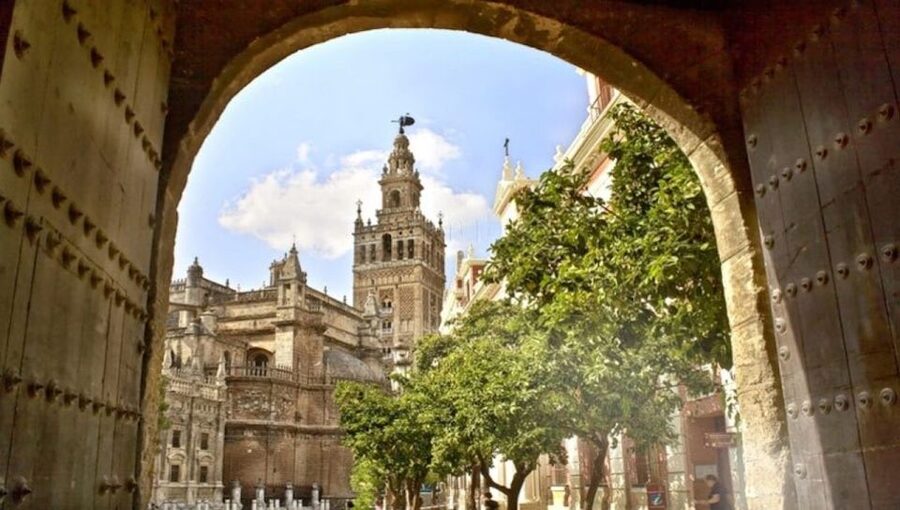
Seville’s past looks different when women take center stage. This two-hour walk links queens, cigar workers, literary lovers, nuns, sex workers, and women caught up in stories of witches and power, while guiding you through major sights and quieter corners. Abby and Nico are among the named guides associated with this experience.
I like the small group of two to eight people, which gives you a better chance to ask questions and hear the guide clearly. I also like the route itself: Maria Luisa Park, Plaza de España, the old Tobacco Factory, and Santa Cruz give you both famous Seville and the less polished stories behind it.
The main drawback is the price: $105 per person for two hours is a serious spend for a walking tour. You are paying for a focused theme, a small group, a professional guide, and insider context rather than entry to paid monuments.
Key points at a glance
- Women shape the whole story: The tour looks at Seville through female figures and female workers who are often left out of standard city tours.
- A smart route through Seville: You move from the 1929 Exposition buildings and Maria Luisa Park toward the Tobacco Factory and Santa Cruz.
- Small groups matter: With a maximum of eight people, the walk should feel more personal than a large coach-style city tour.
- Famous sights get fresh context: Plaza de España and the old Tobacco Factory become places tied to women’s work, politics, art, and daily life.
- Guides add personality: Abby is described as engaging and humorous, while Nico is noted for his warmth, clear English, and ability to include younger participants.
- The pace is manageable: The route uses short walks between stops and finishes in central Plaza Nueva.
Why this is not a standard Seville walking tour
Most first visits to Seville focus on kings, cathedrals, conquistadors, and grand architecture. This tour takes a different route through the city, asking who the women were behind the buildings, legends, workplaces, and literary stories.
That approach gives you a useful second layer of Seville. You still see major sights, but the guide points your attention toward the women who worked in them, lived near them, shaped their reputation, or were later turned into symbols. Some had power. Others had very little. That contrast is part of the point.
The subject matter is broad. You may hear about queens and nuns alongside cigar girls, sex workers, women linked to witchcraft, and the fictional Doña Inés from the Don Juan story. This is not a tour built around one historical period, so you should expect a series of connected stories rather than a single continuous biography.
I would choose it after a basic orientation tour, or as a first walk if you already know the main sights. It helps you see familiar places with sharper questions in mind.
More Witch Tours in Spain
- Inquisition, The Executioner, Witches, Expulsion Jews and Muslims
★ 5.0 · 85 reviews - Gran Canaria: Green Witchcraft in the Magic Island
★ 4.9 · 26 reviews - Tour of the Inquisition and Witchcraft in Toledo
★ 3.3 · 13 reviews
Beginning at the Costurero de la Reina
The meeting point is the Costurero de la Reina, or Queen’s Sewing Box, at Paseo de las Delicias. This small, distinctive building gives the tour an immediate connection to women and royal life.
The stop looks at the role of women connected with the building and its name. You spend about ten minutes here before moving toward the park and the Exposition area. Since the meeting point is a monument rather than a conventional shop or hotel entrance, check the exact location before you set out.
The route begins near the former riverfront and then works inland through some of Seville’s most attractive public spaces. That makes the opening easy to follow, with little need for transport between stops.
The 1929 Exposition and Maria Luisa Park
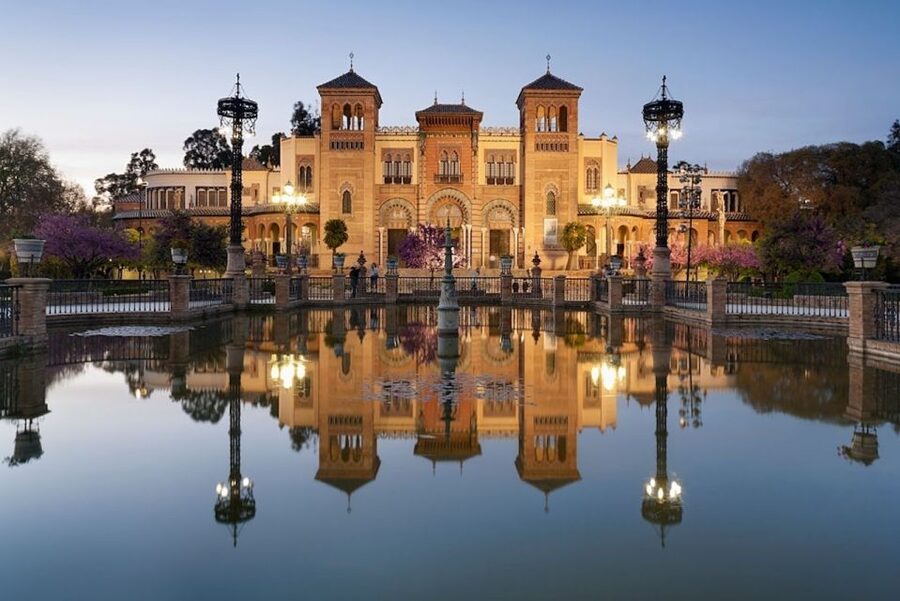
The early part of the walk takes in the former United States Pavilion and other Exposition 1929 buildings. These structures bring a more recent period of Seville’s story into the tour, rather than keeping the focus only on medieval and early modern history.
You then enter Maria Luisa Park, one of the city’s best places for a slower walk. The tour spends time connecting the park and its buildings with women’s roles and public life. I like this part because the setting gives the stories room to breathe. You are not standing in a crowded street while trying to listen to a lecture about a distant figure.
The park stop is listed at about ten minutes, though the walking between points creates more time in the area. You should wear comfortable shoes and bring water, especially in hot weather. The route is outdoors, and the experience includes a fair amount of walking even though the official duration is only two hours.
A useful detail from the tour’s past guiding style is the attention to personal needs on hot days. Nico was praised for responding to the group and even buying drinks during one particularly warm outing. That should not be treated as a guaranteed inclusion, but it suggests a guide who watches the group rather than simply reciting a script.
Doña Sol and Plaza de España
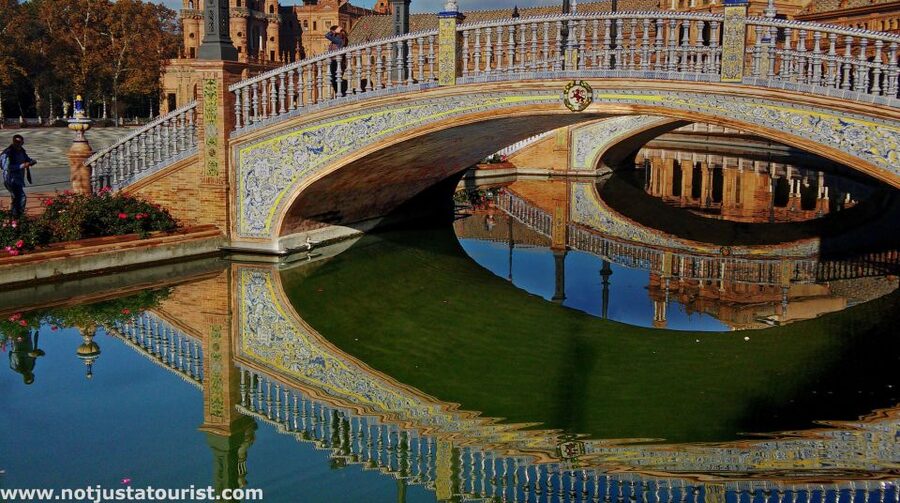
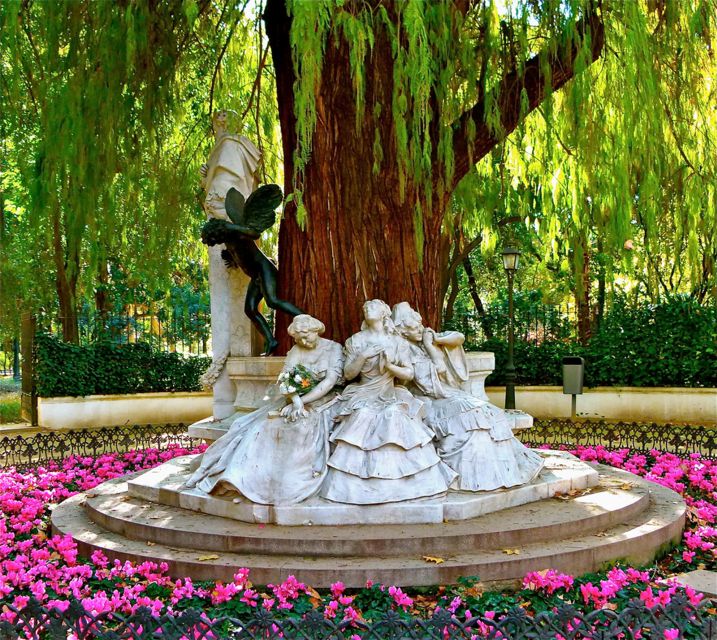
The next stop is the Glorieta de Doña Sol, followed by Plaza de España. The small plaza gives the tour another chance to focus on a female figure in Seville’s cultural memory.
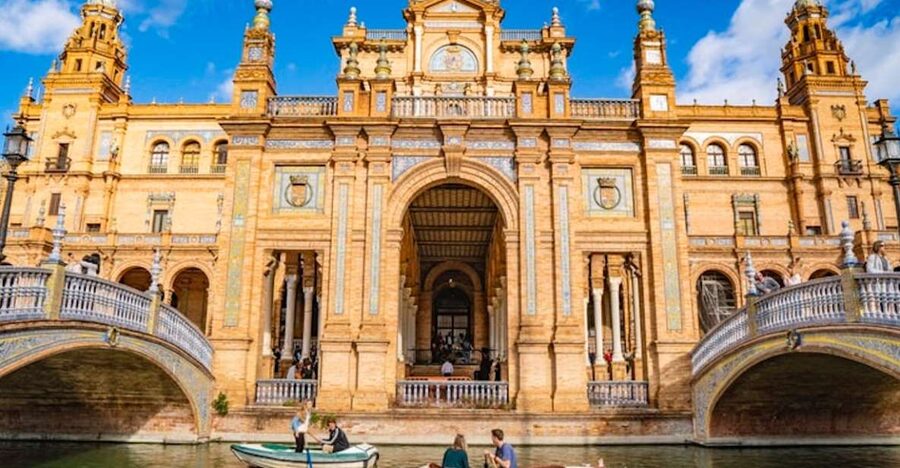
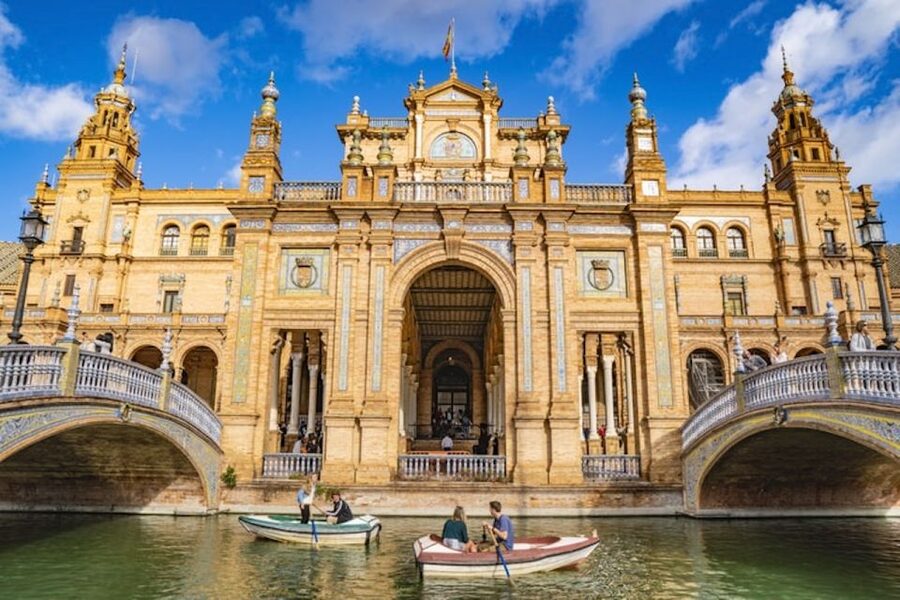
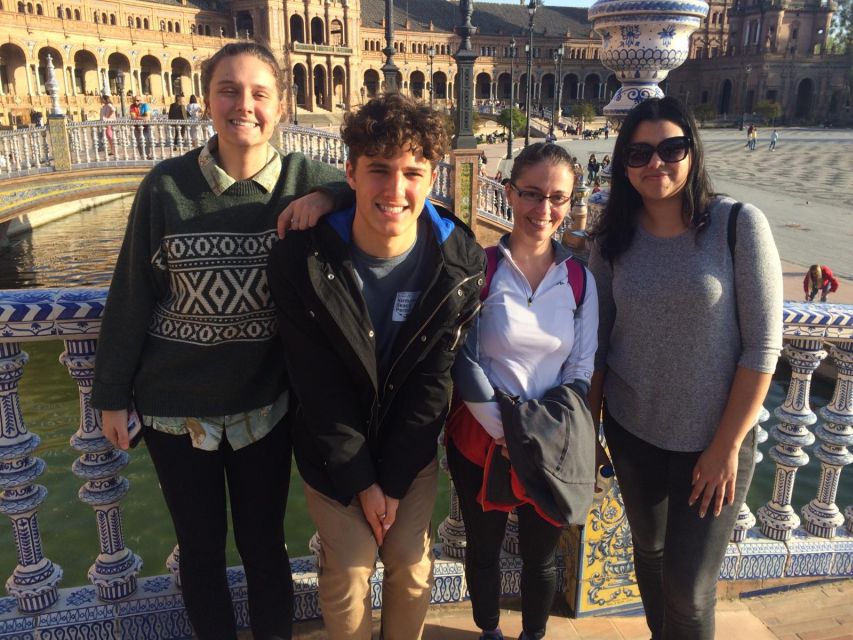
Plaza de España needs little introduction. Its grand scale and tile work make it one of the city’s essential sights, and the tour gives you time to hear how women fit into the stories connected with the place. You are scheduled to spend about ten minutes here with the guide.
Do not expect a full architectural tour of every tile and tower. The value here is the angle. You see one of Seville’s most photographed spaces while listening for the women whose roles are less obvious in the stone and decoration.
The route then continues to the Portuguese Pavilion, another Exposition-era building. This creates a useful link between architecture, international display, and women’s work and representation. If you have already visited Plaza de España independently, this stop still earns its place because the commentary changes what you look for.
More witch trial tours in Spain:
- Witch Hunt on Montjuïc: Self-Guided Puzzle Quest in Barcelona
★ 4.5 · 9 reviews - Zaragoza: Only excommunicated and cursed town with witches in Spain and food
★ 4.7 · 6 reviews - Plants and natural elements for Witchcraft and Tarot
★ 3.2 · 4 reviews - The Salem Witch Walk
★ 4.5 · 1,301 reviews
The old Tobacco Factory and the cigar girls
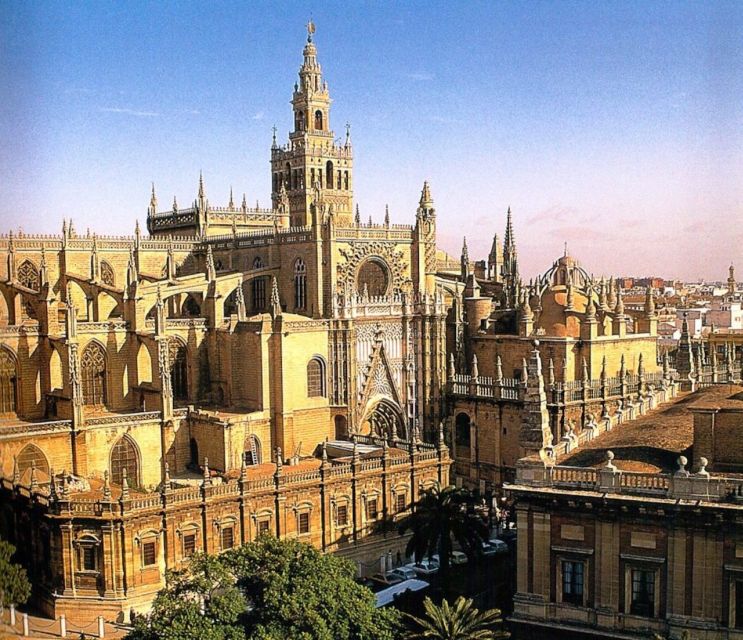
The Antigua Fábrica de Tabacos is one of the most important stops on the walk. The former tobacco factory is closely tied to the cigar girls, the women who worked rolling cigars and became part of Seville’s public image.
This is where the tour moves from queens and monuments toward labor. The women connected with the factory were not simply decorative figures in local folklore. Their work made them part of the city’s economic and social life, and the factory itself helps you picture the scale of that world.
The stop lasts about ten minutes. That is enough for a focused explanation, though not enough for a full study of the building or the entire tobacco industry. If working women and social history are your main interests, this is one of the tour’s strongest sections.
The old factory also helps balance the glamorous parts of the route. Seville is often sold through palaces, courtyards, and romantic legends. The cigar girls point you toward wages, labor, reputation, and the limits placed on women’s choices.
Santa Cruz, Susona, and the city’s darker stories
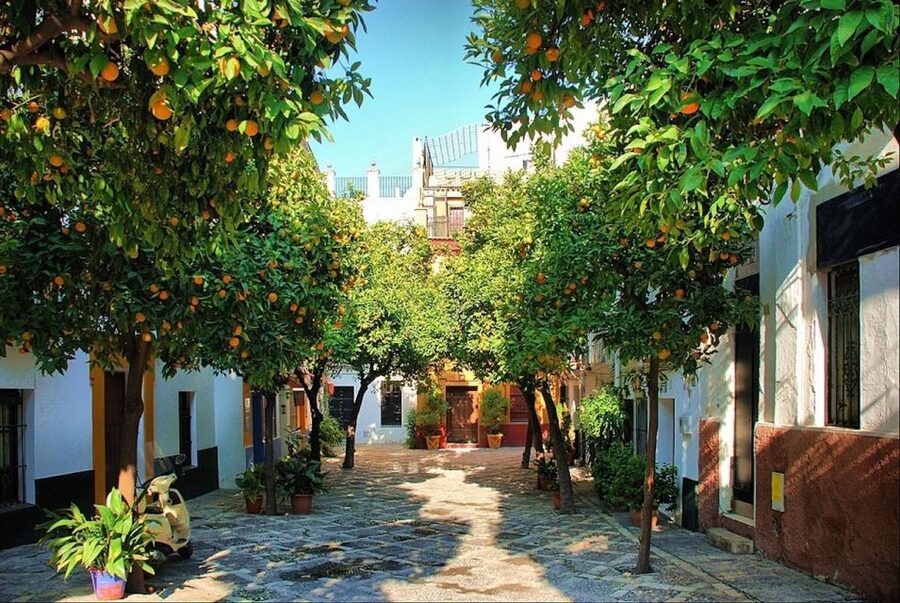
After the Tobacco Factory, the tour turns toward Calle Susona and the Jewish quarter of Santa Cruz. Here the streets become narrower and the stories more local in scale.
Calle Susona is tied to a female figure and a dramatic story from Seville’s past. The guide uses the street to show how individual women can become part of the city’s legends, especially when their stories involve loyalty, betrayal, danger, or family pressure.
This is also the part of the route where the themes of nuns, sex work, witches, and women with limited power fit most naturally into the wider discussion. The material is not presented as a simple celebration of famous women. You also hear about people whose lives were shaped by social rules, religious expectations, and the judgments of others.
The word witches in the title should not lead you to expect a supernatural show. The information provided describes a historical walking tour about women and their place in Seville. The emphasis is on stories and context, not staged effects.
Callejón del Agua offers a short stop in one of Santa Cruz’s atmospheric lanes. The alley and nearby streets show why this district is so popular, but the guide’s role is to move beyond pretty walls and narrow passages. You get the setting plus the human stories attached to it.
The local bar stop and a central finish
The tour includes a refreshing stop at an atmospheric local bar. The details of the drink or whether it is included are not specified, so you should treat this as a pause during the walk rather than a promised tasting.
That break matters. Two hours of walking and listening can feel dense, especially in warm weather. A short stop gives you a chance to ask about a story, take stock of the route, and enjoy a small slice of ordinary Seville.
The walk ends at Plaza Nueva, in the center of Seville. This is a practical finish if you want to continue toward other central sights, find lunch, or use the guide’s tips for the rest of your day.
One useful feature is the chance to request a more customized version or combine this walk with another activity, tour, or workshop from the same provider. The exact options are not specified, so ask before booking if you have a particular interest in women’s labor, literary Seville, religious life, or local legends.
How the guides shape the experience
The guide can make or break a story-led walking tour. Abby is repeatedly singled out for her engaging style, humor, and ability to explain women’s roles in Seville without making the subject feel dry. Her approach also worked well for teenagers, including one young participant who was not eager to join the tour.
Nico is described as funny, responsive, and very comfortable speaking English. His willingness to include a grumpy teenager and help arrange a carriage ride after the walk shows the kind of practical attention that can improve a family outing.
Guide assignments can change, so you should not assume Abby or Nico will lead your departure. Still, their reported strengths tell you what to look for: a guide who can tell a good story, adjust to the group, and connect the historical material to the places around you.
The tour runs in English or Spanish. Ask questions as you go. With no more than eight people, you have a much better setting for discussion than on a large group walk.
Is $105 a fair price?
At $105 per person, this is not a budget orientation walk. The tour lasts two hours, and the listed inclusions are the walking tour, professional guide, city map, and local tips. Entry tickets to monuments are not listed, and the route appears to view the sites from the outside or visit public areas.
The price makes more sense if you value the theme and the small group. You are paying for a carefully shaped story, access to a guide who can respond to questions, and a route that combines well-known places with less obvious streets.
It is harder to justify if you simply want an inexpensive introduction to Seville’s major monuments. In that case, a standard city walk may cover more ground for less money. This tour is for people who want a particular point of view, not just a checklist of sights.
The score of 4.3 from 27 ratings suggests a generally positive experience with some room for variation. The strongest praise centers on the guides’ storytelling, humor, attention to individual needs, and ability to make the female perspective feel personal rather than academic.
Who should book this walk?
I would recommend it to you if you enjoy social history, women’s history, literary legends, and stories about ordinary work as much as royal buildings. It also suits repeat visitors who have already seen Seville’s headline monuments and want a different way to read them.
Families with older children or teenagers may find the human stories easier to connect with than a long lecture on dates and dynasties. The guide’s ability to adjust the conversation matters here, and the small group helps.
You should think twice if you dislike sensitive subjects. The title signals stories involving sex work, witchcraft, unequal power, and women whose lives were judged by society. The tour is still a city walk, but it is not designed as a light architectural stroll.
The pace also favors people comfortable walking outdoors for two hours. The route includes parks, plazas, narrow streets, and several short stretches on foot. Comfortable shoes and water are sensible choices.
My verdict on Seville’s women-centered walk
Book this tour if you want Seville told through people who are often pushed to the side of the official story. The route gives you Plaza de España, Maria Luisa Park, the Exposition buildings, the Tobacco Factory, and Santa Cruz, but its real purpose is to connect those places with women’s work, choices, reputations, and struggles.
Skip it if your main goal is to enter monuments or cover every major sight in one fast sweep. The $105 price is high for two hours and does not list monument admissions. For the right person, though, the small group, strong guide-led storytelling, refreshing pause, and unusual theme make this a thoughtful addition to a Seville visit.
FAQ
How long does the Seville women’s history tour last?
The tour lasts two hours.
What is the price?
The price is $105 per person.
Where does the tour begin?
It begins at the Costurero de la Reina monument at Paseo de las Delicias, 3, in Seville.
Where does the tour finish?
The tour finishes at Plaza Nueva, 41001 Sevilla, Spain.
What languages are available?
The tour is available in English and Spanish.
How large is the group?
The group has a minimum of two participants and a maximum of eight.
Which major sights are included?
The route includes Maria Luisa Park, Plaza de España, the Pabellón de Portugal, the former Tobacco Factory, Santa Cruz, and several Exposition 1929 buildings.
Does the tour include a guide?
Yes. A professional live guide leads the walking tour.
Is a map included?
Yes. A city map and insider tips are included.
Can the tour be customized?
You can ask for a more customized tour or a combination with other activities, tours, or workshops offered by the provider.
Just added around Spain
- Zaragoza: Only excommunicated and cursed town with witches in Spain and food★ 4.7 · 6 reviews
- Self-Guided Audio Tour – Ghosts of Madrid: History and terror★ 3.5 · 9 reviews
- Ghosts of Madrid: Exploration Game and Tour★ 5.0 · 4 reviews
- Walking Tour Mysteries and Legends of Barcelona and its Ghosts★ 5.0 · 3 reviews
- Witch Hunt on Montjuïc: Self-Guided Puzzle Quest in Barcelona★ 4.5 · 9 reviews
- Barcelona Ghosts of a Dark Past Gothic Walking Tour★ 5.0 · 55 reviews
- Dark History and Legends Night Walk of Gothic Quarter★ 5.0 · 2 reviews
- The Gothic Trail – Ghosts of Barcelona Exploration Game★ 4.5 · 33 reviews
Seville Ghost Tours, compared.
Seville Evening Historical Tour with Haunted History
Read our review →
Browse the lists this tour appears in