
REVIEW · SPAIN GHOST TOURS
Inquisition, The Executioner, Witches, Expulsion Jews and Muslims
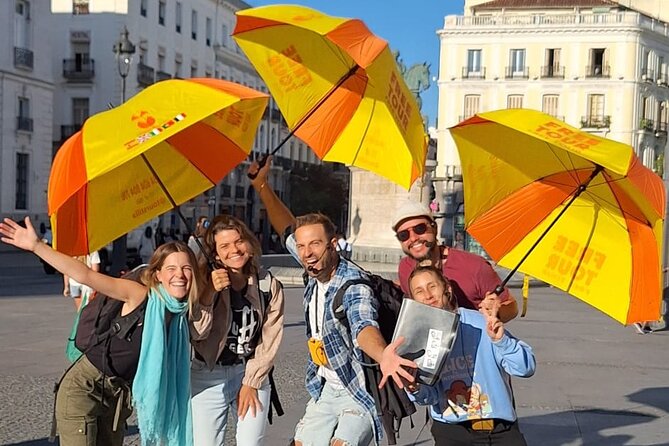
The most striking part of this Madrid walk is its route through places tied to the Spanish Inquisition, from investigations and torture to public executions and the long afterlife of religious persecution. You move through central Madrid while connecting the story to Christianity, Judaism, and Islam, rather than treating the Inquisition as an isolated chapter.
I like the clear stop-by-stop structure, and I like that guides such as Jackie and David Onion use printed material and teaching tools instead of relying only on talk. The price is also hard to ignore: $3.61 per group of up to 15, though you should treat it as a tip-supported free tour and allow for a possible cancellation if the guide is unavailable.
Key points to know before you book
- Eight central Madrid stops: The walk begins at Plaza Mayor and finishes at Plaza de la Armería, near the Royal Palace.
- A three-religion approach: The tour examines how the Inquisition affected Christians, Muslims, and Jews, including forced conversions and false accusations.
- The execution process gets full attention: You hear about investigation, torture, confession, the gallows, beheading, the garrote, and burning at the stake.
- Guides shape the experience: Jackie and David Onion are specifically associated with strong storytelling, clear explanations, and engaging delivery.
- It is a short, serious history walk: The route lasts about 2 hours 15 minutes, with eight stops and no required site admissions.
- The ending looks at memory and legacy: The final stops connect the Inquisition to Vatican records, John Paul II’s pardon, modern religious conflict, and Jewish and Muslim legacies in Spain.
What this Madrid Inquisition walk is really about
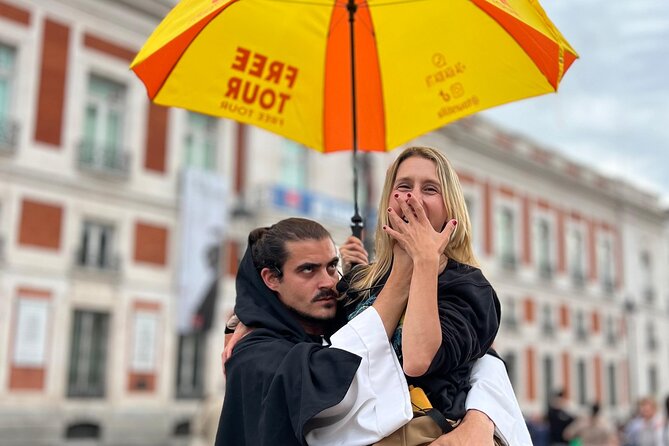
This is not a general sightseeing stroll with a few dark anecdotes added for atmosphere. It is a focused account of how religious authority, suspicion, law, and punishment worked in Spain.
You will hear about the Inquisition’s relationship with the three major monotheistic faiths. The emphasis is not only on the people accused, but also on the machinery around them: investigations, declarations of faith, denunciations, confessions, public trials, and punishment.
That approach gives the walk useful weight. You are not simply shown a square and told that something grim happened there. You are asked to consider how a legal and religious system could turn private belief into a public test.
The subject matter is plainly difficult. Torture, executions, forced conversion, and false allegations are central to the route. If you prefer light sightseeing, this is not the right pick. If you want a serious look at Madrid’s religious and political past, the format gives you plenty to think about without requiring entry into a museum.
More Witch Tours in Spain
- Seville: City of Queens, Nuns, Sex Work & Witches
★ 4.3 · 27 reviews - Gran Canaria: Green Witchcraft in the Magic Island
★ 4.9 · 26 reviews - Tour of the Inquisition and Witchcraft in Toledo
★ 3.3 · 13 reviews
Starting at Iglesia de Santa Cruz
The walk begins at Iglesia de Santa Cruz, where the guide introduces the Inquisition through its connection to Christianity, Islam, and Judaism. This opening matters because it sets the scope of the tour from the first stop.
You can expect the guide to explain how religious identity became a matter of official concern and how the three faiths were treated within the changing political order. The stop lasts about 15 minutes, so it functions as a framework rather than a long lecture.
I appreciate that the route starts with ideas before moving to punishment. Without that context, the later discussion of torture and execution could become a grim list of techniques. Here, you first get the religious and social structure that made those practices possible.
No admission fee is required at the church stop. Since the route stays in central Madrid, you also avoid spending time crossing the city between sections.
The investigation at Plaza de la Provincia
At Plaza de la Provincia, the focus turns to the executioner and the investigative process. This is where the tour explains how accusations were examined, how torture was used, and how confessions entered the process.
The subject can be unsettling, but it is also one of the most useful sections for understanding the Inquisition as a system. Torture and confession were not random acts of violence in the story presented here. They were tied to procedure, authority, and the pressure placed on people accused of religious wrongdoing.
The stop lasts around 15 minutes. That is enough time for a clear explanation, though anyone seeking a full academic study will find the treatment necessarily condensed.
The guide’s delivery matters here. David Onion is described as using dramatic skill to keep the group engaged, while Jackie is noted for making the subject easy to follow. Those qualities are valuable when the material is dense and emotionally heavy.
Public trials at Casa de la Carniceria
Casa de la Carniceria introduces the autos de fe, or public acts of faith, in Madrid. The stop also covers the major trial and the most famous painting connected with the subject.
This section shifts the story from hidden investigation to public spectacle. The Inquisition was not only about what happened in rooms where accusations were examined. Public ceremony, display, and collective judgment also played a role.
The painting reference gives the guide a visual way to discuss the big trial. Printed materials and teaching tools are used along the route, which should help if you do not already know the people, symbols, or scenes being discussed.
This stop is scheduled for about 15 minutes. You do not need to enter the building, so the value comes from the explanation and the location rather than from viewing an interior collection.
More witch trial tours in Spain:
- Witch Hunt on Montjuïc: Self-Guided Puzzle Quest in Barcelona
★ 4.5 · 9 reviews - Zaragoza: Only excommunicated and cursed town with witches in Spain and food
★ 4.7 · 6 reviews - Plants and natural elements for Witchcraft and Tarot
★ 3.2 · 4 reviews - The Salem Witch Walk
★ 4.5 · 1,301 reviews
Religious suspicion at Basilica de San Miguel
The Basilica de San Miguel stop looks at how authorities tried to identify a false Jew or a false Moorish convert. It also covers Edicts of Faith and false allegations.
This is one of the most important parts of the experience because it shows how suspicion could spread beyond a single accusation. Religious practice, ancestry, and reputation could all become points of scrutiny.
The language of false Jew and false Moorish reflects the categories used in the historical story. The guide’s job here is to explain how those labels operated, not to present them as neutral descriptions.
You also hear about Edicts of Faith, public proclamations that encouraged accusations. That detail helps explain how the process could reach into ordinary community life. The danger was not limited to a formal hearing. Allegations could gain force through public pressure and official encouragement.
Again, the stop lasts approximately 15 minutes. The basilica provides a strong setting for the discussion, but the experience does not include a required interior visit.
Cisneros and Torquemada at Casa Cisneros
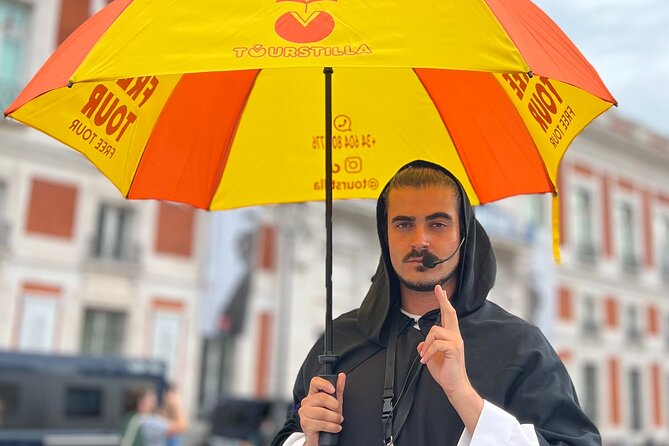
Casa Cisneros brings two major names into the discussion: Cisneros and Torquemada. The guide compares their historical roles in a short 10-minute stop.
This is a useful pause in the route because large institutions are often easier to understand through individual figures. You get a chance to place personalities and decisions within the wider story of the Inquisition.
The brief timing means this will be an overview, not a biography lesson. Still, it breaks up the larger themes and gives you names to remember as the walk moves toward punishment and public execution.
If you enjoy political and religious history, this section may be one of the most helpful. If you are mainly interested in Madrid architecture, it will feel more like a historical marker than a sightseeing highlight.
Punishment at Plaza de la Cruz Verde
Plaza de la Cruz Verde is the tour’s most direct encounter with the symbols and methods of Inquisition punishment. The guide covers implementation, the gallows, beheading, the garrote vil, burning at the stake, and Bruges.
The stop lasts about 20 minutes, making it one of the longer sections. That extra time is understandable. The guide is covering several methods of execution as well as the symbolism attached to the square.
The garrote vil deserves special attention because it returns later in the tour. You will hear about it as one of the execution methods associated with the Inquisition, then again when the route discusses the last execution using the device in 1974.
This repetition connects old and modern Spain in a disturbing way. It shows that the end of the Inquisition did not mean every form of state execution ended at the same moment.
The material here is graphic in subject, even if no physical display is involved. I would not book this walk for young children unless you already know they can handle frank discussion of torture and execution.
The cathedral, Vatican Archives, and the end of the Inquisition
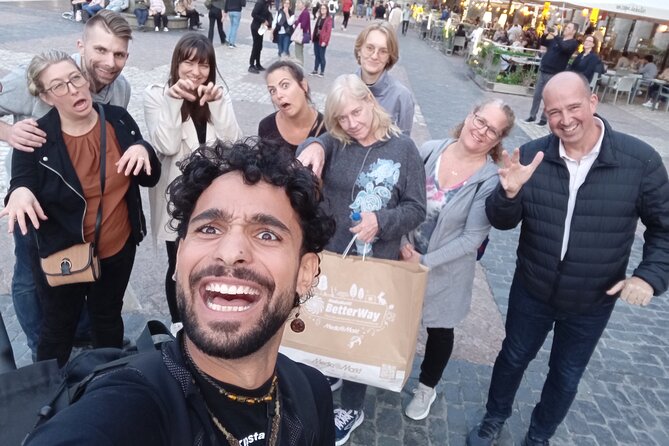
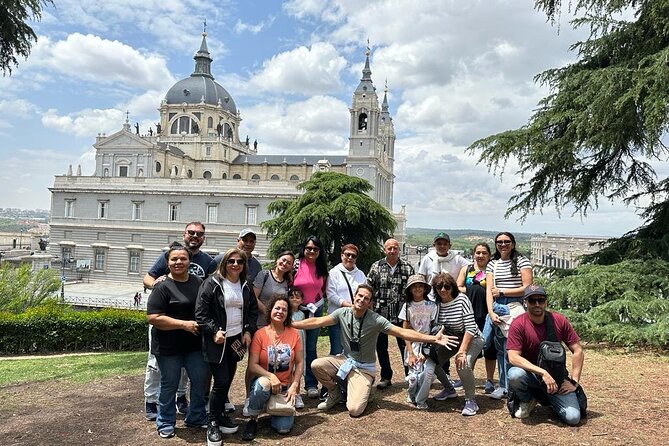
At Catedral de Santa María la Real de la Almudena, the route turns toward the end of the Inquisition and the records preserved in the Vatican Archives.
The guide also discusses John Paul II and the pardon of the Catholic Church. This gives the walk a later chapter that many short historical tours omit. Instead of ending with the last execution or the formal end of an institution, you are asked to consider how the Church addressed the damage associated with the past.
The stop also returns to the garrote vil, including the last execution of the Inquisition and the 1974 execution using that method. The exact wording of the historical connection is something you will want to follow closely, since the section links the Inquisition’s legacy to a much later Spanish event.
The tour then broadens again, covering Jewish legacies in Spain and Muslim legacies in Spain. This is where the walk moves beyond institutions and punishments to the cultural and religious traces left behind.
The cathedral stop lasts about 20 minutes. It is a strong late point in the route because you have already heard how religious identity was policed. Now you consider what survived, what was lost, and how Spain remembers those communities.
Closing at Plaza de la Armería
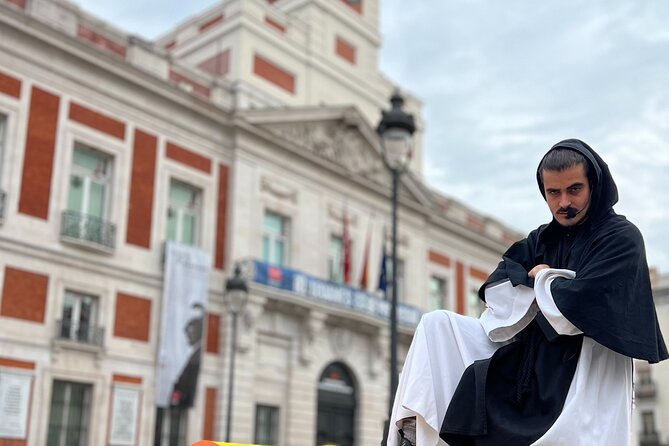
The final stop is Plaza de la Armería, about a 10-minute walk from the Plaza Mayor meeting point and close to Madrid’s Royal Palace area. The guide discusses current religious conflicts, the idea of holy wars, continuing legacies, and a closing reflection.
This ending is more open-ended than the earlier stops. You are not simply given a final date and sent away. The discussion asks you to connect the historical material with modern questions about religion, political power, and conflict.
That can make the tour feel more relevant, though it may also feel less tidy. History does not end neatly at the last execution. The closing reflection is meant to leave you considering how old divisions continue to shape public life.
The end point is also practical. You finish near Plaza de la Armería, and the route is only about three minutes from Metro Ópera according to the meeting information. You can continue toward the Royal Palace area or return toward central Madrid without arranging extra transport.
Guide style matters more than the low price
This experience uses a free-tour model. The listed price is $3.61 per group of up to 15, and tips are not included. You are encouraged to value the guide’s effort with a tip at the end.
That price offers excellent value if you want a structured introduction to a difficult subject without paying museum admission. The route includes a local guide, printed material, teaching tools, and a link to personalized Madrid recommendations. No food, drink, or paid site entrance is part of the experience, but no entry is required at the stops.
A guide’s ability to explain and pace the material will shape your experience. Jackie is associated with clear, interesting explanations, while David Onion is noted for dramatic storytelling and keeping the group engaged. David also explained the usual tipping practice without pressure, which is useful on a free tour.
There is one practical caution. A booking was canceled at the last minute because a guide was unavailable and no replacement could be found. The stated policy allows free cancellation up to 24 hours before the start time, but that does not remove the possibility of a provider-side cancellation. Keep this in mind if you are building a tight schedule around the walk.
Timing, group size, and who will enjoy it
The full experience takes about 2 hours 15 minutes. The eight stops range from 10 to 20 minutes, with walking between them. Wear comfortable shoes, even though the route is in central Madrid and does not require a long day of sightseeing.
The maximum group size is listed as 30, while the price refers to groups of up to 15. Ask for clarification if the number matters to you, since those figures describe different parts of the booking arrangement.
The tour is offered in English and uses a mobile ticket. Service animals are allowed, public transport is nearby, and most people can participate. Since the supplied details do not describe the exact pavement, stairways, or seating at every stop, ask the provider directly if you have specific mobility needs.
I would choose this for:
- You want a serious history walk rather than a broad city tour.
- You are interested in religious persecution, public trials, and Spanish political history.
- You prefer explanations at outdoor locations over paid museum visits.
- You enjoy a guide who uses drama, visuals, and teaching aids.
- You want to connect medieval and early modern events with later Spanish memory.
I would skip it if you want a relaxed route centered on food, architecture, or cheerful stories. The themes are grim, and the route asks you to listen closely.
Should you book this Madrid Inquisition tour?
Book it if you want Madrid’s central streets to serve as a classroom for religious power, suspicion, punishment, and memory. The strongest features are the focused route, the attention to Jewish and Muslim legacies, and guides such as Jackie and David Onion who can make difficult material understandable and engaging.
The low price makes it a sensible choice for history-minded visitors, but remember that it operates through tips and that a guide shortage has caused at least one last-minute cancellation. Give yourself some schedule flexibility.
For a thoughtful introduction to the Inquisition, this is a worthwhile two-hour walk. You will not leave with every historical detail, but you will leave with a clearer sense of how religion shaped Madrid’s institutions, public spaces, and long memory.
FAQ
Where does the tour begin?
The tour begins at Plaza Mayor in central Madrid.
Where does the tour end?
It ends at Plaza de la Armería, near the Royal Palace area. The endpoint is about a 10-minute walk from Plaza Mayor and about three minutes from Metro Ópera.
How long does the experience last?
The tour lasts approximately 2 hours and 15 minutes.
What language is the tour offered in?
The experience is offered in English.
Are entrance tickets required?
No. The listed stops do not require admission for this experience. Food, drinks, and tips are not included.
What is the cancellation policy?
You can cancel for a full refund if you do so at least 24 hours before the local start time. Cancellations or changes made less than 24 hours before the start are not accepted for a refund.
Just added around Spain
- Zaragoza: Only excommunicated and cursed town with witches in Spain and food★ 4.7 · 6 reviews
- Self-Guided Audio Tour – Ghosts of Madrid: History and terror★ 3.5 · 9 reviews
- Ghosts of Madrid: Exploration Game and Tour★ 5.0 · 4 reviews
- Walking Tour Mysteries and Legends of Barcelona and its Ghosts★ 5.0 · 3 reviews
- Witch Hunt on Montjuïc: Self-Guided Puzzle Quest in Barcelona★ 4.5 · 9 reviews
- Barcelona Ghosts of a Dark Past Gothic Walking Tour★ 5.0 · 55 reviews
- Dark History and Legends Night Walk of Gothic Quarter★ 5.0 · 2 reviews
- The Gothic Trail – Ghosts of Barcelona Exploration Game★ 4.5 · 33 reviews
Spain Ghost Tours, compared.
Gothic Quarter Ghosts and Legends Walking Tour
Read our review →
Seville Evening Historical Tour with Haunted History
Read our review →


Barcelona Dark History Night Walking Tour With Drinks
Read our review →Browse the lists this tour appears in