
REVIEW · SPAIN GHOST TOURS
Tour of the Inquisition and Witchcraft in Toledo
Toledo’s Inquisition tour takes you into the city’s darker past, beginning at Plaza de Zocodover, where public acts of faith were held. You’ll hear how accusations moved from suspicion to interrogation, punishment, and sometimes execution, while also sorting documented events from the witchcraft legends that grew around them.
I like the clear route through several historic quarters, and I like that the tour explains the Inquisition’s hierarchy and legal process, not just its most sensational stories. The Spanish-speaking guide Vanesa has also been praised for her energy and for handling the subject with sensitivity, including when a Jewish participant was in the group.
The main caution is reliability. Several bookings were canceled less than an hour before departure because the minimum group size had not been reached. The current score is 3.3 from 13 ratings, so I’d keep a little flexibility in your Toledo schedule.
Key points to know before you book
- Start at Zocodover: Meet at Calle Armas 3, opposite the Rodilla café, at the beginning of the square, and look for the guide’s small colored flag or pink flag.
- Focus on history, not ghost stories: Witchcraft legends appear, but the guide’s approach is mainly historical rather than theatrical or mysterious.
- Visit the old Jewish Quarter: The route connects religious persecution with Toledo’s Jewish past and the wider climate of suspicion in the city.
- See places tied to punishment: Posada de la Hermandad, Plaza Mayor, San Pedro Mártir, and nearby streets help explain prisons, torture, and public penance.
- Spanish only: The live guide speaks Spanish, so you’ll get the most from this walk if you can follow a historical explanation in that language.
- Small booking limits apply: Groups of family or friends are limited to six people, and at least six participants are needed for the tour to run.
Starting where Toledo staged its public acts of faith
The tour begins at Calle Armas 3, just opposite the Rodilla café at the start of Plaza de Zocodover. This is a busy and easy-to-find part of Toledo, but do not simply wait near the middle of the square. Look for the guide with a small colored flag, described in the meeting instructions as a pink flag.
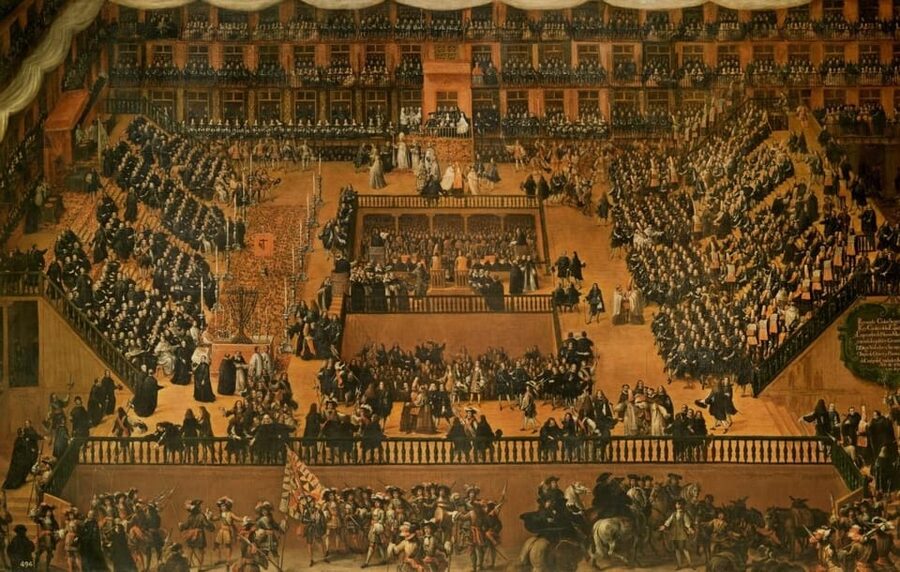
Zocodover is the right starting point for this subject. During the time of the Spanish Inquisition, the square hosted autos de fe, public religious ceremonies where accused people acknowledged their sins and showed repentance in the hope of reconciliation with the Catholic Church.
These events were not simply private court hearings. They were public displays of authority, religion, shame, and control. Beginning here helps you understand how the Inquisition affected ordinary life, not just the people who ended up in prison.
The tour lasts about 90 minutes, so the opening explanation needs to set the tone quickly. This is not a costumed show or a theatrical reenactment. You are walking through a working city while learning how a powerful institution used public ceremony and fear to enforce religious conformity.
More Witch Tours in Spain
- Inquisition, The Executioner, Witches, Expulsion Jews and Muslims
★ 5.0 · 85 reviews - Seville: City of Queens, Nuns, Sex Work & Witches
★ 4.3 · 27 reviews - Gran Canaria: Green Witchcraft in the Magic Island
★ 4.9 · 26 reviews
How the Inquisition worked in Toledo
One of the useful features of this tour is its attention to structure. You’ll hear about the Inquisition’s hierarchy and the steps followed after a suspected offense was detected.
That matters because popular stories often reduce the Inquisition to a simple chain of accusation and execution. The reality presented here is more procedural. People could be investigated, arrested, interrogated, and judged. Sentences varied, and could include confiscation of property, public penance, and other forms of punishment.
The tour also covers torture as part of the interrogation process. Accused witches and sorcerers were treated as people suspected of heresy, and confessions could be sought through coercive methods. This is difficult material, but it gives the walk more substance than a collection of spooky tales.
You should expect the guide to explain the system rather than recreate its violence. That is a strength for anyone interested in Toledo’s religious and political history. If you want a dramatic ghost walk full of supernatural anecdotes, this may feel too restrained.
Posada de la Hermandad and the machinery of punishment
From Zocodover, the route continues through Toledo’s narrow streets toward the Plaza Mayor and the Posada de la Hermandad. Here the subject turns more directly to prisons, punishments, and torture methods associated with the Holy Inquisition.
The setting matters. Toledo’s old streets can make the past feel close, but the buildings and lanes alone do not explain what happened in them. The guide’s job is to connect the physical route with the institutions that operated in the city.
At this point, you’ll get a clearer sense of how punishment worked as both law and public example. The Inquisition did not only punish an accused person. It also sent a message to everyone watching, especially when ceremonies took place in prominent public spaces.
The route is pedestrian and takes place in Toledo’s historic center. Wear comfortable shoes, since the tour moves through old streets rather than following a flat modern promenade. The supplied information confirms wheelchair accessibility, though Toledo’s historic center can still require patience in places.
San Pedro Mártir and a mass public ceremony
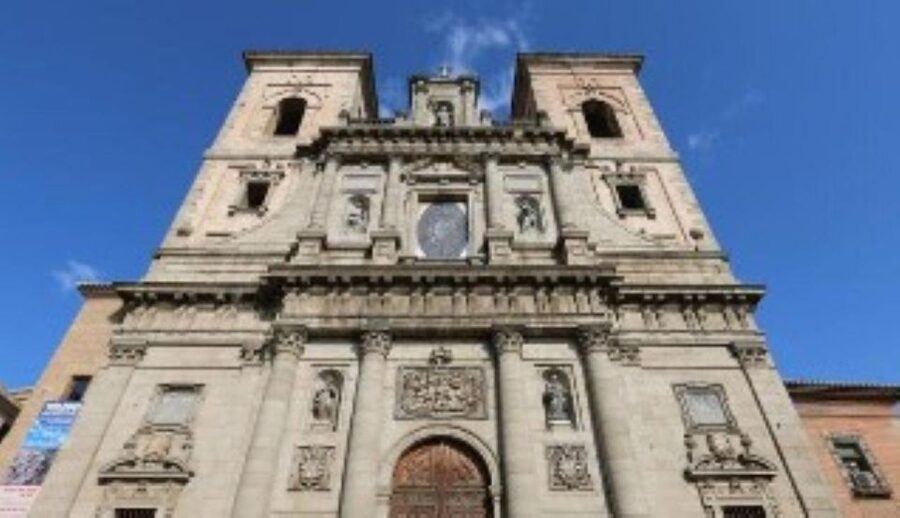
The stop at the Convento de San Pedro Mártir gives the tour one of its most striking details. The first auto-da-fé in Toledo is said to have left from here in the 15th century, involving more than 700 people.
That number helps show the scale of these events. The Inquisition was not only dealing with isolated individuals. Large public ceremonies could involve many accused people and turn religious judgment into a spectacle witnessed by the city.
Near San Pedro Mártir, the guide explains how the headquarters were organized and what happened from the first detection of an alleged crime through the later stages of the case. I find this part especially useful because it turns a vague historical label into a sequence you can follow.
You may also hear about famous prisoners connected with Toledo. The supplied material does not name them in advance, so do not book this expecting a fixed list of celebrity cases. The value is in the explanation of how individual stories fit into the wider system.
More witch trial tours in Spain:
- Witch Hunt on Montjuïc: Self-Guided Puzzle Quest in Barcelona
★ 4.5 · 9 reviews - Zaragoza: Only excommunicated and cursed town with witches in Spain and food
★ 4.7 · 6 reviews - Plants and natural elements for Witchcraft and Tarot
★ 3.2 · 4 reviews - The Salem Witch Walk
★ 4.5 · 1,301 reviews
The Cathedral area and Toledo’s religious power
The itinerary includes the Toledo Cathedral as a guided stop. The tour does not list an interior entrance or a separate cathedral ticket, so treat this as an exterior or surrounding-area explanation unless the guide tells you otherwise.
The Cathedral is an important place to discuss the religious setting in which the Inquisition operated. Toledo was a major religious and cultural center, and the church’s influence shaped public life, law, and ideas about acceptable belief.
The stop also helps place the darker subject within the city’s wider story. You are not only hearing about dungeons and accusations. You are learning how religious institutions, public ritual, and civic space worked together.
Because the tour does not require entrance tickets or extra payments, the Cathedral stop is best understood as part of the walking narrative rather than a full guided visit inside the building. If seeing the Cathedral interior is a priority, plan that separately.
The Jewish Quarter and a careful approach to persecution
The route passes through Toledo’s ancient Jewish Quarter, one of the most important parts of the walk. This is where the tour can connect the Inquisition with the city’s complex religious past.
Toledo’s history includes Christian, Jewish, and Muslim communities, and the Inquisition’s story cannot be separated from questions of religious identity and pressure to conform. The route does not present persecution as a simple tale of good and evil. It examines how suspicion and religious authority affected different people.
Guide Vanesa received specific praise for showing sensitivity when a Jewish person was part of the group. That detail is worth noting because this subject can be handled poorly if it becomes sensational or careless. Here, the intended approach is historical and respectful.
The Jewish Quarter also gives the walk a useful change of pace. Instead of staying only with prisons and public punishments, you see how the city’s streets hold several overlapping histories. Listen closely to the guide’s explanation, since the live tour is in Spanish.
Calle de la Espadería and the difference between fact and legend
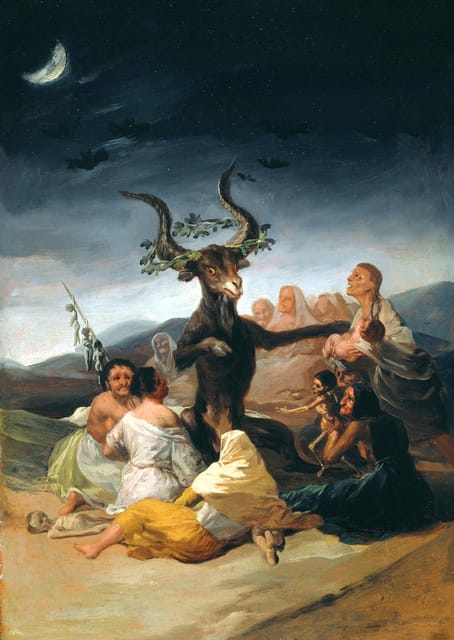
Toledo’s witchcraft stories are tied to old streets and secret meeting places, including Calle de la Espadería. The route uses these stories to show the fear and superstition surrounding alleged sorcery.
This is where expectations matter most. One booking described the guide’s approach as historical rather than focused on mystery and myths. That means you might hear legends of witches and sorcerers, but the emphasis is on how people were accused and treated, not on proving that supernatural events happened.
I prefer this approach for a history walk. Legends still matter because they show what a society feared. At the same time, separating folklore from documented procedure keeps the tour from turning persecution into entertainment.
If you want shocking tales, secret covens, and a spooky nighttime mood, you may find this route less dramatic than expected. If you want to understand why witchcraft accusations carried such serious consequences, it should be a better fit.
San Vicente and the end of the Inquisition
Near the old Church of San Vicente and Plaza de San Vicente, the guide discusses the end of the Inquisition in Spain. The institution began in the 15th century under Ferdinand and Isabella and continued into the 19th century.
This final section gives the walk a needed sense of time. The Inquisition was not a brief medieval episode that disappeared quickly. Its long existence helps explain why its methods and reputation remained such a powerful part of Spanish history.
You’ll also return to stories of notable prisoners from Toledo. The route ends back at Calle Armas 3, so the walk forms a loop from the central meeting point rather than leaving you in an unfamiliar part of town.
The ending is practical as well as historical. From Zocodover, you can continue exploring Toledo’s center, visit another sight, or stop for a drink without needing transport back to your hotel.
What $10 gets you, and what it does not
At $10 per person, this is a low-cost way to add historical context to a Toledo visit. The price includes an official local guide, and the route covers several important areas without requiring extra ticket payments.
The strongest value comes from the guide’s interpretation. You are paying for a 90-minute explanation of how the Inquisition operated, where it held public ceremonies, how it treated suspected heresy, and why witchcraft accusations carried such weight.
You are not paying for a museum entrance, a private group, or a long specialist lecture. The group can include several people, and reservations for a family or friend group cannot exceed six. At the same time, the tour requires at least six participants to run.
That minimum is the main practical weakness. Two separate bookings were canceled less than an hour before the start because there were not enough reservations. One person was still waiting for a refund after a cancellation, while another felt the late notice caused problems with a carefully arranged day.
I would not build a tight Toledo schedule around this walk. If you book it, leave room afterward and check for changes before heading to Zocodover. The free cancellation period is 24 hours in advance, and you can reserve now while paying later, which gives you some flexibility.
Who should take this Toledo walk
I would recommend it to you if you enjoy local history, can follow Spanish, and want a serious look at persecution rather than a standard sightseeing circuit. It is also a useful choice if you have already seen Toledo’s major monuments and want a subject-focused walk through familiar streets.
The tour suits curious adults and older children who can handle discussion of prisons, torture, religious conflict, and executions. It may not suit young children looking for light entertainment.
You should also book with realistic expectations about the witchcraft theme. The tour includes legends and superstition, but its strongest material concerns the Inquisition’s structure, public ceremonies, punishments, and the lives of accused people.
Guide Vanesa’s warmth and enthusiasm are clear positives. Her careful handling of sensitive religious history adds value, especially for a mixed group. Still, the tour is offered in Spanish only, and the uneven record of last-minute cancellations deserves attention.
Should you book the Inquisition and Witchcraft tour?
Book it if you want a short, inexpensive, Spanish-language history walk that connects Zocodover, the Jewish Quarter, religious buildings, prisons, and public punishment. The route gives you a sharper understanding of Toledo’s past than simply looking at its old walls.
Skip it if you need a guaranteed departure, an English guide, a private group larger than six, or a highly theatrical witchcraft show. If you do reserve, confirm the departure close to the start time and avoid placing an important timed activity immediately afterward.
For the right visitor, $10 is fair value. The strongest reason to go is the historical framing and the sensitive guiding. The biggest reason to hesitate is not the subject matter, but the possibility that the tour may be canceled when too few people book.
FAQ
Where does the tour meet?
Meet at Calle Armas 3, opposite the Rodilla café at the beginning of Plaza de Zocodover. The guide carries a small colored flag, also described as a pink flag.
How long does the tour last?
The walking tour lasts approximately 1.5 hours.
What language is the tour in?
The live guide speaks Spanish.
Is the tour wheelchair accessible?
Yes, the activity is listed as wheelchair accessible.
Are entrance tickets or extra expenses required?
No. The tour does not require payment for tickets or additional expenses.
What happens if I can no longer attend?
You can cancel up to 24 hours before the tour for a full refund. If you cannot attend, cancel the reservation so the guide is not left waiting.
Just added around Spain
- Zaragoza: Only excommunicated and cursed town with witches in Spain and food★ 4.7 · 6 reviews
- Self-Guided Audio Tour – Ghosts of Madrid: History and terror★ 3.5 · 9 reviews
- Ghosts of Madrid: Exploration Game and Tour★ 5.0 · 4 reviews
- Walking Tour Mysteries and Legends of Barcelona and its Ghosts★ 5.0 · 3 reviews
- Witch Hunt on Montjuïc: Self-Guided Puzzle Quest in Barcelona★ 4.5 · 9 reviews
- Barcelona Ghosts of a Dark Past Gothic Walking Tour★ 5.0 · 55 reviews
- Dark History and Legends Night Walk of Gothic Quarter★ 5.0 · 2 reviews
- The Gothic Trail – Ghosts of Barcelona Exploration Game★ 4.5 · 33 reviews
Spain Ghost Tours, compared.

Gothic Quarter Ghosts and Legends Walking Tour
Read our review →
Seville Evening Historical Tour with Haunted History
Read our review →


Barcelona Dark History Night Walking Tour With Drinks
Read our review →Browse the lists this tour appears in