
REVIEW · GERMANY GHOST TOURS
Freiburg: Acting tour “Witches, Torture, Stake” with Historix-Tours
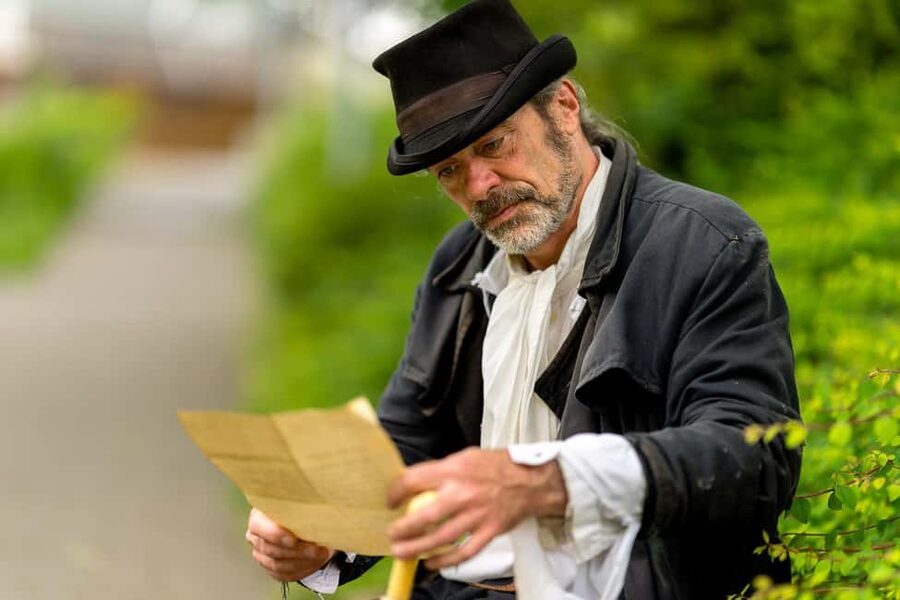
Freiburg’s witch hunts come alive through the story of Catharina Stadellmenin, a woman accused in 1599 and dragged into prison, torture, and interrogation. I like the way the tour connects her fate to real places in the old town, and I like the actor-led storytelling, which gives the history more urgency than a standard walking tour. You also hear about two other women, making this more than a single tragic tale.
The main drawback is that every stop is outdoors, and the places themselves may not offer much to look at. You need some imagination, especially since there are no interior visits. The subject is grim, too, so this is best for adults and teens with a serious interest in witch-hunt history, not for young children or anyone seeking a light city stroll.
Key points
- Catharina Stadellmenin’s 1599 case: Follow the story of Freiburg’s so-called Witch of Freiburg from accusation to imprisonment and questioning.
- A professional actor as guide: The guide performs the history rather than simply reciting dates. Julia M. received especially strong praise for her acting and friendly manner.
- Seven atmospheric old-town stops: The route runs from Rathausplatz through sites linked with courts, prisons, torture, religious life, and execution.
- A correction to the usual timeline: Freiburg’s witch hunts belong mainly to the early modern period, from the 16th century through 1751, not the Middle Ages.
- Good value at $17: A 90-minute guided city walk costs little compared with many sightseeing activities, though the tour is in German and includes outdoor views only.
- Dark material, handled as history: Expect accounts of torture, accusations, and execution, with some period attitudes and imagery that may be disturbing.
Freiburg’s witch hunts begin at Rathausplatz
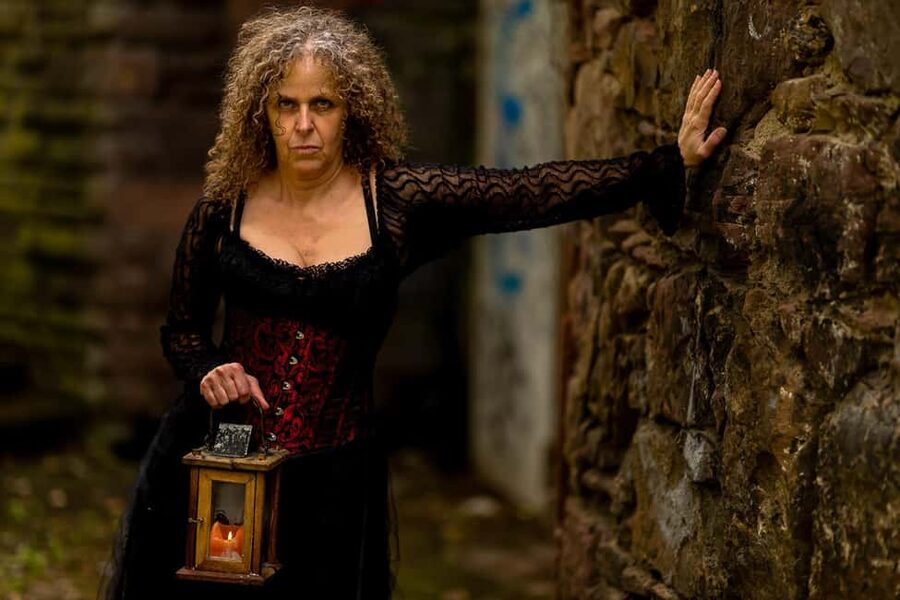
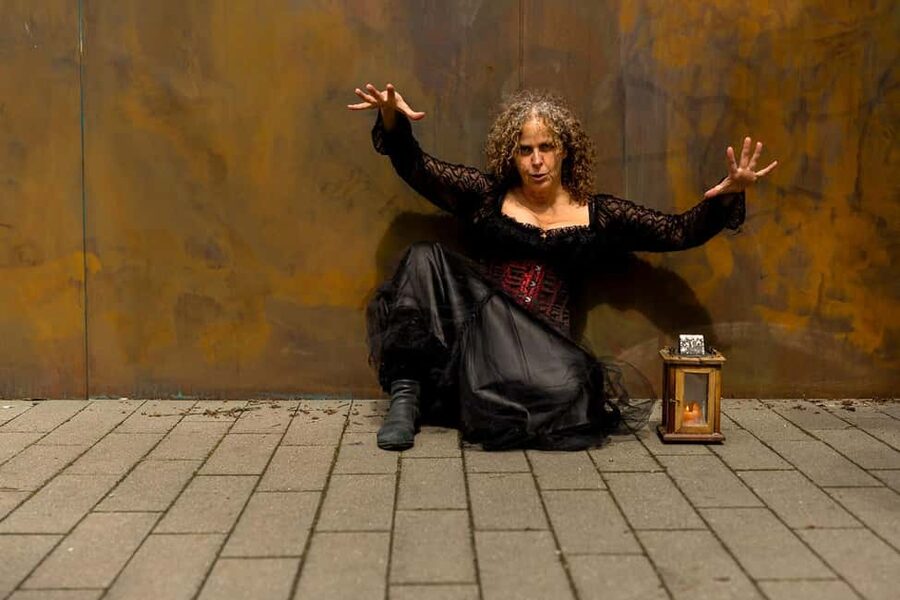
Meet in front of the main entrance to St. Martin’s Church on Rathausplatz, opposite the tourist information office. The guide is easy to spot: look for the costume and lantern.
That opening detail matters. This is not a guide in ordinary street clothes pointing out a few plaques. Historix-Tours presents the program as an acting tour, and the lantern and costume set the tone before the first story begins. You are still on a city walking tour, but the guide takes on the voice and mood of a historical performer.
The central figure is Catharina Stadellmenin, known as the Witch of Freiburg. In 1599, she was living an ordinary life in the city until an accusation of witchcraft changed everything. The tour asks the questions that shaped such cases: Was she accused of sleeping with the devil? Did authorities demand a confession? Who was said to attend a witches’ sabbath? What happened when torture was used again and again?
These questions are not presented as spooky folklore alone. They point to the machinery of persecution: suspicion, interrogation, imprisonment, torture, and the belief that a confession proved guilt. That makes the tour more useful than a simple collection of ghost stories.
More Witch Tours in Germany
- Munich: Witches and Executioners Guided Tour
★ 4.7 · 353 reviews - Witch Trials in Bamberg
★ 4.4 · 187 reviews - Oldenburg: “Executioners, witches & scoundrels” (crime thriller tour)
★ 4.6 · 50 reviews
Gerichtslaube and the machinery of accusation
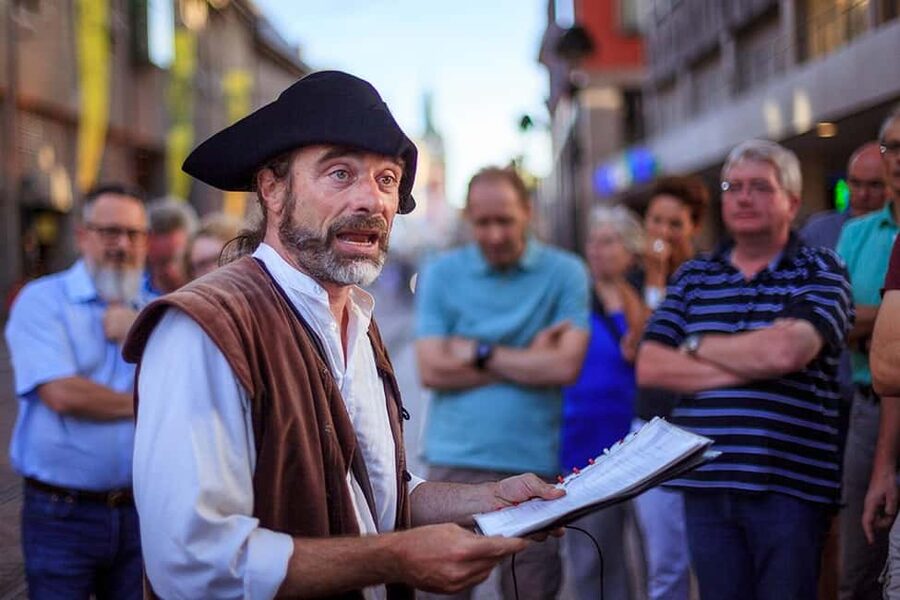
The first listed stop is the Gerichtslaube, or historic court building. Here, the story moves from rumor to formal authority. A witch accusation became dangerous when courts accepted it, investigated it, and treated torture as a path to the truth.
You can expect the guide to explain how the legal process worked in the period, along with the fears and assumptions that made witch hunts possible. The exact interior is not part of the tour. You see the site from outside, so the value comes from the narration and the setting rather than from entering a courtroom.
I like this approach for a short walking tour because it keeps the focus on people and decisions. The building gives the story a physical anchor, while the actor explains how an accusation could become a death sentence. It also helps you understand that witch hunts were not random outbreaks of medieval superstition. They were tied to institutions, laws, and social beliefs.
Am Predigertor and the city’s old boundaries
At Am Predigertor, the route continues through Freiburg’s historic pedestrian zone. A gate is a useful place to discuss how the old city was organized and how officials, prisoners, and condemned people moved through it.
The tour does not promise access to a preserved dungeon or torture room. Instead, the outdoor stop helps you picture a city where movement was controlled by gates and where public punishment carried a strong message. You might find that the physical remains are less dramatic than the subject suggests. The guide’s performance does much of the work.
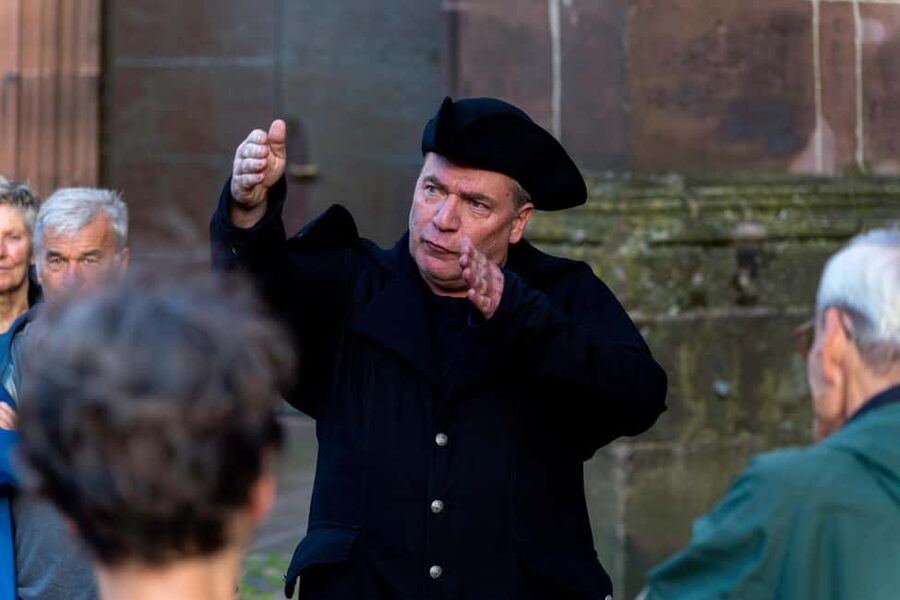
This is where the tour’s acting format matters most. A strong performer can make an ordinary street corner feel tied to the people who passed through it. Julia M., one of the named performers praised in the feedback, was singled out for a top-level acting performance, friendliness, and an interesting presentation. The exact performer depends on the departure, but you should expect a guide who treats the material as a dramatic historical account.
Schiffstraße 14 and the homes behind the accusations
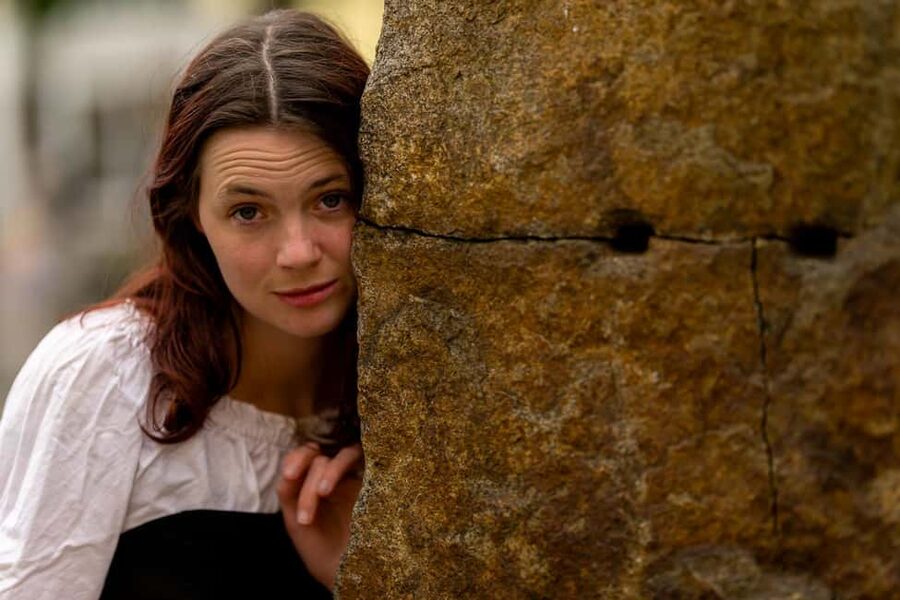
The stop at Schiffstraße 14 brings the story closer to everyday life. The tour visits places associated with the women accused of witchcraft, including the homes of the so-called witches.
That contrast is important. A witch-hunt story can make the accused seem like distant symbols. By connecting the women to homes and streets, the tour presents them as people who had lived in the city before authorities turned suspicion against them.
The focus is not only Catharina Stadellmenin. The program tells the true life stories of three women. That wider view helps you see that persecution was not one isolated mistake. Different women could be pulled into the same system, with accusations spreading through a community and authorities pressing for names, explanations, and confessions.
The subject also has a gendered side. The tour examines the persecution of women in the early modern period and shows how ideas about female behavior, morality, and alleged dealings with the devil shaped the accusations. The material is presented in the language and mindset of the period, so some descriptions may feel harsh or uncomfortable. That is part of the warning you receive before booking.
More witch trial tours in Germany:
- Cologne Haunted Quest: The Witch Self-Guided Tour
★ 3.0 · 38 reviews - Goslar: Witches – From delusion to myth
★ 4.7 · 16 reviews - Executioners, whores, witches with drama
★ 5.0 · 7 reviews - Witches, ghosts and executioners / Mystical North Hesse
★ 4.4 · 4 reviews
Münsterplatz and the difference between medieval and early modern history
Münsterplatz gives the tour a broad public setting and a chance to correct a common misunderstanding. Witch hunts are often placed vaguely in the Middle Ages, but in Breisgau they occurred from the 16th century until 1751. That means many of these persecutions belong to the early modern period, much closer to the modern world than the popular image suggests.
This timeline is one of the most worthwhile parts of the experience. It removes the easy distance of thinking that witch hunts were a strange practice from a remote age. The people involved lived in a society with courts, churches, written procedures, and organized government. Yet officials still accepted accusations and torture as part of a legal process.
Münsterplatz also gives you a recognizable Freiburg landmark along the way. You are not spending 90 minutes in a single gloomy corner. The route combines major public spaces with smaller streets and addresses connected with the cases.
Again, the tour views the city from outside. You do not enter buildings, tour a museum collection, or inspect preserved torture equipment. If you want artifacts and indoor displays, this will feel limited. If you prefer a moving history lesson that fits into a sightseeing day, the outdoor format keeps the walk simple and focused.
Martin’s Gate and the route beyond the city
Martin’s Gate marks another important point in the old city. Gates help explain the boundary between civic life inside Freiburg and the spaces beyond it. The final part of the story leads toward the place of execution outside what was then the city.
That movement gives the tour a clear shape. You begin in the center, hear how accusations were handled, visit places connected with the accused women, and then follow the path toward punishment. The route is not a series of unrelated facts. It follows the logic of the historical process.
For you, the practical benefit is that the tour also serves as an orientation walk through Freiburg’s pedestrian center. You pass through streets and squares you might otherwise cross without noticing. The subject gives those places a new layer, even when there is no sign announcing the connection.
The tour takes place in all weather. Freiburg rain can change the feel of an outdoor performance, so wear suitable shoes and bring protection from the elements. The route is wheelchair accessible, but anyone who needs a detailed assessment of surfaces or stopping points should confirm current conditions when booking.
Fischerau 24 and the personal cost of persecution
At Fischerau 24, the story remains tied to specific places rather than drifting into general history. The address helps keep attention on the women at the center of the tour and on the difference between a person’s ordinary home life and the label imposed on her by authorities.
The presentation is intended for adults and teenagers who want to understand witch hunts. It includes torture, accusations of sexual dealings with the devil, forced questioning, and the threat of execution. The guide may describe period beliefs in a direct way, because the point is to show how people of that time thought.
That can be thought-provoking, but it is not casual entertainment. Some people will appreciate the serious treatment. Others may find the subject too bleak, especially if they expect a playful ghost walk. The tour’s title is blunt for a reason: torture and the stake are part of the historical subject, not decorative atmosphere.
A good acting guide can keep this material from becoming a dry lecture, and the strongest feedback points to exactly that quality. The tour has been praised for being informative, exciting, lively, and easy to follow. One participant described it as interesting and entertaining in the sense of holding attention, while another found the performer’s narration especially vivid.
Holzmarkt and the place of execution
The walk finishes at Holzmarkt, in Freiburg im Breisgau. By this point, the route has led from the court and city streets to the place associated with execution outside the old city gates.
The ending gives the story a necessary pause. Witchcraft was punishable by death, but the tour does not reduce every case to a simple formula. It asks what happened to Catharina Stadellmenin, whether she confessed under torture, and whether the punishment actually reached its final stage in her case.
Those questions leave you with more than a spooky tale. They show why historical evidence and legal context matter. An accusation, a confession, and an execution were not always the same event, even when fear and official power made the process deadly.
The final stop also works as a practical endpoint. You finish in the city rather than being taken to a distant site, so you can continue sightseeing after the 90 minutes. The walk is long enough to provide a full program but short enough to fit before dinner or another Freiburg activity.
What $17 gets you in Freiburg
At $17 per person, this is a strong value if you want a guided story rather than a list of landmarks. You receive 90 minutes with a live actor, a narrated piece of city history, and a route through several central locations.
The value comes from the connection between performance and place. You are not paying for museum admission, a vehicle, or entry into historic interiors. You are paying for the guide’s preparation, delivery, and ability to link scattered streets with the lives of three women.
That makes the guide the most important part of the purchase. The highly positive response to the acting, especially the performance by Julia M., suggests that the experience can be memorable when the actor brings energy and clarity to the material. The feedback is not uniformly perfect, though. One critical response found the locations less effective and said the tour required too much imagination. That is a fair warning.
You should book this expecting outdoor storytelling, not a preserved torture chamber or a staged indoor show. The places may be quiet street corners, gates, squares, and exterior addresses. The story supplies the detail that the buildings alone cannot provide.
Language, age, weather, and booking flexibility
The tour is conducted in German. Some content is shown or presented in its original language, so you should have a solid understanding of German to follow the historical explanations and dramatic narration.
Children under 12 are not permitted. The subject matter makes that sensible, since the tour deals directly with torture, execution, and the persecution of women. Older teenagers may find it worthwhile if they already have an interest in history and can handle dark material.
The route is wheelchair accessible, and the tour runs in all weather. Wear clothing suited to the forecast, since the program does not shift indoors during rain. You can cancel up to 24 hours before the start for a full refund, and the reserve-now, pay-later option lets you keep plans flexible.
Who should book Witches, Torture, Stake
I would choose this tour if you want Freiburg history with a strong human story and do not mind serious subject matter. It suits adults, older teenagers, history students, and anyone curious about how witch hunts actually worked in the early modern period.
You should skip it if you want a cheerful introduction to Freiburg, a tour in English, or access to historic interiors. The outdoor sites are atmospheric but may not explain themselves, and one stop may look ordinary unless you listen closely.
For $17, the risk is small. The main question is not the price. It is whether you enjoy a performance-led history walk in German and are willing to use imagination when the surviving places offer few visible clues.
FAQ
Where does the tour begin?
It begins in front of the main entrance to St. Martin’s Church on Rathausplatz, opposite the tourist information office.
How will I recognize the guide?
The guide wears a costume and carries a lantern.
How long does the tour last?
The tour lasts 90 minutes.
What language is the tour in?
The live tour is conducted in German.
Is the tour suitable for children?
No. Children under 12 are not permitted, and the subject matter is intended for adults and older teens interested in history.
Does the tour enter buildings?
No. The tour includes city views from outside and does not include interior visits.
Is the route wheelchair accessible?
Yes, the activity is listed as wheelchair accessible.
What happens if it rains?
The tour takes place regardless of the weather, so you should dress appropriately for outdoor conditions.
Just added around Germany
- Witches, ghosts and executioners / Mystical North Hesse★ 4.4 · 4 reviews
- Creepy city tour Experience the dark side of Görlitz★ 5.0 · 63 reviews
- Nuremberg Ghosts and Gallows Evening Walking Tour in English★ 5.0 · 56 reviews
- Executioners, whores, witches with drama★ 5.0 · 7 reviews
- The Original Haunted Walk of Munich in English★ 4.5 · 13 reviews
- Ghosts of Munich: The Haunted Apprentice Exploration Game★ 4.0 · 19 reviews
- Cologne Haunted Quest: The Witch Self-Guided Tour★ 3.0 · 38 reviews
- Gruseltour Berlin Haunted Ghost Walk 90-minute at Berlin Mitte city center★ 5.0 · 75 reviews
Germany Ghost Tours, compared.
Munich Ghosts and Spirits Evening Walking Tour
Read our review →
Görlitz: Ghosts and Spooky Historical Night Walking Tour
Read our review →Browse the lists this tour appears in