
REVIEW · ROME GHOST TOURS
Rome: Capuchin Crypts & Ghostly Legends Small-Group Tour
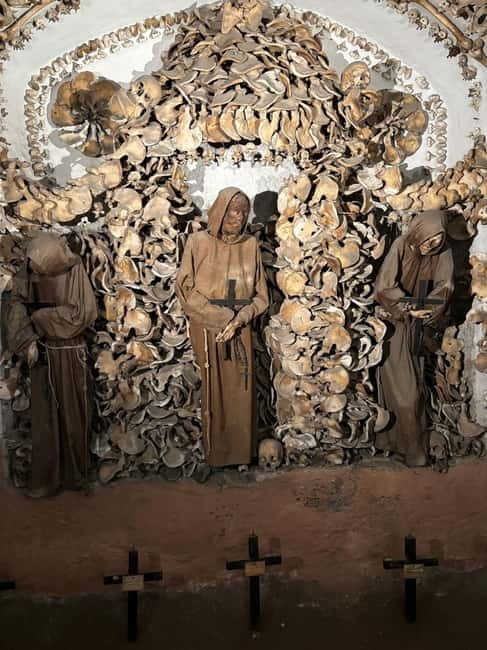
The most striking part of this tour is not simply seeing bones. It is learning how the Capuchin monks turned more than 3,700 skeletons into a meditation on death, with vertebrae chandeliers, bone patterns, and chapels that are beautiful in a deeply unsettling way. The later walk gives the crypt a wider setting, linking mortality and violence to Rome’s famous streets.
I like the small limit of 10 people, which makes it easier to hear the guide and ask questions. I also like the unusual route: Via Rasella, the Trevi Fountain, the Pantheon, and Piazza Navona become places of murder, ghosts, executions, and scandal instead of quick photo stops.
The main consideration is that the first portion inside the crypt uses the venue’s required audio guide, so your live guide may not accompany you through every moment. The tour also requires covered shoulders and knees, and the crypt is not suitable for wheelchair users.
Key points to know before booking
- 3,700 skeletons in five chapels: Expect real human remains arranged as decoration, not a theatrical haunted-house display.
- Two experiences in one: The crypt visit is followed by a one-hour walk through Rome’s darker stories.
- Small groups matter: With no more than 10 people, you can hear the guide and ask questions without shouting.
- Strong guides shape the evening: Alethea, Marilena, Ben, Leo, Ivana, and Maria have all led sessions praised for humor and clear storytelling.
- The route ends at Piazza Navona: You finish in a central area with plenty of options for dinner and further sightseeing.
- Dress rules are strict: Cover your shoulders and knees, or buy a covering on site for €1.
Why the Capuchin Crypt is unlike any other Roman stop
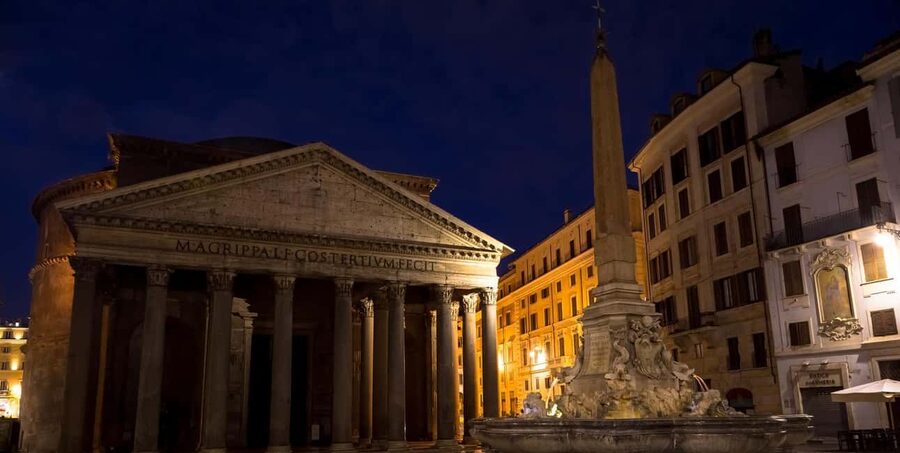
Rome has no shortage of grand churches, ancient ruins, and famous fountains. The Capuchin Crypt offers something much less polished. Beneath the Church of Santa Maria della Concezione dei Cappuccini, five small chapels are decorated with the bones of Capuchin friars.
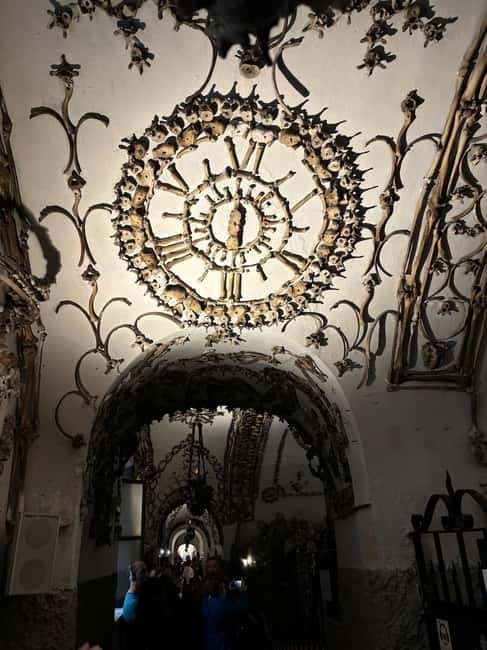
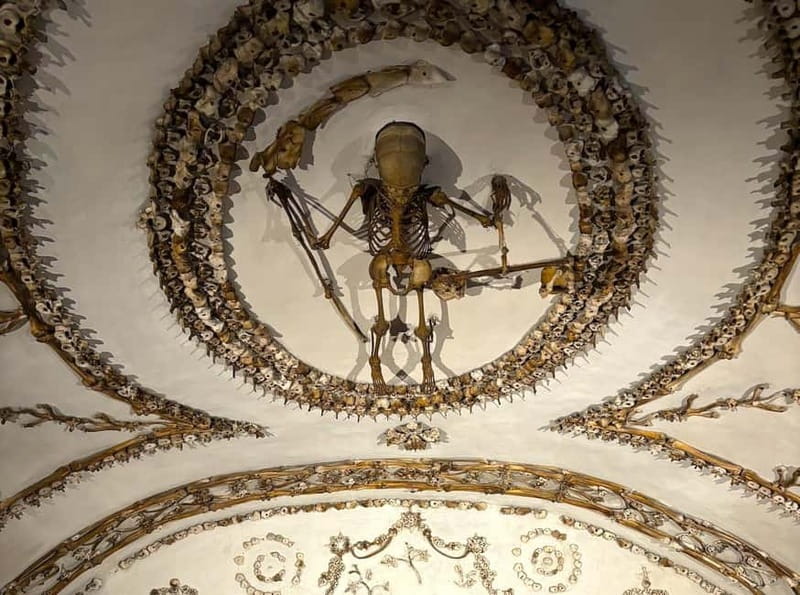
The effect is direct. You are not looking at a painting of death or reading an inscription about mortality. You are looking at human remains arranged into arches, flowers, stars, patterns, and chandeliers. Femurs and pelvises become part of the design. Vertebrae hang overhead. It is macabre, but it is not presented as a cheap shock.
The idea behind the decoration is memento mori, a reminder that death comes for everyone. The bones were arranged to encourage reflection on the shortness of life and the equality of death. That context matters. Without it, the crypt can seem like an elaborate curiosity. With it, the rooms become a serious religious statement that happens to be very hard to forget.
I would not bring anyone who is likely to be upset by actual skeletons. The material is unmistakable and there is no attempt to soften it. For you, that may be the main reason to go, or it may be a clear reason to choose another Roman sight.
The scheduled crypt portion is listed as about 30 minutes, though the tour description allows roughly 45 to 60 minutes in the chapels and museum area. Timing can vary, so do not plan a tight dinner reservation immediately after the advertised two-hour finish.
More Ghost Story Tours in Italy
- Rome: Small Group Rome’s Dark Side – Ghosts & Legends Tour
★ 4.9 · 343 reviews - Ghosts, Legends & Mysteries of Rome Tip-Based Walking Tour
★ 4.7 · 284 reviews - Ghosts Legends and Mysteries of Rome Walking Tour
★ 5.0 · 149 reviews
Meeting at Via Vittorio Veneto
You meet at Via Vittorio Veneto 19, outside the Capuchin Crypt entrance, at the bottom of the stairs and directly opposite an antique coin shop. Arrive 10 minutes early. The guide carries a sign for the Capuchin Crypts and Dark Centre Tour.
This is one place where care pays off. A small amount of confusion about the meeting point has occurred, and the operator cannot promise to wait for late arrivals because the crypt uses strict entry times. Give yourself enough time to identify the entrance rather than relying on a last-minute dash from another part of Rome.
The meeting point is useful for sightseeing before or after the tour. Via Veneto is one of Rome’s best-known streets, and the crypt is close to the historic center. Transport is not included, so you need to reach the starting point on your own.
Inside the crypt, expect bones without much softening
The venue requires visitors to use its audio guide. Your live guide can explain the larger religious and historical picture, answer questions, and help you make sense of the symbolism, but the recording is part of the indoor visit.
That arrangement has one advantage: you receive the crypt’s official interpretation while still having access to a guide who can put the experience in plain language. It also has a limitation. If you expect a guide to narrate every step beside you, this may feel less personal than a fully escorted museum visit.
The best way to approach the chapels is slowly. Look at the design rather than rushing to count individual bones. Notice how ordinary anatomical parts have been placed into decorative forms. A chandelier made from vertebrae is not just an odd object. It shows how the monks used the body itself as the material for a lesson about impermanence.
The crypt is also a place where the group’s mood matters. Guides such as Alethea, Marilena, and Ben have been praised for mixing humor with respect. That balance is important. Too much joking would cheapen the site, while an overly solemn presentation could make the visit feel stiff. The strongest guides use a light touch before letting the room speak for itself.
Via Rasella adds wartime memory to the route
After the crypt, the tour moves outdoors to Via Rasella for about 15 minutes. This stop shifts the focus from religious reflections on death to a specific episode in Rome’s darker modern history.
You will hear about the street’s connection to violence and wartime memory. It is not one of Rome’s grand monuments, and that is part of its value. A famous fountain can tell you about art and papal ambition. An ordinary street can show how political conflict and violence affected the city itself.
This is a short stop, so expect a focused explanation rather than a long historical lecture. Wear comfortable shoes because the experience becomes a walking tour at this point. The route runs through central Rome, and the guide uses places you might otherwise pass without knowing what happened there.
More Ghost Story Tours in Rome
- Rome’s Dark Side Ghosts and Legends Tour
★ 5.0 · 93 reviews - Crypts and Legends: Exploring the Dark Side of Rome
★ 4.5 · 69 reviews - Ghost & Legends in Night Rome Walking Tour
★ 5.0 · 36 reviews - Rome After Dark Mysteries Myths and Haunted History
★ 5.0 · 14 reviews
The Trevi Fountain gets a ghost story
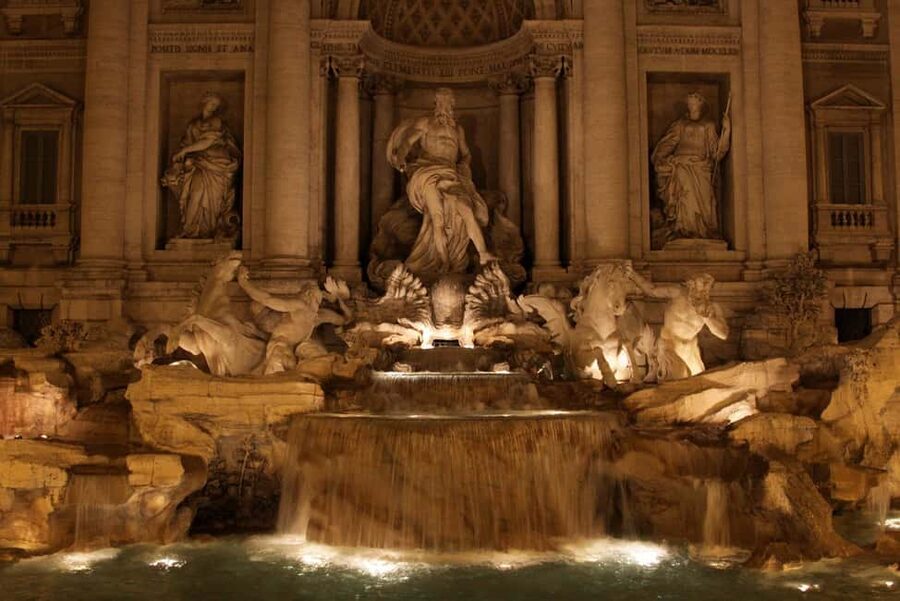
The Trevi Fountain is usually presented as a place for photographs, coins, and grand Baroque theater. This tour adds a darker layer, including a persistent ghost with a connection to the fountain.
The exact pleasure here comes from seeing a familiar sight through a different lens. You may already know the fountain’s basic story from guidebooks, but a ghost tale changes how you look at the crowds, the water, and the surrounding buildings. The stop lasts about 15 minutes, so you get a compact story rather than a full art-history lesson.
This is also one of the route’s busier areas. The small group helps, but you should still expect street noise and people moving around you. A guide who can project clearly is valuable here. The best sessions use the setting as a stage without pretending the modern city has disappeared.
The Pantheon stop looks behind the elegant facade
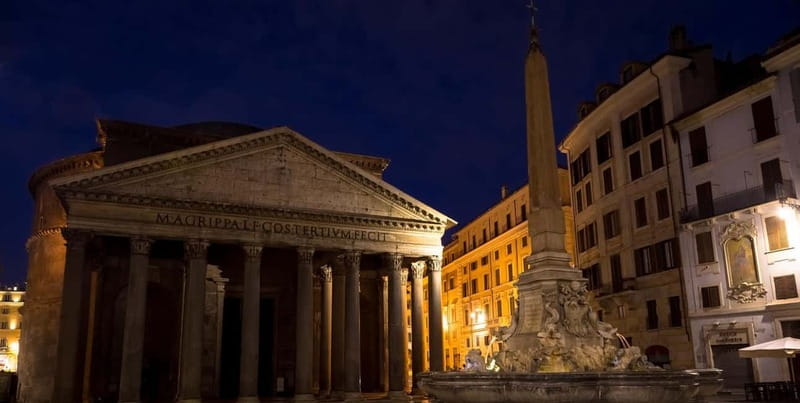
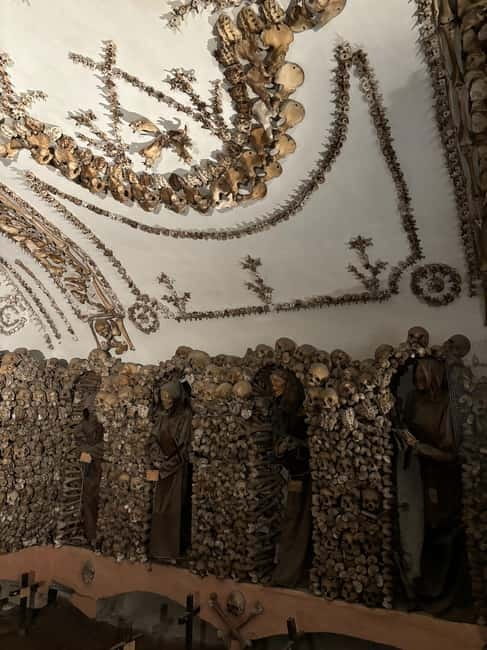
At the Pantheon, the tour turns to stories that sit beneath Rome’s polished surface. The surrounding area includes a culinary scandal that gives the stop a particularly grim twist, along with tales of murder and people who handled inconvenient bodies in creative ways.
The Pantheon itself is one of Rome’s essential sights, but this is not a substitute for a full visit inside. The route gives you about 15 minutes at the site and focuses on dark anecdotes connected with the area. If you want a detailed explanation of the building’s architecture, history, and interior, plan a separate visit.
I like this part of the tour because it shows how Rome’s famous monuments can carry several layers of meaning. You can admire a beautiful piazza while also learning that its past included cruelty, scandal, and public punishment. The city becomes less tidy and more believable.
Piazza Navona supplies the grand finale
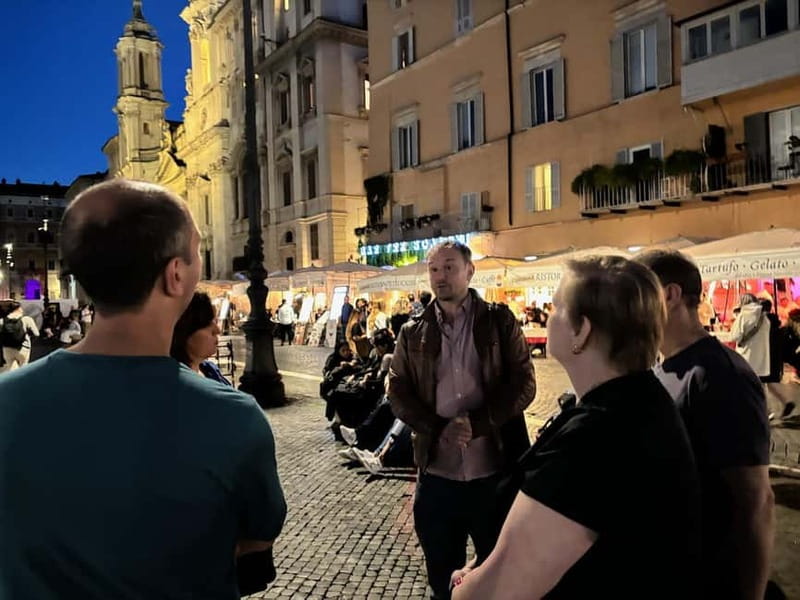
The final stop is Piazza Navona, with about 20 minutes devoted to its darker past. Today, the piazza is one of Rome’s most attractive public spaces, lined with fountains, restaurants, and historic buildings. The tour looks beyond the pleasant present to executions, scandals, and stories of people whose lives ended badly.
One tale involves a noblewoman whose perfect hands attracted dangerous attention. Another concerns an innkeeper who complained to strangers about papal tax policy and paid a terrible price. These stories show the range of the experience. You are not getting a single ghost walk built around one theme. You are hearing how power, money, rumor, punishment, and death shaped daily life in different periods.
Piazza Navona is a useful ending point. You can continue walking, find food, or use the square as a reference point for the rest of the evening. Since food and drinks are not included, plan to choose your own restaurant afterward. The tour gives you a setting and stories, not a meal.
What the two-hour format does well
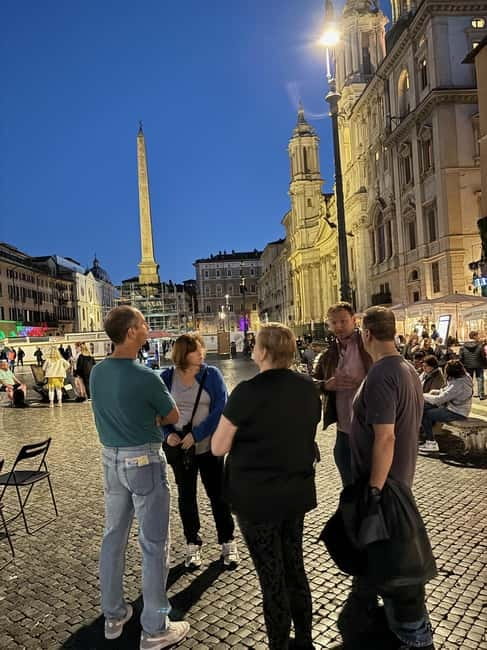
The length is one of the tour’s strengths. You get enough time for the crypt to make an impression, then enough outdoor walking to understand that Rome’s dark history is not confined to one underground site.
The route also works as a first-evening orientation. One person used it as an introduction to central Rome and later returned to several stops with more time to browse. I can see why. The tour does not replace a full visit to the Trevi Fountain, Pantheon, or Piazza Navona, but it gives you reasons to return and look more closely.
The pace should suit you if you like short explanations at several locations. It may feel too brief if you want a long lecture at each monument. The 15-minute stops are designed for storytelling and atmosphere, not exhaustive scholarship.
The small group is a real benefit. With 10 people or fewer, the guide can keep everyone together without turning the walk into a procession. You have a better chance of hearing the story at a noisy square and asking about a detail that catches your interest.
Guides make the difference
The experience depends heavily on the individual guide. Names associated with the tour include Alethea, Marilena, Ben, Leo, Ivana, Maria, and Alitheia, with several spellings appearing in booking records. The strongest descriptions consistently focus on warmth, humor, storytelling, and a clear command of the subject.
Alethea has been especially praised for making the crypt and city stories entertaining without losing the historical point. Marilena is described as enthusiastic and able to connect the stories to Rome’s wider past. Ben is noted for answering questions and keeping the tour interesting from start to finish. Leo has been appreciated for a relaxed, friendly manner, while Ivana has been praised for adding historical background at each stop.
You should still allow for some variation. A dark-history tour works best when the guide enjoys telling stories and can judge the group’s mood. The route remains the same, but the balance between facts, legends, and humor may change from one session to another.
Price, practical limits, and who should book
At $35 per person, the tour offers fair value if you want both the crypt admission and a guided walk through central Rome. A separate crypt visit would give you access to the site, but this experience adds interpretation and a full hour of stories at places you may already plan to see.
The price is less compelling if you only want a quick look at the bones. The outdoor portion is half the point, and skipping it would leave you with only the first chapter of the experience. One person considered the activity somewhat expensive, so I would book it for the combined format rather than for basic admission alone.
Wear comfortable shoes and clothing suitable for the weather. The tour operates in rain or shine, and the outdoor portion has no indoor substitute. Shoulders and knees must be covered in the crypt. If needed, coverings can be purchased on site for €1.
Shorts, short skirts, and sleeveless shirts are not allowed. A reusable water bottle is sensible, especially if your tour takes place in warm weather. The tour is in English and is not suitable for wheelchair users.
I would recommend it most to adults, older children, and teenagers who enjoy unusual history and can handle disturbing imagery. One family with two teenagers had a good time, but the subject matter is not gentle. If you prefer art, architecture, and cheerful legends, choose a conventional city walk instead.
Free cancellation is available up to 24 hours before the start, and you can reserve now and pay later. Check the available starting times because the duration and evening atmosphere may affect your choice.
Should you book the Capuchin Crypts and Dark History Tour?
Book it if you want Rome to feel less polished and more human. The bone chapels are unforgettable, but the real value comes from connecting them with stories at Via Rasella, the Trevi Fountain, the Pantheon, and Piazza Navona.
I would choose this over a standard crypt visit if you like legends, murders, executions, religious symbolism, and the stories guidebooks often leave out. I would skip it if real human remains make you uncomfortable, if you need step-free access, or if you want a slow architectural tour of each landmark.
For most curious visitors, the $35 price is reasonable because it combines admission, a small group, and two different ways to see Rome. Arrive early, dress modestly, keep an open mind, and expect the city’s famous sights to look rather different by the time you reach Piazza Navona.
FAQ
How long does the Capuchin Crypts and dark history tour last?
The advertised duration is two hours. The crypt portion is listed as about 30 minutes, while the full description allows roughly 45 to 60 minutes inside the crypts followed by about an hour of outdoor storytelling.
Where does the tour meet?
Meet outside the Capuchin Crypt entrance at the bottom of the stairs, directly in front of the antique coin shop at Via Vittorio Veneto 19. Arrive 10 minutes early and look for the guide holding a Capuchin Crypts and Dark Centre Tour sign.
Where does the tour finish?
The walk finishes at Piazza Navona after the stops at Via Rasella, the Trevi Fountain, the Pantheon, and Piazza Navona.
Is the tour conducted in English?
Yes. The tour has a live English-speaking guide and is limited to 10 participants.
What clothing is required?
Your shoulders and knees must be covered inside the Capuchin Crypt. Shorts, short skirts, and sleeveless shirts are not allowed. If you forget suitable clothing, coverings can be bought on site for €1.
Is the tour suitable for wheelchair users?
No. The experience is not suitable for wheelchair users.
More Cemetery Tours in Rome
- Rome: Ghosts & Bone Crypts Tours: 2 Tours, 1 Discount Ticket
★ 4.9 · 37 reviews - Rome’s Dark Side: Ghosts, Scandals and Crypts – Small Group Tour
★ 5.0 · 28 reviews - COMBO: Rome’s Capuchin Crypts Tour & Rome’s Dark Side Ghost Tour
★ 5.0 · 21 reviews - Rome’s Dark Side: Ghosts, Scandals and Crypts – small group
★ 5.0 · 2 reviews
Just added around Rome
- Ghost & Legends in Night Rome Walking Tour★ 5.0 · 36 reviews
- Secrets of Rome – The dark side Small Group Walking Tour★ 5.0 · 20 reviews
- Rome After Dark Mysteries Myths and Haunted History★ 5.0 · 14 reviews
- Rome: Private Night Ghost Walking Tour★ 5.0 · 38 reviews
- Rome Secrets with Dark History and Tasty Bites Tour Experience★ 4.5 · 3 reviews
- Haunted Rome & True Crime: The Cenci Curse Game★ 4.5 · 27 reviews
- Experience Rome in this Mysterious Ghost Tour★ 3.5 · 3 reviews
- Haunted Rome: Eternal City Night Walking Tour★ 5.0 · 38 reviews
Rome Ghost Tours, compared.
Paranormal Night Walking Tour & Secret Backstreets
Read our review →
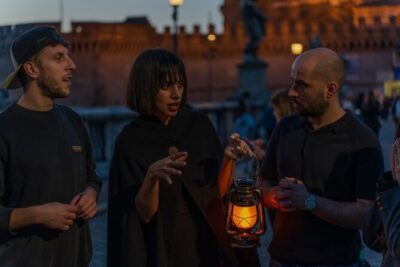

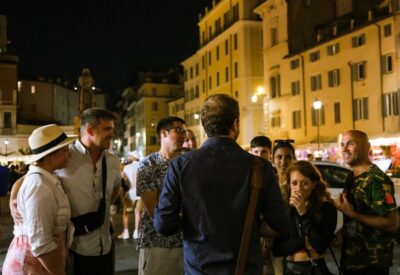
Small Group Rome’s Dark Side – Ghosts & Legends Tour
Read our review →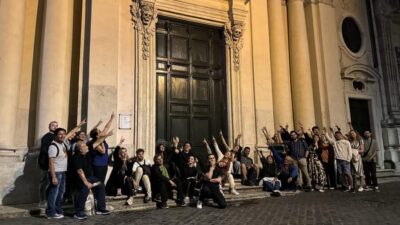
Ghosts, Legends & Mysteries of Rome Tip-Based Walking Tour
Read our review →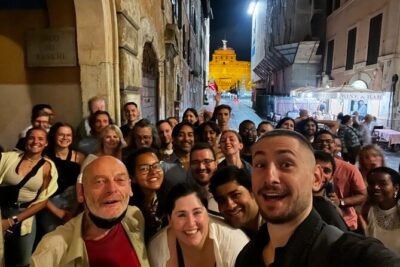
Ghosts Legends and Mysteries of Rome Walking Tour
Read our review →Browse the lists this tour appears in