
REVIEW · ROME GHOST TOURS
Rome: Paranormal Night Walking Tour & Secret Backstreets
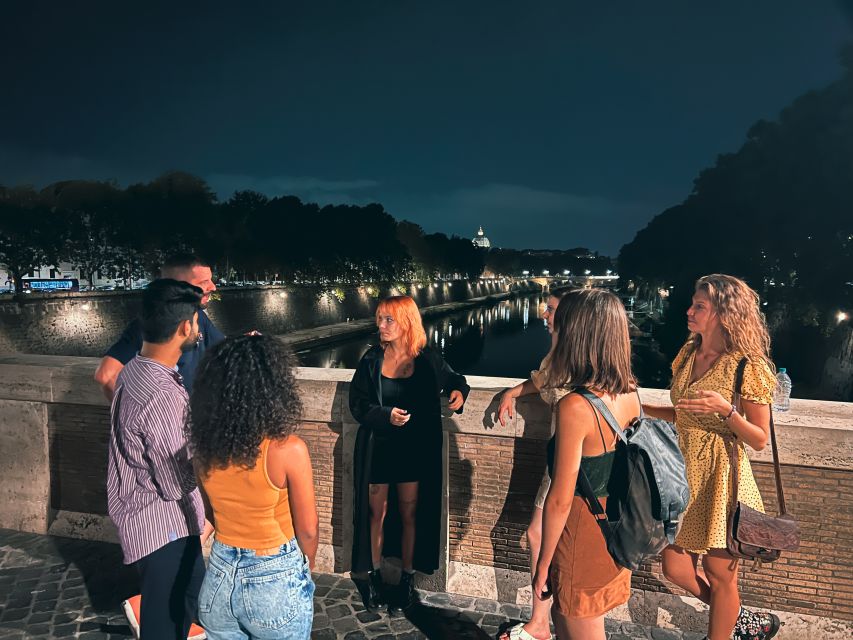
Rome’s dark side begins beneath the stern statue of Giordano Bruno in Campo de’ Fiori, where the past feels close enough to reach out and grab you. From there, this two-hour walk follows old lanes, bridges, fountains, churches, and shadowy corners toward Castel Sant’Angelo, mixing real Roman history with ghost stories and grisly legends.
I like the after-dark setting, which takes you away from the heat and daytime crowds. I also like the route itself: you see familiar central Rome from a less polished angle, including small Madonnelle shrines, Via Giulia, Ponte Sisto, and the church of Santa Maria dell’Orazione e Morte. The main consideration is that this is a walking tour with plenty of storytelling, not a tour of interiors or a special-effects scare show.
Key points to know before you book
- Start beneath Giordano Bruno’s statue: Meet at Campo de’ Fiori at least 10 minutes early, beside the yellow Carpe Diem Tours sign or flag.
- Expect history first, horror second: The stories center on executions, murders, popes, emperors, artists, religious sites, and Roman legends.
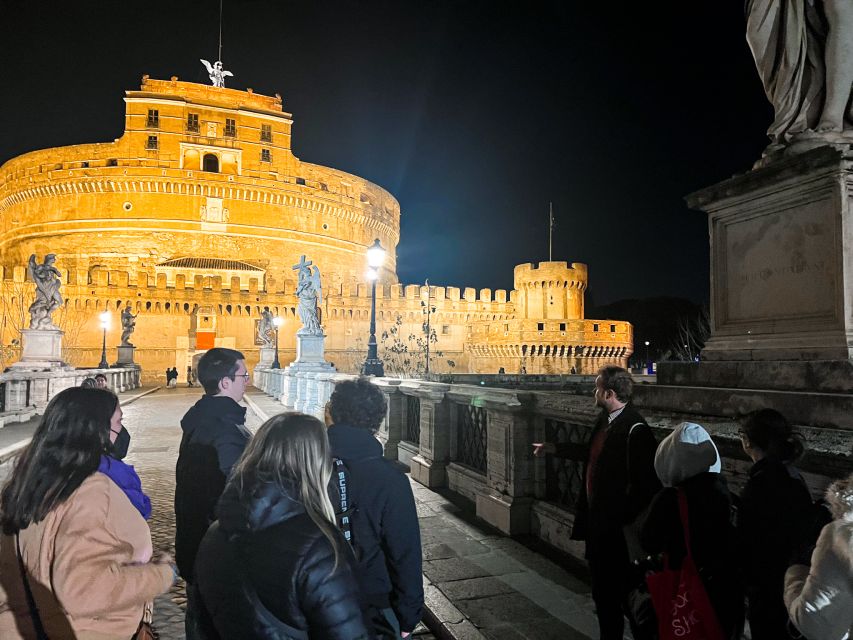
- The route ends at Castel Sant’Angelo: You finish near one of Rome’s most dramatic night-time monuments, not back at the starting point.
- Small-group feel: The maximum group size is 20 people, with private groups available.
- English guide-led storytelling: Guides including Ana, Antonio, Maham, Domenica, Yusuf, and Sarah have been praised for humor, warmth, strong voices, and dramatic storytelling.
- Good value at $34: For two hours of guiding and central Rome sightseeing, the price is fair, especially if you want an evening activity without paying for museum admission.
Why Rome’s dark history works best after sunset
Rome is packed with grand churches, fountains, ruins, and famous names. In daylight, it is easy to rush from one landmark to the next, taking in the postcard version of the city. At night, the same streets feel more private and mysterious. A narrow lane becomes a place where something may have happened, and an ordinary church facade takes on a more serious mood.
This tour uses that change in atmosphere well. The guide does not simply point out monuments. You hear about bloody executions, violent deaths, condemned criminals, unusual religious practices, and people who helped shape Rome through cruelty, ambition, or scandal.
The approach is more historical than frightening. You may hear a ghost story, but you will also learn why a site mattered, who lived or died there, and how Roman memory has kept certain stories alive. That makes the walk a good choice if you enjoy folklore but still want solid historical context.
The guides bring much of the personality. Names that appear frequently in the guide team include Ana, Antonio, Maham, Domenica, Yusuf, Sarah, Dina, and Yousef. The strongest descriptions focus on lively delivery, clear explanations, humor, and a talent for keeping a group together on busy streets. Ana is described as especially energetic, while Antonio is known for storytelling. Maham’s gentle delivery suits the more emotional tales, and Domenica brings a friendly, engaging style.
You should still know what you are booking. This is not designed as a haunted-house attraction. There are no theatrical props, staged scares, food stops, or drinks. The atmosphere comes from Rome itself and from the guide’s voice.
More evening tours in Rome:
- Rome: Haunted City Night Walking Tour
★ 4.9 · 616 reviews - Haunted Rome Ghost Night Walking Tour
★ 5.0 · 495 reviews - Ghosts and Crimes of Rome Night Walk
★ 5.0 · 61 reviews
Campo de’ Fiori and Giordano Bruno’s final stand
The meeting point is Campo de’ Fiori, one of central Rome’s most recognizable squares. Find the statue of Giordano Bruno and look for the guide holding a yellow Carpe Diem Tours flag or sign. Arrive at least 10 minutes early. Late arrivals are not eligible for a refund, and the group will be moving on once the tour begins.
The statue of Bruno sets the tone. He was executed in the square in 1600, and his severe bronze figure now looks across the same open space. This is a useful first stop because it connects Rome’s public beauty with its history of punishment and religious conflict.
Your guide spends about 15 minutes at this opening area, then leads the group onward. The square can be busy, even at night, so listen for the guide and stay close. The group limit of 20 helps, but this is still a public city walk rather than a private room.
Piazza Farnese and the polished face of old Rome
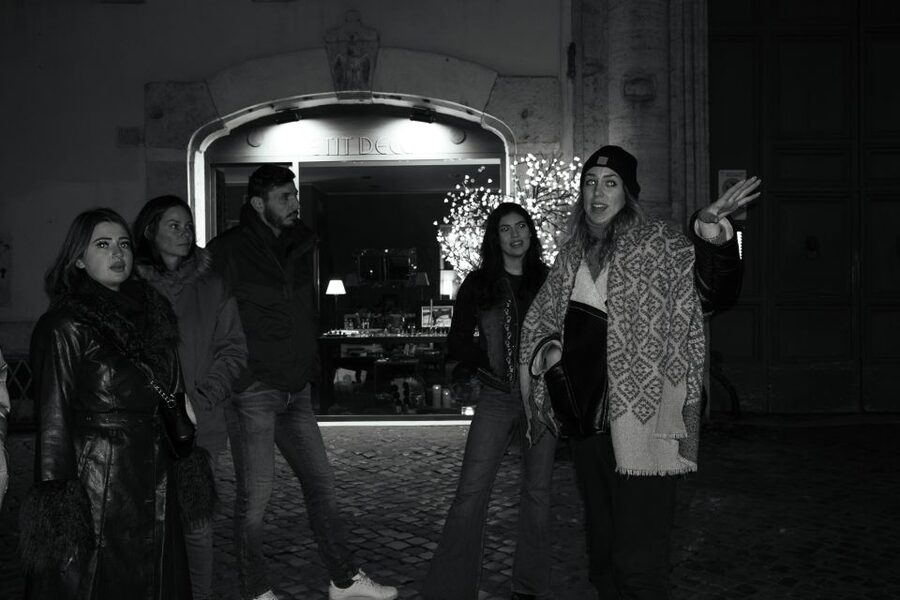
Piazza Farnese offers a sharp contrast to Campo de’ Fiori. Its broad space and elegant buildings give you the grand Roman setting you might expect from a night walk. The tour uses that visual calm to tell darker stories connected with powerful families, artists, church officials, and political figures.
This is where the tour begins to show its main strength. You are not just walking through places that look old. You are learning to read the city’s surfaces. A beautiful palace or orderly square can carry stories of ambition, punishment, rivalry, and death.
The stop is listed at roughly 15 minutes, followed by another walk. Wear shoes that can handle uneven paving. You are not hiking, but Rome’s historic streets can be tiring after a full day of sightseeing.
Madonnelle and the small signs of Roman devotion
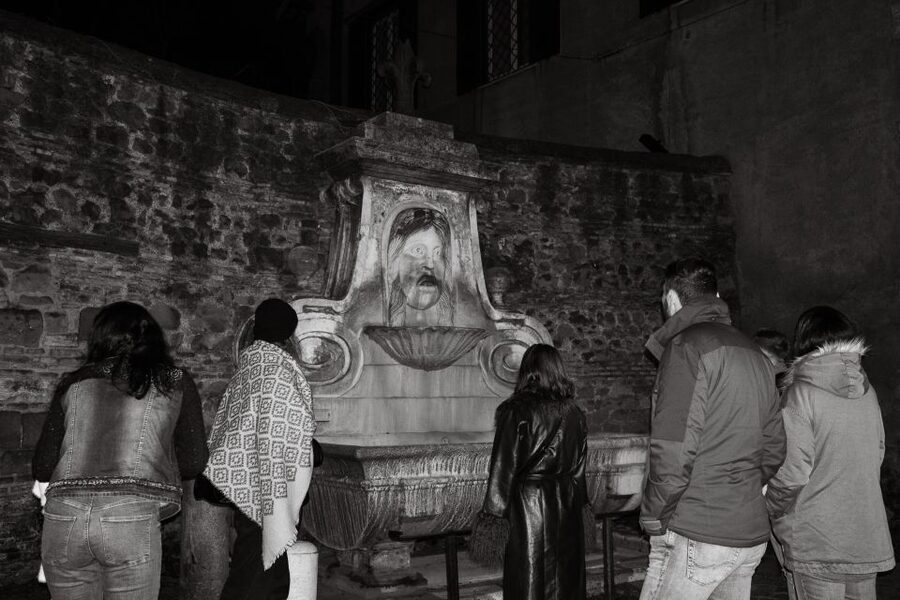
One of the more unusual parts of the route is the look at Madonna della Pietà and Rome’s Madonnelle, the small Madonna images placed around the city. These modest shrines are easy to miss when you are focused on major monuments.
That is exactly why this stop matters. The tour pulls your attention down from the grand churches and onto the details built into walls, corners, and side streets. The stories here add a more personal layer to Rome, shaped by local belief, fear, grief, and protection.
The subject also gives the evening some variety. The tour is not one long sequence of murders and executions. Religious objects and small street shrines break up the darker material and help explain how ordinary people related to the city around them.
More walking tours in Rome:
- Ghosts, Legends & Mysteries of Rome Tip-Based Walking Tour
★ 4.7 · 284 reviews - Ghosts Legends and Mysteries of Rome Walking Tour
★ 5.0 · 149 reviews - Rome: Private Night Ghost Walking Tour
★ 5.0 · 38 reviews - Haunted Rome: Eternal City Night Walking Tour
★ 5.0 · 38 reviews
Ponte Sisto and the night walk across the Tiber
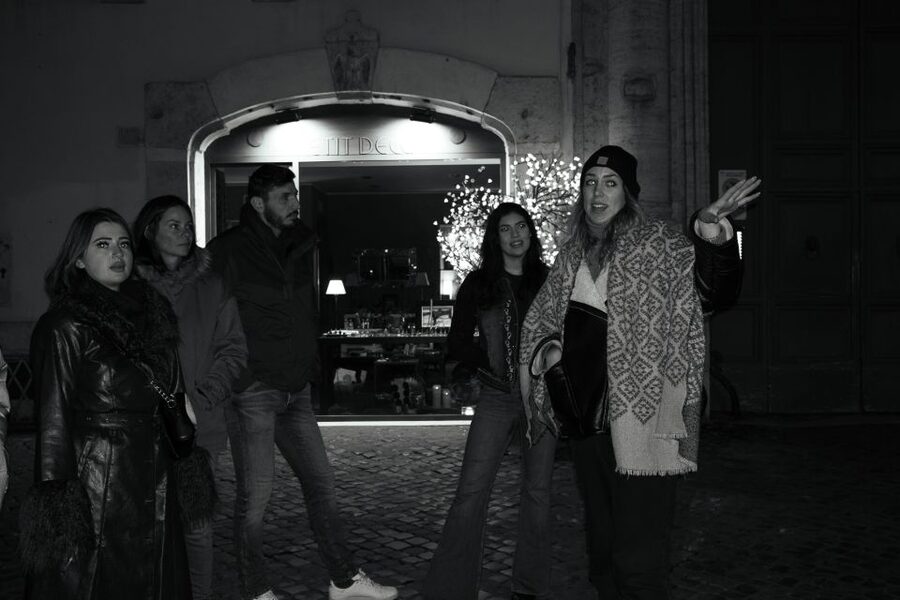
Crossing Ponte Sisto gives the group a change of pace. Bridges have always made good settings for legends. They connect districts, bring people together, and offer a natural place for stories involving escape, death, punishment, or unexplained events.
The bridge walk is also one of the more scenic parts of the evening. You get a different view of Rome from the river crossing, though the focus remains on the guide’s narrative rather than on a formal viewpoint stop. If you want photographs, take them quickly and stay aware of the group.
The route’s mix of famous places and lesser-known corners is a real plus. You may already have visited parts of this area by day, yet the same streets feel different once the crowds thin and the stories begin.
The Fountain of the Mask and Rome’s strange details
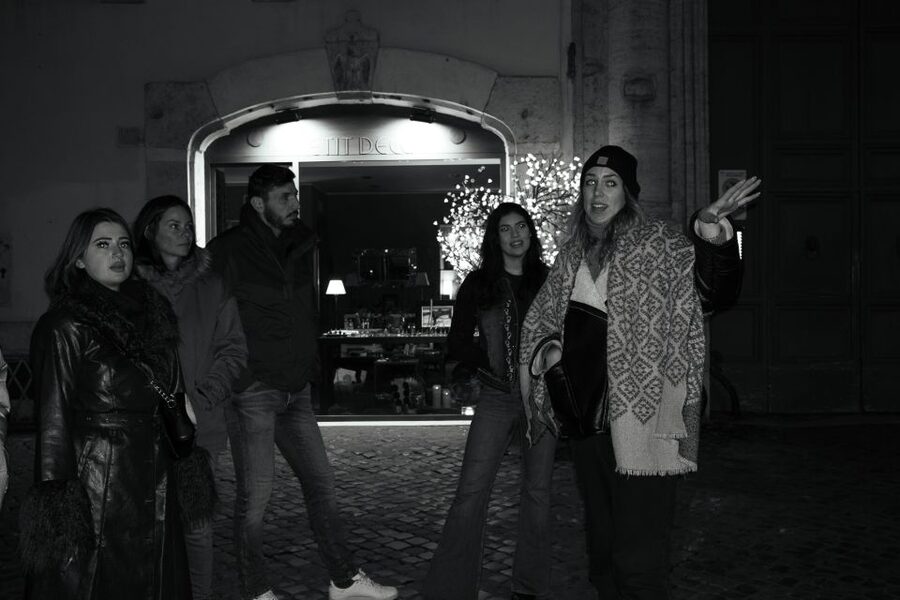
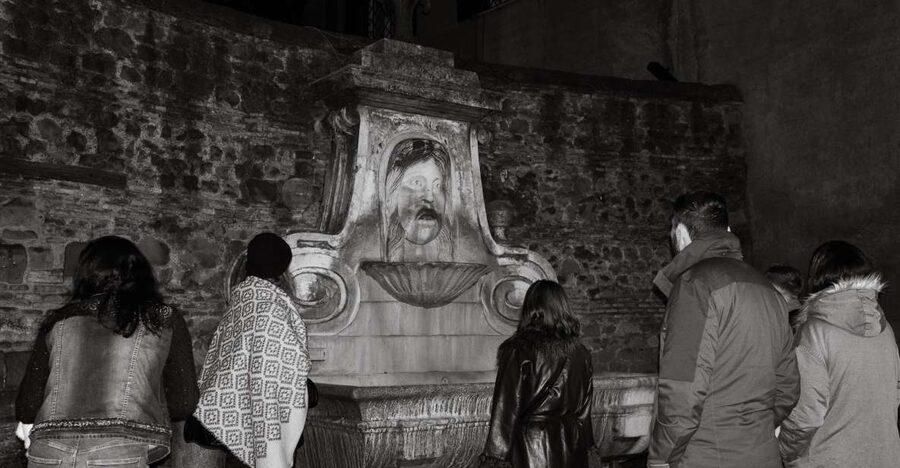
The Fountain of the Mask is another stop where a small feature carries more weight than its size suggests. Rome is full of carved faces, worn inscriptions, religious images, and decorative details that are easy to pass without a second glance.
A guide gives those details a reason to matter. You hear the story attached to the fountain and see how the city’s decoration can carry hints of humor, warning, death, or superstition. This is the kind of stop that helps you notice more on your own during the rest of your trip.
The tour is especially useful early in a Rome visit for this reason. It gives you names and stories to investigate later, and it encourages you to look up at walls and around corners instead of walking only toward the major attractions.
Santa Maria dell’Orazione e Morte
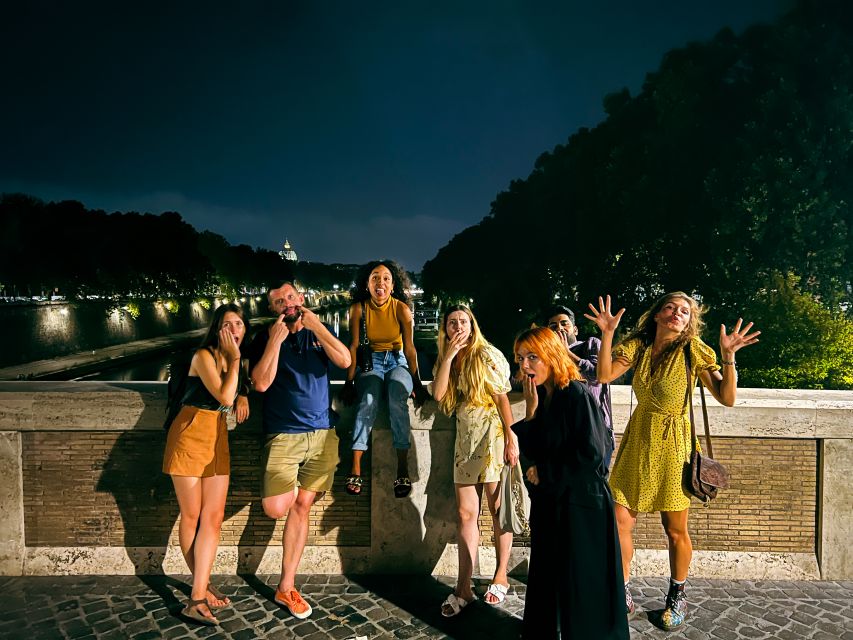
The Church of Santa Maria dell’Orazione e Morte is one of the most fitting stops on the route. Its name refers to prayer and death, and the church is tied to the religious care of the dead. The tour also points to a chapel associated with human bones, one of the evening’s more unsettling details.
This section is likely to appeal most to visitors who enjoy macabre religious art and the way older societies dealt with death. It is not a light topic, and the guide’s tone matters. The best experience comes from treating the material as history, not as a cheap scare.
The stop also shows why a walking tour can add value beyond a list of famous attractions. A church like this might receive little attention from someone rushing between major landmarks. With a guide, it becomes part of a larger story about Rome, mortality, and public memory.
Santa Maria in Monserrato degli Spagnoli
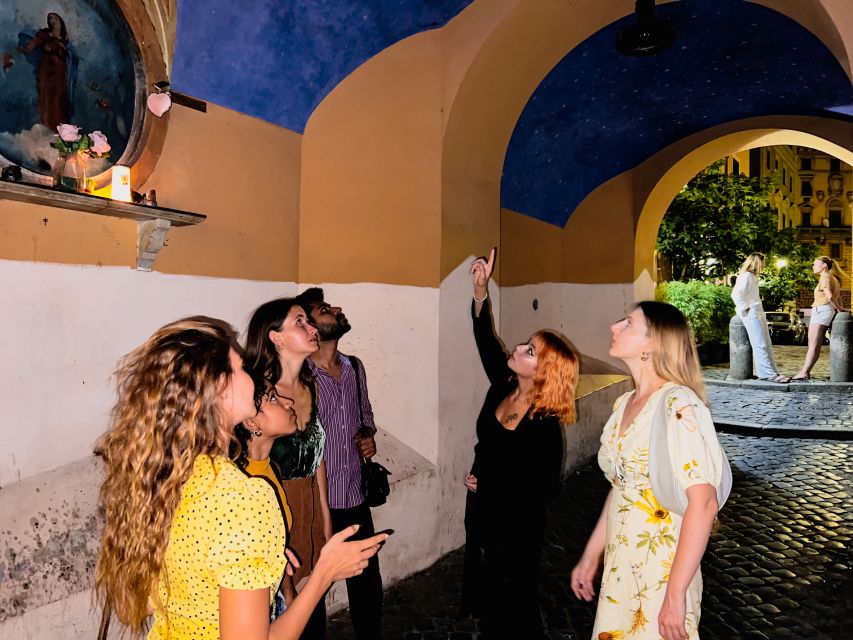
Santa Maria in Monserrato degli Spagnoli adds another church to the route, but it does not feel like a repeat of the previous stop. The changing sites help the guide move between religious life, notable figures, local legends, and the darker events tied to Rome’s past.
You should expect exterior storytelling rather than a guaranteed extended interior visit. The activity information describes a guided walk and sightseeing stops, not reserved entry or private access to every church. If entering a particular church is important to you, check the conditions before booking.
This is also a good point to judge your own interest. If you like history told through places and people, the route should hold your attention. If you want a fast sequence of dramatic sights, the storytelling may feel slow.
Clivo di Rocca Savella and the quieter final stretch
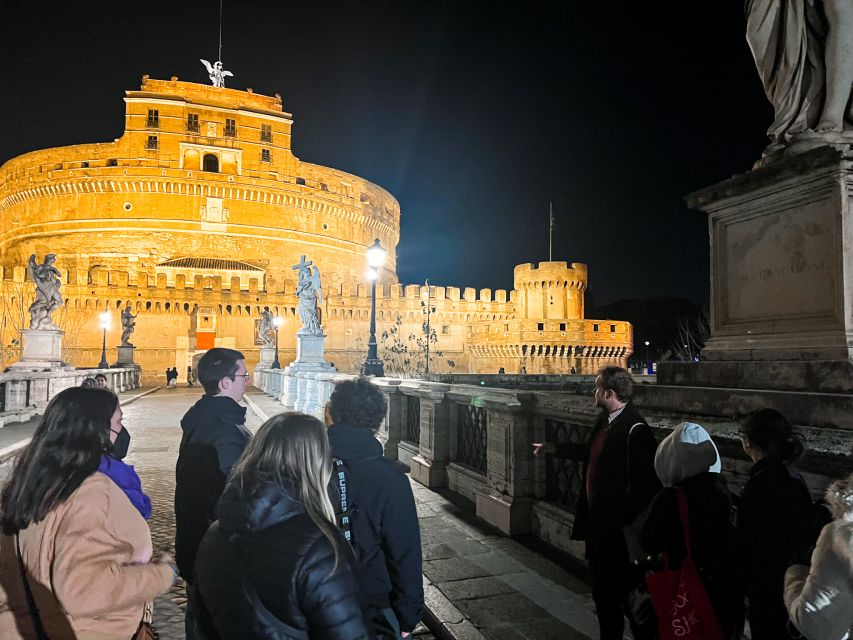
Clivo di Rocca Savella brings the group into one of the route’s less obvious streets. The name itself sounds like a Roman mystery, but the value here is the setting: a quieter incline and a less familiar part of the historic center.
By this stage, the tour has moved away from the most obvious squares and into the kind of street you might otherwise pass without knowing its story. That makes the final part feel like a discovery rather than a repeat of the opening stops.
The walk finishes at Castel Sant’Angelo. This is a strong ending because the fortress has its own long connection with popes, imprisonment, power, and death. You do not enter the monument as part of this experience, but finishing near it gives you a dramatic place to continue your evening.
What $34 gets you
At $34 per person, the tour is fairly priced for a two-hour guided walk in central Rome. You are paying for a live English-speaking guide, a planned route, local stories, and the chance to see several places without arranging the evening yourself.
The value is strongest if you would otherwise spend the night simply wandering between Campo de’ Fiori, Ponte Sisto, and Castel Sant’Angelo. The guide turns that walk into a themed experience and adds context you would not get from a quick look at a map.
The value is weaker if you want admission to churches, food, drinks, or major attractions. None of those are included. You are also paying for storytelling, so the guide’s delivery will shape your experience more than the physical sites alone.
The tour allows free cancellation up to 24 hours before the start, and you can reserve now and pay later. These terms are useful if your Rome plans are still shifting, but the late-arrival rule is strict.
Who will enjoy this night walk
I would recommend it most to:
- First-time Rome visitors who want a different introduction to the historic center
- Repeat visitors who have already seen the Colosseum, Trevi Fountain, and Vatican sights
- Couples and friends looking for an evening activity with a spooky edge
- Families with older children who enjoy ghost stories and unusual history
- People who like local legends, true crime, religious history, and atmospheric walks
- Anyone who wants a small-group tour without paying for a fully private experience
I would be more cautious if you dislike stories about murder, executions, death, or human remains. The tone can be funny and warm, but the subject matter is still dark.
The walk is also not ideal for anyone wanting a seated experience. Guides keep the group moving between stops, and some streets can be crowded. Good walking shoes and a layer for the evening are sensible, especially in cooler or rainy weather. The route has gone ahead in cold rain, but bad weather can make the two hours less comfortable.
My booking advice
Book this tour if you want Rome to feel stranger and more personal after sunset. The strongest parts are the guide-led stories, the lesser-known street details, and the route from Giordano Bruno’s statue to Castel Sant’Angelo.
The $34 price makes sense for a two-hour evening activity, especially because you get both sightseeing and a clear theme. I would not book it expecting a horror performance or access to every church interior. Book it for the voices, the history, the odd corners, and the pleasure of seeing central Rome through a darker lens.
FAQ
How long is the Rome paranormal walking tour?
The tour lasts two hours.
What language is the tour conducted in?
The live guided tour is conducted in English.
Where does the tour begin?
It begins at Piazza Campo de’ Fiori, beneath the statue of Giordano Bruno.
How do I find the guide?
The guide will be holding a yellow Carpe Diem Tours flag or sign at the meeting point.
Where does the tour finish?
The tour finishes at Castel Sant’Angelo.
What places are included on the route?
The route includes Giordano Bruno’s statue, Piazza Farnese, Madonna della Pietà and the Madonnelle, Ponte Sisto, the Fountain of the Mask, Santa Maria dell’Orazione e Morte, Santa Maria in Monserrato degli Spagnoli, Clivo di Rocca Savella, and Castel Sant’Angelo.
Is food or drink included?
No. Food and drinks are not included.
How large is the group?
The group can include up to 20 people. A private group option is also available.
Can I cancel the booking?
Yes. You can cancel up to 24 hours in advance for a full refund. You can also reserve now and pay later.
Just added around Rome
- Ghost & Legends in Night Rome Walking Tour★ 5.0 · 36 reviews
- Secrets of Rome – The dark side Small Group Walking Tour★ 5.0 · 20 reviews
- Rome After Dark Mysteries Myths and Haunted History★ 5.0 · 14 reviews
- Rome: Private Night Ghost Walking Tour★ 5.0 · 38 reviews
- Rome Secrets with Dark History and Tasty Bites Tour Experience★ 4.5 · 3 reviews
- Haunted Rome & True Crime: The Cenci Curse Game★ 4.5 · 27 reviews
- Experience Rome in this Mysterious Ghost Tour★ 3.5 · 3 reviews
- Haunted Rome: Eternal City Night Walking Tour★ 5.0 · 38 reviews
Rome Ghost Tours, compared.
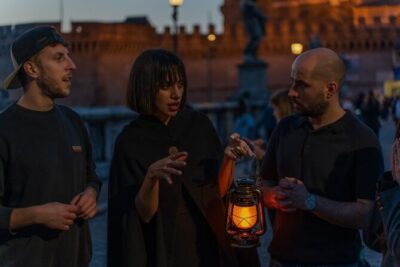

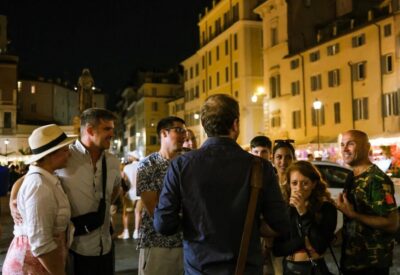
Small Group Rome’s Dark Side – Ghosts & Legends Tour
Read our review →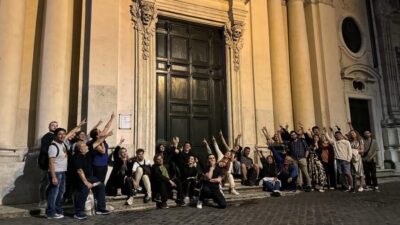
Ghosts, Legends & Mysteries of Rome Tip-Based Walking Tour
Read our review →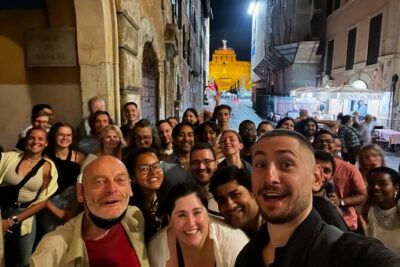
Ghosts Legends and Mysteries of Rome Walking Tour
Read our review →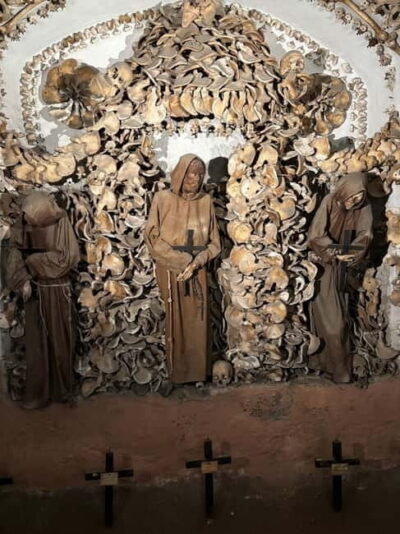
Capuchin Crypts & Ghostly Legends Small-Group Tour
Read our review →Browse the lists this tour appears in