
REVIEW · ROME GHOST TOURS
Ghosts Legends and Mysteries of Rome Walking Tour
Rome’s darker side comes out after sunset, when Castel Sant’Angelo, the angel-lined bridge, old prisons, execution sites, and shadowy lanes make a fine setting for stories about murder, torture, witches, and restless souls. This is a storytelling walk, not a haunted-house show or paranormal investigation.
I like the short 90-minute route and the way it links famous sights with less familiar corners of the old city. I also like the low advertised price of $3.63, though you should remember that this is a tip-based tour, so the guide’s income comes from gratuities. The main drawback is that some stories may feel more historical than supernatural, and a few people have found fast speech or street noise hard to follow.
Five details worth knowing before you book
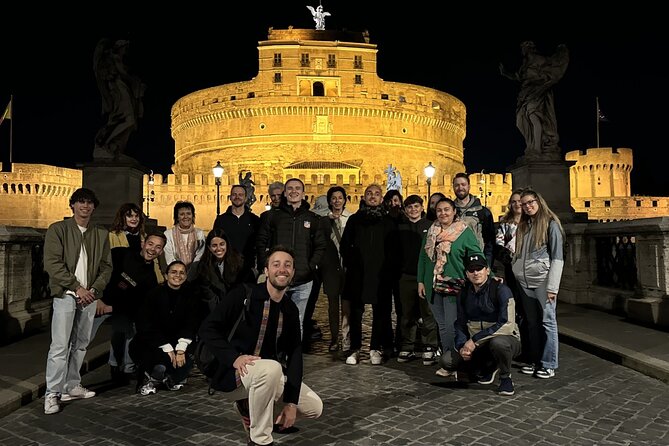
- The route crosses central Rome after dark: You walk from Castel Sant’Angelo to Campo de’ Fiori, with many stops along the way.
- The tales are historical and legendary: Expect executions, prisons, exorcism, kidnapping, and witchcraft, not ghost sightings.
- Guides make the experience: Ivan, Simone, and Max have led this walk, with photos sometimes used to bring past figures to life.
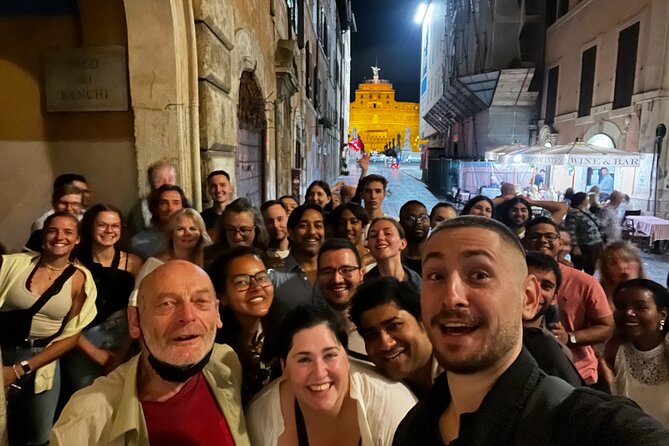
- The group can reach 24 people: That keeps the walk social, but hearing the guide may take effort on busy streets.
- The tour starts at 8 p.m.: It is a useful evening plan and ends near buses and taxis at Campo de’ Fiori.
- The subject matter is adult: Graphic details are included, and the tour is not recommended for children under 12.
Castel Sant’Angelo begins the night with a real sense of menace
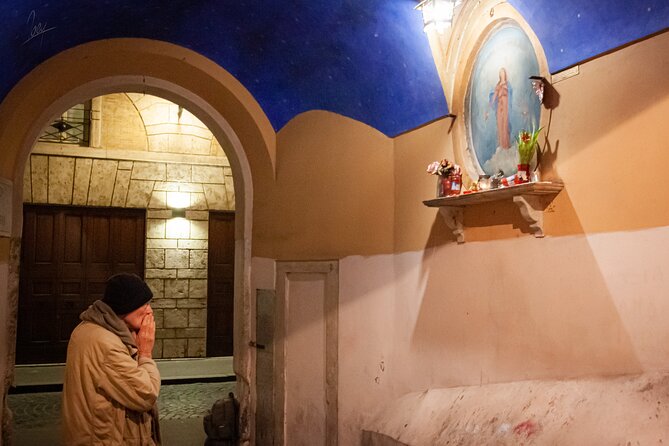
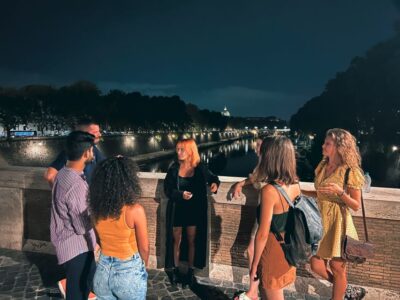
Meet at Lungotevere Castello, 50, beside Castel Sant’Angelo, for the 8 p.m. start. The meeting point is near public transportation, but the first gathering can be slightly confusing if the guide’s sign is not easy to spot. Give yourself a few extra minutes and check the exact point before you leave.
The castle gives the tour a strong opening. Built as Emperor Hadrian’s mausoleum, it later became a fortress, papal residence, and prison. Its huge round form beside the Tiber and the statue of the Archangel Michael on the roof already suggest power, secrecy, and confinement.
You do not go inside the castle, and admission is not part of the walk. Instead, the guide uses the building as a starting point for stories about the people who passed through it and the world of fear surrounding papal Rome. This works well because you get the dramatic exterior without spending the evening on a standard monument visit.
At night, the castle is also a practical landmark. It is easy to recognize, and the open riverfront gives the group room to gather before heading into narrower streets.
More Ghost Story Tours in Italy
- Rome: Small Group Rome’s Dark Side – Ghosts & Legends Tour
★ 4.9 · 343 reviews - Ghosts, Legends & Mysteries of Rome Tip-Based Walking Tour
★ 4.7 · 284 reviews - Rome: Capuchin Crypts & Ghostly Legends Small-Group Tour
★ 4.9 · 133 reviews
Ponte Sant’Angelo turns religious art into a spooky set piece
From the castle, the route crosses Ponte Sant’Angelo. The bridge is lined with ten angel statues designed by Gian Lorenzo Bernini and his students. Each carries a symbol linked to Christ’s suffering, including instruments of the Passion.
In daylight, the bridge is one of Rome’s most graceful walks. After dark, the same statues can feel more severe. Their stone faces and lowered wings seem to watch the passage toward the fortress. This is a good example of how the tour works best: the setting is real, and the guide adds the unsettling interpretation.
The bridge can also be a weak point for sound. Cars, pedestrians, and other evening activity may make it difficult to hear every sentence, especially if you are at the back of a group. Stay close to the guide and avoid drifting behind when the group moves.
Via Paola tells the story of Rome’s kindest executioner
The stop on Via Paola concerns the house of the man remembered as the kindest executioner in Rome. It is a brief stop, about ten minutes, but it introduces one of the walk’s main themes: the city’s old relationship with public punishment.
This is not a cheerful story, but it adds useful context. Executioners were feared and often kept apart from ordinary society, yet accounts of their conduct could be surprisingly complicated. The tale gives you a human angle on a job usually reduced to a single grim image.
You are looking at an ordinary urban setting rather than entering a preserved historic room. The value comes from the story and the contrast between today’s street life and its former associations.
Arco dei Banchi brings in exorcism and local belief
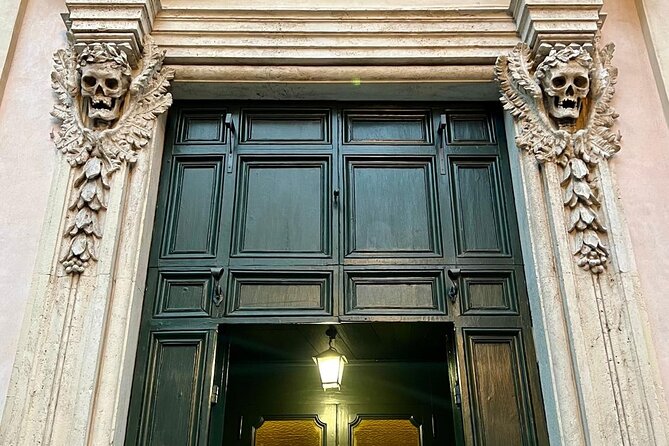
At Arco dei Banchi, the guide points out the Haunted Arch and the place associated with prayer by one of Rome’s most controversial exorcists. The stop lasts only about five minutes, so expect a sharp anecdote rather than a long lecture.
This part of the walk shifts from public punishment to private fear. Rome’s religious culture has long included prayers, rituals, and concerns about evil forces. The guide presents that material as legend and urban history, rather than claiming that anything supernatural will happen around you.
That distinction matters. If you want actors, special effects, or a ghost-hunting test, this is not the right activity. If you enjoy hearing how people explained frightening events in earlier centuries, the subject fits the tour well.
More Ghost Story Tours in Rome
- Rome’s Dark Side Ghosts and Legends Tour
★ 5.0 · 93 reviews - Crypts and Legends: Exploring the Dark Side of Rome
★ 4.5 · 69 reviews - Ghost & Legends in Night Rome Walking Tour
★ 5.0 · 36 reviews - Rome After Dark Mysteries Myths and Haunted History
★ 5.0 · 14 reviews
Benvenuto Cellini adds art, violence, and moral contrast
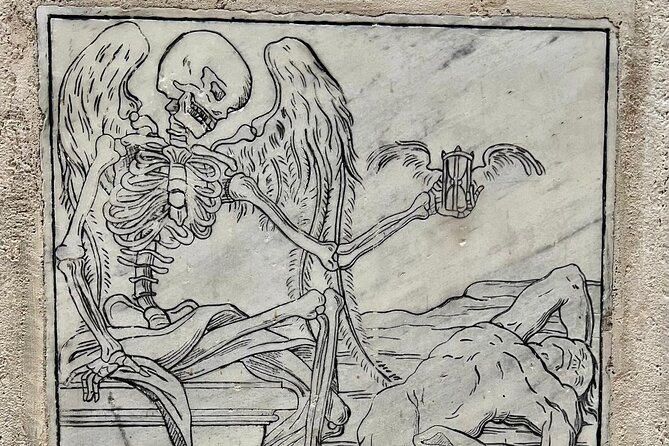
At Largo Ottavio Tassoni, 319, you hear about Benvenuto Cellini, the 16th-century artist whose reputation includes both artistic brilliance and serious crimes. The stop is short, around five minutes, but the contrast is memorable.
Rome has plenty of stories about celebrated figures who were far less admirable in private life. Cellini’s presence keeps the tour from becoming a simple parade of anonymous ghosts. You get a portrait of a famous person whose talent did not cancel out his violent behavior.
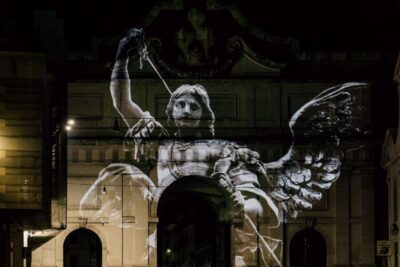
The guide may use images during the talk. That can help when the subject is a person from another century, especially if you are trying to connect a name to a face while standing outdoors at night.
Vicolo della Moretta brings witches and the Inquisition together
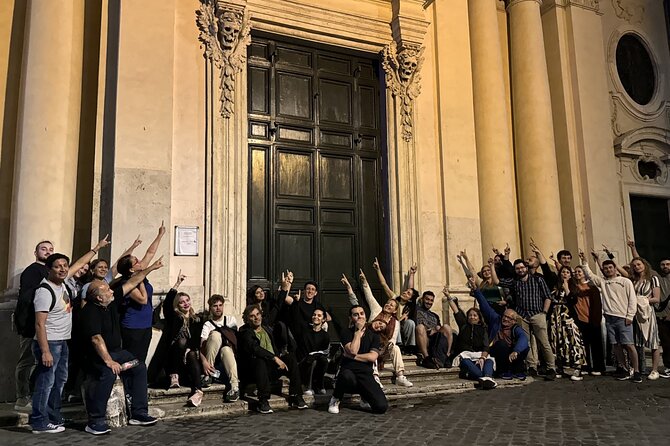
The narrow Vicolo della Moretta is linked with the house of Giulia Tofana, remembered in stories about poison and witchcraft. The guide also discusses the Holy Inquisition, adding another layer of fear to a lane that might otherwise be easy to pass without noticing.
This is one of the more atmospheric parts of the route. A small alley can make old stories feel closer than they do in a broad piazza. Still, the experience depends on the guide’s delivery. Some people will find the material chilling, while others may hear it as a dark historical anecdote.
The subject is not light family entertainment. Stories of poison, accusations, and religious punishment can be graphic. That is why the age guidance of 12 and up is sensible.
Corte Savella recalls Beatrice Cenci’s final days
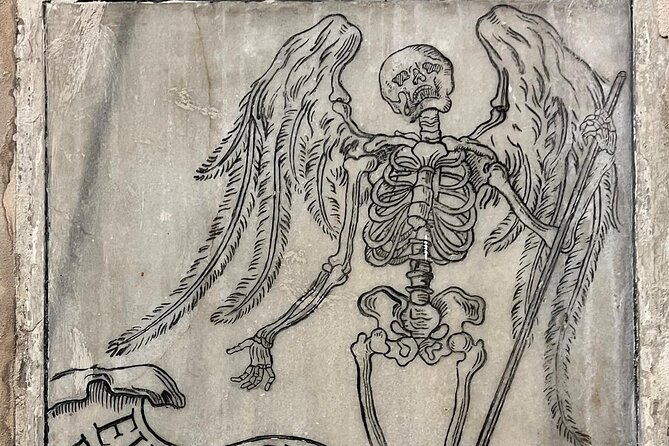
On Via di Monserrato, the route reaches Corte Savella, described as the only prison in Rome authorized to execute convicts inside its walls. The stop also recalls Beatrice Cenci, who was tortured there before her execution.
This is among the heaviest sections of the walk. Beatrice Cenci has become one of Rome’s most famous tragic figures, and her story connects family violence, imprisonment, torture, and public anger. The guide uses the location to show how punishment worked not only as law but also as spectacle and political control.
The stop lasts about five minutes, so you will not receive a full biography. Instead, you get a concentrated piece of Rome’s darker past, tied to the actual street where the events are said to have unfolded.
Via Giulia provides a quiet pause between grim stories
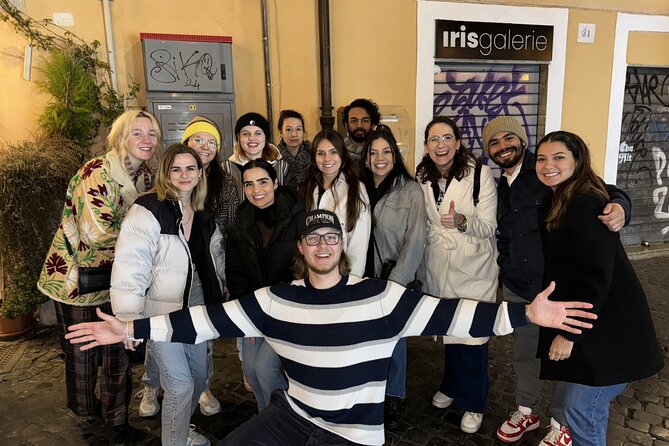
Via Giulia was designed by Bramante in the early 16th century for Pope Julius II. Its Renaissance palaces, ivy-covered walls, and calm appearance offer a welcome change after the prison and execution stories.
The street once served as an important route for Rome’s aristocratic life. Today, its quieter mood makes it a good place to notice the city’s architectural layers. Even on a ghost-themed walk, not every stop needs to be frightening. Sometimes the pleasure comes from seeing an elegant street at night and hearing how its past fits into the wider story.
The group keeps moving through central Rome, so wear shoes suited to uneven urban surfaces. This is a walking tour with several short stops, not a single stationary talk.
Santa Maria dell’Orazione e Morte is the tour’s most unsettling setting
The Church of Santa Maria dell’Orazione e Morte concerns a confraternity devoted to finding and burying abandoned bodies. Its Baroque interior is associated with skulls, bones, and symbols of death.
The name itself, Our Lady of Prayer and Death, tells you what kind of atmosphere to expect. The church represents a time when abandoned corpses were a pressing social and religious concern. Burial was not merely a private matter. It was also a duty carried out by groups willing to deal with the dead whom others had left behind.
The tour does not promise entry into every building, and the supplied details do not say that you enter this church. Treat it as an exterior storytelling stop unless the guide tells you otherwise. Even from outside, the subject gives the evening its clearest link to the city’s traditions around death.
Fontana del Mascherone connects a grim fountain with a modern crime
The Fontana del Mascherone on Via Giulia is an eerie Baroque fountain built around a large stone mask. Water comes from the mask’s grimacing mouth, creating an odd blend of decoration and menace.
The stop also concerns the kidnapping of John Paul Getty III, which brings the tour into more recent criminal history. That change of period is useful. The night is not limited to medieval legends or Inquisition stories. Rome’s darker tales continue into the modern era.
This is another quick stop, about five minutes. You will not spend long studying the fountain, but the unusual face and the crime connection make it easy to remember.
Campo de’ Fiori ends with executions beneath Giordano Bruno
The final stop is Campo de’ Fiori, one of Rome’s best-known squares. In the morning, it is associated with produce, flowers, and local shopping. At night, restaurants and bars fill the surrounding streets, creating a lively finish after the quieter lanes.
The square’s dark past centers on the statue of Giordano Bruno. He was executed here during the Inquisition, and the statue’s presence keeps that history visible in a place now used for eating, meeting, and evening entertainment.
Ending here is convenient. Campo de’ Fiori has bus connections and taxi stands, so you can continue to dinner or return to your accommodation without arranging a complicated transfer. It also gives you the chance to discuss the final story over a drink or meal, though food and drinks are not included.
What the $3.63 price really means
The advertised price is unusually low for a 90-minute guided walk, but read the arrangement carefully. This is a tip-based experience, and the guides work from gratuities rather than a standard fixed guide fee. You can pay by card, which helps if you are not carrying cash.
The low starting price makes the tour a sensible gamble for a first evening in Rome. You see ten story locations, hear local legends, and get a guided walk across the historic center without committing to an expensive attraction.
Still, the final cost is not truly fixed at $3.63. Plan on giving a reasonable tip if the guide provides the service you hoped for. The guide’s effort matters more here than on a conventional prepaid excursion, and the tipping structure is explained at the beginning.
The guide can make or break the evening
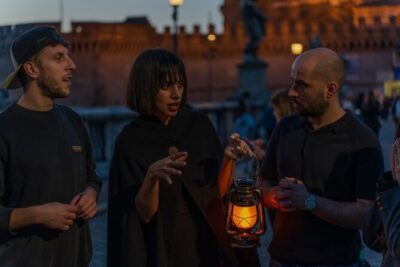
The guides associated with this walk include Ivan, Simone, and Max. Ivan is described as energetic, funny, and especially strong at telling Roman stories. Simone has been praised for a polished, light-hearted presentation, while Max has brought personal observations and darker historical detail to the route.
That said, delivery can vary. One person found Ivan’s accent and fast pace hard to follow, while others found him engaging and clear. Street noise, passing cars, and a group of up to 24 people can add to the problem.
I would stand near the guide, ask for a repeat if needed, and avoid lingering at the edge of the group. Some guides use photos to show the people involved in the stories, which can make old names and events easier to follow.
Who should book this Rome night walk
I would choose this tour if you enjoy:
- Roman history with a grim edge
- Legends about witches, exorcists, prisons, and executions
- A short evening activity after a day of sightseeing
- Walking through central Rome rather than sitting in a theater
- A low upfront price with a tip-based format
- Seeing familiar areas in a different mood
I would skip it if you want a true paranormal investigation, guaranteed ghost sightings, theatrical scares, or access to historic interiors. The experience is built around narration and place, not effects.
The route suits adults and older children who can handle graphic material. Service animals are allowed, and most people can take part, but you should be ready to walk outdoors in evening conditions. Rain does not necessarily ruin the experience, though wet streets and umbrellas can make it harder to hear and move with the group.
Should you book Ghosts, Legends and Mysteries of Rome?
Book it if you want a compact, inexpensive introduction to Rome’s darker stories and do not need the supernatural to be literal. The route covers a lot in 90 minutes, from Castel Sant’Angelo and Bernini’s angels to Giordano Bruno’s execution site.
My main advice is to set the right expectation. You are buying a guided history walk with eerie themes, not a haunted attraction. For many people, that is the strength: the city itself provides the setting, and a lively guide adds the stories. If you can accept the tip-based format, stay close enough to hear, and enjoy dark history more than jump scares, this makes a good first-night activity.
Free cancellation is available up to 24 hours before the 8 p.m. start time. Changes or cancellations inside that window are not accepted, and the tour requires a minimum number of participants.
FAQ
How long is the Ghosts Legends and Mysteries of Rome tour?
The walk lasts approximately 1 hour and 30 minutes.
What time does the tour start?
The tour starts at 8 p.m.
Where does the tour begin?
It begins at Lungotevere Castello, 50, 00193 Rome, near Castel Sant’Angelo.
Where does the tour end?
It ends at Piazza Campo de’ Fiori, a well-connected area with bus stops and taxi stands.
Is this a ghost hunt or paranormal investigation?
No. It is a storytelling walk about legends, mysteries, ghostly tales, and darker episodes from Roman history.
Is the tour offered in English?
Yes. The tour is offered in English and includes a licensed guide.
How much does the tour cost?
The advertised price is $3.63 per person. It is tip-based, and guides work from tips alone.
Is the tour suitable for children?
It is not recommended for children under 12 because it includes graphic information and adult subject matter.
What is the cancellation policy?
You can cancel up to 24 hours before the start time for a full refund. Cancellations or changes made less than 24 hours before the tour are not accepted.
More Walking Tours in Rome
- Rome: Paranormal Night Walking Tour & Secret Backstreets
★ 4.9 · 1,921 reviews - Rome: Haunted City Night Walking Tour
★ 4.9 · 616 reviews - Haunted Rome Ghost Night Walking Tour
★ 5.0 · 495 reviews - Ghosts and Crimes of Rome Night Walk
★ 5.0 · 61 reviews
Just added around Rome
- Ghost & Legends in Night Rome Walking Tour★ 5.0 · 36 reviews
- Secrets of Rome – The dark side Small Group Walking Tour★ 5.0 · 20 reviews
- Rome: Private Night Ghost Walking Tour★ 5.0 · 38 reviews
- Rome Secrets with Dark History and Tasty Bites Tour Experience★ 4.5 · 3 reviews
- Rome After Dark Mysteries Myths and Haunted History★ 5.0 · 14 reviews
- Haunted Rome & True Crime: The Cenci Curse Game★ 4.5 · 27 reviews
- Experience Rome in this Mysterious Ghost Tour★ 3.5 · 3 reviews
- Haunted Rome: Eternal City Night Walking Tour★ 5.0 · 38 reviews
Rome Ghost Tours, compared.
Paranormal Night Walking Tour & Secret Backstreets
Read our review →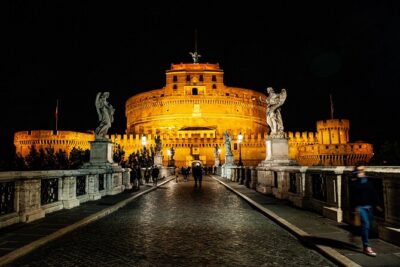

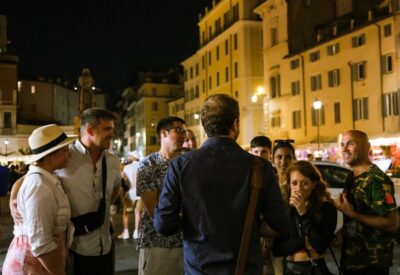
Small Group Rome’s Dark Side – Ghosts & Legends Tour
Read our review →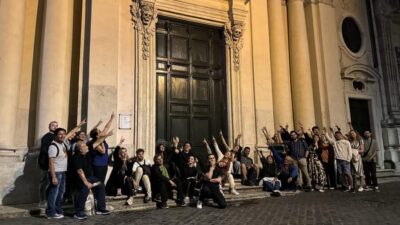
Ghosts, Legends & Mysteries of Rome Tip-Based Walking Tour
Read our review →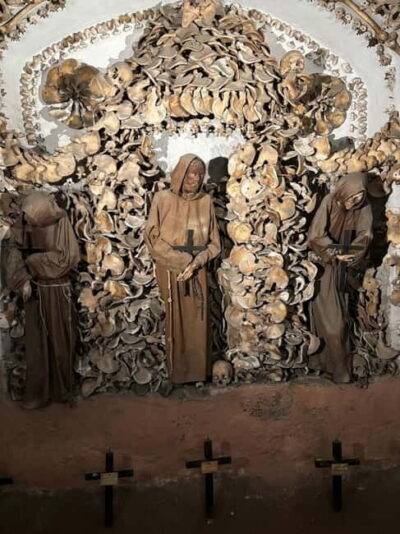
Capuchin Crypts & Ghostly Legends Small-Group Tour
Read our review →Browse the lists this tour appears in