
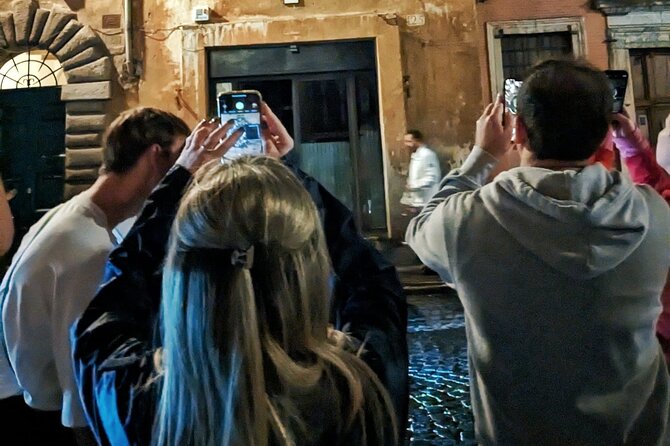
REVIEW · ROME GHOST TOURS
Ghosts and Crimes of Rome Night Walk
Rome after dark has more to offer than fountains and softly lit domes. This walk takes you through executions, poisonings, prisons, and ghost tales, with stops tied to some of the city’s grimmest stories. The route begins near Castel Sant’Angelo and ends at Campo de’ Fiori.
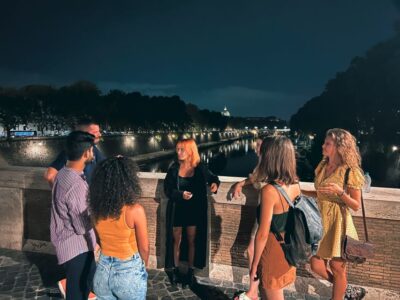
I like two things right away: the small group of no more than 15 people, which makes it easy to hear the guide, and the use of dowsing rods, which gives the ghost theme a playful, hands-on twist. Guides such as Lara, Elvira, Bryan, Yash, and Arianna have been praised for turning dark facts into lively stories.
The main consideration is simple: this is more a crime-and-execution walk with ghost elements than a hunt for visible spirits. If you want constant supernatural scares, you may find it too historical. If you enjoy Rome’s less polished past, the $25.09 price is a fair deal.
Key points to know before you book

- Castel Sant’Angelo starts the story: The opening sets up tales of wrongful executions and the fortress dungeons near the Vatican.
- The route reaches Campo de’ Fiori: You finish at the famous piazza linked with public executions and burnings.
- Real crimes drive the tour: Expect stories about a serial killer, torture, execution tools, and Rome’s executioner tradition.
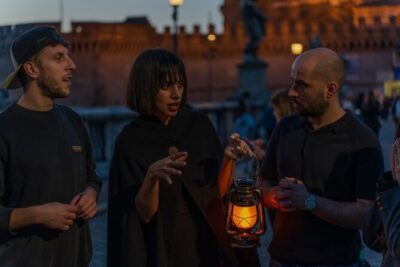
- Dowsing rods add audience participation: You get a chance to try the tools rather than only listen to the guide.
- The guide makes or breaks the evening: The strongest feedback names Lara, Elvira, Bryan, Yash, Clara, Allie, Amber, and Arianna as lively storytellers.
- The walk suits older children and teens: The subject matter is grisly, but one guide was specifically recommended for families with tweens and teens.
Rome’s darker side begins near Castel Sant’Angelo
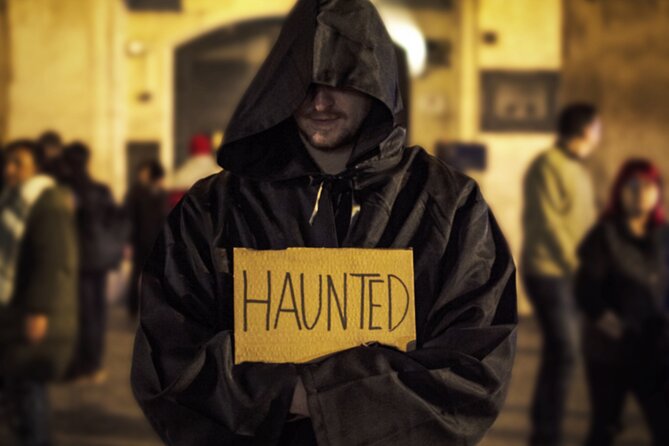
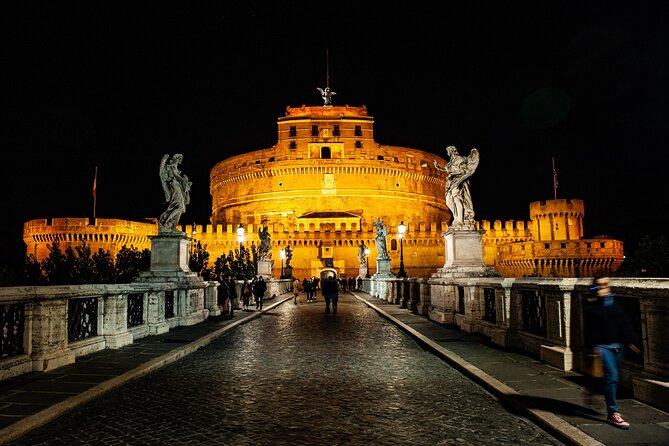
Meet at Lungotevere Castello 50, close to Castel Sant’Angelo. The meeting point puts you beside one of Rome’s most dramatic night-time sights, though this activity focuses on the fortress’s darker role rather than offering an interior visit.
The opening story concerns people executed for crimes they did not commit. You also hear about the dungeons inside the Papal fortress, which gives the evening a strong sense of place. This is a good way to start because the setting does much of the work: a massive stone fortress, old streets, and a history tied to imprisonment and papal power.
From the beginning, you should expect storytelling rather than a formal lecture. The guide carries the evening through spoken accounts, historical detail, and ghost stories. The best guides use humor and a touch of theatrical flair without losing the facts.
That balance matters. Rome’s past includes enough real cruelty that the guide does not need to invent much. The activity works best when the supernatural material sits beside documented crimes and punishments, instead of replacing them.
More evening tours in Rome:
- Rome: Paranormal Night Walking Tour & Secret Backstreets
★ 4.9 · 1,921 reviews - Rome: Haunted City Night Walking Tour
★ 4.9 · 616 reviews - Haunted Rome Ghost Night Walking Tour
★ 5.0 · 495 reviews
Following crimes through the Centro Storico
The walk continues through the Centro Storico, moving away from the busiest tourist path. You see piazzas and streets connected with brutal events, and the guide explains how ordinary-looking corners became scenes of murder, punishment, or public fear.
One stop concerns the residence of a serial killer who poisoned more than 600 men. That story gives you a sense of the tour’s tone. You are not just hearing vague tales about haunted buildings. You are learning about specific people, places, and crimes that shaped the city’s darker reputation.
Another story focuses on an executioner who killed roughly 500 people during a career lasting 65 years. Details like this help explain how public execution once functioned as part of city life. The executioner was not an unseen figure from a legend. He held a recognized role, worked for decades, and became part of Rome’s social story.
I like this part of the route because it adds context to streets you might otherwise cross without a thought. The tour does not rely on major monuments alone. Instead, it uses locations as prompts for stories about law, violence, religion, and superstition.
The drawback is that the material can be grim. The tour deals with murder, torture, and death in direct terms. Families should decide in advance if that suits their children, although the experience has worked well for groups with children aged 14 and older, including tweens and teens.
The ancient prison and the tools of death
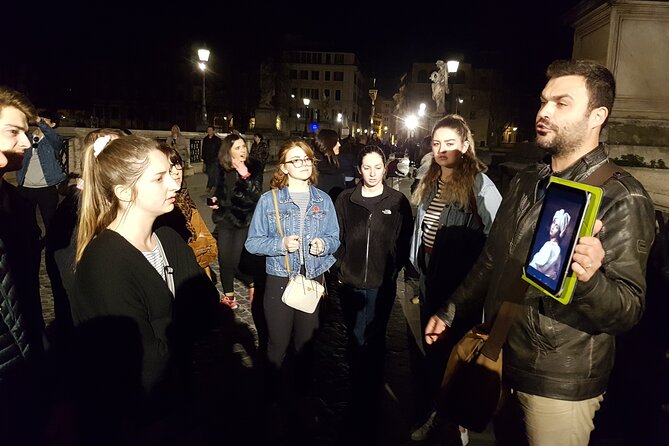
A major stop is an ancient prison where hundreds of women were tortured and executed. Here, the guide explains the methods and tools used to put people to death.
This section is likely to appeal to you if you enjoy social history, not just ghost stories. It shows how punishment operated and how fear was made public. The focus is unsettling, but it also helps you see Rome as a lived city, not only a collection of imperial ruins and grand churches.
The guide’s delivery matters more here than at almost any other stop. A dry recitation of dates would make the subject hard to follow. The strongest guides named in the feedback, including Clara, Elvie, Yash, Bryan, and Elvira, are described as clear, funny, and able to hold attention.
Some praise goes to guides who explained difficult material in a way that was easy to understand. That is useful if English is not your first language, or if you are walking with younger people who may lose interest during a long historical talk.
You should also allow for different guide styles. One account found the guide very informed but a little long-winded. The tour lasts about 90 minutes, so a guide who spends extra time on each story can make the pace feel slower. Most groups appear to find the storytelling engaging, but the experience is not built around rapid sightseeing.
Julius’s private road and the Brotherhood of Death
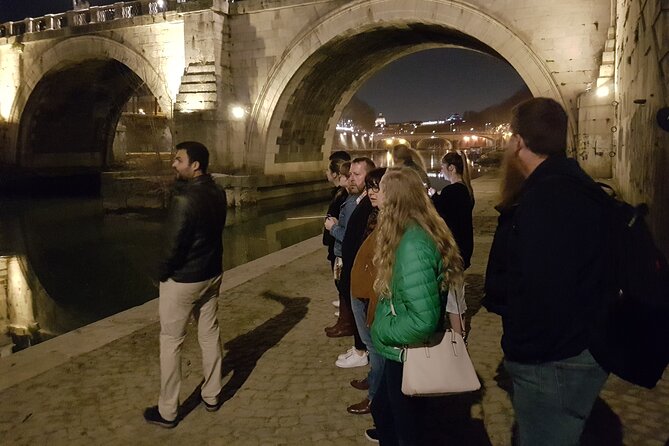
The route includes a street built so Pope Julius could visit his mistresses in privacy. This detail gives the tour one of its more surprising turns. It moves the subject beyond murder and punishment into the private lives of powerful figures.
You also see the head church of the Brotherhood of Death. The name alone tells you why it fits the route, but the stop also shows how death became part of organized religious and civic life. Rome’s churches often look serene from the outside. This walk asks you to consider the groups, rituals, and institutions connected with death behind those calm facades.
I like these stops because they connect personal scandal, religion, and public custom. The stories are not limited to famous emperors or ancient battles. They concern popes, executioners, prisoners, religious brotherhoods, and ordinary streets.
The guide will likely point out details you would miss on a standard city walk. You are still seeing Rome at night, but the subject changes how you read the buildings. A church may become a sign of mourning. A narrow road may recall secrecy. A piazza may suggest punishment rather than cafés and photographs.
More walking tours in Rome:
- Ghosts, Legends & Mysteries of Rome Tip-Based Walking Tour
★ 4.7 · 284 reviews - Ghosts Legends and Mysteries of Rome Walking Tour
★ 5.0 · 149 reviews - Rome: Private Night Ghost Walking Tour
★ 5.0 · 38 reviews - Haunted Rome: Eternal City Night Walking Tour
★ 5.0 · 38 reviews
The churchless piazza and Campo de’ Fiori
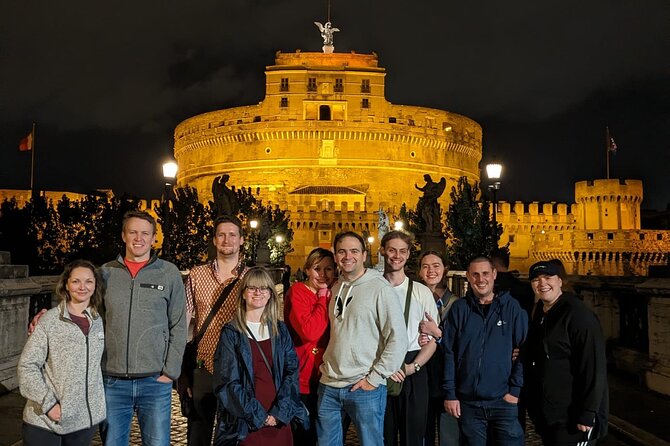
The walk proceeds to a piazza without churches, then ends at Campo de’ Fiori. These locations help the guide explain where executions and burnings took place.
The final section concerns thousands of people burned alive. It is the starkest part of the route and reinforces the difference between the polished Rome of postcards and the violent city revealed by its public spaces.
Campo de’ Fiori is a strong ending because it is one of Rome’s best-known squares, yet its past is easy to overlook while you are enjoying the restaurants and evening atmosphere. Ending here gives you a final story in a place you may revisit later during your stay.
The tour does not include admission to a major monument. The value comes from the guide’s interpretation and the route through the streets. That keeps the price low, but it also means you should not book this expecting museum access, theatrical actors, or a staged haunted-house event.
Ghost hunting with dowsing rods
The dowsing rods are the activity’s most unusual feature. You get to use them as part of the ghost-hunting element, rather than simply hearing the guide talk about spirits.
For some people, this will be the highlight. It adds a bit of participation and gives the group something to do during the stories. One account described flickering lights and a spooky atmosphere, while another person felt the dowsing rods connected the group to the spirit world. You can enjoy that playful uncertainty without needing to take every supernatural claim literally.
For other people, the rods may feel like a gimmick. That is fair. The experience does not provide proof of ghosts, and even positive accounts make clear that the main attraction is the storytelling. Think of the rods as a fun extra, not the core reason to book.
This is also why the title can create a false expectation. Several accounts describe the activity as mostly a tour of crimes, criminals, and executions, with a few ghost stories mixed in. You should book it for atmosphere and unusual history first, supernatural encounters second.
Why the small group matters after dark
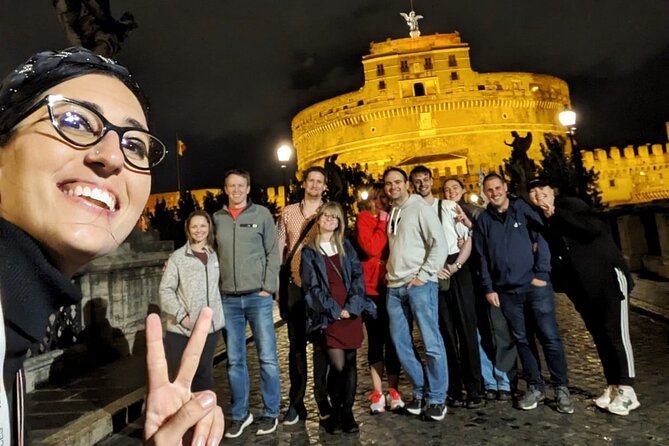
The maximum group size is 15 people. That is a useful limit on a walking tour, especially at night when you need to stay close to the guide and hear every word.
A small group also improves the dowsing-rod activity. Everyone has more room to take part, and the guide can respond to questions without trying to manage a crowd. It helps create the friendly group dynamic that several strong accounts describe.
The guide’s name and phone number are provided to make communication easier. You receive instant booking confirmation, and the activity runs in all weather conditions. Dress for the forecast and wear shoes suited to 90 minutes on city streets.
The tour is offered in English. It is near public transportation, and most people can participate. Service animals are allowed. The route ends at Piazza Campo de’ Fiori, so you are left in a central area with plenty of options for continuing your evening, although food and drinks are not included.
Because of the Jubilee, some monuments may be under restoration and the route may change. Pay attention to any updates sent before the activity. This matters if you are especially interested in seeing a particular church or monument along the way.
What the $25.09 price really buys you
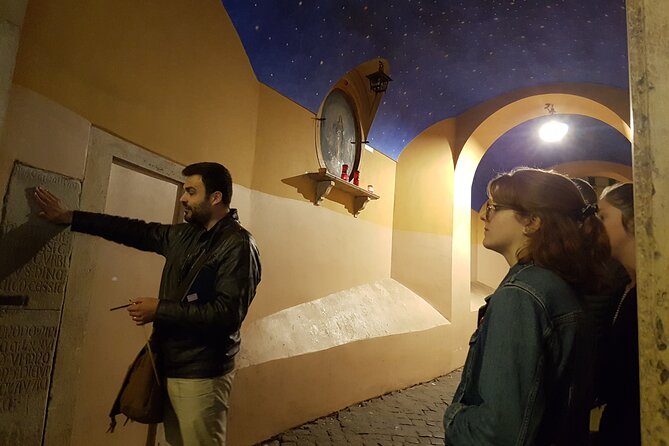
At $25.09 per person, this is priced as an affordable evening walk rather than a premium private tour. You are paying for a local storyteller, a carefully chosen route, a small group, and the dowsing rods.
I see good value here for a first or second night in Rome. You get a different look at the city without spending half a day or paying monument admission fees. The 90-minute length is also easy to fit between dinner and other plans.
The value depends heavily on your interest in spoken storytelling. If you want grand interiors, archaeological displays, or a long list of major sights, this will not replace a daytime history tour. If you want entertaining context for streets you may otherwise ignore, the cost is modest.
The high overall score of 4.8 from 61 ratings, with 97 percent recommending the experience, supports the idea that the guide quality is usually strong. Still, the individual guide makes a real difference. Names receiving especially warm praise include Lara, Elvira, Bryan, Yash, Clara, Allie, Amber, Arianna, and Elvie.
The kind of guide you want
Look for a guide who can tell a grisly story without turning the whole evening into a joke. The best style here seems to mix clear historical explanation, warmth, and a little theatrical energy.
Lara is described as funny, friendly, captivating, and good at working with a small group. Elvira receives praise for both her information and ghost-story delivery. Bryan is repeatedly described as enthusiastic and easy to understand, with a clear love for Rome and the subject.
Yash is praised for wit and strong command of the material. Clara brings attention to lesser-known parts of Rome’s past, while Arianna is described as enthusiastic and entertaining. Allie, Amber, and Elvie also receive strong praise for making the walk easy to follow.
You cannot always choose your guide, so I would not book solely on one name. The practical lesson is to expect a storytelling-led experience and to value a guide who can keep the group together, speak clearly, and connect each tale to the street around you.
Who should book this night walk
I would recommend it to you if you enjoy:
- Dark history, crime stories, and old punishment practices
- Walking through central Rome after sunset
- Small groups instead of large flag-following tours
- Unusual stories about popes, prisons, executioners, and religious groups
- A light ghost theme with a hands-on activity
- Family sightseeing with older children or teenagers
You may want to skip it if you want a serious paranormal investigation, a tour inside the Colosseum or Vatican, or a frightening theatrical performance. The experience is informative and entertaining, but the ghosts share the stage with real crimes and historical facts.
It also suits repeat visitors. One account came from people who already lived in Rome and still enjoyed the walk with their children. That makes sense: the route focuses on stories and places you might not encounter during a first-time list of major sights.
Should you book Ghosts and Crimes of Rome?
Book it if you want to see Rome through its prisons, executions, scandals, and ghost legends rather than through its usual monuments. The small group, 90-minute duration, lively guides, and modest price make it an easy evening addition.
Just set the right expectation. You are more likely to hear a gripping account of a murder or execution than to witness a ghost. If that sounds like a weakness, choose another activity. If it sounds like a fun way to understand the city’s darker corners, this walk offers good value and a memorable change of pace.
Free cancellation is available up to 24 hours before the start time. The activity needs a minimum number of participants, and a full refund or another option is offered if the provider cancels for that reason.
FAQ
How long does the Ghosts and Crimes of Rome Night Walk last?
The walk lasts approximately 1 hour and 30 minutes.
Where does the tour start?
It starts at Lungotevere Castello 50, 00193 Rome, Italy.
Where does the tour end?
The walk ends at Piazza Campo de’ Fiori, 00186 Rome, Italy.
Is the tour offered in English?
Yes. The experience is offered in English.
How large is the group?
The tour has a maximum of 15 participants.
What happens if I need to cancel?
You can cancel at least 24 hours before the start time for a full refund. Cancellations or changes made less than 24 hours before the start time are not accepted for a refund.
Just added around Rome
- Ghost & Legends in Night Rome Walking Tour★ 5.0 · 36 reviews
- Secrets of Rome – The dark side Small Group Walking Tour★ 5.0 · 20 reviews
- Rome After Dark Mysteries Myths and Haunted History★ 5.0 · 14 reviews
- Rome: Private Night Ghost Walking Tour★ 5.0 · 38 reviews
- Rome Secrets with Dark History and Tasty Bites Tour Experience★ 4.5 · 3 reviews
- Haunted Rome & True Crime: The Cenci Curse Game★ 4.5 · 27 reviews
- Experience Rome in this Mysterious Ghost Tour★ 3.5 · 3 reviews
- Haunted Rome: Eternal City Night Walking Tour★ 5.0 · 38 reviews
Rome Ghost Tours, compared.
Paranormal Night Walking Tour & Secret Backstreets
Read our review →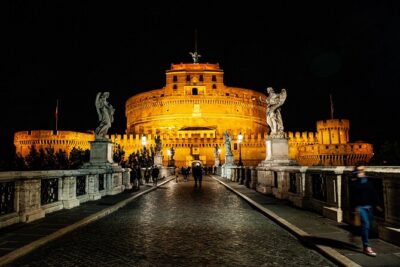

Small Group Rome’s Dark Side – Ghosts & Legends Tour
Read our review →
Ghosts, Legends & Mysteries of Rome Tip-Based Walking Tour
Read our review →
Ghosts Legends and Mysteries of Rome Walking Tour
Read our review →Browse the lists this tour appears in