
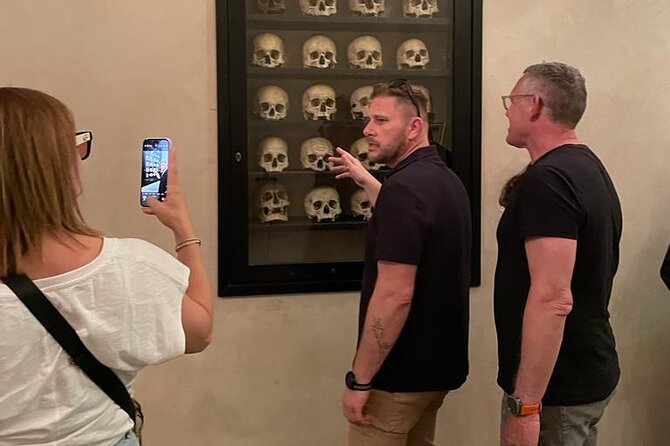
REVIEW · ROME GHOST TOURS
Secrets of Rome – The dark side Small Group Walking Tour
Rome’s dark past is not tucked away in a museum. It is written into the streets, churches, bridges, and squares you pass every day. This two-hour walk takes you from Castel Sant’Angelo to Campo de’ Fiori, linking famous sights with stories of executions, serial crime, prisons, ghosts, and religious persecution.
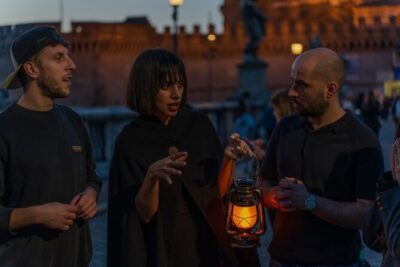
I like two things here. First, you see familiar Rome from an unusual angle, especially the Vatican and Castel Sant’Angelo. Second, the guides bring real personality to the tales. Bryan, Arianna, Sarah, Ali, Sama, and Sonia Perrera have all led this walk, with strong praise for their storytelling and humor.
The main drawback is the setting itself. You walk over narrow cobbled streets, and the tour can be harder for wheelchair users. Rain may also shorten the route or make the evening less comfortable, so wear suitable shoes and clothing.
The dark side of Rome in six memorable stops
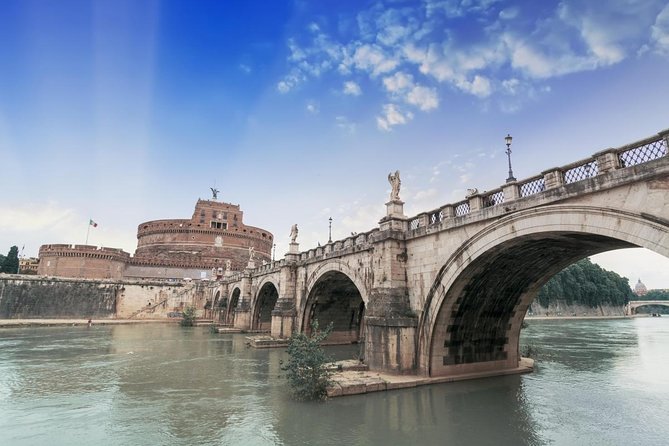
- Castel Sant’Angelo and St. Angelo Bridge: Begin beside one of Rome’s most recognizable fortresses, with stories of public executions and a fresh view toward the Vatican.
- Via del Banco di Santo Spirito: Hear about an executioner who personally put hundreds of people to death.
- Via dei Banchi Vecchi: Follow a narrow old street connected with one of Rome’s most prolific serial killers.
- Via Giulia: Pause on one of Rome’s prettiest streets and see how beauty and grim history often sit side by side.
- Church of Prayer and Death: Learn about a mysterious brotherhood whose work centered on mercy and death.
- Campo de’ Fiori: Finish in a lively square that once hosted executions of heretics and alleged witches.
Starting beneath Castel Sant’Angelo
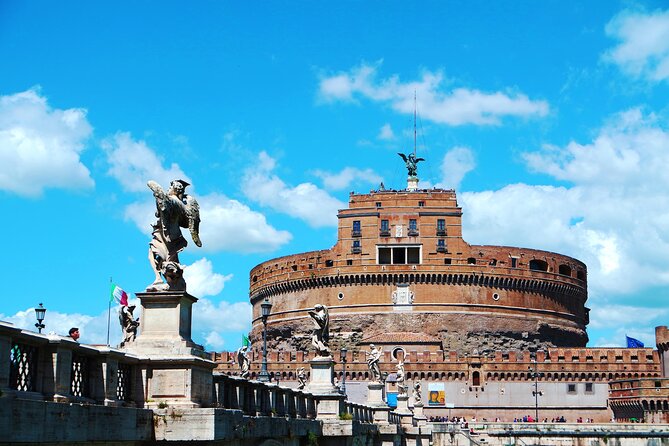
Your meeting point is on St. Angelo Bridge, at Lungotevere Castello 50, beside Castel Sant’Angelo. This is a smart place to begin. The bridge gives you an immediate view of the fortress, the river, and the Vatican beyond.
The walk opens with the area’s connection to public executions in ancient Rome. You also hear about Castel Sant’Angelo, first known as a mausoleum and later used as a papal fortress. The building has had many lives, and its defensive role makes a fitting setting for a tour about fear, punishment, and power.
The first stop lasts about 20 minutes, with no separate admission charge. You do not go inside Castel Sant’Angelo on this tour. Instead, you use the exterior and the bridge as a backdrop while your guide explains what happened here and why this part of Rome mattered.
I like this start because it gives you a familiar landmark with a different mood. If you have already seen the fortress by day, the stories can change how you look at it. The Vatican view also adds a useful visual link between religious authority and the darker events discussed later.
More Dark History Tours in Italy
- Rome: Guided Bar Crawl with Drinks & Dark History
★ 4.9 · 444 reviews - Rome: Small Group Rome’s Dark Side – Ghosts & Legends Tour
★ 4.9 · 343 reviews - Rome’s Dark Side Ghosts and Legends Tour
★ 5.0 · 93 reviews
An executioner on Via del Banco di Santo Spirito
The next stop takes about 15 minutes on Via del Banco di Santo Spirito. Here, the focus shifts from places of punishment to the person who carried it out.
You hear the story of an executioner who is said to have put hundreds of people to death by his own hand. This is the kind of material that makes the tour different from a standard walk through Rome’s ancient monuments. Instead of concentrating only on emperors, artists, and popes, the guide brings attention to the people who worked on the margins of Roman society.
This section depends heavily on delivery. The facts are grim, but a good guide needs to tell them with care rather than turning suffering into cheap entertainment. The guides praised most warmly on this walk, including Bryan, Sarah, Arianna, and Sonia Perrera, were noted for humor, clarity, and a strong sense of storytelling.
If you are visiting with older children or teenagers, use your judgment. The subject matter includes executions and crime, and the tour is not designed as a light family history walk. Children must be accompanied by an adult.
Following the cobbles of Via dei Banchi Vecchi
Via dei Banchi Vecchi is one of the more atmospheric sections of the route. The street is narrow, old, and cobbled, and it leads you toward the former home of one of Rome’s most prolific serial killers.
This is where the physical setting does much of the work. You are not standing in front of a grand monument with a long explanation panel. You are walking through an enclosed old street, listening to a personal story tied to the buildings around you.
That closeness can make the account feel more immediate. It also creates the clearest practical issue on the route. The cobbles are not ideal for every mobility device, and one account specifically noted that the walk was challenging for wheelchair users, although the guide was patient and helpful.
Wear shoes with a firm sole. Rome’s old streets can be uneven, and you may spend much of the walk standing while the guide speaks. If you need extra mobility support, contact the operator before booking so you can discuss the route.
A lighter pause on elegant Via Giulia
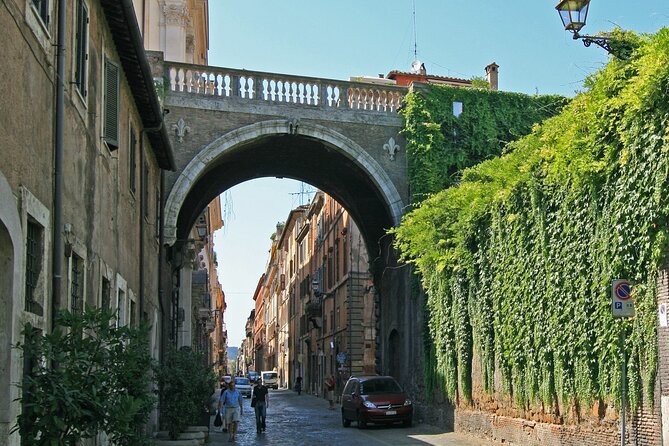
After the darker account on Via dei Banchi Vecchi, the walk reaches Via Giulia, described as one of Rome’s most beautiful streets. This stop lasts around 10 minutes.
The change of mood is useful. A good dark-history tour should not force every location into the same gloomy tone. Via Giulia gives you a chance to notice Rome’s architecture and street design while still keeping the larger theme in view.
The route also shows how close Rome’s beauty and brutality can be. A graceful street may be only a short walk from a site linked with crime or punishment. I like this contrast because it keeps the walk from becoming a string of disconnected ghost stories.
Your guide may also add related stories about people and places in this part of the city. One particularly memorable account included Michelangelo’s former home and the pressure he faced while painting the Sistine Chapel. That detail shows the sort of extra material that can make a guide’s personal presentation important, although specific stories can vary by guide.
More Dark History Tours in Rome
- Crypts and Legends: Exploring the Dark Side of Rome
★ 4.5 · 69 reviews - Rome Secrets: Dark History & Tasty Bites Tour
★ 5.0 · 37 reviews - Rome’s Dark Side: Ghosts, Scandals and Crypts – Small Group Tour
★ 5.0 · 28 reviews - Haunted Rome & True Crime: The Cenci Curse Game
★ 4.5 · 27 reviews
Inside the story of the Prayer and Death church
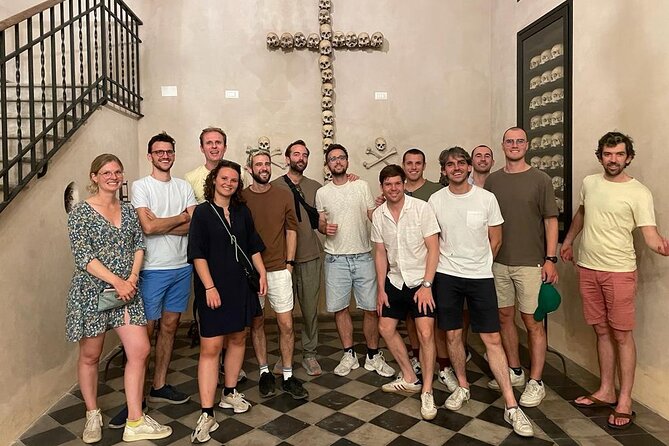
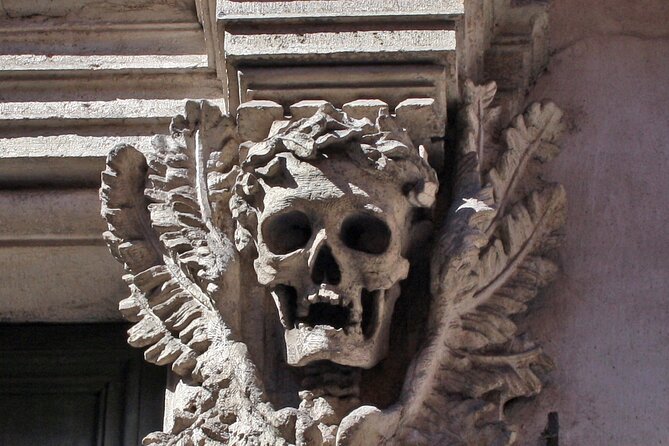
The next stop is Chiesa di Santa Maria dell’Orazione e Morte, usually translated as the Church of Prayer and Death. The church once served as the headquarters of a mysterious brotherhood of mercy.
The theme here is not simply punishment. It is also what happened to people who died without family or support. Brotherhoods connected with death often dealt with burial, prayer, and care for the abandoned dead. The stop adds a more complicated moral side to the tour, showing that Rome’s religious institutions could be associated with both authority and acts of mercy.
Admission is included in the walking route, but you should understand that this is not presented as a separate church tour. The guide’s explanation is the main event. Pay attention to the storytelling, since the meaning of the brotherhood becomes clearer through the account of its work.
This is also a good place to ask questions. A small group can make it easier to hear the answer and keep the discussion focused. The maximum group size is 15, and some departures may be smaller. One account even described a walk with only two people, though you should not expect that every time.
Ending at Campo de’ Fiori
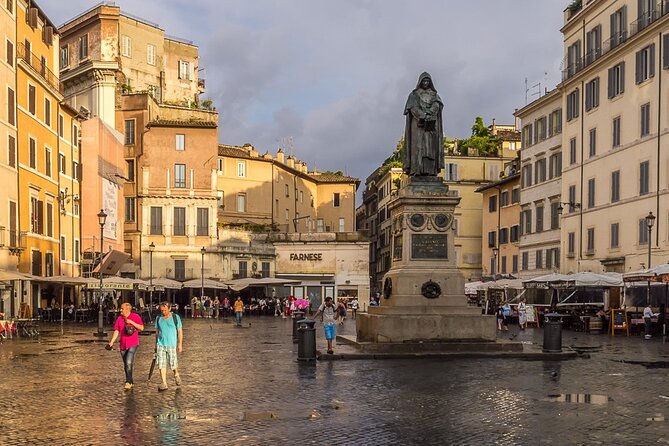
The final stop is Campo de’ Fiori, where the tour ends after roughly 30 minutes. Today, this central square is known for its market, restaurants, bars, and cafés. It is an easy place to continue your evening.
The square’s earlier role was far darker. The guide explains how it was used for the burning of heretics and witches. That history gives the busy modern setting a sharp contrast. You can finish a story about public death and then walk a few steps into a square filled with food stalls and evening activity.
This is one of the most effective endings because the location remains part of everyday Rome. You do not finish at an isolated memorial that feels separate from modern life. You finish in a place where people still meet, eat, shop, and pass through without always thinking about what happened there.
The end point is Piazza Campo de’ Fiori, 00186 Rome. No return transport is provided, but the square has cafés and restaurants if you want to stop for a drink or meal. Food and drinks are not included in the tour.
Why the guides matter so much
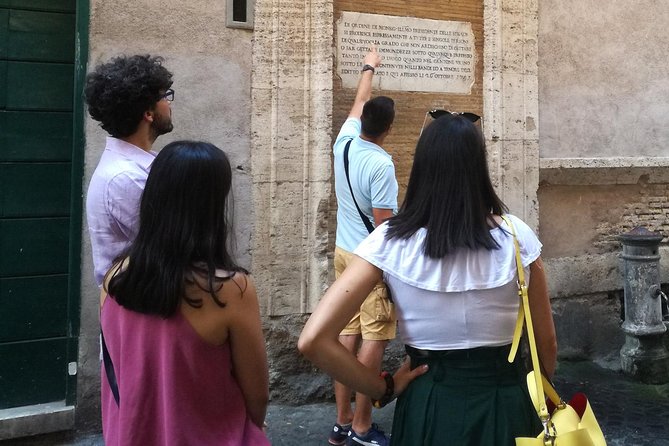
This walk rises or falls on the guide. The route itself is compact, and most of the locations are free public spaces. You are paying for the explanation, pacing, atmosphere, and connections between the stops.
The guides named in the tour’s feedback include Ali, Sama, Sonia Perrera, Bryan or Brian, Arianna, and Sarah. Their approaches differ, but the strongest qualities are clear. You want someone who can explain the historical setting, tell a story without losing the facts, and keep a small group engaged on a busy street.
Bryan was repeatedly praised for humor and strong storytelling. Arianna was noted for enthusiasm and personal touches. Sarah was described as especially effective at making old scenes feel immediate, while Sonia Perrera was praised for her funny and engaging style. Ali and Sama also received warm comments for their presentation and grasp of Rome’s darker past.
You may receive a guide not named here. The practical point is to expect a personality-led walk rather than an audio guide or a formal lecture. Your guide’s style can shape how spooky, serious, or playful the evening feels.
Some groups have found that a radio or headphones would help when the streets are noisy or crowded. With a maximum of 15 people, the group is still fairly small, but you should stay close and listen carefully at busy points.
What $31.19 gets you
At $31.19 per person, this is a reasonably priced way to spend two hours in central Rome. You are not paying for museum admission, food, transport, or a long guided visit inside a monument. You are paying for a guide who connects several public places through a focused theme.
That value works best if you enjoy storytelling and already plan to walk through the historic center. You cover several neighborhoods between Castel Sant’Angelo and Campo de’ Fiori, and the route ends in a convenient part of town.
The cost is less compelling if you want detailed architectural instruction or access to major interiors. This is not a replacement for a Colosseum tour, Vatican visit, or Castel Sant’Angelo admission. Think of it as a themed evening walk that adds another layer to the Rome you see during the day.
Gratuities are not required, but they are appreciated. Since the guide provides the main value, a tip is sensible when the storytelling and care make the walk worthwhile.
Timing, weather, and practical comfort
The walk lasts about two hours, although poor weather can affect the length. One rainy outing lasted only about an hour, and the wet conditions added to the eerie mood but reduced the amount of time on the route.
The tour operates in all weather. Bring clothing suitable for the forecast, and do not assume that an umbrella alone will make the cobbles comfortable. A waterproof layer and stable walking shoes are the better choice.
The activity is offered in English and uses a mobile ticket. You receive the guide’s name and phone number to make meeting and communication easier. The start is near public transportation, but pickup and drop-off are not provided.
Rome may also have restoration work connected with the Jubilee period. Some monuments could be partly covered or affected by changes, so check any messages sent before your departure.
Who should book this walk?
I would choose this tour for someone who has already seen a few major Roman sights and wants a different side of the city. It also works well on a first evening, when a guided walk can help you get oriented without committing to a long museum visit.
The tour suits:
- Adults interested in crime, punishment, ghosts, and unusual local stories
- Teenagers with an interest in criminology or dark history
- Couples looking for a story-led evening activity
- Repeat visitors who want streets and subjects beyond the usual monuments
- Small groups who prefer direct contact with a guide
I would think twice if you dislike graphic stories, have difficulty walking on cobbles, or need a fully accessible route. The experience is also less suitable if rain would make two hours outdoors unpleasant for you.
Should you book Secrets of Rome?
Book it if you like Rome with its polished surface removed. The walk shows how churches, bridges, elegant streets, and busy squares connect with fear, punishment, crime, and death. At $31.19, it offers a good amount of guided storytelling for the price.
You should also book with realistic expectations. The tour does not include food, drinks, hotel pickup, or entry to major monuments. Its quality depends on the guide, the weather, street noise, and your comfort with cobblestones.
For an atmospheric introduction to Rome’s less respectable past, I think it is a strong choice. Choose a dry evening if possible, stay close to the guide, and allow time for a drink or meal at Campo de’ Fiori when the stories are over.
FAQ
How long does the Secrets of Rome walking tour last?
The tour lasts approximately two hours. Poor weather may affect the duration, as the walk takes place outdoors.
Where does the tour begin?
The meeting point is St. Angelo Bridge, at Lungotevere Castello 50, 00193 Rome, near Castel Sant’Angelo.
Where does the tour end?
The tour ends at Piazza Campo de’ Fiori, 00186 Rome. The square has a farmers’ market, restaurants, bars, and cafés.
Is the tour offered in English?
Yes. The experience is offered in English.
How many people can join the tour?
The group has a maximum of 15 people. Some departures may be smaller.
Are food and drinks included?
No. Food and drinks are not included, though the tour ends near restaurants, bars, and cafés in Campo de’ Fiori.
Is the route suitable for wheelchair users?
The route includes narrow cobbled streets, which can make it difficult for wheelchair users. Service animals are allowed, and most people can participate, but you should contact the operator if you need specific mobility information.
What happens if I need to cancel?
You can cancel up to 24 hours before the start time for a full refund. Cancellations or changes made less than 24 hours before the start time are not accepted for a refund. If the minimum number of participants is not reached, you will be offered another date or experience, or a full refund.
More Walking Tours in Rome
- Rome: Paranormal Night Walking Tour & Secret Backstreets
★ 4.9 · 1,921 reviews - Rome: Haunted City Night Walking Tour
★ 4.9 · 616 reviews - Haunted Rome Ghost Night Walking Tour
★ 5.0 · 495 reviews - Ghosts, Legends & Mysteries of Rome Tip-Based Walking Tour
★ 4.7 · 284 reviews
Just added around Rome
- Ghost & Legends in Night Rome Walking Tour★ 5.0 · 36 reviews
- Rome After Dark Mysteries Myths and Haunted History★ 5.0 · 14 reviews
- Rome: Private Night Ghost Walking Tour★ 5.0 · 38 reviews
- Rome Secrets with Dark History and Tasty Bites Tour Experience★ 4.5 · 3 reviews
- Haunted Rome & True Crime: The Cenci Curse Game★ 4.5 · 27 reviews
- Experience Rome in this Mysterious Ghost Tour★ 3.5 · 3 reviews
- Ghosts and Crimes of Rome Night Walk★ 5.0 · 61 reviews
- Haunted Rome: Eternal City Night Walking Tour★ 5.0 · 38 reviews
Rome Ghost Tours, compared.
Paranormal Night Walking Tour & Secret Backstreets
Read our review →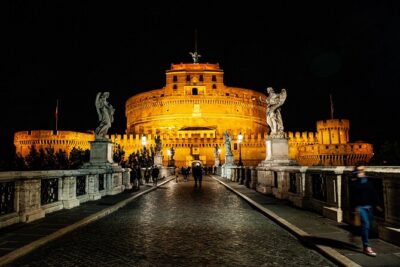

Small Group Rome’s Dark Side – Ghosts & Legends Tour
Read our review →
Ghosts, Legends & Mysteries of Rome Tip-Based Walking Tour
Read our review →
Ghosts Legends and Mysteries of Rome Walking Tour
Read our review →Browse the lists this tour appears in