
REVIEW · ROME GHOST TOURS
Rome Secrets: Dark History & Tasty Bites Tour
Rome’s darker side is the star here: Golem legends, forbidden love, poisoners, executions, and skull-covered church art unfold along lanes that many visitors pass without a second glance. The walk links the Jewish Ghetto, Campo de’ Fiori, Via Giulia, and Ponte Sant’Angelo in two lively hours.
I like the mix of serious history and simple Roman food, especially the hot pizza stop and the ciambelline biscuits with wine. Guides such as Simona and Daniele have earned praise for bringing the stories to life with humor and feeling. The main trade-off is pace: two hours covers a lot, so this suits you better if you want memorable stories than a slow, detailed look at every site.
Key points to know before booking
- The Jewish Ghetto begins the story: Hear about Kabbalah, the number seven, and the legend of the Golem around Portico d’Ottavia.
- Food breaks up the walking: Roman pizza, a drink, local sweets, and wine give the tour a tasty Roman rhythm.
- The mood grows darker: Santa Maria dell’Orazione e Morte features skulls, bones, and reminders of anonymous deaths.
- The route uses lesser-seen corners: Passetto del Biscione and Arco dei Banchi add secret passages and small urban details.
- Guides make a major difference: Simona, Daniele, Daniela, and Sylvia are praised for passion, humor, and strong storytelling.
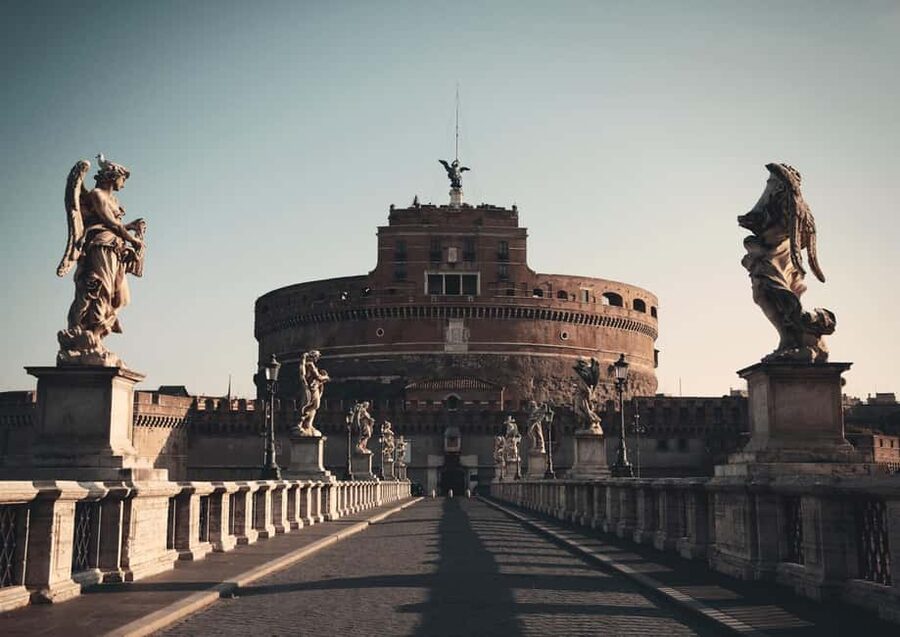
- The walk ends near Castel Sant’Angelo: The final tales concern Mastro Titta, Rome’s most notorious executioner.
Why this Rome walk feels different
Rome offers no shortage of grand monuments. This tour takes another route. Instead of centering on the Colosseum or the Vatican Museums, it uses alleys, façades, statues, and small religious images as prompts for stories.
That makes the experience a good fit for you if you have already seen the main sights, or if you want an unusual first-night introduction. The setting changes often, but the central idea stays clear: Rome’s stones carry stories of belief, punishment, secrecy, and survival.
I especially like the way food keeps the tone from becoming too grim. You hear about heresy and poison, then pause for pizza. Later, after skulls and executions, you get a local sweet and wine. It is a sensible balance for an evening walk.
The stories are not all of the same kind. Some concern documented figures, such as Giordano Bruno and Giulia Tofana. Others belong to folklore, including the Golem and tales of ghosts. A good guide needs to signal the difference, and the strongest guides on this tour, including Daniele and Simona, are praised for blending folklore with historical explanation rather than presenting every tale as proven fact.
More Dark History Tours in Italy
- Rome: Guided Bar Crawl with Drinks & Dark History
★ 4.9 · 444 reviews - Rome: Small Group Rome’s Dark Side – Ghosts & Legends Tour
★ 4.9 · 343 reviews - Rome’s Dark Side Ghosts and Legends Tour
★ 5.0 · 93 reviews
Starting at Portico d’Ottavia in the Jewish Ghetto
The meeting point is in front of the ruins of the Portico d’Ottavia. This gives you a useful landmark, but take care to arrive with the exact meeting instructions in hand. The portico is in the Jewish Ghetto, an area where ancient Roman remains and later Jewish history sit close together.
The opening section focuses on mysticism, Kabbalah, and the Golem. You also hear about the symbolic power of the number seven in Rome. These subjects give the walk an atmospheric start, though you should expect interpretation and storytelling rather than a formal religious lecture.
This is also the first food stop. The supplied details include authentic Roman pizza, and the food descriptions also refer to a drink, local sweets, wine, and beer during the experience. Several guide accounts specifically praise the pizza and gelato, while the tour details describe ciambelline al vino, small wine biscuits, with a glass of wine. Since food arrangements can vary by departure, check the exact inclusions when booking if a particular tasting matters to you.
The pizza is not meant to replace dinner. Think of it as a generous snack that gives the walk a pleasant pause. If you need a full meal, plan one before or after the tour.
Passetto del Biscione and Rome’s small sacred images
From the Ghetto, the route reaches Passetto del Biscione. This old frescoed corridor is the kind of place you could easily miss without a guide. Its narrow passage carries stories of secret meetings, forbidden affairs, and quick escapes.
I like this stop because it shows how much of Rome’s character lies away from the famous squares. You get a photo opportunity, but the real value is learning how an overlooked passage once functioned within the city.
The guide also explains the Madonnelle, small images of the Virgin placed on corners and walls. These modest religious details help you read Rome at street level. You begin to notice how worship, protection, and public life once shared the same walls.
The corridor may feel tight, and the walking surface is historic rather than polished. Wear shoes that handle cobblestones well. This advice applies to the whole route.
Campo de’ Fiori and the shadow of Giordano Bruno
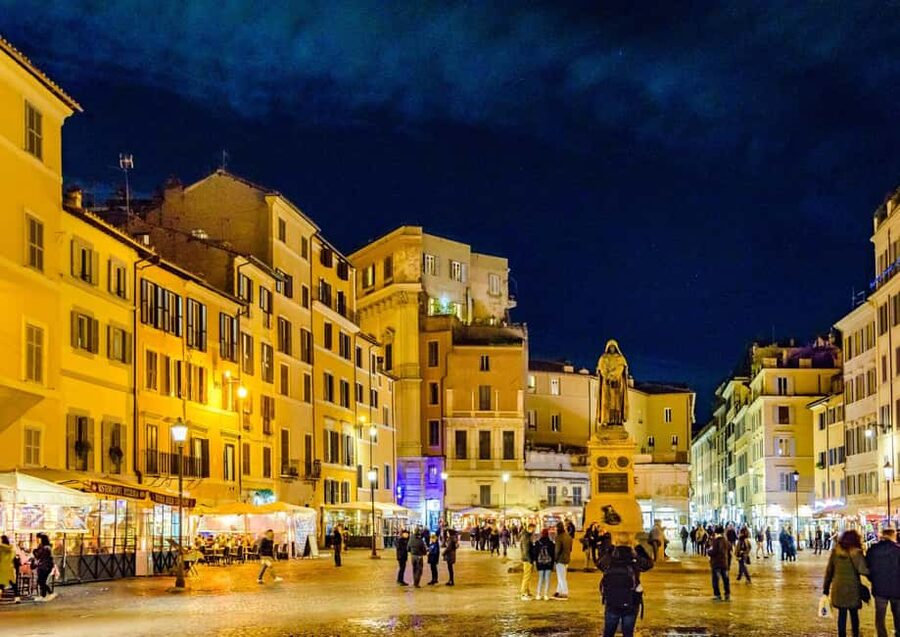
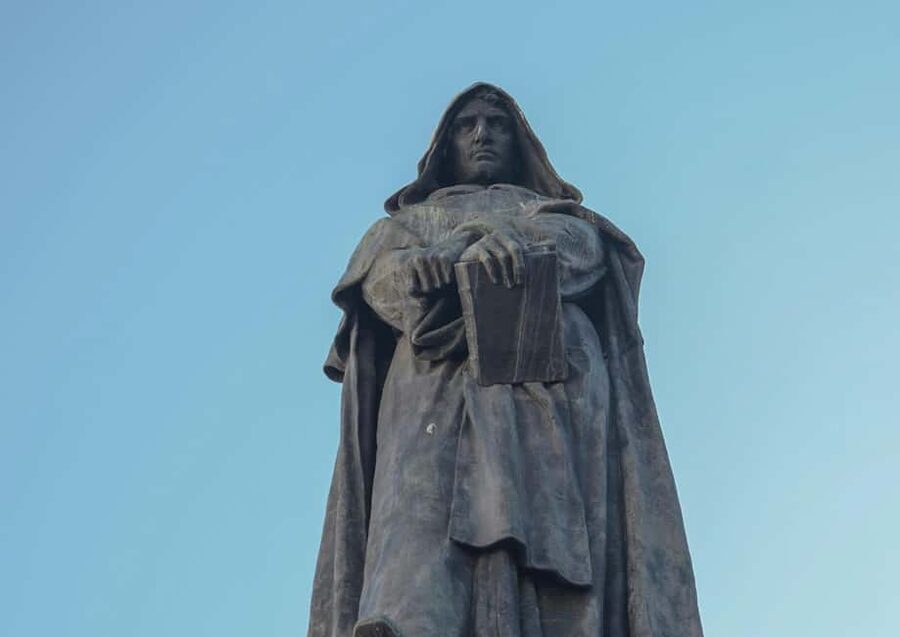
Campo de’ Fiori brings the group into a more open and recognizable square. At its center, the bronze statue of Giordano Bruno looks across the space with a severe expression.
Bruno was burned alive for heresy in 1600. The tour uses his story to explore free thought, forbidden ideas, and the risks of challenging religious authority. His statue is not just a monument. It changes the feeling of the square, especially as daylight fades.
This is one of the tour’s strongest historical stops because it connects a real person to a place of public punishment. The story has moral weight, but the guide’s delivery matters. Daniele is repeatedly praised for keeping the subject engaging, using humor and clear explanations without losing the seriousness of Bruno’s fate.
Campo de’ Fiori can be lively, so you may hear ordinary city noise while the story unfolds. That is part of the experience, but it also means you should stay close to the guide. The group may not stand in one fixed place for long.
More Dark History Tours in Rome
- Crypts and Legends: Exploring the Dark Side of Rome
★ 4.5 · 69 reviews - Rome’s Dark Side: Ghosts, Scandals and Crypts – Small Group Tour
★ 5.0 · 28 reviews - Haunted Rome & True Crime: The Cenci Curse Game
★ 4.5 · 27 reviews - COMBO: Rome’s Capuchin Crypts Tour & Rome’s Dark Side Ghost Tour
★ 5.0 · 21 reviews
Santa Maria dell’Orazione e Morte and the skull-covered façade
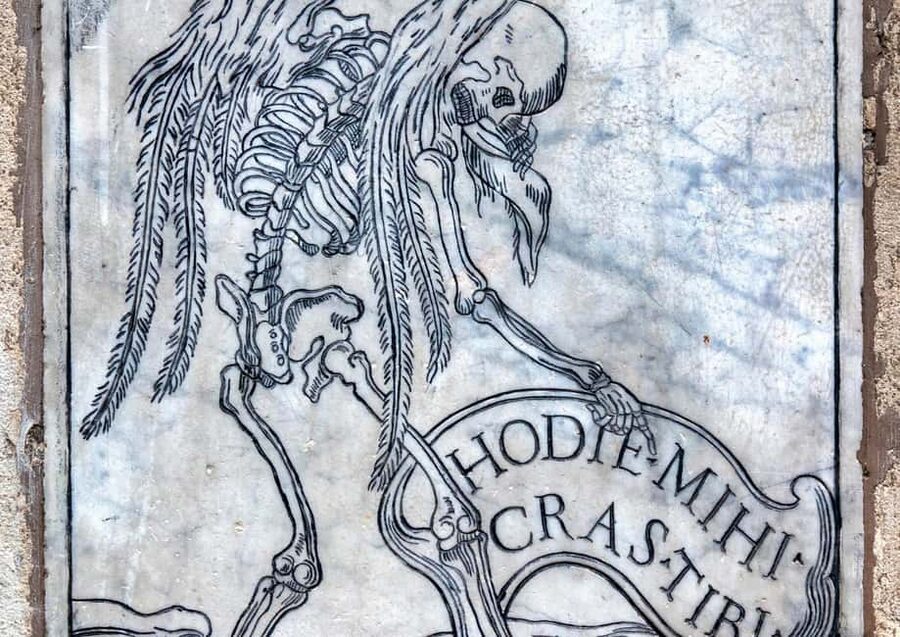
The route then reaches the church of Santa Maria dell’Orazione e Morte. Its name refers to prayer and death, and the exterior makes the purpose plain. Carved skulls and macabre details greet you on the façade.
The church was connected with the care and remembrance of nameless people recovered from the Tiber. That fact gives the stop more depth than simple gothic decoration. The bones and inscriptions are reminders of a charitable mission, not only props for a frightening tale.
This is the most openly macabre point on the walk. If you enjoy dark art, mortality symbols, and unusual religious history, it may be your favorite stop. If skulls and death imagery unsettle you, know what to expect before booking.
The scheduled stop allows time for photographs and explanation, but not an extended architectural study. You will get the story behind the place and its visual details rather than a long guided tour of every artistic feature.
Via Giulia and the tale of Giulia Tofana
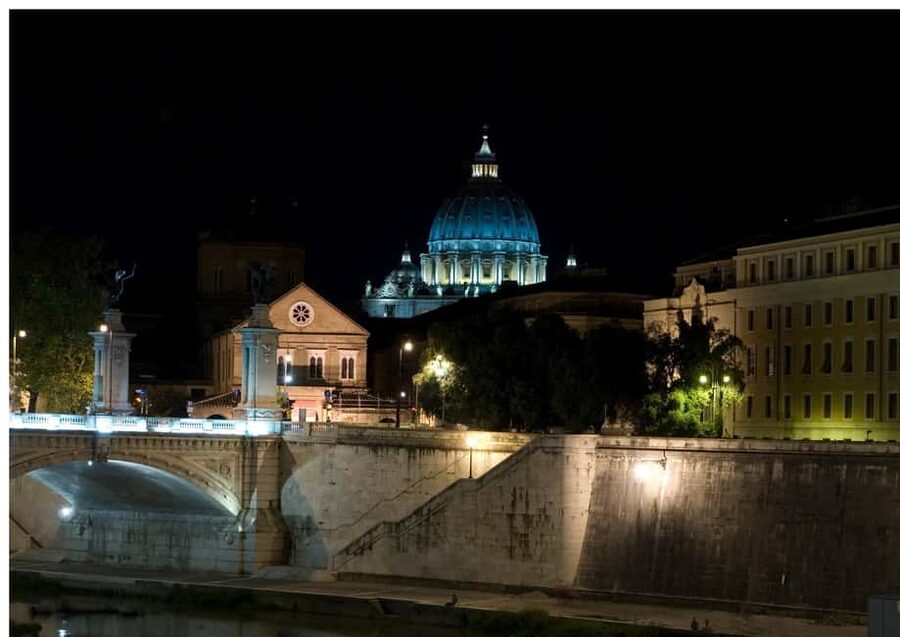
Via Giulia brings a change of mood. This elegant street provides the setting for the story of Giulia Tofana, the seventeenth-century poisoner associated with Aqua Tofana.
According to the tale presented on the walk, Tofana sold the lethal mixture to women trying to escape unhappy marriages. The story opens questions about domestic power, crime, and the limited choices available to women in that period.
This part works because the street looks calm and refined while the subject is anything but. Rome often has that contrast. A beautiful façade may sit above a story of betrayal, violence, or political pressure.
The guide should handle this story with care. It is memorable, but it can easily become a sensational tale if stripped of context. The guides praised for this experience are noted for mixing folklore with historical explanation, which is particularly useful here.
Arco dei Banchi and the city’s secret routes
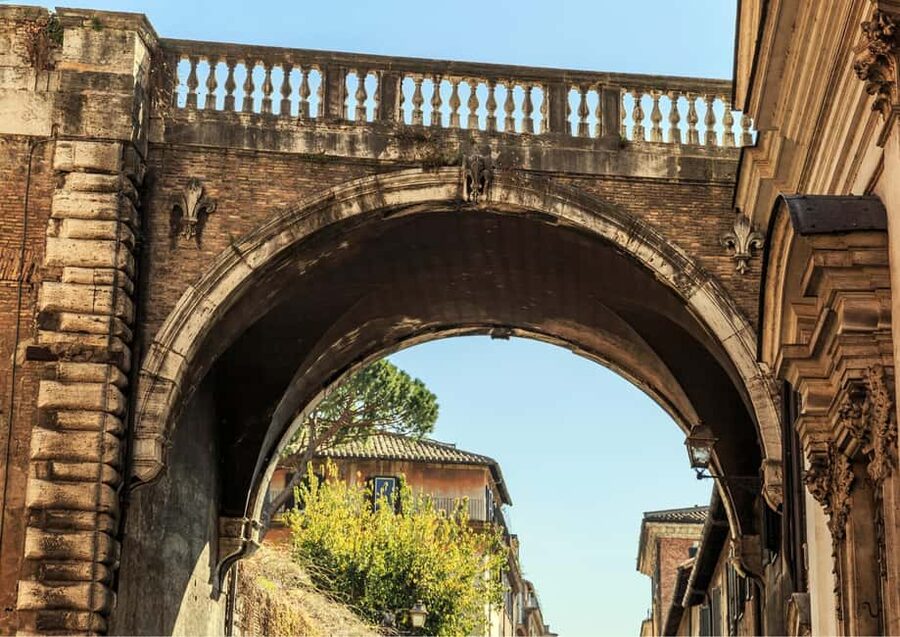
The walk continues beneath Arco dei Banchi, a passage once used by bankers, spies, and priests moving between the Vatican and central Rome without attracting notice.
This stop gives you a look at Rome as a city of movement and concealment. The passage was not a grand monument built for crowds. Its appeal comes from the idea of private routes hidden within the ordinary street plan.
It also reinforces the tour’s main strength: you are not simply ticking off famous buildings. You are learning how people used the city, who needed privacy, and how power moved through narrow lanes.
The route finishes near Via del Banco di Santo Spirito, close to Ponte Sant’Angelo. The walk is generally manageable in distance, but Rome’s cobbles and uneven paving can make two hours feel more active than the number suggests.
Ciambelline, wine, and the final approach to Ponte Sant’Angelo
The sweet stop helps reset the mood before the final stories. Ciambelline al vino are traditional biscuits made to pair with wine, and they offer a simple taste of Roman food culture rather than a formal dessert course.
The included drinks are listed as one glass of beer and one glass of wine, along with local sweets. The descriptions also refer to pizza and, in guide accounts, gelato. I would treat the food as an enjoyable part of the tour, but not book it solely as a fixed tasting menu unless the provider confirms the exact serving plan for your date.
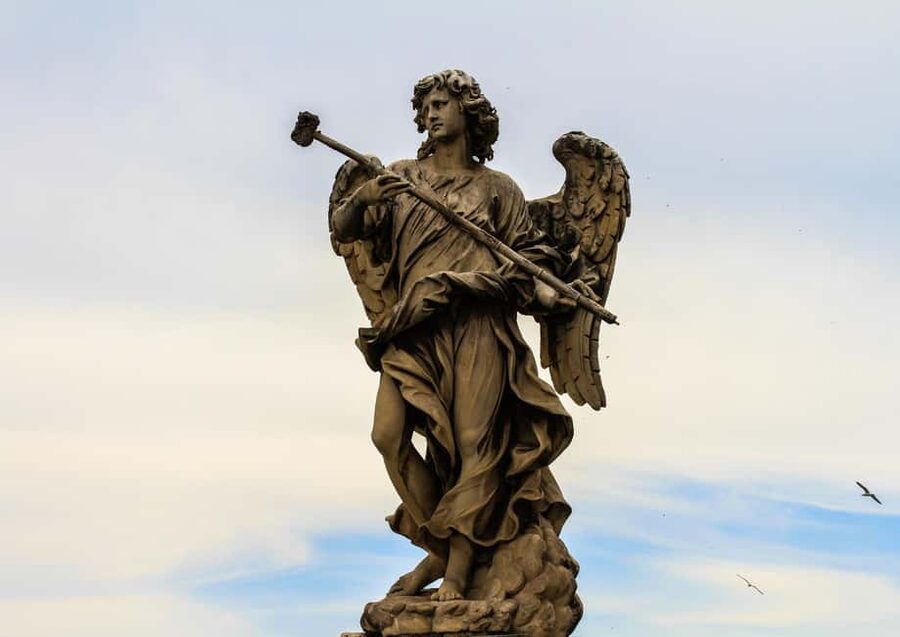
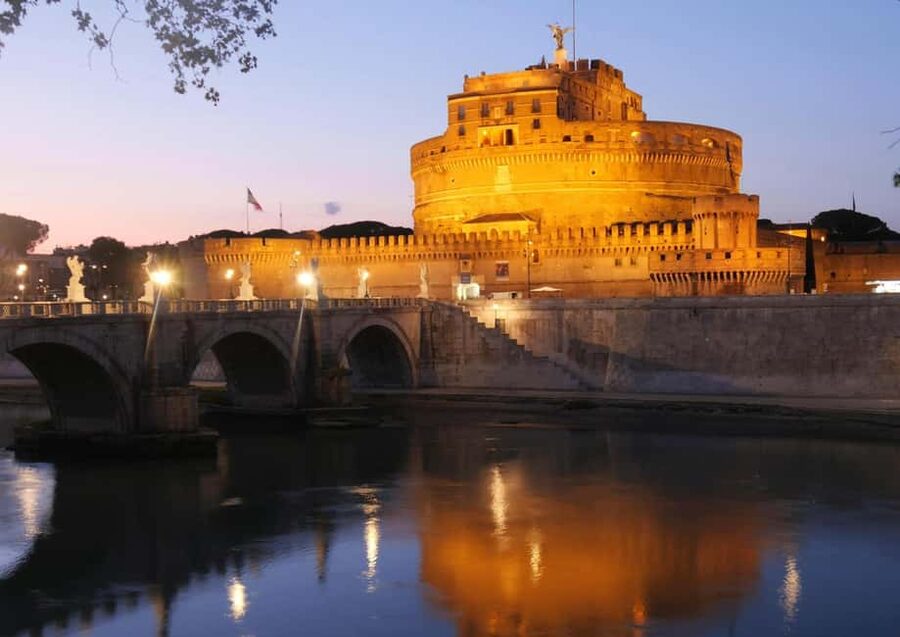
Ponte Sant’Angelo provides a dramatic setting for the end. The route reaches the area near the bridge and Castel Sant’Angelo, where the story turns to Mastro Titta, Rome’s most notorious executioner.
Mastro Titta’s work was gruesome, but the tour also considers his personality and place in Roman life. That makes the ending more interesting than a simple list of punishments. You get a final look at how public executions, fear, and civic ritual shaped the city.
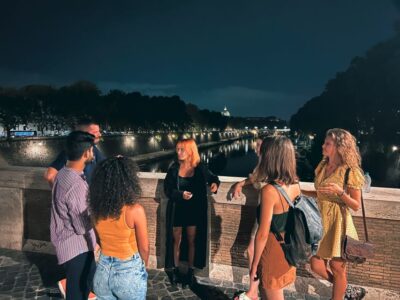
The walk ending under the evening sky is one of the experience’s strongest visual moments. One detailed account describes the pleasure of beginning in daylight and reaching the area around Castel Sant’Angelo beneath the moon. Starting time matters, so check the available departures if you want the full transition from day to night.
Guides, group size, and the value of the experience
The price is $40 per person for two hours. For Rome, that is reasonable if you value a live guide, several food and drink samples, and a route that visits places you might not understand on your own.
The value depends less on the number of monuments than on the guide’s storytelling. This is not a ticketed attraction with a large included exhibit. You are paying for interpretation, pacing, local context, and access to stories that are easy to miss.
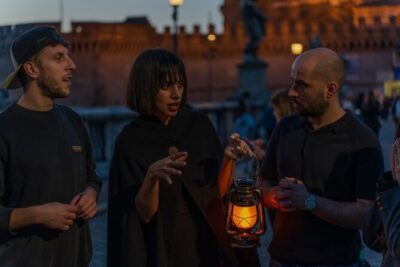
Guide names connected with strong experiences include Simona, Daniele, Daniela, and Sylvia. Simona is praised for passion and for making the history feel personal. Daniele is described as an archaeologist with humor, strong command of Roman history, and the ability to hold attention for the full two hours. Sylvia is noted for weaving history and folklore together.
You can book a private or small-group version. That matters here because narrow passages and story-based stops work better when you can hear the guide clearly. A smaller group may also make it easier to ask about the difference between legend and documented history.
The tour is offered in English, French, Spanish, and Portuguese. The published details also list free cancellation up to 24 hours before the start and a reserve-now, pay-later option. Those terms are useful if your Rome plans may shift.
Who should book this evening walk
I would recommend it to you if you like:
- Unusual Roman stories beyond the major monuments
- Folklore mixed with documented history
- Dark religious art, executions, and tales of crime
- Short walks with food and drink included
- Small groups or private guiding
- An activity for your first evening in Rome
It is especially useful early in a stay because it helps you understand the city’s streets before you spend more time exploring them alone. The route also gives you several locations to revisit in daylight.
I would choose another activity if you want a full meal, a slow museum-style tour, or detailed access to church interiors and architecture. The walk is story-led. You will see places and hear why they matter, but you will not spend long at each stop.
Should you book Rome Secrets?
Book this tour if the thought of Roman pizza followed by tales of the Golem, Giordano Bruno, poisoners, skulls, and an executioner sounds like a good evening. At $40, the combination of a live multilingual guide, several tastings, and a two-hour route offers solid value.
Choose a small-group or private format if hearing every detail matters to you. Arrive ready for cobblestones, keep an open mind about the line between history and legend, and confirm the exact food inclusions if you care about gelato or a particular drink.
For a first night, it gives you a lively introduction to Rome’s less polished side. For a repeat visit, it offers the kind of local stories that can make familiar streets feel new.
FAQ
How long does the Rome Secrets tour last?
The tour lasts two hours.
Where does the tour begin?
It begins in front of the ruins of the Portico d’Ottavia in Rome’s Jewish Ghetto.
Where does the tour finish?
It finishes on Via del Banco di Santo Spirito, near Ponte Sant’Angelo.
What food and drinks are included?
The experience includes Roman pizza, one glass of beer, one glass of wine, and local sweets. The tour details specifically describe ciambelline al vino biscuits with wine.
Which languages are available?
The tour is offered in English, French, Spanish, and Portuguese.
Is this a private tour or a group tour?
You can choose a private or small-group option.
Can I cancel the booking?
You can cancel up to 24 hours in advance for a full refund. A reserve-now, pay-later option is also available.
More Heritage Tours in Rome
- Rome After Dark Mysteries Myths and Haunted History
★ 5.0 · 14 reviews - Rome: Colosseum and Ancient Dark History Walking Tour
★ 5.0 · 10 reviews - Rome Secrets with Dark History and Tasty Bites Tour Experience
★ 4.5 · 3 reviews - History and Hauntings of Salem Guided Walking Tour
★ 5.0 · 14,564 reviews
Just added around Rome
- Ghost & Legends in Night Rome Walking Tour★ 5.0 · 36 reviews
- Secrets of Rome – The dark side Small Group Walking Tour★ 5.0 · 20 reviews
- Rome: Private Night Ghost Walking Tour★ 5.0 · 38 reviews
- Rome Secrets with Dark History and Tasty Bites Tour Experience★ 4.5 · 3 reviews
- Rome After Dark Mysteries Myths and Haunted History★ 5.0 · 14 reviews
- Haunted Rome & True Crime: The Cenci Curse Game★ 4.5 · 27 reviews
- Experience Rome in this Mysterious Ghost Tour★ 3.5 · 3 reviews
- Haunted Rome: Eternal City Night Walking Tour★ 5.0 · 38 reviews
Rome Ghost Tours, compared.
Paranormal Night Walking Tour & Secret Backstreets
Read our review →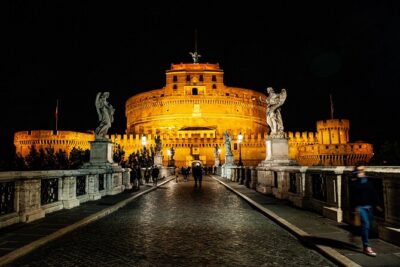

Small Group Rome’s Dark Side – Ghosts & Legends Tour
Read our review →
Ghosts, Legends & Mysteries of Rome Tip-Based Walking Tour
Read our review →
Ghosts Legends and Mysteries of Rome Walking Tour
Read our review →Browse the lists this tour appears in