REVIEW · ROME GHOST TOURS
Rome: Small Group Rome’s Dark Side – Ghosts & Legends Tour
Rome’s prettiest squares have some very ugly stories. On this two-hour evening walk, you’ll hear about executions, poisoners, betrayals, church scandals, and alleged ghosts while moving through Campo de’ Fiori, Ponte Sisto, Via Giulia, and the streets around Castel Sant’Angelo. The history is grim, but the delivery is lively.
I like the small maximum of 15 people, which makes it easier to hear the guide in narrow streets. I also like the mix of real events and folklore, told by guides such as Ben, Arielle, Ivanna, and Ariel, who are repeatedly praised for clear storytelling and good humor. The main drawback is that this is a walking story tour, not a haunted-house attraction: if you want actors, jump scares, or underground crypts, you may find it too restrained.
Key points at a glance
- Campo de’ Fiori after dark: Begin beneath the imposing statue of Giordano Bruno, then hear how this beautiful square became tied to punishment and religious conflict.
- Stories with real historical teeth: Expect murder, poison, betrayal, executions, and strange characters rather than a parade of vague ghost tales.
- A relaxed two-hour route: The walk includes a short stop at a local bar for drinks and a bathroom break.
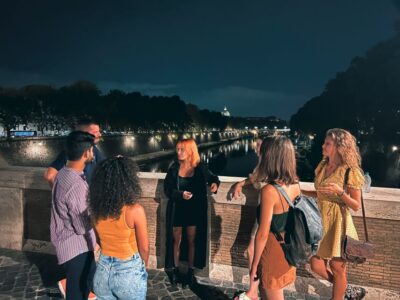
- Small-group storytelling: With no more than 15 people, you can usually stay close to the guide and follow the stories without a crowd swallowing the punch lines.
- A useful finish near Castel Sant’Angelo: The tour ends at St. Angelo Bridge or Castel Sant’Angelo, both practical places to continue your evening.
- Rain or shine: Wear comfortable shoes and plan for Roman cobblestones, changing weather, and a full two hours on foot.
Why Rome’s dark side works so well at night
Rome usually presents itself through emperors, fountains, painters, and marble facades. Those subjects matter, but they can make the city feel polished and predictable. This tour changes the angle. It asks what happened in those same handsome squares when power was threatened, someone wanted revenge, or the church decided an idea had gone too far.
The result is less a ghost hunt than a walk through Rome’s record of bad behavior. You hear about people who lied, schemed, poisoned, betrayed, manipulated, or simply made terrible choices in grand surroundings. That contrast gives the route its bite. A graceful palace or church becomes more interesting when you know it also witnessed punishment, intrigue, or public disgrace.
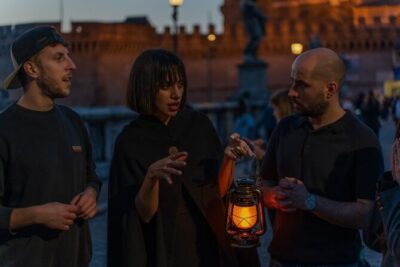
The tone matters. The guides do not appear in costumes or rely on ghost-hunting apps. The approach is closer to informal historical storytelling, with jokes and a few deliberately inappropriate laughs mixed into the darker material. Ben is often praised for keeping the facts accurate without turning the walk into a lecture. Arielle, Ivanna, Ariel, and Alethea are also singled out for warmth, humor, and the ability to keep a group involved.
You should expect stories to be presented with confidence, but not every ghostly element can be treated as proven fact. That is part of the fun. The tour places documented events beside local legends and asks you to enjoy the uneasy space between the two.
More Dark History Tours in Italy
- Rome: Guided Bar Crawl with Drinks & Dark History
★ 4.9 · 444 reviews - Rome’s Dark Side Ghosts and Legends Tour
★ 5.0 · 93 reviews - Crypts and Legends: Exploring the Dark Side of Rome
★ 4.5 · 69 reviews
Meeting Giordano Bruno in Campo de’ Fiori
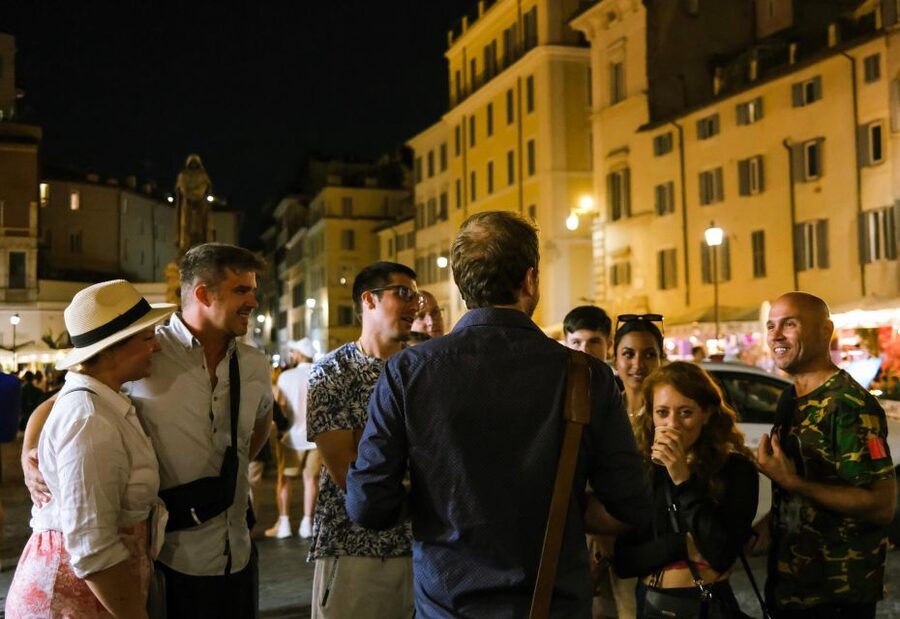
The advertised meeting point is the statue of Giordano Bruno in the center of Campo de’ Fiori. The statue is tall, hooded, and hard to miss, so it serves as a useful landmark in a busy part of central Rome. Look for the sign reading Rome’s Dark Side, Ghosts & Legends, and arrive about 10 minutes early.
This opening location sets the mood without needing any theatrics. Campo de’ Fiori is lively by day, but its connection with execution history gives the square a different feel once the market stalls and daytime activity have faded. The monument to Bruno immediately shifts your attention from Rome’s postcard image to its history of censorship, fear, and punishment.
The route information also refers to the Monumento a Giordano Bruno as the starting point, which is the same central Campo de’ Fiori area. If you are using a map, search for the statue rather than relying only on the tour title.
Do not cut the timing too closely. One person who arrived late was helped by the guide, but the tour cannot promise to wait. If you are delayed, send a message as soon as possible. Nighttime streets and small lanes make catching up harder than it might be on a broad sightseeing route.
Campo de’ Fiori and Farnese Palace: beautiful places, harsh stories
From Campo de’ Fiori, the walk moves toward Farnese Palace. You will not be touring the palace interiors, so think of this as an outdoor storytelling stop that uses the buildings and streets as a backdrop.
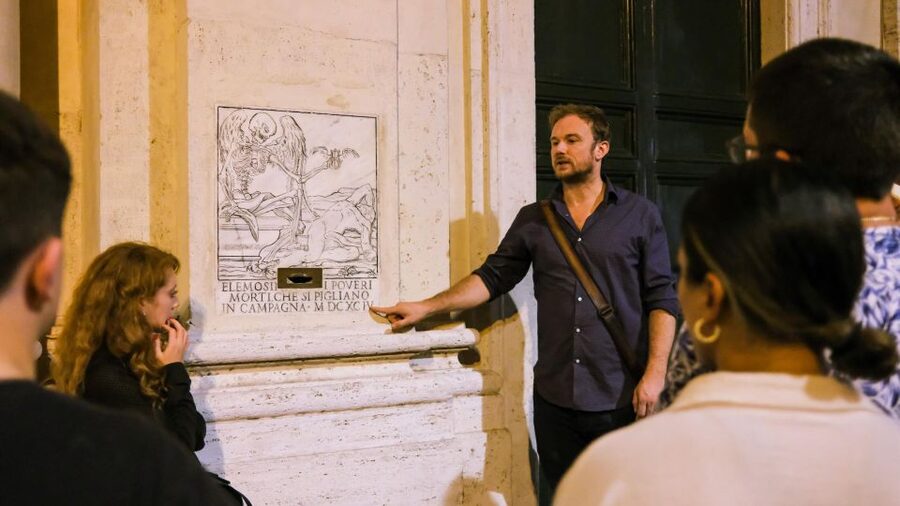
This is one of the strongest parts of the experience because Rome’s grand architecture can hide the human drama that took place around it. The guide connects the setting with stories of power, scandal, and people behaving badly. You get the atmosphere of the neighborhood without spending time on another formal art or architecture explanation.
The tour’s subjects range widely. One story concerns a philosopher whose ideas brought him into conflict with the church. Another follows a noblewoman who survived political upheaval, outlasted powerful men, and became the kind of figure who attracts both historical records and legend. You may also hear about a suspected poisoner whose clients may have included unhappy wives and about a self-styled magician whose luck eventually ran out.
These stories are useful because they make Rome’s past feel personal. Instead of memorizing dates and names, you meet ambitious, reckless, clever, and frightened people. The guide’s job is to keep the narrative moving, and the best guides do that by giving each character a clear motive and a sharp ending.
Ponte Sisto and the short bar break
Ponte Sisto provides a change of scenery. The route reaches a bridge associated with Rome’s river crossings and nighttime atmosphere, giving the guide another setting for stories about death, superstition, and events that may have left a lasting mark on the city’s imagination.
Bridges work well on a ghost tour because they feel transitional. You are physically leaving one neighborhood and entering another, while the stories often shift from public punishment to private crime or rumor. The exact balance depends on the guide, but the tour is built around that movement through different kinds of darkness.
A short stop at a local bar follows. Food and drinks are not included, but you can buy something if you want it. The pause also offers a bathroom break and a chance to sit or lean, which matters after a full day on Rome’s hard streets.
This is not a dinner stop. You should not arrive expecting a meal or a long rest. It is simply a practical interruption in a two-hour walk, and it helps keep the pace comfortable. One especially useful feature is that the guides do not treat the break as wasted time. It gives the group room to reset before the next set of stories.
More Dark History Tours in Rome
- Rome Secrets: Dark History & Tasty Bites Tour
★ 5.0 · 37 reviews - Rome’s Dark Side: Ghosts, Scandals and Crypts – Small Group Tour
★ 5.0 · 28 reviews - Haunted Rome & True Crime: The Cenci Curse Game
★ 4.5 · 27 reviews - COMBO: Rome’s Capuchin Crypts Tour & Rome’s Dark Side Ghost Tour
★ 5.0 · 21 reviews
Via Giulia and the city’s less obvious corners
After the break, the route continues along Via Giulia. This is where the tour’s strength as a neighborhood walk becomes clear. You are not being moved from one headline sight to another. Instead, you are using side streets, alleys, and overlooked facades to understand how the city’s past was lived at street level.
The route includes a 20-minute stop at an unspecified location described as a special or less familiar site. Since the exact place can vary or is not published, you should think of it as a storytelling stop rather than a guaranteed major monument. The value lies in seeing a part of central Rome that you might pass without knowing what happened there.
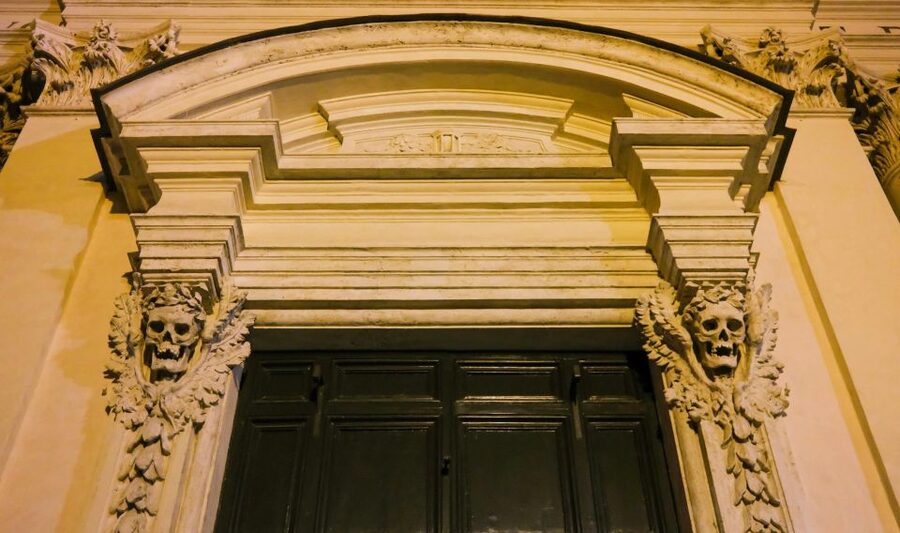
The guide may point out churches with unsettling decoration or a setting linked to punishment and scandal. This is a useful counterweight to Rome’s usual church tour, which tends to focus on paintings, architecture, and saints. Here, the question is what people did inside and around these places, and how religious authority shaped the lives of those who challenged it.
The walk is accessible in the sense that the activity is listed as wheelchair accessible, but you should still plan carefully. The route runs over cobblestones and lasts two hours, and the information provided does not describe every surface, curb, or doorway. If you use a wheelchair, contact the operator before booking to confirm that the specific departure and route suit your needs.
Castel Sant’Angelo and the final stories
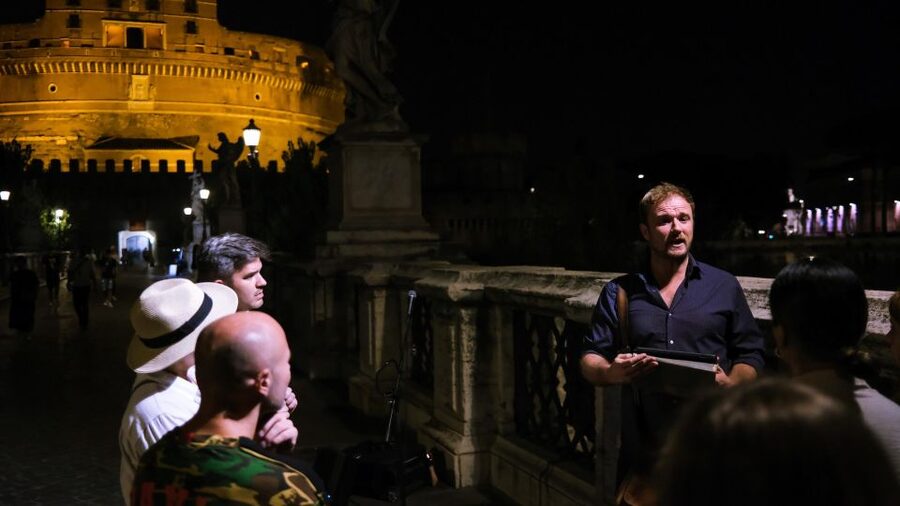
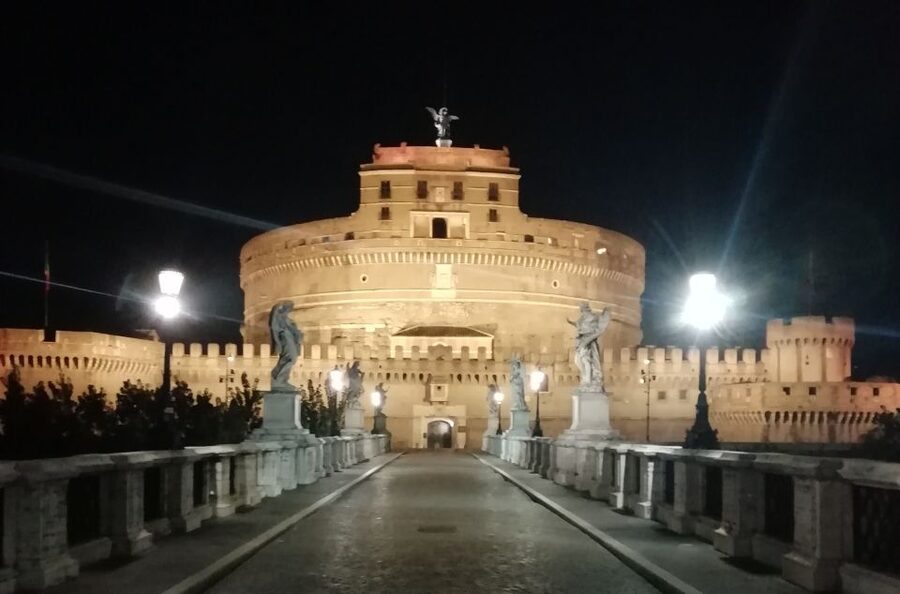
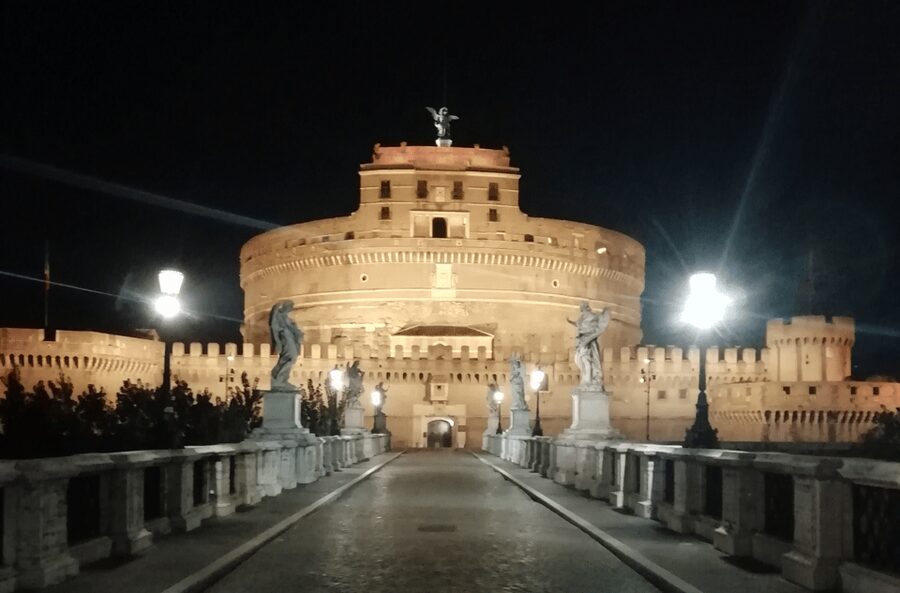
The last major area is Castel Sant’Angelo, reached via St. Angelo Bridge. The castle and bridge provide a strong final setting because both are instantly recognizable and carry a serious, imposing mood after dark.
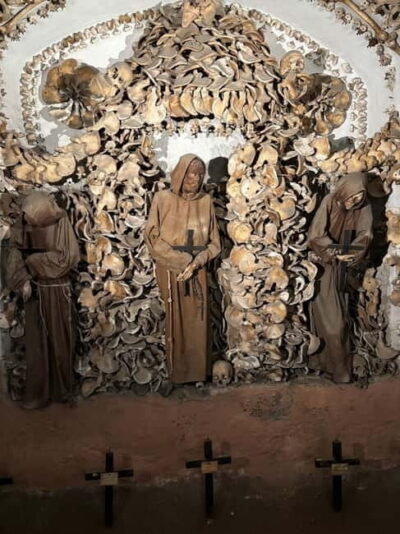
You will hear about executions, haunted places, and the people connected with Rome’s darker chapters. The tour does not take you inside the castle, and it does not include crypts, tunnels, or underground sites. That limitation is worth knowing before you book. The atmosphere comes from the streets, the buildings, the river, and the guide’s delivery, not from exploring a dark interior.
The final drop-off points are St. Angelo Bridge and Castel Sant’Angelo. This gives you a practical choice: linger near the bridge, continue toward another central neighborhood, or arrange your own transport. Transport is not included, so you need to plan the next part of your evening yourself.
Ending here also keeps the route compact. You are not dragged back to the starting point after the stories are finished. The walk has a clear beginning and end, which makes it easier to pair with dinner or another evening plan.
What the guides do best
The strongest thread through the guide feedback is storytelling. Ben is repeatedly described as funny, accurate, and able to explain the darker chapters without drowning the group in facts. Arielle is praised for making people feel included while bringing the city to life. Ivanna is especially noted for animated delivery, while Ariel is often praised for a natural way of telling stories.
That consistency matters more than the name on your booking. The tour depends heavily on the person leading it. A dry guide could make the same route feel like a list of unpleasant incidents, while a good guide can give each story pace, character, and a reason to care.
The humor also makes a difference. This is not a solemn memorial walk, and the tone can be cheeky. The jokes help keep the evening light, but they may not suit someone looking for a serious study of Roman justice or church history. You should be comfortable with black humor and a few stories that are not suitable for very young children.
The guides also appear willing to answer questions and offer practical Rome advice at the end. Tips about places to eat, drinks, or getting a taxi can be useful, especially because central Rome has plenty of overpriced spots aimed at passing visitors. Treat any recommendation as a starting point, not a guarantee.
Price, group size, and overall value
At $23 per person, this is an inexpensive way to add structure to an evening in Rome. You receive two hours with a live guide, a planned route, and a small group capped at 15 people. The price is particularly fair if you want context for streets and squares you might otherwise pass without noticing.
The value is not in paid entries or exclusive access. There are no museum tickets, drinks, meals, or transport included. You are paying for selection, research, timing, and delivery. If the guide is strong, those things can turn an ordinary night walk into one of the more memorable parts of your visit.
A group of 15 is small enough to follow, but it is not a private walk. If you want to interrupt often or ask detailed questions at every stop, a private group may suit you better. A private option is available, although no private price is provided.
The tour is also a good choice for repeat visitors. You do not need another basic introduction to the Colosseum or Trevi Fountain to enjoy it. The focus on lesser-known people and uncomfortable episodes gives you a different way to read central Rome.
Who should book, and who should skip it
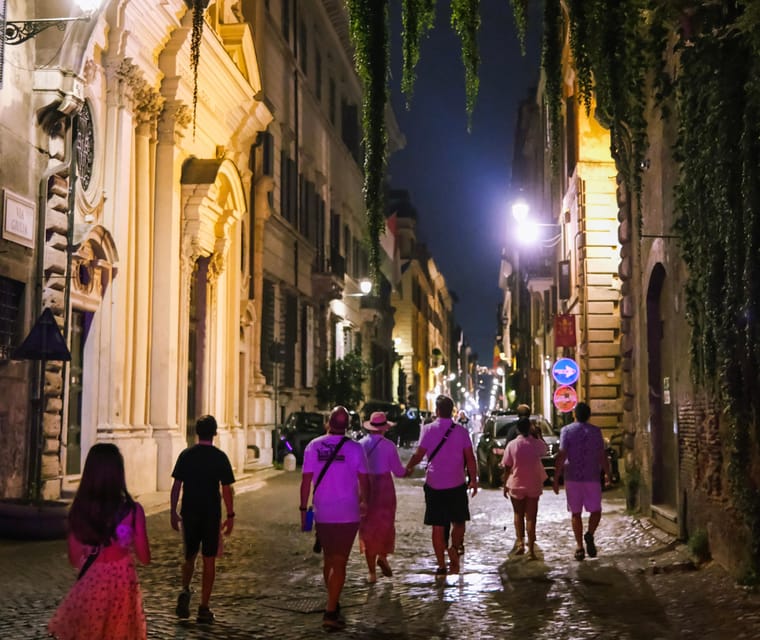
I would choose this tour if you like history with a sharp edge, enjoy walking after sunset, and prefer stories about difficult people to another round of famous artists and emperors. It suits couples, friends, solo visitors, and families with older teenagers who can handle murder, executions, poison, and church conflict.
It is also a smart early-trip activity. A few hours of walking through Campo de’ Fiori, Farnese, Ponte Sisto, Via Giulia, and Castel Sant’Angelo can help you get your bearings while showing you places you may revisit in daylight. Several guides also share local suggestions at the end, which can help shape the rest of your stay.
I would skip it if you want a theatrical scare experience, a large number of haunted interiors, or a scholarly lecture with extensive dates and source discussion. You also need to be ready for cobblestones, weather, and standing or walking for most of the evening.
The tour operates rain or shine, so wear comfortable shoes and bring protection from the forecast. Free cancellation is available up to 24 hours before the start, and you can reserve now and pay later. English and Italian departures are offered.
Should you book Rome’s Dark Side?
Book it if you want a funny, compact, and genuinely different look at Rome. The best reason to go is the combination of real historical cruelty and strong personal stories, delivered by guides who know how to keep the mood moving.
At $23, the risk is low, and the two-hour length is easy to fit into a busy itinerary. Just set the right expectation: this is history and folklore on foot, not a haunted attraction. If that sounds like your kind of night, the small group, well-chosen route, and consistently praised guides make it a very good buy.
FAQ
How long is the Rome’s Dark Side Ghosts and Legends Tour?
The tour lasts two hours, including the walking route and a short stop at a local bar.
Where does the tour meet?
Meet in front of the Giordano Bruno statue in the center of Campo de’ Fiori. Look for a sign reading Rome’s Dark Side, Ghosts & Legends, and arrive 10 minutes before the start.
Where does the tour finish?
The tour finishes at one of two nearby drop-off points: St. Angelo Bridge or Castel Sant’Angelo.
Is the tour conducted in English?
Yes. Live guided tours are available in English and Italian.
Does the tour include underground sites or crypts?
No. The entire experience stays above ground, with no crypts or underground locations included.
What happens if it rains?
The tour runs rain or shine. Wear comfortable shoes and prepare for two hours of walking over cobblestones.
Is the tour wheelchair accessible?
The activity is listed as wheelchair accessible. Because the route includes cobblestones and lasts two hours, contact the operator before booking to confirm the route details for your needs.
More Ghost Story Tours in Rome
- Rome After Dark Mysteries Myths and Haunted History
★ 5.0 · 14 reviews
More Ghost Story Tours in Italy
- Ghosts, Legends & Mysteries of Rome Tip-Based Walking Tour
★ 4.7 · 284 reviews - Ghosts Legends and Mysteries of Rome Walking Tour
★ 5.0 · 149 reviews - Rome: Capuchin Crypts & Ghostly Legends Small-Group Tour
★ 4.9 · 133 reviews - Ghost & Legends in Night Rome Walking Tour
★ 5.0 · 36 reviews
Just added around Rome
- Ghost & Legends in Night Rome Walking Tour★ 5.0 · 36 reviews
- Secrets of Rome – The dark side Small Group Walking Tour★ 5.0 · 20 reviews
- Rome After Dark Mysteries Myths and Haunted History★ 5.0 · 14 reviews
- Rome: Private Night Ghost Walking Tour★ 5.0 · 38 reviews
- Rome Secrets with Dark History and Tasty Bites Tour Experience★ 4.5 · 3 reviews
- Haunted Rome & True Crime: The Cenci Curse Game★ 4.5 · 27 reviews
- Experience Rome in this Mysterious Ghost Tour★ 3.5 · 3 reviews
- Haunted Rome: Eternal City Night Walking Tour★ 5.0 · 38 reviews
Rome Ghost Tours, compared.
Paranormal Night Walking Tour & Secret Backstreets
Read our review →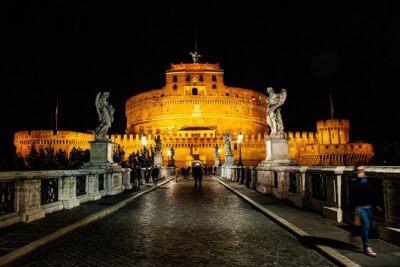

Ghosts, Legends & Mysteries of Rome Tip-Based Walking Tour
Read our review →
Ghosts Legends and Mysteries of Rome Walking Tour
Read our review →