
REVIEW · ROME GHOST TOURS
Ancient Rome’s Dark Side: Ghosts, Murders & Imperial Blood
Rome’s most gripping stories are not all about triumphs, temples, and marble. This evening walk follows the city’s darker trail, from Julius Caesar’s assassination at Largo Argentina to the blood-soaked arena below the Colosseum. You’ll hear about poison, palace murders, cursed streets, and restless ghosts while Rome cools down around you.
I like the way this tour reaches places many daytime sightseeing plans skip, especially the Suburra district and the staircase near the ancient Vicus Sceleratus. I also like the small group size, which is capped at 15 and makes it easier to hear the guide. The main drawback is that the tour stays outdoors, so you will not enter the archaeological sites or museums along the route.
- Caesar’s murder site: Begin at Largo Argentina, where the assassination of Julius Caesar took place in 44 BCE.
- Imperial intrigue: Hear stories linked to Livia, Caligula, Domitian, and Messalina.
- Nighttime atmosphere: See Ancient Rome after dark, when the cooler air and smaller crowds change the mood.
- Eight outdoor stops: Walk from Largo Argentina through Monti to a viewpoint above the Colosseum.
- Small English-speaking group: The maximum group size is 15 people.
- Practical value: At $30.10, the price covers a guided two-hour walk, but not site admission, food, or drinks.
Why Rome’s darker stories work so well at night
This is not a standard tour of Ancient Rome. You will not spend the evening working through dates, building techniques, and military campaigns in a classroom-like way. Instead, the guide uses murder, scandal, revenge, and ghost lore to make the old stones feel immediate.
That approach suits Rome. The city’s ancient center is filled with fragments, broken columns, excavated foundations, and half-seen ruins. At night, you are less focused on taking in every detail and more alert to the stories attached to each place.
The tour begins at 8:00 pm at Largo di Torre Argentina and ends at Largo Gaetano Agnesi, above the Colosseum metro station. The walk lasts about two hours, with roughly ten to fifteen minutes at each main stop. You should expect a steady urban walk rather than a long archaeological visit.
I would choose this experience after a hot day of sightseeing. The evening timing helps you avoid the worst heat, and the route gives you a different view of familiar monuments. The atmosphere is part of the appeal, but the guide’s storytelling matters just as much. One guide named Ivana has been praised for making the stories entertaining while keeping the historical setting clear.
Largo Argentina and the ghost of Julius Caesar
The first stop puts you above the remains of the Area Sacra di Largo Argentina, the ancient temple complex where Caesar was killed in 44 BCE. You do not enter the archaeological area, but the outdoor viewpoint gives you a direct connection to the event.
Caesar’s death was not a neat political transition. He was attacked by a group of Roman senators, including men he had trusted, and the murder sent Rome into turmoil. The tour adds the darker tradition that Caesar’s ghost returned to trouble the men responsible.
That combination of fact and legend sets the tone for the evening. You hear what happened, then learn how later generations reshaped the event into a ghost story. It is a good reminder that Ancient Rome was not only built from laws and armies. It was also shaped by fear, rumor, betrayal, and the need to explain sudden violence.
You spend about ten minutes here. That is enough time for a focused story, but not enough for a full archaeological lesson. If you want to study the temples closely, plan a separate visit during the day.
More Dark History Tours in Italy
- Rome: Guided Bar Crawl with Drinks & Dark History
★ 4.9 · 444 reviews - Rome: Small Group Rome’s Dark Side – Ghosts & Legends Tour
★ 4.9 · 343 reviews - Rome’s Dark Side Ghosts and Legends Tour
★ 5.0 · 93 reviews
Teatro di Marcello and the poison at court
The next stop is Teatro di Marcello, one of Rome’s oldest surviving theaters. Its curved stone ruins are easy to appreciate from outside, and the setting provides a strong backdrop for the story of Livia.
Livia was the wife of Emperor Augustus and the mother of Tiberius. She has often been portrayed as a woman who used intelligence, patience, and ruthless political skill to protect her family’s position. The tour examines the accusation that she removed rivals, including her own stepson, through poison.
The important point is not simply deciding if every accusation was true. Imperial Rome produced plenty of stories about powerful women, succession struggles, and convenient deaths. You will hear how rumor and politics became tangled together inside the imperial household.
This stop is especially useful if you enjoy the personal side of Roman politics. Instead of viewing emperors as distant names, you see the throne as the center of a dangerous family contest. Again, you remain outside. There is no theater admission included.
Capitoline Hill, Caligula, and the haunted palace
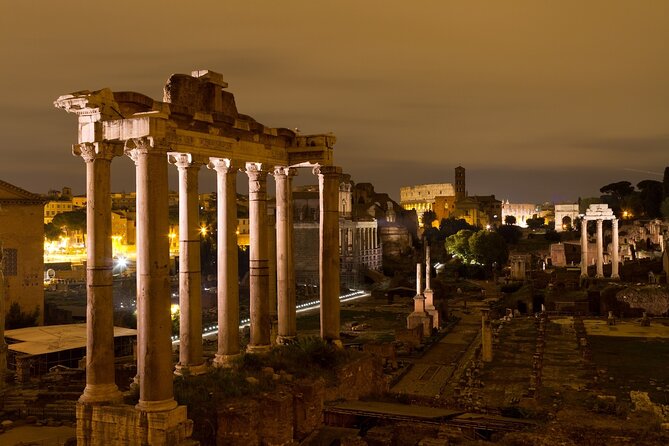
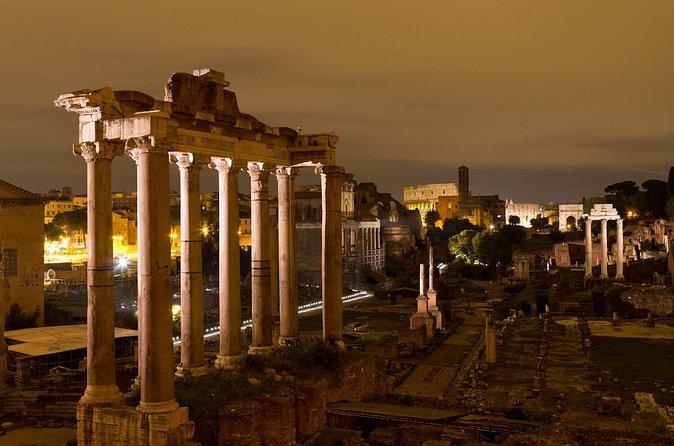
From Capitoline Hill, you look toward the Roman Forum and Palatine Hill. This is one of the stronger viewpoints on the walk because it connects the ruins below with the imperial residences that once occupied the Palatine.
The story here centers on Caligula, whose short reign became associated with cruelty, extravagance, and erratic behavior. The tour follows his decline and assassination, then adds the belief that his ghost continued to haunt the palace after his death.
You should expect a view rather than a formal visit to the hilltop museums or Forum grounds. That distinction matters. If you have already toured the Roman Forum, this stop may help you attach a dramatic story to places you saw in daylight. If you have not yet visited the Forum, it may leave you wanting a separate daytime ticket.
The night setting changes the view. The ruins become less about individual stones and more about the scale of the old political center. Below you are the spaces where power was displayed, challenged, and destroyed.
Carcer Tullianum and Rome’s harsh justice
The route then reaches the Carcer Tullianum, also known as the ancient Tullianum prison. You stand near the steps and entrance associated with a prison used for traitors and enemies of the state.
This part of the walk is grim by design. Powerful prisoners could be taken underground, strangled, and denied a proper burial. In Roman society, burial mattered greatly, so being left without a proper funeral added another layer of punishment.
The tour does not include entry to the prison. You see the exterior and hear how the site functioned within Rome’s system of political control. That keeps the stop short, but the subject gives the evening a sharper edge. The stories are not only about emperors behaving badly. They are also about what happened to people who lost a contest for power.
If you dislike tales of execution or physical violence, this may be the most uncomfortable section. The tour title is accurate. The material includes murder and death, not just playful ghost stories.
More Dark History Tours in Rome
- Crypts and Legends: Exploring the Dark Side of Rome
★ 4.5 · 69 reviews - Rome Secrets: Dark History & Tasty Bites Tour
★ 5.0 · 37 reviews - Rome’s Dark Side: Ghosts, Scandals and Crypts – Small Group Tour
★ 5.0 · 28 reviews - Haunted Rome & True Crime: The Cenci Curse Game
★ 4.5 · 27 reviews
Domitian’s forum and a prophecy that came true
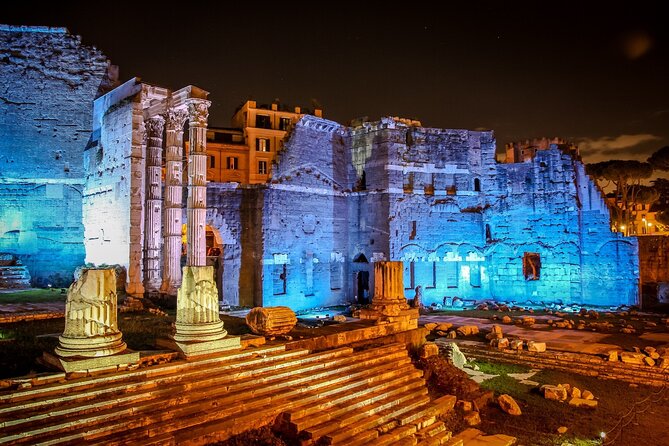
Along Via dei Fori Imperiali, the guide turns to the area linked with Domitian’s forum. Domitian ruled as emperor from 81 to 96 CE and developed a reputation for suspicion and authoritarian rule.
The story here concerns his fear of a prophecy about the hour of his death. He tried to avoid the prediction, yet was murdered at the very time he had feared. Afterward, his name was erased from public memory through a practice known as damnatio memoriae, in which official references and images could be removed or altered.
The ghost element returns with stories of servants who feared Domitian after his death. This is a fitting place for that tale because the modern road cuts through a huge concentration of imperial ruins. You are walking through a zone where public memory was literally built in stone, then sometimes attacked with chisels.
This stop also shows why the tour is more than a sequence of spooky claims. The guide links the legend to a real Roman practice: the attempt to control memory after an emperor’s fall. You get both the eerie story and a useful piece of Roman political context.
Monti and the nighttime world of the Suburra
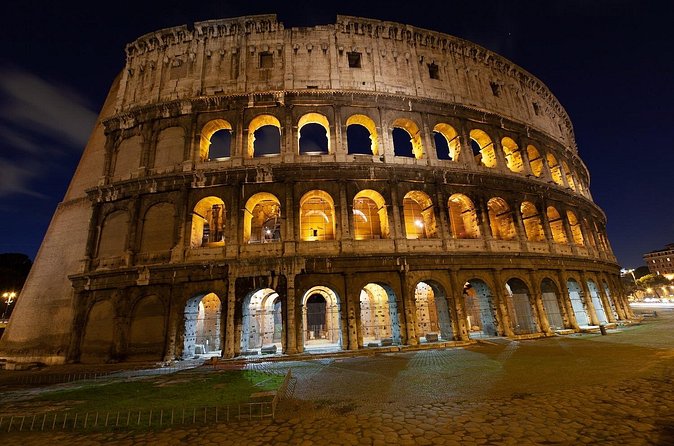
Monti brings a change of mood. This neighborhood occupies the area associated with the ancient Suburra, once known as one of Rome’s rougher districts.
Here the focus shifts to Messalina, the wife of Emperor Claudius. She has long been portrayed in ancient accounts as sexually adventurous, politically dangerous, and willing to move through Rome at night in disguise. The tour explores the story that she visited the Suburra and that her ghost still lingers in its shadows.
As with many stories about Roman women, you should listen for the politics behind the scandal. Ancient writers often presented imperial women as corrupt or unnatural when they challenged expected behavior. The story is entertaining, but it also raises questions about who wrote the accounts and why.
Monti is a good setting for this section because it is a real neighborhood rather than a single monument. You get a sense of how the route moves beyond the main ruins and into the streets of modern Rome. The stop lasts about 15 minutes, longer than several others, so the guide has room to explain the tale and its setting.
The Borgia Steps and the curse of a street
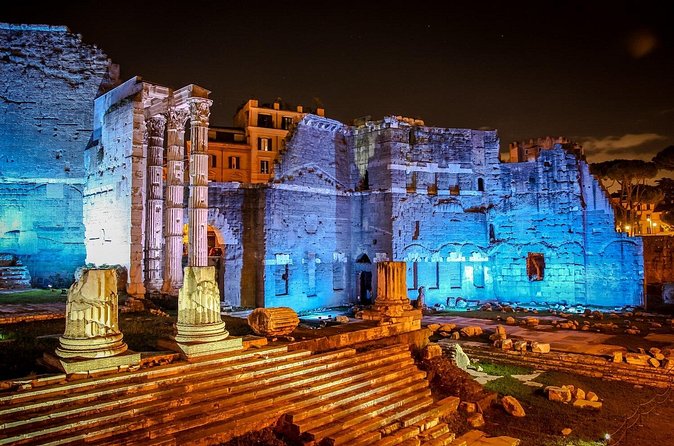
At Scalinata dei Borgia, the tour reaches one of its more unusual stories. The staircase lies near the ancient Vicus Sceleratus, or wicked street, where a Roman princess is said to have driven her chariot over her murdered father’s body.
The story is shocking, but the larger idea is what makes the stop memorable. Romans believed that violent acts could stain a place and bring a curse to an entire street. In a city filled with killings, political plots, and family conflicts, that belief gave physical locations a moral charge.
You may not recognize this staircase from a typical first-time Rome itinerary. That is one of the tour’s strengths. It takes you away from the most familiar monuments and shows how Rome’s darker legends are scattered through ordinary corners of the city.
There are a couple of sets of stairs on the route. The physical effort is moderate, but you should wear comfortable shoes and expect uneven urban walking. This is not a suitable choice if you want a seated storytelling event.
Finishing above the Colosseum
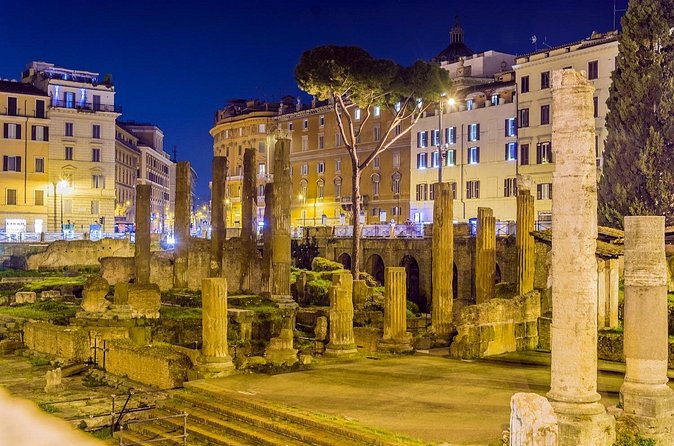
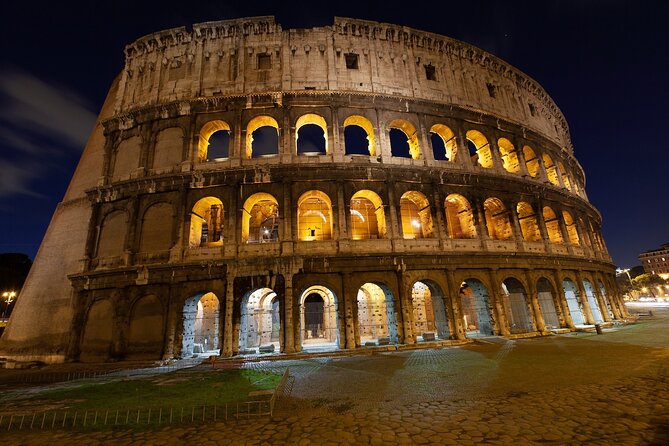
The walk ends at Largo Gaetano Agnesi, above the Colosseum metro stop. From here, you get a dramatic view over the Colosseum without entering the arena.
The final story connects the monument to conquest, public violence, gladiatorial combat, and prisoners who may never have received proper burial. The guide considers the idea that so many deaths left behind a restless presence.
This is an effective ending because the Colosseum needs little help creating atmosphere. At night, its huge outer walls and dark openings provide a natural backdrop for stories about people whose lives ended there. You will have time to look out over the monument, but the stop is still brief, about ten minutes.
Do not book this tour expecting an after-hours Colosseum entry. The experience finishes at a viewpoint above it. If entering the arena is important to you, arrange a separate ticket for another time.
What $30.10 gets you
At $30.10 per person, the price is fair for a two-hour guided walk with a maximum of 15 people. You are paying for a themed route and a live storyteller, not for museum admission or access to the ruins.
The value is strongest if you want help connecting scattered locations. You could walk past Largo Argentina, Teatro di Marcello, the Forum, Monti, and the Colosseum on your own. The guide gives those places a shared theme and adds stories you might not find in a basic guidebook.
The price is less attractive if you want an intensive archaeological tour. You will not enter any site, and each stop is short. Think of it as an evening layer to add to your Rome visit, not a replacement for a Forum or Colosseum tour.
A stop is made for optional snacks and drinks, but food and beverages are not included. Gratuities are also optional. The tour is offered in English, and confirmation is provided when you book.
Who should book this night walk
I would recommend it to you if you enjoy ancient politics, ghost legends, and stories with a sharp edge. It works particularly well for visitors who have already seen Rome’s major monuments and want lesser-known locations and a different theme.
Families with older children may also like it, especially if standard history tours lose their attention. One parent described the experience as a favorite tour for her daughter, and the short stops help keep the pace moving.
You should think twice if you want to spend the evening inside museums or archaeological sites. You should also consider the content if stories about executions, murder, and burial practices are not your idea of fun.
The walk requires a moderate level of fitness. Comfortable shoes are wise, and the tour includes stairs and an urban route through central Rome. Since the start is at 8:00 pm, check your route to Largo di Torre Argentina before the evening begins.
Should you book Ancient Rome’s Dark Side?
Book it if you want a cooler, quieter evening walk that adds murder, scandal, and ghost lore to Rome’s familiar ruins. The small group, focused route, and strong setting give you good value for $30.10.
Skip it if your priority is entering monuments or studying archaeology in detail. For everyone else, this is a lively way to see Rome after dark and leave with a few stories that are much harder to forget than another list of emperors and dates.
FAQ
How long does the tour last?
The walking tour lasts approximately two hours.
What time does the tour begin?
The tour begins at 8:00 pm.
Where does the tour start?
It starts at Largo di Torre Argentina, 00186 Rome, Italy.
Where does the tour finish?
It finishes at Largo Gaetano Agnesi, above the Colosseum metro stop.
Is the tour offered in English?
Yes. An English-speaking storyteller guide leads the experience.
How many people can join the tour?
The group has a maximum of 15 people.
Are archaeological site admissions included?
No. The tour takes place outdoors, and entry to archaeological sites and museums is not included.
Is food included?
No. The tour makes a stop where you can optionally buy snacks and drinks.
Can I cancel for a full refund?
Yes, if you cancel at least 24 hours before the experience begins. Cancellations made less than 24 hours before the start time are not refunded, and late changes are not accepted.
Just added around Rome
- Ghost & Legends in Night Rome Walking Tour★ 5.0 · 36 reviews
- Secrets of Rome – The dark side Small Group Walking Tour★ 5.0 · 20 reviews
- Rome After Dark Mysteries Myths and Haunted History★ 5.0 · 14 reviews
- Rome: Private Night Ghost Walking Tour★ 5.0 · 38 reviews
- Rome Secrets with Dark History and Tasty Bites Tour Experience★ 4.5 · 3 reviews
- Experience Rome in this Mysterious Ghost Tour★ 3.5 · 3 reviews
- Haunted Rome & True Crime: The Cenci Curse Game★ 4.5 · 27 reviews
- Haunted Rome: Eternal City Night Walking Tour★ 5.0 · 38 reviews
Rome Ghost Tours, compared.
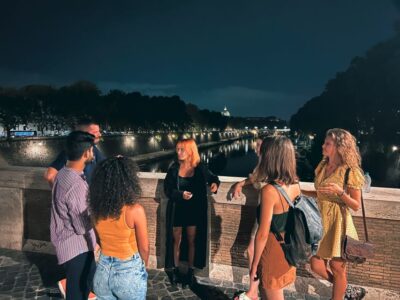
Paranormal Night Walking Tour & Secret Backstreets
Read our review →

Small Group Rome’s Dark Side – Ghosts & Legends Tour
Read our review →
Ghosts, Legends & Mysteries of Rome Tip-Based Walking Tour
Read our review →
Ghosts Legends and Mysteries of Rome Walking Tour
Read our review →Browse the lists this tour appears in