
REVIEW · ROME GHOST TOURS
Rome Secrets with Dark History and Tasty Bites Tour Experience
Rome’s darker side comes alive on this evening walk, from the Golem legends around the Portico d’Ottavia to the execution ground beneath Giordano Bruno’s statue. The route mixes documented events with ghost stories, so you get Rome’s old streets, but also the uneasy tales that guide Costanza brings to life.
I like the small maximum of 15 people, which should make it easier to hear the stories in narrow lanes. I also like the practical food stops: pizza along the way, then a local sweet and drink near Castel Sant’Angelo. The main drawback is pace. Two hours covers several neighborhoods, so stops are brief and the tour is not designed for long visits inside sites.
Key points before you book
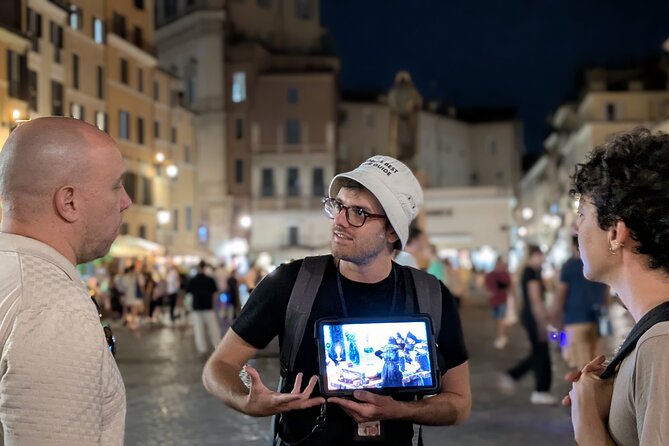
- A night route through six atmospheric areas: Walk from the Portico of Octavia to Ponte Sant’Angelo by way of the Jewish Ghetto, Campo de’ Fiori, Via Giulia, and the Tiber.
- Stories mix fact, folklore, and fear: Hear about the Golem, Giordano Bruno, Giulia Tofana’s poison, Olimpia Maidalchini, and Rome’s executioner Mastro Titta.
- Food is part of the experience: Pizza and a local sweet are included, along with alcoholic beverages.
- A compact two-hour format: The route is useful for an evening introduction, but each stop gets only a few minutes.
- A small group helps on city streets: The tour has a maximum of 15 people and is offered in English.
- Plan for ordinary walking shoes: The route uses cobbled streets and urban lanes, and the meeting point is at the Portico of Octavia.
Rome after dark, with a darker point of view
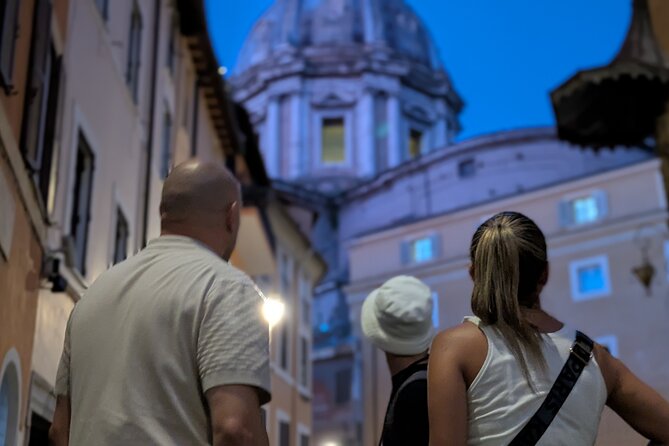
Rome can feel almost too familiar in daylight. You see the ruins, fountains, churches, and grand piazzas, then move on to the next famous sight. This tour takes a different approach. It uses familiar places as settings for stories about persecution, forbidden ideas, poison, death, and ghosts.
That makes the experience less about ticking off monuments and more about changing the way you see the city. The Portico of Octavia is not only an ancient ruin. Campo de’ Fiori is not only a market square. Ponte Sant’Angelo is not only a photogenic bridge. Each place gains a second identity after sunset.
The tone is spooky, but this is not presented as a haunted-house attraction. The guide connects legends to Roman customs, religious tensions, political power, and real punishments. Some stories are clearly folklore. Others are tied to recorded people and events. That mixture is part of the fun, though you should enjoy the tour as storytelling rather than expect a formal academic lecture.
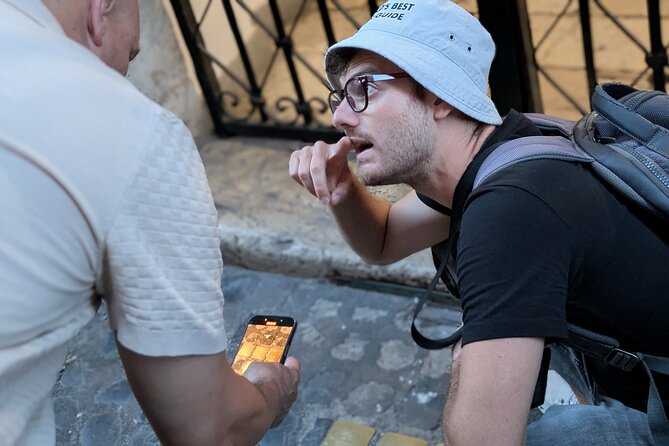
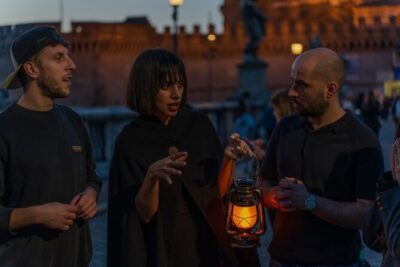
Guide Costanza led the experience described in the available feedback and was praised for sharing unusual stories. That matters here. The route itself is public and easy to walk, but the value comes from knowing what happened in these lanes and why the stories survived.
More Dark History Tours in Italy
- Rome: Guided Bar Crawl with Drinks & Dark History
★ 4.9 · 444 reviews - Rome: Small Group Rome’s Dark Side – Ghosts & Legends Tour
★ 4.9 · 343 reviews - Rome’s Dark Side Ghosts and Legends Tour
★ 5.0 · 93 reviews
Starting at the Portico of Octavia
Meet at the Portico of Octavia, at Via del Portico d’Ottavia 29, in the heart of the Jewish Ghetto. This is a strong starting point because the ruins already carry several layers of Rome. The complex was built by Emperor Augustus for his sister Octavia, and later generations built their own beliefs and memories around the ancient stones.
The stop itself is short, about five minutes, so do not expect a full archaeological explanation. The focus is on the symbolic and mysterious side of the site. You hear about Kabbalah, the number seven, and the Golem, a creature said to have protected the Jewish community during periods of persecution.
The Golem tale gives the opening a clear mood. It is a story about fear, faith, and protection, and it fits the old stonework well. The guide also places the Jewish Ghetto in a broader setting. Created in the 16th century, the district preserved religious practices and customs while also becoming a place where legends took root.
Come early enough to find the meeting point without rushing. The starting address is specific, but Rome’s lanes can be confusing, especially at night. The tour ends near Sant’Angelo Restaurant on Via del Banco di Santo Spirito, so you will not finish where you began.
Walking through the Jewish Ghetto and Via dei Giubbonari
The Jewish Ghetto section gives the tour a more human scale. In daylight, the area has bakeries, restaurants, and narrow streets with daily life carrying on around old walls. At dusk, the guide turns your attention to the stories attached to the district, including the ghost of Berenice and the symbolic role of the number seven.
This is one of the places where the tour’s mood depends on your imagination. You will not be entering a preserved medieval scene. You are walking through a living neighborhood. That contrast works well: modern Rome continues around you while older fears and beliefs are brought back into the conversation.
The route then reaches Via dei Giubbonari, the street named for the tailors who once worked there. Today, shops and foot traffic can make it feel ordinary. The story of Olimpia Maidalchini, known as the Pimpaccia, gives it a sharper edge.
Maidalchini was a powerful 17th-century noblewoman associated with greed and political manipulation. According to legend, her spirit still wanders the street. The story is less about proving a ghost than about the way Rome turns notorious figures into permanent parts of its streetscape.
This section is good for people who enjoy stories attached to places rather than isolated facts. It also shows one limit of the tour. Because the route keeps moving, you will hear the essential tale, then continue. If you want time to study façades or photograph every lane, you may feel hurried.
Campo de’ Fiori and the shadow of Giordano Bruno
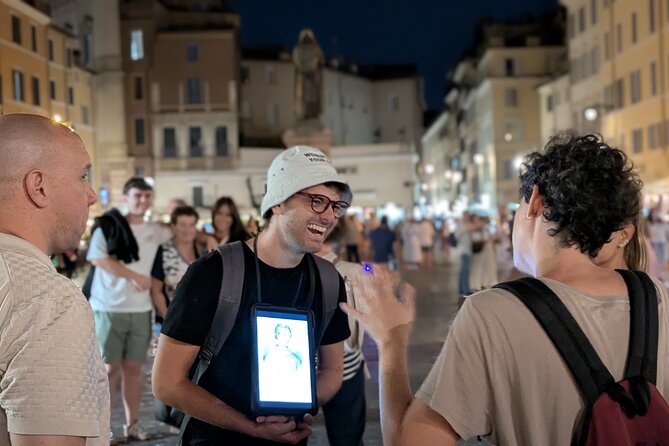
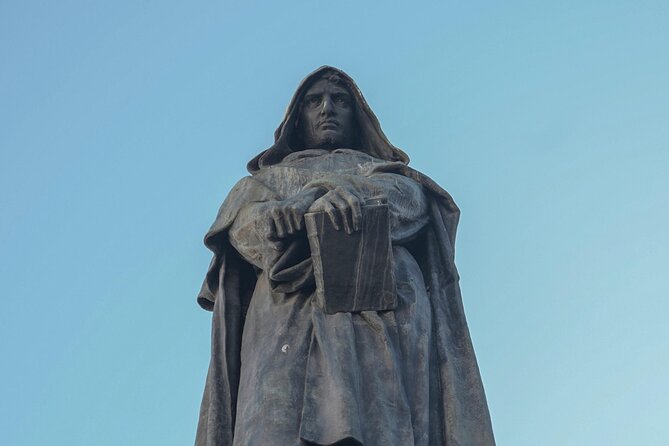
Campo de’ Fiori is one of the tour’s clearest changes of mood. By day, it is known for its market and cafés. On this walk, the focus shifts to the statue of Giordano Bruno at the center of the square.
Bruno was a philosopher and friar condemned for heresy and burned here in 1600. His hooded figure faces toward the Vatican, creating a powerful visual link between free thought, religious authority, and punishment. The statue does much of the work before the guide even begins speaking.
You will hear about Bruno’s trial and execution, along with the square’s past as a place of public punishment. That history gives Campo de’ Fiori an uncomfortable second life. The same open space that now attracts people for food and evening drinks once gathered crowds for grim spectacles.
The stop lasts about ten minutes, making it one of the longer pauses on the route. That extra time helps. The story needs room because Bruno is not simply a frightening character. His case raises questions about who controls accepted ideas and what happens when a person refuses to stay within them.
I like this part because it has a strong visual focus and a clear historical subject. It also keeps the tour from becoming a string of ghost tales. The danger, poison, and supernatural stories are balanced by a real public event that shaped the square.
More Dark History Tours in Rome
- Crypts and Legends: Exploring the Dark Side of Rome
★ 4.5 · 69 reviews - Rome Secrets: Dark History & Tasty Bites Tour
★ 5.0 · 37 reviews - Rome’s Dark Side: Ghosts, Scandals and Crypts – Small Group Tour
★ 5.0 · 28 reviews - Haunted Rome & True Crime: The Cenci Curse Game
★ 4.5 · 27 reviews
Santa Maria dell’Orazione e Morte by the Tiber
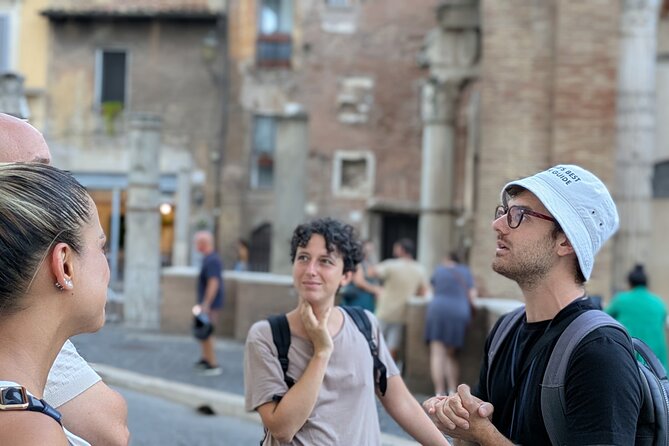
The Church of Santa Maria dell’Orazione e Morte is one of the tour’s most unsettling locations. Its name refers to prayer and death, and its purpose was tied to people who drowned in the Tiber or died without family to arrange a proper burial.
The church belonged to a confraternity devoted to caring for forgotten dead. Its exterior uses skulls, winged skeletons, and Latin inscriptions to make its message plain: life is fragile, and death waits close by.
The guide explains the church’s niches, human bones, and symbols of mortality. This is not a cheerful stop, but it gives the tour a useful connection to Roman religious practice. The macabre decoration was not meant only to frighten. It also reflected a duty to remember people who had no one else to remember them.
The planned stop is about five minutes. That is enough for an introduction, but not enough for a long look at every detail. Access and viewing conditions may affect what you can see, so treat this as an exterior and brief storytelling stop rather than a church visit with a full interior tour.
For me, this is the point where the tour’s theme becomes most focused. The story is not simply about a ghost. It is about how a city dealt with anonymous death, public responsibility, and the fear of being forgotten.
Via Giulia and the tale of Aqua Tofana
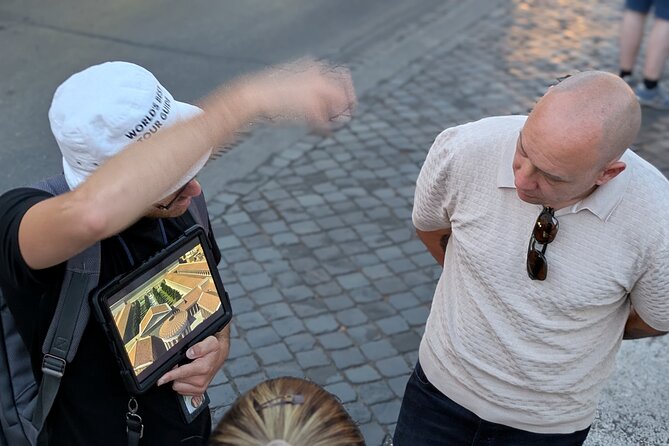
Via Giulia offers a striking contrast. It is elegant, quiet, and lined with the kind of grand architecture that makes Rome look polished. The story attached to it is anything but polished.
Here you hear about Giulia Tofana, associated with Aqua Tofana, a poison said to have been sold to women trapped in abusive marriages. The potion could kill slowly and without easy detection, making it a weapon of secrecy and desperation.
The story places hidden danger behind noble façades. Rome’s grand streets can suggest order and power, but the tale of Aqua Tofana points to the private fear and limited choices faced by women in earlier centuries. The guide also describes a network that supplied the poison to people across social classes.
This stop is brief, around five minutes, so you will receive the key story rather than a long account of chemistry, court records, or the full legal aftermath. That is probably the right balance for a walking tour. The subject is grim, and too much detail would slow the route.
The value here is the contrast between appearance and reality. Via Giulia looks refined. The story asks you to imagine whispered deals, guarded courtyards, and domestic danger behind that calm surface.
The Arco dei Banchi and a small taste of Rome
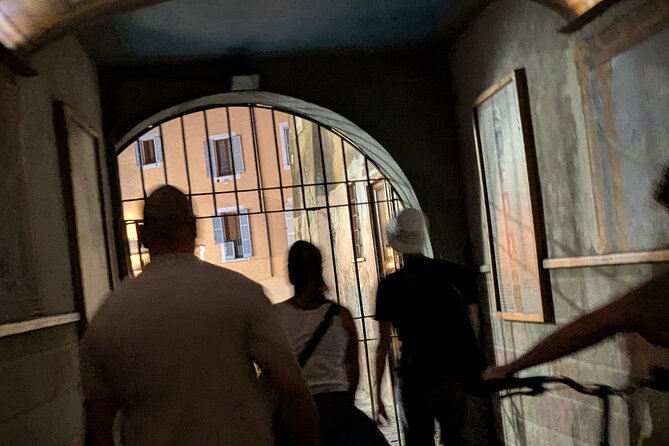
The Arco dei Banchi is easy to miss if you do not know to look for it. The passage once served an area filled with bankers and merchants, and it also gave pilgrims heading toward the Vatican a sheltered route.
Under the vaulted ceiling, commerce, religion, and private dealings shared the same narrow space. A small image of the Madonna once lit the passage at night, offering direction and comfort. A plaque recalls destructive floods from the Tiber, adding a reminder that Rome’s dangers were not only human or supernatural.
This stop lasts about five minutes, but it adds useful variety. After stories of executions and poison, the arch shows a quieter kind of mystery. It is a place of movement and transaction, where people passed through while carrying money, prayers, secrets, or urgent business.
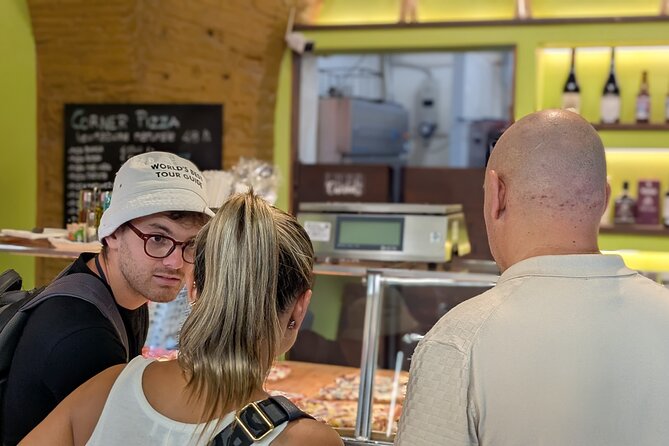
The food element begins to matter around this part of the evening. Pizza is included, along with a local sweet and alcoholic beverages. The exact serving details are not specified, so you should think of these as tasting breaks rather than a full dinner.
That is good news if you want to keep walking and still sample something local. It is less useful if you are replacing a proper meal. The tour is not suitable for a gluten-free diet, so anyone with that requirement should not book it expecting an alternative.
Ending beneath the angels of Ponte Sant’Angelo
The route ends at Ponte Sant’Angelo, one of Rome’s most memorable night settings. Bernini’s angels line the bridge, each carrying a symbol connected with Christ’s Passion. Beyond them, Castel Sant’Angelo gives the riverfront a strong final backdrop.
The final story concerns Mastro Titta, Rome’s notorious executioner. The bridge and nearby area became linked to his grim work, and the guide blends historical detail with the legends that gathered around his name.
This is a fitting final stop because the setting is beautiful while the subject is severe. The illuminated arches, river, angels, and fortress create an almost theatrical scene. The tour’s main idea comes together here: Rome can present grace and brutality within the same few steps.
You finish on Via del Banco di Santo Spirito, in front of Sant’Angelo Restaurant. That location is useful if you want to continue your evening near Castel Sant’Angelo, but remember that the tour does not return to the Jewish Ghetto.
Is $35.07 a fair price?
At $35.07 per person, the tour offers a good value if you want a guided evening walk with food included. You are paying for about two hours of English-language guiding, a small group capped at 15, several central locations, pizza, a local sweet, and alcoholic drinks.
The price is less compelling if you judge it as a sightseeing tour with admissions. The stops are free public places, and the route does not include entry to museums or extended church visits. The value is in the guide’s storytelling, the route design, and the way food breaks up the walk.
The available rating is 4.7 from three reviews, so it suggests a positive experience but is not a large sample. The strongest praise centers on the evening atmosphere, the unusual stories, Costanza’s presentation, and the food stops. Those are the features I would use to decide, not the rating alone.
Timing, walking, and who will enjoy it
The tour lasts about two hours and is offered in English. Since the walk moves through several central districts, wear comfortable shoes and expect cobbled streets, short pauses, and changing levels of activity around you.
Most people can take part, and service animals are allowed. The tour is near public transportation, which helps with reaching the start and leaving the end. Confirmation is provided at booking, and free cancellation is available until 24 hours before the start time. Changes or cancellations inside that window are not accepted for a refund.
I would choose this tour if you have already seen some of Rome’s headline sights and want a different way to read the city. It also works well for an evening when you want structure without committing to a long dinner or a major ticketed attraction.
I would skip it if you dislike ghost stories, grim subjects, or food that is not guaranteed to meet dietary restrictions. It is also not the right choice for a slow architectural tour. The route is designed to keep moving, and several stops last only five minutes.
Should you book this Rome night walk?
Book it if you want local legends tied to real streets, a compact route, and enough food to make the evening feel more than a lecture. The best moments come from the contrast between ordinary Rome and its unsettling past: a market square linked to execution, a fine street linked to poison, and a beautiful bridge tied to an executioner.
Skip it if you need a full meal, a gluten-free plan, or long indoor visits. For everyone else, $35.07 is a reasonable price for a small-group evening that gives familiar Rome a stranger, darker voice.
FAQ
How long does the Rome Secrets with Dark History and Tasty Bites Tour last?
The tour lasts approximately two hours.
Where does the tour begin?
It begins at the Portico of Octavia, at Via del Portico d’Ottavia 29, 00186 Rome, Italy.
Where does the tour end?
The tour ends on Via del Banco di Santo Spirito, in front of Sant’Angelo Restaurant.
What food and drinks are included?
Pizza, a local sweet, and alcoholic beverages are included.
Is the tour suitable for someone following a gluten-free diet?
No. The tour information states that it is not suitable for gluten-free diets.
What is the cancellation policy?
You can cancel up to 24 hours before the start time for a full refund. Cancellations or changes made less than 24 hours before the start time are not accepted for a refund.
More Heritage Tours in Rome
- Rome After Dark Mysteries Myths and Haunted History
★ 5.0 · 14 reviews - Rome: Colosseum and Ancient Dark History Walking Tour
★ 5.0 · 10 reviews - History and Hauntings of Salem Guided Walking Tour
★ 5.0 · 14,564 reviews - Savannah History and Haunts Candlelit Ghost Walking Tour
★ 5.0 · 3,235 reviews
Just added around Rome
- Ghost & Legends in Night Rome Walking Tour★ 5.0 · 36 reviews
- Secrets of Rome – The dark side Small Group Walking Tour★ 5.0 · 20 reviews
- Rome: Private Night Ghost Walking Tour★ 5.0 · 38 reviews
- Rome After Dark Mysteries Myths and Haunted History★ 5.0 · 14 reviews
- Haunted Rome & True Crime: The Cenci Curse Game★ 4.5 · 27 reviews
- Experience Rome in this Mysterious Ghost Tour★ 3.5 · 3 reviews
- Haunted Rome: Eternal City Night Walking Tour★ 5.0 · 38 reviews
- Ghosts and Crimes of Rome Night Walk★ 5.0 · 61 reviews
Rome Ghost Tours, compared.
Paranormal Night Walking Tour & Secret Backstreets
Read our review →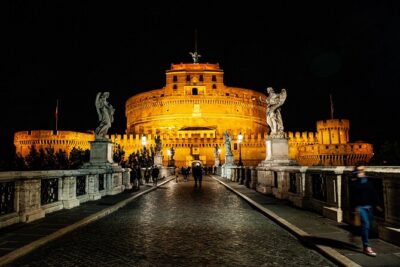

Small Group Rome’s Dark Side – Ghosts & Legends Tour
Read our review →
Ghosts, Legends & Mysteries of Rome Tip-Based Walking Tour
Read our review →
Ghosts Legends and Mysteries of Rome Walking Tour
Read our review →Browse the lists this tour appears in